Industrial Automation Industry
Key Highlights
- Industrial automation uses control systems, software, sensors, and machines to handle industrial processes with minimal human intervention. Currently, the industrial automation market is valued at over $200 billion and is expected to grow at a compound annual growth rate (CAGR) of approximately 8% through 2030, driven by increased adoption across various sectors. Today’s automation systems support digital transformation by connecting the shop floor, production data, and decision-making tools.
- Today’s automation systems support digital transformation by connecting the shop floor, production data, and decision-making tools. The main types of industrial automation systems include hard automation, programmable automation, flexible automation, and integrated automation systems. The current industrial automation market is valued at over $200 billion globally and is expected to experience steady growth, with projections indicating a compound annual growth rate (CAGR) of around 8% through 2028. Rapid advancements in automation systems and digital transformation across industries continue to drive this significant market expansion.
- The main types of industrial automation systems include hard automation, programmable automation, flexible automation, and integrated automation systems.
- Core technologies include sensors, actuators, programmable logic controllers, industrial robots, artificial intelligence, and machine learning.
- Key benefits include cost savings, better quality control, stronger workplace safety, and higher operational efficiency.
- Adoption also brings challenges, including workforce transformation, cybersecurity, and data management.
Introduction
Industrial automation is changing how manufacturers run equipment, manage output, and respond to market pressure. If your business is facing downtime, quality issues, or rising labor demands, automation systems can help. They support digital transformation by connecting machines, people, and data in smarter ways. From simple conveyor-based tasks to advanced AI-supported operations, industrial automation now plays a central role in modern production. Understanding how it works is the first step toward making better decisions for your facility.
Defining the Industrial Automation Industry
At its core, industrial automation is the use of control systems, software, machines, sensors, actuators, processors, and networks to automate industrial processes. The goal is simple: complete specific tasks with greater speed, consistency, and minimal human intervention. In modern industries, these connected tools collect data, follow programmed logic, and trigger actions across a production line or even an entire factory floor.
In practice, automation technology works by linking physical equipment with digital decision-making. A sensor detects a condition, control systems process that information, and a machine responds in real time. That could mean adjusting temperature, moving parts, or stopping equipment before damage occurs. This is why industrial automation has become a major part of the manufacturing industry and a key driver of digital transformation.
How Industrial Automation Works in Manufacturing
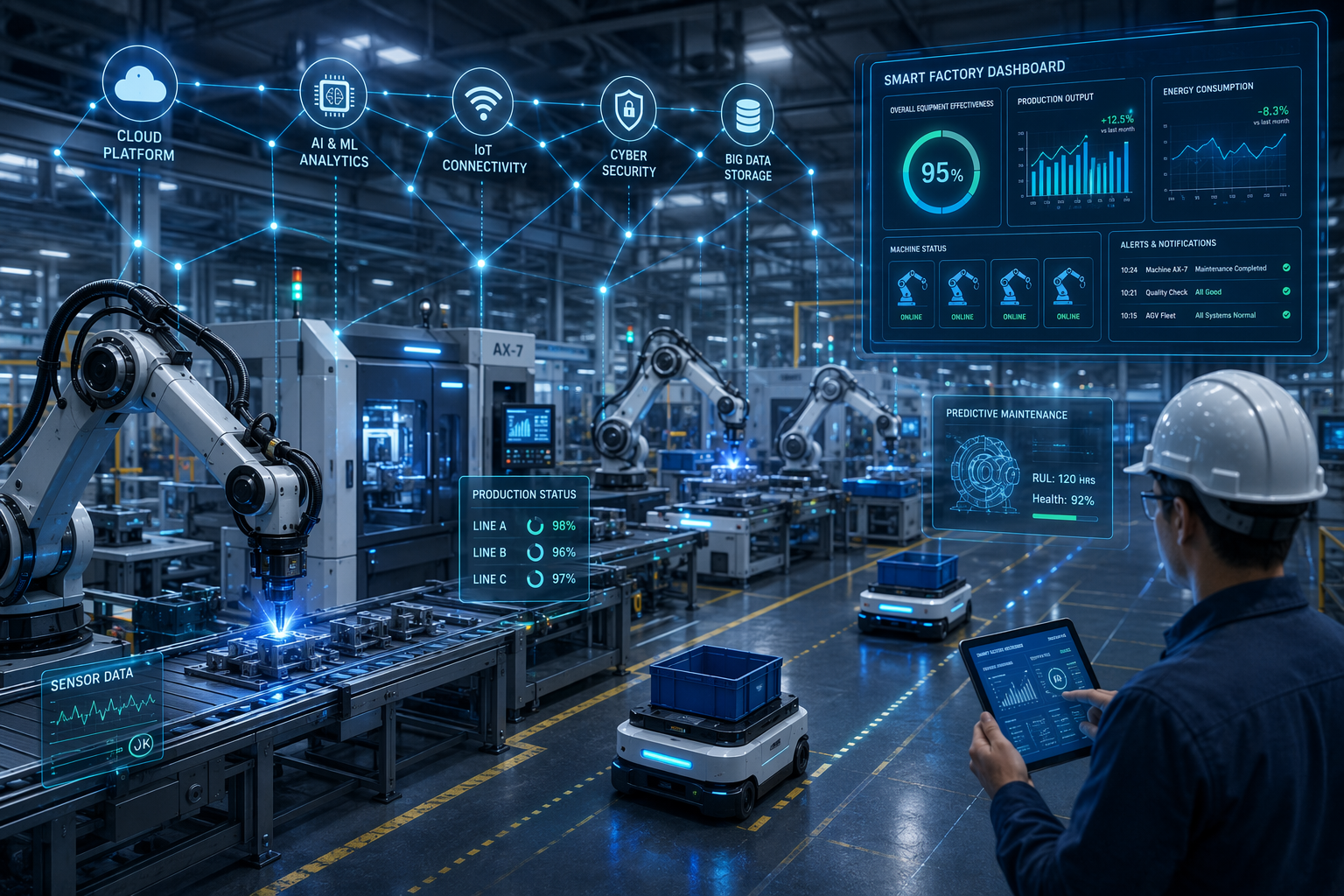
In a typical manufacturing process, automation systems start with data collection. Sensors and other field devices gather information about speed, temperature, pressure, cycle time, or machine status. That data gives the system a clear view of what is happening on the shop floor.
Next, controllers and software apply rules to that information. If a reading moves outside the set range, the system can adjust settings, stop the line, or alert operators. This reduces human intervention in repetitive tasks while keeping important human input available for oversight and problem-solving.
The final step is action and feedback. Machines, robotic arms, conveyors, and other equipment respond in real time. The system then continues monitoring results, creating a loop of measurement and response. This closed approach helps improve quality control, cut downtime, and keep the production line moving more smoothly.
Evolution and Modern Milestones in Industrial Automation
Industrial automation began with simple mechanical systems such as conveyor belts that moved parts through an assembly line. Early machines reduced manual labor by handling basic, repetitive tasks. That was a major shift, even before advanced computing entered the picture.
As automation technology matured, manufacturers began using programmable logic controllers, networks, and machine-level monitoring. This expanded automation from isolated machines to connected systems across the factory floor. The focus moved from basic movement to control, visibility, and repeatable output.
Today, the industry is shaped by digital transformation. Industrial IoT, edge computing, artificial intelligence, machine learning, and connected platforms now allow equipment to share production data and support better decisions. Modern milestones include predictive maintenance, AI summaries for production dashboards, integrated monitoring, and systems that connect machines, ERP data, and shop floor knowledge in one environment.
Major Types of Industrial Automation Systems
When you review the types of industrial automation used today, one thing becomes clear: no single model fits every operation. Different industrial automation systems serve different production goals, volumes, and product requirements. That is why choosing the right setup matters.
The main categories include hard automation, programmable automation, flexible automation, and integrated automation systems. Each type supports different automation solutions, from fixed high-volume output to connected, data-driven operations. The next sections explain where each option works best and what you should expect from it.
Fixed (Hard) Automation
Hard automation is a type of automation built for a set task and a continuous workflow. It is often used in large-volume production where the same activity happens again and again. Think of a production line designed to perform repetitive tasks with very few changes.
Because the equipment is specialized, this approach can be fast and reliable. It works well when product design stays stable for a long period. In those cases, hard automation can support strong output and predictable production time.
Still, there is a tradeoff. Changes are difficult and costly, which makes this type of automation less suitable for short product life cycles or low-volume runs. If your operation needs frequent updates or more variety, other types of industrial automation systems may offer better flexibility and a lower barrier to change.
Programmable Automation
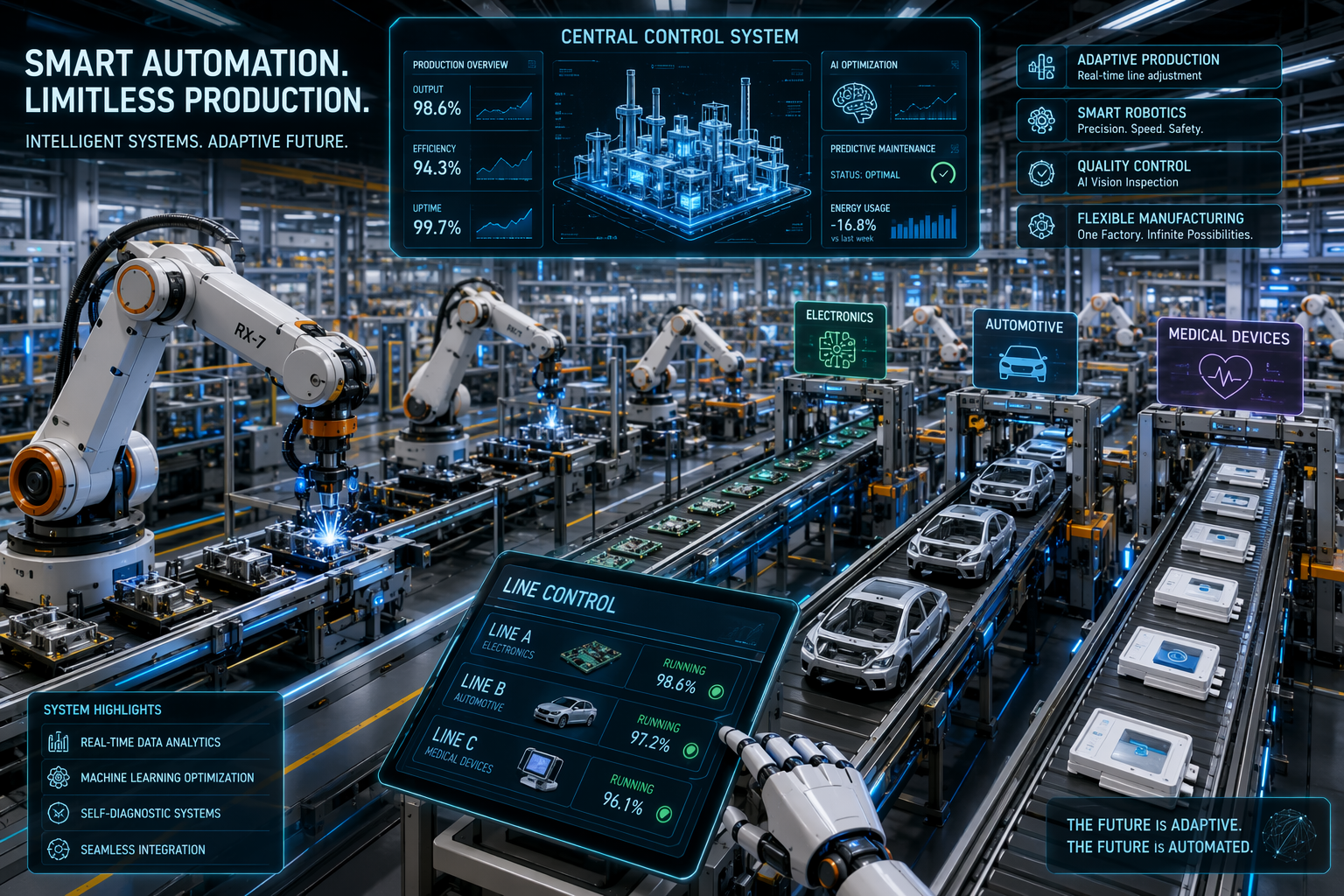
Programmable automation is designed for batch production. Instead of making one product forever, these automation systems can be reprogrammed to support different runs. This makes them useful for manufacturers producing several dozen to several thousand units at a time.
A big strength here is adaptability. Control systems can be updated between batches, allowing one setup to handle changing needs. That makes programmable automation a practical choice when demand shifts or when different product versions share similar equipment.
There is still some downtime during changeovers, and that affects lead times and planning. Even so, many companies use programmable automation to balance volume with variety. It offers more freedom than hard automation while still reducing manual effort, improving repeatability, and helping plants manage production more effectively across multiple product runs.
Flexible Automation
Flexible automation takes adaptability a step further. It is built to reduce downtime and allow faster changes between product variants. This makes it one of the most responsive types of industrial automation for operations that need customization and quicker shifts in output.
In many cases, flexible automation relies on precise electromechanical controls. A CNC machine is a good example. It can move from one job to another with automated changeovers, helping process automation run with less disruption. That improves production flow and reduces waiting time between tasks.
For manufacturers dealing with changing product design or demand-based scheduling, flexible automation offers real value. It supports batch production while also enabling more on-demand manufacturing. If your business needs both efficiency and variety, this approach can help you produce more options with less manual setup and better use of machine time.
Integrated Automation Systems
Integrated automation systems connect machines, devices, and processes through a single control structure. Instead of isolated equipment working alone, this model links the full operation. That makes it one of the most advanced types of industrial automation systems in use today.
The value comes from visibility and coordination. Through supervisory control and data acquisition, managers can view performance across lines, assets, and processes in one place. This creates better automation solutions for monitoring, scheduling, labor planning, and process optimization.
As industrial internet of things tools grow, integrated automation keeps gaining importance. Connected machines can share production data, support real-time monitoring, and respond more intelligently across the factory floor. For companies aiming at a connected factory model, this approach helps bring control systems, analytics, and machine communication into one practical operating environment.
Core Technologies Shaping Industrial Automation
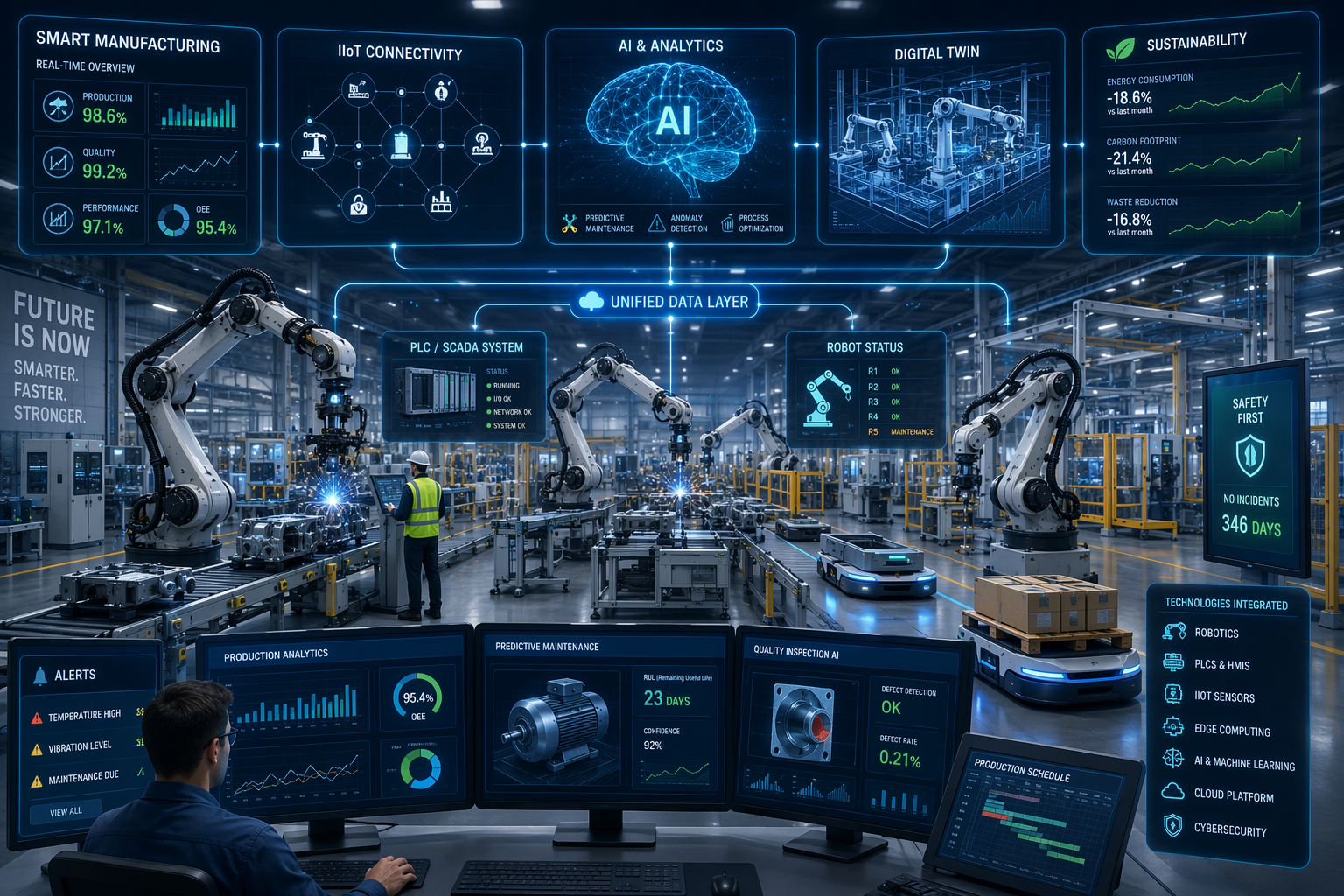
Industrial automation depends on a set of technologies that work together rather than alone. Sensors gather signals, controllers process them, and machines respond. These layers form the backbone of modern control systems and help turn raw data into useful action.
Today’s automation technology also includes industrial automation tools that support visibility, planning, and smarter responses. PLCs, robots, AI, machine learning, and connected monitoring platforms are all shaping how factories operate. The following technologies show how this shift is happening on the ground.
Role of Sensors and Actuators
Sensors and actuators are basic but essential field devices in industrial automation. Sensors detect conditions such as pressure, temperature, movement, or position. Actuators then turn commands into physical action by opening valves, moving components, or adjusting machine behavior.
These devices matter because control systems depend on them. Without sensors, the system has no clear view of what is happening. Without actuators, it cannot respond. Together, they allow machines to measure, decide, and act in real time during production.
As factories collect more detailed operating data, sensors become even more valuable. They support process automation, early fault detection, and better quality control. When connected to analytics or AI tools, they also help identify patterns that people may miss. That is one reason automation technology is moving toward more intelligent, connected, and responsive operations.
The Impact of Programmable Logic Controllers (PLCs)
Programmable logic controllers are one of the most important building blocks in industrial automation. These rugged industrial computers receive signals from machines and sensors, apply pre-set logic, and send commands back to equipment. In simple terms, they help automation systems make quick, reliable decisions.
On the shop floor, PLCs control specific processes and machines automatically. They are used for timing, sequencing, switching, and basic machine coordination. Because they are built for industrial conditions, they can handle constant use in demanding environments.
Their impact goes beyond single machines. Modern automation technology often links programmable logic controllers with monitoring tools, SCADA platforms, and industrial internet of things infrastructure. That connection supports more visibility, faster response, and better data collection. If you want reliable control at the machine level, PLCs are still central to the entire automation architecture.
Robots, Cobots, and Automated Machinery
Industrial robots are widely used to handle welding, assembly, material handling, and inspection. On a production line, they bring speed, repeatability, and steady output. That makes them especially useful for tasks where consistency matters more than human judgment.
A newer shift involves collaborative robots, often called cobots. Unlike traditional robots that usually work behind safety barriers, collaborative robots are designed to operate alongside people. This makes automation more practical for mid-sized manufacturers and for operations that need a mix of machine support and human skill.
Across the shop floor, automated machinery now does much more than simple movement. Robots can guide parts, support quality checks, and help reduce repetitive tasks that strain workers. As automation expands, the mix of industrial robots and cobots is helping factories improve output while creating safer and more flexible ways to work.
Artificial Intelligence and Machine Learning in Automation
Artificial intelligence and machine learning are changing automation from rule-based control to smarter decision support. Instead of only following fixed instructions, systems can now identify patterns, spot problems earlier, and suggest better actions using historical and live data.
One major use is predictive maintenance. By analyzing machine behavior over time, AI can identify warning signs before a breakdown happens. That helps plants reduce downtime, lower maintenance costs, and keep equipment available when needed most.
Another important area is quality control. AI-powered vision and analytics can detect defects faster and more consistently than manual inspection in many cases. Machine learning also supports demand planning, schedule optimization, and knowledge management. As more companies connect machines, ERP, and shop floor data, artificial intelligence is becoming a practical tool for daily operations, not just a future concept.
Benefits of Industrial Automation for Modern Manufacturers
The advantages of industrial automation are easier to see when you focus on day-to-day plant performance. Manufacturers use automation to reduce delays, improve output, and respond faster to production issues. It is not only about replacing manual work.
It is also about stronger operational efficiency, better data use, and long-term cost savings. From productivity and product quality to safety and return on investment, automation creates value in several ways. The following sections break down the main business benefits more clearly.
Boosting Productivity and Efficiency
Productivity improves when machines can run steadily without fatigue, breaks, or uneven performance. Automation systems help identify slowdowns, bottlenecks, and downtime causes before they reduce output. That gives teams better control over daily production.
Just as important, automation takes over repetitive tasks that consume time but do not require high-value judgment. This allows employees to focus on exceptions, planning, and more complex work. The result is stronger operational efficiency across the floor.
Common productivity gains include:
- Faster throughput on repetitive tasks
- Reduced downtime through earlier problem detection
- Better visibility into bottlenecks and cycle issues
- More stable output across shifts and lines
When systems share data across one platform, leaders can act sooner and keep the production line moving with fewer interruptions.
Enhancing Product Quality and Consistency
Product quality depends on repeatability, and automation technology is built for that. Automated machines perform the same action in the same way, helping reduce variation across production processes. That makes it easier to meet standards and customer expectations.
Quality control also improves because connected systems can collect data from many points on the line. If a measurement changes or a defect starts appearing, the issue can be flagged earlier. Catching problems sooner helps reduce waste, rework, and missed requirements.
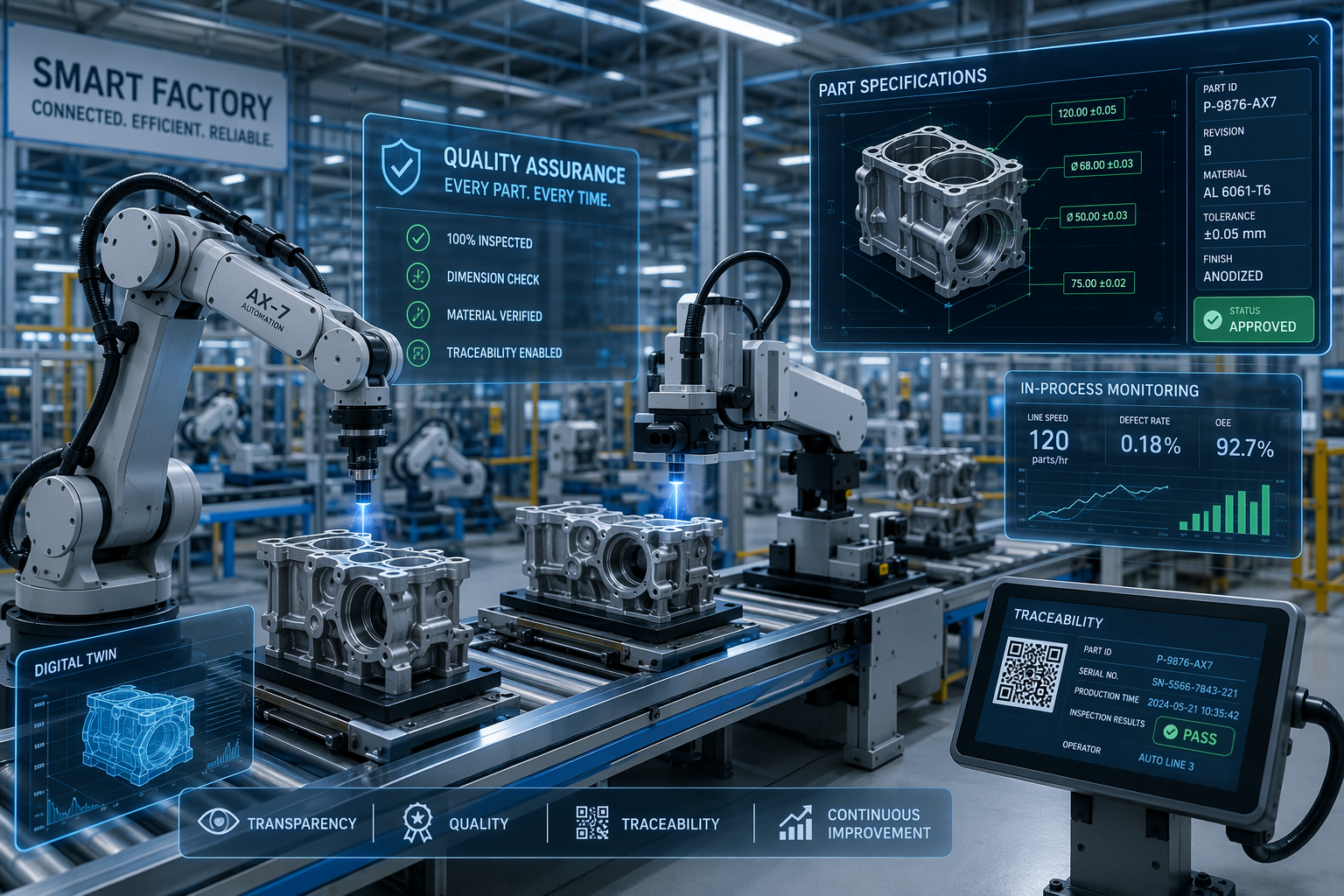
Another benefit is transparency. Automated verification and validation tools help confirm that finished parts meet specifications before they leave the factory floor. This is especially useful in sectors where quality records matter. When you combine repeatable machine action with better monitoring, you get more consistent results and stronger confidence in every production run.
Improving Workplace Safety and Operational Reliability
A safer workplace is one of the clearest benefits of automation. Machines can take over dull, dirty, or dangerous jobs that expose workers to repetitive motion, lifting, or hazardous conditions. That reduces strain on human labor and can lower injury risk.
Reliability also improves when equipment is monitored continuously. Instead of waiting for a failure, teams can use machine data to catch warning signs earlier. This leads to fewer unexpected stoppages and more confidence in daily performance.
Over time, that reliability affects costs too. Fewer disruptions can reduce maintenance costs, improve schedule stability, and support stronger delivery performance. Workers are still important, but their role shifts from constant manual handling to higher-value supervision and response. That combination of better workplace safety and steadier operations is a strong reason many manufacturers keep advancing their automation journey.
Cost Savings and Return on Investment
The upfront cost of automation can be significant, so it is fair to ask about return on investment. In many cases, the value builds over time through better output, reduced waste, and fewer interruptions. That is where cost savings become easier to measure.
Minimal human intervention in routine activities can lower labor pressure, while better monitoring helps avoid expensive failures. Maintenance costs may drop when predictive tools are used to fix problems before equipment breaks. These gains often compound as more assets become connected.
Typical sources of return on investment include:
- Lower downtime and fewer emergency repairs
- Reduced waste, rework, and scrap
- Better labor use across automated and manual stations
When production data is visible across assets, managers can confirm whether automation solutions are meeting targets and where added investment will create the next wave of savings.
Industrial Automation Applications Across Different Sectors
Industrial automation appears in many sectors because the same core idea applies across different industrial processes. Machines, sensors, software, and connected data help businesses improve output, consistency, and control, even when the products and regulations vary.
In the manufacturing industry, automation solutions are common in assembly, inspection, packaging, and material movement. Still, the exact use case changes by sector. Automotive, food and beverage, chemicals, pharmaceuticals, and packaging all use automation in different but practical ways.
Automotive Industry Automation Use Cases
Automotive manufacturing is one of the clearest examples of automation at scale. On the assembly line, industrial robots handle welding, positioning, and repetitive joining tasks with high accuracy. This supports fast production and dependable repeatability.
Automation systems in automotive plants also collect production data from machines and stations across the factory. That information helps teams track output, spot downtime patterns, and improve scheduling. As systems become more connected, plants gain better visibility into overall equipment performance.
Common automotive use cases include:
- Robotic welding and body assembly
- Automated material handling between stations
- Data-driven monitoring of line performance
These tools help manufacturers maintain steady volume, improve quality control, and respond faster when issues appear. For high-output environments, automation is not optional. It is part of how the operation stays competitive.
Automation in Food and Beverage Manufacturing
Food and beverage producers often rely on automation systems to keep output consistent and manageable. In this sector, process automation helps control timing, temperature, filling, movement, and packaging while reducing manual handling. That is especially useful when production volume is high.
Batch production is also common here, which makes changeovers and repeatability important. Automated controls help plants move from one recipe or package type to another with more accuracy and less waste. This supports tighter schedules and better use of equipment.
Product quality matters heavily in food and beverage manufacturing, so monitoring plays a major role. Sensors and connected systems can flag issues early, helping teams correct conditions before larger losses happen. When quality, speed, and consistency all matter at once, automation becomes a practical tool for daily performance.
Packaging, Chemical, and Pharmaceutical Industry Solutions
Packaging, chemical, and pharmaceutical operations use automation solutions to maintain control in environments where precision matters. Automated systems can monitor process conditions, guide material movement, and support reliable output with less variation from batch to batch.
In chemical and pharmaceutical settings, quality control is closely tied to compliance and traceability. Sensors can automatically adjust temperature and pressure to stay within required thresholds. Automated records and validation tools also make it easier to prepare for audits and prove that standards were met.
Process optimization is another major benefit. Packaging lines can inspect labels and containers, while regulated manufacturers can monitor production steps for medical devices and other sensitive products. When every variable counts, automation provides a more structured, trackable way to run operations and reduce the risk of missed requirements.
Current Trends and Growth of the Industrial Automation Market
The industrial automation market is growing because manufacturers want more visibility, less downtime, and stronger responsiveness. As digital transformation moves deeper into operations, more companies are connecting machines, data, and decision tools instead of relying on disconnected workflows.
Industrial IoT is a big part of that shift. Connected devices, monitoring platforms, and analytics tools are helping companies scale automation across production, maintenance, and planning. Growth is also tied to labor pressure, competition, and the need to make faster decisions using real-time information.
Market Size and Forecast for the United States
The compiled information does not provide a numeric market size for the United States industrial automation market. It does, however, show clear growth direction. Manufacturers are expanding automation across core operations and expect to scale current efforts significantly within the next five years.
It also notes that automation is becoming a workforce strategy, with a growing share of tasks handled by machines or in combination with people. That points to a strong growth forecast, even without a specific dollar value. Production data, AI use, and connected monitoring are helping push that expansion.
| U.S. market view | What the compiled information shows |
|---|---|
| Market size | No specific U.S. dollar market size provided |
| Near-term direction | Ongoing growth tied to digital transformation and connected operations |
| Five-year outlook | Manufacturers plan to scale automation efforts by roughly three times current levels |
| Growth support | More use of AI, machine data, and integrated production data systems |
Key Drivers Accelerating Market Adoption
Several forces are pushing automation forward. Manufacturers are dealing with faster production demands, tighter labor markets, and more complex supply chain conditions. Digital transformation is helping them respond by connecting operations and reducing delays caused by manual workflows.
Cost savings also matter. When companies reduce downtime, improve product quality, and use labor more effectively, automation technology becomes easier to justify. Better visibility into assets and output also gives teams more control over daily decisions.
Key drivers include:
- Pressure to improve cost savings and uptime
- Demand for better production visibility and data use
- Need for a stronger competitive advantage
- Expansion of AI, IIoT, and connected monitoring tools
Together, these factors explain why more businesses are moving from isolated pilots to broader automation programs across the factory and beyond.
Smart Factories and the Industrial Internet of Things (IIoT)
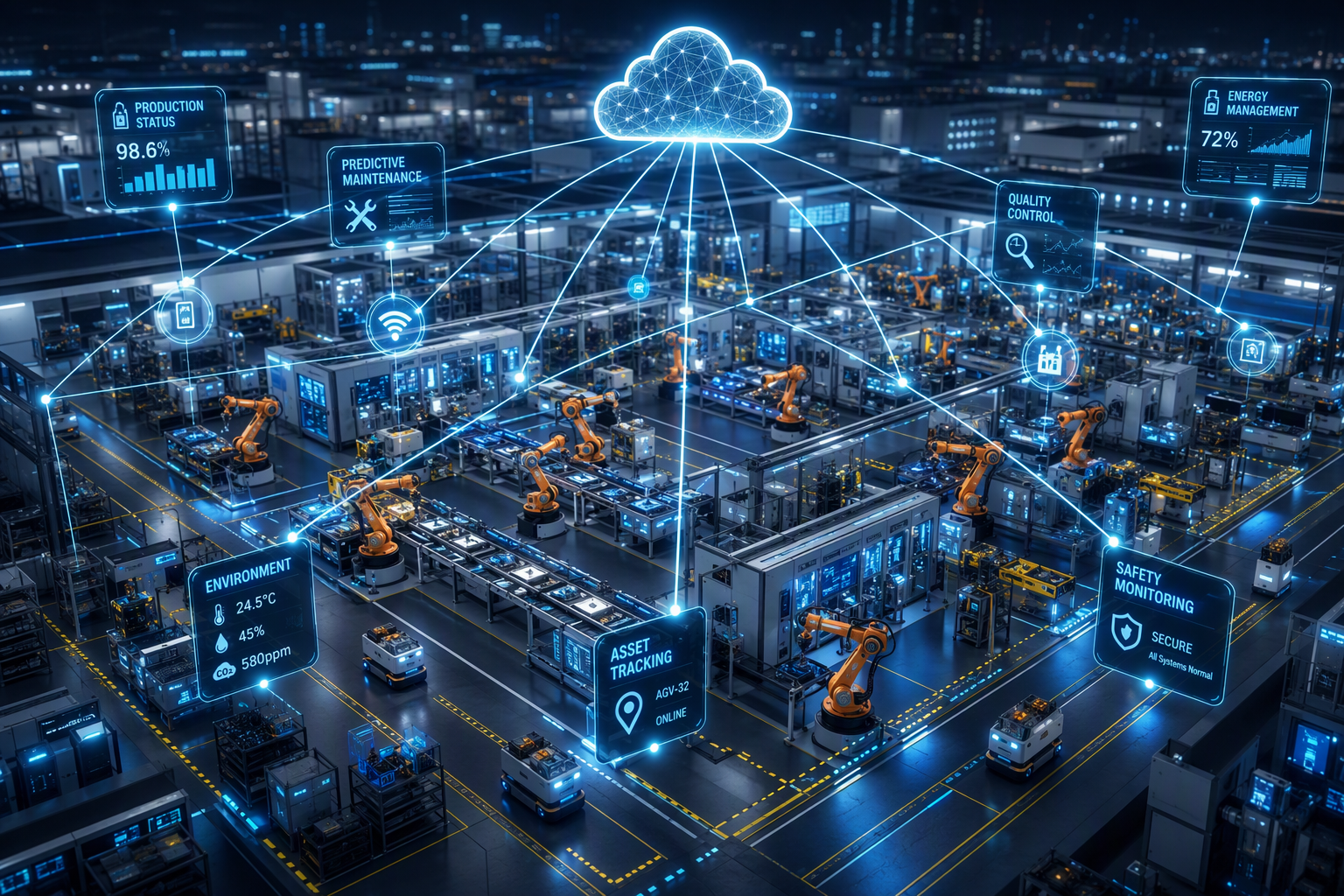
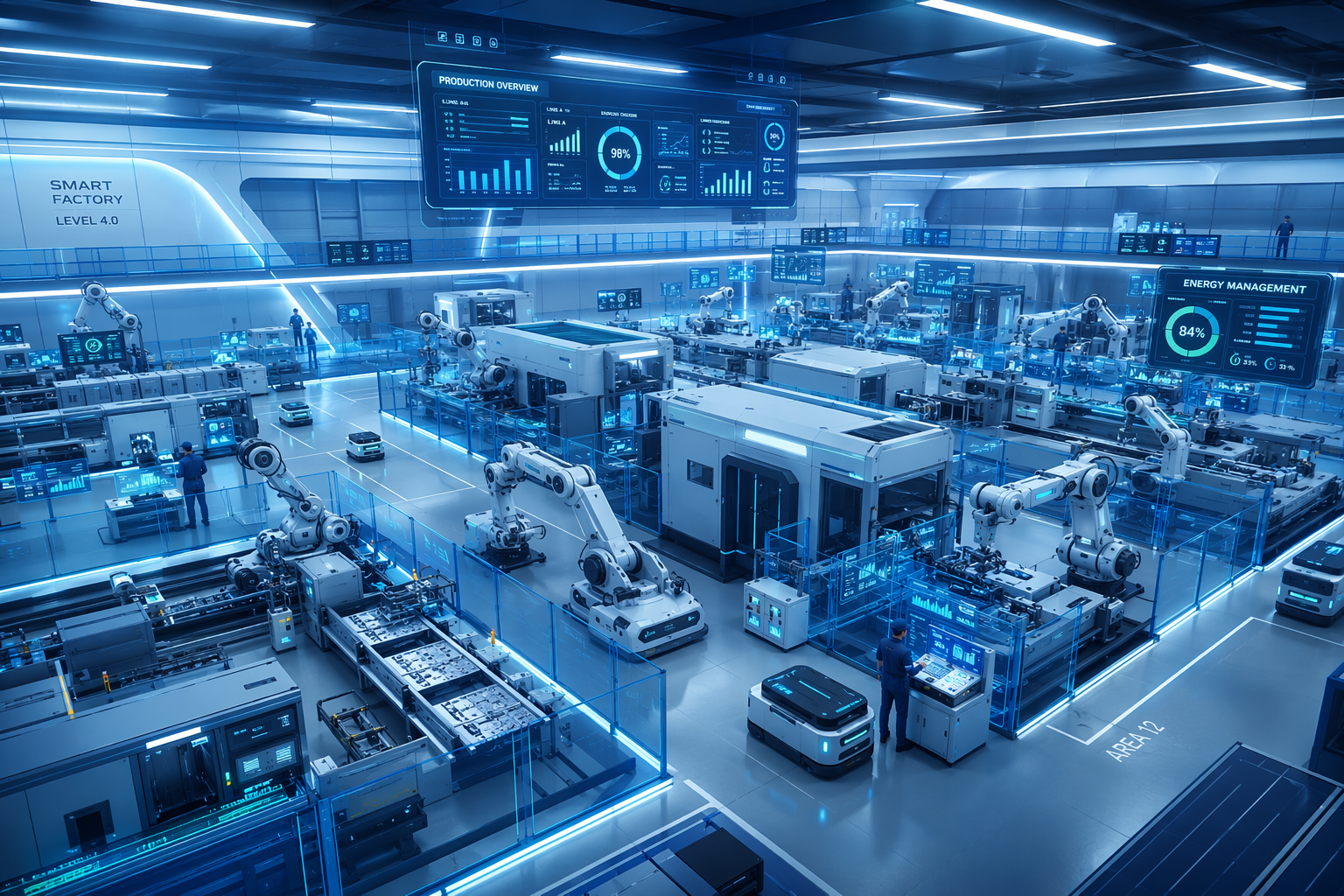
Smart factories depend on connected systems that can monitor, analyze, and respond across the entire operation. That is where the industrial internet of things becomes essential. IIoT links machines, sensors, and software so information can move quickly between physical assets and digital systems.
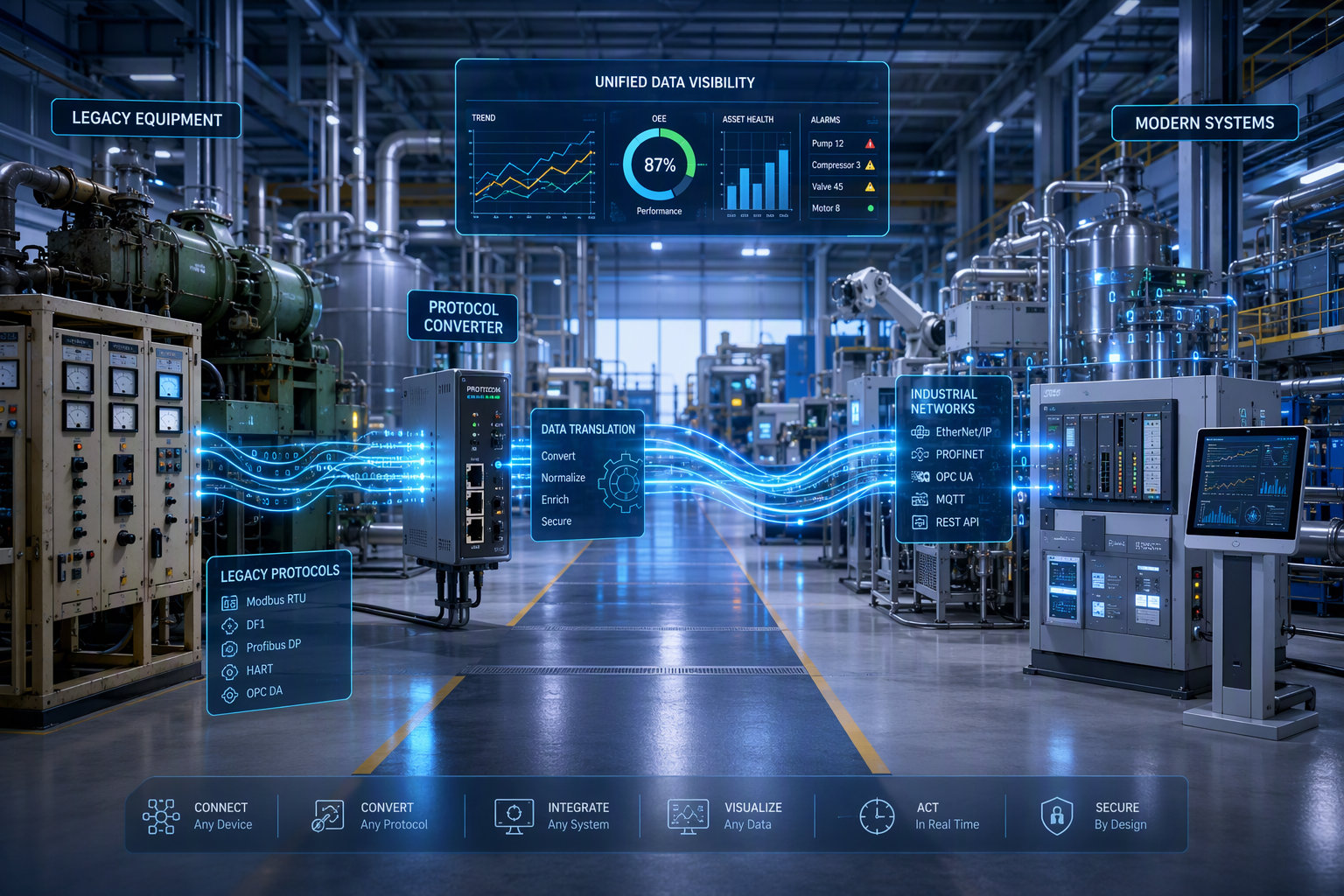
Industrial IoT supports use cases such as machine health tracking, remote troubleshooting, predictive maintenance, and safer field operations. It also connects PLCs, HMIs, SCADA platforms, and distributed control systems into a broader operating environment. This makes smart factories more visible and easier to manage.
Edge computing strengthens this model by helping systems process information closer to the machine source. That supports faster action in real time and reduces delays in decision-making. As more manufacturers pursue connected operations, IIoT and edge computing are becoming core parts of modern factory design and market growth.
Challenges and Considerations in Adopting Automation
Automation can deliver major value, but the automation journey is rarely simple. Companies often face hurdles related to planning, system integration, workforce change, and security. Good results depend on more than buying equipment.
Human input still matters, especially when deciding where to start, how to scale, and how to use data collection effectively. Businesses need a clear view of goals, processes, and gaps before moving ahead. The next sections outline the most common implementation concerns and what they mean in practice.
Common Implementation Obstacles
One common obstacle in industrial automation is starting without a clear roadmap. If a company does not know which processes cause the biggest losses, it may invest in tools that do not solve the right problem. That is why many experts recommend a small pilot before scaling further.
Another issue is disconnected systems. Production data may sit in silos, making it hard to understand how machines, labor, and material flow affect each other. When visibility is limited, decisions about supply chain timing, staffing, and machine use become less reliable.
There is also the challenge of balancing automation with existing work. Some tasks still need human intervention, and many operations still depend heavily on manual labor. In fact, the compiled information notes that a large share of factory tasks remains manual. That means automation must be introduced in ways that fit real workflows, not ideal ones.
Addressing Workforce Transformation
Workforce transformation is one of the biggest concerns in any automation project. People often worry that machines will replace jobs entirely. In reality, many automation systems are introduced to remove repetitive tasks, reduce strain, and free workers for more complex responsibilities.
That shift changes the role of human labor rather than eliminating it in every case. Workers may spend less time on lifting, inspection repetition, or manual reporting and more time on oversight, response, scheduling, and improvement work. This can make daily work safer and more meaningful.
Still, change needs to be managed carefully. Teams need training, clear communication, and support during the transition. Since many factories still rely on people for a large share of tasks, automation works best when it is designed around real operator needs. Strong workforce transformation depends on partnership, not just new hardware.
Cybersecurity and Data Management Concerns
As more factory systems connect to networks, cybersecurity becomes a core concern. Industrial environments now link machines, cloud tools, enterprise systems, and external partners. That creates more value, but it also increases exposure to digital threats.
Production data is especially important because it supports planning, maintenance, and quality decisions. If data acquisition systems are not protected, companies may face operational risk or loss of trust in what their dashboards show. Strong security helps keep connected assets from becoming liabilities.
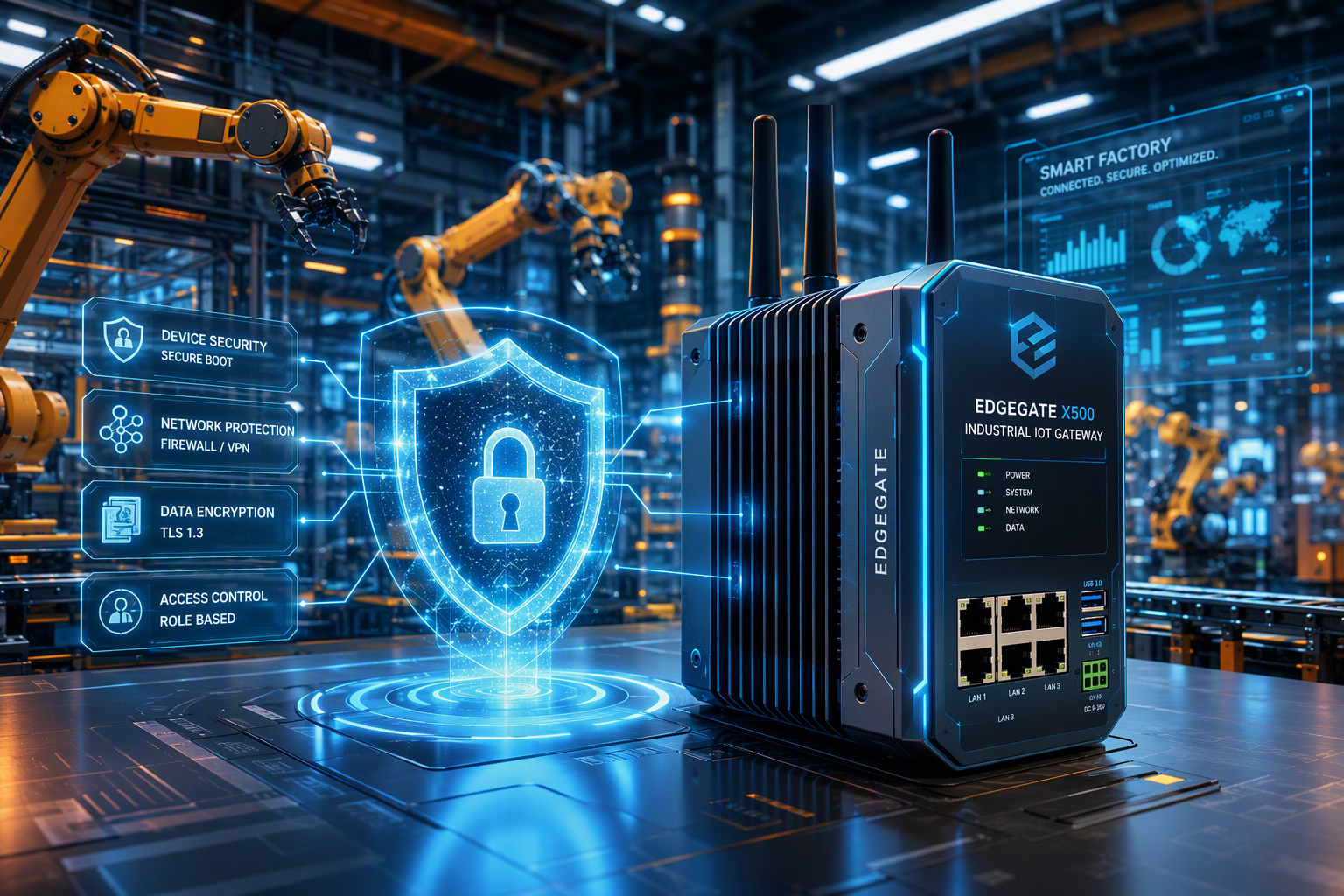
The compiled information highlights built-in protections such as encryption, gateway protection, and cloud services. These features help secure data moving in real time across the operation. Companies also need OT-aware controls, network segmentation, and response planning. As IT and OT continue to converge, safe data management must be treated as part of automation design, not an afterthought.
Industrial Automation and Sustainability Initiatives
Sustainability is becoming part of the business case for automation, not a separate topic. Manufacturers increasingly want systems that improve output while also lowering waste and resource use. That is where automation can make a measurable difference.
By improving energy efficiency, tracking usage, and supporting resource optimization, automated operations can reduce unnecessary consumption across production. This benefit is growing in importance as sustainability becomes a board-level priority. The next sections explain how automation supports that goal in practical ways.
Energy Efficiency and Resource Optimization
Automation helps manufacturers understand how energy and materials are used across production. When systems collect detailed operating data, managers can see where waste happens and where adjustments will have the biggest effect. That visibility supports stronger energy efficiency.
Process automation also makes resource use more precise. Machines can maintain settings more consistently than manual operation in many cases, which helps avoid excess consumption tied to variation, delays, or repeated corrections. Over time, that improves resource optimization and stabilizes operating performance.
These gains are one reason automation solutions are being tied to sustainability goals from the start. Instead of treating efficiency as a separate project, companies can build it into machine control, monitoring, and planning. If your facility wants to reduce waste without sacrificing output, automation can support both priorities at the same time.
Reducing Environmental Impact with Automation
Reducing environmental impact often starts with better control over production processes. When machines run more consistently, there is less scrap, less rework, and fewer unnecessary restarts. That means fewer wasted materials and a lower burden on the overall operation.
Automation technology also supports earlier detection of quality problems. Better quality control helps catch defects before they spread through a batch or a shift. This reduces waste and limits the extra resource use that comes with remaking products or discarding materials.
Another advantage is better measurement. Automated systems create data trails that show how equipment performs and where inefficiencies exist. That makes environmental improvement more practical because teams can act on clear information instead of guesswork. In that way, automation supports sustainability through discipline, visibility, and better daily execution.
Preparing for Automation Investment
Before investing, companies need to understand where they are on the automation journey and what problems they want to solve first. Automation works best when it is tied to clear business needs, not general interest in new technology.
That is why informed decisions matter. The right automation products depend on your processes, current systems, workforce readiness, and data maturity. A thoughtful approach helps avoid wasted spending and improves the chance of measurable gains. The next sections focus on readiness and technology selection.
Assessing Organizational Readiness
Organizational readiness starts with honesty. Are your processes documented? Is machine data available and useful? Do teams understand where losses come from? These questions help reveal whether your business is prepared to apply automation technology effectively.
The compiled information outlines clear maturity levels, from low maturity with little data collection to best-in-class operations where automation systems support the shop floor, supply chain, and decision-making together. Knowing your current level helps you choose the next realistic step instead of aiming too far ahead.
Readiness also includes culture and process discipline. Digital transformation is not only about installing connected devices. It requires people, systems, and goals that can work together. Many companies begin with a small pilot, measure results, and then scale. That approach helps confirm value early while building confidence across the organization.
Choosing the Right Technologies for Your Business
Choosing the right technology starts with your production needs. A high-volume line may benefit from hard automation, while a changing product mix may call for programmable or flexible systems. The goal is to match automation products to the work, not the other way around.
It also helps to think in layers. You may need sensors for data acquisition, PLCs for machine logic, SCADA for visibility, and analytics for improvement. These industrial automation tools should support each other and fit the level of control your operation requires.
Security and integration should be part of the decision too. Control systems are more valuable when they connect cleanly with machine monitoring, production dashboards, and other business platforms. If you choose technology that fits your processes, data maturity, and people, the automation journey becomes more practical and far less risky.
Conclusion
In conclusion, the industrial automation industry is revolutionizing the way manufacturers operate. By embracing technologies like AI, robotics, and smart systems, businesses can significantly enhance productivity, ensure product quality, and improve workplace safety. As you prepare to invest in automation, it's crucial to assess your organization's readiness and choose the technologies that align with your goals. The benefits are clear, from increased efficiency to reduced environmental impact, making it an exciting time to be part of this transformative landscape. If you're looking to learn more or need guidance on how to navigate this journey, feel free to reach out for a free consultation.
Frequently Asked Questions
What are some practical examples of industrial automation?
Practical examples of industrial automation include industrial robots welding on an automotive assembly line, sensors adjusting conditions in pharmaceutical production, CNC machines supporting flexible manufacturing, and connected automation systems monitoring machine performance. These examples show how different types of industrial automation are used across the manufacturing industry.
How does artificial intelligence enhance industrial automation?
Artificial intelligence improves automation technology by finding patterns in machine and process data. With machine learning, manufacturers can support predictive maintenance, detect defects earlier, and strengthen quality control. This helps teams reduce downtime, respond faster to issues, and make more informed decisions using connected production data.
What should companies consider before investing in industrial automation?
Before investing, companies should review organizational readiness, current processes, data maturity, and business goals. The best automation systems are chosen through informed decisions, not guesswork. Businesses should also consider expected cost savings, workforce impact, integration needs, and how the investment fits their wider digital transformation plan.
You might also like