OEE and Predictive Maintenance: Catching Failures Before They Cost Availability
Key Highlights
- Predictive maintenance supports overall equipment effectiveness by protecting availability from unplanned downtime. When using predictive maintenance to improve equipment effectiveness, it is important to track metrics such as machine availability, performance efficiency, and quality rate, which together form the overall equipment effectiveness score. Additional key metrics include the frequency and duration of unplanned downtime, number of potential failures detected through condition monitoring, and the responsiveness of maintenance teams. Monitoring these condition-based metrics, alongside data from IIoT sensors, provides actionable insights for timely interventions that help sustain high OEE.
- Condition monitoring uses vibration, temperature, and oil analysis to spot potential failures early.
- IIoT sensors, CMMS records, and production data strengthen maintenance decisions with better visibility.
- Compared with reactive maintenance, predictive maintenance cuts costly downtime and lowers repair pressure.
- Data analytics and machine learning help teams recognize failure trends and act sooner.
- Better uptime, stronger equipment performance, and fewer breakdowns lead to measurable OEE improvement.
Introduction
In manufacturing, OEE is only as strong as your weakest asset. When a machine fails without warning, equipment performance drops fast and availability takes the hit first. This blog explains how
predictive maintenance helps you protect OEE by finding problems before they become breakdowns. You will see how condition monitoring, sensor data, and maintenance systems work together to improve reliability, reduce downtime, and support better production results across your operation.
Understanding OEE in Modern Manufacturing
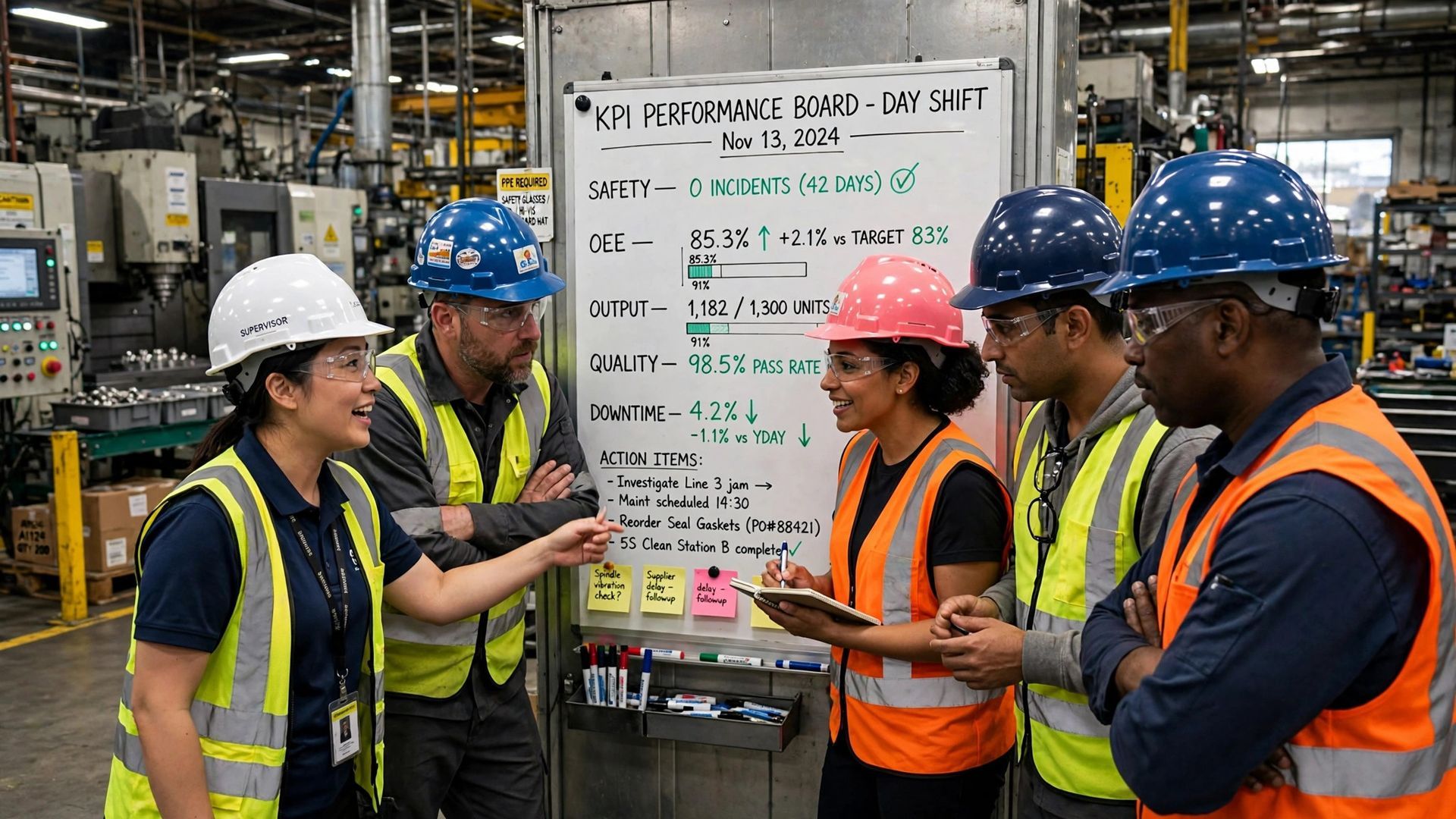
Overall equipment effectiveness measures how well your production process performs against its full potential. The oee calculation combines availability, performance, and quality into one number, giving you a clear view of equipment efficiency across a line, cell, or individual asset.
That matters because a low oee score usually points to hidden losses. The relationship between OEE and predictive maintenance is direct: predictive maintenance helps prevent failure-related losses, especially in availability, so your operation can run with fewer interruptions and more control.
Defining Overall Equipment Effectiveness (OEE)
OEE is a metric used to measure equipment effectiveness in a manufacturing operation. It shows how well a machine or process is being used to produce output during planned production time. A stronger oee score means the asset is running closer to its true capability.
The measure has three parts: availability, performance, and quality. Availability looks at actual run time versus planned time. Performance checks whether the asset is running at its expected rate. Quality tracks how much good product is made without scrap, rejects, or rework.
With oee monitoring, you can see where losses are happening and where to focus improvement work. This is where predictive maintenance connects to OEE. By identifying failure risks before they turn into breakdowns, predictive maintenance protects uptime and improves the availability portion of your overall result.
The Three Pillars: Availability, Performance, and Quality
Every OEE program rests on three pillars. If one weakens, your overall result drops. For maintenance managers and plant leaders, these oee metrics help you see whether losses come from downtime, slow running, or poor product quality.
Track these core measures:
- Availability: planned production time versus actual run time, including downtime and changeovers.
- Equipment performance: speed losses, minor stops, and idling that reduce output.
- Product quality: scrap, rejects, and rework that lower good count.
- OEE metrics together: the combined picture of how efficiently the asset produces saleable output.
When using predictive maintenance to improve OEE, start with the signals tied to availability, then connect them to performance and quality outcomes. A failing bearing can first cause downtime, then reduced speed, and eventually defects. That is why maintenance strategy and OEE should be managed together.
Why OEE Matters for US Manufacturing Operations
For U.S. manufacturers, OEE matters because it turns day-to-day production losses into a number your team can act on. It helps you measure manufacturing efficiency, compare lines, and find where time, speed, or quality is slipping away.
That visibility supports oee improvement in plants where margins, delivery commitments, and quality standards all matter. When you know which assets create the biggest losses, you can prioritize maintenance, training, and process changes with more confidence. It also helps create a stronger competitive edge in markets where output and consistency drive performance.
The key benefits of applying predictive maintenance to OEE show up clearly here. You reduce breakdown risk, improve uptime, lower waste, and make better decisions from real operating data. Those gains strengthen plant performance without needing major added capacity.
The Critical Role of Availability in OEE
Availability is often the fastest way to improve OEE because every minute a machine is down cuts output immediately. When equipment availability drops, schedules slip, labor waits, and downstream processes feel the impact.
Predictive maintenance improves OEE in manufacturing by reducing equipment failures and unexpected breakdowns before they stop production. Good oee data makes those losses visible, which helps your team focus on the assets and failure modes that hurt uptime the most.
How Unplanned Downtime Impacts OEE Scores
Unplanned downtime is one of the biggest threats to OEE because it removes production time you expected to have. The result is immediate: availability falls, output drops, and recovery often takes longer than the stop itself. Even short downtime events can damage the shift’s result.
Those stops create production losses in several ways. You lose run time, delay orders, and often disrupt upstream and downstream equipment. If restart conditions are unstable, performance and quality can suffer too. That is why costly downtime rarely stays limited to one machine or one department.
Yes, predictive maintenance strategies can help reduce downtime and increase OEE. They give you earlier warning so maintenance can be planned during controlled windows instead of after a failure. That shift from response to prevention is essential for protecting availability.
Identifying the Sources of Availability Loss
Availability loss comes from more than major breakdowns. In many plants, repeated small interruptions add up just as fast. If you want better OEE, you need to separate true failure events from planned stops, changeovers, and recurring disruptions tied to asset condition.
Common sources include:
- Equipment breakdowns and failure-related stoppages.
- Changeovers and planned maintenance activities that consume production time.
- Unplanned stops caused by unstable machine condition or operator response delays.
- Hidden issues that later create speed losses or restart instability.
Root cause analysis helps you identify which events are avoidable and which are part of normal operations. One challenge when integrating predictive maintenance with OEE systems is connecting condition signals to downtime codes in a consistent way. Once you do, patterns become easier to see and availability loss becomes easier to prevent.
The Cost Consequences of Equipment Failures
Equipment failures cost more than the repair itself. The most visible hit is lost production time, but the true impact spreads across labor, scheduling, material flow, and delivery performance. A single failure can disrupt an entire shift or delay downstream operations for hours.
The financial effect also shows up in maintenance costs and repair costs. Emergency work usually demands faster response, unplanned parts use, and more pressure on maintenance teams. In many cases, failures also shorten equipment life or trigger related damage in connected components.
One of the key benefits of applying predictive maintenance to OEE is cost control through earlier action. If you catch deterioration before failure, you can plan work, protect uptime, and avoid the heavier cost of breakdown recovery. That strengthens availability while reducing waste across the operation.
Predictive Maintenance: A Game Changer for Availability
Predictive maintenance changes the way you manage asset health. Instead of waiting for failure or relying only on fixed maintenance schedules, you use machine condition and operating data to act when the equipment shows signs of risk.
That makes it a stronger maintenance strategy for availability-driven oee improvement. As a form of proactive maintenance, it helps you reduce surprise stops, plan interventions with less disruption, and protect the production time that matters most. The next sections show how it differs from other approaches and why that matters.
Predictive Maintenance vs. Preventive Maintenance
Predictive maintenance and preventive maintenance both aim to avoid failure, but they work differently. Preventive maintenance is based on time or usage intervals. Predictive maintenance uses equipment condition and data trends to decide when action is needed. Reactive maintenance waits until something breaks.
Here is the practical difference:
- Preventive maintenance follows schedule maintenance rules, even if the asset is still healthy.
- Predictive maintenance responds to condition changes and likely failure patterns.
- Reactive maintenance addresses the problem after the breakdown has already affected production.
There is also a difference between OEE monitoring and predictive maintenance. OEE monitoring tells you where losses happened. Predictive maintenance helps prevent one major source of those losses from happening in the first place. Used together, they give you both measurement and action for better availability.
Principles and Core Technologies of Predictive Maintenance
Predictive maintenance works by tracking asset condition over time and looking for changes that suggest wear, instability, or approaching failure. The goal is simple: detect potential failures early enough to plan work before the machine stops production.
Core technologies often include:
- Condition monitoring tools such as vibration, temperature, and oil analysis.
- Sensor data collected from machines during normal operation.
- Advanced analytics that compare trends, flag anomalies, and support maintenance decisions.
AI is used for predictive maintenance to boost OEE by helping teams analyze larger volumes of operating data faster. Machine learning models can recognize patterns that precede failures, making it easier to target the right intervention at the right time. That improves availability while supporting more efficient maintenance programs.
Aligning Predictive Maintenance with OEE Goals
Predictive maintenance delivers the most value when it is tied directly to your oee goals. If availability is your biggest loss, focus first on assets that create the most downtime. If certain failures also affect speed or scrap, include those links in your maintenance strategy.
This alignment matters because not every machine deserves the same level of monitoring. OEE monitoring helps you identify the critical assets with the biggest operational impact. Then predictive maintenance can be applied where it supports the strongest return in uptime, quality, and maintenance effort.
The key benefits are clearer when both systems work together. You get better prioritization, more targeted continuous improvement, and stronger follow-through from data to action. For plant leaders, that means maintenance is no longer separate from production performance. It becomes part of the OEE improvement plan.
Condition Monitoring and its Impact on Predictive Maintenance
Condition monitoring is the backbone of predictive maintenance. It gives you a way to observe machine health during operation instead of waiting for obvious failure symptoms. That changes maintenance practices from calendar-based work to evidence-based action.
The impact on equipment reliability is significant because early failure detection creates time to plan repairs before production is affected. In practical terms, predictive maintenance improves OEE in manufacturing by using condition monitoring to protect availability and reduce breakdown-related disruption.
Vibration Analysis for Early Failure Detection
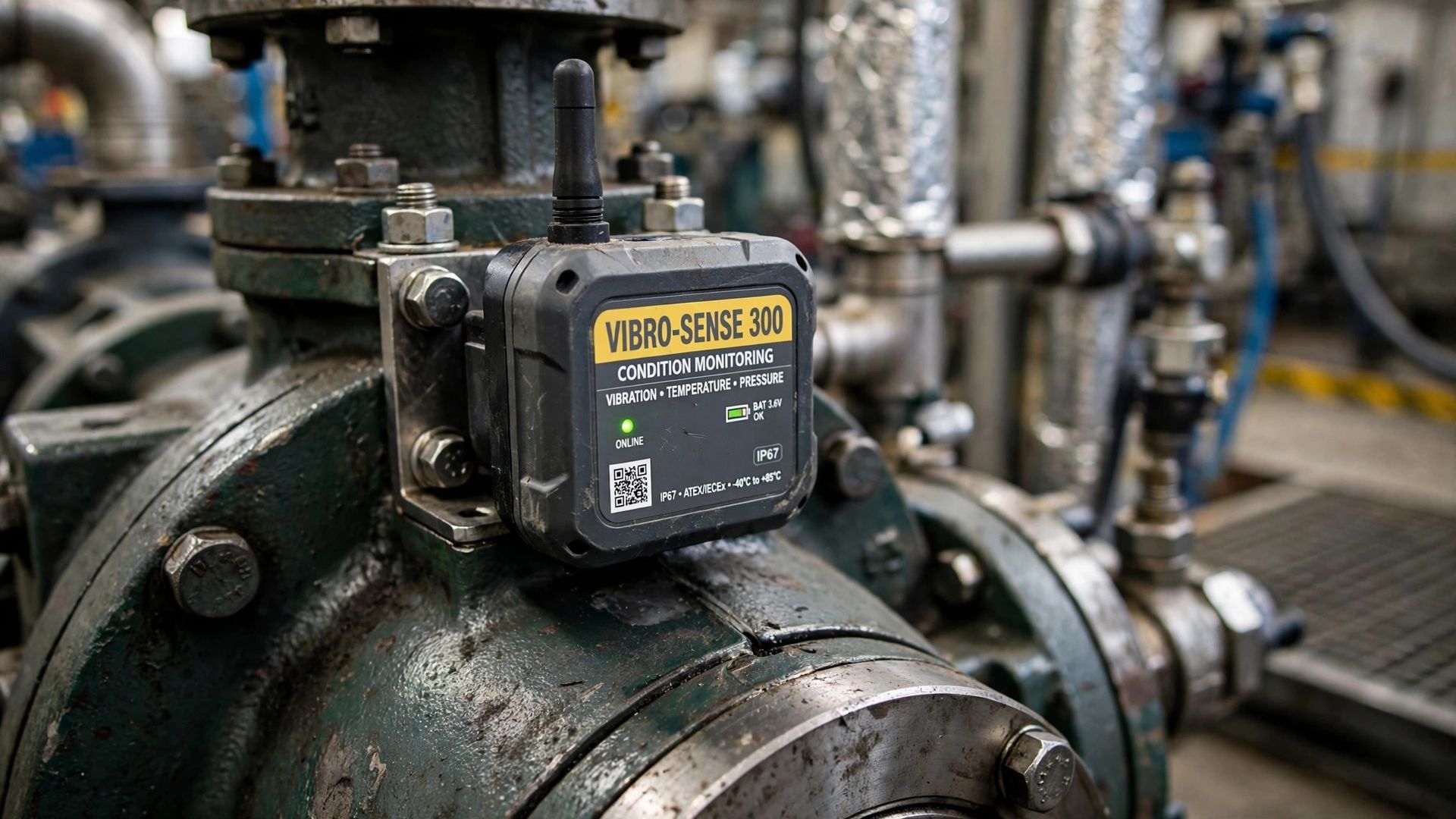
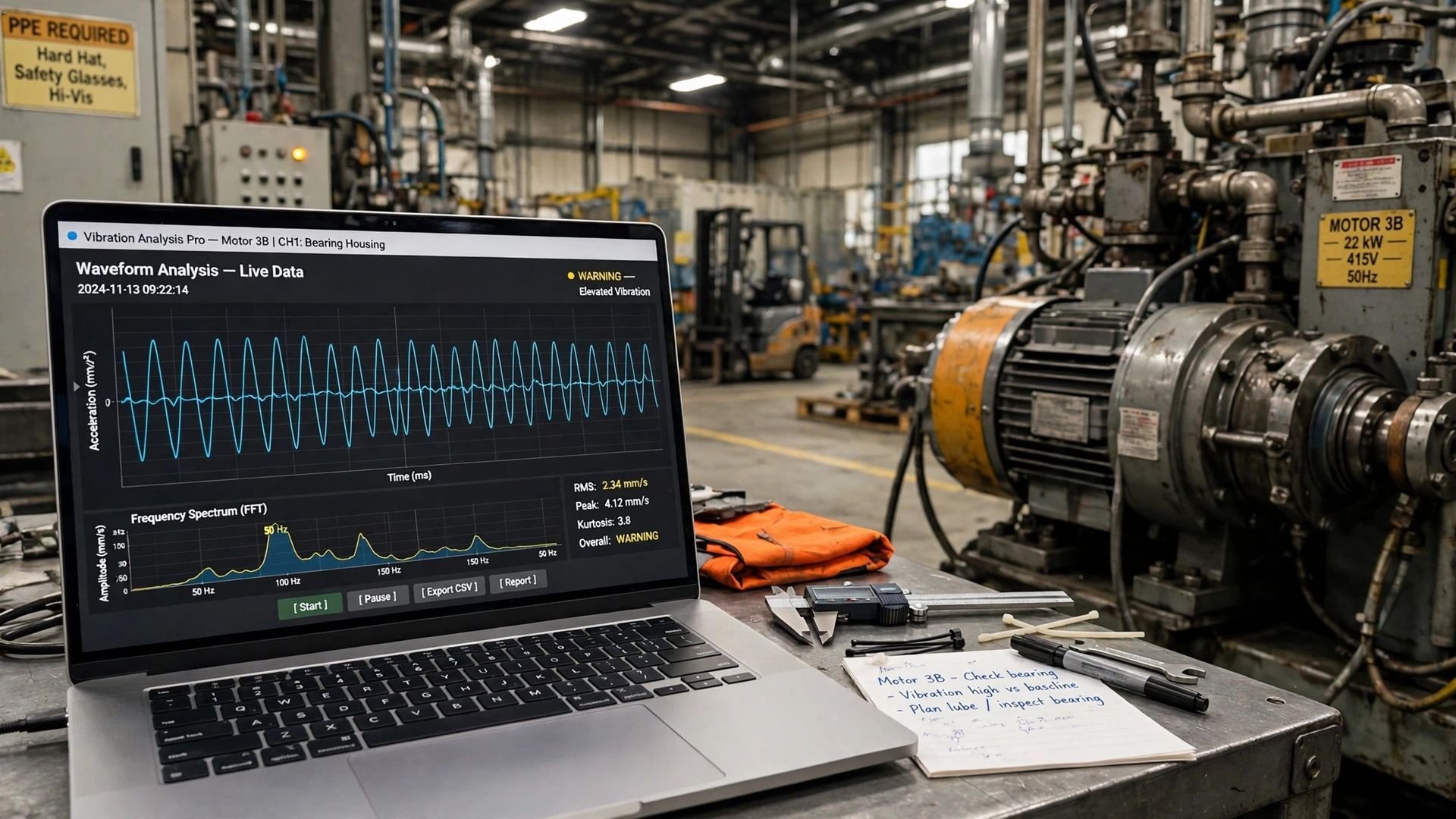
Vibration analysis is one of the most useful tools for monitoring rotating equipment. It helps detect changes in machine behavior that may point to imbalance, looseness, bearing wear, or other developing issues. For many critical assets, it provides an early signal before failure becomes visible.
That makes it valuable for early failure detection in motors, pumps, gearboxes, and similar equipment that support the production process. By trending vibration over time, your team can see whether a condition is stable or worsening. This gives maintenance planners better timing for inspection and repair.
For effective predictive maintenance in modern manufacturing, this type of condition data is essential because it reflects actual machine health. When vibration trends are connected to downtime history and asset criticality, you can build smarter maintenance schedules and reduce avoidable stoppages.
Temperature Monitoring in Critical Machinery
Temperature monitoring helps you track heat changes that often appear before equipment failure. Excess heat can point to friction, lubrication problems, electrical issues, or overloaded components. In critical machinery, those signals are useful because they are easy to trend and often show up early.
You can use fixed sensors, connected devices, or routine checks to watch for changes in operating temperature. What matters most is consistency. When normal ranges are defined, deviations become clear and easier to act on. That turns raw readings into practical maintenance information.
Temperature data is essential for effective predictive maintenance because it connects directly to equipment health and operational efficiency. When teams use it to adjust maintenance schedules before a failure occurs, they reduce surprise stops and help protect the availability factor in OEE.
Oil Analysis and Lubrication Health
Oil analysis gives you a view inside the machine without taking it apart. By checking lubricant condition and contamination levels, you can identify wear, degraded oil, or process-related issues that may lead to damage. This is especially useful for gearboxes, hydraulic systems, and other lubricated assets.
Lubrication health matters because poor oil condition can increase friction, heat, and wear long before a visible failure happens. Those problems reduce equipment efficiency and may also create quality issues if machine motion becomes unstable or product handling is affected.
As part of predictive maintenance, oil analysis provides essential data about the condition of both the lubricant and the machine. It helps your team plan service based on actual need, protect asset life, and reduce the chance that hidden internal wear turns into downtime or scrap.
Leveraging IIoT, Sensors, and Data Collection
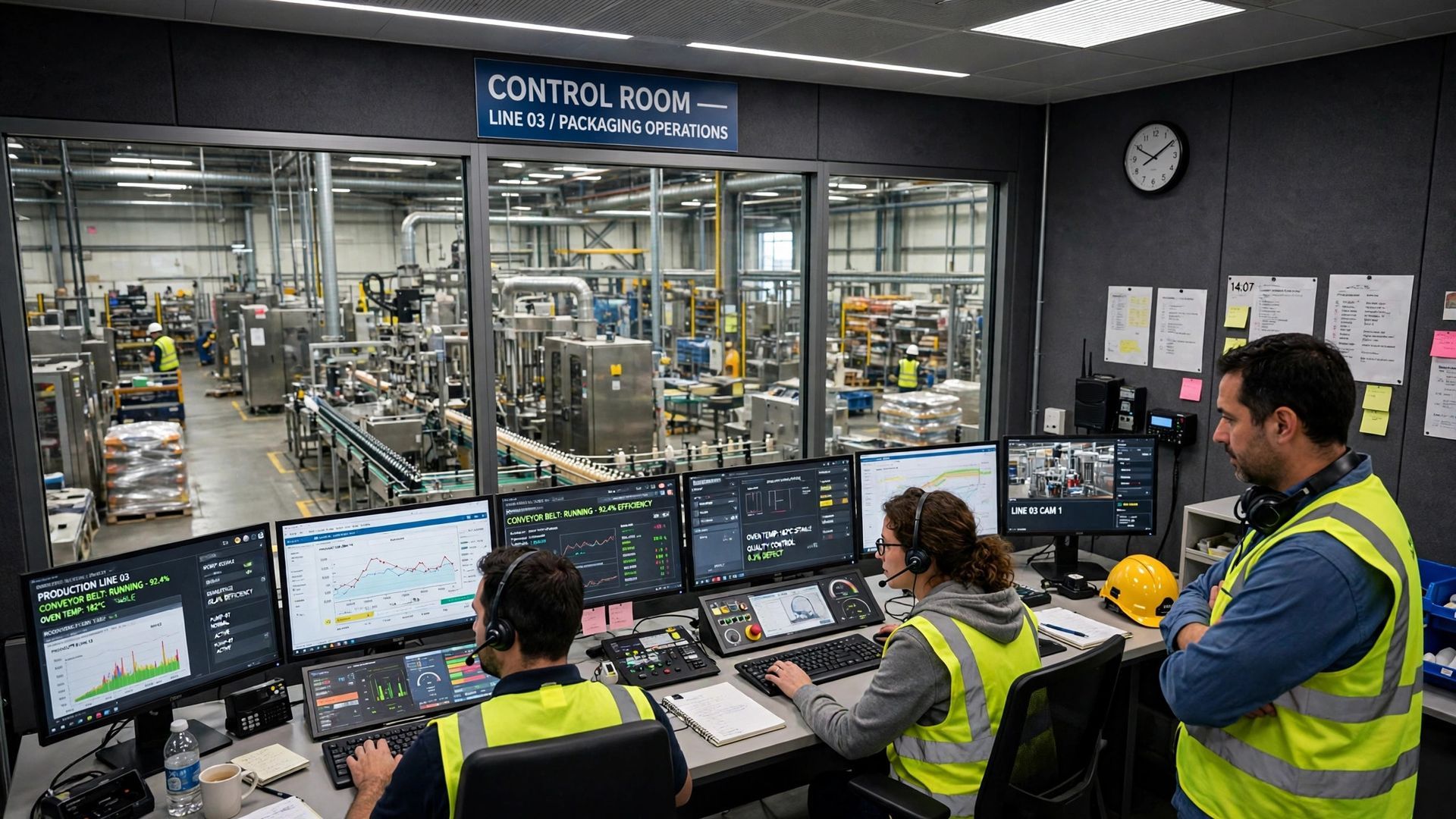
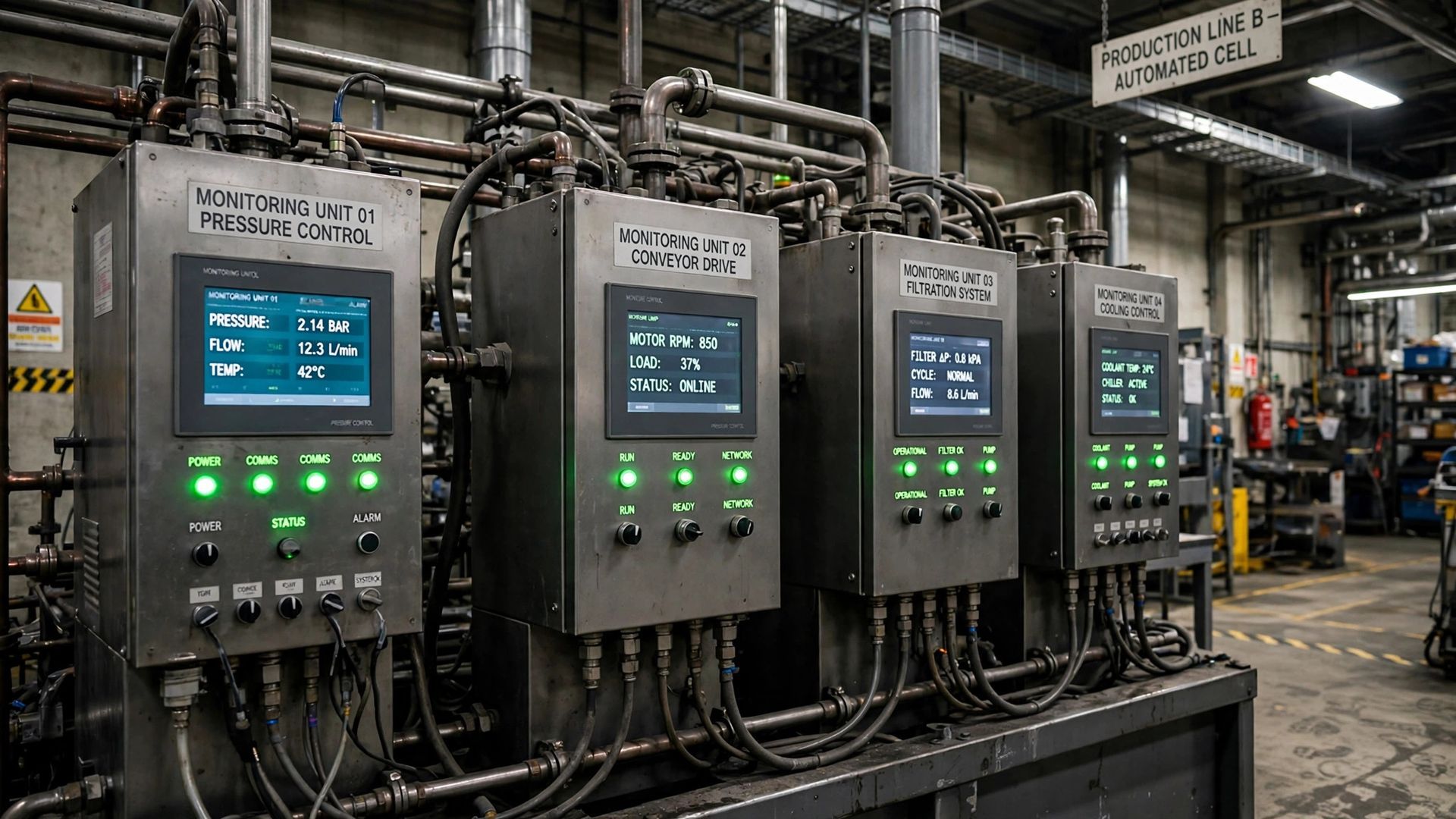
IIoT technologies help with predictive maintenance for OEE by making equipment condition easier to capture in real time. IIoT sensors collect operating data directly from manufacturing equipment, reducing the delay between machine behavior and maintenance awareness.
That stronger data collection improves visibility across lines and assets. Instead of relying only on manual checks, your team can monitor patterns continuously and respond sooner. The next sections look at the sensor types, software systems, and decision-making benefits that support this approach.
Types of Sensors Used for Condition Monitoring
The right sensors depend on the asset, the failure mode, and the role that equipment plays in your production process. In predictive maintenance, sensors support condition monitoring by turning machine behavior into measurable signals your team can trend over time.
Common examples include:
- Vibration sensors for rotating equipment and bearing-related issues.
- Temperature sensors for heat changes in motors, drives, and other assets.
- Oil condition tools that support lubrication health checks.
- IoT sensors that provide continuous visibility and remote monitoring support.
The essential data for effective predictive maintenance comes from sensors that match the likely failure risks of the asset. That is why sensor choice should be part of your maintenance programs, not an afterthought. When the sensor strategy fits the machine, the data becomes more actionable and more useful for OEE improvement.
Leveraging Data from CMMS and ERP Systems
Sensor readings become far more useful when you combine them with records from a CMMS and ERP systems. These platforms hold the maintenance history that helps explain why failures repeat, how often assets receive service, and which work orders are tied to the biggest downtime events.
For maintenance management, that context matters. A trend in vibration data means more when it is linked to previous repairs, spare parts usage, and failure frequency. It also helps teams track the metrics that matter most: downtime by asset, repeat failures, planned versus unplanned work, and OEE impact tied to availability losses.
Integration can still be challenging if systems store data in different formats or departments use different naming rules. Even so, connecting CMMS records, ERP information, and condition data creates a better picture for prioritizing action and improving maintenance decisions.
Enabling Real-Time Insights for Maintenance Decisions
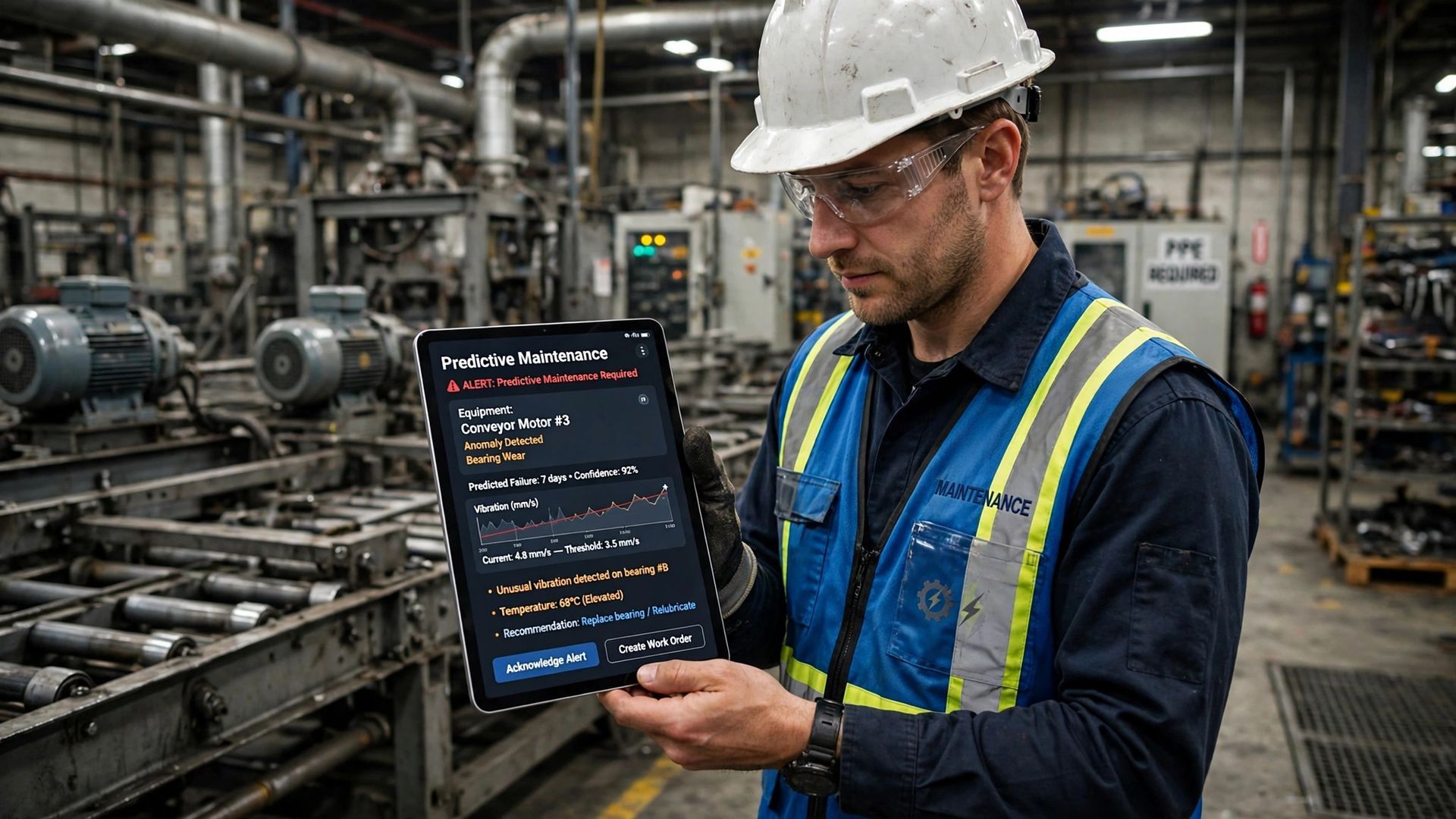
Real-time visibility changes the speed of maintenance decisions. Instead of learning about a developing issue after a shift report or breakdown call, your team can see condition changes while the asset is still running. That gives maintenance teams more time to respond with less production disruption.
These valuable insights are especially useful when assets are critical to line flow. If temperatures rise, vibration shifts, or other indicators move outside normal ranges, teams can assess risk and decide whether to inspect, monitor closely, or adjust maintenance schedules. The response becomes more deliberate and less reactive.
This is one of the clearest ways IIoT technologies help with predictive maintenance for OEE. Real time data shortens the gap between warning and action, which supports better planning and stronger availability. For plants focused on uptime, that faster awareness is a practical advantage.
Early Warning Signs and Predictive Analytics
Predictive analytics helps your team move from observation to anticipation. It reviews condition and operating trends to identify early warning signals that may point to potential issues before they become equipment breakdowns.
That matters for OEE because earlier action protects availability and reduces disruption. AI supports this process by finding patterns in large data sets, helping maintenance teams recognize failure risk sooner and plan the right response before production is interrupted.
Common Patterns Indicating Potential Failures
Machines usually show signs before they fail. The challenge is knowing which changes matter and which are normal variation. That is where pattern recognition and data analysis help. They allow your team to compare current readings with historical trends and identify signals linked to potential failures.
Common patterns include:
- Rising vibration levels on rotating assets.
- Increasing operating temperature over time.
- Oil condition changes that suggest wear or contamination.
- Repeated minor abnormalities that appear before a larger failure event.
The most useful predictive maintenance data is the data that shows change over time, not just one reading in isolation. When these patterns are tracked consistently, you can schedule maintenance before the problem turns into downtime. That keeps interventions controlled and supports a more stable production environment.
AI and machine learning improve predictive analytics by processing more data than most teams can review manually. They look for recurring combinations of signals, operating conditions, and past failures that tend to appear before downtime events. This helps identify risk earlier and more consistently.
In practical terms, machine learning models support predictive maintenance by recognizing patterns in sensor trends, maintenance history, and oee data. If the same warning sequence has led to failure before, the model can flag it again and support a faster decision. That does not replace maintenance expertise. It strengthens it.
This boosts OEE by helping your plant prevent availability losses before they occur. When the system catches likely failure trends early, work can be planned during better windows. That reduces surprise stoppages and improves the usefulness of the data your team already collects.
Integrating Analytics Within the Production Environment
Analytics delivers value when it fits the way your plant actually works. In the production environment, that means connecting condition data, downtime records, and OEE measures so operators, maintenance, and leadership can work from the same picture of asset performance.
Advanced analytics helps turn raw signals into valuable insights by showing trends, highlighting abnormal behavior, and linking failure risk to operational impact. When that information is available in the flow of work, teams can prioritize the assets that create the biggest availability losses instead of reacting to the loudest issue.
The key benefit for OEE improvement is better decision-making. You can focus maintenance on the equipment that matters most, support continuous improvement with better evidence, and reduce the gap between data collection and action. That is how analytics becomes useful on the plant floor.
Measurable Benefits of Predictive Maintenance for OEE
The benefits of predictive maintenance are measurable because they affect the losses OEE already tracks. When failures are caught earlier, availability improves, breakdowns decrease, and equipment reliability becomes more consistent across the production schedule.
That leads to clearer oee improvement and real cost savings. Plants can reduce emergency work, avoid lost production time, and make better use of maintenance labor. The following sections break down those gains in uptime, asset life, and operational efficiency.
Reduced Breakdowns and Improved Machine Uptime
Yes, predictive maintenance strategies can help reduce downtime and increase OEE because they lower the chance of sudden failure. When your team sees condition changes early, it can act before the issue becomes a full shutdown. That is the core reason plants see reduced breakdowns with this approach.
The effect on machine uptime is direct. Fewer surprise failures mean stronger equipment availability and less disruption to the schedule. Even when service is required, the work is more likely to happen during planned windows instead of in the middle of production. That makes the overall system more stable.
Over time, better maintenance schedules lead to better OEE metrics. Availability improves first, but performance often benefits as well because equipment runs in healthier condition. For plant managers, that means a more reliable line and a more predictable output plan.
Enhanced Asset Lifespan and Lower Repair Costs
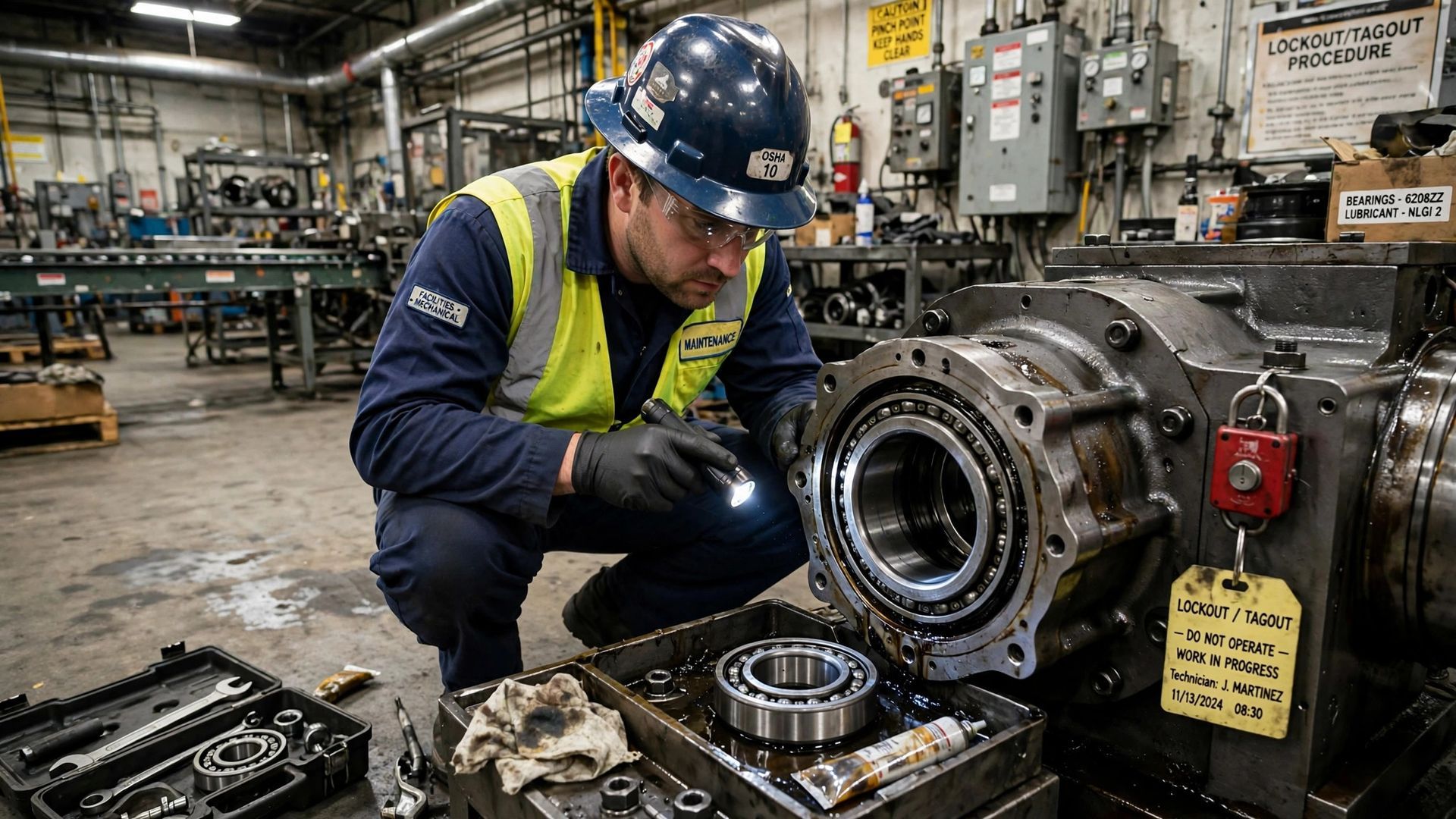
Catching problems earlier helps extend asset lifespan because damage is addressed before it becomes severe. A bearing replaced at the right time is very different from a failure that damages the shaft, housing, or connected components. Small interventions often prevent larger mechanical consequences.
That is why predictive maintenance can lower repair costs and overall maintenance costs. Instead of responding to equipment breakdowns under pressure, your team can plan labor, parts, and timing more effectively. The work is usually less disruptive, and the asset is less likely to suffer secondary damage.
The value shows up in return on investment as well. Longer asset life, fewer emergency events, and more stable production all support better financial performance. For manufacturers focused on OEE, this is not just a maintenance win. It is an operational win tied to availability and cost control.
Supporting the OEE Pillar: Linking to Empowered Automation’s OEE Solutions
If your goal is to connect predictive maintenance with measurable plant performance, OEE needs to be part of the conversation. Empowered Automation’s OEE solutions help teams see where losses occur so they can prioritize the maintenance and process changes that matter most. You can explore that broader view here: https://www.empoweredautomation.com/oee.
A simple way to think about the connection is below:
OEE focus area
What to track with predictive maintenance
Operational value
Availability
Unplanned downtime, failure frequency, equipment availability
Protects uptime and reduces surprise stops
Performance
Speed losses, minor stops, unstable running conditions
Improves output consistency
Quality
Defects, rework, scrap linked to machine condition
Supports product quality and less waste
OEE monitoring
Trend changes by asset, line, and time period
Guides oee improvement priorities
For maintenance leaders, the value is practical. Better oee monitoring helps you see which assets deserve the most attention, while predictive maintenance helps you act before losses grow. Together, they support stronger operational efficiency and better use of plant resources.
Challenges and Best Practices in Implementation
Most plants see the value of predictive maintenance quickly, but implementation challenges are common. Data silos, inconsistent records, and disconnected systems can make it hard to link machine condition with OEE losses in a reliable way.
The best practices are straightforward: standardize data, focus first on critical assets, and involve maintenance teams early. Success depends on more than sensors. It requires aligned workflows, usable information, and a shared understanding of how maintenance actions support availability and OEE.
Overcoming Integration Barriers and Data Silos
One of the biggest barriers in predictive maintenance programs is disconnected information. Condition data may live in one platform, downtime codes in another, and work history in a separate maintenance management system. These data silos make it harder to connect failure signals with actual OEE losses.
A practical way forward is standardization. Use consistent asset naming, failure coding, and event definitions so data from different systems can be compared. Start with critical equipment where the value of better oee monitoring is easiest to prove. That keeps the integration effort focused and more manageable.
When these integration barriers are reduced, your team gets a clearer picture of asset health and operational impact. Instead of treating predictive maintenance and OEE as separate efforts, you can connect them through common data and common priorities. That leads to better decisions and stronger availability results.
Change Management and Workforce Engagement
Engaging your workforce in change management is vital for maximizing overall equipment effectiveness (OEE). By leveraging predictive maintenance techniques, employees can be trained to utilize condition monitoring systems to detect early warning signs in equipment performance. Implementing a computerized maintenance management system (CMMS) allows for streamlined data collection from sensors, enabling maintenance teams to analyze equipment reliability and address potential failures proactively. This shift not only encourages a culture of continuous improvement but also results in fewer breakdowns, ultimately raising OEE and protecting availability. Discover more about OEE here.
Conclusion
Predictive maintenance serves as a cornerstone for enhancing overall equipment effectiveness by ensuring availability and minimizing unexpected breakdowns. Through advanced analytics, condition monitoring—including vibration, temperature, and oil analysis—equipped with IoT sensors, teams can detect early warning signs of equipment failures. This proactive approach reduces unplanned downtime and associated maintenance costs while improving equipment performance. By embracing a computerized maintenance management system (CMMS) alongside predictive analytics, organizations can achieve significant improvements in manufacturing efficiency and customer satisfaction. For deeper insights into OEE, explore more at
OEE pillar page.
Frequently Asked Questions
How does predictive maintenance directly improve OEE Availability?
Predictive maintenance enhances OEE availability by identifying potential equipment failures before they occur, reducing unplanned downtime. This proactive approach ensures that machinery operates at optimal levels, leading to improved efficiency and productivity, ultimately increasing overall equipment effectiveness in manufacturing processes.
What data is essential for effective predictive maintenance in modern manufacturing?
Essential data for effective predictive maintenance includes machine performance metrics, historical failure data, environmental conditions, and real-time sensor readings. This information enables manufacturers to predict failures accurately, optimize maintenance schedules, and enhance overall equipment effectiveness (OEE). Proper analysis of this data is crucial for success.
Can you share a real-world example of predictive maintenance boosting OEE in US manufacturing?
One notable example is General Electric, which implemented predictive maintenance in their jet engine manufacturing. By utilizing IoT sensors and analytics, they reduced unplanned downtime by 10%, significantly enhancing overall equipment effectiveness (OEE) and optimizing production processes across multiple facilities.
oee predictive maintenance
You might also like