OEE + ERP and MES Integration: Where OEE Data Should Flow
Key Highlights
- OEE data should move both ways between each ERP system and MES integration layer.
- ERP handles planning, orders, and schedules, while MES drives manufacturing operations on the floor.
- Clean information flow improves production efficiency by aligning planned work with actual performance.
- OEE dashboards should combine live execution results with business context for better action.
- Strong data models, clear interfaces, and defined ownership reduce integration errors.
- Better connectivity and cleaner records lead to more accurate OEE data and faster decisions.
Introduction
If your overall equipment effectiveness numbers are built on disconnected systems, your team is likely making decisions from partial facts. In many manufacturing operations, planners work from stale schedules, supervisors catch issues late, and OEE data does not match what is happening on the floor. That gap matters. When ERP, MES, and OEE reporting stay connected, you get a clearer view of execution, faster response to problems, and a stronger base for improving output, cost, and daily performance.
Understanding OEE, ERP, and MES in U.S. Manufacturing
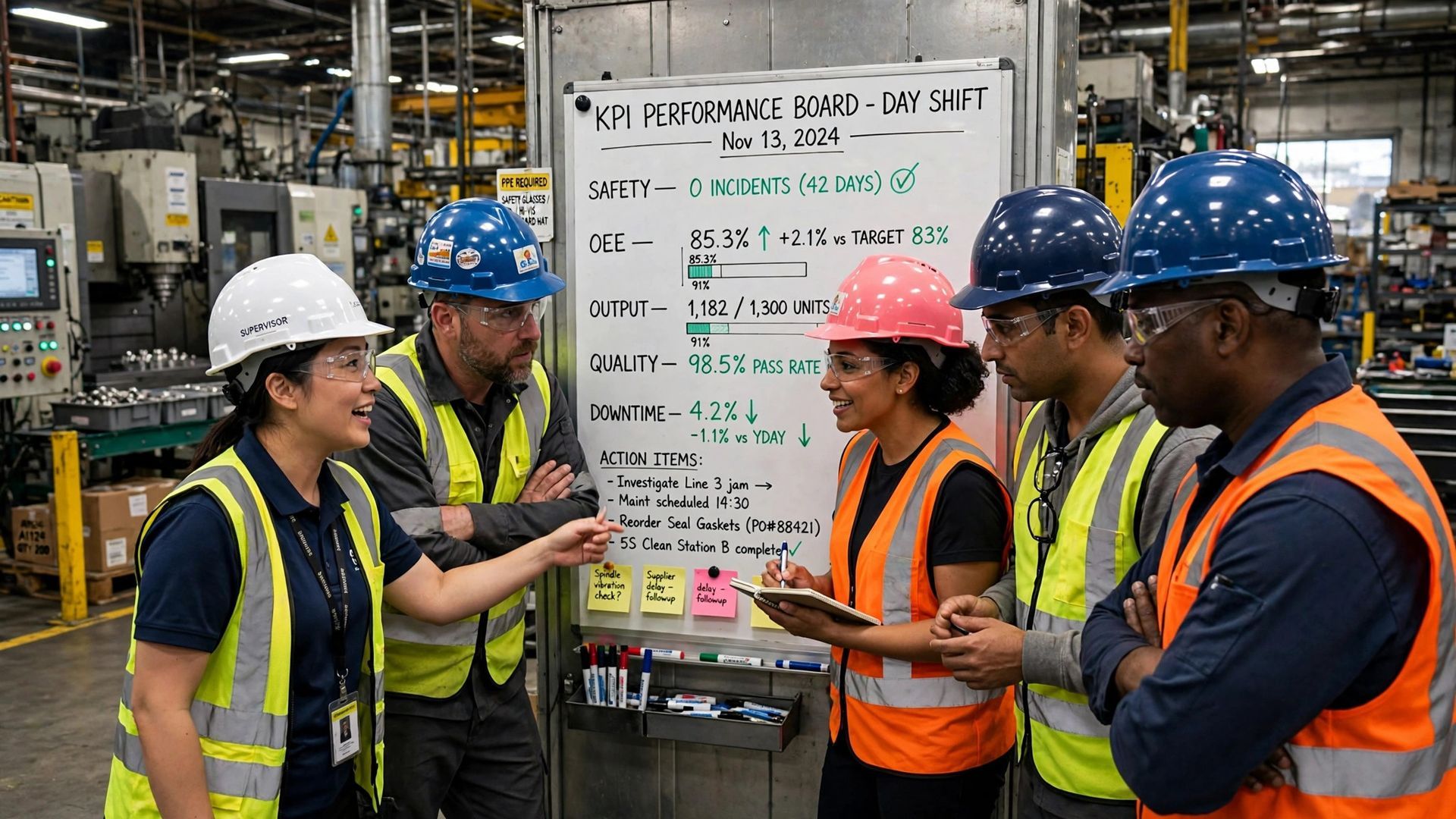
In U.S. manufacturing, OEE measures how well equipment performs during actual production. It depends on accurate production data from the shop floor, not estimates. If that data is late or incomplete, OEE becomes less useful for day-to-day manufacturing operations.
At the same time, enterprise resource planning supports business planning, while a manufacturing execution system manages production execution. The ERP system focuses on orders, inventory, and wider business systems. MES systems focus on what is happening now. To keep both layers aligned, you need clear data movement between planning and execution.
Overall equipment effectiveness is a simple way to see how much productive capacity your plant is really using. It combines factors tied to equipment availability, run performance, and quality output. For plant leaders, that makes it one of the clearest signals of production efficiency.
On the production floor, OEE helps expose hidden loss. A machine may be scheduled for eight hours, but breakdowns, slow cycles, or scrap can cut useful output sharply. Without that visibility, the manufacturing process looks healthier than it is.
This is where integration improves manufacturing productivity. When OEE is tied to ERP and MES, the number reflects actual conditions, not delayed manual reports. Planners can react to downtime sooner, supervisors can see the impact on output, and continuous improvement teams can focus on the losses that matter most.
Core Functions of ERP in Plant Operations
Enterprise resource planning supports the business side of plant operations. It manages production orders, procurement, finance, inventory, and broader supply chain coordination. In short, it tells the business what should be made, when it should be made, and what resources are expected to be available.
That makes ERP critical for business processes, but it is not designed to run the shop floor in real time. It works best when it receives reliable operational data from execution systems. If that input is wrong, inventory accuracy suffers and schedules drift away from reality.
So what is the main difference between ERP and MES in a manufacturing environment? ERP plans and coordinates at the business level. MES tracks and controls execution at the plant level. ERP needs shop floor truth. MES supplies it. Integration keeps those roles clear and useful.
MES Capabilities for Modern Shop Floors
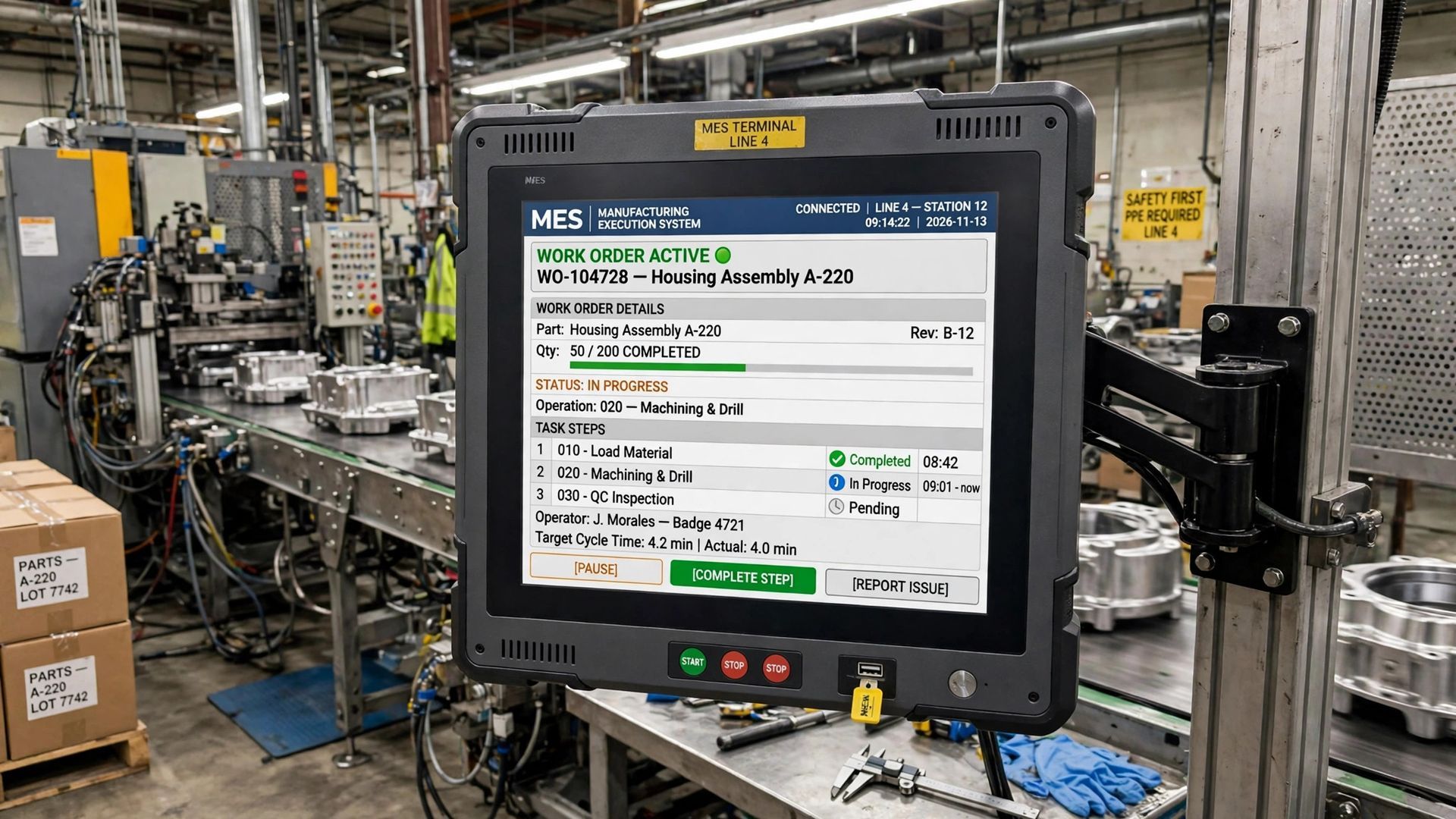
A manufacturing execution system is built for real-time production execution. It captures shop floor data such as machine status, work order progress, labor activity, scrap, quality events, and actual cycle time. That gives operations teams a much clearer picture of what is happening now.
Good MES software also supports process control. It helps track routing steps, work-in-progress, and production flow as raw materials move toward finished goods. In regulated or complex environments, it supports genealogy, traceability, and tighter quality checks.
The key benefit of linking MES and ERP systems for production management is that planning no longer runs on assumptions. ERP sends schedules, BOMs, and work instructions down. MES sends actual results back up. That closed loop improves scheduling, material use, response time, and confidence in performance reporting.
Key Differences Between ERP and MES Systems
An ERP system supports business planning across finance, inventory, purchasing, and customer orders. It organizes business processes and helps leadership coordinate manufacturing operations at an enterprise level. Its view is broad and usually less immediate.
MES systems work closer to shop floor execution. They track production as it happens, capture actual performance, and expose disruptions that business planning alone cannot see. Knowing that difference is essential when you decide where OEE data belongs and which system should own each step in the flow.
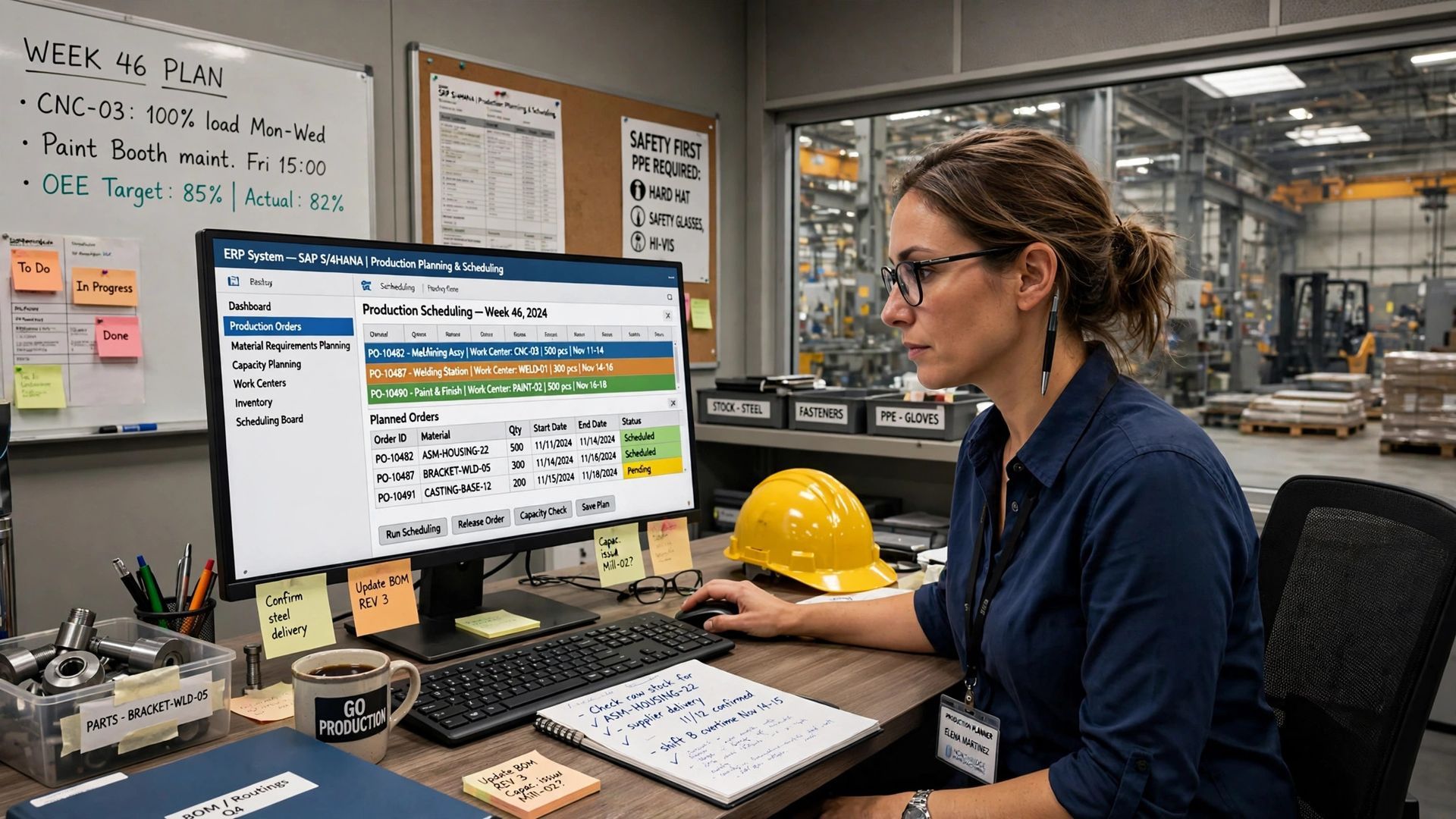
Production planning starts with demand, capacity assumptions, inventory, and due dates. That is the ERP side. It creates work orders, sets priorities, and supports business planning by deciding what the plant is expected to run.
Production execution is different. It deals with what really happens once those work orders hit the floor. Machines stop. Cycle times vary. Scrap appears. Operators rework parts. MES captures that production data as events unfold.
That is the practical difference between ERP and MES systems in a manufacturing environment. ERP should own planned values such as schedule, order, BOM, and routing release. MES should own execution facts such as start times, completed quantity, scrap, labor actuals, and status. OEE should be calculated from execution facts, then shared upward so planning reflects reality.
oee erp mes integration
On the shop floor, teams need real time insight. They need to know if a line is down, whether output is slipping, and how fast a quality issue is spreading. MES and machine connectivity are built for that speed.
Business systems need a different view. Leaders want visibility into orders, inventory, costs, fulfillment risk, and customer impact. Those business operations do not always require second-by-second updates, but they do require trusted input from production.
When you integrate the two, manufacturing productivity improves because each group sees the right level of detail. Operators and supervisors act on current events. Planners and managers use summarized performance inside business systems. That balance raises operational efficiency without overwhelming ERP with raw event traffic it does not need to own directly.
How Boundaries Impact OEE Data Flows
System boundaries answer a simple question: which platform owns which record? Without that answer, OEE information flows become messy. The same downtime, count, or status may be entered twice, stored twice, or calculated differently across systems.
Manufacturers usually define system boundaries by separating planning from execution. ERP owns orders, schedules, inventory planning, and cost structures. MES owns machine and labor events, actual quantities, scrap, cycle performance, and other shop floor execution records. OEE dashboards consume that execution data and present it for analysis.
Clear boundaries also support change management and data integrity. People know where to enter information and where not to. Interfaces become easier to govern. When ownership is unclear, integration projects stall, numbers get challenged, and improvement work slows because nobody trusts the source.
The Importance of Seamless OEE Data Flow
Seamless OEE information flow matters because OEE is only as reliable as the operational data feeding it. If downtime, counts, or quality events arrive late, your score no longer reflects the real manufacturing process.
That affects far more than reporting. Real time information flows improve data accuracy, help teams respond within the shift, and keep planning aligned with execution. The next sections show how connected systems break down silos, support faster decisions, and strengthen continuous improvement work.
Reducing Data Silos Across Operations
Disconnected systems trap useful facts inside separate teams and tools. One group sees schedules, another sees machine states, and a third sees quality results. Those data silos make it harder to understand what is happening across operations.
That is why seamless information flow between OEE, MES, and ERP software matters so much. With stronger MES integration, the same production event can support execution, planning, costing, and performance analysis. You reduce manual reconciliation and give every function a more consistent picture of business processes.
Key improvements often include:
- Fewer duplicate entries across production and business teams
- Faster movement of execution results into planning data
- Better visibility across operations and support functions
- Cleaner information flows for OEE reporting and follow-up action
When those silos come down, teams spend less time arguing over numbers and more time fixing causes.
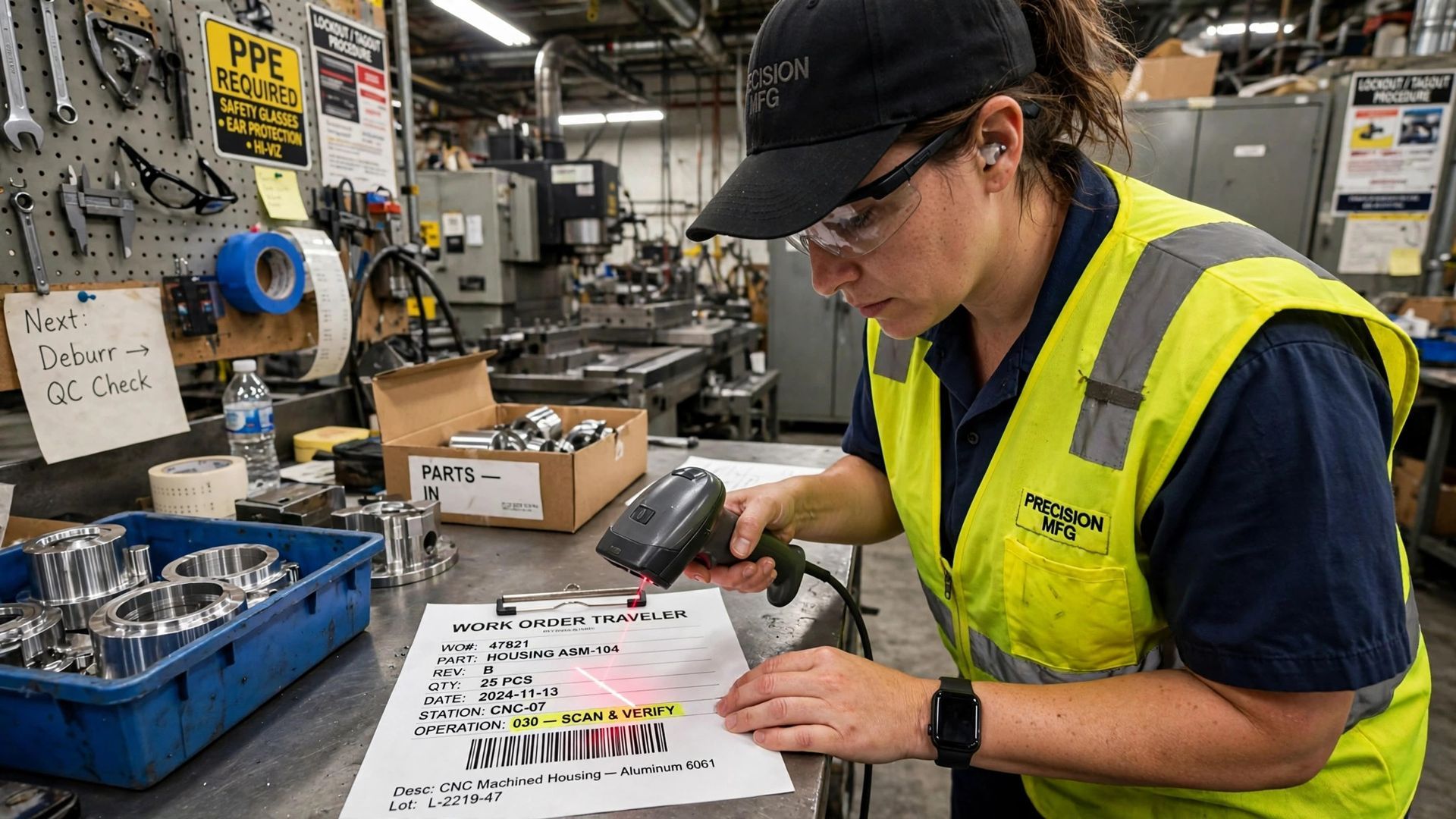
Achieving Real-Time Decision Making with OEE Integration
Real time decisions depend on current facts. If a machine goes down and ERP finds out tomorrow, the schedule is already wrong. If scrap rises during the shift and nobody sees it until day end, the cost keeps growing.
OEE integration helps by turning raw shop floor data into usable signals as events occur. MES captures actual performance. OEE logic organizes that performance into availability, speed, and quality losses. Dashboards and alerts then support better decisions on the floor and in planning.
That improves productivity because teams can respond while the issue still matters. Supervisors can reassign work. Planners can adjust priorities. Improvement teams can spot recurring loss patterns and use advanced analytics on trustworthy inputs. Faster action does not just speed up response. It prevents avoidable output loss from becoming normal.
Supporting Continuous Improvement Initiatives
Continuous improvement depends on stable facts over time. If downtime reasons are incomplete or quality records live outside the production system, teams struggle to see where losses truly begin. That weakens corrective actions and slows process optimization.
Integrated OEE with MES and ERP helps track equipment effectiveness by tying equipment performance to schedule context, material use, and quality management outcomes. You can see whether a recurring stop affects one work center, one product, one shift, or one supplier-driven condition.
For continuous improvement teams, that means better production efficiency work. They can validate whether a change reduced loss, whether a process update improved first-pass quality, and whether equipment issues are affecting delivery risk. Improvement stops being a guessing exercise and becomes a data-backed operating habit.
What OEE Data Should Move Between Systems
Not all OEE data belongs everywhere. The best approach is to keep detailed event capture close to execution, then pass only needed production data between mes systems, the erp system, and reporting tools.
For most plants, ERP should send planned information down, while MES should send actuals back up. OEE dashboards should combine those inputs without replacing source ownership. That structure improves data accuracy and keeps each platform focused on what it does best.
Essential OEE Metrics Shared Between MES and ERP
In an integrated setup, the ERP system does not need every machine event, but it does need the execution facts that affect schedule, inventory, cost, and customer commitments. MES integration should move those essential metrics upward in a controlled way.
For OEE, the most useful shared data comes from the shop floor and reflects actual results rather than planned assumptions. These records help ERP compare expected performance with what was delivered and help dashboards explain loss clearly.
Common shared items include:
- Actual quantities produced, completed, and scrapped
- Downtime totals and coded stop reasons
- Actual cycle time, run time, and part counts
- Quality results, rework totals, and labor actuals
That is the data typically shared between MES and ERP systems. MES remains the source for execution detail. ERP uses the summarized results for planning, inventory, costing, and order status.
Data Points Driving Accurate Production Schedules
Accurate production schedules depend on more than open capacity in a planning screen. They depend on trusted production data from yesterday, this shift, and sometimes the last hour. Without that, work orders are released based on theory, not plant conditions.
The most important schedule-driving data points are actual machine availability, current work-in-progress, cycle performance, scrap, labor consumed, and completed quantity. When those facts move from MES into ERP, planners can revise production schedules using current constraints instead of historical averages alone.
This improves operational efficiency because the schedule becomes more realistic. It also improves data accuracy inside ERP, especially for inventory and promise dates. In an integrated setup, the point is not to flood planning tools with raw events. It is to send the execution facts that change what the plant can finish and when.
Role of OEE Dashboards in Reporting and Analysis
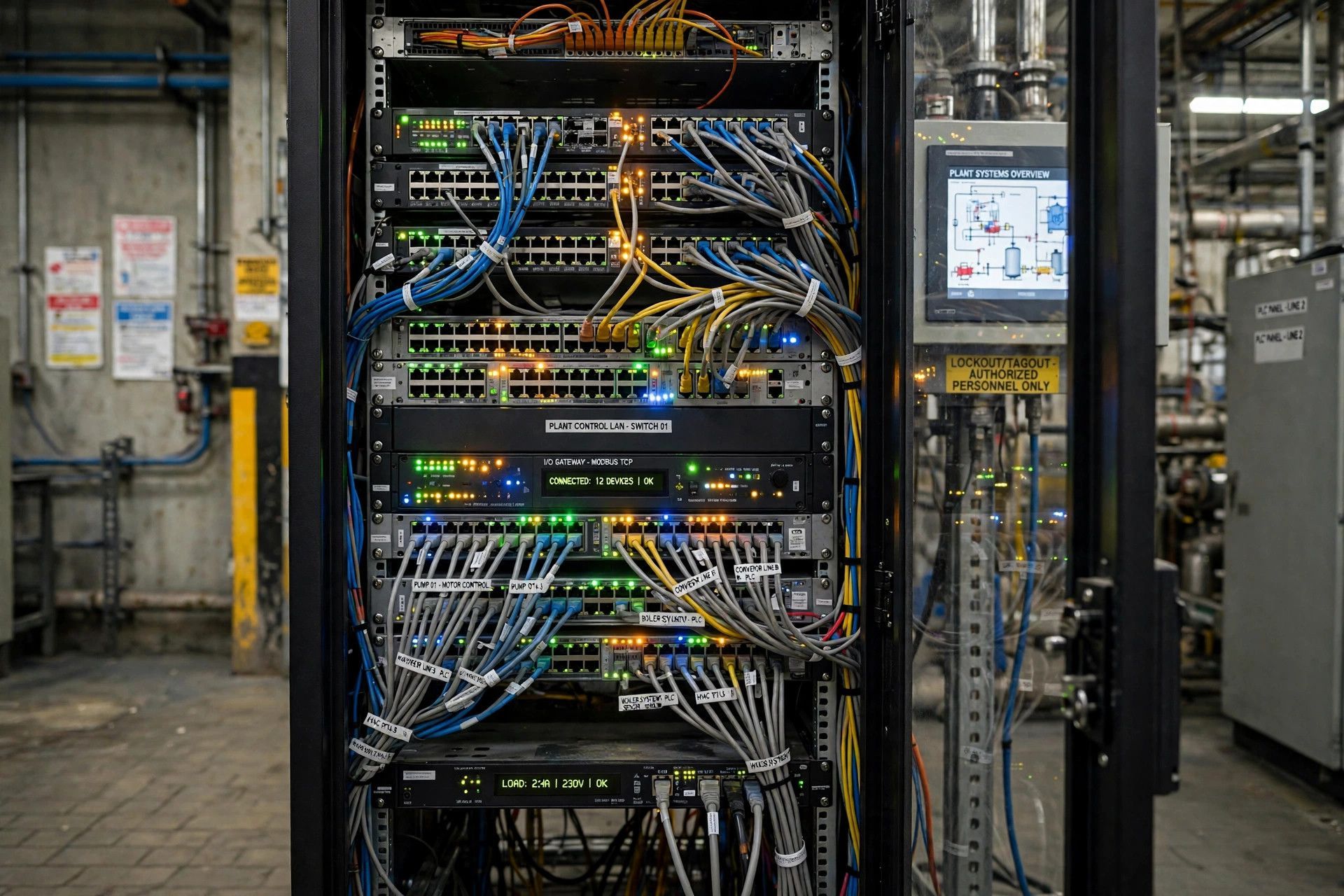
OEE dashboards sit above the transaction systems. They should not replace MES or ERP. Instead, they should pull governed data from both and turn it into clear reporting and analysis for operations, management, and continuous improvement teams.
On a production line, the dashboard should show live loss by machine, order, shift, and reason code. It should also connect those losses to schedule impact, output risk, and quality trends. That gives managers a better way to track equipment effectiveness than isolated spreadsheets or delayed summaries.
When OEE integration is done well, dashboards support advanced analytics without weakening source control. MES remains the execution record. ERP remains the planning and business record. The dashboard becomes the place where your team compares planned versus actual, sees recurring loss patterns, and prioritizes what to fix next.
Data Models and Interfaces for OEE, ERP, and MES Integration
Strong integration starts with shared data models, not just software connectors. If part numbers, work center IDs, shifts, or units of measure do not match, your mes integration will carry errors from one system to another.
The erp system, MES, and OEE layer all need consistent definitions for the records they exchange. Once those rules are set, you can choose interfaces that support clean information flows, stable ownership, and better data accuracy over time.
Choosing the Right Data Model for Your Plant
Choosing the right data model starts with your manufacturing operations. You need one shared structure for materials, equipment, personnel, and process steps so the erp system and MES interpret records the same way. This is one of the most practical steps in connecting an MES with an existing ERP system.
ISA-95 gives many plants a useful framework because it separates business planning from execution while defining how information should move. That helps with mes integration, process optimization, and long-term maintenance.
Data area
ERP should own
MES should own
OEE dashboard should use
Orders and schedules
Production orders, due dates, routing release
Dispatch status by operation
Planned vs actual comparison
Materials
BOM, inventory planning, procurement records
Material consumption at execution
Consumption impact on output
Equipment
Asset master references
Machine state, downtime, cycle records
Availability and loss trends
Quality
Quality standards and business status
In-process checks, scrap, rework
Quality loss analysis
Interface Options: APIs, Middleware, and Direct Connects
Once your data model is defined, you can choose among common interface options. The right fit depends on vendor capabilities, the number of systems involved, and how much change you expect over time. This is a core part of digital transformation in manufacturing.
APIs work well when both platforms expose clear services and the scope is manageable. Middleware adds a broker layer that can translate formats and manage traffic. Direct connects may be simple at first, but they often become harder to maintain as complexity grows.
Typical options include:
- APIs for structured, direct system-to-system exchange
- Middleware for transformation, message handling, and scaling
- Direct connects for simpler environments with fewer endpoints
- Embedded solutions when MES capabilities sit inside a broader platform
In practice, manufacturers should verify supported endpoints, authentication, update impacts, and data ownership before they connect anything.
Standardizing Data for Consistency and Accuracy
Manufacturers can ensure successful OEE information flow during integration by standardizing data before they automate exchange. If one system uses different part IDs, shift names, or unit labels than another, the interface may work technically while still producing bad results.
Standardizing data means agreeing on naming conventions, units of measure, code lists, and master records across business systems and plant systems. It also means deciding which system is the source for each field. That is how you protect consistency and keep duplicates under control.
This work supports data accuracy in every downstream use. OEE calculations become more reliable. Inventory updates land correctly. Operational data can be trusted by planners, supervisors, and analysts. Standardization takes effort up front, but it lowers future rework and keeps integration from becoming a constant cleanup exercise.
Avoiding Common Integration Mistakes
Most integration mistakes are predictable. Plants run into trouble when they skip ownership rules, trust poor source data, or treat the project as a technical task only. That leads to weak adoption and numbers nobody fully believes.
You can avoid much of that risk by setting system boundaries early, improving data quality before scaling interfaces, and treating change management as part of the core plan. The next sections cover where manufacturers often stumble and how to reduce those problems.
Misalignment of System Boundaries and Responsibilities
One common failure point is misalignment around responsibilities. If the erp system stores one quantity, MES stores another, and nobody knows which one is official, information flows become a source of conflict instead of clarity.
Manufacturers define system boundaries by assigning ownership according to function. ERP owns planning records, customer-facing commitments, inventory planning, and business status. MES owns execution events, machine and labor activity, and actual production results. OEE systems should calculate and display performance using governed inputs from those source systems.
This is not just a technical issue. It is also a change management issue. Teams need shared rules about where data is entered, where it is edited, and how exceptions are handled. Without that discipline, interfaces may move records correctly while the business still operates with competing versions of the truth.
Overlooking Data Quality and Cleansing Processes
A clean interface cannot fix dirty source records. That is why data quality and data cleansing should be part of the plan before broader integration goes live. Plants often discover too late that master data, reason codes, or inventory records are inconsistent.
Practical steps include reviewing item masters, work center names, units of measure, routing references, and downtime categories before mapping them between systems. You also need quality checks that catch missing fields, invalid values, and failed transfers early.
This protects data integrity across both transactional and reporting layers. Reliable operational data supports accurate OEE, cleaner scheduling, and more useful cost feedback. If you skip cleansing, you spend the project chasing exceptions. If you handle it early, the interface works with stronger inputs and the business sees value faster.
Underestimating Change Management During Integration
Many manufacturers focus on software and underestimate people. Yet change management is one of the main challenges when integrating OEE with MES and ERP. Operators, supervisors, planners, IT, and human resources teams all feel the impact of new workflows.
Legacy systems and old workarounds make this harder. Teams may still trust spreadsheets, side logs, or manual updates more than the new flow. If training and leadership support are weak, users bypass the process and operational efficiency drops instead of improving.
Strong change management usually includes:
- Clear ownership and workflow training by role
- Visible support from plant and business leadership
- Pilot rollouts before wider deployment
- Ongoing review of user adoption and exception handling
Integration succeeds when people understand why the process changed and how the new information flow helps them do better work.
Practical Steps to Integrate OEE with ERP and MES
Good integration starts with a narrow, useful scope. Focus first on the OEE data and execution records that most affect schedules, inventory, and response time. That keeps mes integration manageable and helps the team prove value early.
From there, build outward with clear ownership, validation, and process control. The erp system should receive the actuals it needs, while MES continues to handle execution detail. The following steps show how to map, validate, and govern that flow in a practical way.
Mapping Data Flows Between Systems
One practical step in connecting an MES with an existing ERP system is to map information flows field by field. Start with the highest-impact exchanges, usually production orders moving down and actual production data moving back up.
For each record, define source system, destination, timing, owner, and business purpose. For example, the erp system may send order number, item, due date, and routing release to mes systems. MES may return completed quantity, scrap, labor, downtime summary, and status updates.
That mapping work prevents confusion later. It also helps teams decide what should move in real time and what can be synchronized on a schedule. The goal is not to move everything. It is to move the right production data in a way that supports execution, planning, and OEE without creating duplicate ownership.
Validating Data Integrity at Every Stage
Successful OEE information flow depends on validation at every handoff. You need to confirm that the record sent is the record received, that the units match, and that both systems interpret the value the same way.
That means testing the manufacturing process through normal cases and exceptions. What happens when a work order closes early? What happens when scrap is posted after shift end? What happens when a machine event arrives late? These scenarios expose weak spots before they affect live reporting.
Validation protects data integrity across business systems and plant systems alike. It helps ensure that production data supports trusted OEE, inventory updates, and schedule revisions. When teams validate stage by stage, they catch errors early and build confidence that the integrated view reflects what the plant actually did.
Engaging IT/OT Teams Early for Success
Integration crosses both plant technology and enterprise technology, so IT/OT teams need to work together early. That is one of the biggest challenges manufacturers face. OT understands machine behavior and shop floor data. IT understands interfaces, security, and business operations.
In a manufacturing environment, those perspectives must meet before architecture decisions are locked in. This matters even more when legacy machines are involved, because MES can only support accurate OEE if equipment data reaches it reliably.
Early collaboration should cover:
- Machine connectivity and data source readiness
- Interface design, security, and support ownership
- Data models, naming standards, and timing rules
- Escalation paths for failed transfers or bad records
For a deeper overview of OEE fundamentals, it helps to review the OEE pillar page at https://www.empoweredautomation.com/oee as part of your planning.
How Clean Data Flow Enhances OEE Accuracy and Business Performance
Clean information flow improves OEE because the score is calculated from trusted events instead of delayed estimates or duplicate entry. Better data accuracy means losses on the production floor are measured more honestly.
That honesty improves business performance too. Schedules become more realistic, inventory records become more reliable, and teams can raise operational efficiency without debating the source. The next sections show how cleaner flow sharpens downtime tracking, insights, and alignment between plant results and business goals.
Improved Tracking of Downtime and Losses
Downtime tracking improves when machine and execution data are captured close to the source and passed through cleanly. Instead of relying on delayed notes, the shop floor gets a clearer picture of when stops happen, how long they last, and which reasons appear most often.
That helps teams track equipment effectiveness because they can connect downtime to specific orders, machines, and output loss. Equipment failures no longer sit in a maintenance log alone. They appear in the same performance view as schedule impact, scrap, and completed quantity.
Over time, this supports stronger loss analysis and better predictive maintenance decisions. If one asset shows repeated alarm patterns before longer stoppages, the team can act earlier. OEE becomes more than a score. It becomes a structured way to measure and reduce production losses tied to real equipment behavior.
Enhanced Equipment Effectiveness Through Actionable Insights
Integration improves manufacturing productivity when it turns scattered records into actionable insights. You are not just collecting more data. You are connecting machine behavior, order context, and quality outcomes so the team can see where performance is being lost.
That drives equipment effectiveness because supervisors and improvement teams can focus on causes with the highest operational value. Better process control follows when the plant sees recurring loss by asset, order type, shift, or product family instead of just an overall number.
Useful insights often include:
- Which assets create the most lost runtime
- Which products run below expected speed
- Which quality events drive repeat rework
- Which shifts or routes show unstable performance
With stronger inputs and advanced analytics, production efficiency work becomes more targeted, faster, and easier to sustain.
Better Alignment of Production and Business Objectives
Production teams often chase throughput, while business teams focus on delivery, cost, and margin. Those goals should support each other, but disconnected systems make that hard. One side sees plans. The other side sees shop reality.
Integrated OEE, MES, and ERP help align production objectives with business objectives by creating a shared operating picture. Business planning gains current operational data. The plant gains visibility into how downtime, scrap, or slow cycles affect customer commitments and cost performance.
That alignment improves productivity because decisions become easier to connect to business value. A routing change, maintenance priority, or staffing adjustment can be judged by both output impact and enterprise impact. Process optimization becomes more practical when everyone works from the same facts and the same timing.
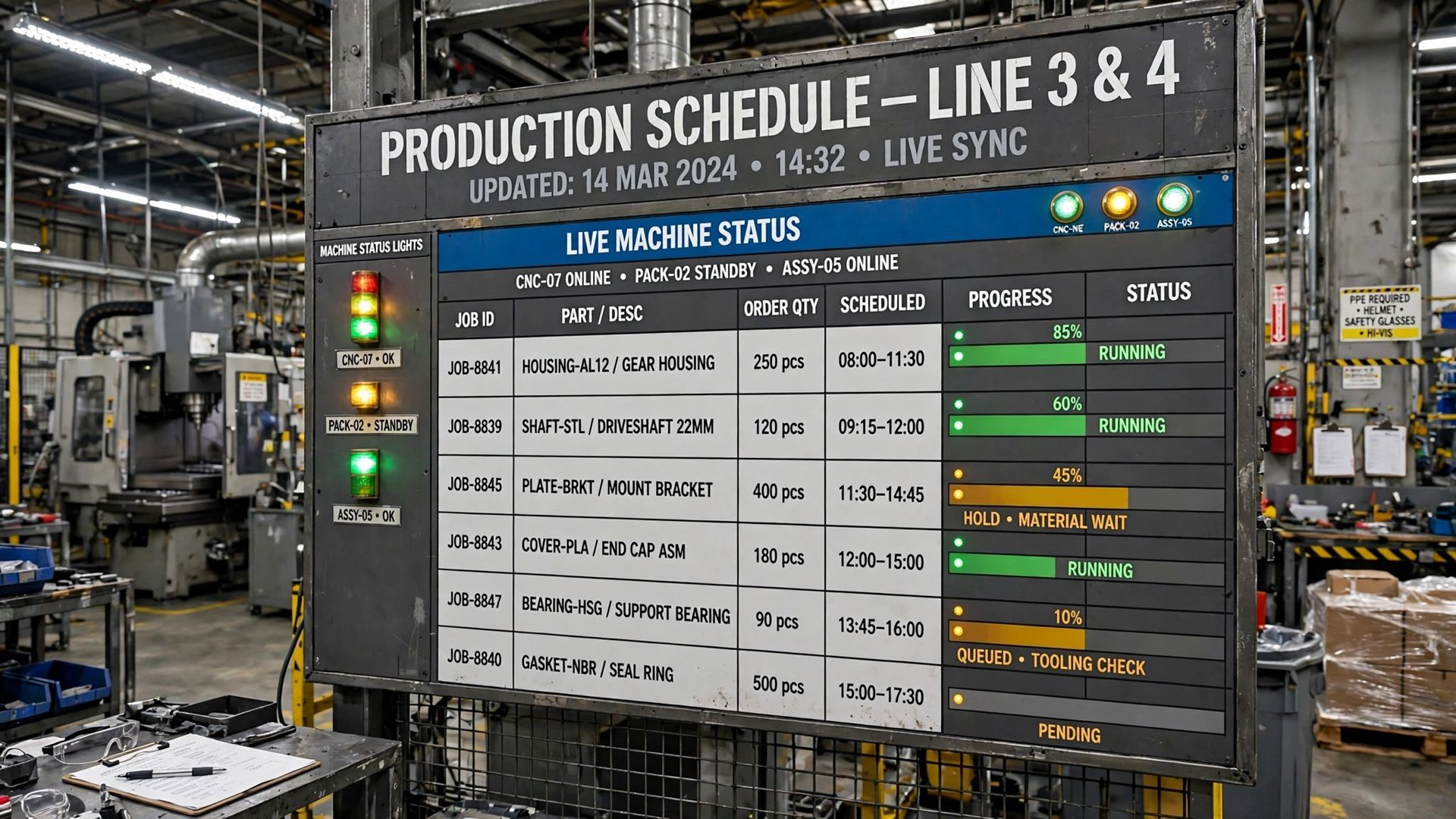
Impact of OEE + ERP and MES Integration on Quality Management
Quality management improves when OEE data is linked with execution records and planning context. You can see not only that output dropped, but whether defects, rework, or process drift caused the loss.
That is where mes integration and the erp system support stronger response. Quality data captured during execution can trigger faster action, better traceability, and clearer reporting. The next sections show how integrated quality monitoring closes the loop between production events and business impact.
Real-Time Quality Monitoring and Traceability
MES integration with ERP improves quality management by moving quality monitoring closer to the moment of production. Instead of waiting for an end-of-day report, teams can see quality control issues in real time as they develop on the production line.
That matters because fast response limits the spread of defects. If one operation starts producing bad parts, MES can capture the event immediately and feed results into upstream and downstream decisions. ERP can then reflect shipment risk, order impact, or rescheduling needs with better timing.
Traceability also gets stronger. MES records what happened at each stage, while ERP connects that information to wider business records. Together, they create a more complete chain for genealogy, quality review, and customer response. That is a practical gain for plants that need both speed and accountability.
Integrated data helps close the loop on defects because quality issues no longer sit in a separate report. They connect directly to orders, machine states, labor, and schedule impact. That makes process adjustments faster and more grounded in evidence.
It also strengthens corrective actions. Teams can see where defects began, how long they continued, and what downstream work was affected. That feedback is valuable for continuous improvement because it links root cause work to measurable production results.
A closed-loop response often includes:
- Detecting defects during execution instead of after completion
- Triggering corrective actions sooner across affected steps
- Updating planning or shipment decisions when quality issues appear
- Reviewing whether process adjustments reduced repeat loss
This is how integrated MES and ERP move quality from inspection alone to active control.
A useful case example comes from manufacturers that connect execution and quality data tightly enough to trigger action during production, not after it. In those environments, integrated data supports faster detection, better containment, and lower scrap and rework.
The result is better product quality because teams are not relying on delayed summaries. They can identify where the issue started, which orders were affected, and whether the process returned to normal after a change. Data accuracy matters here because weak records can hide both the problem and the fix.
This shows how MES integration with ERP affects quality outcomes in practical terms. It improves visibility, speeds response, and ties quality events to business consequences. That makes quality performance easier to manage, measure, and improve across both plant and enterprise teams.
Conclusion
In summary, the integration of OEE with ERP and MES systems is essential for optimizing information flow and enhancing manufacturing performance. By ensuring a seamless exchange of critical OEE metrics between these systems, manufacturers can achieve better tracking of production efficiency and make informed decisions in real time. Clean information flow not only reduces silos but also supports continuous improvement initiatives, aligning operational activities with business goals. As you embark on this journey, consider the importance of data quality and engaging IT/OT teams early in the process. For a deeper dive into OEE integration strategies, explore our OEE pillar page here. Start transforming your operations today!
Frequently Asked Questions
What data does MES share with ERP for OEE tracking?
MES shares production data such as completed quantity, scrap, downtime totals, cycle performance, labor actuals, and quality results with the erp system. In strong mes systems, this can move in real time or near real time, giving ERP the OEE data it needs for scheduling, inventory, and costing updates.
Can small or mid-size manufacturers benefit from OEE, ERP, and MES integration?
Yes. Small and mid-size manufacturers often feel the pain of manual updates most strongly. Mes integration improves production efficiency, supports continuous improvement, and gives better operational data without requiring an enterprise-scale overhaul. Modular tools and phased rollout approaches have made this type of digital transformation more practical.
How can manufacturers ensure successful OEE information flow during integration?
Manufacturers improve success by defining ownership early, cleaning master data, mapping information flows carefully, and validating every handoff. OEE data should come from trusted execution records, especially for shop floor execution. Strong integration depends on data accuracy, consistent naming, and clear rules for what each system sends, receives, and stores.
You might also like