State-Based Alarming: Adapting Alarms to Operating Mode
State-Based Alarming: Adapting Alarms to Operating Mode
A plant does not run in one steady state. It starts up, shuts down, changes load, and goes into maintenance, and each mode has different alarm needs. State-based alarming changes which alarms are active, and how urgent they are, based on the operating mode. When the alarm set matches the mode, operators see fewer nuisance alarms, and they can focus on the alarms that matter right now.
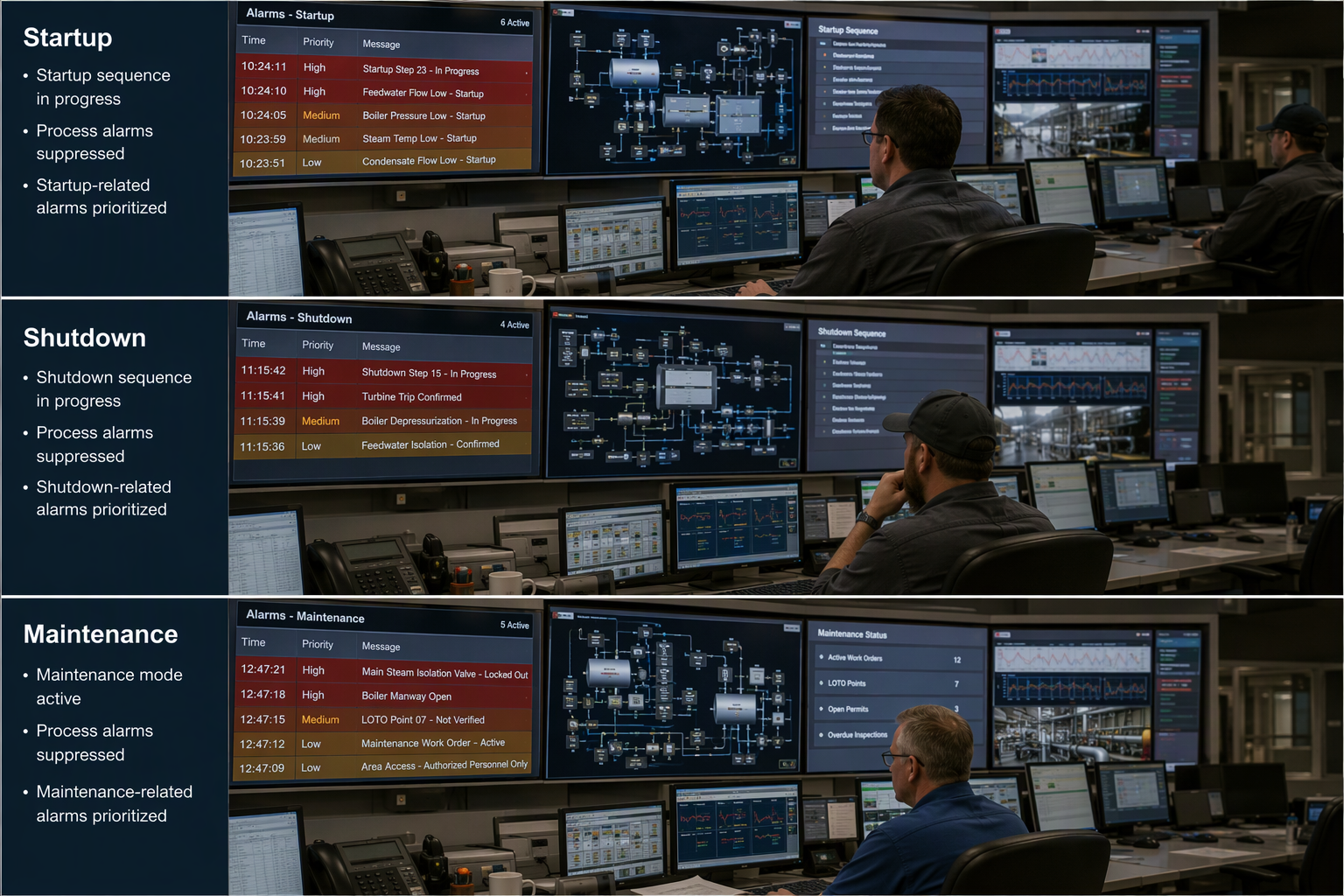
What State-Based Alarming Means
State-based alarming means the control system uses the current operating mode to decide which alarms to show, suppress, or change in priority. In normal running, a full alarm set is active. In startup, some alarms are held back, because the process is not yet stable. In maintenance, alarms for equipment that is out of service are suppressed, so they do not flood the screens. The alarm set follows the plant, not a fixed list.
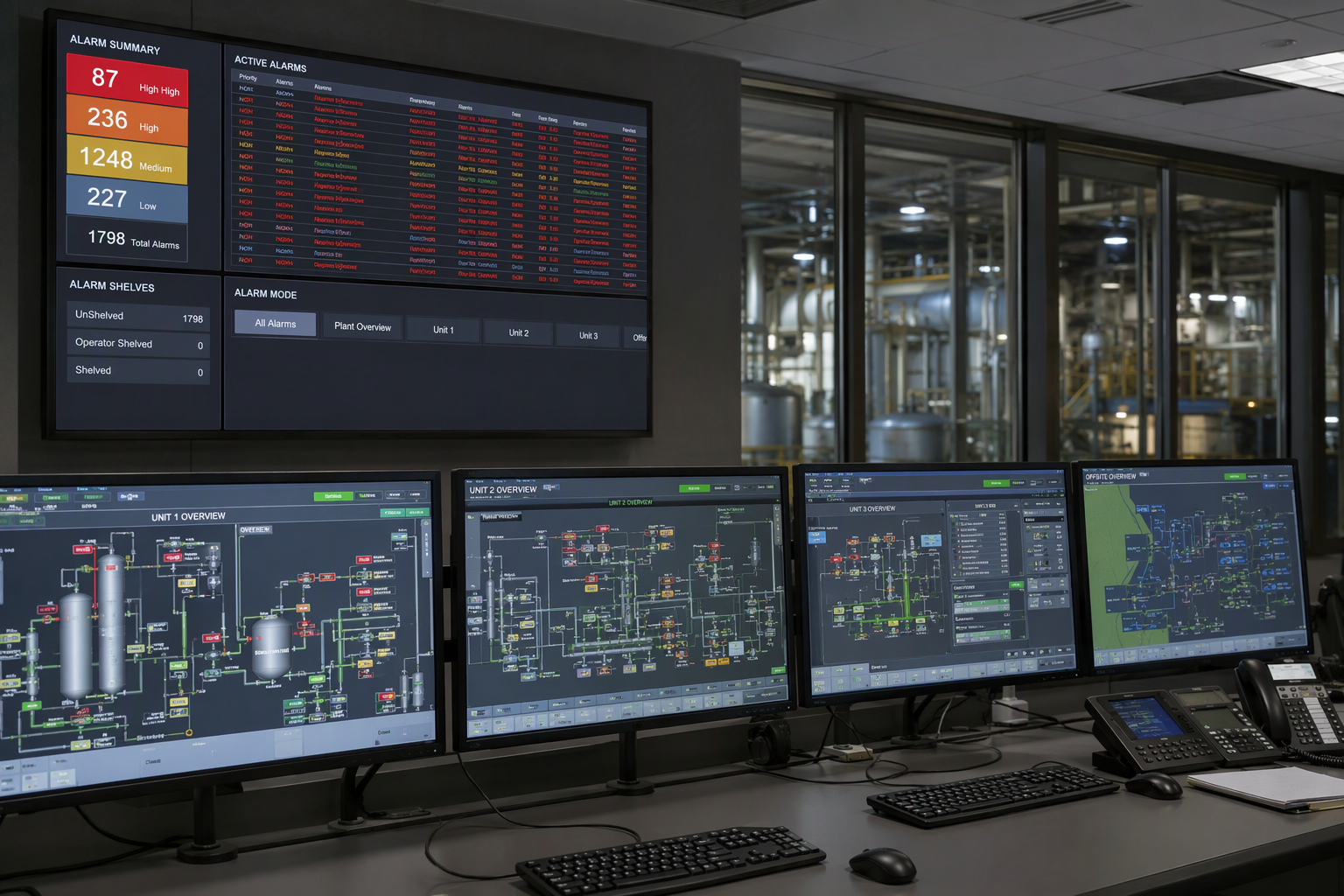
Why One Alarm Set Does Not Fit Every Mode
A single alarm set creates problems in every mode except normal running. During startup, many values are out of range by design, so a fixed alarm set floods the screens with alarms that operators cannot act on. During shutdown, the same thing happens in reverse, as equipment stops in sequence. During maintenance, alarms for isolated equipment keep sounding, even though no action is possible. A mode-based alarm set avoids these floods, and keeps the alarm list useful.
Common Operating Modes in a Plant
Most plants use a small set of modes, so operators can learn them and trust them. Common modes include normal running, startup, shutdown, standby, and maintenance. Some plants add modes for load change, product change, or emergency. Each mode should have a clear definition, a clear entry condition, and a clear exit condition, so the control system and the operators agree on which mode is active.
Startup Mode
In startup mode, the plant is warming up, filling, and reaching stable conditions. Many alarms that apply in normal running do not apply yet, because temperatures, pressures, and flows are still moving to their targets. State-based alarming holds back those alarms, or lowers their priority, until the process is stable. Alarms that signal a real startup problem, such as a failed pump or a blocked line, stay active, so operators still see what needs action.
Shutdown Mode
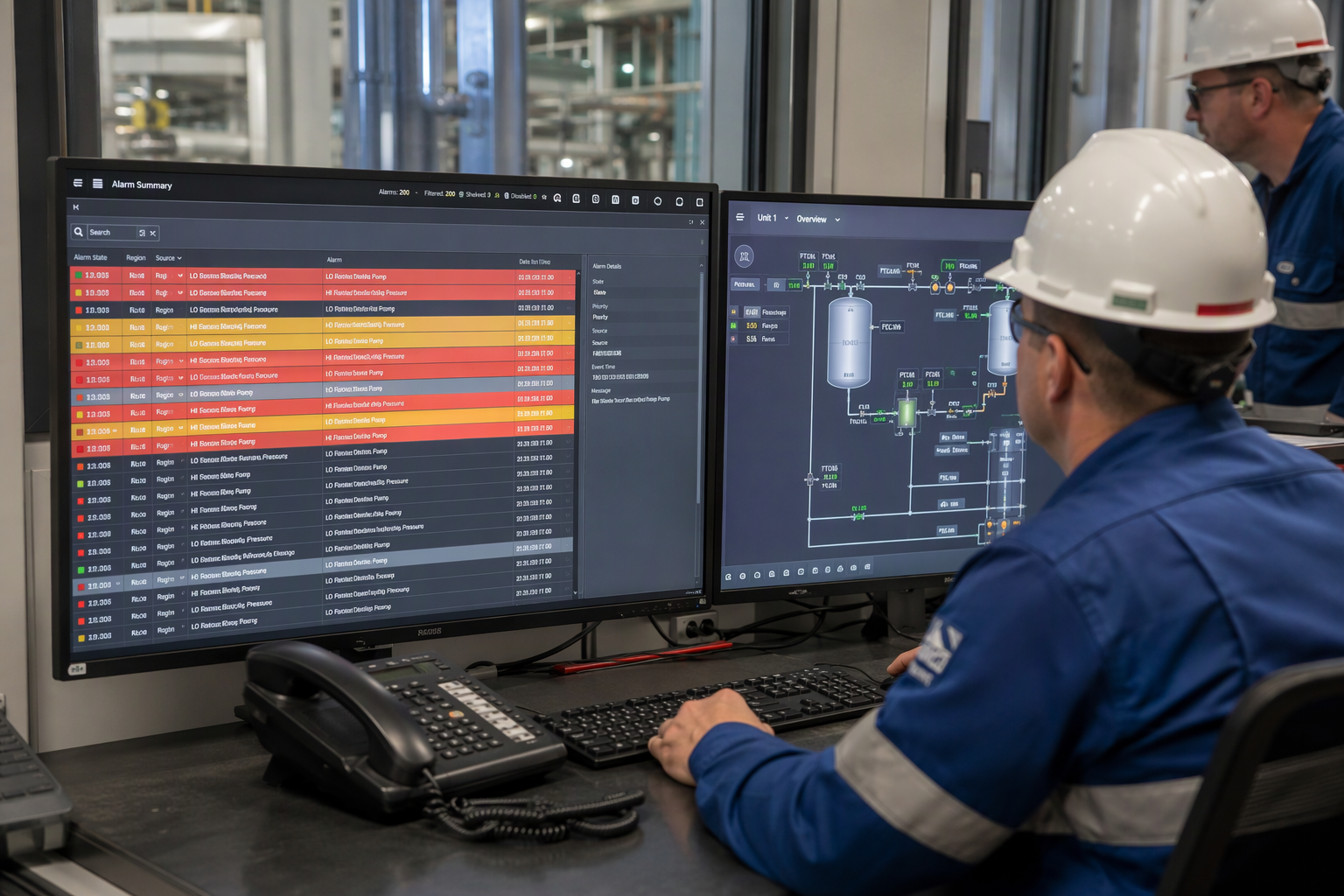
In shutdown mode, equipment stops in a planned sequence, and values move away from normal running targets. A fixed alarm set would sound for every step of the shutdown, even when the shutdown is going as planned. State-based alarming suppresses the alarms that are expected during shutdown, and keeps active the alarms that signal a shutdown problem, such as a valve that fails to close or a temperature that stays high. Operators can follow the shutdown, instead of fighting the alarm list.
How the Control System Knows the Mode
The control system needs a reliable mode signal, not a guess. The mode can come from a mode selector switch, from a sequence step in the control logic, or from a combination of process values that prove the mode. The mode signal should be visible on the operator screens, so operators always know which mode the system thinks is active. If the mode signal is wrong, the wrong alarm set is active, so test the mode logic as carefully as the alarms themselves.
Designing a State Table
A state table lists each alarm, each mode, and what happens to that alarm in that mode. For each alarm, the table should say if it is active, suppressed, or changed in priority, and why. The table is the design record for state-based alarming, and it should be reviewed by operations, engineering, and safety. A clear state table makes testing easier, and it helps the next team understand why each alarm behaves the way it does.
Setting Priorities by Mode
Priority should follow the mode, not just the alarm. An alarm that is critical in normal running may be low priority in startup, because the process is not yet stable and the alarm does not need immediate action. An alarm that is low priority in normal running may become critical in shutdown, because it signals a failure in the shutdown sequence. Review priorities mode by mode, and record the reason for each change, so operators can trust the priority they see.
HMI Design for State-Based Alarming
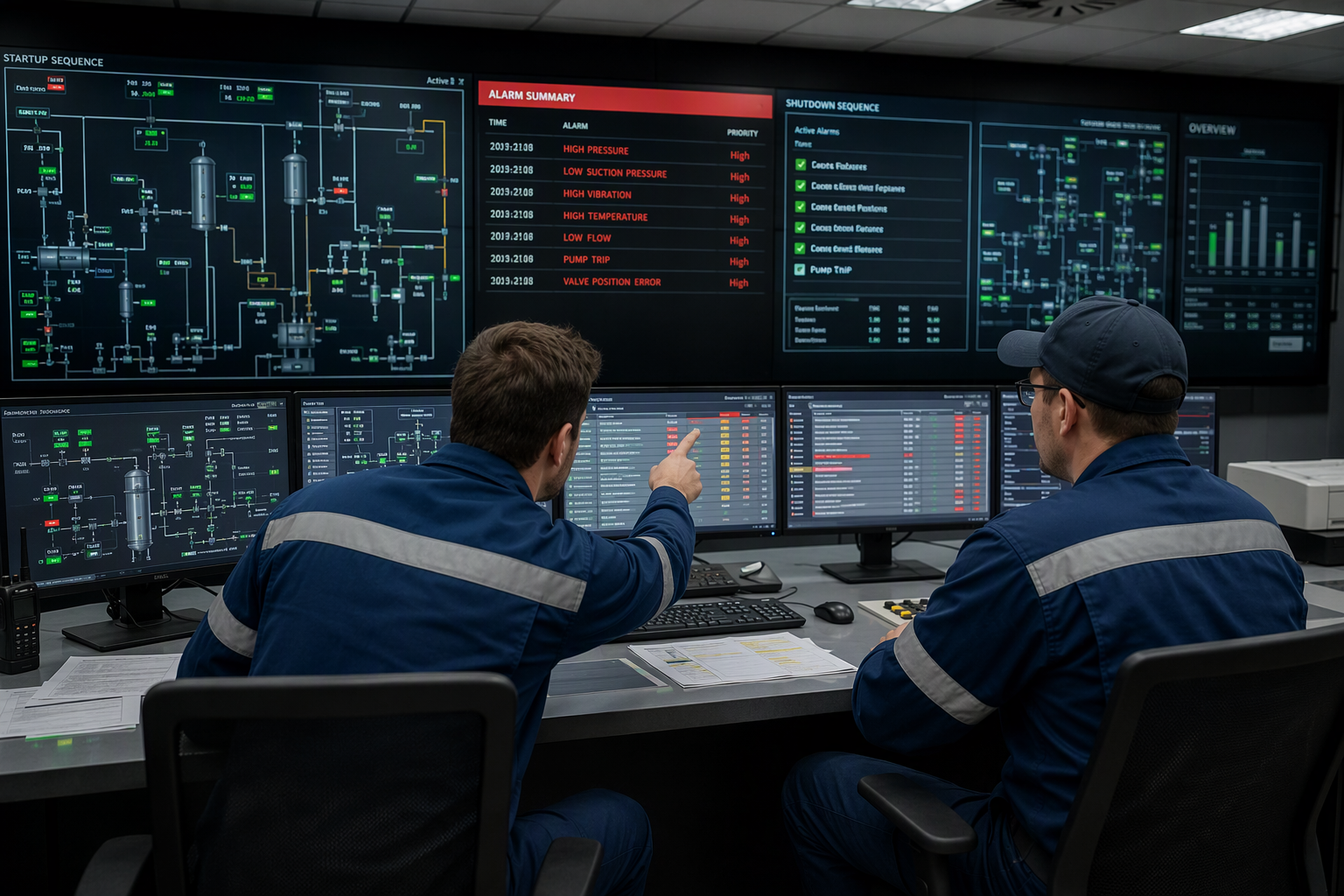
The HMI should show the current mode clearly, and it should show which alarms are suppressed and why. Operators should be able to see the active alarm list, the suppressed alarm list, and the mode that caused the suppression, without digging through menus. Use clear labels, not codes, and keep the mode display in the same place on every screen. Good HMI design makes state-based alarming transparent, and it prevents operators from wondering why an alarm disappeared.
Stale Alarms and State Changes
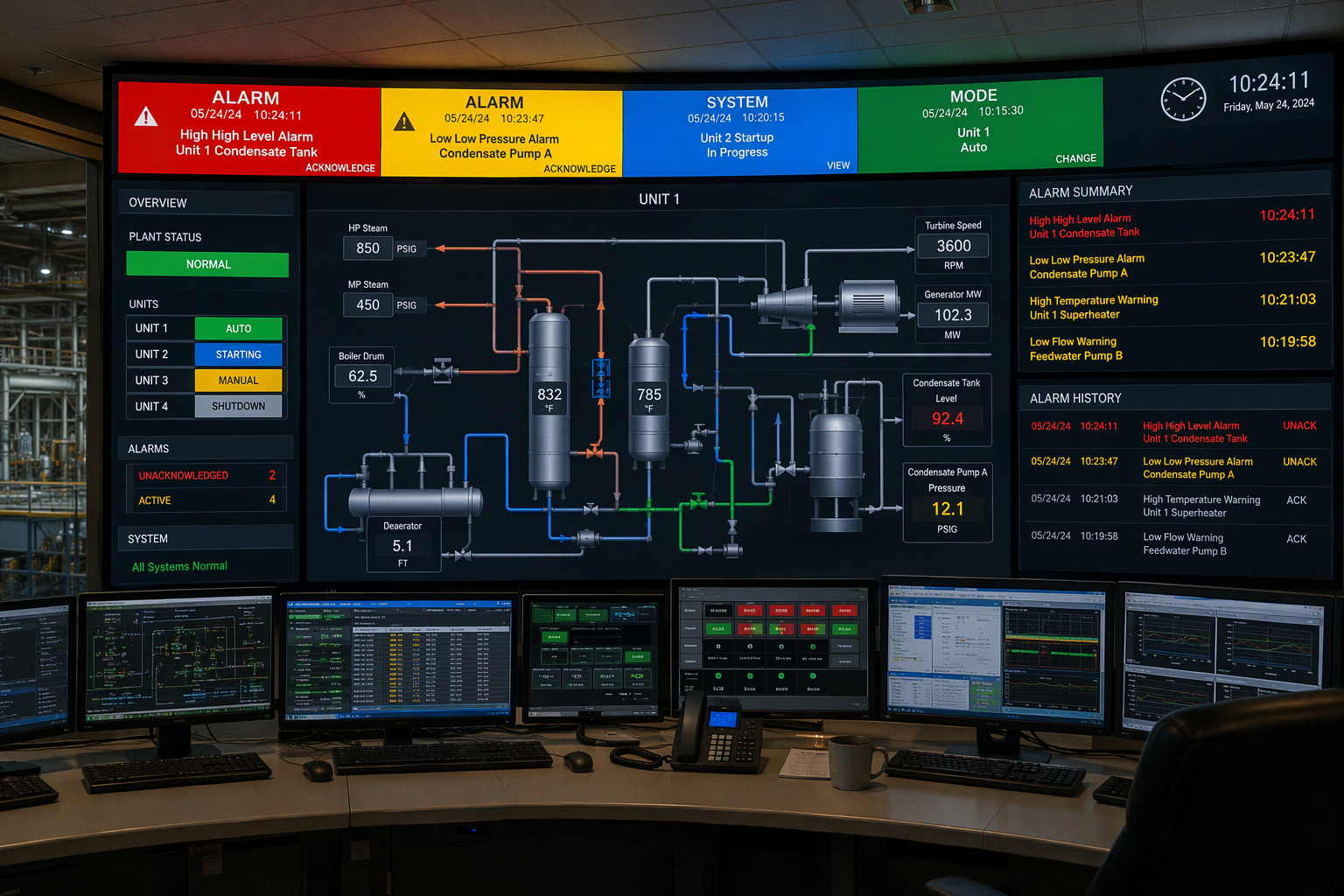
A stale alarm is an alarm that stays active after its mode has passed, or an alarm that was suppressed and never returns. State changes should be tested for stale alarms, because a suppressed alarm that never comes back can hide a real problem. The control system should log mode changes, alarm suppressions, and alarm returns, so the team can review them. After a state change, check that the alarm list matches the new mode, and that no alarm is stuck in the wrong state.
Testing State Changes
Test every state change before it goes live, with the plant in each mode and with alarms in each state. Simulate startup, shutdown, and maintenance, and confirm that the right alarms appear, the right alarms are suppressed, and the right priorities are shown. Test the return to normal running, because that is where stale alarms are most likely. Record the test results with the state table, and repeat the test after any change to the mode logic or the alarm set.
Management of Change for Alarm States
Every change to an alarm state belongs under management of change, with a reason, an approver, and a test record. Alarm states affect what operators see in every mode, so an unreviewed change can hide a real event or flood the screens at the worst moment. The change record should list the alarms touched, the states affected, and the expected effect on alarm counts and alarm system performance. After the change goes live, review the results with operators and keep the record with the alarm philosophy, so the next team can see why each state looks the way it does.
Alarm Philosophy and State-Based Alarming
The alarm philosophy should describe how states are defined, how the state table is maintained, and how changes are approved. It should set limits on the number of states, so the system stays maintainable, and it should require a review of alarm counts by mode. A philosophy that ignores states will lead to a fixed alarm set, and a fixed alarm set will flood operators during startup and shutdown. Write the philosophy first, then build the states to match it.
Measuring Alarm Performance by Mode
Measure alarm performance by mode, not just in total. Count alarms per mode, alarm floods by mode, and operator response times by mode, and compare them with the targets in the alarm philosophy. If startup still floods, the state table needs work, or the mode definition needs work. If maintenance still floods, check for alarms that should be suppressed but are not. Mode-based measurement shows where the alarm system helps, and where it still hurts.
Common Mistakes in State-Based Alarming
One common mistake is creating too many states, so operators cannot tell which one is active and engineering time is wasted maintaining dozens of small variants. A second is suppressing alarms without a written reason, which leaves the next team guessing and can hide a real abnormal condition or process deviation. A third is forgetting to test the return to normal running, so alarms that were held back during startup never come back. Poor alarm management like this leads to safety incidents, missed alarms, and operator confusion, even when the intent was to reduce the flood.
How Does State-Based Alarming Reduce Nuisance Alarms?
It reduces nuisance alarms by matching the alarm set to the operating mode. During startup, shutdown, and maintenance, many alarms that are normal in running do not apply, so state-based alarming holds them back or changes their priority. That keeps the list short, so operators can see and act on the alarms that matter in that mode.
Alarm identification matters too: each alarm needs a clear name, a clear owner, and a clear response, so operators can act without guessing. When the alarm set changes with the mode, operators should still know which alarms are active, which are held, and what action each one requires.
Designing alarms well keeps operators focused on real events in every operating mode.
Match alarms to the mode, and the alarm list stays useful.
Test state changes before go-live.
You might also like