Industrial Automation Industry Growth: What to Expect Ahead
Industrial Automation Industry Growth: What to Expect Ahead
Key Highlights
- Industrial automation uses control systems and automation solutions to improve operational efficiency across industrial operations.
- Smart factories depend on real time data, process control, and connected field devices to run with minimal human intervention.
- Machine learning, predictive maintenance, and industrial robots are changing how manufacturers handle repetitive tasks and quality control.
- The automation market is expanding as companies modernize supply chain processes and reduce lead times.
- Growth is strongest where flexible automation, smart manufacturing, and stronger control logic meet rising production requirements.
- Challenges still matter, especially integration, labor shortages, cybersecurity, and return on investment.
Introduction
Industrial automation is the use of control systems and automation solutions to manage machines, industrial processes, and production steps with less manual effort. In simple terms, it works by connecting software, hardware, and process control tools so tasks can run more accurately and consistently. For manufacturers, that means better operational efficiency, steadier output, and faster decisions. As technology improves, the industry is moving from basic machine control to smarter, more connected operations.
Understanding the Industrial Automation Industry
At its core, industrial automation covers the tools and automation systems that help run a manufacturing process with speed, consistency, and lower reliance on manual labor. It supports process control across machines, lines, and entire facilities.
You can think of it as the operational layer behind modern industrial operations. It links equipment, sensors, software, and control logic so businesses can manage output, quality, and timing more effectively. The next sections explain what it means, how it works, and why it matters.

Definition of Industrial Automation
Industrial automation is the use of automation technology to control machines and industrial processes with limited direct handling by workers. It brings together hardware, software, and automation systems to manage production steps in a structured way. The goal is not just speed. It is also accuracy, repeatability, and stable performance.
In practice, these systems support process control across equipment, assembly line tasks, material handling, and supervisory control. They help manufacturers keep operations consistent even when production requirements change. That makes planning easier and reduces avoidable disruption.
For businesses, the biggest value is better operational efficiency. Industrial automation reduces variation, supports quality checks, and helps teams use labor where human judgment matters most. That is why it has become a key part of modern manufacturing and industrial operations.
How Industrial Automation Works
Industrial automation works by using automation technology to monitor inputs, apply control logic, and trigger actions. Sensors collect information from machines or production lines. Control systems read that information and compare it to set rules. When needed, the system adjusts equipment to keep process control on track.
This setup is useful for repetitive tasks that need steady timing and precision. Instead of relying on constant operator input, automation solutions handle repeated motions, measurements, and routine machine responses. That allows production to continue with minimal human intervention in many steps.
The human role does not disappear. People still design workflows, supervise exceptions, and improve performance. What changes is where their effort goes. Rather than spending time on basic manual actions, teams focus on oversight, maintenance, and smarter decision-making across industrial processes.
Role of Automation in Modern Manufacturing
Modern manufacturing depends on speed, consistency, and tight coordination. Automation supports smart manufacturing by helping companies manage repetitive tasks, maintain quality control, and keep output stable across changing demand. It is especially valuable in batch production, where every run must meet the same standard.
You can see the impact in several areas:
- Industrial robots handle repetitive tasks with reliable precision.
- Automated checks improve quality control during production.
- Systems support process optimization by reducing unnecessary delays.
- Minimal human intervention helps maintain flow in routine operations.
Beyond labor savings, automation improves how the whole manufacturing process works. It helps teams react faster, reduce errors, and keep products moving with fewer interruptions. That makes automation a practical foundation for competitive, scalable manufacturing in a demanding market.
Factory Automation vs. Industrial Automation
Factory automation is a focused part of industrial automation. It usually refers to automated equipment and systems inside a plant, such as conveyors, assembly line tools, and traditional industrial robots. Industrial automation is broader and includes process industries, utilities, and many non-factory industrial operations.
The difference becomes clearer here:
- Factory automation targets plant-floor tasks in a manufacturing process.
- Industrial automation covers wider process control and operational systems.
- Factory automation often centers on equipment coordination and automation logic.
- Industrial automation can include connected monitoring across multiple sites.
So, how do they relate? Factory automation is one major application of industrial automation overall. If your business runs a production facility, factory automation may be the first step. But the larger industrial automation strategy can also connect planning, monitoring, and process performance well beyond the factory floor.
Major Types of Industrial Automation Systems
The main types of industrial automation include fixed automation, programmable automation, flexible automation, and integrated smart systems. Each one supports different production goals, from high-volume repetition to quick changeovers and connected decision-making.
Choosing between these automation systems depends on your output, process automation needs, and product mix. Some control systems are best for stable lines, while others are built for adjustment and scalability. The following sections break down where each approach fits and why it matters.

Fixed Automation Systems
Fixed automation, also called hard automation, is designed for high-volume production where the same steps repeat again and again. It is common on an assembly line built around stable output and limited variation. The equipment is set up for one defined sequence.
That makes it a strong fit for repetitive tasks and products with predictable demand. Once installed, fixed automation can move fast and maintain steady quality. It works best when production requirements do not change often and when the cost of reconfiguring equipment would be high.
The tradeoff is flexibility. Fixed automation is efficient, but it is not ideal for frequent product changes or mixed runs. If your operation depends on repeatability and scale rather than frequent adjustments, this type of system can be a practical and cost-effective choice.
Programmable Automation Solutions
Programmable automation is built for operations that need recurring changes between product runs. Unlike fixed setups, these automation solutions can be reprogrammed when a new item, size, or process step is introduced. That makes them useful for batch production.
The system still relies on strong process control, but the control logic can be updated without replacing all the equipment. This approach helps manufacturers keep structure in production while allowing planned changeovers. It offers a middle ground between rigid lines and highly adaptive systems.
For many businesses, programmable automation supports better use of equipment across several product types. It is especially helpful when demand varies by season, customer order, or run size. You keep control and consistency while gaining more room to respond to market shifts.
Flexible Automation Approaches
Flexible automation is designed for fast adjustment with less downtime between changes. It is useful when product mix, volume, or production requirements shift often. In these environments, automation solutions must adapt without slowing the whole operation.
Its strengths usually include:
- Quick changes to support different production requirements.
- Better scalability as demand rises or falls.
- Use of industrial robots for varied tasks and handling.
- Stronger responsiveness across mixed-product workflows.
This approach helps companies stay competitive when markets move quickly. Flexible automation does not remove structure. Instead, it combines control with adaptability. If your operation needs both efficiency and product variety, this model can offer the balance that fixed or basic programmable systems may not provide.
Integrated and Smart Automation Systems
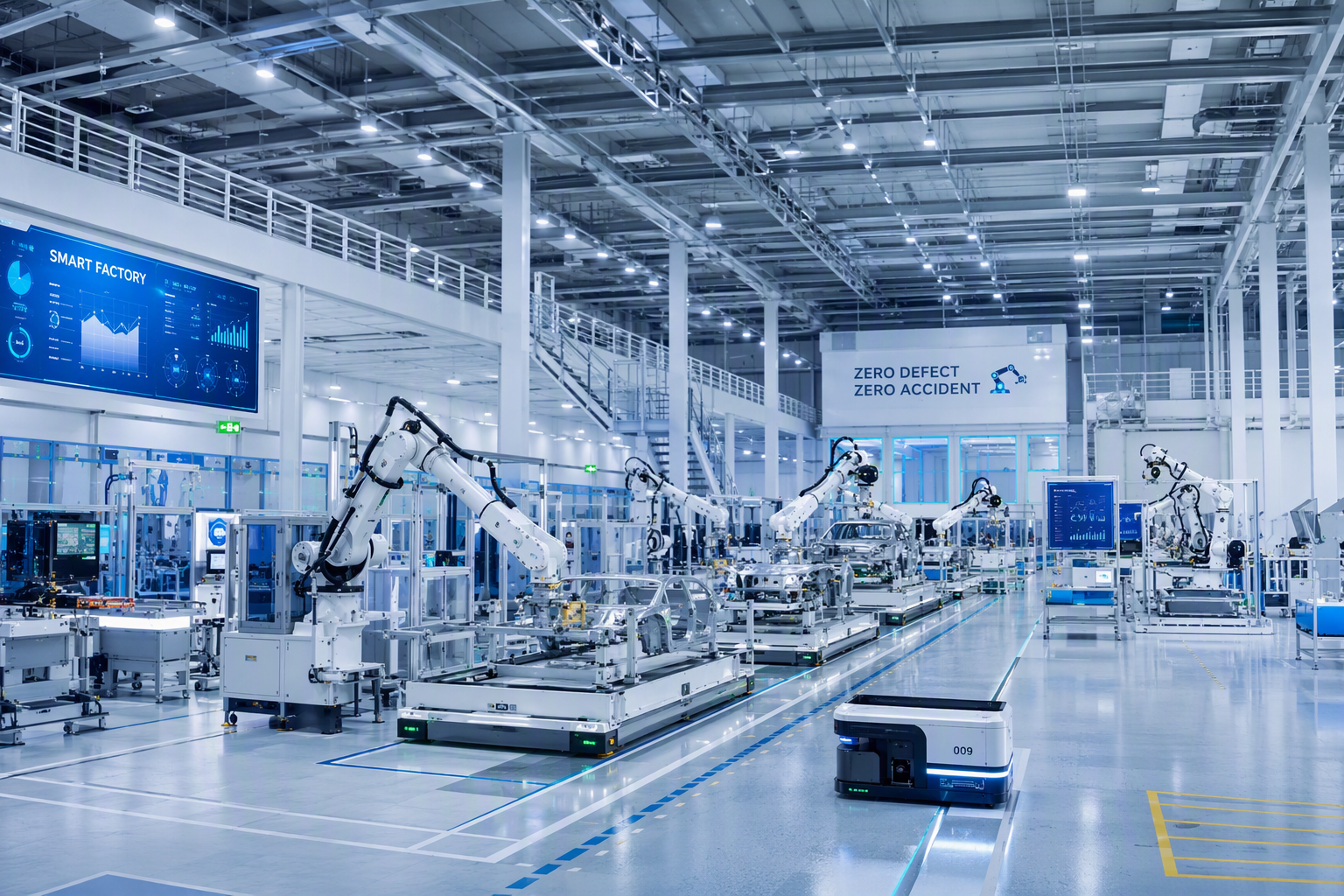
Integrated and smart automation systems connect machines, software, and data across the operation. They are the backbone of smart factories, where equipment communicates through the internet of things and decisions happen faster. Instead of isolated machines, the system works as one coordinated environment.
This kind of automation technology supports process optimization by linking field devices, control systems, data acquisition tools, and monitoring platforms. Information can move from the machine level to supervisory systems and back again. That improves visibility and supports better timing across industrial operations.
For manufacturers, the advantage is a more connected workflow. Smart automation systems help reduce delays, improve quality checks, and support stronger planning. They also create a path toward predictive maintenance, better control software use, and more efficient production at scale.
Key Technologies Driving Industrial Automation
Industrial automation is being shaped by a mix of automation technology, machine learning, robotics, and smarter control software. These tools help systems respond faster, use data better, and reduce waste across the production cycle.
At the same time, the industrial internet of things is connecting machines, sensors, and platforms in ways that support predictive maintenance and clearer decision-making. Together, these technologies are moving automation from simple task execution to more intelligent, connected, and responsive operations.

Artificial Intelligence and Machine Learning
Artificial intelligence and machine learning are changing automation by helping systems learn from operating data instead of following only fixed rules. These tools can spot patterns, compare current conditions with past performance, and support better decisions in real time.
One major use is predictive maintenance. Rather than waiting for equipment to fail, machine learning models can flag unusual behavior that may lead to unplanned downtime. This gives teams time to inspect machines, manage maintenance costs, and keep production moving.
AI also supports quality checks by identifying variation earlier in the process. That helps reduce scrap, stabilize output, and improve process optimization. For manufacturers, the result is not just more data. It is better use of data to improve control, timing, and operating confidence.
Robotics and Collaborative Robots (Cobots)
Robotics remains one of the clearest examples of automation in action. Industrial robots are widely used for repetitive tasks, material handling, and precise movement. Collaborative robots, or cobots, add a more flexible option by working closer to people in shared production areas.
Their value stands out in several ways:
- Industrial robots perform repetitive tasks with stable accuracy.
- Collaborative robots support flexible workflows and easier deployment.
- Automation logic helps coordinate motion, timing, and safety responses.
- Robots can take over hazardous tasks with minimal human intervention.
This shift matters because it improves both output and work design. Companies can assign machines to physically demanding or risky steps while people manage oversight, quality, and exception handling. That creates a safer, more balanced operating model without slowing production goals.
Industrial Internet of Things (IIoT)
The industrial internet of things connects field devices, machines, and software so data can move across an operation in a useful way. Sensors gather information from equipment, while connected platforms help teams track conditions, performance, and output across process automation environments.
This matters because better visibility improves decisions. Instead of relying only on periodic checks, operators can see what is happening during production. With edge computing, some of that data can be processed close to the machine, which supports faster response and less delay.
IIoT is not just about connectivity for its own sake. It helps create smarter control, stronger monitoring, and more accurate planning. For manufacturers, that means improved coordination between equipment, maintenance teams, and production managers who need dependable information to act quickly.
Programmable Logic Controllers (PLCs)
Programmable logic controllers are a core part of many industrial control systems. PLCs receive signals from machines and sensors, apply automation logic, and trigger responses based on defined rules. They are widely used because they are reliable and well suited to demanding industrial environments.
In process control, PLCs manage timing, sequence, and machine actions across production equipment. They can support conveyors, material handling, assembly operations, and even industrial robots. This makes them a practical control layer for both simple and complex automation systems.
Their ongoing relevance comes from flexibility and stability. PLCs can be programmed for different tasks while still delivering dependable machine coordination. As factories become more connected, they continue to serve as an important bridge between physical equipment, operators, and higher-level software platforms.
Sensors and Actuators
Sensors and actuators are the basic working parts of automation technology. Sensors detect conditions such as position, motion, or temperature. Actuators turn system commands into physical action, such as opening a valve or moving a mechanism. Together, they allow automation systems to sense and respond.
Common examples include:
- Temperature sensors for heat monitoring and process stability.
- Motion sensors for machine position and movement checks.
- Actuators that drive mechanical changes based on system input.
- Real time signals that support quality control during operation.
Without these devices, higher-level software would have little to act on. Sensors provide the information, and actuators carry out the response. This simple but essential relationship supports everything from basic machine control to advanced, connected industrial processes.
Cloud Computing and Edge Processing
Cloud computing gives manufacturers a way to store, review, and use large volumes of operating data across sites. It supports data acquisition from machines, systems, and connected platforms, making it easier to compare performance and improve planning over time.
Edge processing plays a different but equally important role. Instead of sending every signal to a remote platform, edge systems handle selected data near the equipment. That helps reduce delay and supports faster machine response in time-sensitive operations linked to industrial iot.
Used together, cloud computing and edge processing create a stronger data framework for automation. One supports broader visibility and analysis, while the other helps with immediate action. For manufacturers, this combination improves process optimization without giving up control over speed or system performance.

Market Size and Growth Projections in the United States
The United States automation market is expanding as manufacturers invest in control systems, process automation, and connected production tools. Growth is being pushed by the need for better efficiency, stronger supply chain performance, and more resilient operations.
Large market players and specialized providers are both active in this space. As market size increases, demand is spreading across factories, process industries, and logistics-related operations. The sections below look at current scope, growth direction, and the factors shaping this expansion.
Current Scope of the Industrial Automation Market
The current automation market in the United States covers a wide range of needs, from shop-floor machine control to broader supply chain visibility. Its market size reflects demand for automation technology that improves the manufacturing process, reduces delay, and supports consistent output.
You can understand the scope by looking at where adoption is strongest and what buyers need most.
| Market Area | Current Focus |
|---|---|
| Manufacturing process | Faster throughput, better quality control, stable production |
| Supply chain | Better tracking, shorter lead times, smoother coordination |
| Automation technology | Smarter equipment, connected systems, scalable control |
| Control systems | Reliable machine operation and process consistency |
| Process automation | Reduced manual effort and stronger operational flow |
This broad reach shows why the market continues to attract investment. It is not limited to one tool or one industry. Instead, it supports a wide set of industrial goals that businesses now see as essential.
Expected Industry Growth Rate Over the Next Decade
Over the next decade, industry growth is expected to stay strong as businesses continue upgrading equipment, software, and connected operations. The automation market is benefiting from long-term demand for higher efficiency, better quality, and more reliable process automation across industrial settings.
A key reason is that automation solutions now support more than production speed. They also help with planning, maintenance, quality checks, and supply chain performance. That broader value makes adoption easier to justify, even when projects start small and expand in phases.
Market players are likely to compete through smarter systems, stronger integration, and more flexible service models. As digital tools become easier to connect with existing operations, growth should continue across both large manufacturers and mid-sized firms seeking practical gains from automation.
Factors Influencing Market Expansion
Several business pressures are supporting market expansion in the United States. Companies want more predictable output, stronger uptime, and better use of labor. As a result, automation systems are becoming a practical response to both short-term and long-term operating needs.
The biggest drivers include:
- Labor shortages that make manual staffing harder to sustain.
- The push for higher operational efficiency across production.
- Growing interest in smart factories and connected workflows.
- Rising need for dependable output and lower disruption.
These factors work together. When firms struggle to hire, manage costs, and meet deadlines at the same time, automation becomes more attractive. It offers a way to stabilize operations, improve visibility, and support growth without relying only on expanding the workforce.
Regional Analysis and Leading Industries
A regional analysis of the U.S. market shows adoption growing in areas with strong manufacturing bases, distribution networks, and advanced industrial operations. Demand tends to cluster where companies need faster throughput, tighter quality control, and more resilient supply chain performance.
Leading industries often include:
- Manufacturing with high-volume and batch production needs.
- Material handling and logistics operations tied to supply chain flow.
- Process-heavy industrial operations requiring steady control.
- Facilities adopting connected automation solutions at scale.
Well-known market players such as Siemens AG, Rockwell Automation, Schneider Electric, and Mitsubishi Electric remain visible in this landscape. Their presence reflects broad demand for control systems, automation technology, and service support across regions where industrial modernization continues to gain momentum.
Key Trends Shaping Industrial Automation in 2024 and Beyond
Industrial automation trends in 2024 and beyond are centered on connected operations, smarter decision-making, and wider use of advanced technologies. Businesses want systems that can improve uptime, support predictive maintenance, and react faster to changing production demands.
At the same time, smart factories and more adaptable automation solutions are moving from concept to daily practice. The trends below show how data, sustainability, cybersecurity, and new industry use cases are shaping the next stage of automation growth.
Increasing Adoption of AI and Data Analytics
One of the biggest changes in automation is the growing use of artificial intelligence and machine learning alongside data analytics. These tools help manufacturers move beyond simple monitoring. They can identify patterns, compare machine behavior, and support smarter choices during daily operations.
A major advantage is predictive maintenance. Instead of reacting after equipment problems appear, companies can use data trends to plan service earlier. This reduces unplanned downtime and helps teams control maintenance costs while protecting output.
Data analytics also supports process optimization by showing where delays, variation, or waste are happening. That makes improvement more targeted and measurable. As AI becomes easier to apply, more companies are using it not just for insights, but for practical gains in quality, reliability, and speed.

Rise of Connected Smart Factories
Connected smart factories are becoming a defining model for modern production. They use the industrial internet of things, integrated control systems, and shared data to coordinate machines, people, and workflows more effectively. This creates a more visible and responsive operating environment.
Their growth is driven by clear advantages:
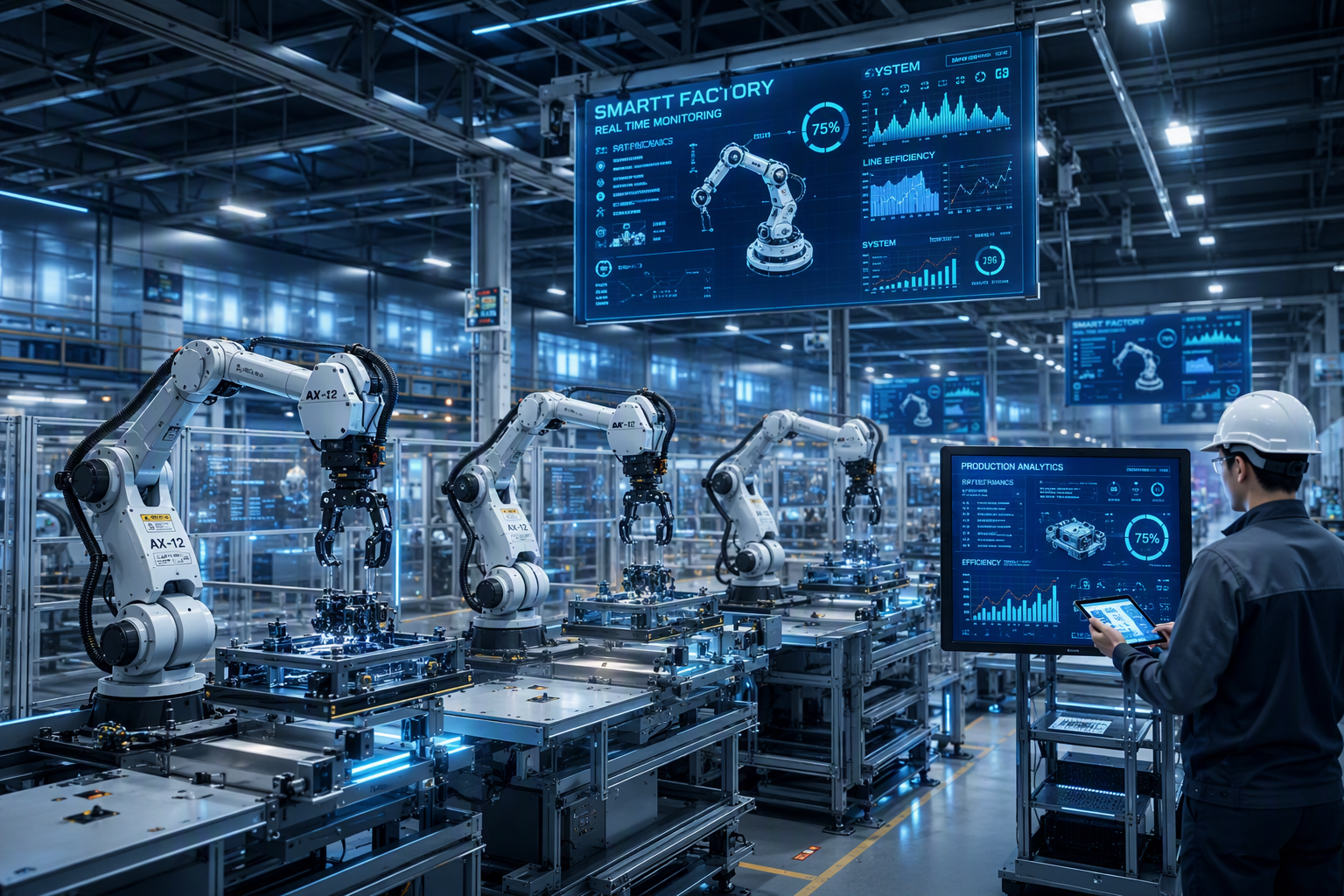
- Real time monitoring across machines and production lines.
- Better coordination between control systems and software tools.
- Faster response to problems through connected automation solutions.
- Stronger visibility for quality, output, and machine status.
For manufacturers, this trend changes how decisions are made. Instead of working with delayed reports, teams can act on current information. That improves timing, reduces waste, and helps factories become more agile without giving up the structure needed for reliable production.
Sustainable and Green Automation Practices
Sustainable automation is gaining attention because manufacturers want stronger performance with lower resource use. Green automation focuses on process optimization that reduces waste, supports energy efficiency, and keeps production more controlled from start to finish.
This trend is practical, not just image-driven. When systems run with better timing and less variation, companies often use fewer materials and avoid unnecessary machine cycles. That supports waste minimization while also helping control operating costs and maintenance needs.
As pressure grows to improve both productivity and resource use, sustainable automation will remain an important direction. Businesses are looking for systems that do more than increase output. They want solutions that also help them run cleaner, leaner, and with better long-term operating discipline.
Automation in Non-Traditional Industries
Automation is no longer limited to classic factory settings. New use cases are appearing in operations that once relied more heavily on manual coordination, basic equipment, or disconnected workflows. As automation technology becomes more flexible, adoption is spreading further.
A big reason is that many industries now face the same pressures: rising expectations for quality control, shorter lead times, and stronger supply chain performance. Automation solutions help meet those demands by improving repeatability, visibility, and process consistency across varied environments.
This expansion matters because it broadens the value of industrial automation. Businesses outside traditional high-volume manufacturing can still benefit from better tracking, more dependable execution, and lower reliance on manual work. That makes automation a wider business tool, not just a factory investment.
Cybersecurity and Risk Management in Automation
As automation systems become more connected, cybersecurity becomes a bigger priority. Manufacturers are linking machines, platforms, and data sources in ways that improve performance, but those connections also increase exposure. Strong risk management is now part of any serious automation strategy.
Key focus areas include:
- Data protection for operational and production information.
- Securing process control systems from disruption.
- Managing user access across automation systems.
- Monitoring connected devices for unusual activity.
This trend will keep growing as smart factories expand. Businesses want the benefits of connectivity without creating avoidable weakness. That means cybersecurity is no longer a side issue. It is a core requirement for safe, reliable, and trusted automation in modern industrial operations.
Benefits of Industrial Automation for Manufacturers
Industrial automation solutions help manufacturers improve speed, consistency, and visibility across production. By using automation systems more effectively, companies can strengthen operational efficiency, support quality control, and reduce unnecessary delays in the manufacturing process.
The benefits go beyond output alone. Better process optimization can lower waste, improve safety, and make operations easier to scale. The next sections look at the specific gains manufacturers can expect when automation is applied in a practical, well-planned way.
Enhanced Productivity and Efficiency
One of the clearest benefits of automation is higher productivity. Machines and software can handle repetitive tasks with steady speed and accuracy, allowing operations to move more smoothly through each production stage. That creates fewer slow points and less variation in daily output.
Automation solutions also improve operational efficiency by keeping processes aligned with set timing and control rules. Teams spend less time correcting minor issues or repeating manual actions. This makes it easier to meet schedules and use equipment more effectively across shifts.
Over time, better process optimization helps the whole operation perform more consistently. Faster cycle times, fewer interruptions, and clearer machine coordination all contribute to stronger results. For manufacturers, that means greater output without needing to rely only on adding more labor or floor space.
Improved Product Quality and Consistency
Quality matters most when customers expect the same result every time. Automation improves quality control by applying the same automation logic to each cycle of the manufacturing process. That reduces variation and helps products stay within defined standards.
You can see the benefit in several ways:
- Real time monitoring catches issues earlier in production.
- Automation logic keeps machine actions consistent.
- Minimal human intervention reduces avoidable handling errors.
- Quality control checks become more repeatable and traceable.
This consistency has a direct business impact. Better output means fewer rejected units, less rework, and more confidence in delivery performance. For manufacturers, automation supports product quality not through guesswork, but through tighter control and more dependable execution at every stage.
Cost Reduction and Waste Minimization
Automation can support cost reduction by improving how materials, machines, and labor are used. When process control is tighter, operations produce fewer errors and require less correction. That lowers scrap, reduces repeated work, and supports stronger planning against actual production requirements.
Waste minimization also comes from better machine timing and more consistent output. If equipment runs within defined limits, there is less chance of overprocessing, material loss, or unstable product quality. These improvements may seem small at first, but they add up quickly across regular production.
There is also an impact on maintenance costs. Systems that provide better monitoring can help teams address wear or irregular behavior earlier. That reduces surprise failures and supports more efficient use of service time, spare parts, and maintenance budgets over the long term.

Safer Working Conditions
Automation helps create safer working conditions by moving people away from the most physically demanding or risky parts of production. This is especially important when operations include hazardous tasks, fast-moving equipment, or difficult material handling steps.
Safety gains often come from:
- Using automation technology for hazardous tasks.
- Reducing direct exposure through minimal human intervention.
- Supporting staffing gaps linked to labor shortages.
- Assigning workers to oversight instead of risky manual activity.
The result is a better balance between people and machines. Employees can focus on supervision, quality, and problem-solving rather than constant physical handling. For manufacturers, improved safety is not separate from productivity. It supports more stable operations, fewer disruptions, and a stronger workplace overall.
Scalability and Flexibility in Operations
Manufacturers rarely operate under one fixed demand pattern for long. That is why scalability matters. Automation solutions make it easier to increase output, adjust schedules, or support new product runs without rebuilding the whole operation from scratch.
Flexible automation is especially useful in batch production, where changeovers and varied order sizes are common. It allows manufacturers to respond to market shifts while keeping operational efficiency under control. Instead of choosing between speed and adaptability, they can support both more effectively.
This flexibility also helps with growth planning. As customer demand changes, businesses can expand in phases rather than relying on major manual adjustments. That makes automation a practical tool not only for current performance, but also for future readiness across changing production environments.
Challenges Facing the Industrial Automation Industry
Even with clear benefits, industrial automation still comes with real challenges. Companies often face issues around integration, security concerns, workforce capability, and the cost of introducing new automation solutions into existing operations.
These barriers can slow process automation projects or limit results if they are not planned well. Labor shortages, legacy systems, and risk management all shape how quickly businesses can modernize. The sections below look at the main obstacles and why they matter.
Talent Shortages and Upskilling Workforce
Labor shortages remain a major issue in industrial operations. Many companies want to expand automation systems, but they also need people who can install, manage, and improve them. Without the right skills, even strong technology investments may underperform.
That is why upskilling matters. Workers need training in control software, system oversight, maintenance, and connected production tools. As technologies such as digital twin become more useful, the need for technical understanding grows. Teams must be able to interpret data and act on it effectively.
The challenge is not simply replacing labor. It is building a workforce that can support higher operational efficiency through better use of automation. Businesses that invest in training are more likely to see stronger results because people remain essential to planning, supervision, and continuous improvement.
Integration with Existing Systems
Integration is one of the hardest parts of any automation project. Many companies already rely on legacy machines, older control software, and separate planning tools. Bringing new process automation into that environment can be complex, especially when systems were not designed to work together.
The challenge often extends beyond the plant floor. Automation platforms may need to connect with ERP systems, supervisory control tools, and reporting workflows. If those links are weak, data may stay isolated and automation logic may not support the broader operation as intended.
Successful integration requires careful planning, not just new hardware. Businesses need to map how information moves, how machines respond, and where compatibility issues may appear. When this step is rushed, projects can become expensive, slow, and harder for teams to manage day to day.
Security Concerns and Data Protection
Connected automation brings strong benefits, but it also increases exposure to security threats. As more machines, platforms, and users connect across operations, cybersecurity becomes a central concern. Protecting systems is essential for both business continuity and trust.
Common risk areas include:
- Weak data protection across connected production systems.
- Gaps in risk management for remote or shared access.
- Disruption to process control through insecure connections.
- Poor visibility into devices added through automation technology.
This challenge is growing because modern automation depends on connectivity. The more information flows through the system, the more important it becomes to secure that flow. Manufacturers need clear policies, reliable access controls, and ongoing monitoring if they want connected operations without unnecessary risk.
Initial Investment and Return on Automation
The initial investment in automation can be difficult for many businesses, especially when equipment, software, integration work, and training are all needed at once. Even when the long-term value is clear, the upfront cost can delay decisions or reduce project scope.
Another challenge is proving return on investment in a way that fits real production requirements. Some benefits, such as quality gains or lower downtime, build over time rather than showing up immediately. That can make automation solutions harder to evaluate in short budgeting cycles.
Maintenance costs also need to be considered. A system that improves output still needs service, updates, and skilled support. For that reason, companies often do better when they treat automation as a phased business improvement rather than a one-time purchase.
The Future of Industrial Automation: What to Expect Ahead
The future of industrial automation will be shaped by wider use of advanced technologies, stronger connectivity, and more intelligent automation solutions. Systems will continue moving beyond simple control toward better coordination, deeper visibility, and faster response across industrial operations. That means more value from data, stronger process optimization, and broader adoption across industries that once moved more slowly.
At the same time, tools such as digital twin, machine learning, and connected control platforms will support better planning and more confident decisions. The next decade is likely to bring automation technology that is easier to scale, easier to integrate, and more closely tied to business performance. For manufacturers, the direction is clear: connected, adaptive, and more outcome-focused automation will define what comes next.
Emerging Business Models in Automation
As the industry grows, business models are evolving along with the technology. Companies are looking for automation services that go beyond equipment sales. They want support with design, integration, monitoring, updates, and long-term performance across process automation environments.
New business models often focus on:
- Ongoing automation services instead of one-time delivery.
- Flexible support for smart factories and connected operations.
- Stronger collaboration between market players and end users.
- Scalable service packages tied to production goals.
This shift matters because buyers want lower complexity and clearer value. Rather than building every capability internally, many firms will rely more on specialized partners. That can help speed deployment, improve system reliability, and make automation easier to adopt across a wider range of industrial settings.

Impact on Jobs and Industry Roles
The future of jobs in automation will be more about change than replacement. Process automation will continue to take over routine and repetitive tasks, but industrial operations will still need people for supervision, maintenance, planning, and improvement. Human intervention will remain important where judgment and coordination matter most.
Labor shortages are likely to keep pushing companies toward automation, especially in roles that are hard to fill or physically demanding. At the same time, new positions will grow around system support, control software, data use, and automation logic management.
For workers and employers, the message is practical. The industry will need fewer purely manual roles in some areas, but greater technical capability across many others. Businesses that prepare for this shift through training and role redesign will be better positioned for long-term success.
Conclusion
The future of the industrial automation industry is bright, fueled by advancements in technology and a growing demand for efficiency. As automation solutions evolve, businesses can expect smarter factories that leverage artificial intelligence and machine learning to optimize processes. Moreover, the integration of IoT devices will lead to real-time data acquisition and predictive maintenance, further enhancing operational efficiency. With collaborative robots and flexible automation becoming mainstream, labor shortages may be alleviated, ushering in a new era of productivity and innovation in industrial operations. Embracing these advancements is vital for companies aiming to thrive in a competitive landscape.
Frequently Asked Questions
Which sectors are leading the adoption of industrial automation in the US?
The manufacturing, automotive, and healthcare sectors are at the forefront of adopting industrial automation in the U.S. These industries leverage advanced technologies to enhance productivity, reduce costs, and improve efficiency, driving significant growth in automation solutions across various applications.
How is artificial intelligence changing industrial automation?
Artificial intelligence is revolutionizing industrial automation by enhancing predictive maintenance, optimizing supply chains, and enabling advanced robotics. It improves efficiency and accuracy while reducing operational costs, allowing businesses to adapt quickly to market demands and enhance overall productivity.
What does the next decade hold for industrial automation growth?
The next decade is set to witness remarkable advancements in industrial automation, driven by artificial intelligence, IoT integration, and enhanced robotics. These innovations will improve efficiency, reduce costs, and foster greater adaptability in manufacturing processes, shaping a more automated future.
You might also like