How Automation Transforms Industries and Workflows
How Automation Transforms Industries and Workflows
Key Highlights
Here are the key takeaways from our discussion on automation:
- Automation technology uses machines and software to perform tasks with minimal human intervention, boosting efficiency.
- Process automation streamlines workflows, reduces errors, and allows employees to focus on more strategic work.
- Major industries, from manufacturing to healthcare, are adopting automation to gain a competitive advantage.
- Key benefits include increased productivity, enhanced accuracy, significant cost savings, and better decision-making.
- While some jobs may change, automation also creates new opportunities that require different skills.
Introduction
Have you ever wondered how companies produce goods so quickly or how your online orders arrive so fast? The answer often lies in automation. Automation technology is transforming industries by using machines and software to handle tasks that once required constant human intervention. This isn't just about robots on an assembly line; it's a complete workflow transformation that impacts how businesses operate, from customer service to data analysis. This shift is making processes faster, more accurate, and more efficient than ever before.
Understanding Automation: Concepts and Principles
At its heart, automation technology is about using tools and systems to execute tasks without continuous manual input. The goal is to streamline processes, improve efficiency, and reduce the potential for human error in automated systems.
From simple process automation to complex AI-driven operations, automation is not a one-size-fits-all concept. Understanding the different types of automation and the principles behind them is key to seeing how they can be applied. Let’s explore what automation is, how it works, and the technologies that make it possible.
What is automation?
So, what is automation? Simply put, it is the application of technology to perform tasks with minimal human intervention. Think of it as programming a computer or a robot to handle repetitive or complex activities that people traditionally performed. The main purpose is to make processes more efficient, consistent, and reliable.
This technology-driven approach can be seen everywhere. In a factory, automated systems might involve robots assembling products on a production line. In an office setting, it could be software that automatically handles routine tasks like data entry or system backups. These automated systems are designed to follow specific rules and instructions to operate seamlessly.
Ultimately, automation is about leveraging technology to augment human effort. By handing over certain tasks to machines, you can free up time and resources to focus on more creative and strategic challenges. It’s a powerful tool for improving speed, accuracy, and overall productivity in any setting.
How does automation work in modern industries?
In modern industries, automation works through a combination of hardware and software designed to monitor and manage operations. The process typically begins with sensors that collect data from the environment, such as temperature, pressure, or position. This information is then sent to a controller.
These controllers, like Programmable Logic Controllers (PLCs), act as the brain of the system. They process the sensor data based on pre-programmed instructions and make decisions. For example, in industrial automation, a controller might detect that a part is in the correct position and signal a robotic arm to perform a task.
The final step involves actuators, which execute the controller's commands. An actuator might start a motor, open a valve, or move a component. This closed-loop system of sensing, processing, and acting allows manufacturing processes to run continuously and efficiently, often with human workers overseeing the system rather than performing the manual labor themselves.
Core technologies powering automation
Modern automation is made possible by several advanced technologies working together. These innovations have expanded automation from simple, repetitive functions to more complex and intelligent operations. They are the engine that drives today's sophisticated systems.
The integration of these technologies allows automation to become smarter and more capable. For instance, a system might use computer vision to identify a product defect and machine learning to predict when equipment needs maintenance.
Some of the most influential technologies include:
- Artificial Intelligence (AI) and Machine Learning: These allow systems to learn from data, make decisions, and adapt over time. Instead of just following pre-set rules, AI-powered automation can handle more complex and unpredictable situations.
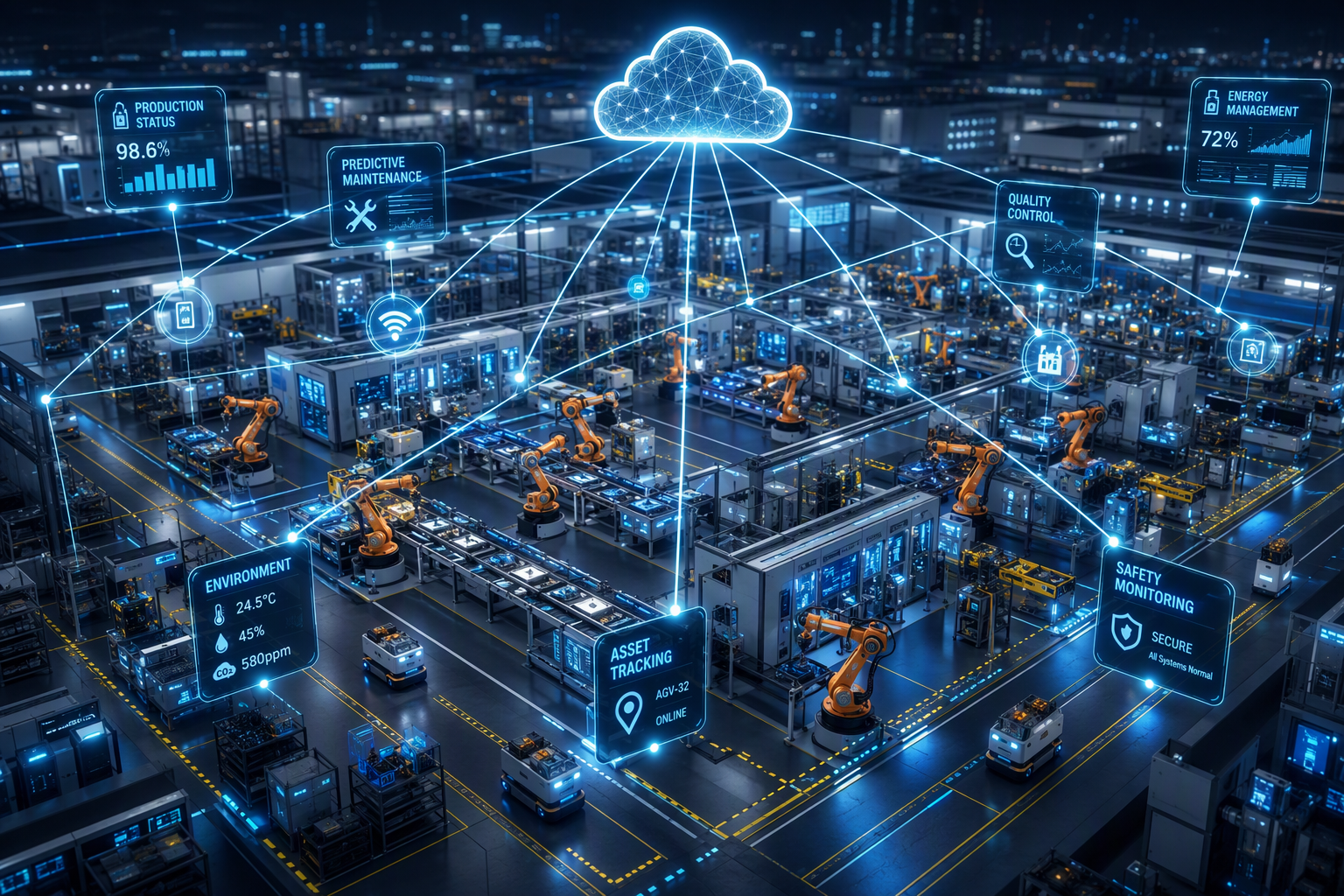
- Internet of Things (IoT): IoT involves a network of interconnected devices and sensors that collect and share data in real time. This enables better monitoring, control, and coordination of automated processes.
- Robotics: Advanced robots, including collaborative bots (cobots), can perform a wide range of physical tasks with high precision and strength, from assembly to surgery.
Automation vs. artificial intelligence: Key distinctions
People often use the terms automation and artificial intelligence (AI) interchangeably, but they refer to different concepts. While they are related and often work together, understanding their distinctions is important. Automation technology is primarily about making systems follow a set of pre-programmed rules.
AI, on the other hand, is about creating systems that can simulate human intelligence. It focuses on enabling machines to learn, reason, and solve problems. You can have automation without AI, but AI is often used to make automation smarter and more powerful, allowing it to handle complex tasks that go beyond simple repetition.
Here are the key differences:
- Task vs. Intelligence: Automation is task-oriented and designed to execute repetitive actions. AI focuses on developing systems that can think and learn, mimicking human capabilities.
- Rules vs. Adaptation: Basic automation follows explicit instructions. AI can analyze data, recognize patterns, and adapt its behavior without being explicitly programmed for every scenario.
- Goal: The goal of automation is efficiency and consistency. The goal of AI is to create intelligent machines that can handle ambiguity and make decisions.
Major Types of Automation Systems
Automation is not a single entity; it comes in many forms, each designed for different purposes and industries. The various types of automation offer a range of solutions, from handling simple digital tasks to controlling large-scale industrial machinery. Understanding these distinctions can help you see where each fits best.
Whether it’s streamlining business workflows through process automation or bringing convenience to your daily life, there’s an automation system for almost any need. Let's look at some of the main types of automation you'll encounter today, including industrial, robotic, business, and home automation.
Industrial automation solutions
Industrial automation refers to the use of control systems, robots, and machinery to manage tasks in industrial settings. Its primary goal is to optimize the production process, improve quality, and enhance safety. This form of automation is the backbone of modern manufacturing and large-scale production facilities.
These solutions rely on technologies like PLCs (Programmable Logic Controllers) to manage machinery and SCADA (Supervisory Control and Data Acquisition) systems to monitor and control entire operations from a central location. This integration ensures that every step of the production process is synchronized and efficient.
Common applications of industrial automation include:
- Assembly Lines: Robots perform tasks like welding, painting, and component assembly with speed and precision.
- Quality Control: Automated vision systems inspect products for defects, ensuring consistency and high standards.
- Material Handling: Automated guided vehicles (AGVs) transport materials and finished goods within a factory or warehouse.
Robotic process automation (RPA) in business
Robotic Process Automation (RPA) uses software "bots" to automate repetitive, rule-based digital tasks. These bots mimic human actions by interacting with applications and systems just like a person would, but with greater speed and accuracy. It's a key tool in business process management for streamlining administrative work.
RPA is designed to handle high-volume tasks that require minimal human input, freeing up employees to focus on more valuable activities. Unlike industrial robots, RPA bots operate in the digital world, working with software, emails, and data.
Here are some typical uses for RPA:
- Data Entry: Automatically transferring data from spreadsheets or forms into business systems.
- Invoice Processing: Extracting information from invoices and entering it into accounting software.
- Customer Service: Handling routine customer queries or updating customer records after an interaction.
Business process automation (BPA) fundamentals
Business Process Automation (BPA) takes a broader approach than RPA. Instead of automating individual routine tasks, BPA focuses on automating entire business workflows from start to finish. It aims to improve the efficiency and effectiveness of a whole process, often integrating multiple systems and departments.
Information technology is at the core of BPA, using software to manage and streamline complex workflows, reduce manual steps, and ensure smooth transitions between stages. A subset of this is IT automation, which specifically targets the automation of IT operations like system monitoring, software deployment, and network management.
Key goals of BPA include:
- Optimizing Workflows: Redesigning processes to be more efficient before automating them.
- Improving Transparency: Providing better visibility into the status of a process at any given time.
- Ensuring Compliance: Automating steps to ensure that regulatory and business rules are consistently followed.
Home and consumer automation trends
Automation isn't just for businesses; it's becoming increasingly common in our daily lives through home automation. This trend, also known as consumer automation, involves using smart devices to create connected, convenient, and efficient smart homes. The goal is to automate household tasks for better comfort and control.
These systems connect various devices over a network, allowing you to manage them from a central hub, like a smartphone app or a voice assistant. This integration provides convenience and can also lead to significant savings, particularly in energy usage.
Popular home automation applications include:
- Smart Lighting: Programming lights to turn on or off at specific times or based on motion.
- Climate Control: Using smart thermostats to automatically adjust heating and cooling for optimal comfort and energy efficiency.
- Home Security: Automating security cameras, door locks, and alarms for enhanced safety and remote monitoring.
Prominent Industries Adopting Automation
The adoption of automation technology is widespread, touching nearly all sectors of the economy. This broad application of technology is driving what many consider a new industrial revolution, where efficiency, data, and intelligent systems are paramount. Various industries are leveraging automation to solve unique challenges and stay competitive.
From the factory floor to the hospital room, automation is reshaping how work gets done. Let's explore some of the prominent industries that are leading the way in adopting automation and see how it's transforming their operations.
Manufacturing and automotive sector
The manufacturing and automotive sectors have long been pioneers in industrial automation. Here, automation is essential for managing complex manufacturing processes and achieving the high volume and precision required. Robotic arms are a common sight on production lines, performing tasks like welding, painting, and assembly.
Automation has revolutionized these industries by enabling continuous production, reducing errors, and improving worker safety. Automated quality control systems use cameras and sensors to inspect parts at high speed, ensuring that every product meets strict standards before it leaves the factory.
This transformation boosts efficiency and consistency across the board.
| Aspect of Manufacturing | Manual Process | Automated Process |
|---|---|---|
| Assembly | Workers manually assemble parts. | Robotic arms assemble parts 24/7 with high precision. |
| Quality Control | Human inspectors visually check products. | High-speed cameras and sensors detect defects. |
| Material Handling | Forklifts and carts are operated by people. | Automated guided vehicles (AGVs) move materials. |
Healthcare and medical services
Automation is making a significant impact on healthcare and medical services, improving both clinical outcomes and administrative efficiency. In hospitals and labs, automation helps reduce the workload on human workers, allowing them to focus more on patient care.
Process automation handles routine administrative tasks like appointment scheduling, billing, and managing patient records, which helps reduce errors and save time. In the clinical setting, artificial intelligence and robotics are transforming diagnostics and treatment, leading to more accurate and less invasive procedures.
Key applications in healthcare include:
- Robotic Surgery: Surgeons use robotic systems to perform complex procedures with greater precision and control.
- AI-Powered Diagnostics: AI algorithms analyze medical images like X-rays and MRIs to help radiologists detect diseases earlier and more accurately.
- Lab Automation: Automated systems handle and analyze samples, speeding up test results and reducing the risk of contamination.
Retail and ecommerce operations
In the fast-paced world of retail and ecommerce, automation technology is crucial for meeting customer demands for speed and convenience. From the warehouse to the checkout counter, automation is streamlining ecommerce operations and enhancing customer satisfaction.
One of the biggest impacts is in order fulfillment. Large ecommerce companies use robots in their warehouses to pick, pack, and sort items, which significantly speeds up the time it takes to get an order out the door. This allows them to handle a massive volume of orders with high accuracy.
Other key automation trends in retail include:
- Automated Checkout: Cashier-less stores use computer vision and sensors to let customers grab items and leave, with the payment processed automatically.
- Inventory Management: Automated systems track stock levels in real time, preventing out-of-stock situations and optimizing inventory.
- Personalized Marketing: AI-driven algorithms analyze customer data to offer personalized product recommendations and promotions.
Finance, banking, and insurance
The finance, banking, and insurance industries rely heavily on process automation to handle vast amounts of data and transactions securely and efficiently. With a need for high data accuracy and compliance, automation is a natural fit for these sectors.
In the banking industry, automation streamlines back-office operations with minimal human intervention. This includes tasks like processing loan applications, verifying customer information, and managing compliance reporting. By automating these processes, financial institutions can reduce errors, lower operational costs, and speed up services.
Common uses of automation in this sector include:
- Fraud Detection: AI-powered systems monitor transactions in real time to identify and flag suspicious activity.
- Customer Service: Chatbots and virtual assistants handle common customer inquiries, providing 24/7 support.
- Underwriting and Claims Processing: Automation helps insurers assess risk and process claims faster by automatically gathering and analyzing relevant data.
Logistics, transportation, and supply chain
Automation is revolutionizing the logistics, transportation, and supply chain sectors by improving operational efficiency from end to end. Automated systems are making it possible to move goods faster, more reliably, and at a lower cost.
In warehouses, automated systems manage inventory, sort packages, and load trucks, minimizing manual labor and speeding up fulfillment. On the road, the development of autonomous vehicles promises to transform how goods are transported, potentially leading to safer and more efficient long-haul shipping.
Key automation applications in this field are:
- Warehouse Automation: Robotic systems for picking and packing, along with automated conveyor belts, streamline warehouse operations.
- Autonomous Vehicles: Self-driving trucks and delivery drones are being tested to automate last-mile and long-haul transportation.
- Supply Chain Management: AI-powered software optimizes routes, predicts demand, and manages inventory across the entire supply chain for better visibility and control.
Energy and utilities management
In the energy and utilities sector, automation is key to improving energy efficiency, ensuring reliability, and managing complex infrastructure. An automation system can monitor and control energy production, distribution, and consumption in real time.
Smart grids use automation to dynamically manage electricity distribution, balancing supply and demand to prevent outages and integrate renewable energy sources more effectively. In commercial and residential buildings, building automation systems optimize energy usage by controlling HVAC, lighting, and other systems based on occupancy and time of day.
Other important uses include:
- Predictive Maintenance: Sensors and AI monitor equipment in power plants to predict failures before they happen, preventing downtime.
- Remote Monitoring: SCADA systems allow operators to monitor and control remote assets like pipelines and substations from a central location.
- Optimized Energy Consumption: Automated systems help industrial facilities reduce their energy usage by adjusting operations based on real-time energy prices and demand.
Key Benefits of Automation Implementation
Why are so many businesses embracing automation? The answer lies in the significant benefits it offers. The advantages of implementing automation go far beyond just speed. They can fundamentally improve how a business operates, leading to better outcomes across the board.
From major cost savings and improved quality control to boosts in productivity, automation helps organizations achieve greater operational efficiency and a stronger competitive edge. Let’s explore some of the key benefits of automation that are driving its widespread adoption.
Boosting efficiency and productivity
One of the most immediate benefits of automation is a dramatic increase in efficiency and productivity. Automation technology allows businesses to perform tasks faster and more continuously than manual methods. Automated systems can operate 24/7 without breaks or fatigue, maximizing output.
By taking over repetitive and time-consuming tasks, automation frees up employees to concentrate on more complex, strategic, and creative work. This shift in focus not only improves operational efficiency but also makes better use of your team's skills.
Here’s how automation drives productivity:
- Faster Execution: Automated systems complete tasks in a fraction of the time it takes humans.
- Reduced Downtime: Continuous operation and a reduction in human errors lead to smoother workflows with fewer interruptions.
- Increased Throughput: Businesses can process more work, whether it’s manufacturing products, handling customer requests, or analyzing data.
Improving accuracy and consistency
Humans are prone to making mistakes, especially when performing repetitive tasks. Automated systems, however, execute tasks with a high degree of accuracy and consistency every single time. They follow their programming precisely, which eliminates the variability and human errors associated with manual work.
This enhanced accuracy is crucial in many areas, from manufacturing where it ensures product quality, to finance where it prevents costly accounting errors. Consistent performance means you can rely on the output, leading to better quality control and more dependable operations overall.
Automation improves accuracy by:
- Eliminating Typos and Data Entry Errors: Software bots can enter data without making the mistakes a person might.
- Ensuring Uniformity: In manufacturing, automation ensures that every product is made to the exact same specifications.
- Following Rules Perfectly: Automated systems don't forget steps or take shortcuts, ensuring processes are followed correctly every time.
Cost savings for businesses
While there can be an upfront investment, automation solutions often lead to significant long-term cost savings. One of the most direct savings comes from reduced labor costs, as automation can handle tasks that would otherwise require manual effort.
Beyond labor, automation helps optimize resource utilization. For example, automated systems can reduce energy consumption by turning off lights and equipment when not in use. They can also minimize waste in manufacturing by improving precision and reducing defective products.
Here are some ways automation leads to cost savings:
- Lower Labor Costs: Automating repetitive tasks reduces the need for manual labor for those specific functions.
- Improved Resource Management: Better control over materials and energy leads to less waste and lower utility bills.
- Reduced Costs from Errors: By improving accuracy, automation avoids the expensive consequences of mistakes, such as rework or compliance fines.
Enhancing decision-making with data
Modern automation systems are excellent at collecting and processing vast amounts of data. This capability, especially when combined with artificial intelligence and data analytics, provides businesses with valuable insights that can lead to better decision-making.
Information technology infrastructure powered by automation can monitor processes, track performance metrics, and identify trends that might be invisible to a human observer. This data-driven approach allows leaders to move beyond guesswork and make strategic choices based on real evidence.
Automation enhances decision-making by:
- Providing Real-Time Data: Leaders can see how operations are performing at any moment and react quickly to issues.
- Identifying Patterns and Trends: AI can analyze historical data to predict future outcomes or identify opportunities for improvement.
- Generating Actionable Insights: Automated reports and dashboards can highlight key performance indicators (KPIs) and suggest areas that need attention.
Fostering innovation and competitiveness
By freeing employees from mundane, repetitive tasks, automation creates space for innovation. When your team can focus on problem-solving, creative thinking, and strategic planning, they are better positioned to develop new ideas, products, and services.
This ability to innovate gives businesses a significant competitive advantage. Companies that leverage advanced technologies to become more efficient and agile can respond more quickly to market changes and customer needs. Automation allows businesses to scale operations, improve quality, and lower costs—all factors that help them stand out from the competition.
Automation fosters a competitive edge by:
- Increasing Agility: Automated processes can be quickly adapted to meet new demands or market conditions.
- Enabling Focus on High-Value Work: Employees can dedicate their time to activities that drive growth and innovation.
- Improving Customer Experience: Faster service, higher quality, and personalization all contribute to greater customer loyalty.
Transformation of Workflows Through Automation
Automation does more than just speed up individual tasks; it fundamentally transforms entire workflows. This workflow automation is a cornerstone of digital transformation, changing how work is organized, executed, and managed. It redefines the role of human involvement, shifting it from manual execution to strategic oversight.
By implementing process automation, organizations can create more connected, efficient, and intelligent ways of working. Let's look at how automation streamlines repetitive work, improves collaboration between people and machines, and accelerates organizational change.
Streamlining repetitive tasks
One of the most powerful applications of automation technology is its ability to streamline repetitive tasks. Many jobs involve mundane tasks that are time-consuming but don't require much critical thinking. Automation is perfectly suited to take over this kind of work.
By automating these processes, companies can free their employees from the drudgery of manual labor. This not only boosts morale and job satisfaction but also allows workers to apply their skills to more engaging and valuable activities that automation can't handle.
Here are examples of repetitive tasks that can be streamlined:
- Data Entry and Migration: Copying and pasting information between different systems.
- Generating Reports: Automatically compiling data from various sources into a standardized report.
- Sending Standardized Communications: Automating email responses or notifications based on specific triggers.
Enhancing collaboration between humans and machines
The rise of automation doesn't always mean replacing human workers. In many cases, it leads to enhanced collaboration between people and machines, where each plays to their strengths. This partnership combines the speed, precision, and power of automation with the creativity, critical thinking, and adaptability of human capabilities.
For example, collaborative robots, or "cobots," are designed to work safely alongside humans on a factory floor. The cobot might handle the heavy lifting or repetitive motions, while the human worker performs the final assembly or quality check. This human involvement ensures flexibility and oversight.
This collaborative approach leads to:
- Augmented Abilities: Machines can augment human skills, allowing people to achieve more than they could alone.
- Improved Safety: Robots can handle dangerous or physically strenuous tasks, reducing the risk of injury to workers.
- Greater Flexibility: Humans can intervene to handle unexpected issues or make adjustments that a rigid automated system couldn't.
Accelerating digital transformation in organizations
Adopting automation solutions is a key driver of digital transformation. When an organization decides to automate its processes, it is forced to re-examine how it operates. This often leads to optimizing workflows and updating legacy systems, which accelerates broader organizational change.
Implementing automation requires a deep look into existing IT operations and business processes to identify inefficiencies. The journey of implementing automation solutions naturally pushes a company to become more modern, data-driven, and agile.
Automation accelerates digital transformation by:
- Modernizing IT Infrastructure: Integrating automation often requires upgrading systems and improving connectivity.
- Promoting a Data-Driven Culture: Automation provides the data needed to make informed decisions and continuously improve processes.
- Forcing Process Optimization: You can't automate a broken process. The first step is often to fix and streamline the workflow itself.
Challenges and Considerations in Adopting Automation
While the benefits of automation are clear, the path to implementation has its challenges. Adopting automation is more than just installing new software or machinery; it's a significant project that requires careful planning and management.
Companies must consider technical hurdles like integration with existing systems, the impact on their workforce and the need for new skills, and the complexities of organizational change management. Let's examine some of the key considerations to keep in mind when embarking on an automation journey.
Integration with existing systems
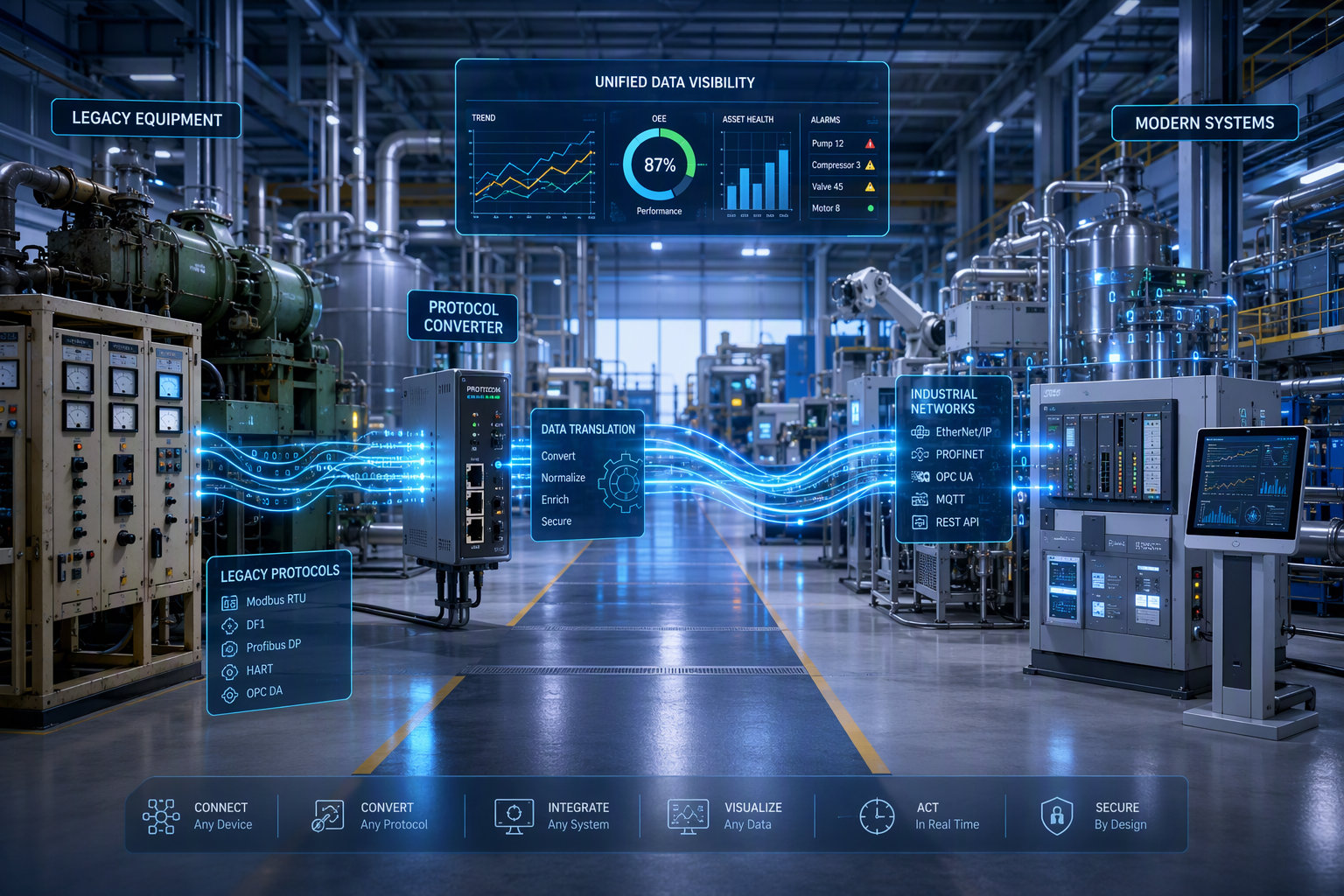
One of the biggest technical hurdles in adopting automation is integration with existing systems. Many organizations rely on legacy systems that were not designed to communicate with modern automation platforms. Making these different technologies work together seamlessly can be complex and expensive.
A new automation system needs to pull data from and push data to other applications, and any breakdown in this communication can disrupt IT processes. A successful integration strategy requires careful planning and often involves custom development or specialized middleware to bridge the gap between old and new.
Key integration challenges include:
- Compatibility Issues: Ensuring that the new automation software can work with older databases and applications.
- Data Silos: Breaking down barriers between different systems to allow for a free flow of information.
- Maintaining Security: Ensuring that the integration doesn't create new vulnerabilities in the IT environment.
Workforce impacts and skills evolution
A major concern surrounding automation is its impact on the workforce, particularly the potential for job loss. While it's true that automation can displace human workers from certain roles, especially those that are repetitive, it also creates new opportunities. History shows that technological shifts lead to a skills evolution, not just an elimination of jobs.
The focus shifts from manual labor to roles that manage, maintain, and improve automated systems. This creates a demand for new skills in areas like data analysis, robotics, and AI programming. For businesses, this means investing in training and upskilling programs to prepare their workforce for the future.
Key considerations for the workforce include:
- Reskilling and Upskilling: Providing training to help employees transition into new roles.
- Job Redesign: Redefining job descriptions to focus on tasks that require human strengths like creativity and problem-solving.
- Managing the Transition: Communicating openly with employees about changes and supporting them through the transition.
Organizational change management
Technology is only one part of the equation; the human element is just as important. Successful automation requires effective organizational change management. Employees may be resistant to change, fearing that automation will make their jobs obsolete or difficult.
A clear adoption strategy that involves employees in the process is crucial. Leaders need to communicate the vision behind the process automation, explain how it will benefit both the company and the employees, and provide the necessary support and training. Human involvement is key to ensuring that the new systems are embraced rather than rejected.
A strong change management plan should include:
- Clear Communication: Explaining the "why" behind the change and keeping everyone informed.
- Employee Engagement: Involving team members in the design and implementation of new workflows.
- Leadership Support: Having strong, visible support from management to champion the initiative.
Conclusion
In summary, automation is reshaping industries and workflows by enhancing efficiency, accuracy, and innovation. As businesses continue to adopt various forms of automation—from industrial solutions to robotic process automation—they position themselves for significant improvements in productivity and decision-making. However, it’s essential to navigate the challenges that accompany this transformation, such as workforce impacts and system integration. Embracing automation not only streamlines repetitive tasks but also fosters collaboration between humans and machines, paving the way for a more competitive future. If you're ready to explore how automation can elevate your business, get a free consultation with our experts today!
Frequently Asked Questions
What is process automation and why is it important?
Process automation is the use of technology to execute recurring routine tasks or processes in a business where minimal human intervention is required. It is important because it boosts operational efficiency, reduces errors, lowers costs, and frees up employees to focus on more strategic work, leading to better business process management.
Can automation lead to job loss in certain sectors?
Yes, automation can lead to job loss, particularly in roles involving repetitive tasks. However, it also creates new jobs that require different skills. This skills evolution means that while some jobs are displaced by industrial automation and advanced technologies, new roles emerge for human workers to manage and collaborate with these systems.
What is the future outlook for automation technology?
The future outlook for automation technology is one of continued growth and innovation. Driven by advancements in artificial intelligence and IoT, automation will become more intelligent and integrated into our lives. It will remain a key driver of digital transformation, fostering new efficiencies and creating smarter, more adaptive systems across all industries.
You might also like