What is Automation? A Comprehensive Overview Explained
What is Automation? A Comprehensive Overview Explained
Key Highlights
- Automation uses technology to perform tasks with minimal human guidance, boosting efficiency and reducing errors.
- There are many types of automation, including industrial automation for manufacturing and robotic process automation for business tasks.
- Key benefits include increased productivity, better accuracy, cost savings, and improved workplace safety for human workers.
- Automation solutions are evolving by integrating artificial intelligence and machine learning for more complex decision-making.
- From smart homes to cashier-less stores, automation is becoming increasingly common in our daily lives.
Introduction
Have you ever wondered how things get done so quickly and precisely in the modern world? The answer often lies in automation. In simple terms, automation is the use of technology to accomplish tasks with little to no human intervention. This powerful approach is designed to streamline everything from complex industrial processes to simple daily chores. It helps improve efficiency, reduce mistakes, and allows people to focus on more creative and strategic work.
Defining Automation in Modern Contexts
At its core, automation involves using various tools and systems to carry out activities without constant manual input. Think of a robot on an assembly line or a smart thermostat in your home. These automation technologies are programmed to perform specific actions, reducing the need for human intervention.
The main goal of automation is to make processes smoother and more effective. By streamlining the production process or managing routine business tasks, it significantly boosts operational efficiency. This is vital for modern industries looking to stay competitive, consistent, and innovative.
Origins and Evolution of Automation
The concept of automation is not new, but it has changed dramatically over the years. It began with very basic automation in specific, isolated tasks. Early systems were designed to handle simple, repetitive actions, marking the first step toward reducing manual labor in factories.
With ongoing technological advances, automation systems grew far more complex. The introduction of computers and programmable controllers allowed for more sophisticated operations. This evolution was particularly transformative in the manufacturing process, where machines could be programmed to handle a series of steps.
Today, automation has evolved into comprehensive, integrated systems. The development of industrial robots and smart technologies has created factories where entire production lines are automated. This journey from simple mechanical aids to intelligent, interconnected systems highlights a significant shift in how industries operate and produce goods.
Key Elements and Technologies Enabling Automation
Modern automation is powered by a combination of hardware and software working together. These various technologies are the building blocks that allow machines to perform tasks without constant direction from human operators. Engineers and developers create the instructions, or algorithms, that guide these systems.
Several key technologies are foundational to most automation systems. These components gather information, process it, and execute physical actions. Some of the most important ones include:
- Programmable Logic Controllers (PLCs)
- Industrial Robots
- The Internet of Things (IoT)
These elements form the backbone of automation. For example, IoT sensors might collect data, which is then processed by a system running on PLCs, ultimately instructing industrial robots on how to act. This synergy is what makes powerful and efficient automation possible across so many different fields.
Major Types of Automation
Automation isn't a single concept but rather a broad field with different approaches tailored to specific needs. Each type of automation offers unique capabilities, from handling physical production to managing digital information. Understanding these categories can help you see how widely automation is applied.
The major types range from fixed or programmable automation, often seen in manufacturing, to more advanced flexible automation that can handle variations. Furthermore, technologies like industrial automation, cognitive automation, and robotic process automation address different challenges in business and production. Let's explore some of these key types in more detail.
Industrial Automation and Its Applications
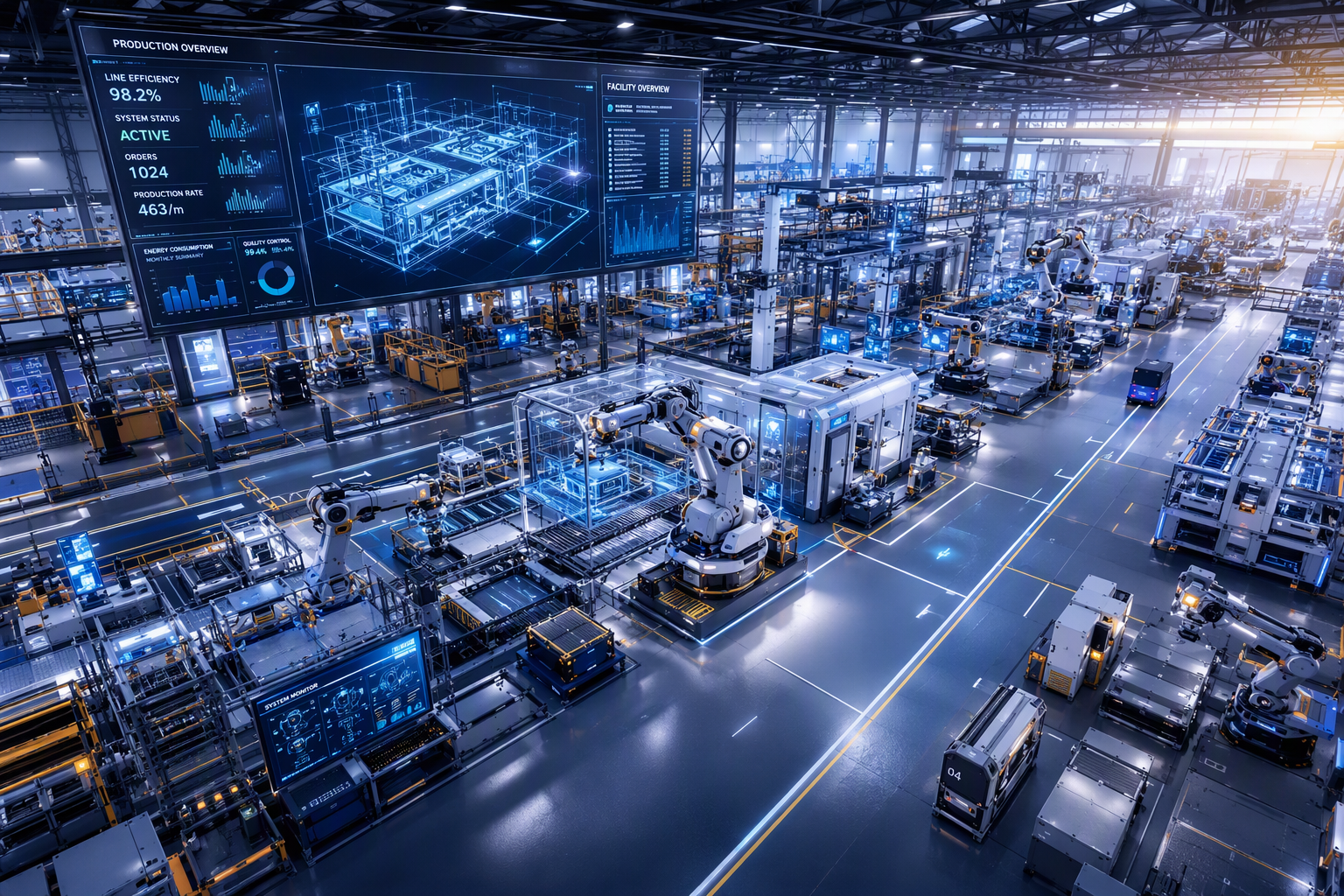
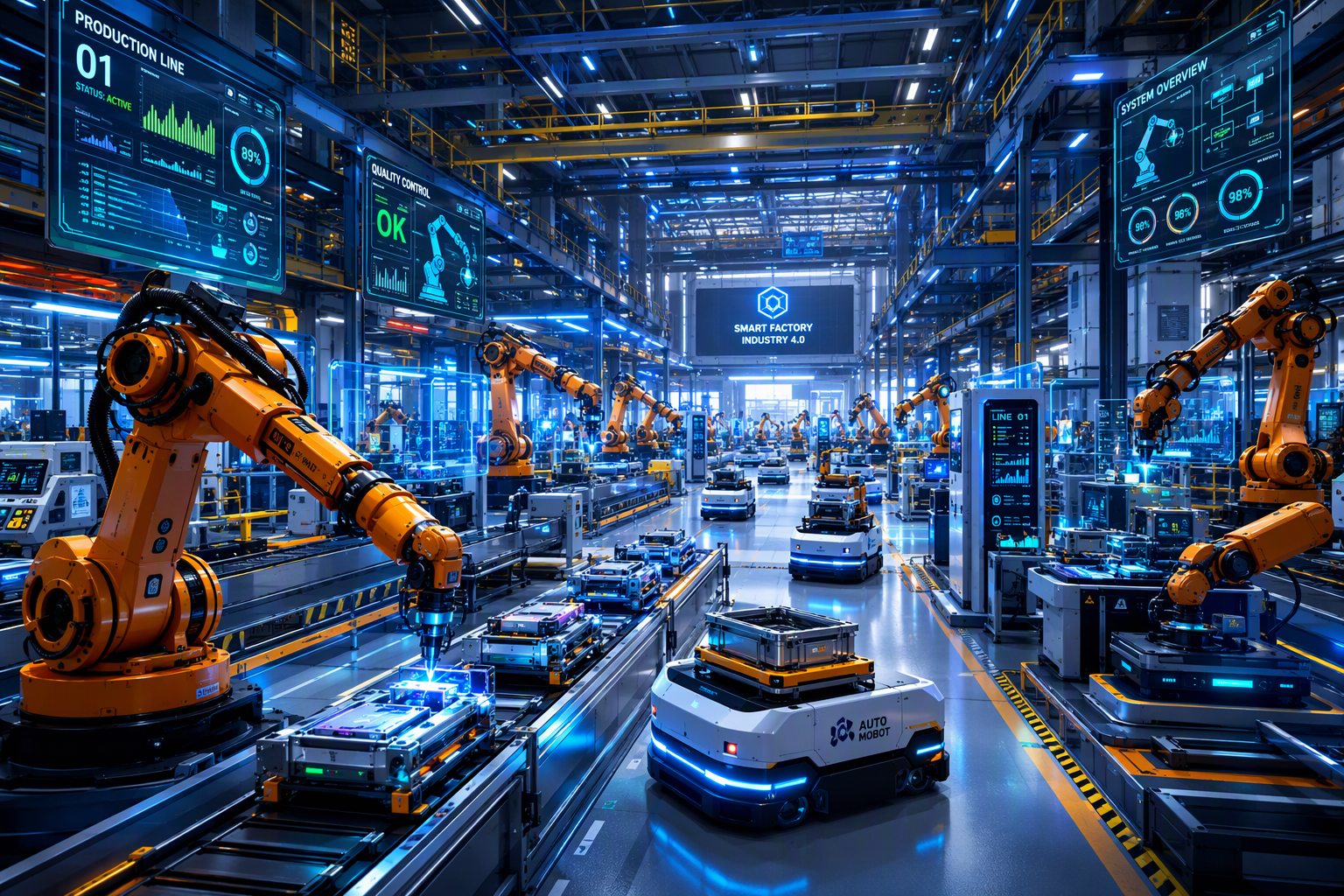
Industrial automation is all about using control systems, machinery, and robots in manufacturing and other industrial settings. Its primary goal is to optimize the production process, from assembly and packaging to quality control. You can see this in action on automotive production lines, where industrial robots perform tasks like welding and painting with incredible speed and precision.
This application of automation dramatically improves efficiency. By automating key parts of the manufacturing process, companies can increase their output, maintain consistent product quality, and ensure that tasks are completed safely. It allows for a continuous flow of work, minimizing downtime and human error.
Many industries rely on industrial automation to stay competitive. Here are a few examples of its application:
| Industry | Application of Industrial Automation |
|---|---|
| Automotive | Using robots for welding, painting, and assembling vehicles on production lines |
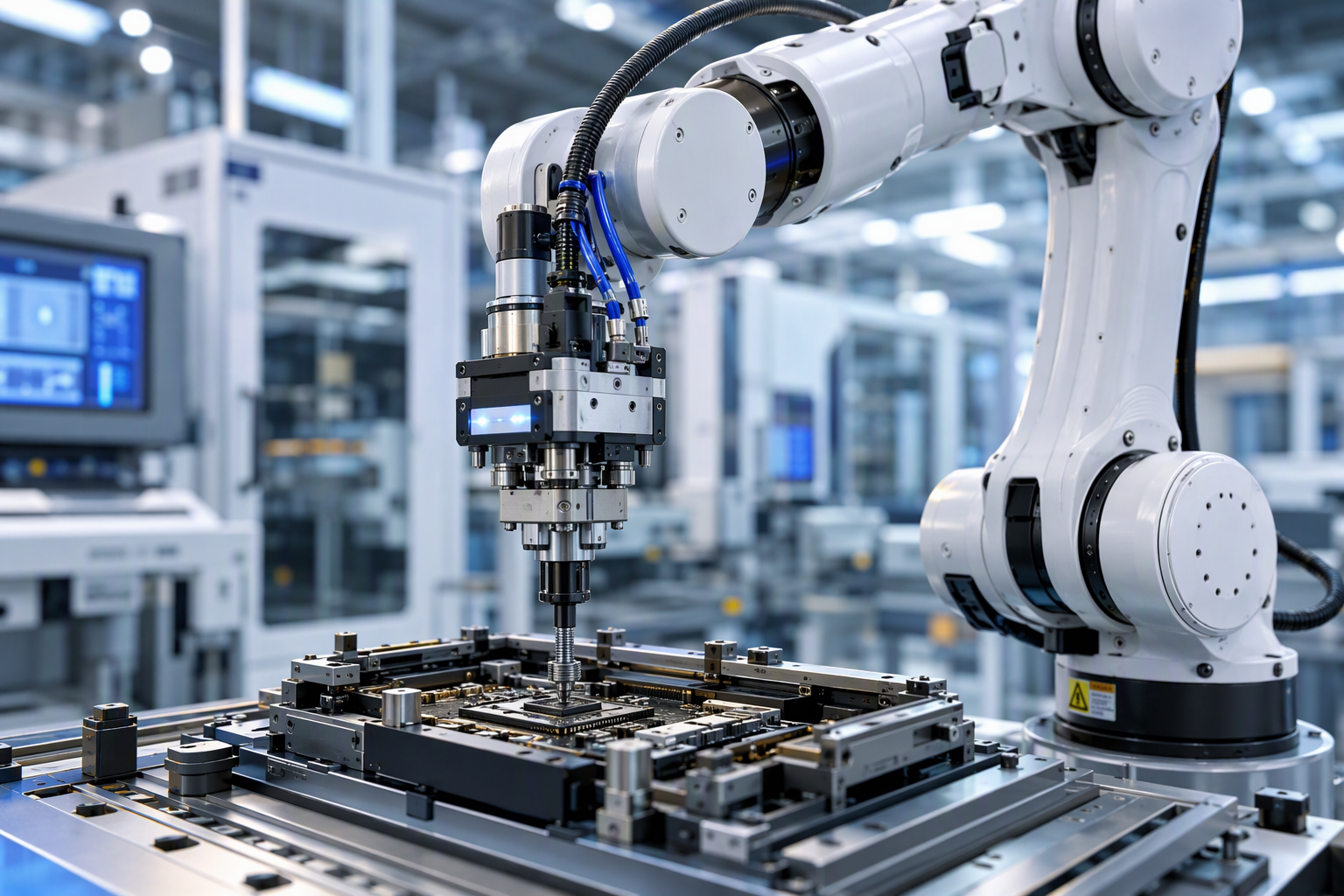
| Electronics | Automating the precise placement of tiny components on circuit boards. |
| Food & Beverage | Employing automated systems for sorting, processing, packaging, and palletizing goods. |
Robotic Process Automation (RPA) in Business
Robotic Process Automation, or RPA, uses software "bots" to automate digital tasks that are typically repetitive and rule-based. Instead of physical robots, RPA mimics human actions on a computer, interacting with applications and systems just like a person would. This type of automation system is perfect for handling high-volume, repetitive tasks that don't require complex decision-making.
The main benefit of RPA is a boost in operational efficiency. By taking over tedious processes, it frees up employees to focus on more strategic work that requires human creativity and judgment. It reduces errors associated with manual data entry and speeds up workflows significantly. This makes it a key tool in business process management.
Common tasks automated with RPA include:
- Data entry and migration between systems
- Filling out forms and processing invoices
- Extracting data from documents
Cognitive and Artificial Intelligence-Based Automation
Going beyond simple rule-based tasks, cognitive automation integrates artificial intelligence (AI) and machine learning to handle more complex processes. This advanced form of automation enables systems to analyze unstructured data, understand patterns, and make decisions that once required human cognitive abilities.
Technologies like machine learning allow these automation solutions to learn and improve over time. For example, AI can analyze vast amounts of medical data to help doctors with diagnoses or use data analytics to predict market trends. Computer vision, another AI-powered technology, allows machines to "see" and interpret the world, which is crucial for applications like self-driving cars.
The relationship between AI and automation is synergistic. AI gives automation the "brains" to perform tasks that are not strictly repetitive, opening up new possibilities. This enables smarter, more adaptive automation that can tackle a wider range of challenges in business, science, and everyday life.
Home and Retail Automation Systems
Automation is no longer confined to factories; it has entered our homes and shopping experiences. Home automation involves integrating smart devices and systems to manage tasks like lighting, temperature, and security. These systems offer convenience, energy savings, and enhanced control over your living environment.
Similarly, the retail industry is using automation to transform the customer experience. From AI-driven personalized marketing to cashier-less stores, these technologies are streamlining operations. An automation system can manage inventory, predict demand for consumer goods, and even handle customer inquiries, pushing beyond traditional human capabilities.
Here are some common examples you might encounter:
• Smart home devices like Amazon Alexa or Google Home
• Automated checkout systems in grocery stores
• Smart thermostats that learn your preferences
How Automation Works: Processes and Mechanisms
So, how does automation actually work? At its heart, it is about creating a system that can execute a series of steps without continuous human guidance. Automation processes are carefully designed workflows that use technology to manage everything from a simple task to a complex production process.
These processes rely on various automation technologies, including sensors to gather data, software to make decisions, and machines or robots to perform actions. By replacing or assisting human labor in specific areas, these systems can operate faster, more consistently, and often more safely. The following sections will break down these mechanisms further.
Process Automation Explained
Process automation focuses on streamlining entire business or IT processes that consist of multiple steps. It's designed to handle repetitive processes from start to finish, which is especially useful for routine tasks that are time-consuming but essential. The primary goal is to improve operational efficiency and ensure consistency.
Unlike automating a single action, process automation looks at the entire workflow. For example, in IT processes, it could involve everything from monitoring system health to deploying software updates and generating reports, all without manual intervention. This approach helps organizations reduce errors, cut costs, and respond faster to business needs.
Implementing process automation typically involves these key steps:
- Identifying and mapping the existing manual process.
- Choosing the right automation tools for the tasks involved.
Developing, testing, and deploying the automated workflow.
Role of Sensors, Software, and Robotics
An effective automation system is like a team, with different components playing specialized roles. Sensors act as the "senses" of the system, collecting data from the environment. They can measure temperature, position, light, and many other variables, providing the raw information needed for a decision.
Software is the "brain" that processes this information. It runs on a controller and uses the data from sensors to make decisions based on its programming. This software dictates what actions need to be taken and when. It is the logic hub that connects information to action, crucial for tasks like quality control on production lines.
Finally, robotics and other machinery are the "hands" that carry out the physical tasks. Guided by the software, these machines perform actions like assembling parts, moving materials, or packaging products. The seamless interaction between sensors, software, and robotics is what enables an automation system to function efficiently and reliably.
Integration with Artificial Intelligence and Machine Learning
The integration of artificial intelligence (AI) and machine learning (ML) is taking automation to a new level. While traditional automation follows pre-programmed rules, AI-powered automation can learn, adapt, and make decisions in more dynamic situations. These advanced technologies are making automation solutions smarter and more capable.
Machine learning algorithms enable systems to analyze data, identify patterns, and improve their performance over time without being explicitly reprogrammed. For instance, in data analytics, an ML-powered automation tool can detect anomalies or predict future outcomes, providing insights that a rule-based system would miss.
This powerful combination is what drives some of today's most innovative technologies. From predictive maintenance in factories to personalized content recommendations online, the fusion of AI and automation is creating systems that are not just efficient but also intelligent. It represents a shift from simply doing tasks to understanding and optimizing them.
Examples of Automation in Everyday Life
You might be surprised by how much automation you already use daily. It's not just for factories and big businesses; it's in our homes, on our roads, and even in how we shop and communicate. Many of the smart devices we rely on are examples of automation simplifying our lives.
From automated customer service chatbots that answer your questions to the cruise control in your car, these systems handle repetitive tasks so you don't have to. The rise of smart homes, autonomous vehicles, and AI-powered services shows that automation is becoming an integral part of modern living. Let's look at a few specific examples.
Smart Homes and Connected Devices
Smart homes are a prime example of automation enhancing our daily routines. Through a network of connected devices, home automation systems can manage various household functions for you. This is made possible by the Internet of Things (IoT), which allows different consumer goods and appliances to communicate with each other and a central hub.
Imagine your lights turning on as you arrive home, your thermostat adjusting to save energy while you're away, or your coffee maker starting automatically in the morning. These are all simple but powerful examples of how automation adds convenience and efficiency to your life.
Some popular smart home technologies include:
- Smart speakers like Amazon Echo and Google Nest Hub
- Smart lighting systems that can be controlled remotely
- Automated security cameras and smart locks
Automated Transportation Solutions
Automation is also revolutionizing how we move people and goods. The development of autonomous vehicles, or self-driving cars, is one of the most talked-about advancements in this area. These vehicles use a complex array of sensors, cameras, and AI to navigate roads with minimal human intervention, promising a future with safer and more efficient travel.
Beyond personal transport, automation is crucial in logistics and manufacturing. The industrial internet of things (IIoT) connects vehicles and equipment in warehouses and factories. Automated Guided Vehicles (AGVs) are used for material handling, autonomously transporting parts to production lines.
This type of automation streamlines the supply chain, reduces the risk of accidents associated with manual transport, and ensures that materials are delivered exactly where and when they are needed. It is a key factor in making modern logistics and manufacturing so efficient.
Customer Service and AI Chatbots
Have you interacted with a chatbot on a website recently? If so, you've experienced automation in customer service. Companies are increasingly using AI chatbots to handle common inquiries and repetitive tasks, freeing up human agents to deal with more complex issues. This automation system can provide instant support to customers 24/7.
These chatbots are programmed to understand and respond to a wide range of questions. By automating the initial stages of customer interaction, businesses can improve response times and ensure a consistent level of quality control in the information they provide. It's an efficient way to manage a high volume of requests.
Key benefits of automated customer service include:
- Immediate responses to customer queries
- 24/7 availability for support
- Handling multiple conversations simultaneously
Benefits of Implementing Automation
Adopting automation offers a wide array of advantages for businesses of all sizes. The benefits of automation extend far beyond just speed, touching on quality, cost, and even employee satisfaction. By improving operational efficiency and quality control, companies can deliver better products and services.
This technological shift also allows human workers to move away from tedious, repetitive, or dangerous tasks to more engaging and valuable roles. Ultimately, embracing automation can provide a significant competitive advantage in today's fast-paced market. Let's examine some of these benefits more closely.
Enhancing Efficiency and Productivity
One of the primary drivers for adopting automation is the significant boost it provides to efficiency and productivity. Automated systems can perform tasks much faster than humans and can operate continuously, 24 hours a day, 7 days a week, without breaks or fatigue.
This is especially true for repetitive tasks. When these are handed over to machines, the entire workflow accelerates. Whether it's a simple type of automation like RPA or a complex industrial robot, the result is higher output in a shorter amount of time. This increased operational efficiency allows businesses to do more with the same or fewer resources.
By streamlining operations, companies can reduce lead times, process more orders, and scale their operations without a proportional increase in labor. This direct impact on productivity is one of the most compelling reasons businesses choose to invest in automation.
Improving Accuracy and Reducing Errors
Humans are prone to making mistakes, especially when performing repetitive tasks over long periods. Automation, on the other hand, excels at consistency. An automation system is designed to perform a task with the same precision and accuracy every single time, which is critical for quality control.
By reducing the need for human intervention in certain steps of a production process, you can dramatically cut down on errors. This leads to higher-quality products, less waste, and greater customer satisfaction. In fields where even a small mistake can be costly or dangerous, this level of accuracy is invaluable.
Automation is key for improving accuracy in areas such as:
- Assembling products with tight tolerances
- Entering and processing large volumes of data
- Conducting standardized quality checks
Scalability and Cost Savings for Businesses
Automation offers powerful financial and operational advantages, particularly in scalability and cost savings. Scalability means a business can handle a growing amount of work without a massive increase in costs. An automated system can often manage a higher volume simply by running for longer hours, unlike manual processes that would require hiring more people.
While the initial investment in automation can be high, it typically leads to significant long-term cost savings. These savings come from several areas, including reduced labor costs, lower error rates that lead to less waste, and more efficient use of energy and raw materials.
For example, implementing industrial automation in a production process might reduce the number of workers needed on an assembly line. Over time, these reduced labor costs, combined with higher output and better quality, provide a strong return on the initial investment.
Challenges and Considerations in Automation Adoption
While automation offers many benefits, adopting it is not without its difficulties. The challenges of automation range from financial hurdles to human resource considerations. The initial investment required to purchase and implement a new system can be substantial, especially for smaller businesses.
Beyond the cost, there's the impact on human workers to consider. Implementing automation often necessitates a significant workforce transformation, as the skill requirements for jobs change. Successfully navigating these challenges is key to a smooth and effective transition to automated processes.
Skill Requirements and Workforce Transformation
The rise of automation is changing the nature of work. As machines take over routine and manual labor, the skill requirements for employees are shifting. This has sparked a workforce transformation, where there is less demand for repetitive manual skills and a greater need for technical and analytical abilities.
Instead of being replaced, many workers are being retrained or "upskilled" to work alongside automated systems. This new dynamic allows human capabilities, like critical thinking, problem-solving, and creativity, to be applied to higher-value tasks. This collaboration between humans and machines can lead to even greater operational efficiency.
To thrive in an automated workplace, employees may need skills in:
- Programming and robotics
- Data analytics and interpretation
- System maintenance and troubleshooting
Economic and Ethical Impacts of Automation
The spread of automation has a profound economic impact, influencing everything from productivity growth to labor markets. By reducing labor costs and improving resource utilization, automation can make industries more competitive on a global scale. However, it also raises concerns about job displacement and income inequality.
There is also an ethical impact to consider. As systems require less human input, questions arise about accountability when something goes wrong. Discussions around the ethical implications of AI and automation are crucial to ensure these technologies are developed and deployed responsibly, for the benefit of society as a whole.
Navigating these economic and ethical landscapes requires careful planning from policymakers, businesses, and educators. The goal is to harness the productivity gains of automation while mitigating the negative consequences, ensuring a fair and prosperous future for everyone.
Conclusion
In summary, automation is reshaping our world by enhancing efficiency across various sectors. From smart homes to industrial applications, the benefits of implementing automation are undeniable—boosting productivity, improving accuracy, and offering significant cost savings. However, as we embrace this technological revolution, it's crucial to consider the challenges that come with it, such as workforce transformation and ethical implications. Understanding these facets will help us better navigate the future of work and technology. If you’re curious about how automation can transform your business operations, don’t hesitate to reach out for a free consultation!
Frequently Asked Questions
What industries use automation the most?
Automation is used in various industries, but it is most prevalent in manufacturing, logistics, automotive, and electronics. These sectors rely heavily on automation systems to streamline the manufacturing process and other industrial processes, enhancing productivity and reducing reliance on manual tasks performed by human workers.
What skills are needed for a career in automation?
The skill requirements for a career in automation include a mix of technical and soft skills. Expertise in programming, robotics, advanced technologies, and data analytics is crucial. Equally important are human capabilities like problem-solving, critical thinking, and creativity to design and improve systems for better operational efficiency.
How does automation relate to artificial intelligence?
Artificial intelligence is a key driver of modern automation. While basic automation follows fixed rules, AI and machine learning enable cognitive automation. This allows automation solutions to learn, adapt, and make decisions, tackling complex tasks in the production process and beyond that were once impossible to automate.
You might also like