What is Industry 4.0 PPT?
What is Industry 4.0 PPT?
Key Highlights
- Industry 4.0 marks the fourth industrial revolution, focusing on the digital transformation of manufacturing.
- This revolution is driven by technologies like the Internet of Things (IoT), big data, and automation.
- It builds upon the foundations of previous industrial revolutions, from steam power to computers.
- Key benefits include improved efficiency, better product quality, and enhanced supply chain management.
- Presentations are a vital tool for educating people about the concepts and benefits of Industry 4.0.
- The shift towards smart factories connects machines and people in real-time for better performance.
Introduction
Welcome to the next phase of the industrial revolution! You've likely heard the term Industry 4.0, but what does it really mean, and how can a simple presentation help you understand it? This new era is all about digital transformation, where new technologies are reshaping how companies operate. From smart factories to connected supply chains, this shift is changing the way we work and live. This guide will break down what Industry 4.0 is, how it works, and how you can create an effective presentation to explain it to others.
Understanding Industry 4.0 PPT
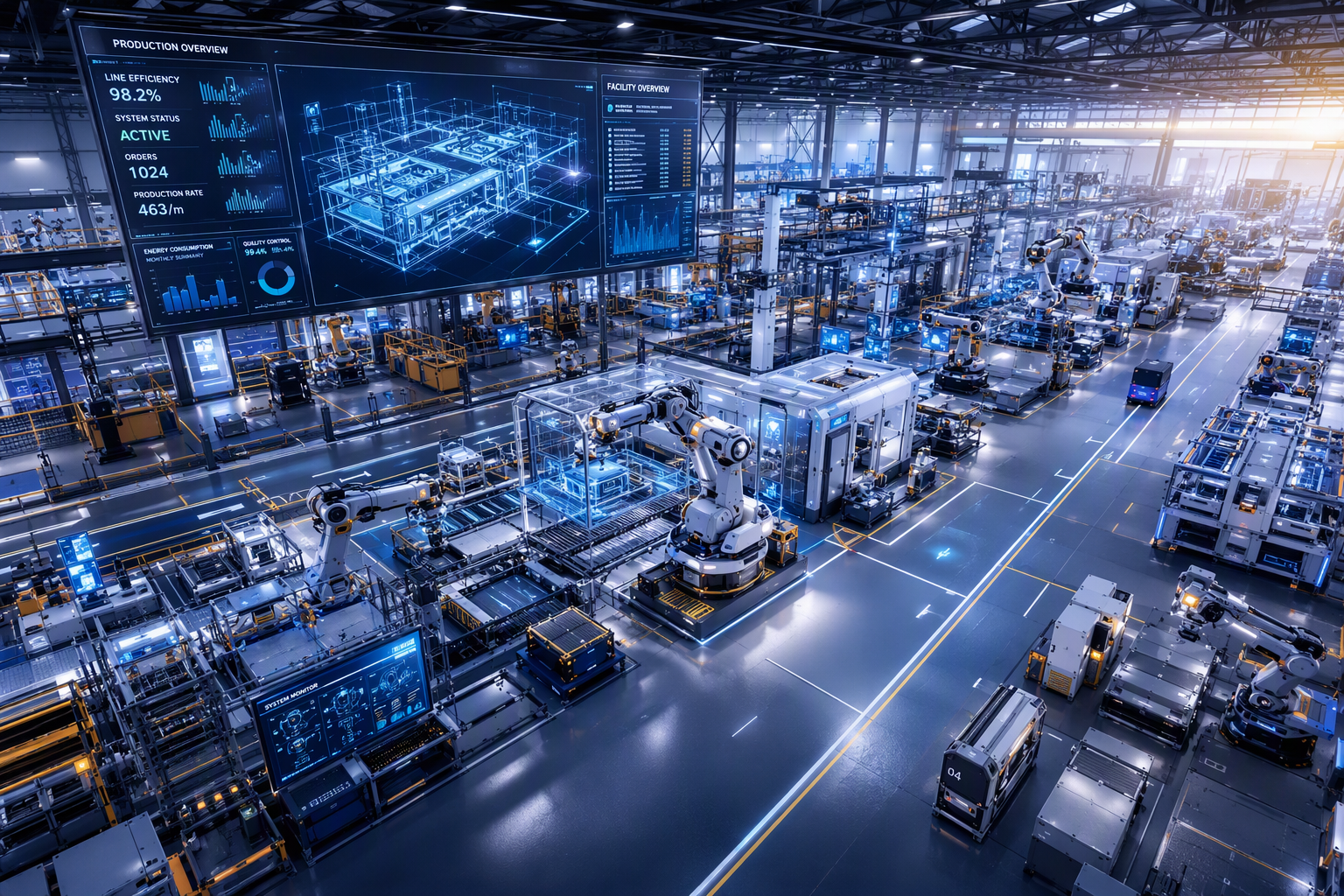
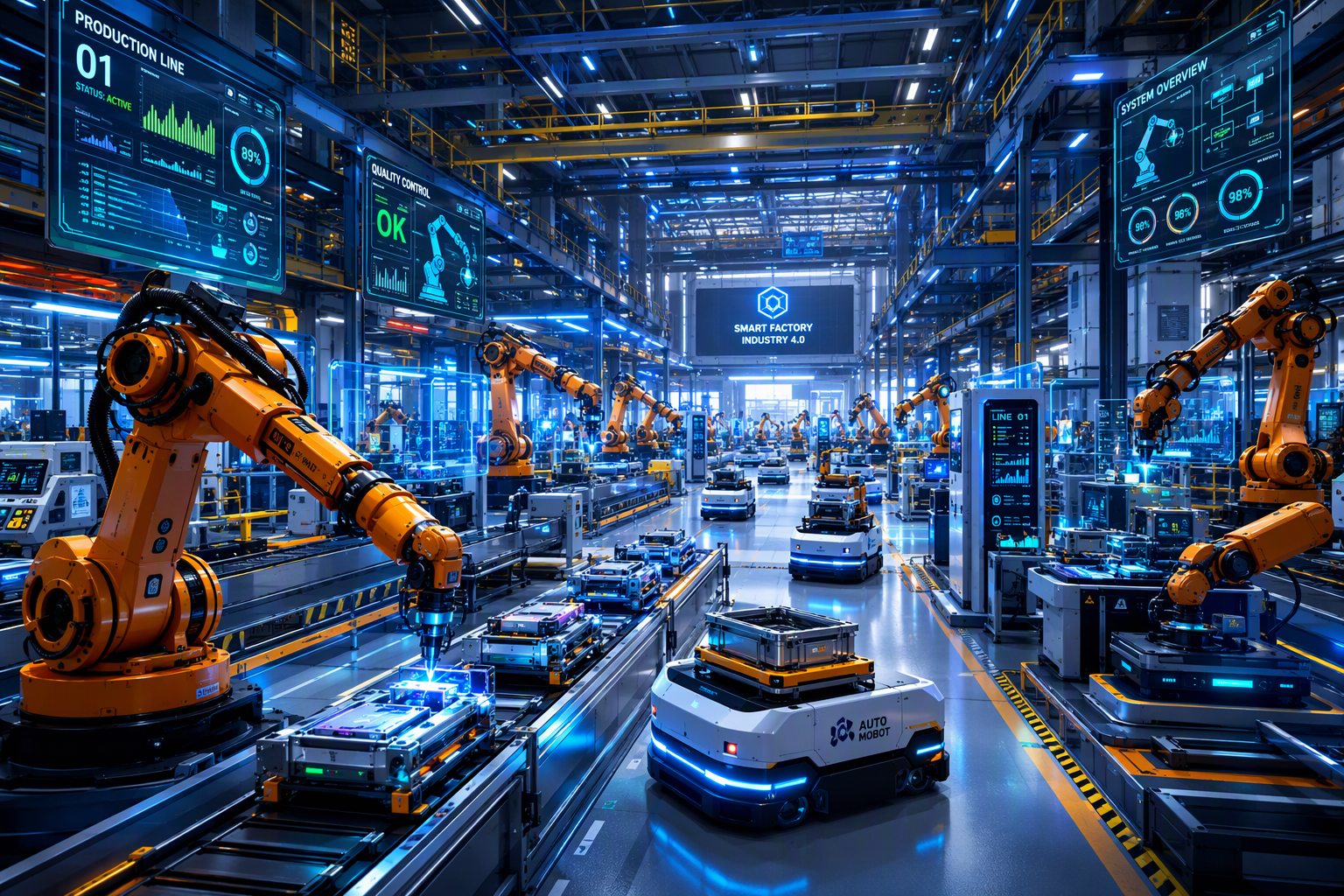
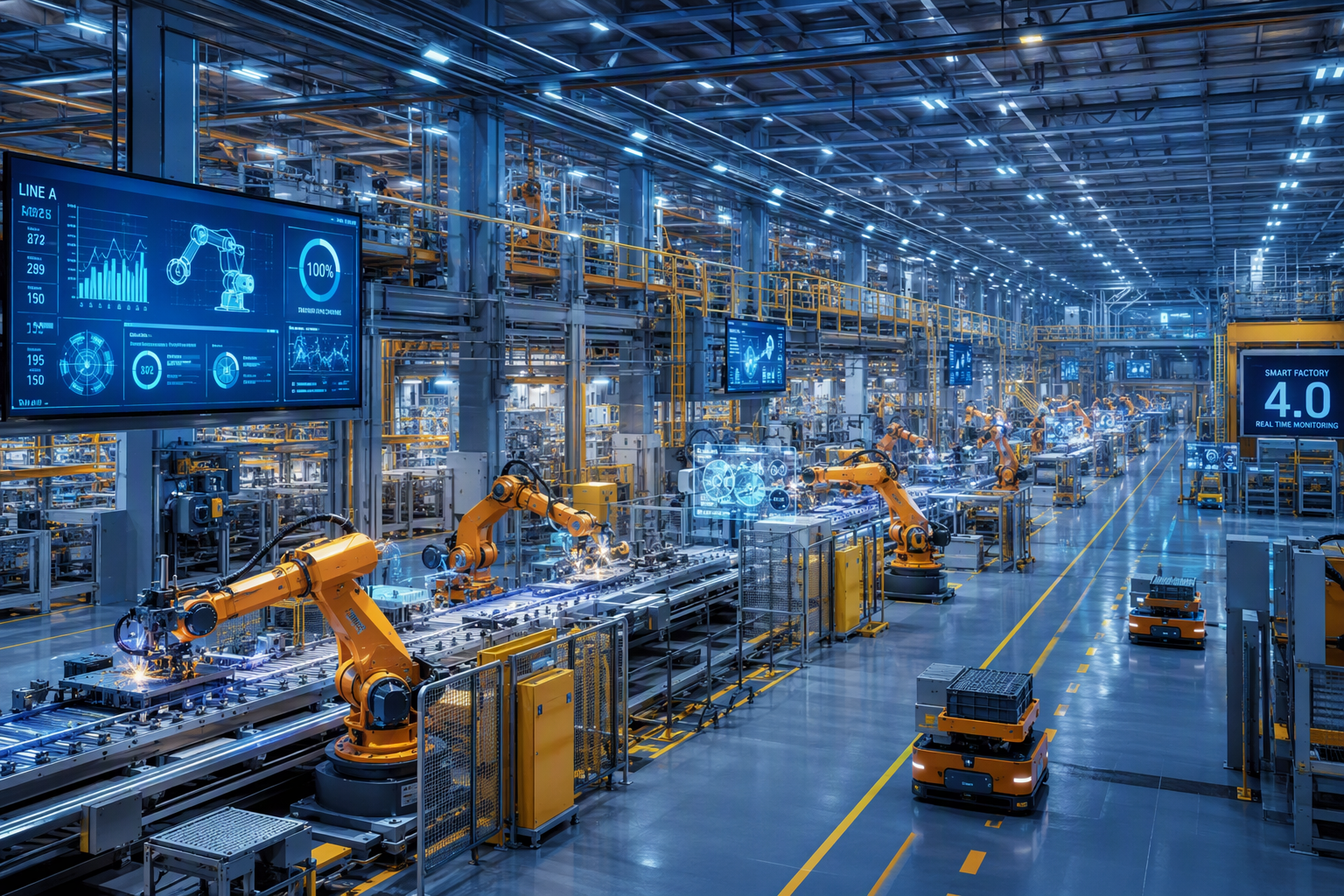
Industry 4.0 represents the fourth industrial revolution, a new chapter in manufacturing driven by digital technologies. It's about creating a "smart factory" where machines communicate with each other to optimize production processes. Think of it as the application of technology to digitally transform how industrial companies function.
A PowerPoint presentation (PPT) on this topic is a powerful tool for explaining these complex ideas. It helps visualize how technologies like the Internet of Things and artificial intelligence come together to create more efficient and agile operations. Now, let's explore what defines Industry 4.0, how it stands apart from earlier revolutions, and why presentations are crucial for education.
Definition and Overview of Industry 4.0
So, what is Industry 4.0? It's the current phase in the evolution of manufacturing, also known as the fourth industrial revolution. The core idea is that machines should be able to communicate and collaborate to create new products and services, driving a massive digital transformation in industrial operations.
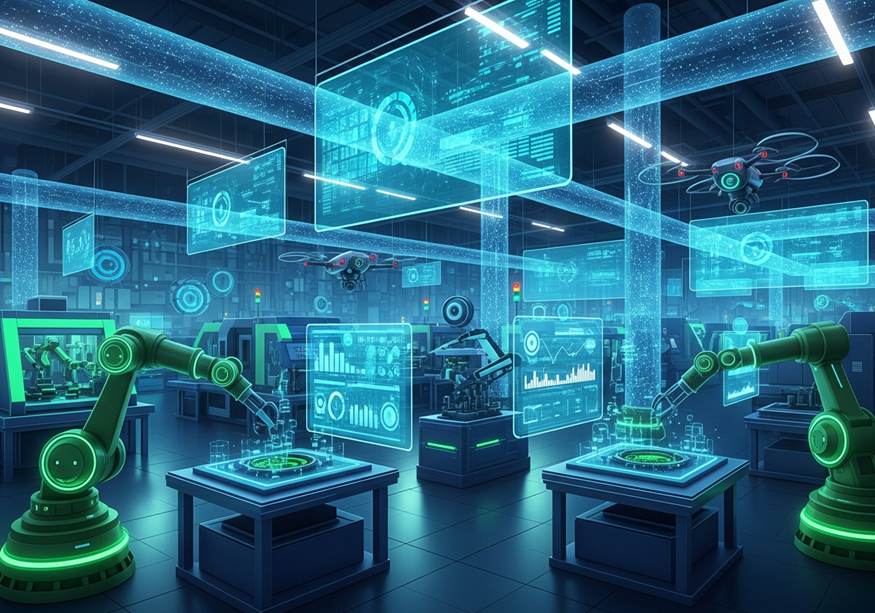
The term was first introduced by Klaus Schwab, the founder of the World Economic Forum, to describe this new era. It’s driven by a need for businesses to boost efficiency, improve quality, and become more agile in response to unpredictable market demands. This revolution is already making a huge impact on the global economy.
Essentially, Industry 4.0 is the application of advanced technology to completely change how industrial companies manage their production systems. This involves integrating digital tools to connect people and machines in real time, leading to smarter, more responsive manufacturing environments.
How Industry 4.0 Differs from Previous Industrial Revolutions
To truly grasp the significance of the fourth industrial revolution, it helps to see how it evolved from the ones before it. While the first industrial revolution introduced machines powered by steam, and the second industrial revolution brought us the assembly line and mass production, each stage was a major leap forward.
The third industrial revolution, or the Digital Revolution, introduced computers and automation. However, the fourth industrial revolution is different because it merges the physical and digital worlds. It’s not just about using new technologies; it’s about how these technologies connect and communicate with each other, creating an integrated system.
This table highlights the key differences:
| Industrial Revolution | Key Technologies and Concepts |
|---|---|
| First Industrial Revolution | Steam power, water power, mechanization |
| Second Industrial Revolution | Electricity, mass production, assembly line |
| Third Industrial Revolution | Computers, electronics, automation |
| Fourth Industrial Revolution | IoT, AI, big data, cyber-physical systems |
The Role of PowerPoint Presentations in Industry 4.0 Education
Explaining the shift from traditional mass production to highly connected, data-driven manufacturing can be challenging. This is where PowerPoint presentations (PPTs) become incredibly useful. They serve as a visual aid to break down complex concepts into digestible pieces, making the digital transformation journey easier for beginners to understand.
Using a PPT, you can effectively illustrate how various technologies work together. You can show diagrams of smart factories, charts demonstrating efficiency gains, and timelines of industrial evolution. Digital platforms like PowerPoint allow you to embed videos and link to resources, creating an interactive learning experience.
For businesses, these presentations are essential for training employees, aligning teams, and explaining new business models to stakeholders. They provide a clear and structured way to communicate the vision and strategy behind adopting Industry 4.0, ensuring everyone is on the same page.
Evolution of Industrial Revolutions
The industrial revolution wasn't a single event but a series of transformative waves, each building on the last. Starting with the harnessing of steam power, each phase introduced new technologies that fundamentally changed society and industry. This journey from hand production to smart factories is a fascinating story of human innovation.
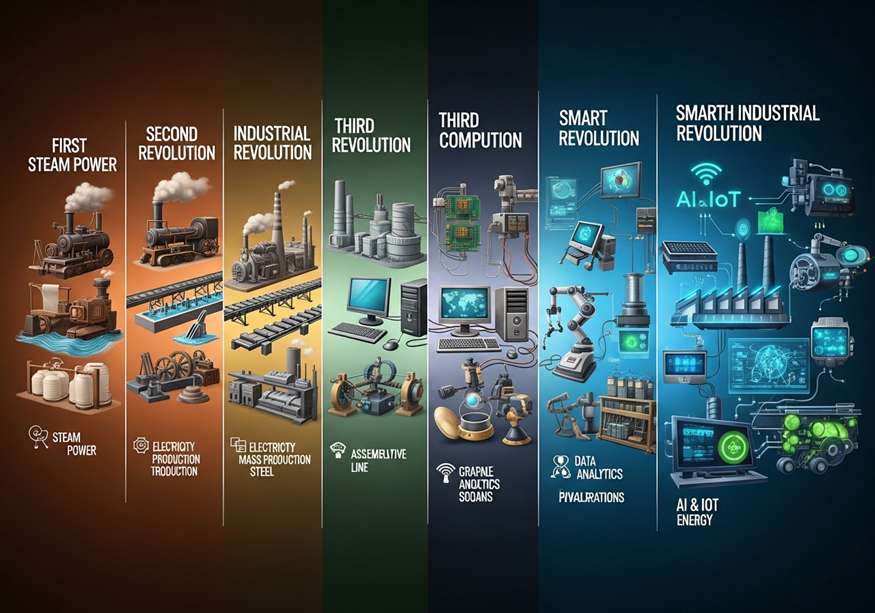
Understanding this evolution helps put the current technological revolution into context. It shows how we moved from basic machines to the interconnected, intelligent systems of today. Let’s take a closer look at each of these groundbreaking periods.
The First Industrial Revolution
The first industrial revolution, which began around 1760, marked a monumental shift from a world powered by manual labor and animals to one driven by machines. This era was defined by the use of water power and, most famously, steam engines. These innovations transformed how goods were produced.
Industries like textile manufacturing, iron, agriculture, and mining were among the first to adopt these new methods. For the first time, factories could be built in locations away from rivers, thanks to the power of steam. This led to the growth of cities and a new way of life for many people.
This period laid the groundwork for all future industrial advancements. The transition from hand production to machine production was a radical change that increased output and set the stage for the even greater changes that were to come.
The Second Industrial Revolution
Starting about a century later, in 1871, the second industrial revolution kicked off what is often called the Technological Revolution. This period was characterized by the widespread use of electricity, major advancements in steel production, and the development of extensive railroad and telegraph networks.
These innovations enabled factories to introduce the modern assembly line, a concept that revolutionized manufacturing. The ability to produce goods on a massive scale led to an era of mass production. This brought a new degree of automation to the factory floor, making products more affordable and accessible.
The combination of new power sources and new production methods dramatically increased efficiency and output. This revolution not only changed manufacturing but also reshaped communication and transportation, connecting the world in unprecedented ways.
The Third Industrial Revolution
The third industrial revolution, also known as the Digital Revolution, began in the late 20th century. Following the end of the second world war, this era was defined by the development of computers, advanced telecommunications, and powerful data analysis capabilities.
In the factory, this meant the beginning of true automation. It started with the digitization of manufacturing processes by embedding programmable logic controllers (PLCs) into equipment. These devices allowed for the automation of specific tasks and started the process of data collection on the factory floor.
This revolution shifted the focus from mechanical to electronic technology. The rise of electronics and information technology paved the way for more sophisticated control systems and began to connect different parts of the production process, setting the stage for the hyper-connected world of Industry 4.0.
The Fourth Industrial Revolution (Industry 4.0)
Finally, we arrive at the fourth industrial revolution, or Industry 4.0. The term "Industries 4.0" was first used by the German government in 2011 to describe a project focused on the digitization of manufacturing. It has since evolved into a global concept for implementing technology to achieve digital transformation on a large scale.
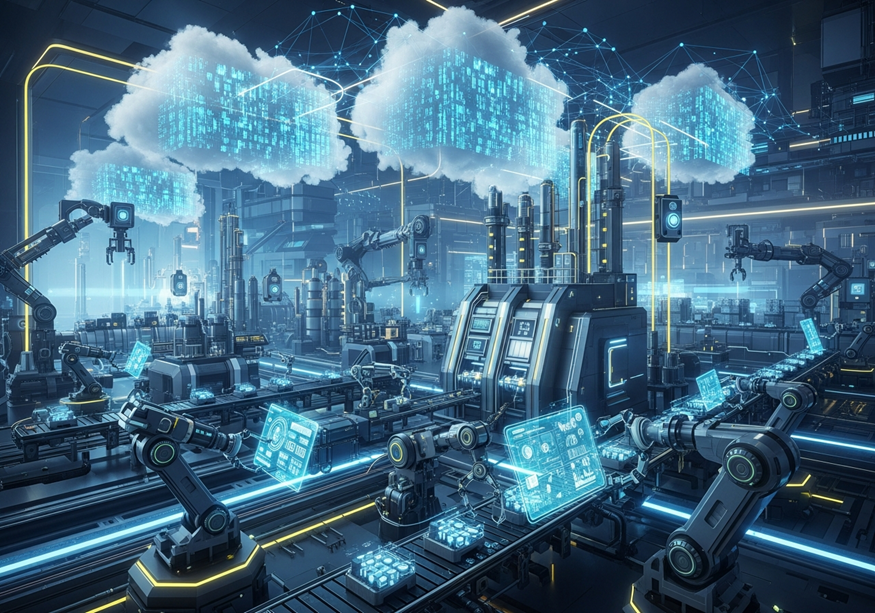
This revolution is defined by the fusion of technologies, blurring the lines between the physical, digital, and biological spheres. It centers on concepts like smart manufacturing, where autonomous systems and the Internet of Things (IoT) create a fully integrated and intelligent production environment.
Unlike previous revolutions, Industry 4.0 is not just about new tools but about creating a network of connected devices that can collect and analyze data, make decisions, and act with minimal human intervention. This is the era of the smart factory, where every part of the process is connected and optimized.
Key Technologies Driving Industry 4.0
Industry 4.0 is powered by a suite of advanced digital technologies that work together to create intelligent, connected systems. These new technologies are the building blocks of the smart factory, enabling automation, real-time monitoring, and data-driven decision-making. Key drivers include the Internet of Things (IoT), artificial intelligence, and the concept of a digital twin.
By integrating these tools, companies can transform their operations, improve efficiency, and innovate faster than ever before. Let's examine some of the most important technologies that are making this revolution possible.
Industrial Internet of Things (IIoT)
The Industrial Internet of Things (IIoT) plays a crucial role in the fourth industrial revolution, connecting various physical systems through IoT sensors and advanced data analytics. This interconnectedness enables real-time monitoring and control of production processes, enhancing operational efficiency and product quality. With the integration of artificial intelligence, businesses can leverage predictive maintenance and smart manufacturing techniques to optimize their supply chains. By adopting these digital technologies, companies can improve lead times and customer satisfaction, paving the way for innovative business models and a more sustainable future.
Artificial Intelligence and Machine Learning
Artificial intelligence (AI) and machine learning are the brains behind smart manufacturing. These technologies allow machines and systems to learn from data, identify patterns, and make decisions without human intervention. They analyze the massive datasets generated by IIoT devices to uncover valuable insights.
One of the most powerful applications is predictive maintenance. AI algorithms can detect subtle failure signals in equipment, allowing for maintenance to be scheduled before a breakdown occurs. This prevents unplanned downtime and saves significant costs. Machine learning also helps build better predictive models over time.
Through advanced data analytics, AI can optimize production schedules, improve quality control, and make critical service decisions. It turns raw data into actionable intelligence, making the entire manufacturing process smarter, more efficient, and more reliable.
Automation and Robotics
Automation and robotics have been part of manufacturing for decades, but Industry 4.0 takes them to a new level. Instead of performing simple, repetitive tasks, modern robots are collaborative, flexible, and intelligent. These advanced technologies are integrated into production systems and can work alongside humans safely and efficiently.
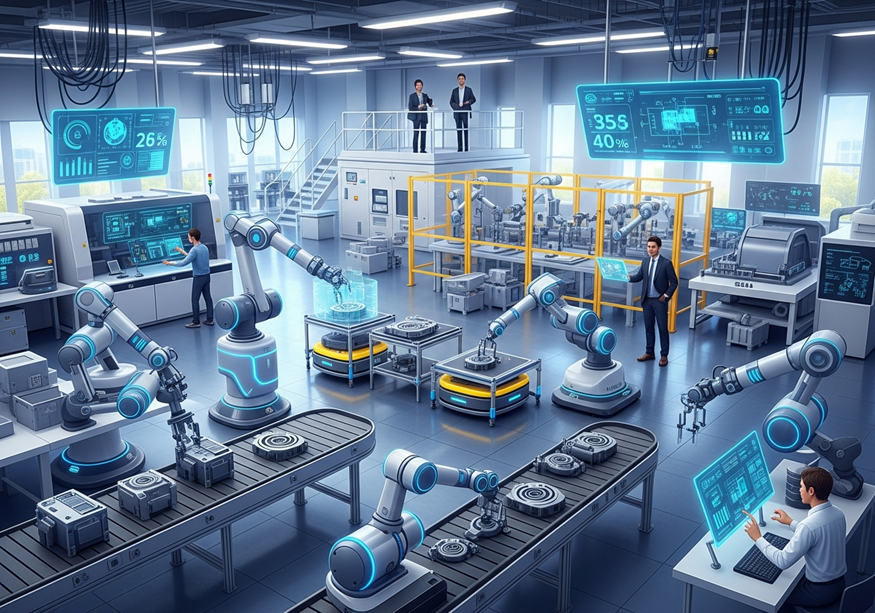
With the help of AI, robots can now handle more complex tasks and adapt to changes in the production line. They are equipped with sensors that allow them to "see" and "feel" their environment, enabling them to make real-time adjustments. This enhances productivity and frees up human workers for more creative and strategic roles.
The goal of automation in Industry 4.0 is to create autonomous systems that can manage entire processes. From handling materials to final assembly, robotics is a key driver in improving the speed, precision, and efficiency of decision making within production.
Big Data and Analytics
In Industry 4.0, data is everything. The term big data refers to the enormous volumes of information generated by connected devices across the factory. However, this data is only valuable if it can be analyzed effectively. This is where big data analytics comes in, turning raw information into meaningful insights.
The process begins with continuous data collection from sensors and machines. This data is then often stored and processed using cloud computing, which provides the necessary power and scalability. Real-time data analysis allows companies to monitor operations, identify trends, and spot inefficiencies as they happen.
By harnessing big data, manufacturers can optimize everything from resource allocation to production schedules. It enables data-driven decision-making, helping to reduce waste, improve quality, and respond quickly to market changes. Analytics provides the clarity needed to make meaningful improvements across the entire operation.
Additive Manufacturing (3D Printing)
Additive manufacturing, more commonly known as 3D printing, is another transformative technology in Industry 4.0. Unlike traditional manufacturing methods that cut away material, additive manufacturing builds objects layer by layer from a digital file. This approach offers incredible flexibility in product design and production.
This technology allows for the rapid creation of prototypes, custom parts, and even new products on demand. It streamlines the design-to-production workflow, enabling companies to innovate and iterate much faster. It also makes it possible to create complex geometries that would be impossible with traditional methods.
In Industry 4.0, additive manufacturing is enhanced by AI-driven design optimization and real-time monitoring. It enables more agile and customized production processes, reducing waste and expediting the time to market for new products. This fosters innovation and reshapes how products are conceived and created.
Benefits of Industry 4.0 Adoption
Adopting Industry 4.0 principles brings a host of powerful benefits. By embracing digital transformation, companies can achieve improved efficiency, streamline their supply chain, and enhance product quality. The move towards a smart factory is not just about new technology; it's about fundamentally improving how production processes are managed.
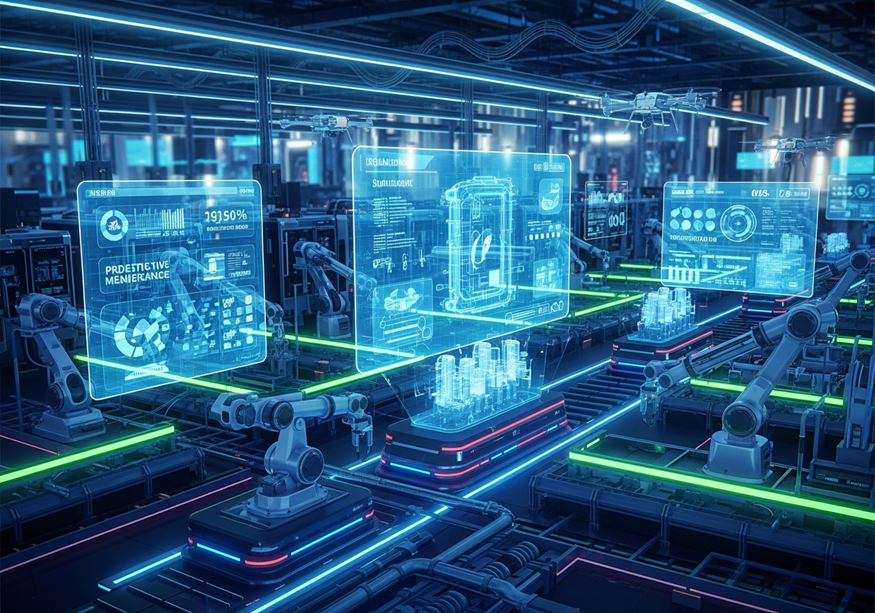
These advantages help businesses outperform their competition, respond faster to market changes, and create new revenue streams. Let's explore some of the key benefits that come with implementing Industry 4.0 solutions.
Improved Efficiency and Productivity
One of the most significant benefits of Industry 4.0 is a dramatic increase in efficiency and productivity. Automation streamlines processes and reduces the need for manual labor in repetitive tasks, allowing work to be completed faster and with fewer errors. This directly translates to higher output with minimal waste.
Data analytics plays a crucial role by optimizing resource allocation and production schedules. Predictive maintenance minimizes equipment downtime, ensuring that production lines run smoothly without unexpected interruptions. This helps to shorten lead times and improve overall energy efficiency.
By integrating the entire supply chain and enabling customizable manufacturing, companies can adapt swiftly to changing demands. This level of agility ensures that resources are always used effectively, maximizing productivity across the board.
Enhanced Supply Chain Management
Industry 4.0 revolutionizes supply chain management by creating a more transparent, agile, and efficient network. Digital platforms enable seamless communication and real-time data sharing across the entire supply chain, from raw material suppliers to end customers.
This enhanced visibility allows for better coordination among all stakeholders. IoT sensors can track goods in transit, while AI-driven data analytics can forecast demand with greater accuracy. This helps optimize inventory levels, reduce lead times, and lower logistical costs. Some key changes include:
- Real-time tracking of materials and products.
- Predictive analytics for demand forecasting and inventory management.
- Improved collaboration between suppliers, manufacturers, and distributors.
- Increased resilience to disruptions.
By connecting all parts of the supply chain, companies can respond faster to market changes and ensure that safety and quality standards are maintained throughout the process. This creates a smarter, more responsive supply network.
Quality and Safety Improvements
Industry 4.0 technologies lead to significant improvements in both product quality and workplace safety. Automation minimizes human error on production lines, resulting in greater consistency and fewer defects. IoT sensors enable real-time monitoring of quality control parameters, ensuring that every product meets the required standards.
Data analytics helps identify the root causes of quality issues, allowing for process improvements that reduce defects over time. Flexible manufacturing also allows for high levels of customization without sacrificing quality, efficiently meeting diverse customer demands.
From a safety perspective, predictive maintenance prevents equipment failures that could lead to accidents. Remote monitoring and robotics reduce human exposure to hazardous environments. Furthermore, data analytics can identify potential risks in the workplace, while augmented reality can be used for safer and more effective training, fostering a safer work environment.
Impact on Developing Countries
The fourth industrial revolution presents both opportunities and challenges for developing countries. On one hand, adopting Industry 4.0 technologies can help these nations leapfrog older production systems and become more competitive on the global stage. Digital transformation can boost productivity and create new economic opportunities.
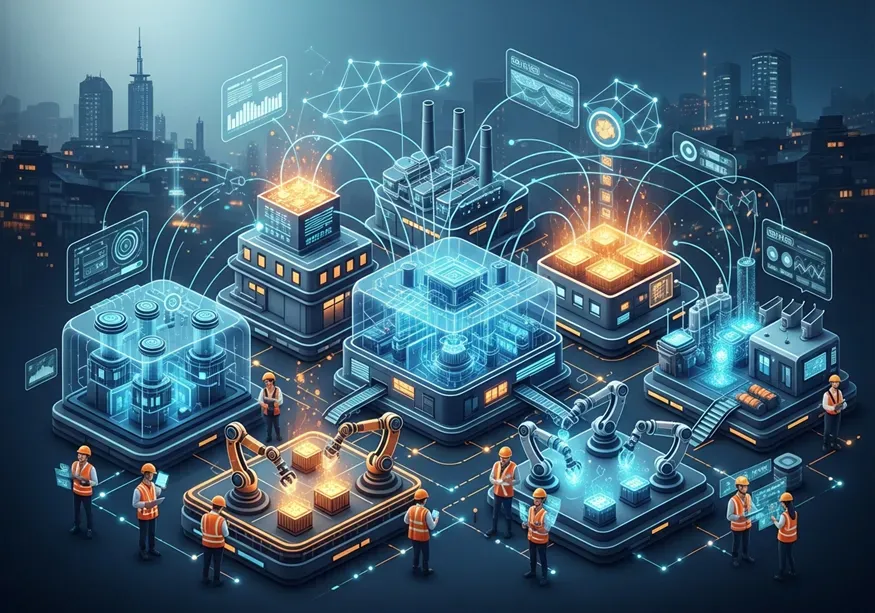
By implementing smart manufacturing principles, developing countries can improve their production capabilities, enhance product quality, and increase customer satisfaction. This can attract foreign investment and help them integrate more deeply into global supply chains.
However, there are also hurdles to overcome. The high cost of new technologies, the need for a skilled workforce, and the lack of robust digital infrastructure can be significant barriers. To fully benefit from this industrial revolution, developing countries will need to invest in education, infrastructure, and policies that support digital innovation.
Beginner’s Guide to Creating and Using an Industry 4.0 PPT
Ready to explain the world of Industry 4.0 to others? Creating a compelling PowerPoint presentation is one of the best ways to do it. You don't need to be an expert to build an effective PPT that clearly communicates the core concepts of smart manufacturing and digital technologies.
This guide will walk you through the process, from gathering the right tools to structuring your content. By using digital platforms to your advantage, you can create a presentation that is both informative and engaging for any audience, even for beginners.
What You Need to Get Started (Tools, Resources, Equipment)
Getting started with your Industry 4.0 presentation is straightforward. You'll need a few basic tools and resources to gather information and build your slides. The goal is to create a clear and visually appealing presentation that explains how digital platforms are changing business processes.
Most importantly, you will need presentation software like Microsoft PowerPoint or Google Slides. These platforms offer a wide range of templates and design tools to help you create a professional-looking presentation. You'll also need access to reliable information about Industry 4.0, which you can find in industry reports, articles, and expert websites. For a more dynamic presentation, consider the following:
- Presentation software (PowerPoint, Google Slides)
- Access to the internet for research
- High-quality images, icons, and diagrams
- A plan or outline for your content
- Smart devices for practicing your delivery
Using cloud computing to store your presentation allows you to access and edit it from anywhere. With these resources, you'll be well-equipped to create an impactful presentation.
Step-by-Step Guide to Making an Effective Industry 4.0 PPT
Creating an effective Industry 4.0 presentation involves more than just putting text on slides. You need a clear structure and compelling content to keep your audience engaged. This step-by-step guide will help you build a presentation that clearly explains concepts like the smart factory and modern production systems.
Start with a strong plan. Before you even open your presentation software, outline the story you want to tell. Think about your audience and what they need to know. A logical flow will make complex topics in information technology easier to follow. Here is a simple framework to guide you:
- Step 1: Choose the right content and structure.
- Step 2: Incorporate key technologies and benefits.
- Step 3: Use real-world examples and visuals.
- Step 4: Review and share your presentation.
By following these steps, you can use digital platforms to craft a presentation that is not only informative but also inspiring, helping your audience grasp the transformative potential of Industry 4.0.
Step 1: Choose the Right Content and Structure
The foundation of a great presentation is solid content and a logical structure. Start by defining your main message. Are you explaining the basics of digital transformation, introducing new business models, or detailing specific production processes? Your objective will guide your content choices.
Structure your presentation like a story. Begin with an introduction that grabs your audience's attention. Then, move into the main body where you explain key concepts like the Internet of Things and its role in Industry 4.0. A good structure might be: introduction, history, key technologies, benefits, real-world examples, and a conclusion.
Break down complex topics into smaller, manageable sections. Use clear headings for each slide and ensure a logical flow from one point to the next. This will help your audience follow along without feeling overwhelmed and make the information much easier to retain.
Step 2: Incorporate Key Technologies and Benefits
Once you have your structure, it's time to add the core information. This section should focus on the key technologies driving Industry 4.0 and the benefits they bring. Dedicate slides to explaining advanced technologies like AI, IoT, robotics, and big data analytics in simple terms.
Don't just list the technologies; explain what they do. For example, explain how data analytics helps optimize production processes. Use simple language and avoid technical jargon as much as possible. The goal is to make these concepts accessible to a general audience.
After explaining the new technologies, connect them to tangible benefits. Use bullet points to highlight advantages such as increased efficiency, improved quality, and lower costs. Showing the "why" behind the technology makes your presentation more persuasive and helps the audience understand the value of adopting Industry 4.0.
Step 3: Use Real-World Examples and Visuals
To make your presentation resonate with the audience, you need to bring the concepts to life with real-world examples and strong visuals. Abstract ideas become much clearer when they are connected to practical applications. Talk about how specific companies are using Industry 4.0 to improve their manufacturing process.
For instance, you could describe how a car manufacturer uses a digital twin to simulate its production line or how a food company uses IoT sensors to ensure quality. These stories make the information more relatable and memorable. Digital platforms are full of case studies you can use for inspiration.
Visuals are just as important. Use high-quality images, icons, charts, and diagrams to illustrate your points. A diagram of a smart factory or a chart showing productivity gains can be more effective than a slide full of text. Visuals break up the content and help your audience process the information more easily.
Step 4: Review and Share Your Presentation
Before you present, it's crucial to review and refine your PowerPoint presentation. Read through your slides to check for any typos or grammatical errors. Practice your delivery to ensure you can speak confidently and clearly about the topics. Time yourself to make sure your presentation fits within the allotted time.
Ask a colleague to review your slides for clarity and impact. They can provide valuable feedback on areas that might be confusing or need more explanation. This review process helps ensure your message about digital technologies and data collection is easy to understand.
Once you're satisfied with your presentation, you're ready to share it. Whether you're presenting to a team, a client, or at a conference, a well-crafted presentation can effectively communicate the importance of Industry 4.0 and its role in modern decision making. Your preparation will pay off in a more confident and impactful delivery.
Real-World Applications and Examples
Industry 4.0 isn't just a theoretical concept; it's already being applied across various sectors with incredible results. These real-world examples show how connected technologies are transforming everything from factory production processes to the development of smart cities. They demonstrate the practical value of this new industrial era.
From manufacturing and healthcare to agriculture, companies are using Industry 4.0 to create new business models, improve field service, and deliver better outcomes for their customers. Let's look at some specific applications in different industries.
Industry 4.0 in Manufacturing
Manufacturing is the heartland of Industry 4.0, where the concept of smart manufacturing comes to life. Factories are using automation and robotics not just for simple assembly but for complex, collaborative tasks. This increases speed and precision while freeing up human workers for more valuable roles.
Predictive maintenance is one of the most impactful applications. By using sensors and AI to monitor equipment health, manufacturers can prevent costly unplanned downtime. This keeps production running smoothly and extends the lifespan of expensive machinery.
The entire supply chain is also becoming smarter. Real-time tracking and data analytics allow for better inventory management and more efficient logistics. This creates a fully connected ecosystem, from the arrival of raw materials to the shipment of the final product, optimizing every step of the process.
Industry 4.0 in Healthcare
The healthcare industry is also undergoing a significant digital transformation thanks to Industry 4.0 principles. Connected medical devices and wearable sensors allow for real-time monitoring of patients' health, both in and out of the hospital. This data can provide early warnings of potential health issues.
Just as in manufacturing, predictive maintenance is being applied to medical equipment, ensuring that critical devices like MRI machines and ventilators are always operational. This improves patient safety and hospital efficiency. Data analysis is also used to optimize hospital workflows and manage resources more effectively.
Furthermore, AI is helping doctors diagnose diseases more accurately and create personalized treatment plans. By analyzing large sets of patient data, machine learning algorithms can identify patterns that might be invisible to the human eye. This is leading to better patient outcomes and a more proactive approach to healthcare.
Industry 4.0 in Agriculture
Even the ancient industry of agriculture is being revolutionized by Industry 4.0. "Smart farming" uses new technologies to increase crop yields, reduce waste, and improve sustainability. IoT sensors placed in fields can monitor soil moisture, nutrient levels, and weather conditions.
This data allows farmers to make precise decisions about irrigation and fertilization, applying water and nutrients only when and where they are needed. Drones and satellites provide aerial imagery to monitor crop health and identify problems like pests or diseases early on. Data analytics helps optimize planting and harvesting schedules.
These technologies are transforming agricultural production processes, making them more efficient and environmentally friendly. By using data to guide their decisions, farmers can produce more food with fewer resources, helping to meet the growing global demand.
Industry 4.0 vs. Industry 5.0
Just as we are getting used to Industry 4.0, the conversation is already shifting towards the next phase: Industry 5.0. While Industry 4.0 focuses on using technology like AI and IoT to optimize production systems for efficiency and productivity, Industry 5.0 aims to bring a more human-centric approach back into the technological revolution.
This emerging trend doesn't replace smart manufacturing; it builds upon it. It seeks to create a better balance between technology and humanity, focusing on collaboration, sustainability, and resilience. Let's explore the key differences and what the future holds.
Main Differences and Evolving Trends
The primary difference between Industry 4.0 and Industry 5.0 lies in their core focus. Industry 4.0 is technology-driven, prioritizing automation and data to create efficient production processes. In contrast, Industry 5.0 is value-driven, emphasizing human-robot collaboration, sustainability, and resilience.
Industry 5.0 recognizes that while new technologies are powerful, they should serve human needs and societal goals. This includes placing a greater emphasis on the well-being of workers and minimizing the environmental impact of industry. It's about combining the best of human creativity with the precision of machines.
Here’s a comparison of the main focus areas:
| Feature | Industry 4.0 | Industry 5.0 |
|---|---|---|
| Main Goal | Efficiency and productivity | Human-centricity and well-being |
| Key Focus | Automation, data, IoT | Human-robot collaboration |
| Driver | Technology | Values (sustainability, resilience) |
| Human Role | Supervised and managed by technology | Empowered and augmented by technology |
The Future of Smart Factories and Connected Industries
The future of the smart factory is set to become even more intelligent and connected. We will see a deeper integration of technologies like the digital twin, which will allow entire production processes to be simulated and optimized in a virtual environment before a single physical part is made.
The combination of cloud computing and edge computing will enable faster and more secure data processing. While the cloud provides massive storage and processing power, edge computing will allow data to be analyzed closer to its source, enabling real-time decisions by autonomous systems on the factory floor.
Ultimately, the goal is to create fully autonomous systems that can manage complex operations with minimal human oversight. However, as we move towards Industry 5.0, this will be balanced with a focus on empowering human workers. The future connected industry will be a collaborative ecosystem where humans and machines work together to achieve new levels of innovation and efficiency.
Conclusion
In conclusion, understanding Industry 4.0 and its applications is crucial for anyone looking to navigate the future of industry and technology. By utilizing key technologies like AI, IoT, and big data, businesses can significantly enhance their efficiency, productivity, and overall performance. As the industrial landscape evolves, so too must our methods of communication and education, including the effective use of PowerPoint presentations to convey complex ideas easily. Embracing these advancements not only ensures competitiveness but also fosters innovation across various sectors. If you're eager to dive deeper into this transformative era, consider booking a free consultation to explore your options further.
Frequently Asked Questions
Can beginners easily understand and implement Industry 4.0 concepts?
Yes, beginners can grasp the core concepts of Industry 4.0. While the digital technologies can be complex, the principles of digital transformation are often explained with simple analogies. Starting with small, focused projects on specific business processes can make implementing smart manufacturing and new production systems manageable for any organization.
Is Industry 4.0 only for manufacturing, or are other industries affected?
While it started in manufacturing, Industry 4.0's principles are transforming many other sectors. Industries like healthcare, agriculture, and logistics are adopting its technologies to improve their production systems. It is also a key driver in the development of smart cities and creating new business models across the economy.
What are some real-world examples of Industry 4.0 implementation?
Real-world examples of Industry 4.0 are everywhere. In a smart factory, predictive maintenance prevents equipment failures. In healthcare, wearable sensors monitor patient health in real time. In agriculture, IoT devices help optimize crop irrigation. These applications show how connected technology is improving efficiency and outcomes across sectors.