The Evolution of SCADA: Past, Present, and Future
The Evolution of SCADA: Past, Present, and Future
Key Highlights
- SCADA stands for Supervisory Control and Data Acquisition, a system that lets organizations manage and monitor industrial processes.
- The core components of a SCADA system include a Human-Machine Interface (HMI), Remote Terminal Units (RTUs), and a communication network.
- SCADA plays a crucial role in industrial automation by enabling real-time data collection, process control, and remote management.
- Industries like utilities, manufacturing, and energy rely on SCADA for operational efficiency and safety.
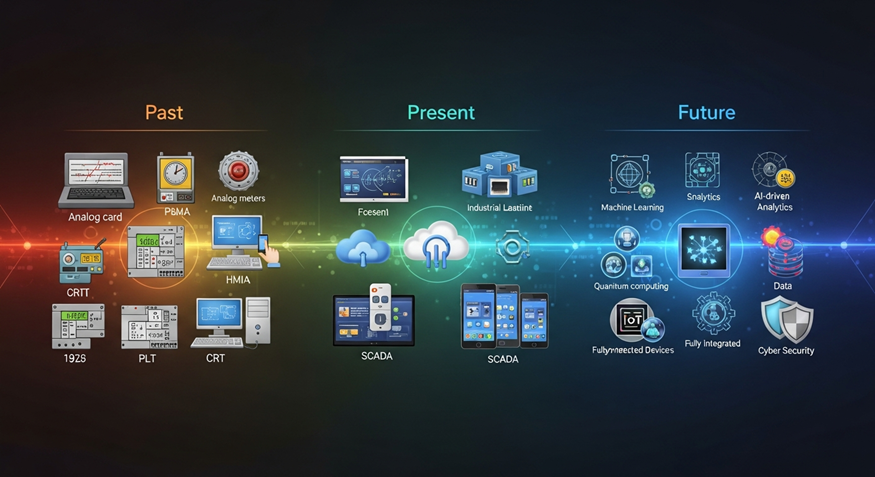
- These systems have evolved from standalone mainframes to modern, cloud-based architectures.
- Protecting your SCADA network with strong cybersecurity measures is essential for critical infrastructure protection.
Introduction
Welcome to the world of industrial automation! Have you ever wondered how large-scale operations like power grids or water treatment plants run so smoothly? The answer often lies with a powerful technology called SCADA. A SCADA system, which stands for Supervisory Control and Data Acquisition, is the backbone of many modern industries. It provides the tools to monitor, manage, and control complex industrial processes from a central location. This blog will explore the journey of SCADA, from its origins to its future possibilities.
Understanding SCADA: Supervisory Control & Data Acquisition
At its heart, SCADA is an architecture designed for high-level supervisory control and data acquisition. Think of it as the central nervous system for industrial operations. This control system combines hardware and software to gather information from various machines and processes, allowing operators to oversee everything from a single interface. Typical SCADA software solutions available today include industry standards such as Siemens WinCC, Schneider Electric's EcoStruxure, Wonderware by AVEVA, GE Digital's iFIX, and Ignition by Inductive Automation. These solutions are widely used across different sectors to provide robust control, monitoring, and data management capabilities for modern industrial environments.
By collecting and analyzing data, a SCADA system helps organizations make smarter decisions, improve efficiency, and maintain safety. It's a critical tool for managing infrastructure and ensuring that everything runs as it should. Now, let's look at how these systems came to be and their core functions.
Origins and Historical Development of SCADA
The story of SCADA begins with early systems that operated on standalone mainframe computers. These initial versions were monolithic, meaning they had no network connectivity and processed all data internally. While functional, they were expensive and lacked the flexibility and remote access we see today.
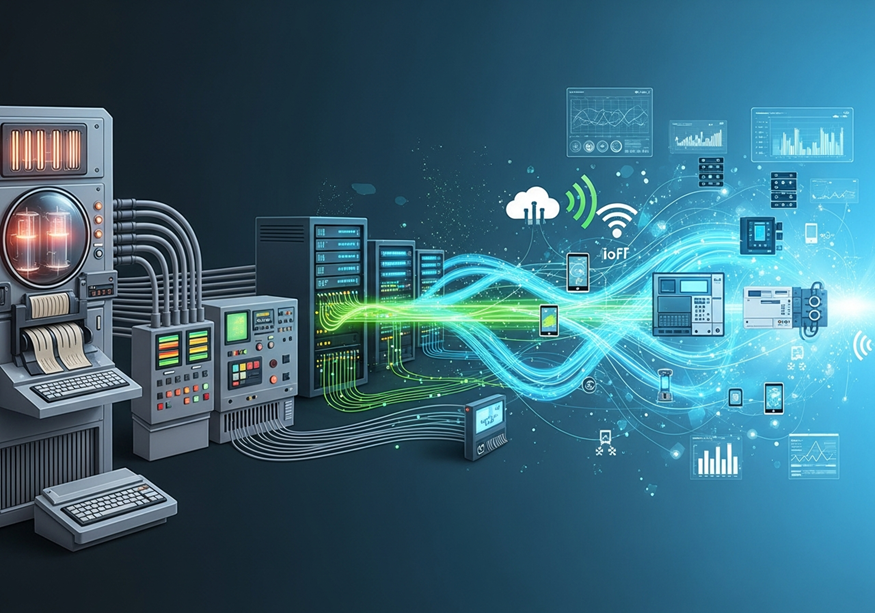
As technology advanced, networking capabilities were introduced, leading to distributed SCADA systems. This development allowed multiple control units to communicate over local area networks (LANs), which improved system redundancy and operational efficiency. However, these systems were still confined to local networks.
The real game-changer was the adoption of Wide Area Networks (WANs) and standard communication protocols. This evolution created the networked SCADA system, enabling remote monitoring and integration across entire enterprises. This shift from proprietary, isolated systems to connected architectures laid the groundwork for the modern SCADA systems that manage critical infrastructure worldwide.
Fundamental Concepts and Definition
So, what is SCADA and how does it work? SCADA is an industrial automation control system that monitors and controls infrastructure processes by communicating with devices and industrial equipment. It gathers process data, records events into log files, and presents the information through user-friendly interfaces.
The system's core function is data acquisition. It collects analog data and displays it in graphs, gathers digital data that can trigger alarms, and accumulates pulse data, like counting meter revolutions. This allows for the real-time supervision of critical facilities and utilities.
Essentially, a computer with SCADA software receives data from hardware components in the field. The computer processes this information and can issue warnings or sound alarms when conditions become hazardous. This capability is vital for industrial organizations to maintain efficiency, make informed decisions, and prevent downtime.
Key Components of a SCADA System
A SCADA system is composed of several interconnected system components that work together to collect, transmit, and display data. These hardware and software elements are essential for monitoring and controlling industrial processes effectively. The primary hardware includes field devices like sensors, Remote Terminal Units (RTUs), and programmable logic controllers (PLCs).
These devices gather information from the industrial environment and send it through a communication network to the central system. The software component then processes this data and presents it to an operator. Let's examine some of these key components in more detail.
Human-Machine Interface (HMI)
The Human-Machine Interface, or HMI, is the dashboard that connects a person to a machine or system. It acts as the primary user interface in a control room, allowing operators to monitor machine inputs and outputs, track key performance indicators, and visually display data from across the SCADA system.
HMI software provides graphical representations of industrial processes, making it easier for operators to understand what's happening. For instance, an operator could use an HMI to monitor the temperature of a water tank or check the performance of a pump within a facility. These interfaces can be computer monitors, tablets, or screens built directly onto machines.
By providing clear insights into the mechanical system's performance and progress, HMIs are used by nearly all industrial organizations. They are crucial for interacting with machines and optimizing processes to improve operational efficiency.
Remote Terminal Units (RTUs) and Programmable Logic Controllers (PLCs)
RTUs and PLCs are the workhorses of a SCADA system. Remote Terminal Units collect and store information from sensors before sending it to the master terminal unit (MTU), which is the core of the SCADA system. The RTU holds onto data until it receives a command from the MTU to transmit it.
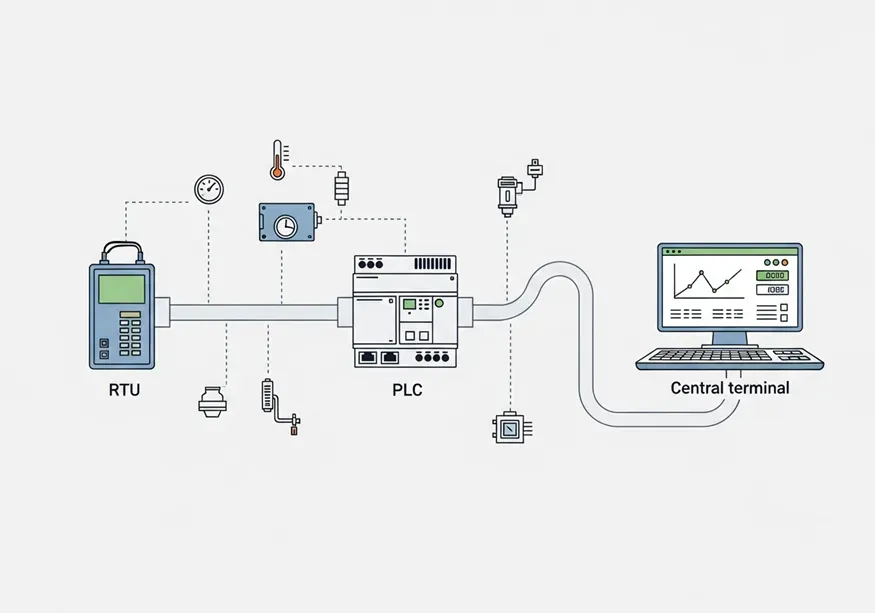
Similarly, a Programmable Logic Controller is a small computer within the SCADA network that collects inputs and outputs from devices. The PLC monitors the state of inputs, such as the speed of a motor, and uses this insight to execute control logic. It can then output signals to devices, for example, telling a motor to slow down or stop.
These industrial control system components perform most of the automatic control actions. They often use programming languages like ladder logic to execute their programmed functions, making them essential for automating complex industrial processes.
Communication Networks and Data Transmission
The communication network is the vital link that connects the RTUs and PLCs in the field to the central MTU. This connection enables data transmission between the units, allowing operators to monitor and control processes from a distance. These networks must be secure and efficient to ensure reliable operation.
This communication channel is bidirectional, meaning data can flow both to and from the central system. Various technologies are used to establish these communication networks, including:
- Wireless communication
- Fiber optic cables
- Twisted-pair cables
Standard automation protocols like Modbus, DNP3, and TCP/IP ensure that different system components can communicate with each other seamlessly. Proper access control and security on these networks are critical to protect the data and the integrity of the entire industrial control system.
How SCADA Systems Operate in Industrial Automation
SCADA systems are at the heart of modern industrial automation, enabling organizations to manage complex operations with precision and efficiency. The primary function of a SCADA control system is to automate processes that would be too complex or dangerous for humans to manage manually. It does this through continuous data collection and process control.
The system uses sensors and measuring devices to detect abnormal behavior and provide a programmed response. For example, if pressure in a pipeline becomes too high, the system can automatically open a relief valve. Let's explore how data collection and remote management work within this framework.
Data Collection, Monitoring, and Real-Time Analysis
The process begins with data collection. SCADA systems gather real-time data from field devices like sensors, PLCs, and RTUs. This raw data can be anything from temperature and pressure readings to the operational status of a motor. This information is then transmitted to a central control system for processing.
Once collected, the system enables continuous monitoring and analysis. The data is displayed through the HMI, where operators can track system performance, identify anomalies, and make informed decisions. This real-time visibility is crucial for maintaining operational efficiency and responding quickly to any issues.
By analyzing sensor data and historical trends, organizations can spot potential problems before they lead to failures. This proactive approach helps optimize performance, enhance safety, and minimize costly downtime across the entire operation.
Process Control and Remote Management
Beyond just monitoring, SCADA systems empower operators with remote process control. Through the HMI, an operator can issue control commands to adjust parameters like flow rates, temperature, or pressure. This capability allows for precise management of industrial processes from a centralized or remote location.
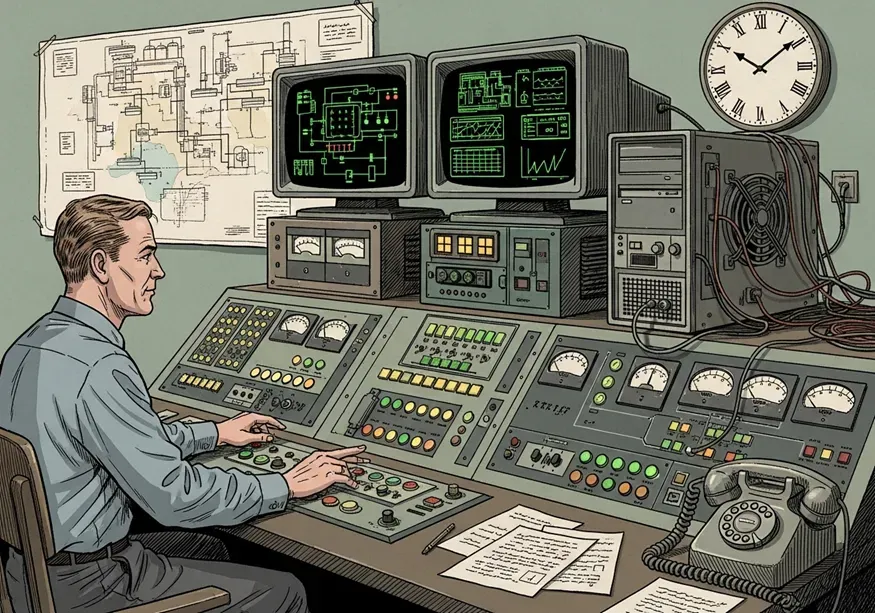
When a command is issued, the SCADA system communicates with field devices to execute the necessary control actions. This could involve modifying equipment settings, initiating automated procedures, or even shutting down a system if required. This centralized control ensures a rapid response to changing conditions.
The ability to perform remote monitoring and management is a significant advantage. It allows experts to troubleshoot issues and adjust processes without being physically present, which improves response times and overall operational flexibility. This remote access is fundamental to how a SCADA system helps monitor and control processes remotely.
SCADA and Other Automation Technologies
The world of industrial automation includes various technologies, and it's important to understand how a SCADA system fits in. While often used together, technologies like Distributed Control Systems (DCS) and PLCs serve different functions within a control system architecture. SCADA provides high-level supervision, while other systems handle more localized control.
Understanding the distinctions between these different systems helps in designing the most effective automation solution for a specific need. We will now look at how SCADA compares to other automation technologies and how it integrates with modern solutions.
Differences Between SCADA, DCS, and PLC Systems
While SCADA, DCS, and PLC systems are all part of the industrial control family, they have distinct roles. A PLC is a hardware-based controller that manages specific machines or processes in real time at a local level. It's designed for fast, repetitive tasks.
A DCS, on the other hand, is a process-oriented system that controls an entire plant or process, often within a single geographic location. It integrates control across many different loops and subsystems. SCADA is a supervisory system that is more data-gathering-focused and typically covers larger geographical areas, overseeing multiple sites.
Here’s a simple breakdown of their differences:
| Feature | SCADA | DCS | PLC |
|---|---|---|---|
| Function | Monitors and manages large-scale processes | Controls an entire plant-wide process | Controls specific machines or processes |
| Scope | Centralized system overseeing multiple remote sites | Process-oriented, typically within a single facility | Operates at the local, machine level |
| Architecture | Software-based, running on centralized computers | Integrated control system for a whole process | Hardware-based controller for industrial environments |
Integration of SCADA with Modern Automation Solutions
Modern SCADA solutions are designed to integrate seamlessly with other automation technologies, creating a comprehensive ecosystem. SCADA systems can aggregate data from numerous PLCs, providing a unified view of operations and enabling remote management of these localized controllers. This integration combines real-time control with centralized monitoring.
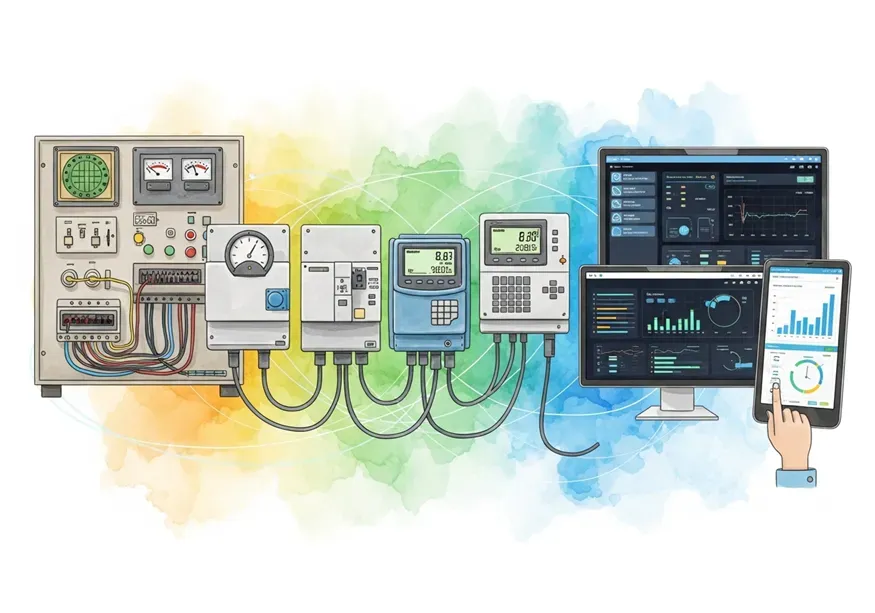
The evolution of technology has also led to the integration of SCADA with advanced analytics and cloud computing. The latest SCADA software components can connect to the Internet of Things (IoT), allowing for predictive maintenance and enhanced data analysis. This helps organizations move from reactive to proactive maintenance strategies.
By combining the supervisory capabilities of SCADA with other system components, businesses can achieve greater efficiency and reliability. These integrated software solutions offer enhanced scalability, remote access, and the ability to turn vast amounts of data into actionable insights for better decision-making.
Industries Powered by SCADA Systems
SCADA systems are the backbone of many modern industries, especially those involving critical infrastructure and complex industrial operations. Their ability to monitor and control large-scale processes makes them indispensable for ensuring efficiency, safety, and reliability. From managing our power grid to ensuring our water is safe to drink, SCADA is working behind the scenes.
These systems help optimize production processes, reduce costs, and maintain quality standards across a wide range of applications. Let's examine some of the key industries that rely heavily on SCADA for their day-to-day industrial equipment and operations.
Utilities: Water, Wastewater, and Power Generation
The utilities sector is one of the biggest users of SCADA technology. For instance, water management firms use SCADA systems to ensure their plants operate efficiently and to monitor equipment like storage tanks and pump stations. In wastewater collection systems, SCADA helps manage treatment facilities and maintain compliance.
In the energy sector, power plants rely on SCADA to manage grid operations, detect faults, and control substations remotely. This ensures a reliable supply of electricity to homes and businesses. Key applications in utilities include:
- Monitoring water levels and chemical dosing in water treatment plants.
- Controlling circuit breakers and transformers in power distribution.
- Managing energy consumption to improve operational efficiency.
By providing real-time data and control, SCADA helps utility firms ensure continuous performance, minimize human error, and safeguard public services.
Manufacturing, Transportation, and Energy Sector Applications
In the manufacturing industry, SCADA systems are crucial for overseeing production metrics, machine performance, and energy usage. This helps companies improve production quality, reduce waste, and lower maintenance costs. The ability to monitor processes in real time ensures that everything runs smoothly on the factory floor.
The transportation sector also benefits from SCADA. For example, it is used to manage traffic signal systems, control railway networks, and monitor public transit operations. In the energy sector, beyond power generation, SCADA is used to monitor oil and gas pipelines for leaks and optimize drilling operations.
These applications demonstrate the versatility of SCADA. By providing centralized control and monitoring, these systems help various industries reduce costs, enhance safety, and achieve significant cost savings while boosting overall performance.
Securing SCADA: Cybersecurity Challenges and Solutions
As SCADA systems become more connected, SCADA security has become a paramount concern. These systems control critical infrastructure, making them attractive targets for cyberattacks. A breach could lead to service disruptions, equipment damage, or even public safety risks. Therefore, critical infrastructure protection is a top priority for any organization using SCADA.
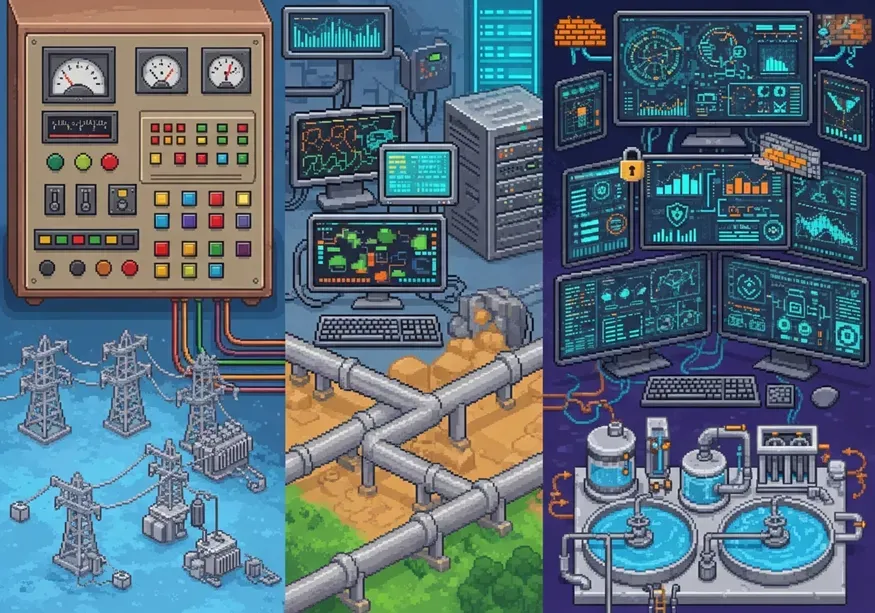
Protecting these networks requires a multi-layered approach that includes securing network access, monitoring for threats, and implementing strong access control policies. Let's look at the common threats facing these systems and the strategies to mitigate them.
Common Threats Facing SCADA Systems
SCADA networks are vulnerable to a range of cybersecurity threats. One of the most significant risks is unauthorized access, where malicious actors gain control of critical systems. This can happen through various means, including exploiting software vulnerabilities or through insider threats.
A lack of security training for employees can also create weaknesses, as staff may not recognize potential cyberattacks like phishing. Additionally, many older SCADA systems were not designed with security in mind, leaving them with gaps that can be exploited. One notable example was the targeted attack on Schneider Electric's systems, which used a sophisticated remote access Trojan.
Common threats to SCADA networks include:
- Malware and ransomware attacks that can disrupt operations.
- Zero-day exploits targeting previously unknown vulnerabilities.
- Denial-of-service (DoS) attacks that can overwhelm the system.
Strategies to Protect SCADA Infrastructure
Protecting SCADA infrastructure requires a proactive and comprehensive approach to security. One of the first and most important steps is to document and map all system connections to the internet and other internal networks. This provides a clear view of all potential entry and exit points for monitoring cyberattacks.
Implementing robust security measures is also essential. This includes using firewalls, intrusion detection systems, and encryption to secure SCADA networks. Strong access control policies should be enforced to ensure that only authorized personnel can access critical systems, limiting the risk of unauthorized changes.
Regularly updating software, conducting security checks, and providing security training for employees are also best practices. Organizations must have procedures in place for rapid response to any detected threats. By combining these strategies, businesses can significantly enhance their SCADA security and protect their vital operations.
Conclusion
In summary, the evolution of SCADA systems has played a crucial role in shaping industrial automation. From its humble beginnings to the advanced technologies we see today, SCADA has continuously adapted to meet the demands of various industries. Understanding SCADA's key components and its integration with other automation solutions is vital for optimizing performance and ensuring security. As we move forward, addressing the cybersecurity challenges that come with these systems will be essential in maintaining a robust infrastructure. Embracing this journey not only enhances operational efficiency but also fosters innovation in an ever-evolving landscape. If you're interested in learning more about SCADA and its applications, feel free to reach out for a consultation!
What is SCADA?
SCADA stands for Supervisory Control and Data Acquisition. It's a system used for industrial control processes, allowing operators to monitor and control equipment remotely. SCADA systems gather real-time data, ensuring efficient operations in sectors like energy, water management, and manufacturing, making them crucial for modern automation.