What is Industry 4.0 PDF?
Key Highlights
- Industry 4.0 means the fourth industrial revolution, where connected machines help improve the manufacturing process.
- It supports digital transformation by linking people, systems, and equipment in real time.
- The industrial internet of things and artificial intelligence are central to this shift.
- A smart factory uses data to improve speed, quality, and coordination.
- Unlike earlier eras, this revolution depends on connected digital tools, not just power or automation.
- It helps businesses work smarter, respond faster, and reduce downtime.
Introduction
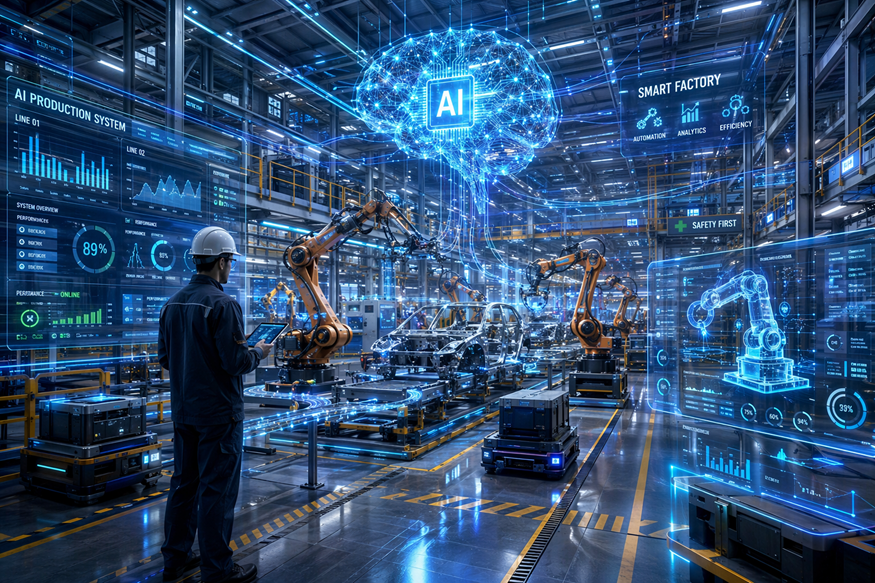
The industrial revolution changed how goods were made, and the fourth industrial revolution is changing it again. Today, factories are using connected systems, automation, and data analytics to make faster and better decisions. If you have ever wondered why modern manufacturing feels more intelligent and responsive, Industry 4.0 is the reason. It brings digital tools into daily operations and helps companies improve output, reduce delays, and adapt to changing business needs with more confidence.
Understanding Industry 4.0 in Simple Terms
In simple terms, the fourth industrial revolution is about making the manufacturing industry more connected, responsive, and data-driven. Machines, software, and people share information so work can happen with better timing and fewer mistakes.
For you, that means digital transformation is not just about adding new tools. It is about changing how operations run from end to end. To understand that clearly, it helps to start with the core definition and why this stage is called Industry 4.0.
Core Definition and Overview
At its core, the fourth industrial revolution is the use of digital technologies to transform how industrial companies operate. It builds on the idea that machines should communicate, share information, and support the creation of products and services in more efficient ways.
What does that mean in simple terms? It means equipment, software, and workers are connected. Instead of relying only on manual checks, companies use data analytics, automation, and connected systems to monitor activity and improve decisions as work happens.
This approach goes beyond one machine or one production line. It creates wider visibility across operations, helping manufacturers improve quality, reduce downtime, and respond faster to changing conditions. That is why Industry 4.0 is now seen as a major shift in how modern industry works.
Why It’s Called the Fourth Industrial Revolution
The name points to a new stage in the long story of the industrial revolution. Earlier shifts were driven by power sources, production lines, and computing. The current stage is different because it combines connected systems, automation, and digital intelligence across the whole business.
The term fourth industrial revolution is closely linked to Klaus Schwab, founder and executive chairman of the World Economic Forum. He helped bring wider attention to the idea that technology was reshaping not just factories, but the global economy and the way people work.
So how is this different from previous industrial revolutions? Earlier periods changed production through steam, electricity, or basic automation. This one connects machines, people, and data at scale. That broader connection is what makes it a distinct new phase.
Evolution of Industrial Revolutions
To see why Industry 4.0 matters, it helps to look at the path that came before it. Each stage changed how work was done and how factories produced goods.
The first industrial revolution introduced machine power. The second industrial revolution expanded mass output. The third industrial revolution brought computers and digitization. Now, the fourth industrial revolution connects systems, data, and automation in smarter ways. That timeline makes the differences easier to understand, especially when you compare how each era changed production.
From Mechanization to Digitization: A Brief History
The first industrial revolution began around 1760. It marked the move away from hand production and animal power toward mechanization using steam power and water power. Industries such as textile manufacturing, iron, agriculture, and mining were among the earliest adopters.
A century later, the second industrial revolution pushed industry further. Railroads, telegraph networks, and the modern production line supported mass production and a growing degree of automation in factories.
Then came the digital revolution in the late 20th century. After the end of the Second World War, computers, telecommunications, and data analysis developed quickly. In factories, programmable logic controllers helped automate equipment and begin data collection. That shift to digitization set the stage for the connected systems seen in Industry 4.0 today.
Key Differences Between Industry 1.0, 2.0, 3.0, and 4.0
The biggest difference between these four stages is the main driver of change. Industry 1.0 focused on machine power from steam and water power. Industry 2.0 centered on mass production. Industry 3.0 introduced electronics and digital control. Industry 4.0 adds connected digital technologies, data sharing, and smarter decision-making across operations.
| Industry Stage | Main Driver | Defining Change | Example Result |
|---|---|---|---|
| 1.0 | Steam and water power | Mechanized production | Less reliance on hand labor |
| 2.0 | Electricity and networks | Mass production and production lines | Higher output at scale |
| 3.0 | Computers and automation | Digitization of factory equipment | Faster control and data collection |
| 4.0 | Connected systems, cloud computing, analytics | Smart factory operations | Real-time visibility and adaptive production |
Foundational Technologies Shaping Industry 4.0
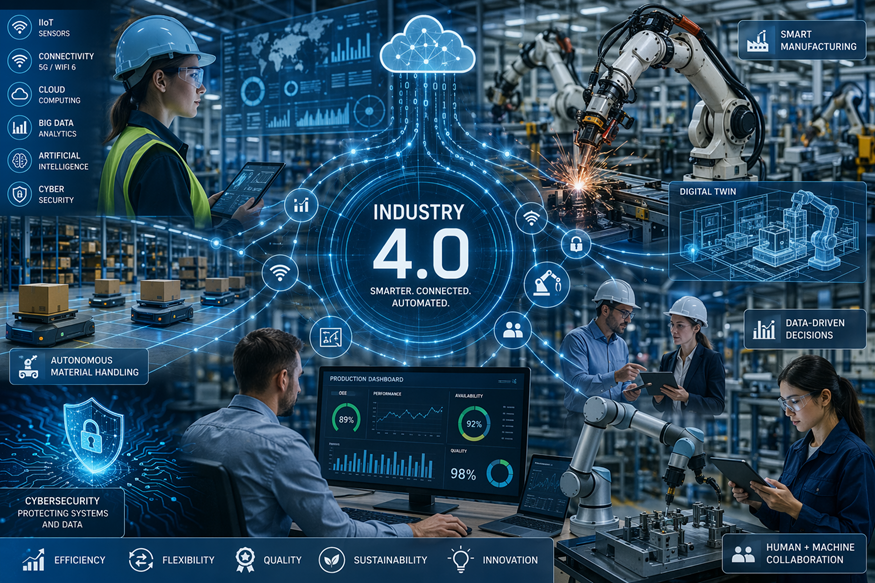
Industry 4.0 is powered by a group of technologies that work together, not in isolation. The most important ones help factories collect information, understand it, and act on it faster.
That is where the industrial internet of things, artificial intelligence, big data, and machine learning come in. They support real-time monitoring, smarter planning, and better equipment decisions. The next sections break down two of the most important building blocks and explain how they support connected manufacturing.
Industrial Internet of Things (IIoT)
The industrial internet of things (IIoT) represents a significant leap in the fourth industrial revolution, connecting machines and devices to enhance operational efficiency. By leveraging smart sensors and data collection tools, businesses can monitor equipment performance in real time, allowing for predictive maintenance and optimized production processes. This network of interconnected devices fosters efficient collaboration and drives innovative business models, ultimately improving product quality and customer satisfaction, and paving the way for technological advancements in the manufacturing industry.
Artificial Intelligence and Machine Learning in Manufacturing
Artificial intelligence and machine learning help manufacturers move from reacting to predicting. Instead of waiting for a problem to stop production, companies can use patterns in operating data to spot warning signs earlier. That makes operations more stable and easier to manage.
These tools are especially useful for predictive maintenance. By combining data analytics with machine learning models, manufacturers can detect failure signals, plan service at the right time, and avoid unnecessary disruption. This improves uptime and supports better equipment performance.
- Artificial intelligence helps identify patterns that people may miss.
- Machine learning improves predictive maintenance with better models over time.
- Data analytics supports faster service and production decisions.
Together, these technologies are key parts of Industry 4.0 because they turn raw factory data into practical action.
Impact of Industry 4.0 on Modern Manufacturing
Industry 4.0 changes the manufacturing process by making it more connected, visible, and responsive. Smart manufacturing uses data from machines, workers, and systems to improve decisions while production is still happening.
It also reaches beyond the factory floor. A digital twin can help teams test and improve processes virtually, while real time data supports supply chain coordination and faster action. To see this clearly, it helps to look at how smart factories run and where these ideas already show up in practice.
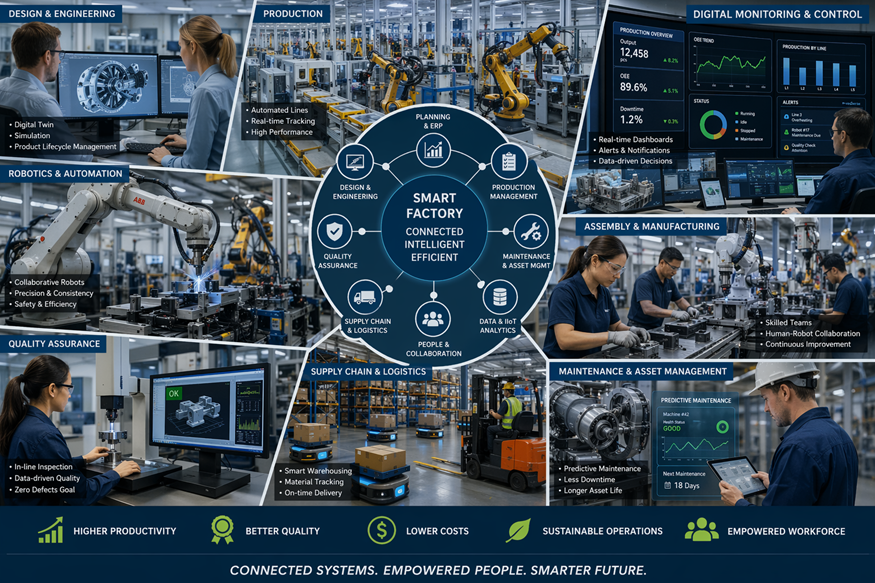
How Smart Factories Operate
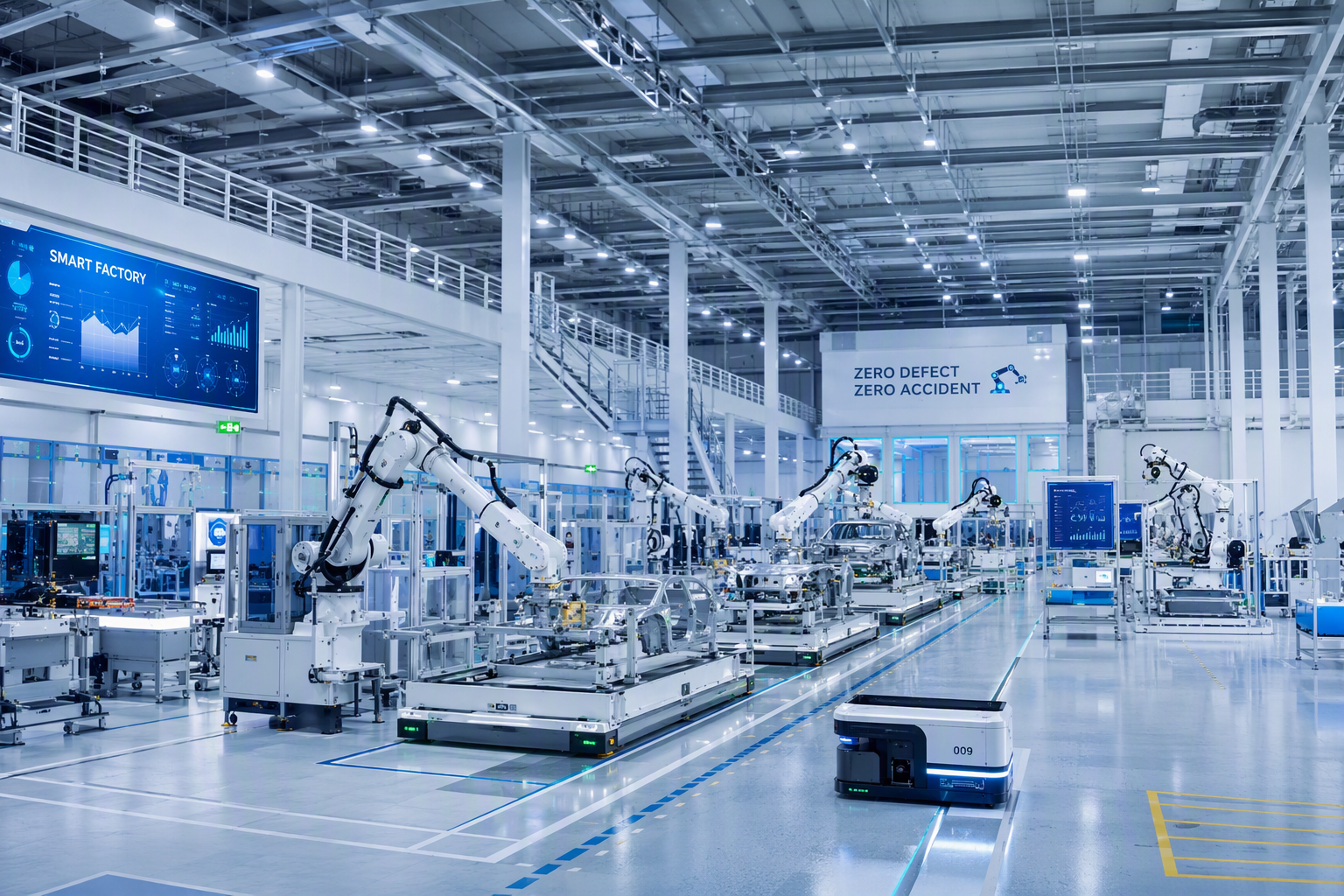
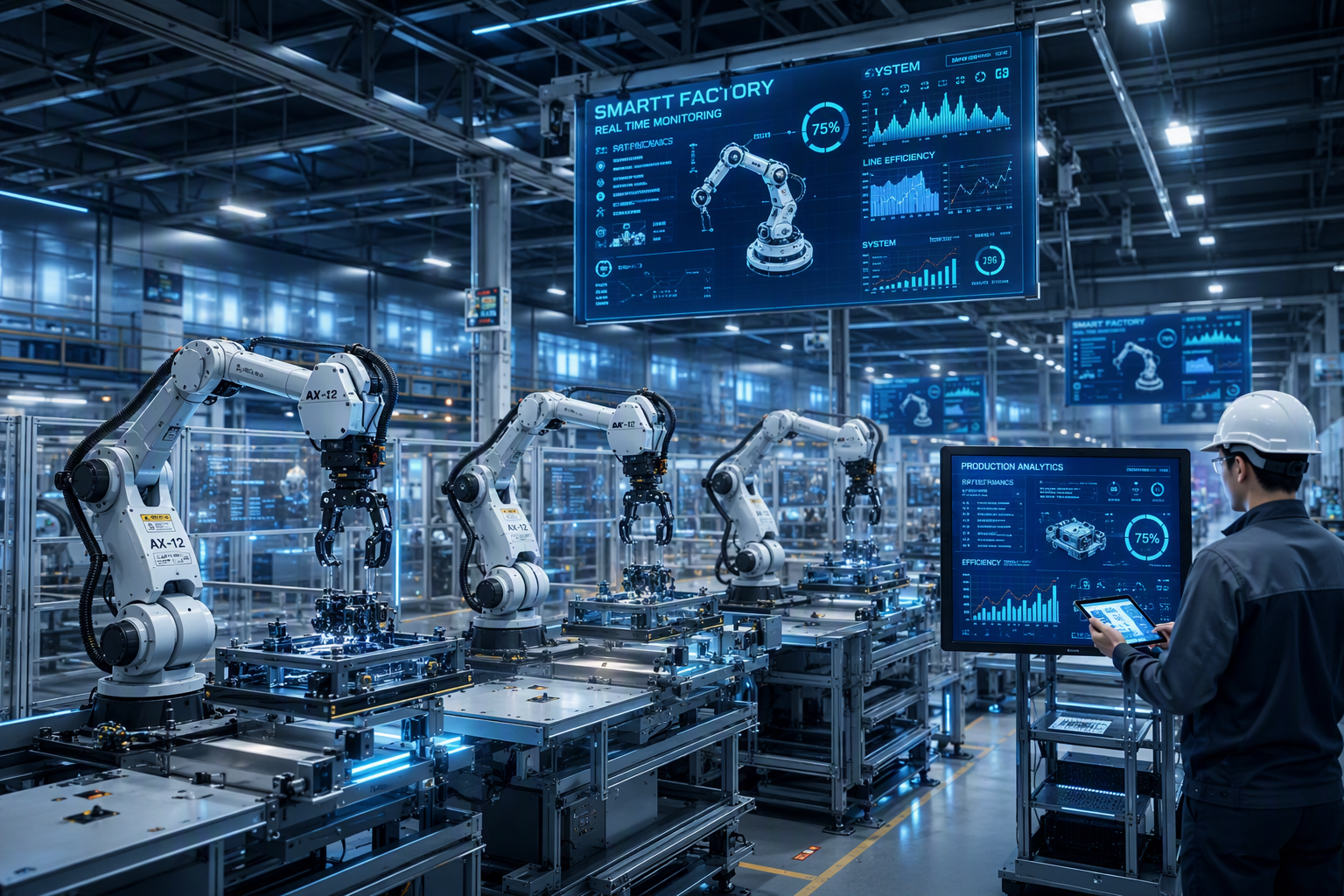
A smart factory operates through connected equipment, software, and workers that share information continuously. Instead of relying on delayed updates, teams can see what is happening as it happens. That helps production stay on track and allows quicker responses when conditions change.
Data analytics is a key part of this setup. Information from machines, processes, and performance systems is used to detect issues, guide maintenance, and improve output. This supports better planning and more stable operations across the facility.
Another important feature is coordination. Smart factories encourage efficient collaboration between departments, systems, and frontline teams. In some settings, autonomous systems also handle repetitive or time-sensitive tasks. The result is a more agile manufacturing environment that can adapt faster, reduce waste, and maintain stronger consistency in daily production.
Real-World Use Cases in the United States
Across the United States, manufacturers are already using Industry 4.0 in practical ways. These applications are not just large-scale concepts. They are helping companies improve visibility, reduce equipment issues, and respond faster to changing production demands.
Many of these use cases depend on real time monitoring and data-driven action. Companies connect existing assets, track conditions remotely, and use analytics to improve planning. This makes operations more responsive in both factories and related service activities.
- Predictive maintenance helps prevent unplanned downtime before equipment fails.
- Connected monitoring supports field service teams with alerts and performance trends.
- Supply chain optimization improves tracking, inventory visibility, and response times during mass production.
These examples show how Industry 4.0 is used in the real world to make daily operations more reliable and more efficient.
Main Benefits for Businesses Using Industry 4.0
Businesses adopt Industry 4.0 because it helps them improve production processes without relying only on more labor or more equipment. Better visibility and automation support faster action and fewer avoidable disruptions.
It also helps with efficient collaboration, stronger resource allocation, and more flexible business models. When operations become easier to track and adjust, companies can improve service, quality, and customer satisfaction. The next sections look at two major benefits in more detail: productivity gains and better product outcomes.
Boosting Efficiency and Productivity
One of the clearest benefits of Industry 4.0 is improved efficiency. Connected systems help businesses see what is slowing operations, where delays begin, and how to adjust work faster. That leads to smoother production processes and better use of time, labor, and materials.
Predictive tools also improve equipment performance. Instead of fixing machines only after a breakdown, companies can act earlier based on warning signals. This reduces avoidable downtime and helps control maintenance costs while keeping output more consistent.
- Better monitoring improves equipment performance across plants and lines.
- Predictive maintenance lowers maintenance costs and supports uptime.
- Smarter planning can shorten lead times and reduce waste in production processes.
For many businesses, these gains make Industry 4.0 a practical investment rather than just a technology trend.
Enhancing Product Quality and Innovation
Industry 4.0 also helps companies improve product quality. Real-time monitoring and connected systems make it easier to spot inconsistencies, track defects, and adjust processes before issues spread. That supports more reliable output and stronger customer trust.
At the same time, better data collection opens the door to faster innovation. Teams can learn from production results, compare performance across sites, and use digital platforms to support design, collaboration, and development work more effectively.
- Real-time monitoring helps protect product quality during production.
- Stronger data collection supports process improvement and learning.
- Digital platforms can help teams create and refine new products more efficiently.
When businesses understand their operations more clearly, they are better positioned to improve what they make and how they bring it to market.
Key Challenges and Considerations When Adopting Industry 4.0
Industry 4.0 brings clear value, but the shift is not always simple. Digital transformation often requires changes to systems, workflows, and roles that companies have used for years. That can slow progress if planning is weak.
Challenges also appear around manual labor, workforce reskilling, security, and the ability to use data analysis effectively. Businesses need the right tools, the right people, and a clear roadmap. The following sections look at the barriers many U.S. companies face and how they can address them.
Digital Transformation Barriers for U.S. Companies
Many U.S. companies still operate with a mix of older and newer systems. Some of these setups were built on processes that grew from the late 20th century digital shift, but they were not designed for today’s connected environment. That can make digital transformation harder to scale.
The challenge is not only technical. Companies often need to rethink business processes, align teams, and connect data that sits in separate systems. If those gaps remain, it becomes difficult to get the full value of Industry 4.0 tools.
- Older systems may not connect easily with modern platforms.
- Business processes often need redesign before technology can deliver results.
- Supply chain management becomes harder when data stays fragmented.
For many businesses, success depends on matching technology plans with operational needs rather than adopting tools without a clear purpose.
Addressing Security and Workforce Reskilling
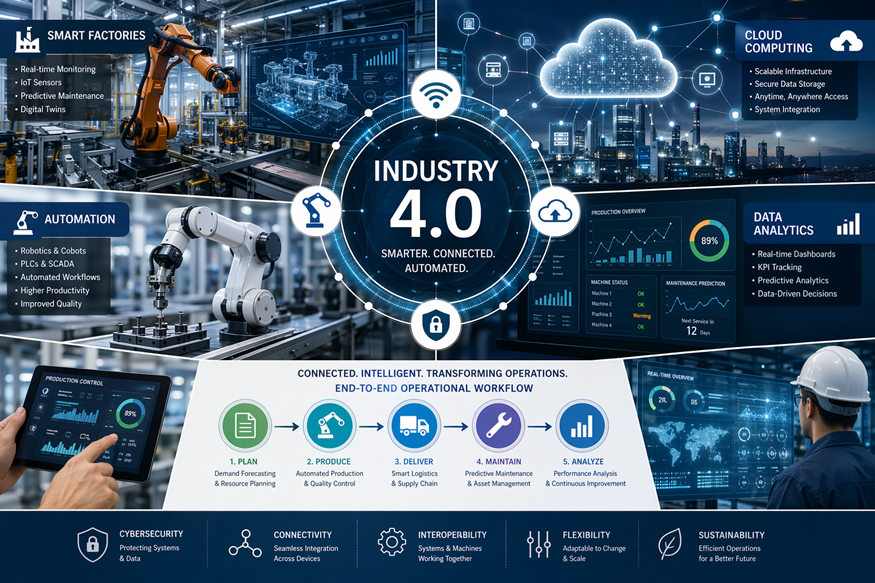
As companies adopt more connected systems, security becomes a bigger concern. Networked equipment, shared data, and cloud-based tools can create new risks if protections are weak. Strong safeguards are needed to protect systems and sensitive information as digital platforms expand.
People are just as important as technology. Advanced technologies can change daily tasks, which means workers may need new skills to use tools, interpret data, or manage connected operations with confidence. That is why workforce reskilling is a major part of successful adoption.
- Security measures should protect connected systems and operational data.
- Workforce reskilling helps employees adapt to new tools and workflows.
- Digital platforms work best when teams know how to use them well.
Companies that support both protection and training are better prepared to make Industry 4.0 work over the long term.
Conclusion
In summary, Industry 4.0 represents a significant leap in the evolution of manufacturing and production processes. By integrating advanced technologies like the Industrial Internet of Things (IIoT) and artificial intelligence, businesses can enhance efficiency, product quality, and innovation. However, with great opportunities come challenges such as digital transformation barriers and the need for workforce reskilling. Embracing these changes is essential for companies looking to thrive in this new industrial era. If you're curious about how Industry 4.0 can specifically benefit your operations, we invite you to explore further and see how you can leverage these advancements to stay competitive in the market.
Frequently Asked Questions
How does the Industrial Internet of Things (IIoT) connect with Industry 4.0?
The industrial internet of things is one of the core building blocks of Industry 4.0. It enables data exchange between machines, systems, and teams, supporting digital transformation through better visibility. In smart manufacturing, IIoT connects operational equipment with information technology so companies can monitor and improve performance more effectively.
What is the difference between Industry 4.0 and Industry 5.0?
The compiled information focuses on the fourth industrial revolution, which uses digital technologies and advanced technologies to connect, automate, and improve industrial operations. In simple terms, Industry 4.0 is the current shift shaping business models and the future of industry through connected, data-driven manufacturing systems.
Where can beginners start learning more about Industry 4.0?
A good starting point is reading introductory material on the fourth industrial revolution from trusted industry resources and digital platforms. You can also explore information linked to the World Economic Forum, where Klaus Schwab, the executive chairman of the World Economic Forum, helped popularize the concept alongside discussions of data analytics and manufacturing change.
You might also like