Automation in Manufacturing: Smart Solutions for Success
Automation in Manufacturing: Smart Solutions for Success
Key Highlights
- Automation solutions use technology to handle tasks with minimal human input, boosting efficiency.
- The primary benefits of automation include increased productivity, better accuracy, and lower operational costs.
- Industrial automation is revolutionizing the manufacturing sector with robotics and smart systems.
- Process automation streamlines workflows, from simple data entry to complex business operations.
- Artificial intelligence and machine learning are making automation smarter and more adaptable than ever.
- Smart manufacturing integrates data and technology to optimize the entire production process.
Introduction
Welcome to the world of manufacturing automation, where technology is reshaping how things are made. Have you ever wondered how factories produce goods so quickly and consistently? The answer often lies in advanced automation technologies. By implementing process automation, manufacturers can streamline their operations, boost efficiency, and significantly reduce the chances of human error. This shift not only accelerates production but also opens up new possibilities for innovation and growth in the industry.
Understanding Automation in Manufacturing
At its core, automation involves using technology to perform tasks that once required human involvement. Think of it as programming machines or software to handle repetitive tasks, freeing up people to focus on more complex and creative work. These automation systems can range from simple scripts to sophisticated robots on an assembly line.
In manufacturing, this means robots might assemble parts, weld components, or package final products. But its use extends to other industries like IT, for system maintenance, and even our smart homes, which control lights and temperature. Let's explore the specifics of how automation is defined and its role across different sectors.
Official Definitions of Automation
When we talk about an official definition, automation is described as the use of technology to accomplish tasks with minimal human intervention. It is a strategy driven by technology to streamline processes, improve efficiency, and minimize mistakes. This concept is built on using various tools and systems to carry out jobs without constant manual input.
The heart of this technology is programming. Developers create instructions that tell a machine how to act in different situations. This ensures the process automation operates smoothly and with high accuracy. It's about creating a system that can run on its own, following a pre-defined set of rules.
This approach is not just about replacing manual work. It's about enhancing it. By automating certain tasks, you allow your team to focus on strategic thinking and problem-solving, activities that machines cannot yet replicate. This synergy between human and machine is where the true power of automation lies.
The Role of Automation in Modern Industries
Automation is incredibly important for modern businesses because it serves as a foundation for efficiency and growth. By reducing the need for human labor in tedious or dangerous tasks, industrial automation allows companies to optimize their resources and speed up operations. This is especially true in manufacturing, where precision and speed are critical.
The integration of various automation technologies reshapes entire business processes. It's not just about doing the same tasks faster; it's about reimagining workflows to be more logical and less prone to error. This transformation helps you stay competitive in a fast-paced market.
Ultimately, automation frees up your workforce from mundane activities. This shift enables your employees to contribute in more meaningful ways, focusing on innovation, strategy, and creative problem-solving. This evolution of roles is key to adapting and thriving in today's dynamic economic landscape.
Historical Evolution of Automation in Manufacturing
The historical evolution of automation has been a fascinating journey. While the concept seems modern, its roots go back decades. The term "automation" itself was first coined by the car company General Motors in 1946. It was used to describe the new systems they were implementing for the automatic handling of parts during the manufacturing process.
Initially, automation was focused on mechanizing simple, repetitive human actions. The goal was to increase production speed and consistency on assembly lines. This early form of process automation was a game-changer, laying the groundwork for the more advanced systems we see today.
From these mechanical beginnings, automation has expanded into nearly every industry. It has grown from simple machinery to complex software and AI-driven systems. This progression shows a continuous effort to streamline processes, improve safety, and push the boundaries of what is possible in production and beyond.
Types of Manufacturing Automation
When you look at manufacturing, not all automation is the same. There are several different types of automation, each suited for specific needs and production scales. These automation technologies range from highly specialized equipment for mass production to flexible systems that can adapt to various products.
Understanding these categories can help you determine the best approach for your own production lines. Whether you need high efficiency for a single product or the agility to handle customized orders, there's an automation strategy that fits. Let’s look at some of the main types you'll find in factories today.
Fixed Automation Systems
Fixed automation, often called "hard automation," involves using machinery specifically designed to perform a single set of repetitive tasks. This approach is perfect for environments with high-volume production where the product design is stable and doesn't change often. The equipment is dedicated to one job, leading to extremely high production rates.
Think of automotive assembly lines as a classic example. Here, you might see machines dedicated to welding a specific part or painting car bodies as they move along conveyor belts. This specialization results in high efficiency and a low cost per unit, but it comes with a major drawback: inflexibility.
Changing the product or process in a fixed automation setup requires significant and expensive retooling. Because the equipment is custom-built for its task, it cannot be easily repurposed. This makes it ideal for mass-producing items but unsuitable for businesses that need to adapt to changing market demands quickly.
Programmable Automation Technologies
Programmable automation offers more flexibility compared to fixed systems. This type of technology is used when production needs vary, allowing machinery to be reprogrammed to handle different tasks or product batches. It is an excellent choice for batch production processes where product volumes are moderate and some customization is required.
A great example is Computer Numerical Control (CNC) machines. These automation systems can be programmed with new instructions to cut, shape, or engrave different materials for various products. This ability to change operations via software is a significant step up from older, purely mechanical legacy systems.
While programmable automation is more versatile, changing the setup between batches can still involve some downtime for reprogramming and physical adjustments. However, it provides a crucial middle ground, allowing manufacturers to produce a variety of products on the same equipment without the complete inflexibility of fixed automation.
Flexible and Integrated Automation Solutions
Flexible automation represents a more advanced approach, allowing equipment to switch between different tasks with almost no downtime for reprogramming. These sophisticated automation solutions are perfect for environments with high product variability, such as a factory producing many different customized items. This system enhances productivity by quickly adapting to new designs.
This adaptability is often achieved through the integration of industrial robots and smart controls. For instance, robotic arms in a car factory can be programmed to perform multiple tasks like assembling, welding, and painting different car models on the same line. The system can identify the incoming model and adjust its actions accordingly.
The use of technologies like machine learning further enhances these systems, enabling them to optimize processes on the fly. While the initial investment can be high, a potential drawback, the long-term benefits of such agile and efficient production are substantial, giving businesses a strong competitive edge.
Smart Manufacturing Explained
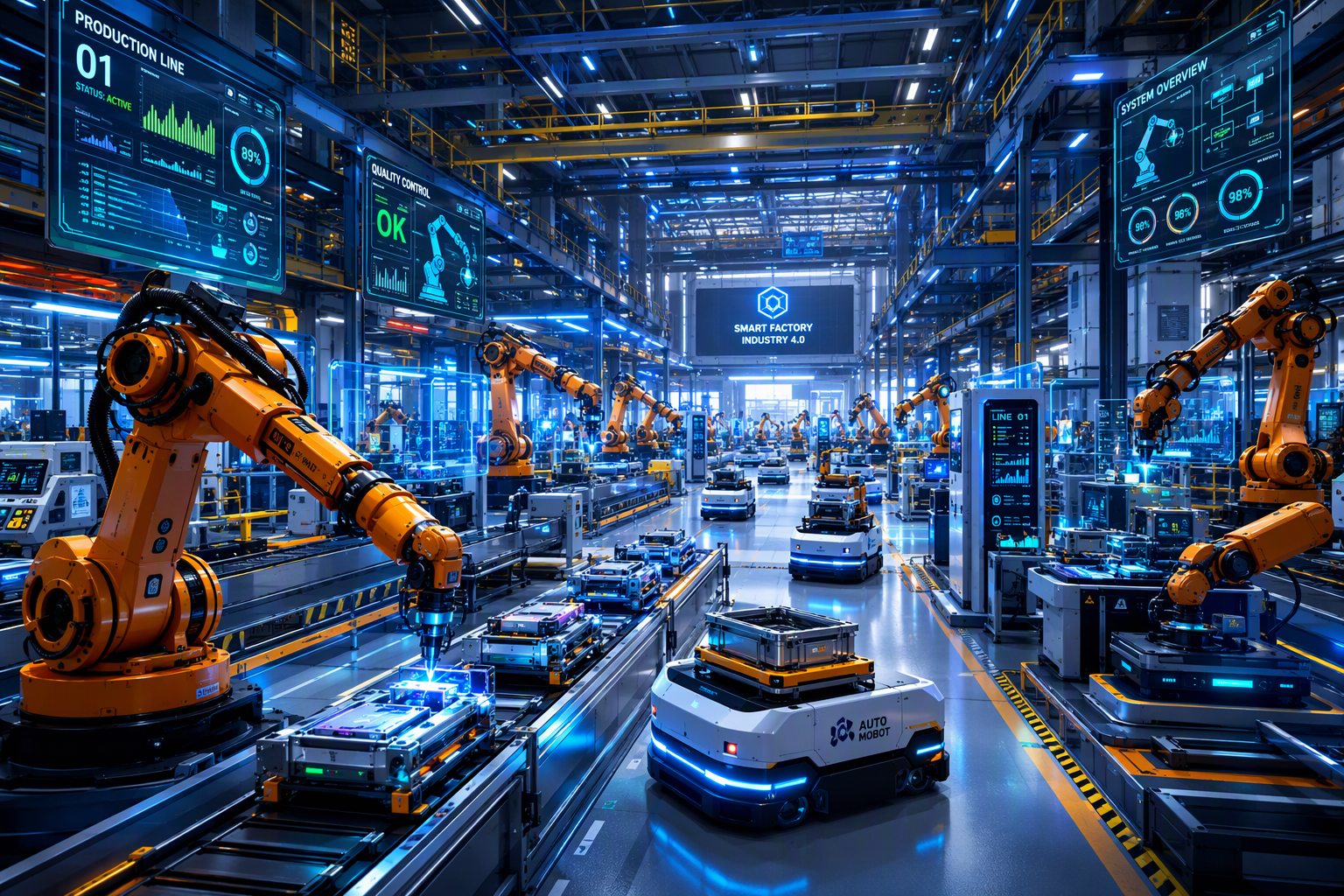
So, what exactly is smart manufacturing? It's the next step in the evolution of industrial automation. This concept involves creating a fully integrated and collaborative manufacturing system that responds in real time to meet changing demands and conditions in the factory, the supply network, and customer needs.
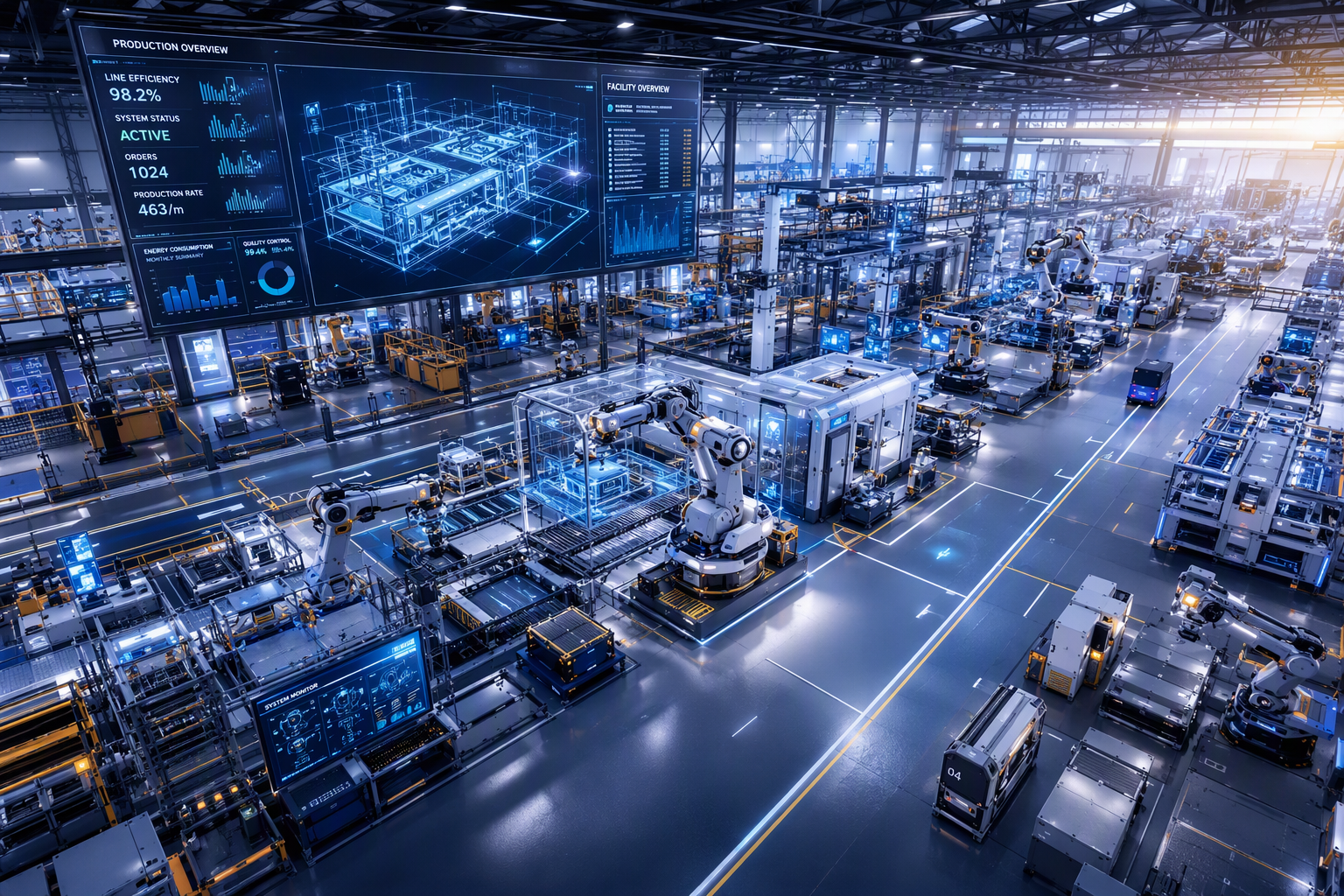
This digital transformation connects machinery, people, and data in a powerful way. By leveraging data from across the production floor, smart manufacturing aims to optimize processes, predict issues before they happen, and create a more agile and efficient operation. Let's examine the principles and tools that make this possible.
Core Principles of Smart Manufacturing
The core principles of smart manufacturing are built on connectivity and data. It's a digital transformation that makes factories more intelligent and responsive. This approach moves beyond simple automation to create a system where machines communicate with each other and with central control systems to optimize the entire production flow.
This integration leads to significant improvements in efficiency and quality. Key principles include:
- Connectivity: Linking machines, sensors, and people to share data in real time.
- Optimization: Using data analytics to fine-tune processes, reduce waste, and improve output.
- Transparency: Providing a clear view of the entire operation, from raw materials to final product.
- Agility: Enabling quick adjustments to production based on supply chain disruptions or changing customer orders.
By embracing these principles, manufacturers can create a more resilient and efficient operation. This data-driven approach helps reduce human error, streamline supply chain management, and ultimately deliver better products to customers faster and more reliably.
Digital Transformation and Automation Tools
Digital transformation is the driving force behind modern manufacturing, and automation tools are the vehicles that make it happen. These tools range from software that manages workflows to physical robots that perform complex assembly tasks. Companies like UiPath and Automation Anywhere provide powerful Robotic Process Automation (RPA) solutions that are essential in this shift.
RPA involves using software robots, or "bots," to mimic human actions on digital systems. Think about tasks like data entry, processing invoices, or managing customer records. These bots can perform such rule-based tasks tirelessly and without error, freeing up your employees for more valuable work. This is a key part of business process automation.
Tools like these help companies streamline their back-office operations, reduce costs, and improve accuracy. By automating entire workflows, businesses can achieve a higher level of efficiency and consistency. This digital transformation is not just about technology; it's about fundamentally changing how your business operates for the better.
Adoption of Artificial Intelligence (AI) in Smart Factories
The adoption of artificial intelligence (AI) is taking smart factories to a whole new level. AI and its subfield, machine learning, enable automation systems to do more than just follow pre-programmed instructions. They can now learn from data, recognize patterns, and make intelligent decisions on their own.
One of the most impactful applications of AI in manufacturing is predictive maintenance. Instead of waiting for a machine to break down, AI algorithms can analyze performance data to predict potential failures before they happen. This allows you to schedule maintenance proactively, preventing costly downtime and extending the life of your equipment.
Beyond maintenance, AI is also enhancing robotics. AI-powered robots can handle more complex tasks that require adaptability and decision-making. As AI technology continues to advance, its integration with automation tools will unlock even greater levels of productivity, quality, and innovation in smart factories.
Industrial Automation in Practice
How does industrial automation actually work on the factory floor? It involves a combination of control systems, machinery, and automation equipment designed to carry out production tasks. From massive robotic arms that lift heavy parts to precise sensors that inspect for quality, these technologies work together to create a seamless workflow.
The use cases are incredibly diverse, spanning from automotive manufacturing to food production. This practical application of technology revolutionizes how goods are made, boosting both speed and accuracy. Let's look closer at the specific equipment used and how different technologies like robotics and the IIoT are put into practice.
Automation Equipment Used in United States Factories
Factories across the United States employ a wide range of automation equipment to stay competitive and efficient. These tools form the backbone of modern industrial automation systems. Industrial robots, particularly robotic arms, are among the most common, handling tasks like welding, painting, assembly, and material handling with precision and speed.
Besides robots, other key pieces of equipment include Programmable Logic Controllers (PLCs), which are ruggedized computers that control machinery, and conveyor systems that move parts and products through the production line. Automated Guided Vehicles (AGVs) also transport materials around the factory floor without a human driver.
Here is a quick look at some common automation equipment and their functions:
| Equipment Type | Function |
|---|---|
| Industrial Robots | Perform tasks like welding, assembly, and painting. |
| PLCs | Control and monitor machinery and processes. |
| Conveyor Systems | Transport materials and products along the assembly line. |
| Machine Vision | Inspect products for defects and guide robots. |
These automation systems work in concert to create a highly efficient and reliable manufacturing environment.
Robotics and Machine Vision Systems
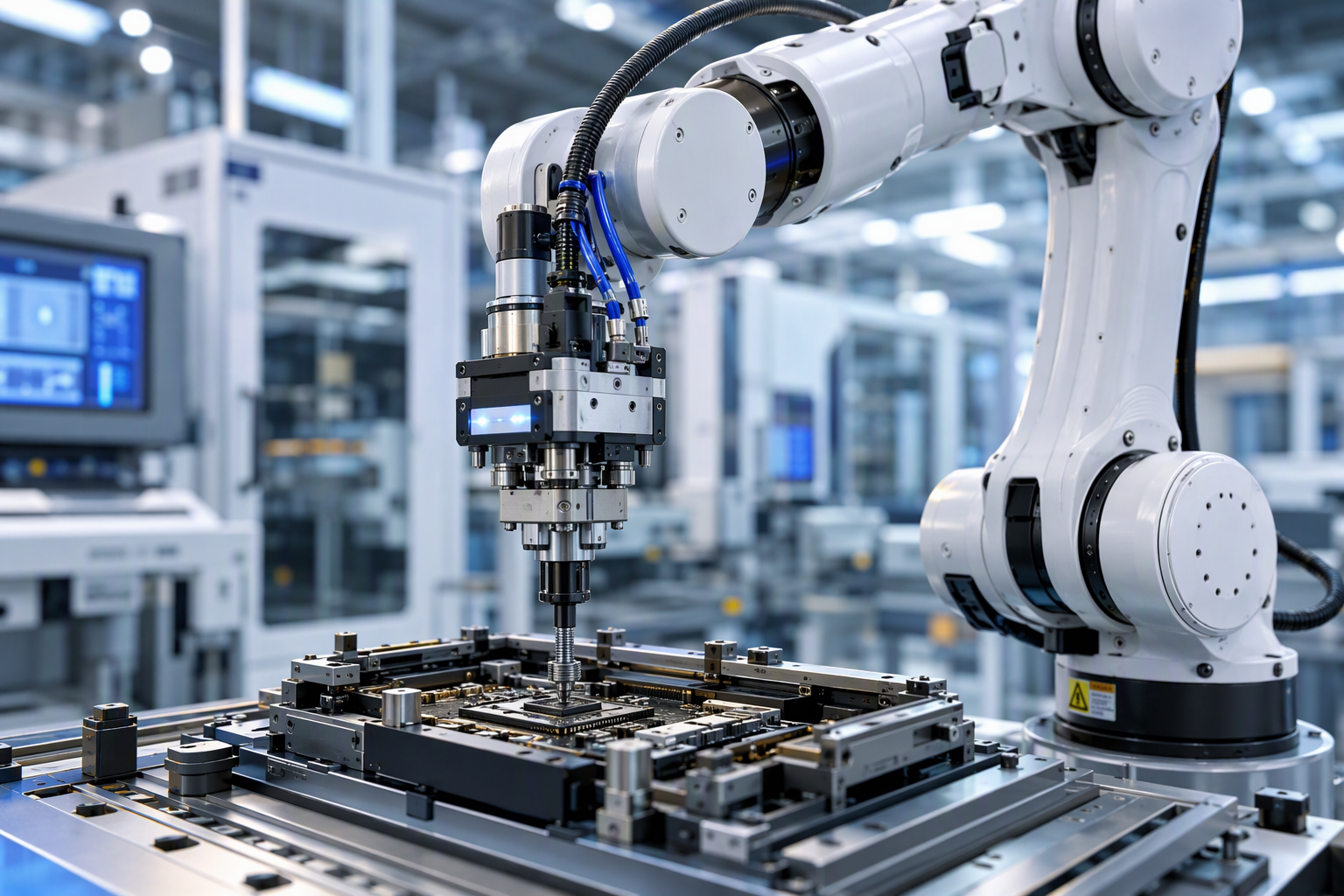
Robotics and machine vision systems are a powerful duo in modern manufacturing. Industrial robots provide the strength and speed to perform physical tasks, while machine vision gives them the "eyes" to see, inspect, and interact with their environment. This combination is crucial for tasks that require high precision and quality control.
Machine vision uses cameras and sophisticated software to analyze images. In a factory setting, it can be used to inspect products for defects, measure parts to ensure they meet specifications, or guide a robot to pick up an object correctly. This automates the quality control process, making it much faster and more reliable than manual inspection.
Many common examples of this technology are found in automotive and electronics manufacturing. For instance, a vision system can check that all components are correctly placed on a circuit board or ensure a weld is perfectly formed. By integrating robotics with machine vision, you can achieve a level of consistency and accuracy that is difficult to match with human labor alone.
Industrial Internet of Things (IIoT) Applications
The Industrial Internet of Things (IIoT) is another key pillar of modern automation. IIoT refers to the network of interconnected sensors, instruments, and other devices on the factory floor. These devices collect and share data, providing a real-time view of the entire manufacturing process.
This constant stream of data is where the magic happens. By applying data analytics, you can gain deep insights into your operations. This allows you to identify bottlenecks, optimize energy consumption, and improve overall efficiency. It's one of the more advanced automation technologies that links the physical and digital worlds.
One of the most valuable applications of IIoT is predictive maintenance. Sensors on machinery can monitor conditions like temperature and vibration. If the data deviates from the norm, the system can flag a potential issue before it causes a breakdown. This proactive approach helps you avoid unplanned downtime and keep your production lines running smoothly.
Key Benefits of Automation for Manufacturers
Adopting automation brings a host of significant advantages to any manufacturing operation. The benefits of automation are clear, touching everything from your production speed to your bottom line. At the forefront are dramatic improvements in operational efficiency and substantial cost savings over the long term.
While the initial investment can be a consideration, the return is often seen in higher output, better quality, and a safer work environment. Are you ready to see how automation can transform your business? Let's break down some of the key benefits you can expect.
Increased Productivity and Efficiency
One of the most immediate benefits of automation is a significant boost in productivity and efficiency. Automated systems can operate 24/7 without breaks or fatigue, allowing you to produce more in less time. This acceleration of operations helps you meet customer demand and achieve greater output with the same or even fewer resources.
When you automate routine and repetitive tasks, your overall operational efficiency soars. This is because machines can perform these jobs faster and more consistently than humans. This streamlining of workflows directly contributes to higher productivity levels across the entire facility.
Furthermore, this increase in output often comes with a reduction in labor costs. While automation doesn't always eliminate jobs, it reallocates human workers to more valuable, less repetitive roles. This optimization of your workforce, combined with higher production rates, has a powerful positive impact on your company's profitability.
Enhanced Product Quality and Consistency
Another major advantage of automation is the enhancement of product quality and consistency. Automated systems execute tasks with incredible precision and reliability, following the exact same process every single time. This consistency is extremely difficult to achieve with manual labor, where factors like fatigue or distraction can lead to variations.
This precision is vital in quality control. Automated inspection systems, for example, can detect tiny defects that might be missed by the human eye. By catching these issues early, you can reduce waste and ensure that only top-quality products reach your customers. This reduces the chance of human error in critical inspection steps.
Ultimately, automation leads to a more uniform and dependable final product. Whether it's the precise application of paint on a car or the exact measurement of ingredients in a food product, automation ensures every item meets the same high standard. This reliability builds customer trust and strengthens your brand's reputation.
Cost Reduction and Sustainable Operations
While the initial investment in automation can be significant, the long-term cost reduction is a compelling benefit. Automation cuts down on expenses in several ways. It lowers labor costs by requiring minimal human intervention for routine tasks and reduces material waste by improving accuracy and minimizing errors.
Automation also contributes to more sustainable operations. Smart systems can optimize energy consumption by running machinery only when needed or by fine-tuning processes to improve energy efficiency. This not only lowers your utility bills but also reduces your company's environmental footprint.
Over time, these savings add up. The efficiency gains, reduced waste, lower energy use, and optimized labor all contribute to a healthier bottom line. By making your operations leaner and more sustainable, automation provides a path to long-term financial stability and responsible manufacturing.
Conclusion
In summary, automation in manufacturing is essential for staying competitive in today's fast-paced market. By understanding the various types of automation and the principles of smart manufacturing, manufacturers can leverage technology to enhance productivity, improve product quality, and reduce costs. The adoption of advanced tools like AI and IoT not only streamlines operations but also paves the way for sustainable practices and innovation. Embracing these smart solutions will significantly contribute to your success in the dynamic manufacturing landscape. If you're ready to take your manufacturing processes to the next level, reach out for a free consultation to explore how automation can revolutionize your operations!
Frequently Asked Questions
What is smart manufacturing and why is it important?
Smart manufacturing is a data-driven approach that uses industrial automation and connected automation solutions to optimize production. It's a digital transformation that makes factories more efficient, agile, and responsive. This process automation is important because it boosts productivity, reduces costs, and provides a significant competitive advantage in the market.
How do automation tools like Automation Anywhere drive success?
Automation tools like Automation Anywhere drive success by using robotic process automation (RPA) to handle repetitive digital tasks. This form of process automation streamlines workflows with minimal human intervention, reducing errors and freeing up employees for strategic work. This digital transformation leads to greater efficiency, lower costs, and improved productivity.
What are common examples of automation in everyday manufacturing?
Common automation examples in manufacturing include industrial robots performing welding and assembly on production lines. You'll also see conveyor belts moving products between stations and vision systems inspecting for quality. These automation solutions are perfect for handling repetitive tasks, ensuring speed and consistency in the factory.
You might also like