Industrial Automation Solutions: Enhance Production Quality
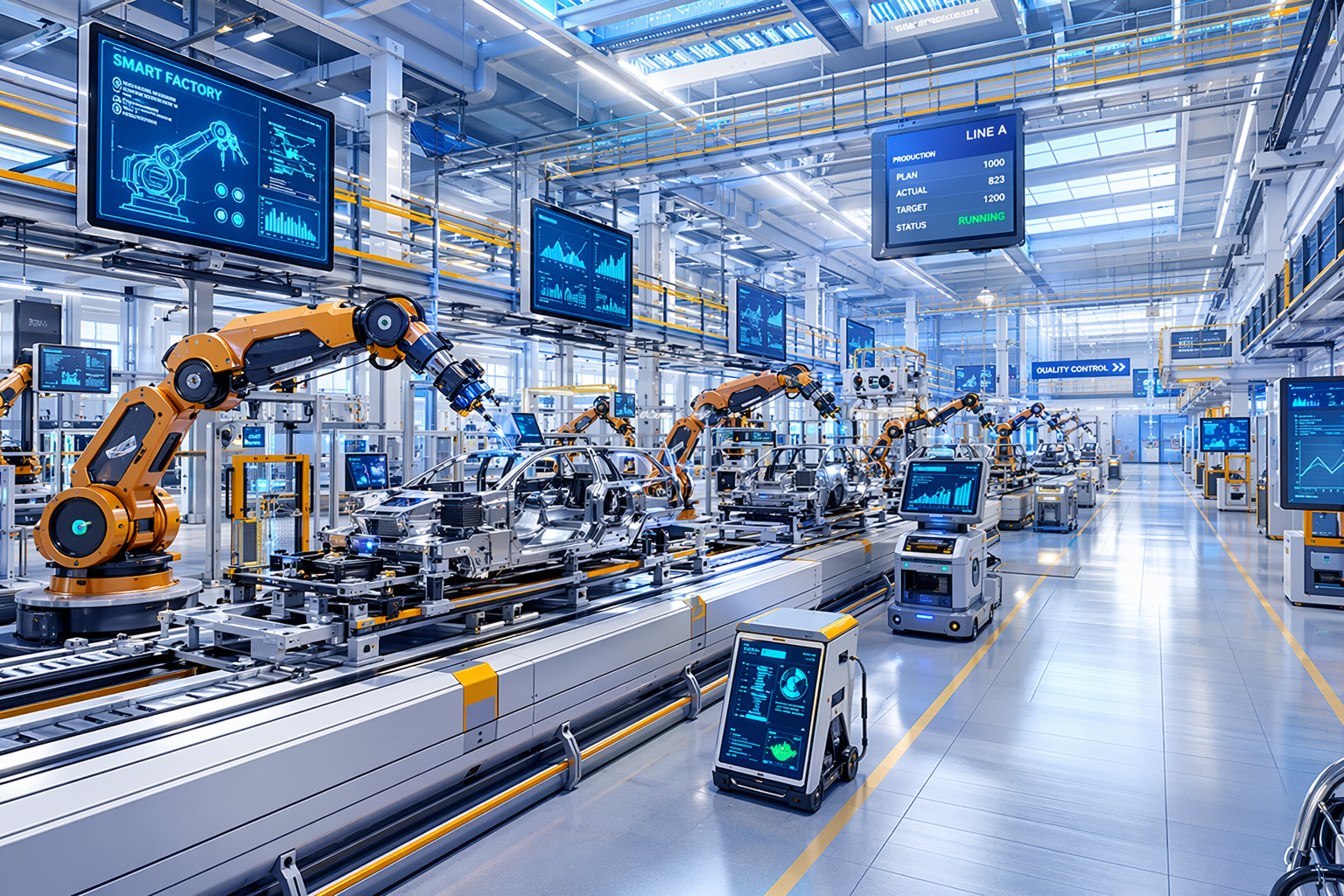
Key Highlights
- Industrial automation uses control systems to improve the manufacturing process with less human intervention.
- Modern automation solutions help raise production quality by reducing errors in repetitive tasks.
- Common systems include fixed automation, programmable automation, and flexible automation for different production needs.
- Key tools such as programmable logic controllers, HMIs, sensors, and industrial robots support steady performance.
- IIoT and data analytics help manufacturers monitor industrial processes and improve decisions.
- Choosing the right provider depends on fit, support, integration, and long-term value.
Introduction
Industrial automation is changing how the manufacturing industry handles the production process. Instead of relying heavily on manual labor, companies now use connected machines, software, and control tools to complete specific tasks with greater speed and accuracy. That shift helps reduce errors, improve output, and support better results on the factory floor. If you want stronger performance without sacrificing consistency, automation can be a practical step. To see why, it helps to start with the basics.
Understanding Industrial Automation Solutions
At its core, automation solutions combine hardware and software to manage the production process with limited human intervention. These systems support control systems that keep industrial processes running with better accuracy and timing.
For the manufacturing process, the main benefits are clear: fewer human errors, stronger output, lower labor pressure, and more reliable results. Companies use automation to improve speed, consistency, and oversight. The next sections explain what these systems are made of and how they work in real production settings.
Defining Industrial Automation in Manufacturing
Industrial automation refers to computerized systems used in a facility to manage work that would otherwise depend on human labor. In the manufacturing industry, an automation system is built to handle repetitive tasks with greater precision and steadier performance.
You can think of it as a way to keep operations moving with less manual effort. Tasks such as assembly, packaging, and other routine manufacturing tasks can be completed faster and more accurately. That directly supports production efficiency by reducing delays and limiting mistakes caused by fatigue or inconsistency.
Over time,
industrial automation has grown from simple hardwired setups to more adaptable systems. This matters because manufacturers need tools that improve output, support product quality, and match changing production demands. When repetitive work is automated, human workers can focus on supervision, problem-solving, and higher-value responsibilities.
Key Components of Automation Systems
A reliable automation system depends on several connected parts working together. These parts collect data, process instructions, and trigger actions across production equipment. Good control systems keep everything coordinated and easier to monitor.
Core components often include:
- Sensors and actuators that detect conditions and carry out physical actions
- Programmable logic controllers that process inputs and control specific tasks
- Human-machine interfaces that give operators a visual view of system status
- Industrial robots and machine vision systems that support speed, accuracy, and inspection
Service providers usually help businesses select, install, integrate, and support these tools. They may also assist with communication networks, SCADA systems, and maintenance needs. When these elements are properly connected, the automation system becomes more dependable, responsive, and useful for daily factory operations.
Types of Industrial Automation Systems
Factories use more than one type of automation because production goals are not all the same. The most common automation technology choices include fixed automation, programmable automation, and flexible automation.
Each type of automation suits a different environment, from long-run assembly lines to batch work and changing product mixes. Industrial robots may appear across these setups, depending on the task. To choose well, you need to understand how each system handles volume, changeovers, and day-to-day production demands.
Fixed, Programmable, and Flexible Automation
Manufacturers commonly choose between fixed automation, programmable automation, and flexible automation. The right automation system depends on how stable your product design is, how often batches change, and how much variation your production line must handle.
Here is a simple breakdown:
- Fixed automation fits high-volume, repetitive work with a long product life cycle
- Programmable automation works well for batch production where settings change between runs
- Flexible automation supports quicker adjustments for changing products and volumes
- PLC-based equipment, CNC machinery, and industrial robots are most common examples across these models
In practice, fixed systems are efficient but harder to change. Programmable setups allow reprogramming, though reconfiguration can take time. Flexible automation offers more agility and is often used where product variety matters. That makes it useful for job shops, discrete manufacturing, and operations that need faster responses to market changes.
Integration of Industrial Internet of Things (IIoT)
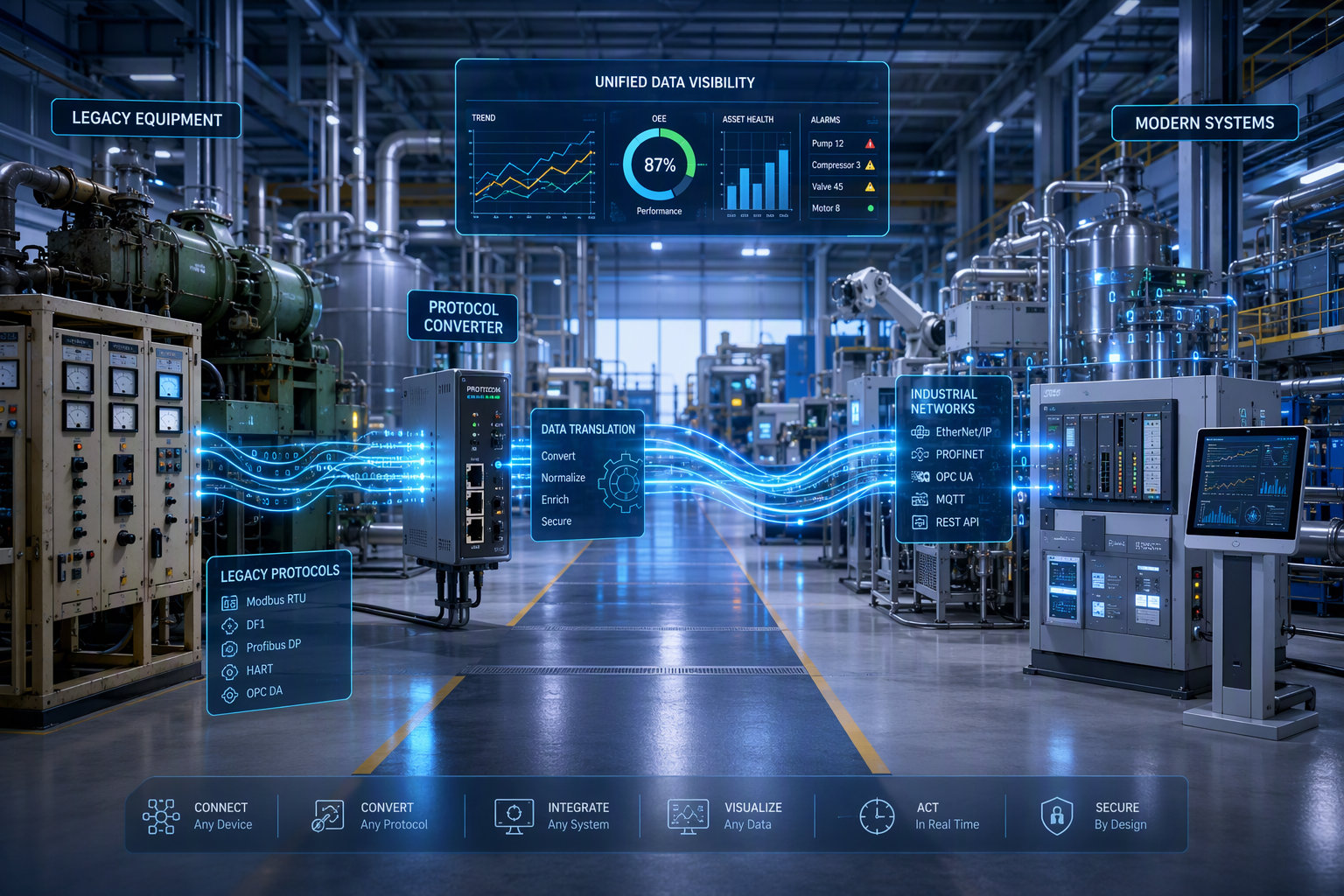
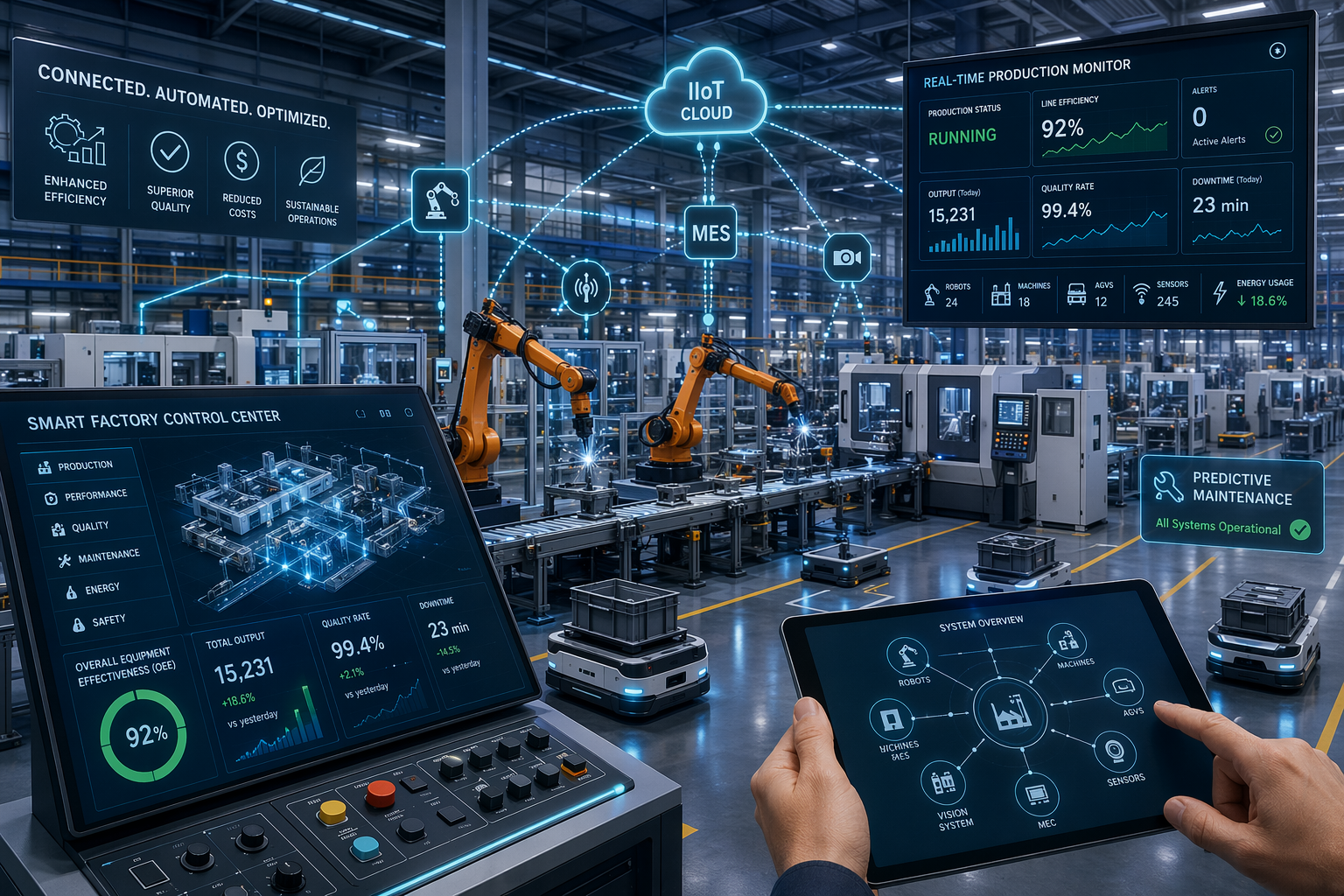
The industrial internet of things connects machines, devices, and sensors so they can share real-time information across an automation system. This added visibility helps companies monitor industrial processes more closely and respond faster when conditions change.
Once equipment is connected, data analytics becomes much more useful. Manufacturers can track performance, spot inefficiencies, and support better decisions using real operating data instead of guesswork. That can improve maintenance planning, output, and overall system awareness.
This connection between equipment and information is a big part of modern automation. It turns isolated machines into a more coordinated environment. As you will see later, IIoT also links industrial automation to broader Industry 4.0 goals such as connected operations, smarter monitoring, and better process control across the factory floor.
Main Benefits of Industrial Automation Solutions
The benefits of automation are practical and measurable. Companies adopt these systems to raise product quality, improve production efficiency, and reduce the strain tied to manual operations.
There is also a cost advantage. While the initial setup can be significant, lower labor costs, less waste, and fewer errors can create long-term value. Automation also supports safer operations by moving risky work away from people. The next two sections focus on quality and output, since those are often the biggest drivers.
Enhanced Product Quality and Consistency
One of the strongest reasons to automate is better product quality. Machines follow programmed instructions closely, which reduces variation and helps companies deliver consistent quality across batches. That matters when customers expect the same result every time.
Automation improves quality control through:
- Precise execution of specific tasks with fewer manual mistakes
- Better data collection during the manufacturing process
- More stable handling of repetitive operations on assembly lines
- Faster detection of process issues through connected systems
These improvements support customer satisfaction because defects, rework, and inconsistency become less common. Automated systems do not get tired, and they do not drift from the process in the way human operators sometimes can. When quality control becomes more reliable, the quality of products improves, returns can decrease, and teams gain a clearer picture of where adjustments are needed.
Increased Production Efficiency and Output
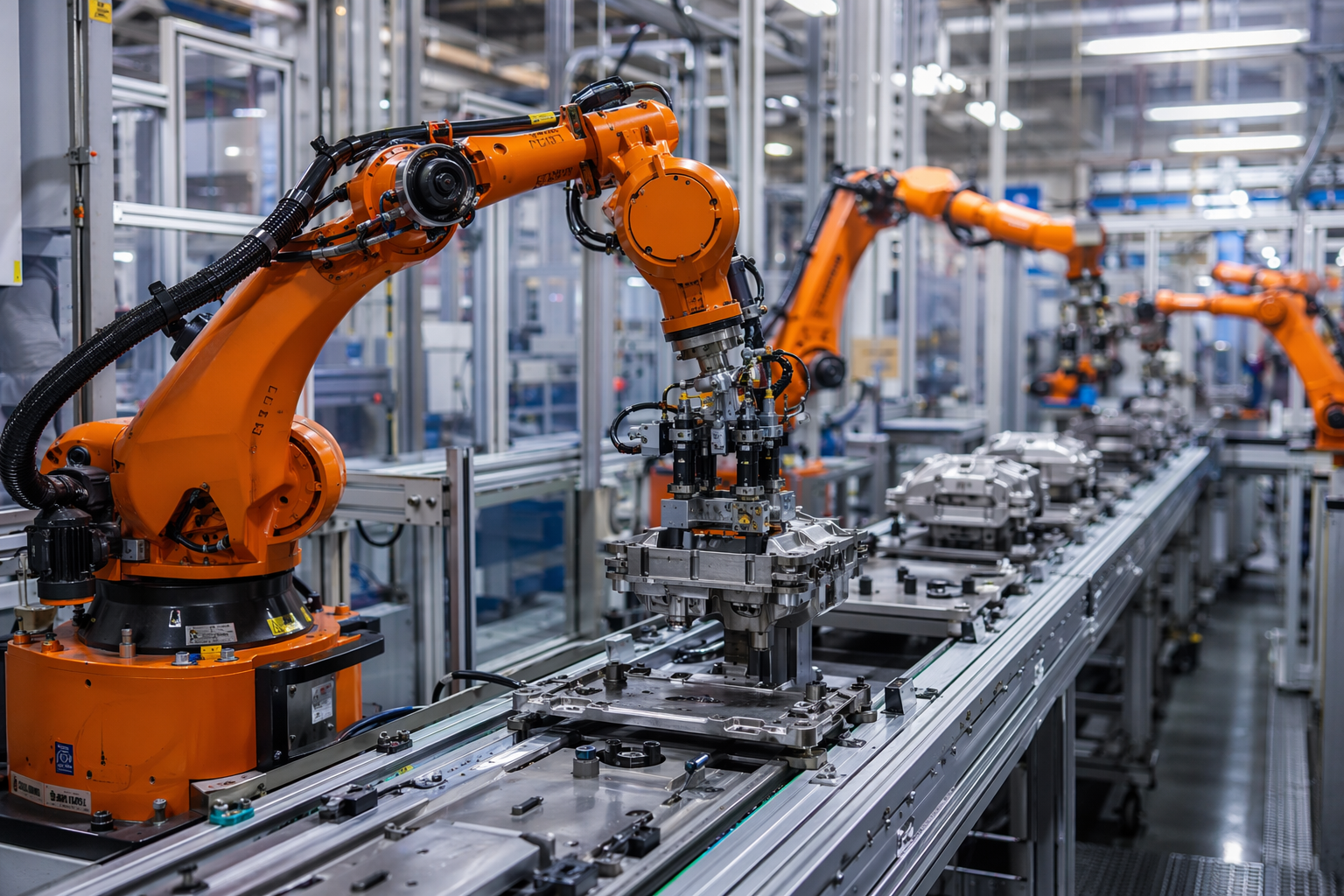
If your goal is higher throughput, automation can make a clear difference. A well-designed automation system keeps the production process moving at a steady pace, often much faster than manual methods. That helps increase production efficiency without sacrificing control.
Key performance gains often include:
- Shorter cycle times on the production line
- 24/7 operation compared with limited human shifts
- More predictable flow across repetitive manufacturing tasks
- Better use of equipment for higher efficiency and output
Industrial robots and other robotic systems can maintain speed for long periods, which boosts output over time. This is one reason automated facilities can respond better to production demands. By reducing pauses, limiting manual bottlenecks, and improving coordination, automation helps manufacturers produce more in less time while keeping performance easier to measure and manage.
Industrial Automation and Industry 4.0
Industry 4.0 builds on industrial automation by adding connectivity, smarter data use, and broader digital visibility. In simple terms, automation technology handles the work, while digital transformation helps companies understand and improve that work in real time.
This link matters because modern manufacturers want more than basic machine control. They want connected systems, faster insights, and better responses to changing conditions. That is why automation now sits at the center of Industry 4.0 strategies, especially in data-driven production environments.
Digital Transformation in Manufacturing
Digital transformation in the manufacturing industry means using connected technology to improve how work is planned, monitored, and adjusted. An automation system becomes more valuable when it is paired with data analytics that show what is happening across operations.
Instead of relying only on manual checks, teams can use system data to review performance, identify weak points, and support better decisions. This can help optimize workflows, improve operational strategies, and strengthen overall production performance. It also gives managers and engineers a better view of what needs attention.
For many businesses, this shift is not just about replacing old tools. It is about creating a smarter operating model. When automation, connected software, and real-time information work together, digital transformation becomes a practical way to improve consistency, control, and responsiveness without adding unnecessary complexity.
Role of Smart Factories and Connected Equipment
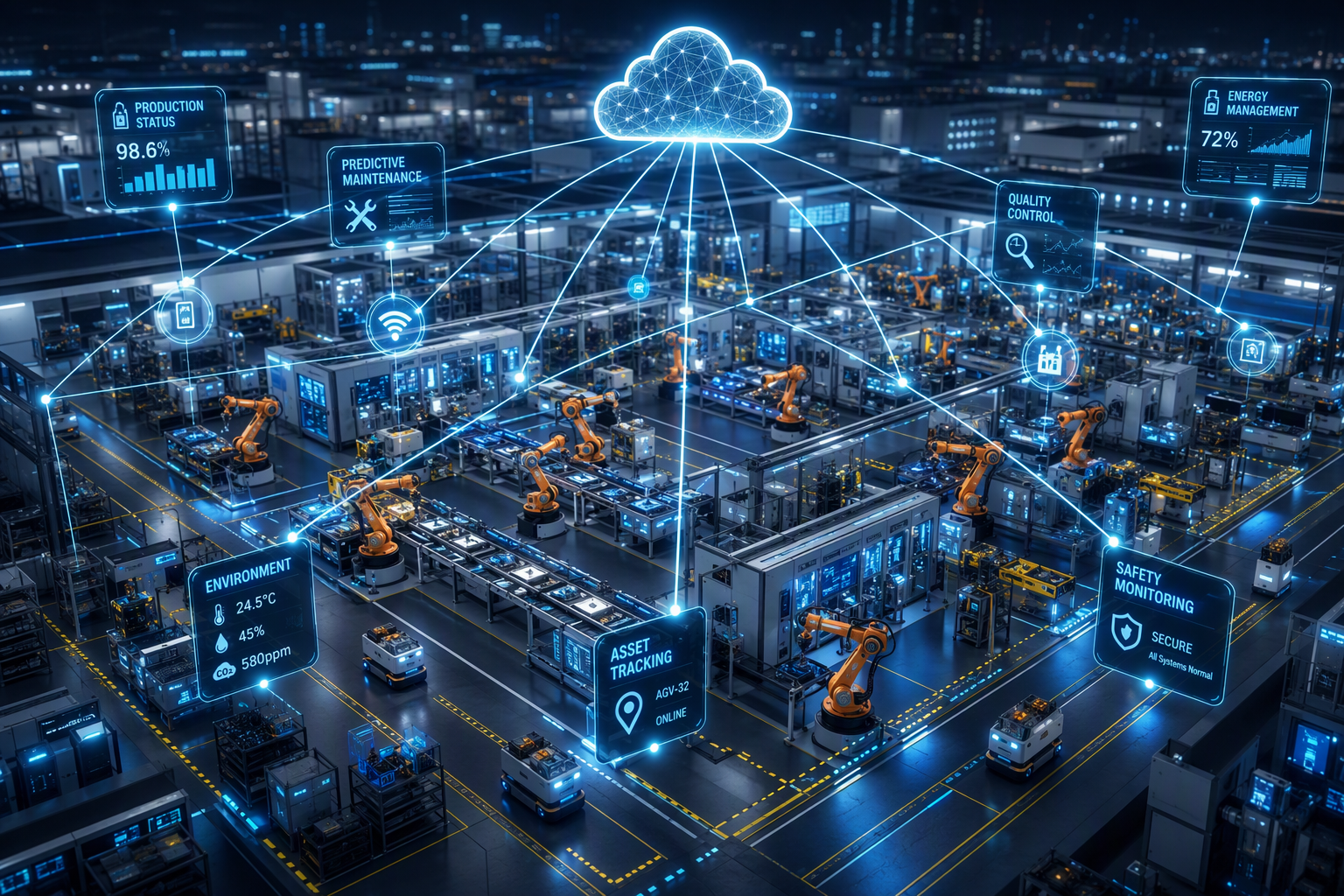
Smart factories rely on connected equipment to share information across the factory floor. Through IIoT, machines, sensors, and devices communicate with one another, making it easier to monitor activity and keep operations aligned.
That connection improves visibility. With stronger data analytics, teams can track machine status, review output, and spot issues before they grow into larger production problems. Connected equipment also supports more informed planning, especially where timing and coordination matter.
In practical terms, smart factories are an extension of modern automation. They combine machine control with live information, helping manufacturers react faster and run more efficiently. This does not remove people from the process entirely. Instead, it gives them better tools to supervise systems, manage change, and maintain smoother operations across complex industrial environments.
Selecting the Right Automation Solution Provider
Choosing the best solution starts with knowing what your operation needs most. In the manufacturing sector, industrial automation works best when the system fits your workflow, equipment, and production goals.
You should also think beyond installation. Automation investments need to support long-term performance, service, and flexibility. Compatibility, durability, scalability, and support all matter. The next sections cover useful evaluation points and highlight several well-known companies active in this space in the United States.
Evaluation Criteria for Industrial Automation Companies
Before selecting an automation solution provider, look at how well the company understands your manufacturing tasks and operating environment. A strong fit will make integration easier and improve the chances of long-term cost reduction and stable performance.
Useful evaluation criteria include:
- Compatibility with your current machinery, software, and network setup
- Ability to support future production changes with scalable options
- Strength of technical support, service response, and maintenance needs
- Expected value compared with the initial investment and operating goals
It also helps to review usability and reporting features. User-friendly controls, remote monitoring, and real-time analytics can make daily management much easier. In many cases, the right provider is not simply the one with the most advanced tools. It is the one that can deliver a dependable solution, support adoption, and keep your system effective as your operation evolves.
Top Industrial Automation Companies in the United States
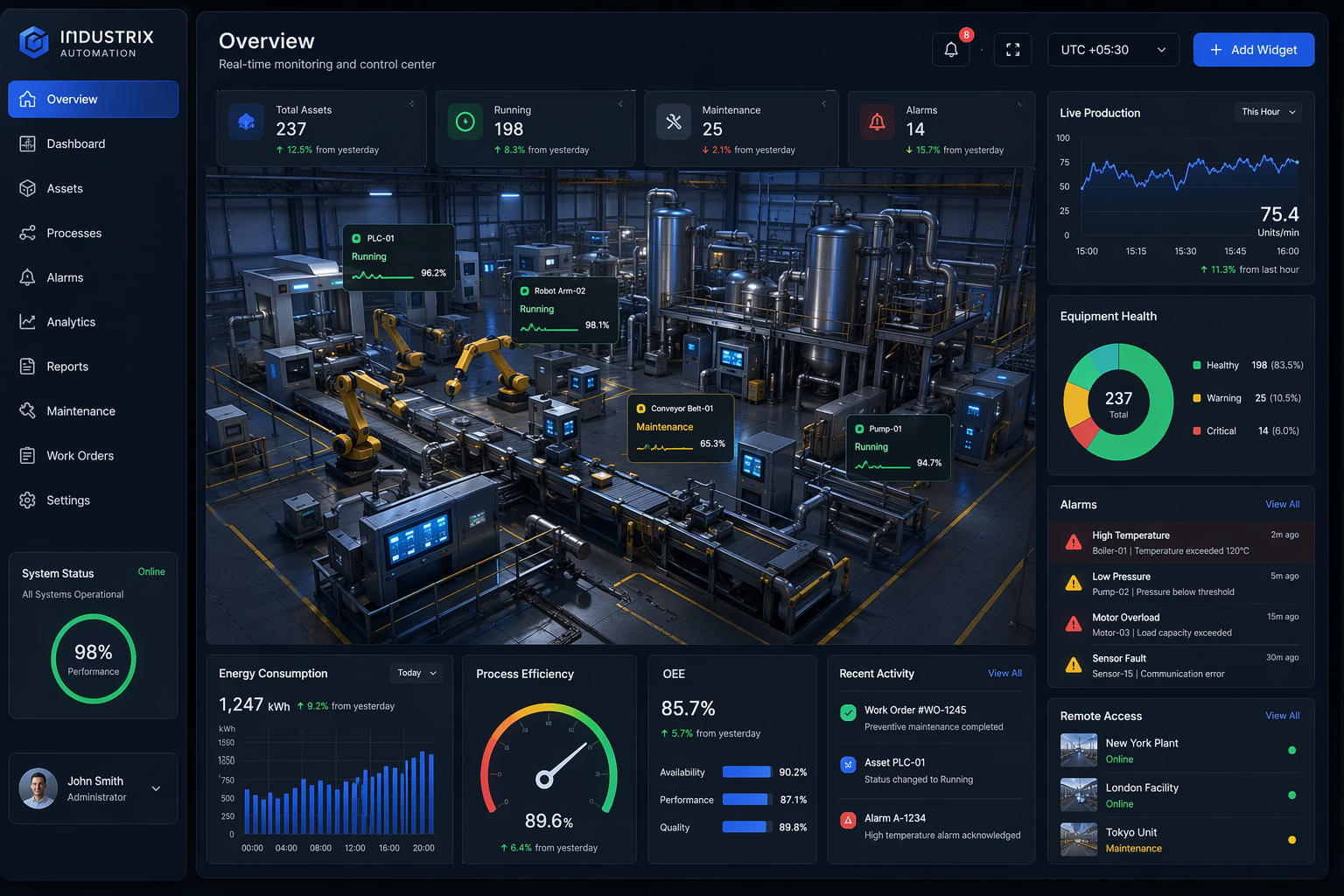
Several industrial automation companies are active in the United States, but the compiled information specifically highlights Schneider Electric as a major provider. It offers a wide range of automation technology for simple and complex process systems, showing how suppliers respond to technological advancement and market changes.
The company’s offerings include programmable relays, motion controllers, motor controls, machine safety tools, data acquisition options, and signaling devices. These products are designed to improve supervision, reduce costs, and support more flexible manufacturing operations.
| Company | Noted automation offerings in the compiled information |
|---|---|
| Schneider Electric | Programmable relays, motion controllers, TeSys motor controls, machine safety, Triconex, ClimaSys DT, Altivar, Harmony push buttons and signaling devices, universal enclosures, Modicon M580 for emergency handling and data acquisition |
Based on the provided material, Schneider Electric is the named example in the United States. No other companies are identified in the compiled information, so a broader worldwide ranking would require sources beyond this brief.
Conclusion
In conclusion, embracing industrial automation solutions is essential for enhancing production quality and achieving operational excellence. By integrating various automation systems, manufacturers can improve efficiency, consistency, and adaptability in their processes. The rise of smart factories and the Industrial Internet of Things (IIoT) further amplifies these benefits, allowing businesses to stay competitive in today’s fast-paced market. As you explore the right automation solution for your needs, consider partnering with top providers who can offer tailored solutions that address your specific challenges. Start your journey towards improved production quality and efficiency today by reaching out for a free consultation to discover how automation can transform your operations.
Frequently Asked Questions
Which industries gain the most from industrial automation solutions?
The manufacturing industry gains the most because many industrial processes involve repetitive, high-volume work. Automation solutions are especially useful in assembly, packaging, electronics, automotive-style production, pharmaceuticals, and consumer goods, where speed, consistency, and quality matter across changing production demands in various industries.
How does automation support sustainability in manufacturing?
Automation supports sustainability by making the production process more efficient and reducing waste caused by errors or inconsistent output. In the manufacturing sector, that can lower energy consumption, improve material use, and reduce operational costs over time while helping companies run cleaner, safer, and more controlled operations.
What trends are shaping the future of industrial automation?
Current trends include technological advancement tied to Industry 4.0, greater use of connected equipment, and stronger data visibility through IIoT. Predictive maintenance, artificial intelligence, and machine learning are also shaping future systems by helping manufacturers monitor performance, improve decisions, and respond faster to changing production conditions.
You might also like