Embracing Automation: Boost Your Efficiency Today
Embracing Automation: Boost Your Efficiency Today

Key Highlights
- Automation uses technology to perform tasks with minimal human intervention, boosting efficiency.
- Key automation technologies include industrial systems, Robotic Process Automation (RPA), and artificial intelligence.
- Process automation streamlines workflows by handling repetitive tasks, which reduces human error.
- Industries from manufacturing to healthcare use automation to improve accuracy and lower costs.
- Modern automation integrates AI and machine learning to handle complex, decision-based activities.
- Embracing automation is a crucial step in digital transformation for businesses seeking a competitive edge.
Introduction
Welcome to the world of automation, a cornerstone of modern digital transformation. Are you looking for ways to make your daily work more efficient and less repetitive? Automation solutions are designed to do just that by using technology to handle tasks that once required manual effort. From boosting productivity to ensuring accuracy, the benefits of automation are reshaping how industries operate. This guide will walk you through what automation is, its different forms, and why it’s essential for growth today.
Understanding Automation: Foundations and Definitions
At its core, automation refers to using technology to get things done without constant human input. Think of it as creating a system that can run on its own. These automation systems are built on various automation technologies designed to streamline process automation and make workflows smoother.
But what exactly qualifies as automation, and how has it evolved? In the following sections, we will explore the official definitions from leading sources, look back at its history, and break down the key terms you need to know, from simple scripts to complex AI.
What is Automation? Official Definitions from Leading Sources
So, what is the official definition of automation? Leading sources define it as the use of technology to perform tasks with minimal human intervention. The primary goal is to create systems that can operate independently, reducing the need for you to manually oversee every step of a process. This approach helps streamline operations and boosts overall efficiency.
The core purpose of process automation is to make workflows more reliable and consistent. By programming machines and software to handle repetitive activities, businesses can significantly reduce the potential for human error. This not only speeds things up but also ensures a higher level of precision in everything from manufacturing parts to processing data.
Modern automation technologies often incorporate artificial intelligence and sophisticated algorithms. Engineers and developers write instructions that tell a machine how to behave in different situations. This allows automated systems to handle more complex scenarios, leverage data for decision-making, and adapt to changing conditions without constant guidance.
The Evolution of Automation Throughout History
The concept of automation isn't new, though it has changed dramatically over time. The term was first used in 1946 by General Motors to describe the automatic handling of parts in its factories. This early form of industrial automation focused on mechanical systems for high-volume production. Historical automation laid the groundwork for the more advanced technologies we see today.
Over the decades, automation expanded beyond the factory floor. The development of computers and software led to new possibilities, moving away from purely mechanical legacy systems. This evolution brought us to modern solutions like robotic process automation (RPA), which uses software to mimic human tasks on a computer.
Here’s a quick look at its progression:
| Era | Key Development |
|---|---|
| 1940s | The term "automation" is coined for manufacturing processes. |
| 1960s-1970s | Programmable Logic Controllers (PLCs) advance industrial automation. |
| 1990s-2000s | Robotic Process Automation (RPA) emerges for business tasks. |
| 2010s-Present | AI and machine learning are integrated for cognitive automation. |
Key Concepts and Terminology in Automation
To fully grasp automation, it helps to know some key terms. These concepts describe the different technologies and approaches used to streamline business processes. Understanding this terminology will help you identify the right automation solutions for your needs, whether you're trying to reduce human error or speed up workflows.
Here are some of the most important concepts in the world of automation:
- Robotic Process Automation (RPA): Uses software "bots" to mimic human actions for repetitive, rule-based digital tasks.
- Machine Learning: A subset of AI that enables systems to learn from data and improve their performance over time without being explicitly programmed.
- Industrial Automation: The use of control systems, such as computers and robots, for handling processes in an industrial setting.
- Business Process Automation (BPA): Focuses on automating entire workflows and processes within an organization to improve efficiency.
These technologies are the building blocks of modern automation. By applying them, organizations can transform their operations, freeing up employees to focus on more strategic and creative work.
Types of Automation in Today’s World
Automation comes in many forms, each tailored to different needs and industries. The various types of automation range from simple, fixed machinery to complex, intelligent systems that can make decisions. These automation systems are designed to enhance processes, increase efficiency, and reduce the need for manual work.
To better understand its impact, let's explore some of the key categories. We will examine everything from the industrial robots on an assembly line to the software bots used in business process automation, and even the AI-powered systems that are changing how we work and live.
Industrial Automation Systems
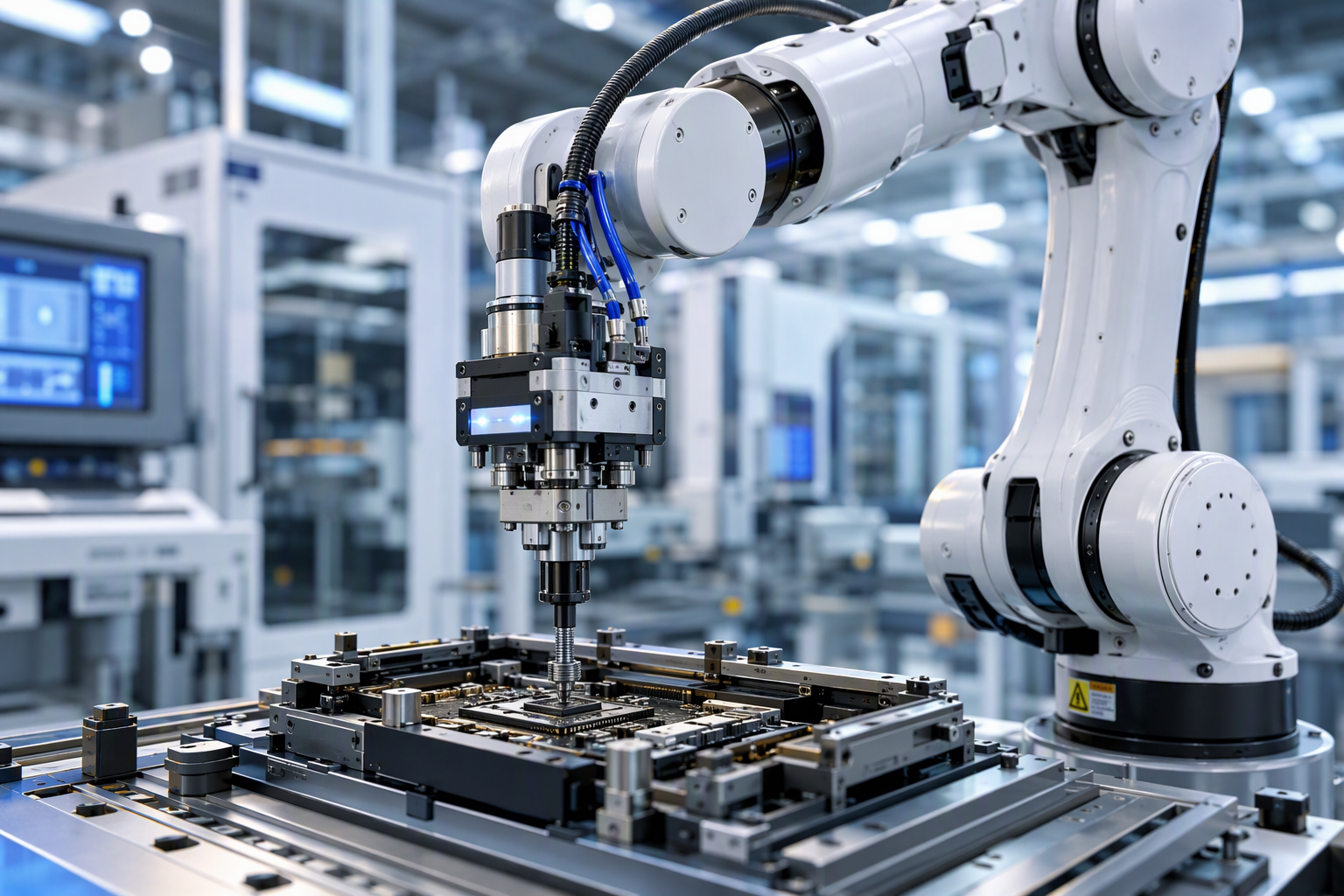
Industrial automation is what most people picture when they think of automation—robots on a factory floor. This type of automation involves using machinery and control systems to perform tasks in manufacturing and other industrial settings. It is essential for managing production lines, where speed and precision are critical.
You can see industrial automation in action on automotive assembly lines. Robotic arms perform tasks like welding, painting, and assembling parts with incredible accuracy and speed. This not only accelerates the production process but also ensures a consistent level of quality control that would be difficult to achieve with manual labor alone.
By taking over repetitive and physically demanding jobs, these systems help reduce labor costs and improve workplace safety. Companies like ABB and Fanuc specialize in providing these solutions, which have become a cornerstone of modern manufacturing by enabling high-volume, high-quality production.
Business Process Automation (BPA) and Robotic Process Automation (RPA)
Business Process Automation (BPA) takes a wide view, focusing on automating entire workflows that may span multiple departments. It aims to optimize the way an organization functions by streamlining everything from document approvals to employee onboarding, reducing manual labor across the board.
A more specific subset of this is Robotic Process Automation (RPA). RPA uses software robots, or "bots," to mimic human actions for repetitive, rule-based digital tasks. Think of a bot logging into an application, copying and pasting data, or filling out a form. Automation tools from companies like UiPath and Automation Anywhere are leaders in this space.
These technologies are perfect for back-office tasks like invoice processing or data entry. By deploying software robots to handle these jobs, businesses can reduce errors, speed up processing times, and free up their employees to focus on tasks that require human judgment and creativity.
Cognitive and AI-based Automation Technologies
Going beyond rule-based tasks, cognitive automation incorporates artificial intelligence and machine learning to handle more complex activities. This advanced form of automation enables systems to analyze unstructured data, understand patterns, and even make decisions with minimal human intervention. It’s like giving your software a brain.
Technologies like natural language processing (NLP) allow bots to understand and respond to human language, which is useful for customer service chatbots. Machine learning algorithms enable systems to learn from experience, improving their accuracy and effectiveness over time. This makes cognitive automation powerful for tasks that require judgment.
A great example is in healthcare, where IBM's Watson Health uses cognitive automation to analyze medical records and research to help doctors with diagnoses. This type of automation doesn't just follow a script; it interprets information and provides insights, making it a valuable partner in complex fields.
Automation Across Industries
Automation is not just for tech companies or large factories; its influence is spreading across various industries around the globe. From improving the supply chain to transforming patient care, automation is a key driver of digital transformation. It helps organizations in every sector boost their operational efficiency and stay competitive.
Let's look at how different fields are putting these technologies to work. We will see how automation is creating smart factories, revolutionizing healthcare, and changing the customer experience in retail and banking. These examples showcase the versatility and power of automation today.
Manufacturing and Smart Factories
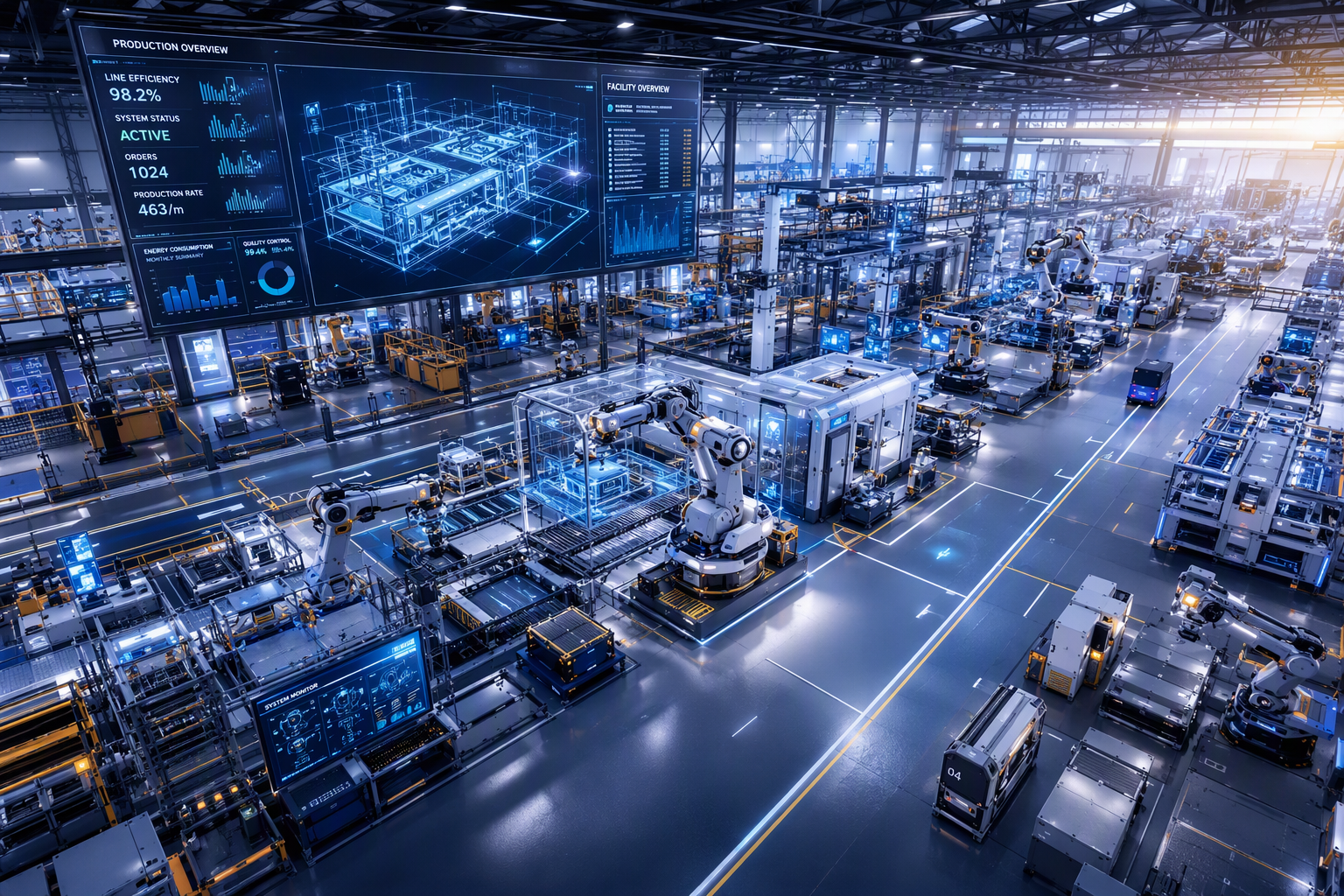
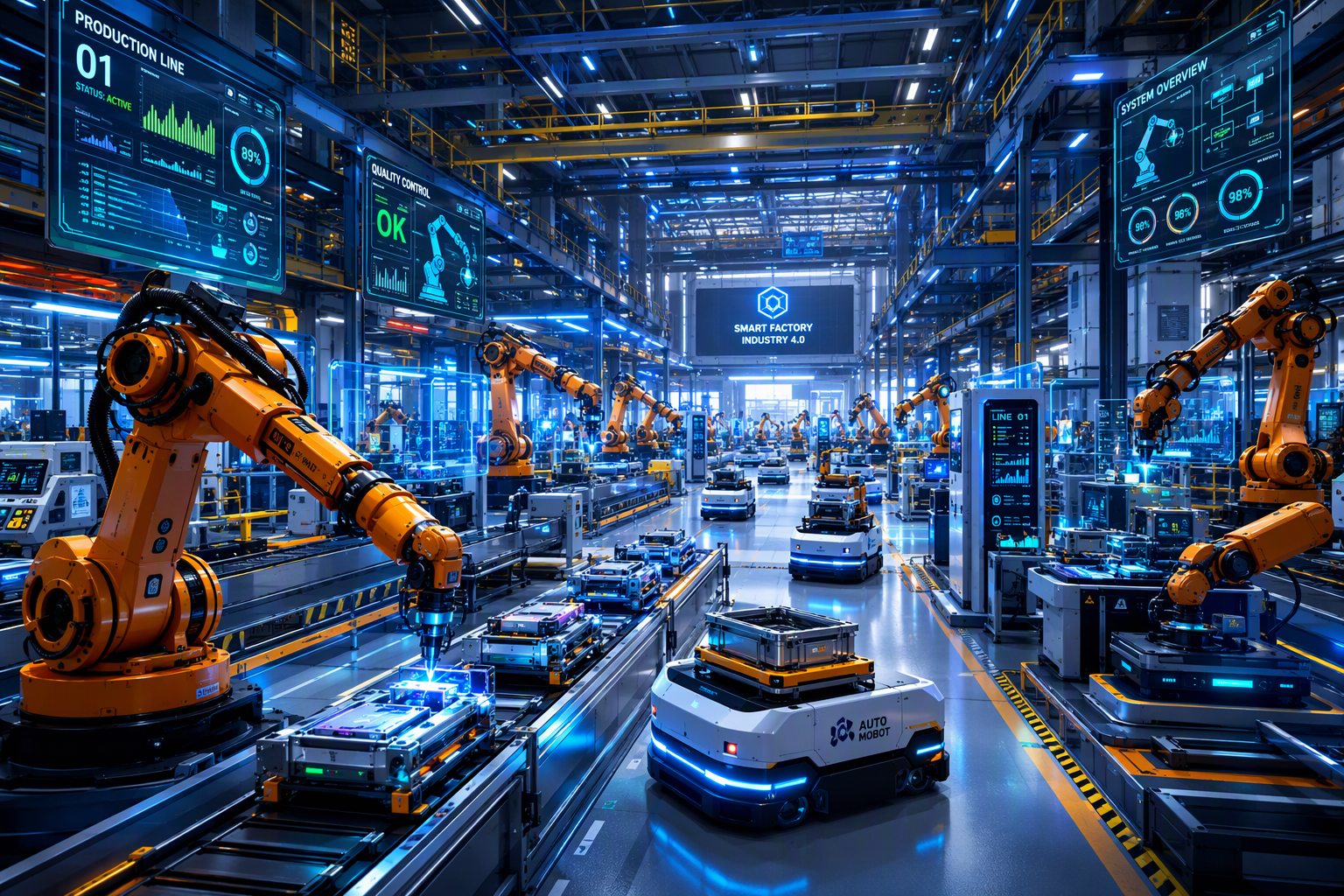
In the world of smart manufacturing, automation is everything. It involves creating interconnected factories where machines, sensors, and computer systems work together to optimize the entire production process. This goes beyond traditional industrial automation by integrating data and AI to make factories more intelligent and responsive.
A key feature of smart manufacturing is predictive maintenance. Sensors on equipment can monitor performance and predict when a machine is likely to fail, allowing for repairs before a breakdown occurs. This minimizes downtime and keeps production rates high. Tesla’s Gigafactories are a prime example, using extensive automation to assemble electric vehicles efficiently.
By connecting all aspects of production, from inventory to assembly, smart factories can achieve unprecedented levels of efficiency and quality. This data-driven approach allows for continuous improvement and helps manufacturers adapt quickly to new challenges.
Automation in Healthcare and Life Sciences
Healthcare automation is transforming how medical professionals deliver care. Automation solutions are being used to streamline administrative tasks, improve diagnostics, and even assist in surgery. These technologies help reduce the burden of repetitive work, allowing doctors and nurses to spend more time with patients.
One of the most advanced examples is robotic surgery. Systems like the da Vinci Surgical System allow surgeons to perform complex, minimally invasive procedures with greater precision. In diagnostics, AI-powered platforms can analyze medical images like X-rays and CT scans to help radiologists spot abnormalities more quickly and accurately.
While these tools are powerful, they are designed to support, not replace, human involvement. By leveraging data analytics and automation, healthcare providers can make more informed decisions, improve patient outcomes, and manage records more efficiently, ultimately enhancing the quality of care.
Retail, Banking, and Service Industries Automation
Retail automation is rapidly changing how we shop. From the warehouse to the checkout counter, technology is streamlining operations and improving customer service. This shift helps businesses manage inventory more effectively, speed up order fulfillment, and create a better overall customer experience.
Here are some ways automation is reshaping these industries:
- Automated inventory management systems track stock levels in real time.
- Chatbots provide 24/7 customer support, answering common questions instantly.
- Self-checkout kiosks and cashier-less stores speed up the payment process.
- Robots in warehouses pick and pack items for faster order fulfillment.
In banking, AI-powered assistants like Bank of America's Erica help customers with daily tasks like checking balances and scheduling payments. These innovations are not just about cutting costs; they are focused on providing a more convenient and personalized experience for every customer.
Everyday Examples of Automation
You might be surprised by how much you interact with automation every day. Many of these technologies work quietly in the background, performing tasks with minimal human intervention to make our lives easier and reduce human error. Process automation is no longer just for big industries; it's a part of our homes, cars, and offices.
Let’s explore some of these common applications. In the next sections, we'll look at how smart home devices, automated transportation solutions, and even the software on your computer use automation technologies to save you time and effort. You'll see that automation is all around us.
Smart Home Devices and Digital Assistants
Home automation has brought the power of automation right into our living rooms. Smart devices and digital assistants like Amazon Alexa or Google Home act as central hubs for controlling various functions around your house. These automation solutions allow you to manage your environment with simple voice commands or pre-set schedules.
Imagine your lights turning on as you arrive home or your thermostat adjusting to the perfect temperature automatically. This is all possible with minimal human intervention. These systems learn your preferences and routines to create a comfortable and efficient living space, saving you both time and energy.
Here are just a few examples of what smart home devices can do:
- Control your lights, plugs, and appliances remotely.
- Manage your home's security with smart locks and cameras.
- Automate your entertainment systems to play music or movies on command.
Automated Transportation and Logistics Solutions
Logistics automation is revolutionizing supply chain management by making it faster and more efficient. From the moment you click "buy" online to the package arriving at your door, automation plays a critical role. This includes everything from managing inventory levels in a warehouse to optimizing delivery routes.
In warehouses, autonomous robots are used to move goods, organize inventory, and assist with order fulfillment. This allows companies like Amazon to process a massive volume of orders with incredible speed and accuracy. These systems ensure that products are picked, packed, and shipped out with minimal delay.
On the road, companies like Waymo are developing self-driving cars that promise to make transportation safer and more efficient. Meanwhile, logistics giants like DHL and FedEx are experimenting with drone delivery for last-mile service. These technologies are reshaping how goods move around the world.
Automation in Daily Office and Personal Productivity Tools
Process automation is a key part of the digital transformation happening in offices everywhere. Many of the software tools you use daily have built-in automation features designed to handle manual tasks and streamline your workflow. This helps reduce the time spent on repetitive activities like data entry and administrative work.
Consider your email client, which can automatically sort incoming messages into folders, or a project management tool that sends reminders about upcoming deadlines. These small automations add up, freeing you to concentrate on more important work. This is where automation tools truly shine in a professional setting.
Here are some common examples in office and productivity software:
- Automated data entry and report generation in spreadsheets.
- Workflow automation for approvals and document routing.
- Scheduling assistants that find the best meeting times for everyone.
Why Automation Matters for Efficiency
So, why is everyone talking about automation? The answer is simple: it's a powerful tool for boosting efficiency. The primary benefits of automation include increased workplace productivity, improved accuracy, and significant cost savings. By letting technology handle routine tasks with minimal human intervention, you can get more done in less time.
But the advantages go beyond just speed. Automation empowers businesses to make smarter decisions, scale their operations, and provide a better experience for their customers. Let's examine how it achieves this by improving accuracy, enhancing resource management, and enabling growth.
Boosting Workplace Productivity and Accuracy
One of the biggest impacts of automation is its ability to increase productivity while reducing human error. Process automation systems are designed to perform tasks with precision and consistency, 24/7. Unlike human actions, which can be prone to mistakes during repetitive work, automated systems follow their programming exactly every time.
This reliability is crucial in fields where manual errors can be costly or dangerous. By automating tasks like data entry, calculations, or quality checks, businesses can ensure a higher standard of accuracy. This frees up employees from tedious work and allows them to focus on tasks that require critical thinking and problem-solving.
Here’s how automation boosts productivity and accuracy:
- It operates continuously without breaks, increasing output.
- It eliminates typos and other common mistakes in data handling.
- It ensures every task is performed the same way, leading to consistent results.
Improving Decision-Making and Resource Management
Automation isn't just about doing tasks faster; it's also about making smarter choices. Modern automation systems often use data analytics and artificial intelligence to gather and interpret vast amounts of information. This provides valuable insights that can lead to better resource management and more informed strategies.
For example, in finance, automated systems can analyze market trends and customer behavior to help with investment decisions. In manufacturing, predictive maintenance tools analyze equipment data to schedule repairs before a breakdown, preventing costly downtime. This data-driven approach is essential for sustainable business growth.
By turning raw data into actionable intelligence, automation empowers leaders to make decisions based on facts, not guesswork. This ability to quickly analyze complex information and identify patterns gives businesses a significant advantage in a fast-paced market.
Scaling Operations and Enhancing Customer Experience
As a business grows, maintaining a high-quality customer experience can be challenging. Automation helps companies scale their operations smoothly without sacrificing service. By automating key customer-facing processes, businesses can handle increased demand while ensuring high levels of customer satisfaction.
Think about how chatbots can provide instant answers to customer questions, or how automated systems can process orders and send shipping updates in real time. These solutions make interactions faster and more convenient, which is crucial for building loyalty and securing a competitive edge. This directly contributes to long-term business growth.
Here’s how automation helps scale operations and improve the customer experience:
- It provides immediate, 24/7 support for common customer inquiries.
- It personalizes marketing and recommendations based on customer data.
- It ensures fast and accurate order processing and fulfillment.
Conclusion
In conclusion, embracing automation can significantly enhance your efficiency and streamline operations across various sectors. By understanding the different types of automation—from industrial systems to cognitive technologies—you can tailor solutions that best meet your needs. The ongoing evolution of automation not only boosts productivity but also improves decision-making and customer experience. As you explore these innovations, consider how they can integrate into your daily routine and business processes. Ready to take the first step towards efficiency? Get in touch with us to discover how automation tools can transform your operations today!
Frequently Asked Questions
How does industrial automation work in factories?
Industrial automation uses a network of automation systems to control machinery on production lines. This includes robotic arms for assembly, conveyor belts for moving parts, and sensors for quality control. These elements work together to manufacture products with speed and precision, reducing the need for manual labor.
What are the main benefits and challenges of automation?
The main benefits of automation are increased efficiency, significant cost savings, and a reduction in human error. However, challenges include high initial implementation costs and the potential impact on the workforce, as it can reduce the need for human involvement in certain tasks, though it often requires new skills.
How do automation tools like Automation Anywhere help businesses?
Automation tools such as Automation Anywhere use robotic process automation (RPA) to streamline business process automation. They deploy software bots to handle repetitive digital tasks like data entry, invoice processing, and report generation, freeing up employees to focus on more strategic and value-added work.
You might also like