Automation in Industry: Types and Benefits You Should Know
Automation in Industry: Types and Benefits You Should Know
Key Highlights
- Automation uses technology to perform tasks with minimal human intervention, streamlining processes and reducing human error.
- Key automation technologies include fixed, programmable, and flexible systems, as well as Robotic Process Automation (RPA) and AI-driven automation.
- Industrial robots and automated systems handle repetitive tasks on production lines, boosting efficiency and consistency.
- The benefits of automation are significant, including increased productivity, enhanced safety, greater accuracy, and long-term cost savings.
- Automation is a cornerstone of digital transformation, empowering businesses across various industries to innovate and grow.
Introduction
Have you ever wondered how so many tasks get done so quickly and accurately in the modern world? The answer often lies in automation. Automation in industry is all about using technology to perform jobs that humans would otherwise do, but with less direct involvement. This technology-driven approach aims to make processes more efficient, consistent, and free from common human error. From manufacturing floors to your favorite online stores, industrial automation is reshaping how work gets done.
Understanding Automation in Industry
At its core, automation in industry means using technology to operate and control processes with minimal human intervention. Think of it as programming a machine or a computer system to handle specific, often repetitive tasks. These automation technologies can range from simple machines on an assembly line to complex software that manages entire business operations.
The main goal is to streamline workflows and boost efficiency. By handing over repetitive tasks to automation systems, companies can free up their human workforce to focus on more creative and strategic activities. This shift not only speeds up production but also ensures a higher level of precision and consistency in the final output.
Official Definitions and Key Concepts
So, what is the official definition of automation? According to leading sources, automation is the use of technology to accomplish a task with as little human intervention as possible. The term itself was first coined by General Motors back in 1946 to describe the automatic handling of parts during manufacturing. Today, its meaning has expanded far beyond the factory floor.
The key concept behind automation is creating a system that can run on its own based on a set of pre-programmed instructions or, in more advanced cases, through artificial intelligence. These automation systems are designed to replace manual effort, especially for tasks that are tedious, repetitive, or require a high degree of precision.
Essentially, automation involves programming and algorithms that dictate how a machine should behave. Whether it's a physical robot on an assembly line or software processing data, the goal is to execute tasks without continuous manual input, making processes more reliable and efficient.
How Automation Is Used Across Sectors
Automation is not limited to just one or two fields; it's transforming various industries by replacing manual human labor with efficient, technology-driven solutions. You can find automation technologies at work in healthcare, finance, retail, and many other sectors. The primary objective is to streamline business processes and reduce the need for constant human involvement.
This widespread adoption shows just how adaptable automation can be. In some cases, it handles physically demanding jobs, while in others, it manages complex data and digital workflows. The result is often increased productivity, fewer errors, and a better overall customer experience.
Here are a few examples of how automation is applied across different sectors:
- Manufacturing: Robots assemble, paint, and package products.
- Finance: Software bots process invoices and manage data entry.
- Healthcare: AI helps analyze medical images and robotic systems assist in surgery.
- Retail: Automated warehouses manage inventory and speed up order fulfillment.
Historical Evolution of Industrial Automation
The journey of industrial automation has been a long and fascinating one. While the concept of automated devices has been around for centuries, modern industrial automation truly began to take shape in the mid-20th century. A key moment in this evolution was when auto manufacturer General Motors coined the term "automation" in 1946 to describe its new, more automated production processes.
Initially, automation systems were relatively simple and focused on mechanizing single, repetitive tasks on the assembly line. These early systems were a huge leap forward, but they were often rigid and difficult to change. As technology advanced, so did the capabilities of automation.
The introduction of computers and new technologies like programmable logic controllers (PLCs) brought more flexibility and intelligence to automation systems. This allowed factories to reprogram machines for different tasks, paving the way for the highly sophisticated and adaptable automation we see today, which now incorporates robotics, artificial intelligence, and machine learning.
Major Types of Industrial Automation
When we talk about industrial automation, it's important to know that it's not a one-size-fits-all solution. There are several major types of automation, each suited for different production needs and environments. These systems range from highly specialized equipment designed for one specific job to flexible robots that can be reprogrammed for various tasks.
Understanding these different types can help you see how businesses choose the right automation systems for their goals. Whether the priority is mass-producing a single item or creating a variety of custom products, there's a type of process automation designed for the job. Let's look at some of the main categories, from fixed systems to more adaptable ones.
Fixed and Hard Automation Systems
Fixed automation, also known as hard automation, refers to a system where the sequence of processing operations is fixed by the equipment's configuration. This type of automation is designed to perform a single, specific task over and over again with high efficiency and speed. Think of conveyor belts or transfer lines in a mass-production factory.
These automation systems are custom-built for a particular product and are ideal for high-volume production lines where products don't change often. Because they are so specialized, they can perform their tasks incredibly quickly, which leads to a very low cost per unit produced. This high level of efficiency also helps minimize human error.
The main drawback of fixed automation is its lack of flexibility. If the product design changes, the entire system often needs to be retooled or even completely replaced, which can be expensive and time-consuming. It’s best suited for industries that produce millions of identical items, like bottling plants or automotive parts manufacturing.
Programmable and Flexible Automation
In contrast to fixed systems, programmable automation offers much more versatility. This type of automation is designed for equipment that can be reprogrammed to handle different product configurations. It's perfect for batch production, where a company needs to produce a moderate volume of different products on the same equipment.
A classic example is a CNC (Computer Numerical Control) machine, which can be given a new set of instructions to cut or shape materials into different designs. While reprogramming the system takes time, it's far more adaptable than fixed automation. This allows for better management of production rates when product variety is a factor.
Flexible automation takes this adaptability a step further. It allows for equipment to switch between different tasks with almost no downtime for reprogramming. Often using industrial robots and advanced machine learning, these systems can handle high product variety seamlessly. This type of process automation is ideal for industries where customization and quick changeovers are essential.
Process Automation in Manufacturing
Process automation in manufacturing is focused on automating the entire production workflow, often with very little human intervention. This goes beyond automating a single task and instead looks at controlling and monitoring a continuous production process. It's commonly used in industries like oil refining, chemical production, and food processing.
In these settings, automation technologies are used to manage variables like temperature, pressure, and flow rates. Sensors collect data from the production environment, which is then fed to controllers that make real-time adjustments to keep the process running smoothly and within specifications. This ensures consistent product quality and enhances safety.
The goal of process automation is to optimize the entire manufacturing operation for efficiency and reliability. By reducing the need for manual adjustments and monitoring, it improves quality control and allows for a much higher output. This form of automation is critical for industries where precision and consistency are paramount.
Robotic Process Automation (RPA) Applications
Moving away from the factory floor, Robotic Process Automation (RPA) is a type of software automation that is transforming office work. RPA uses software robots, or "bots," to mimic human actions and automate repetitive, rule-based digital tasks. These bots can interact with applications and systems just like a person would, but much faster and without getting tired.
RPA is a key component of business process automation, as it's perfect for handling back-office tasks that are high-volume and prone to human error. Instead of employees spending their time on tedious work, they can focus on tasks that require human judgment and creativity.
Here are some common applications of RPA:
- Data Entry: Automatically transferring information between spreadsheets and applications.
- Invoice Processing: Extracting data from invoices and entering it into accounting systems.
- Customer Service: Handling routine customer queries and updating records.
- Report Generation: Compiling data from various sources to create daily or weekly reports.
Core Components of Automation Technology
To make automation happen, several key components must work together seamlessly. These automation technologies are the building blocks of any automated system, whether it’s a simple machine or a complex, intelligent network. They are a combination of hardware that interacts with the physical world and software that provides the instructions and logic.
Understanding these core components helps demystify how automation works. At the most basic level, a system needs to sense its environment, make a decision, and then act on that decision. Let's explore the essential parts, like sensors, actuators, and controllers, as well as the growing role of artificial intelligence and specialized automation tools
Sensors, Actuators, and Controllers
The trio of sensors, actuators, and controllers forms the fundamental core of most automation systems. These components work in a continuous loop to ensure a process runs as intended with minimal human intervention. Each one has a distinct and crucial role to play.
Sensors are the "senses" of the machine. They are devices that detect and respond to input from the physical environment, such as light, temperature, motion, or pressure. They collect data and convert it into a signal that can be read by the controller. Controllers, often computers or microprocessors, are the "brains" of the operation. They receive data from the sensors, process it according to their programming, and send instructions to the actuators.
Actuators are the "muscles." They are the components that actually perform the physical action, such as opening a valve, moving a robotic arm, or turning on a motor. They take the electrical signal from the controller and convert it into physical motion or action.
| Component | Function |
|---|---|
| Sensors | Gather data from the environment (e.g., temperature, position). |
| Controllers | Process sensor data and make decisions based on programming. |
| Actuators | Execute physical actions based on commands from the controller. |
Role of Artificial Intelligence in Automation
Artificial intelligence (AI) and machine learning are taking automation to a whole new level. While traditional automation follows a strict set of pre-programmed rules, AI-powered automation can handle much more complex tasks that require cognitive abilities, like decision-making and pattern recognition.
Instead of just executing repetitive actions, AI enables automation tools to analyze vast amounts of data, learn from it, and adapt their behavior over time. This is what allows for "smart" automation—systems that can make predictions, understand unstructured data like text or images, and interact in a more natural way.
This integration of new technologies is revolutionizing process automation. For example, in manufacturing, AI can predict when a machine is likely to fail, allowing for maintenance before a breakdown occurs. In customer service, AI-powered chatbots can understand and respond to a wide range of customer queries, offering a more dynamic and helpful experience than a simple script-based bot.
Automation Software and Tools
Behind every automated process is a set of powerful automation software and tools that make it all possible. These platforms provide the framework for designing, deploying, and managing automated workflows. They are essential for everything from IT automation to large-scale business process automation.
Companies like UiPath and Automation Anywhere are leaders in the field of Robotic Process Automation (RPA), offering tools that allow businesses to build software bots to handle digital tasks. For IT automation, tools like Ansible and Puppet help manage and configure servers and software across entire networks, ensuring consistency and reliability.
These automation solutions are key drivers of digital transformation. They enable companies to streamline their operations, reduce manual errors, and free up employees for more valuable work. By adopting the right automation tools, businesses can become more agile, efficient, and competitive in a rapidly changing market.
Applications of Automation in Key Industries
The impact of automation is visible across a wide array of industries, where it's being used to solve unique challenges and create new opportunities. From the factory floor to the hospital room, automation technologies are reshaping how work gets done. By implementing various automation solutions, businesses are boosting efficiency, improving accuracy, and enhancing safety.
Let's take a closer look at how process automation is being applied in some key sectors. These real-world examples show the practical benefits and transformative power of automation in manufacturing, healthcare, finance, and even agriculture.
Automation in Manufacturing and Production
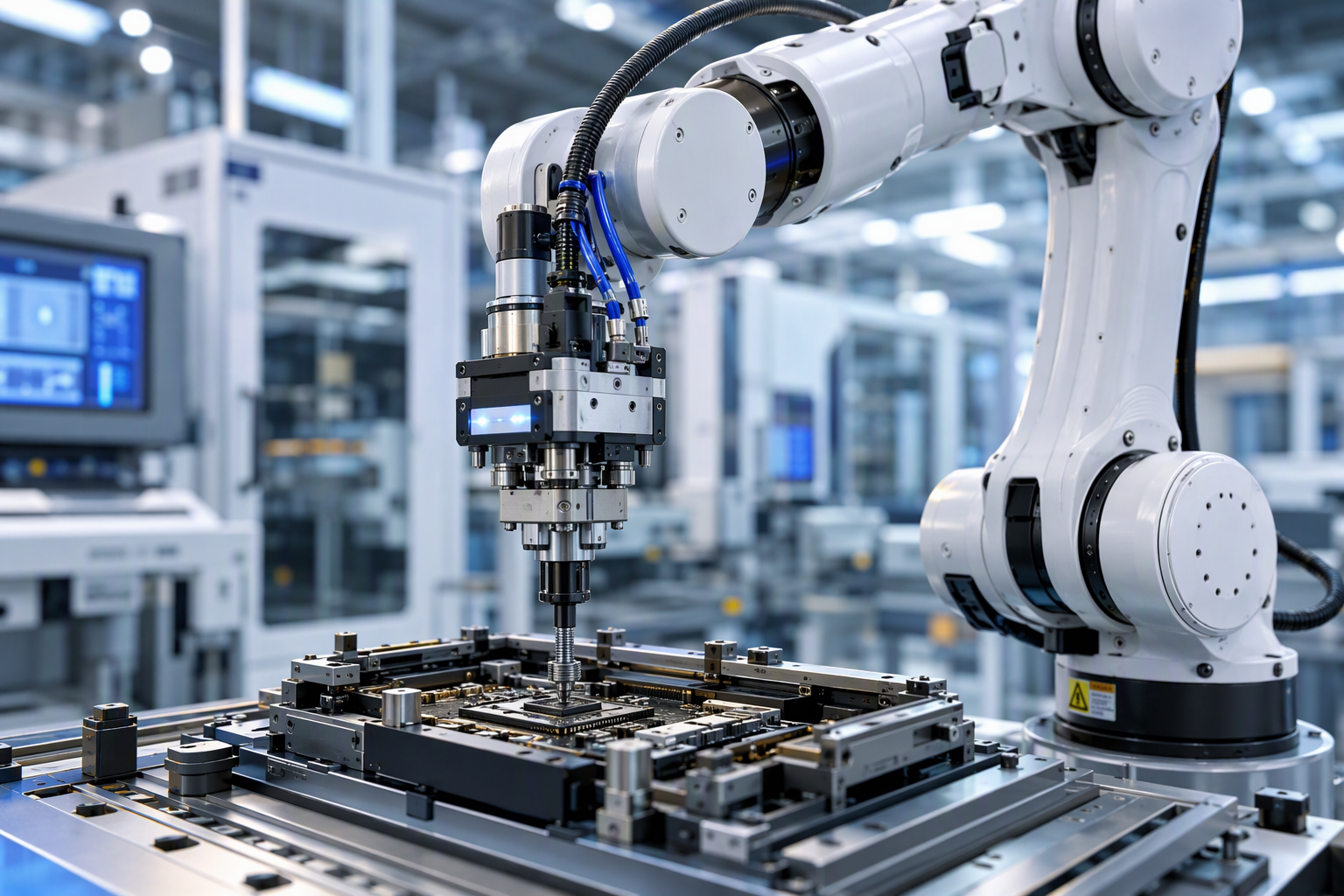
Manufacturing is perhaps the most classic example of industrial automation at work. For decades, automation systems have been used to boost productivity and maintain quality on production lines. Robotic arms, for instance, are a common sight in car factories, where they perform tasks like welding, painting, and assembling parts with incredible speed and precision.
Companies like Tesla have built their "Gigafactories" around a high degree of automation, using thousands of robots to build electric vehicles. This level of automation allows them to achieve high production rates while ensuring that every car meets strict quality standards. This is a clear demonstration of why automation is so important for modern manufacturing.
Beyond assembly, automation is also used for quality control, packaging, and moving materials around the factory. Automated systems can inspect products for defects far more quickly and accurately than the human eye, ensuring that only high-quality goods make it to the customer.
Use of Automation in Healthcare Operations
Advancements in automation technologies have significantly transformed healthcare operations, enhancing efficiency and reducing human error. By utilizing robotic process automation and machine learning, many tasks, including data entry and invoice processing, can now be managed with minimal human intervention. This not only streamlines processes but also boosts operational efficiency across hospitals and clinics. Additionally, automation in inventory management ensures optimal stock levels, supporting timely order fulfillment and improving customer satisfaction, ultimately leading to better patient care and operational growth in the healthcare sector.
Automation in Banking and Financial Services
The banking and financial services industry relies heavily on automation to handle a massive volume of transactions and data securely and efficiently. Automation helps reduce operational costs, minimize errors in data entry, and improve overall customer satisfaction by speeding up processes.
Many banks now use Robotic Process Automation (RPA) to streamline back-office operations. Software bots can handle tasks like invoice processing, account reconciliation, and compliance checks, which are repetitive but require a high degree of accuracy. This allows financial professionals to focus on more complex analysis and client interaction.
Here’s how automation is changing banking:
- AI-Powered Chatbots: Virtual assistants like Bank of America's Erica help customers with everyday banking tasks, from checking balances to scheduling payments.
- Fraud Detection: Automated systems analyze transaction patterns in real time to identify and flag suspicious activity, protecting customers from fraud.
Emerging Automation Trends in Agriculture
Even one of the world's oldest industries, agriculture, is being transformed by automation. Agriculture automation is helping farmers increase crop yields, optimize resource use, and meet growing market demands more sustainably. These new technologies are making farming more precise and efficient than ever before.
Autonomous tractors, like those developed by John Deere, can use GPS and sensors to plow, plant, and seed fields with minimal human oversight. Drones equipped with advanced cameras can monitor crop health from the air, identify areas that need water or fertilizer, and even spot pests or diseases early.
This type of process automation allows for predictive maintenance of equipment and precision farming techniques that reduce waste. For example, automated irrigation systems can deliver exactly the right amount of water to specific parts of a field, conserving water while ensuring optimal crop growth. These automation technologies are helping the agriculture sector become more productive and resilient.
Benefits of Adopting Automation
So, why are so many businesses embracing automation? The answer lies in a wide range of compelling benefits that can drive significant business growth. By implementing process automation, companies can operate more efficiently, reduce costs, and deliver a better product or service. These advantages extend beyond just the bottom line.
The benefits of automation also include creating a safer work environment and freeing up employees from tedious, repetitive tasks, allowing them to contribute in more meaningful ways. Let's explore some of the key advantages, such as increased productivity, enhanced accuracy, and long-term cost savings.
Increased Productivity and Efficiency
One of the most significant benefits of automation is a dramatic increase in productivity and efficiency. Automated systems can operate 24/7 without breaks or fatigue, allowing businesses to produce more in less time. This is especially true for tasks that are repetitive and time-consuming for human workers.
When automation technologies take over these routine jobs, it frees up employees to focus on more complex, value-added activities that require critical thinking and creativity. This reallocation of human resources, combined with the speed of automated systems, leads to a major boost in overall output.
Furthermore, automation helps reduce labor costs and minimize the impact of human error. Machines perform tasks with a level of consistency that is difficult for people to maintain over long periods. This leads to fewer mistakes, less rework, and a more streamlined workflow from start to finish.
Enhanced Safety and Accuracy
Automation plays a crucial role in creating safer workplaces. In many industries, such as manufacturing, construction, and mining, there are tasks that are dangerous or physically demanding for humans. By deploying robots or automated systems to handle these jobs, companies can significantly reduce the risk of accidents and injuries.
In addition to safety, automation brings a remarkable level of accuracy and consistency to processes. Unlike humans, machines don't get tired or distracted, so they can perform tasks with the same precision every single time. This is vital for quality control, as it ensures that every product meets the required standards.
This reduction in human error has a ripple effect across the entire operation. It leads to higher-quality products, less waste, and greater customer satisfaction. Whether it's a robotic arm assembling a delicate electronic component or a software bot processing financial data, automation systems deliver a level of accuracy that is hard to match manually.
Scalability, Flexibility, and Cost Savings
Automation solutions offer incredible scalability, allowing businesses to easily adapt to changes in demand. If a company needs to increase production, it can often do so by simply running its automated systems for longer hours or adding more machines, without the challenges of hiring and training a large new workforce.
Modern automation technologies also provide a high degree of flexibility. While early automation was rigid, today's programmable and flexible systems can be quickly reconfigured to produce different products or handle new tasks. This agility is a major competitive advantage in fast-moving markets, allowing companies to respond swiftly to customer needs.
While there is an initial investment required to implement automation, it leads to significant cost savings in the long run. These savings come from reduced labor costs, lower error rates, increased efficiency, and optimized resource use. For many businesses, the return on investment makes automation a smart financial decision that supports sustainable growth.
Smart Manufacturing and Digital Transformation
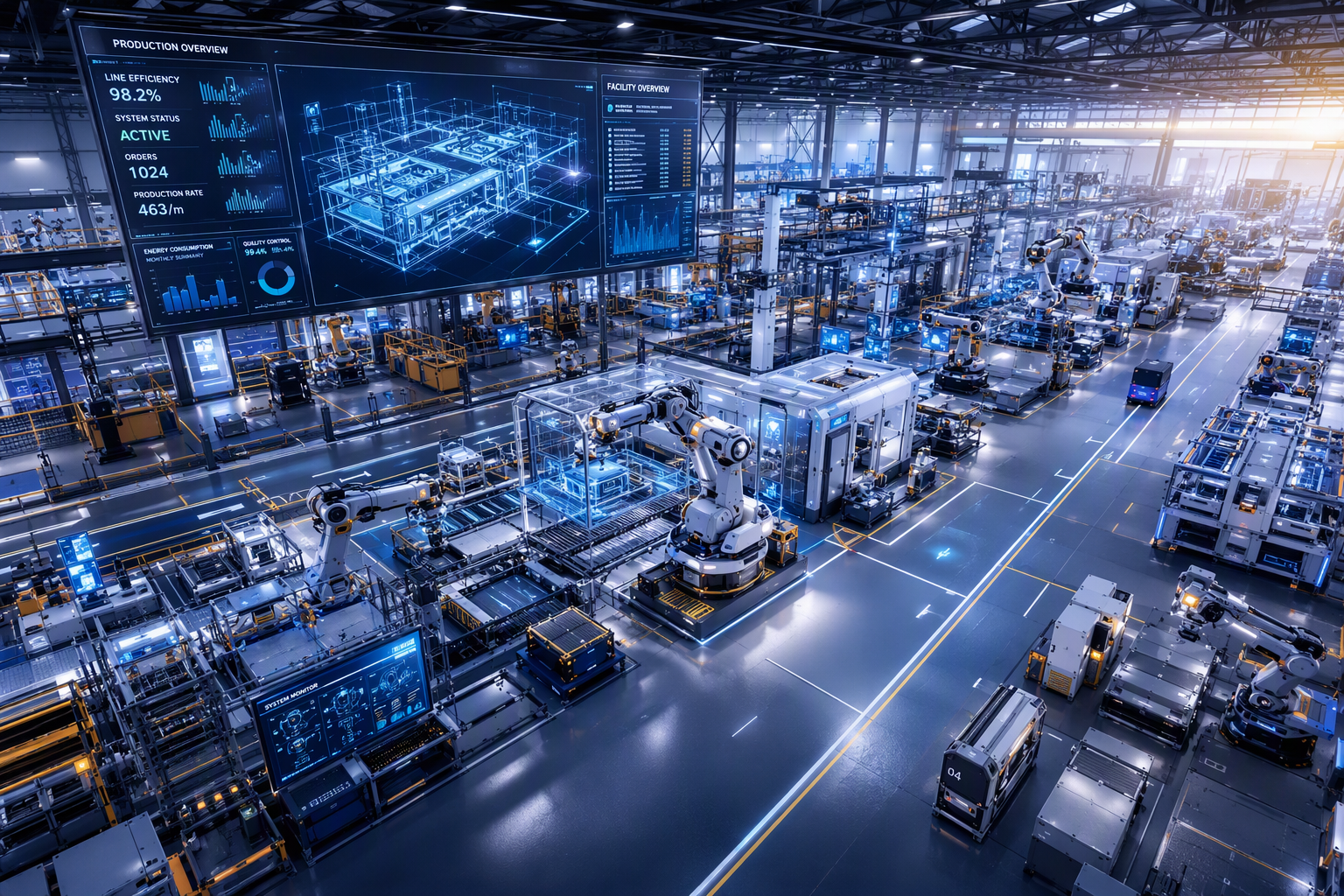
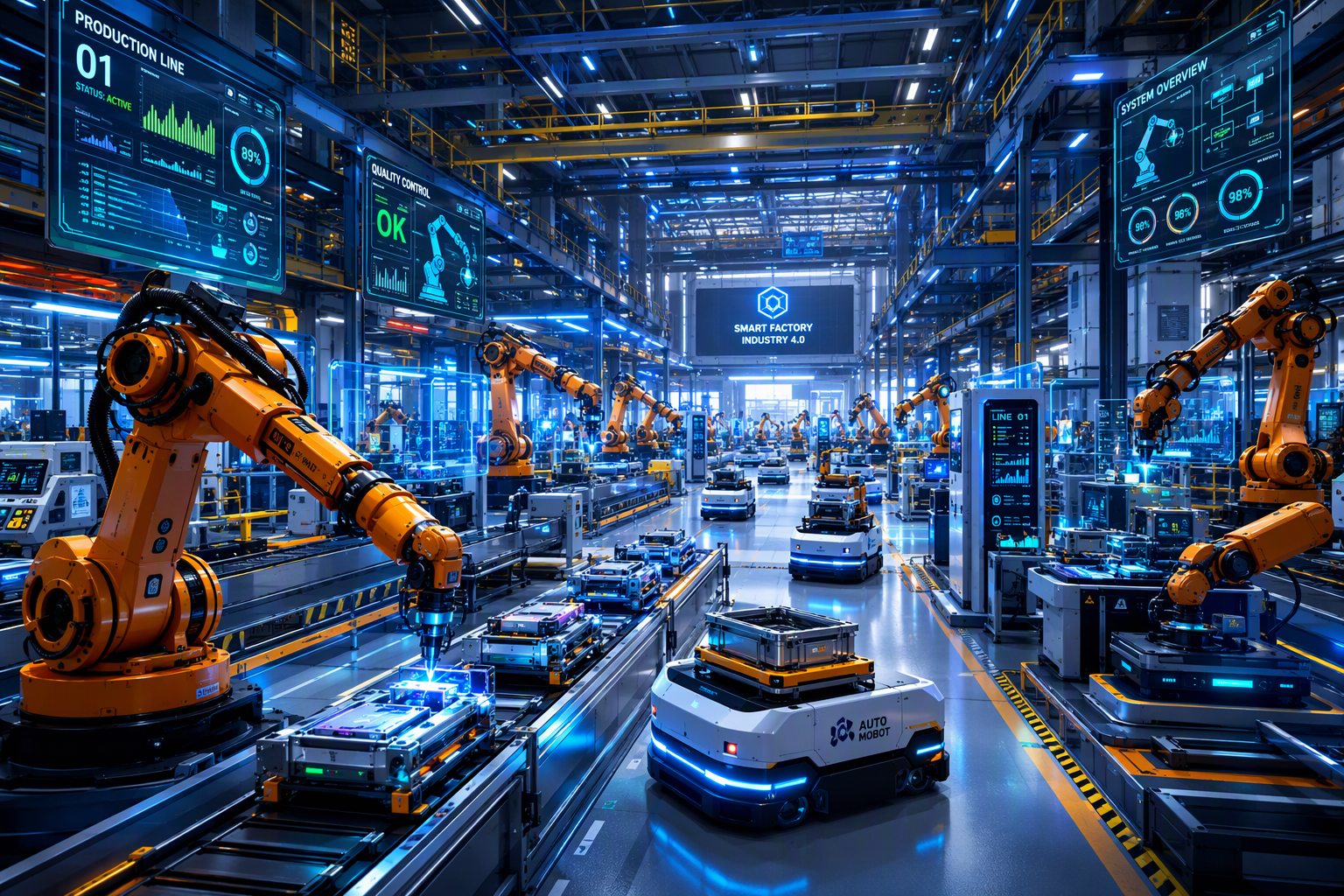
The concept of smart manufacturing represents the next frontier of industrial automation. It's a key part of the broader digital transformation that is sweeping across industries. A smart factory goes beyond simple process automation by integrating advanced technologies to create an interconnected, intelligent, and highly efficient production environment.
In a smart manufacturing setup, machines, systems, and people are all connected, sharing data in real time. This allows for a level of insight and control that was previously impossible. Let's look at how technologies like the Internet of Things (IoT) and data analytics are making these futuristic factories a reality.
Integration of IoT and Cloud Computing
The Internet of Things (IoT) and cloud computing are two of the core technologies powering smart manufacturing. IoT refers to the network of physical devices, vehicles, and other items embedded with sensors and software that allow them to connect and exchange data over the internet.
In a factory setting, IoT sensors are placed on machines and equipment to collect a constant stream of real-time data on their performance, condition, and environment. This data is then sent to the cloud, which provides the vast storage and computing power needed to process and analyze it. This creates a powerful feedback loop for automation systems.
This integration allows for processes to be monitored and controlled remotely with minimal human intervention. For example, a factory manager could check the status of a production line from their tablet, or an automated system could adjust its own settings based on data from IoT sensors, ensuring optimal performance at all times.
Data-Driven Decision Making in Automated Factories
The massive amount of data collected by IoT sensors in an automated factory is a goldmine of insights. Through the use of data analytics and artificial intelligence, companies can turn this raw data into actionable information for data-driven decision making. This helps optimize nearly every aspect of the manufacturing process.
One of the most powerful applications is predictive maintenance. By analyzing performance data, algorithms can predict when a piece of equipment is likely to fail. This allows maintenance to be scheduled proactively, preventing costly unplanned downtime and extending the life of the machinery.
Data analytics also helps in optimizing inventory levels and supply chains. By tracking production rates and material usage in real time, automation systems can automatically reorder supplies when inventory levels get low. This ensures that the factory always has what it needs without tying up capital in excess stock.
How Automation Solutions Like Automation Anywhere Empower Businesses
Modern automation platforms are making it easier than ever for businesses to harness the power of automation. Companies like Automation Anywhere provide comprehensive automation solutions that help organizations of all sizes streamline their operations and accelerate their digital transformation. These platforms act as a central hub for building, managing, and scaling automation across the enterprise.
By offering a suite of powerful yet user-friendly tools, these automation platforms empower businesses to automate complex processes without needing a team of expert programmers. This accessibility is key to driving widespread adoption and helping companies achieve faster business growth.
Streamlining Processes with Automation Platforms
Automation platforms are designed to help businesses streamline processes from end to end, improving operational efficiency and freeing up employees for more strategic work. They combine technologies like Robotic Process Automation (RPA) and artificial intelligence to tackle a wide range of tasks, from simple data entry to complex decision-making workflows.
These platforms provide a visual, often low-code or no-code, interface that allows users to design and build automation "bots" by simply dragging and dropping actions. This makes it possible for business users, not just IT specialists, to create automations that solve their specific challenges.
By using these platforms, businesses can:
- Automate Repetitive Tasks: Eliminate manual effort in areas like finance, HR, and customer service.
- Integrate Systems: Connect different applications and systems to create seamless, automated workflows.
- Achieve Faster ROI: Quickly deploy automations and see improvements in efficiency and cost savings, contributing to business growth.
Real-Life Case Studies from the United States
The impact of automation solutions is best seen through real-life use cases from major companies in the United States. These examples show how industrial automation and retail automation are not just theoretical concepts but practical tools that deliver tangible results, from faster delivery times to an improved customer experience. Platforms like Automation Anywhere have been instrumental in many of these transformations.
Amazon's fulfillment centers are a prime example of automation at scale. The company uses thousands of Kiva robots to autonomously move shelves of products to human workers, drastically speeding up the process of picking and packing orders. This allows Amazon to offer the fast and reliable shipping that customers have come to expect.
Similarly, retailers like Walmart are using automation to manage inventory and improve the in-store experience. Robots scan shelves to check stock levels, ensuring products are available for customers and freeing up employees to provide better service. These cases highlight how automation drives efficiency and enhances the overall customer journey.
| Company | Automation Use Case | Key Benefit |
|---|---|---|
| Amazon | Robotic fulfillment centers | Faster order processing and delivery. |
| Tesla | Highly automated car manufacturing | Increased production rate and quality consistency. |
| Walmart | Automated inventory management | Improved stock availability and employee efficiency. |
Challenges and Considerations for Industrial Automation
While the benefits of industrial automation are clear, implementing it is not without its challenges. Businesses need to carefully consider several factors before diving in. These include the initial implementation costs, the potential impact on the existing workforce, and the technical hurdles of integrating new systems.
A thoughtful and strategic approach is necessary to navigate these challenges successfully. By planning for potential issues related to human labor, costs, and integration with legacy systems, companies can ensure a smoother transition and maximize the long-term benefits of their automation investment.
Addressing Workforce Changes
One of the most discussed aspects of automation is its impact on human labor. The fear that robots will take all the jobs is common, but the reality is more nuanced. Automation does tend to displace jobs that consist of manual, repetitive tasks, but it also creates new roles and opportunities.
The focus often shifts from performing the task to managing, maintaining, and improving the automation solutions themselves. This creates a demand for workers with skills in areas like robotics, data analysis, and software development. For businesses, this means investing in training and upskilling programs to help their workforce adapt to these changes.
Rather than simply replacing workers, automation can augment their abilities, making them more productive and valuable. By handling the tedious parts of a job, automation allows employees to focus on problem-solving, customer interaction, and innovation—areas where the human touch remains essential for business growth.
Managing Implementation Costs and ROI
The initial investment for automation can be substantial. The cost of purchasing robots, software, and other equipment, as well as the expenses related to installation and integration, can be a major hurdle for some businesses, especially smaller ones. This is a critical factor to consider when planning an automation project.
However, it's important to look beyond the upfront implementation costs and calculate the potential return on investment (ROI). The long-run financial benefits of automation often outweigh the initial expense. These benefits come in the form of cost savings from reduced labor, increased output, and fewer errors.
To manage this, businesses should start with smaller, targeted automation solutions that address a specific pain point and offer a clear ROI. As these projects prove successful, the company can then scale up its automation efforts. A careful analysis of costs versus long-term savings is key to making a sound investment decision.
Conclusion
In summary, embracing automation in industry is not just about keeping pace with technological advancements; it's about unlocking significant benefits that can propel your business forward. From enhancing productivity and efficiency to ensuring safety and accuracy, the right automation solutions pave the way for innovative processes and smarter decision-making. Whether you operate in manufacturing, healthcare, or finance, the potential applications of automation are vast and transformative. As you consider integrating these technologies into your operations, remember that the journey toward automation is also a step toward a more agile and competitive future. If you're ready to explore how automation can revolutionize your business, don't hesitate to reach out for a consultation.
Frequently Asked Questions
What is the official definition of automation?
The official definition of automation is the use of technology to perform a process or procedure with minimal human intervention. Industrial automation applies these automation technologies, often including artificial intelligence, to control machinery and systems in manufacturing and other industries, reducing the need for direct human input.
How does industrial automation work in factories?
Industrial automation in factories uses a system of sensors, controllers, and machines to manage production lines. Sensors gather data, controllers process it and make decisions, and machines execute the tasks. This creates highly efficient, self-regulating automation systems that operate with minimal human intervention and reduce human error.
What are the main benefits of automation for businesses?
The main benefits of automation for businesses include significantly increased productivity, enhanced quality control, and major cost savings in the long run. Process automation also improves workplace safety by handling dangerous tasks and boosts efficiency by allowing employees to focus on more strategic, high-value work.
You might also like