Essential Industrial Automation Solutions You Need Today
Essential Industrial Automation Solutions You Need Today
Key Highlights
- Industrial automation helps the manufacturing industry improve operational efficiency and reduce slow manual work.
- Modern automation solutions combine control systems, software, sensors, and industrial robots in one connected setup.
- Factories use these tools to support product quality, safer operations, and more reliable output.
- Common systems include PLCs, SCADA, DCS, machine vision, and IoT-based monitoring.
- Businesses often gain lower costs, faster cycle times, and better quality control.
- Many industries now use automation to stay competitive and support sustainable production.
Introduction
Industrial automation is changing how companies handle the manufacturing process every day. If you want better speed, fewer errors, and stronger consistency, automation solutions can make a real difference. They help factories reduce human intervention in repetitive tasks while improving safety and output. From assembly lines to quality inspection, these systems support smarter production processes. For many businesses, industrial automation is no longer optional. It is a practical way to manage costs, improve performance, and keep operations moving.
Industrial Automation Solutions Benefits for Your Industry
Overview of Industrial Automation Solutions
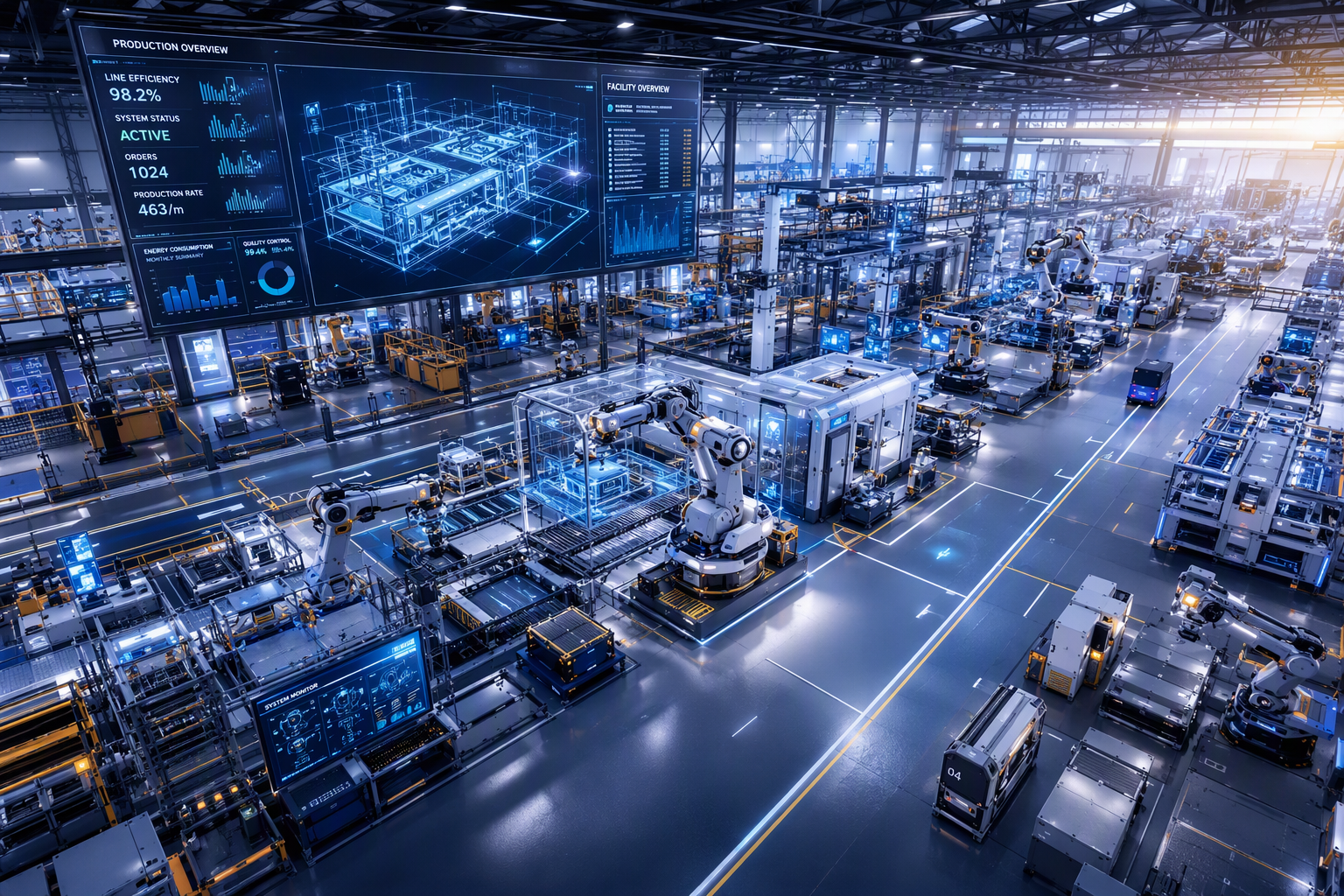
At a basic level, industrial automation uses control systems, sensors, software, and industrial robots to manage tasks inside a manufacturing facility. These automation solutions help machines respond to real-time conditions with less human intervention.
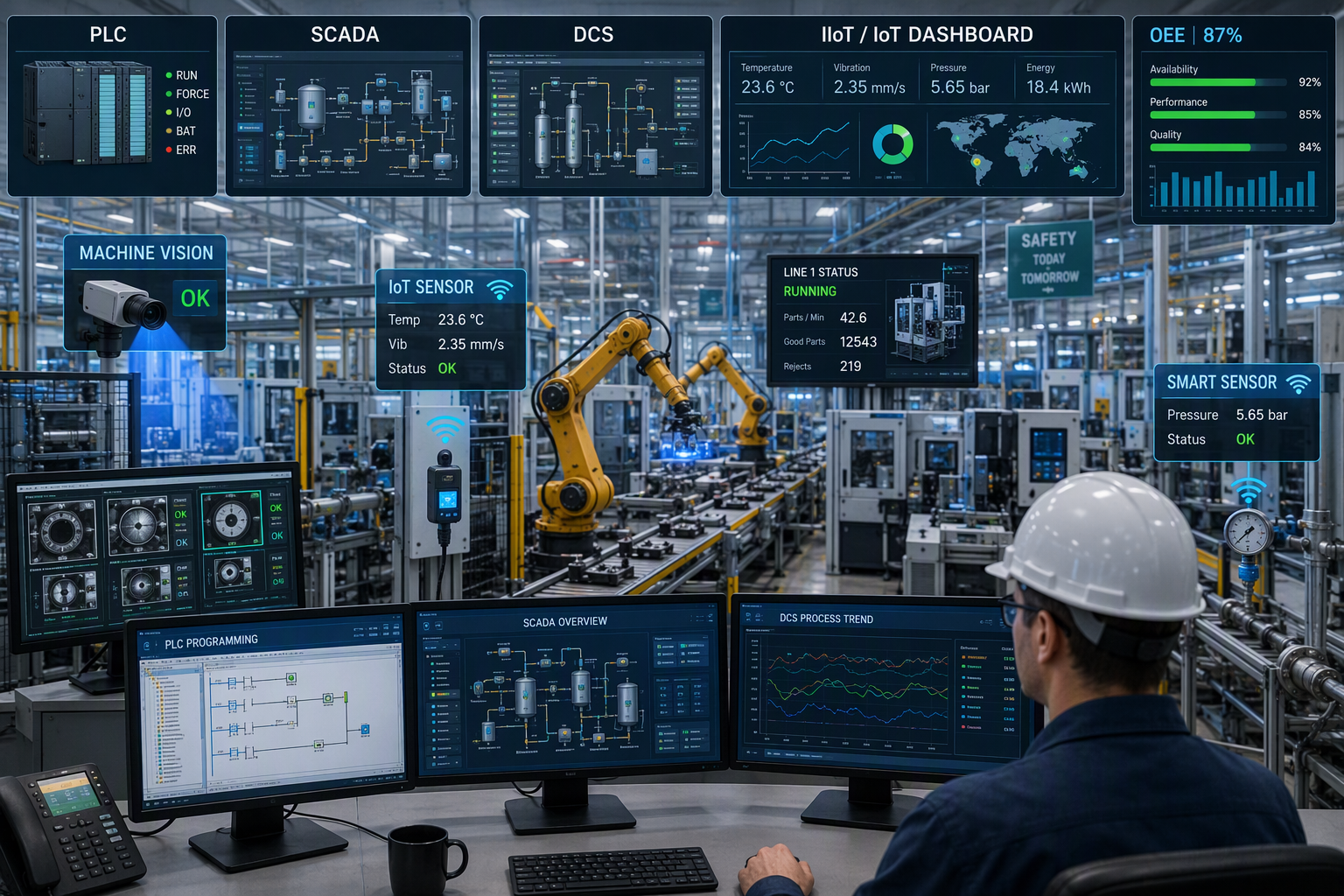
You will often see PLCs, SCADA, DCS, machine vision, and IoT tools used together. In a factory setting, they monitor equipment, guide production lines, and support product quality. The next sections explain what this means in modern manufacturing and how the technology has grown.
Defining Industrial Automation in Modern Manufacturing
In simple terms, industrial automation is the use of machines and digital tools to run parts of the manufacturing industry with less manual effort. It is built to handle repetitive tasks that slow teams down or increase the chance of human error.
Inside a factory, control systems collect information from equipment, compare it to programmed settings, and trigger the next action. That might mean moving items on conveyor systems, adjusting machine speed, or stopping a line when a defect appears. This is how an industrial automation system works in a factory setting.
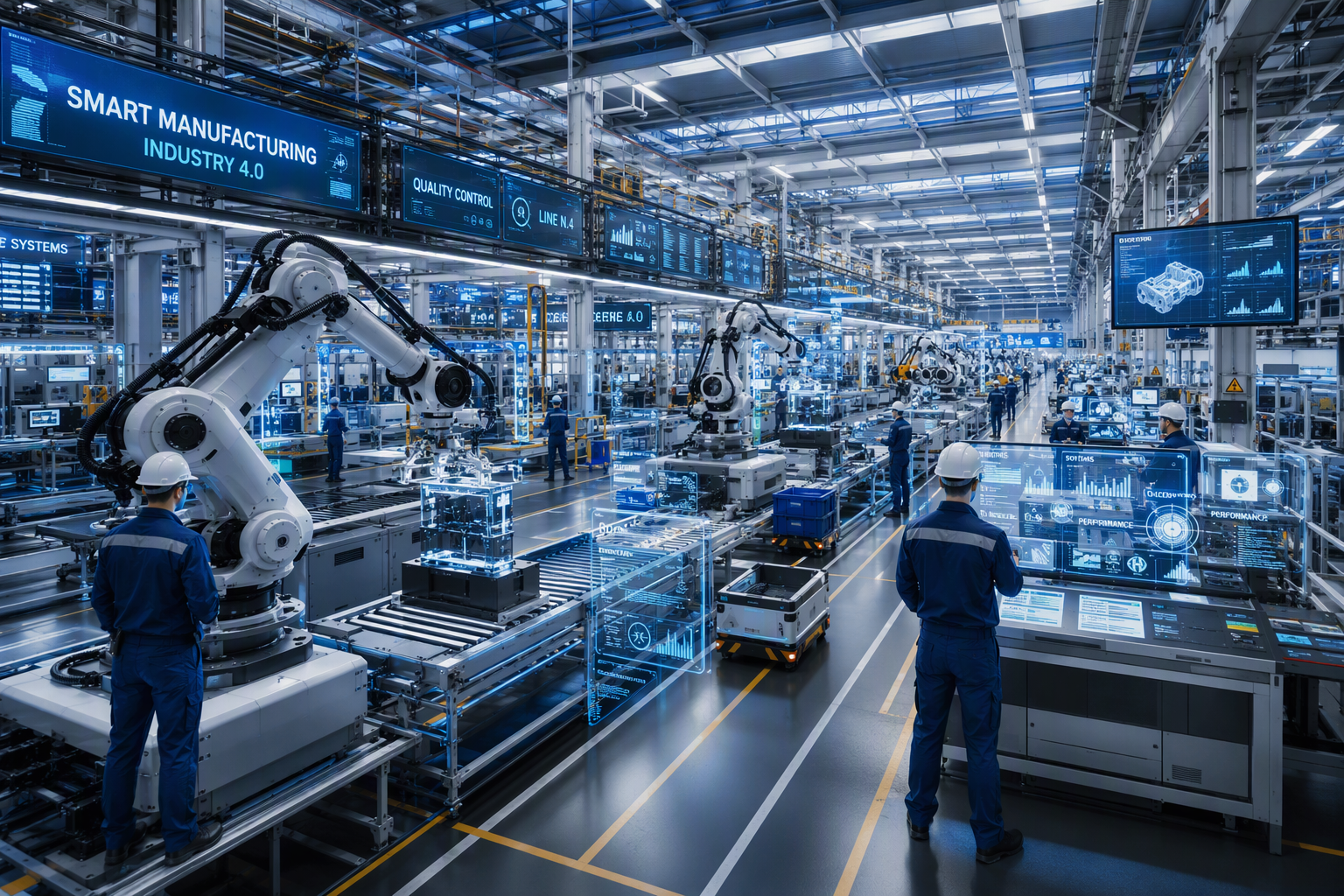
For you, the value is clear. Industrial automation supports steady output, better product quality, and safer operations. It also helps workers move away from repetitive tasks and focus on monitoring, problem-solving, and quality inspection, which makes the whole operation more efficient.
The Evolution and Growth of Automation Technology
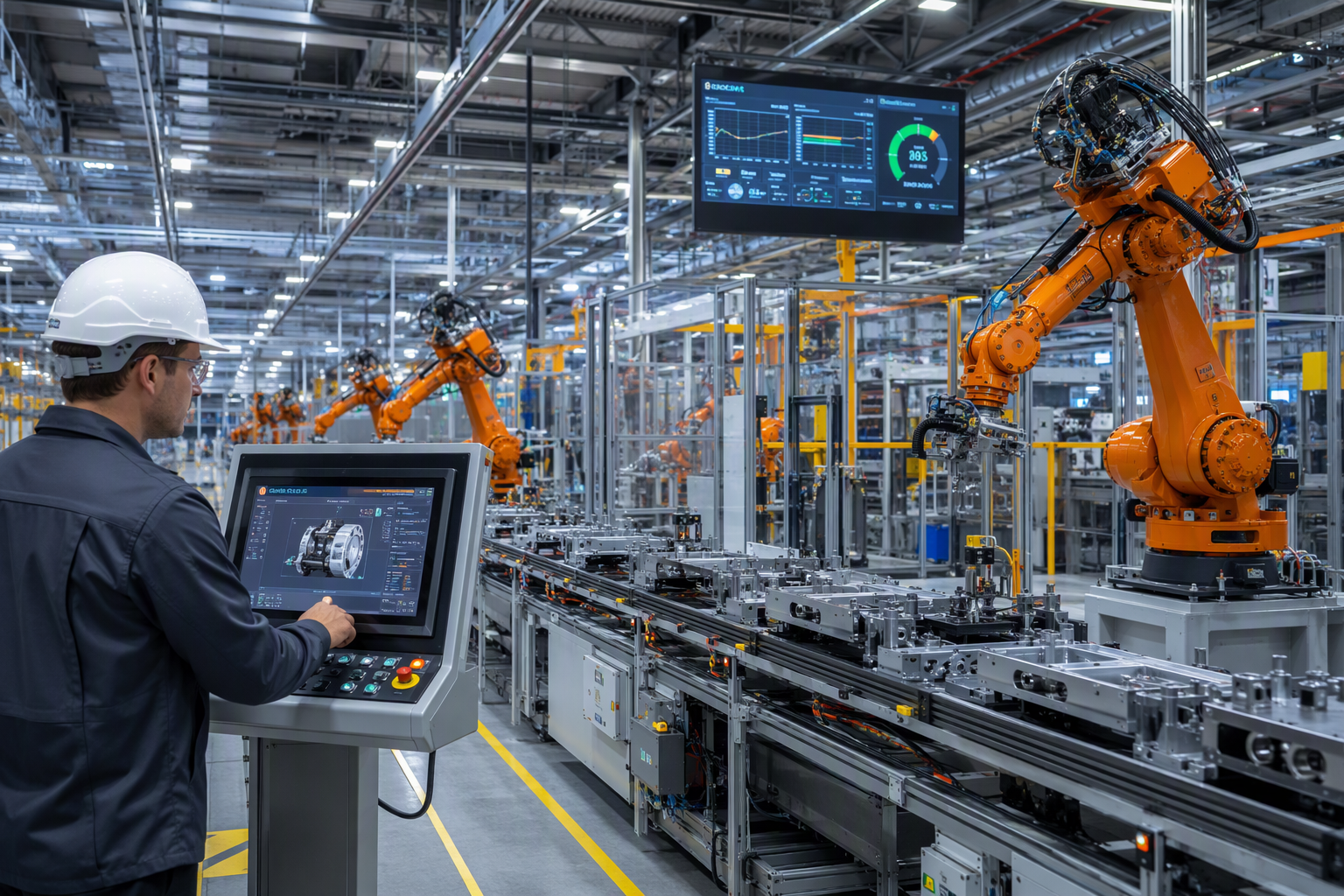
Automation technology has moved far beyond basic machine control. Early systems focused on repeated motion and fixed routines. Today, factories use more connected tools that gather data, respond faster, and support better decisions across production processes.
A big reason for this growth is the rise of the internet of things, machine learning, and artificial intelligence. IoT-enabled devices collect real-time data from machines and production lines. That data helps managers predict maintenance needs, reduce downtime, and improve process control. Industrial robots also do more than simple lifting or welding now.
Common industrial automation solutions used today include PLCs, DCS, SCADA platforms, robotic systems, machine vision, and connected monitoring tools. Together, these technologies help factories stay flexible, improve quality standards, and adapt to changing market demand with less waste.
Key Components of an Industrial Automation Solution
Every industrial automation setup depends on a few core parts working together. Control systems direct activity, sensors gather data, and software helps teams monitor and adjust the automation system in real time.
Factory automation also relies on industrial robots, connectivity tools, and operator interfaces. When these pieces are aligned, businesses can improve output, reduce waste, and manage energy use more carefully. That is why the next two sections focus on hardware first, then the software and connectivity behind it.
Controllers, Sensors, and Robotics Integration
The physical side of automation starts with controllers, sensors, and robotics. These parts tell machines what is happening and what to do next. Without them, an automation system cannot react to changing conditions on the floor.
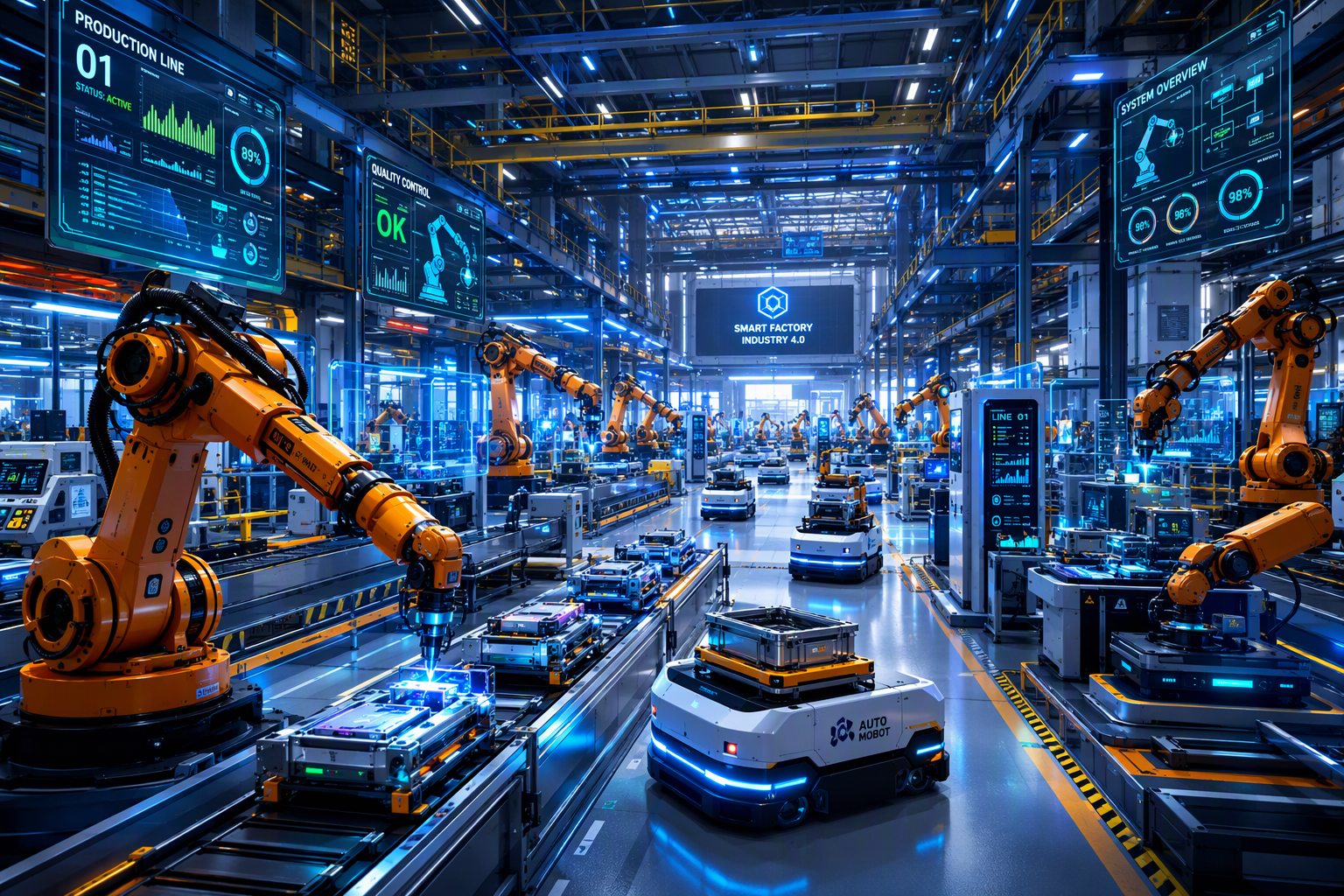
Programmable logic controllers are central because they receive signals from sensors and trigger actions based on programmed rules. Sensors track position, temperature, motion, or product flow. Industrial robots then carry out tasks such as welding, packaging, or material handling with consistent movement and speed.
Key components often include:
- Programmable logic controllers for machine automation and fast process control
- Sensors that detect changes and feed live data into control systems
- Industrial robots for repetitive or hazardous tasks on production lines
- Machine vision for quality inspection, defect detection, and alignment
When you put these together, you get a system that improves reliability and reduces manual strain.
Software Platforms and Connectivity Systems
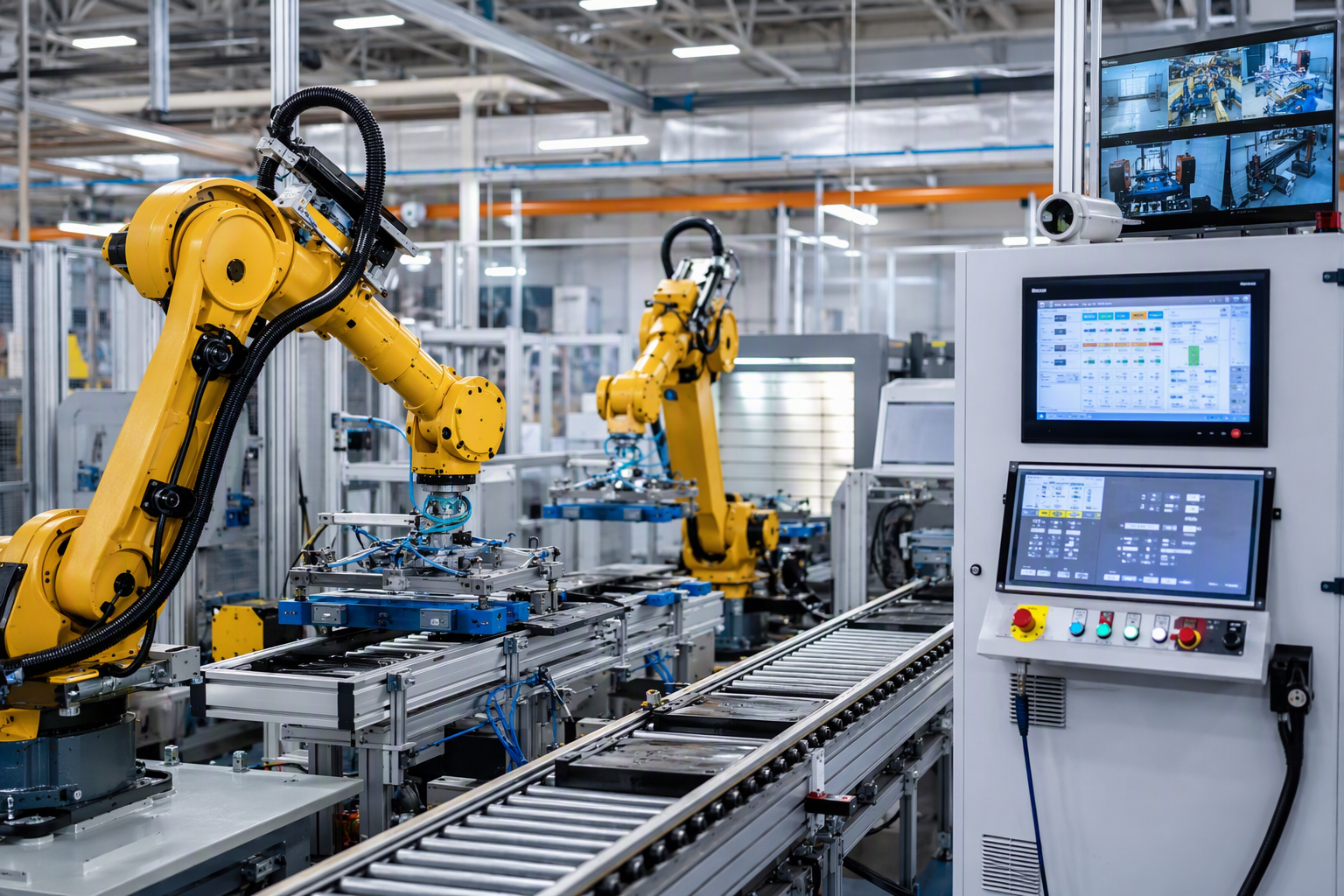
Hardware alone is not enough. Software platforms give structure to the data coming from machines and help teams manage control systems with better visibility. They turn raw signals into useful information that operators can act on quickly.
Connectivity matters just as much. The internet of things links devices, production lines, and industrial equipment so data can move in real time. This supports predictive maintenance, remote monitoring, and faster responses when something starts to drift off target. In busy factories, that can prevent downtime before it spreads.
A human machine interface gives operators a simple way to view status, alarms, and settings. With strong software platforms and solid connectivity, you can coordinate machines, workers, and processes more smoothly. That makes the whole system easier to manage and easier to improve over time.
Popular Types of Industrial Automation Systems
Not every factory needs the same kind of industrial automation. Some automation systems are built for very high-volume output, while others are designed to switch between products with less delay. That is where process automation and flexible automation stand out.
Today, common options include fixed, flexible, and programmable approaches. Each one fits different production goals, budget limits, and changeover needs. The best choice depends on your operation, so it helps to look at how each model works and where U.S. plants use them successfully.
Fixed, Flexible, and Programmable Automation Explained
Fixed automation is built for high-volume, repeated output. It works best when the manufacturing process stays the same for long periods. This approach is common on production lines where speed and consistency matter more than frequent product changes.
Flexible automation is different. It allows equipment to handle different products without long changeovers. Programmable automation also supports variation, but it usually relies on reprogramming for new batches or product runs. These systems give manufacturers more control when demand shifts.
Here is a simple breakdown:
- Fixed automation suits stable, high-volume production with tight process control
- Flexible automation supports faster product switching and adaptable workflows
- Programmable automation works well for batch-based production needs
- All three improve consistency when matched to the right manufacturing process
If your operation changes often, flexible automation may offer the most practical value.
Real-World Applications in U.S. Manufacturing Plants
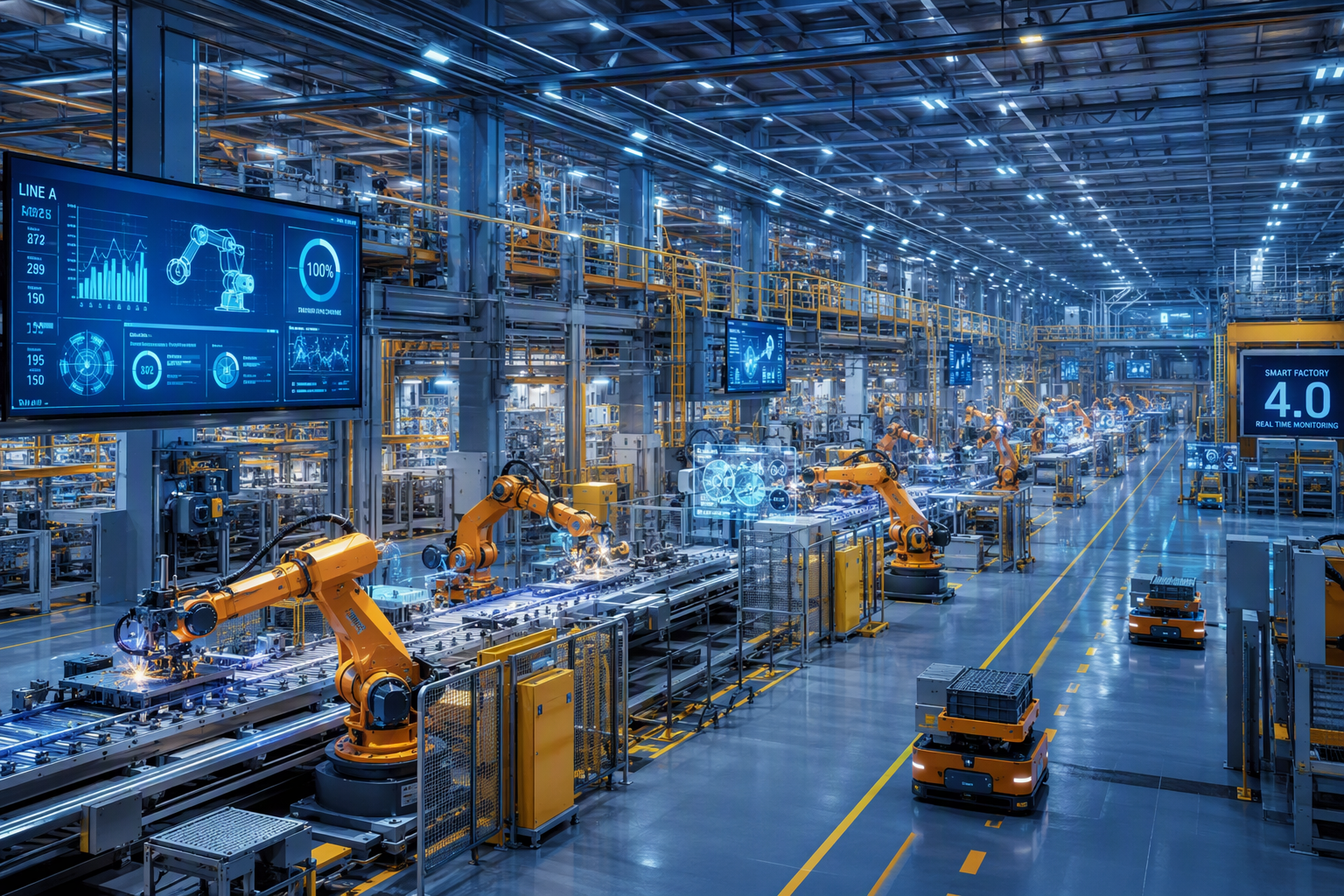
Across the U.S., industrial automation shows up in many practical ways. Manufacturing plant teams use robots for welding, sorting, packaging, and material handling. They also use machine vision to catch defects and improve quality standards before products leave the line.
You can see strong results in automotive, electronics, consumer goods, food production, and aerospace work. Automation projects often focus on reducing cycle times, improving safety, and keeping industrial equipment running with less downtime. Even warehouse and logistics settings benefit from conveyor systems, robotic sorting, and autonomous vehicles.
| Industry | Example use in a manufacturing plant | Main result |
|---|---|---|
| Automotive | Robots on assembly lines for welding and handling | Faster output and consistent quality |
| Food and Beverage | Automated processing, packaging, and quality control | Better hygiene, safety, and efficiency |
| Aerospace and Defense | Precision assembly and component testing | Higher accuracy and less production time |
| Logistics and Warehousing | Conveyor systems and robotic sorting | Better inventory flow and material handling |
Major Benefits of Industrial Automation Solutions
The main benefits of automation come down to stronger productivity, better quality control, and smoother daily performance. Machines can keep working with fewer interruptions, which helps factories improve operational efficiency and manage demanding schedules.
For many businesses, the gains also include lower costs, less waste, and safer production. Automation services improve factory performance by reducing errors, shortening delays, and making output more consistent. The next sections look more closely at productivity, safety, sustainability, and cost control.
Improving Productivity, Efficiency, and Operational Safety
One of the clearest benefits of automation is higher productivity. Automated systems can run continuously, move products faster, and reduce delays across assembly lines and warehouse tasks. That helps factories increase throughput without relying on constant manual effort.
Automation services also improve operational efficiency by reducing human error and tightening process timing. When machines handle repetitive work, cycle times often drop and production becomes easier to manage. Workers can then focus on monitoring, adjustments, and quality inspection instead of routine handling.
Key gains often include:
- Higher productivity through faster and more consistent machine output
- Better operational efficiency from shorter cycle times and smoother workflows
- Stronger worker safety by removing people from dangerous tasks
- Improved operational safety through automated shutdowns and alerts
If your goal is reliable output with fewer disruptions, automation can make a measurable difference.
Enhancing Sustainability and Reducing Operational Costs
Automation can support sustainability in ways that are easy to measure. Modern systems use planned movements, real-time monitoring, and tighter process automation to reduce waste. When factories produce fewer defective items, they avoid unnecessary material loss and support more efficient operations.
Energy efficiency is another major benefit. Properly maintained automated equipment often uses less power, and connected systems can track energy consumption, emissions, and waste output. That gives managers better control over environmental targets and day-to-day performance.
There is also a strong cost benefit. Lower material waste, fewer errors, and better inventory management can lead to lower costs over time. While the initial investment may be significant, many businesses see savings through reduced downtime, improved resource use, and more stable production processes.
Conclusion
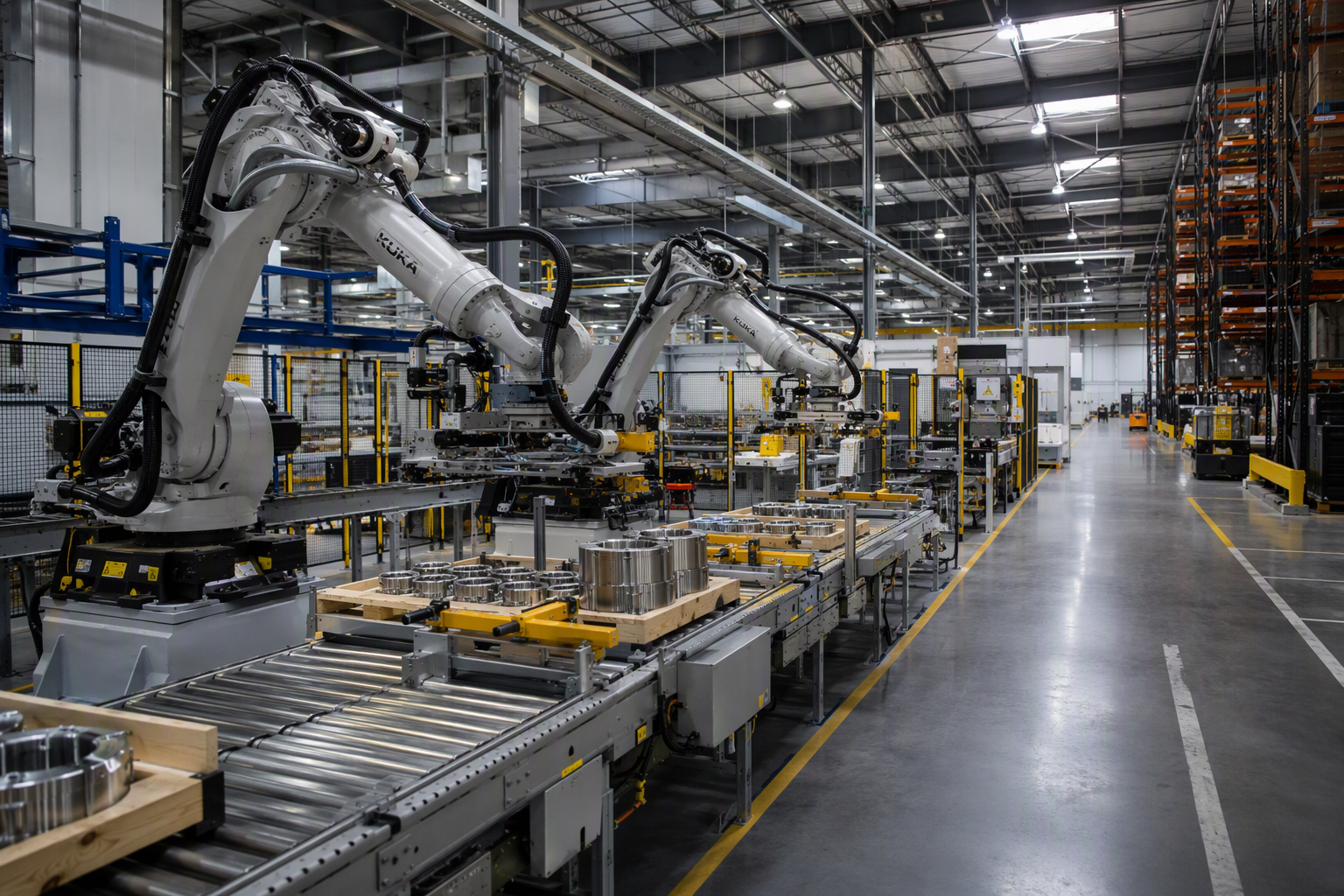
In conclusion, embracing industrial automation solutions is not just a trend; it’s a necessary evolution for businesses looking to thrive in today's competitive landscape. From enhancing productivity and operational safety to promoting sustainability, the benefits of automation are vast and impactful. By integrating key components such as controllers, sensors, and software platforms, companies can streamline their operations and reduce costs significantly. As you consider implementing these solutions, remember that the right approach can transform your manufacturing processes and set you up for long-term success. If you're ready to take the next step, don’t hesitate to reach out for a free consultation to explore how automation can work for you.
Frequently Asked Questions
What should businesses consider when choosing an automation provider?
When comparing automation companies, look at how well their engineering services match your manufacturing facility, process needs, and long-term support expectations. Good industrial automation providers should understand system design, integration, maintenance, and scalability. You should also weigh the initial investment against expected gains in efficiency, safety, and quality.
Which industries in the U.S. benefit most from industrial automation?
The manufacturing industry sees broad value from automation, especially automotive, food and beverage, pharmaceuticals, logistics, and defense industries. Companies producing consumer goods also benefit through faster packaging, better quality control, and improved material handling. Any sector with repetitive production or complex process automation can gain meaningful results.
What are some examples of successful industrial automation projects?
Successful industrial automation projects include robotic welding on assembly lines, machine vision for defect detection, automated packaging in food production, and conveyor-based sorting in warehouses. These automation projects help businesses improve quality standards, increase safety, reduce downtime, and make production processes more consistent and efficient.