Unlock Productivity with Industrial Automation Solutions
Unlock Productivity with Industrial Automation Solutions
Key Highlights
- Industrial automation helps factories improve operational efficiency across the manufacturing process.
- Smart automation solutions reduce repetitive work and support better product quality.
- A strong automation system uses control systems, sensors, software, and industrial equipment together.
- Factories use fixed, flexible, and programmable automation for different production needs.
- New tools like the internet of things, machine learning, and machine vision support faster decisions.
- Businesses that automate well often gain cost savings, safer operations, and a stronger competitive edge.
Introduction
Industrial automation is changing how the manufacturing industry handles speed, quality, and daily output. If your team wants to reduce waste, improve consistency, and make work safer, automation solutions can help. They support better control over machines, data, and production tasks without relying as heavily on manual effort. In a market shaped by rising labor costs and global competition, industrial automation gives manufacturers a practical way to stay productive and responsive.
Industrial Automation Solutions: Benefits for Your Industry
Understanding Industrial Automation Solutions
At its core, industrial automation means using technology to manage industrial processes with more speed, precision, and consistency. Automation solutions can support process automation in tasks such as assembly, packaging, inspection, and material movement across a manufacturing process.
In a factory setting, the system gathers data from machines and sensors, then uses software and controls to direct actions in real time. That helps industrial processes run smoothly, reduces delays, and keeps production on track. To see how this works in practice, it helps to look at the system parts first.
Key Components of an Industrial Automation System
An industrial automation system is built from connected parts that work as one. The most important layer is usually the control systems that monitor conditions and send commands. These systems keep machines working within target settings and help maintain reliable output.
Next come programmable logic controllers, along with software platforms that manage timing, sequences, and responses. In many facilities, these tools connect with sensors, human machine interface screens, motion control devices, and other industrial equipment. Each piece has a specific role in keeping the line coordinated.
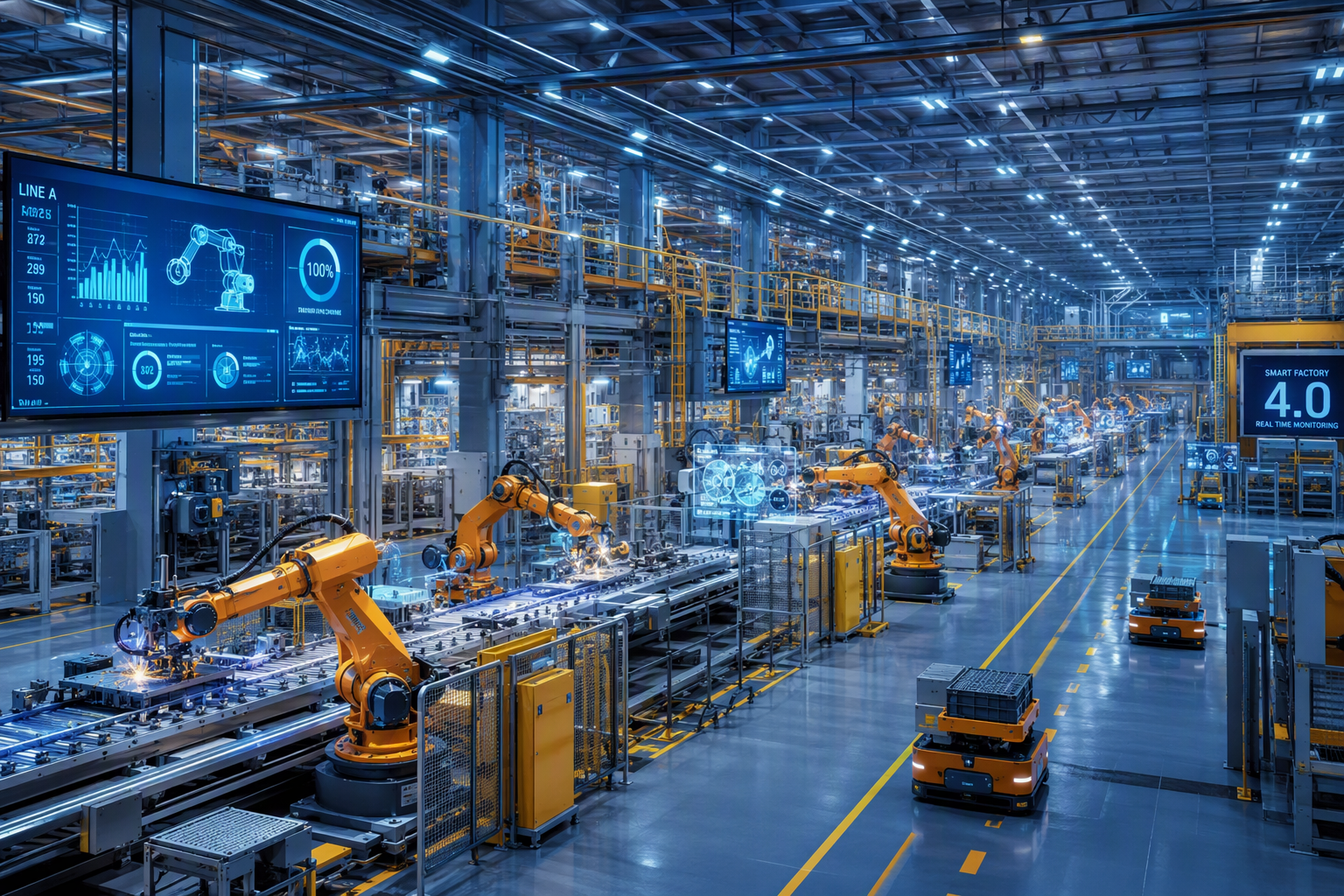
Industrial robots are another major part of many setups. They handle welding, packaging, quality inspection, and material handling with consistent movement and less fatigue than human labor. When these components are integrated well, the automation system can support safer, faster, and more repeatable production.
How Industrial Automation Systems Work in Manufacturing
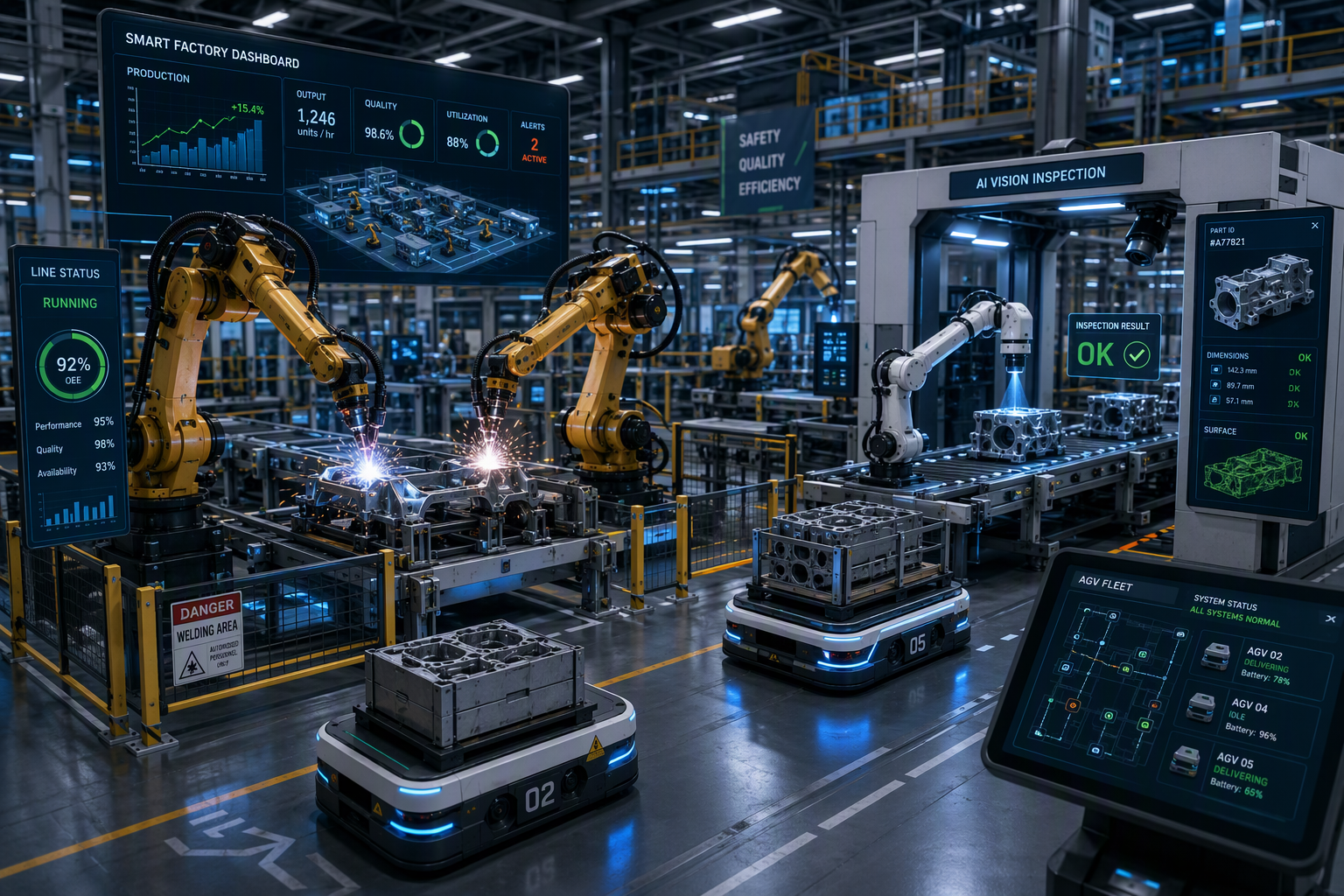
In manufacturing, industrial automation works by linking machines, sensors, and control software into one organized flow. Data is collected from equipment across the production line, and the system uses that information to guide actions as conditions change. This helps the manufacturing process stay stable and efficient.
On assembly lines, the system can control speeds, trigger machine actions, and move products between stations. Conveyor systems carry materials or finished goods to the next step, while automated tools complete repeated tasks with steady timing and fewer interruptions.
The result is a production line that runs with better consistency and less dependence on constant manual oversight. When a problem appears, operators can often spot it faster through real-time monitoring. That makes it easier to improve throughput, reduce errors, and keep orders moving.
Types of Industrial Automation Solutions Available
Factories today use automation solutions in several forms, depending on output goals, product mix, and changeover needs. These systems rely on various technologies, from robotics and control software to sensors and machine automation tools that support specific tasks.
The most common categories include fixed automation, programmable automation, and flexible automation. Each one fits a different production environment. Some support high-volume, repeatable work, while others help teams switch between new products more easily. The differences matter, so the next section breaks them down clearly.
Fixed, Flexible, and Programmable Automation Explained
Not every factory needs the same automation technology. The right choice depends on your production process, how often products change, and how much output you need. Some systems are built for repetition, while others are designed for quick adjustment.
Here is a simple way to understand the main types:
- Fixed automation is best for high-volume tasks that rarely change.
- Programmable automation suits batches where equipment can be reprogrammed for different runs.
- Flexible automation helps factories switch between products with shorter changeovers.
- Each option supports a different balance of speed, variety, and control.
For example, fixed automation often fits dedicated production lines, while programmable automation supports changing schedules more easily. Flexible automation is often seen as the future of manufacturing because it helps plants adapt faster. If your business handles shifting demand, that added flexibility can be a major advantage.
Emerging Technologies in Industrial Automation
Industrial automation keeps expanding because new digital tools add more visibility and control. The internet of things connects machines and devices so they can share real-time data. That gives managers a clearer view of operations and helps them respond sooner when something starts to drift.
Several technologies are shaping modern systems:
- Machine learning helps analyze production data and spot patterns.
- Artificial intelligence supports smarter decisions and adaptive processes.
- Machine vision allows robots to inspect products and detect defects.
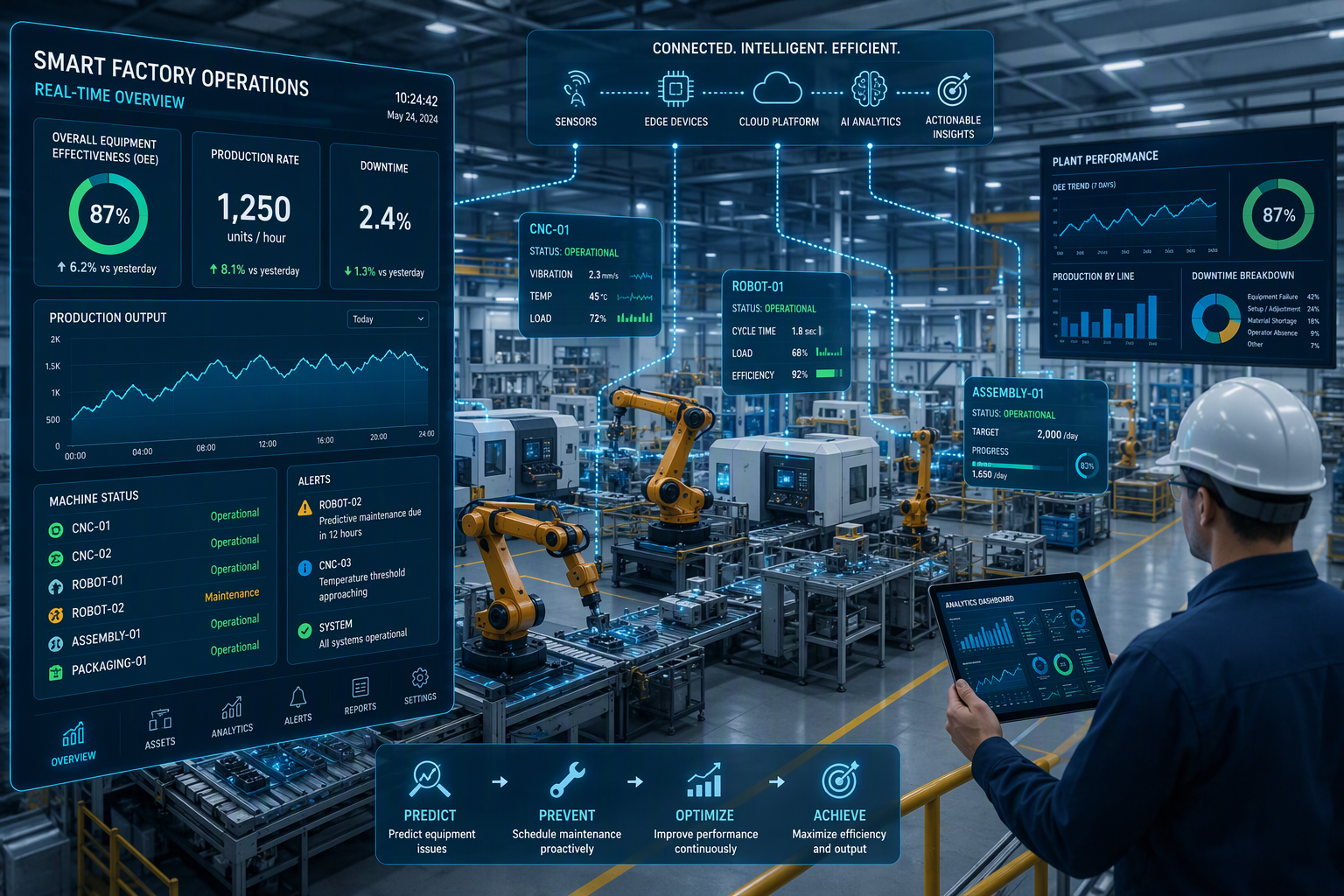
- Predictive maintenance helps teams service equipment before failures cause downtime.
These tools do more than add features. They improve reliability, reduce waste, and support better planning across the floor. When used well, they strengthen product quality, shorten delays, and make automation solutions more valuable over time.
Main Benefits of Industrial Automation for Factories
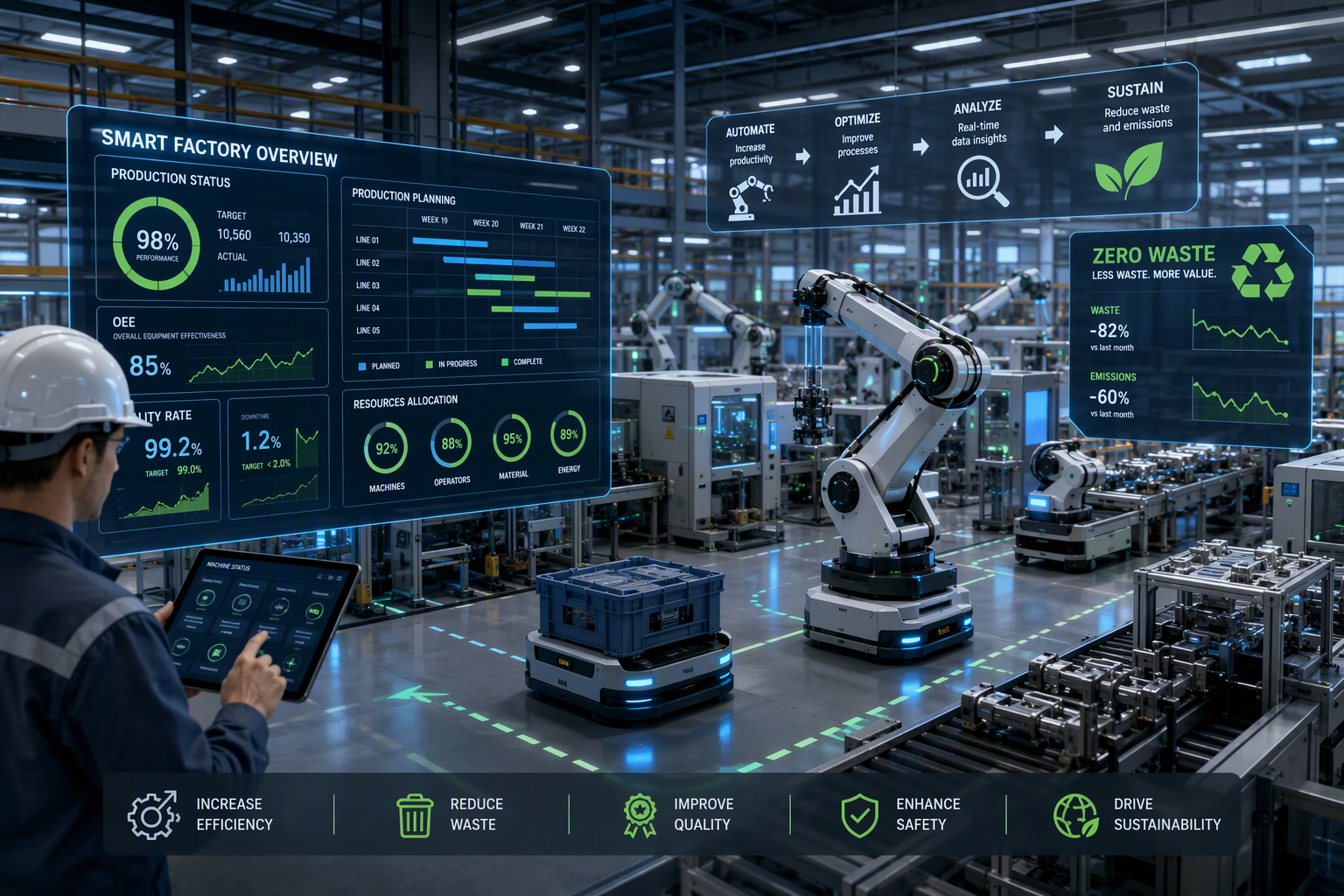
The benefits of automation are practical and easy to measure. Factories often see higher output, steadier quality control, and smoother performance across the production line. Automated systems can also reduce waste, improve timing, and support better use of staff and equipment.
Just as important, industrial automation strengthens operational efficiency while helping control costs. Many manufacturers adopt it to lower errors, improve safety, and create long-term cost savings. The biggest gains usually show up in productivity, consistency, and safer working conditions, which the next sections explain in more detail.
Improved Productivity and Operational Efficiency
One of the clearest advantages of automation services is stronger operational efficiency. Machines can run longer, repeat tasks with the same motion, and keep output moving without the slowdowns that come from fatigue. That helps factories manage busy schedules and improve overall flow.
Teams often see gains in areas like:
- Shorter cycle times on production equipment
- Faster material handling in storage and packing areas
- Better performance on repetitive tasks
- Lower costs through reduced waste and fewer process mistakes
There is also a people benefit. Employees can move away from repetitive work and focus on monitoring, problem-solving, or quality-related duties. That shift can improve job satisfaction while helping the plant run more effectively. When combined with real-time data and process control, automation supports faster decisions and better use of resources.
Enhanced Quality, Consistency, and Workplace Safety
Quality and safety often improve together when factories automate the right tasks. Machines follow set instructions with steady precision, which helps protect product quality and meet quality standards more reliably. That consistency is especially useful in industries where small errors create major cost or compliance issues.
Automation also reduces human error in repeated or physically demanding jobs. When robots or automated equipment take on hazardous tasks, worker safety improves. This matters in areas involving heavy lifting, chemicals, heat, or moving machinery where manual exposure creates higher risk.
| Area | How automation helps |
|---|---|
| Product quality | Supports repeatable actions and more consistent quality |
| Quality control | Uses machine vision and automated checks to spot defects |
| Workplace safety | Removes people from dangerous tasks and risky conditions |
| Worker safety | Lowers exposure to strain, accidents, and hazardous tasks |
These gains can improve customer satisfaction while protecting the workforce.
Industries That Gain the Most from Automation Solutions
Automation is no longer limited to one type of plant. Various industries now use automated systems to improve speed, precision, and safety. A manufacturing facility that handles high volumes, strict standards, or risky tasks often sees the biggest payoff from automation solutions.
That includes sectors producing consumer goods, food products, medical items, and highly engineered parts. Defense industries, logistics operations, energy sites, and chemical plants also benefit. While the needs differ, the goal stays similar: more reliable output with better control. Some of the strongest examples appear in the industries below.
Applications in Automotive, Food & Beverage, and Pharma
Some sectors rely on automation more heavily because their standards are strict and their output demands are high. Automotive, food & beverage, and pharma are strong examples. In each case, automation helps improve consistency, speed, and traceability across essential operations.
Common uses include:
- Automotive plants use automation on assembly lines for welding, testing, and parts handling.
- Food & beverage facilities automate processing, packaging, and hygiene-focused workflows.
- Pharma operations use precise systems for manufacturing, packaging, and lab-related tasks.
- Quality inspection tools help detect defects and protect compliance goals.
These industries benefit because even small mistakes can be expensive. Automation reduces variation, limits contamination risks, and supports repeatable quality inspection. It also helps companies keep up with demand while maintaining tighter control over how products are made and checked.
Growing Role of Automation in U.S. Manufacturing
Across the U.S. manufacturing industry, factory automation is becoming a practical response to cost pressure, labor challenges, and rising customer expectations. Manufacturers want better uptime, steadier quality, and more visibility into performance. Automation helps them move in that direction without relying on more manual effort alone.
Automation companies and industrial automation companies support this shift by designing systems, integrating robotics, developing controls, and providing maintenance and support. Their services often include process automation, machine vision, IoT-based monitoring, and control platforms such as PLC, DCS, and SCADA solutions.
These services improve operational efficiency by connecting equipment, reducing downtime, and helping teams act on real-time data. As more plants modernize, automation is playing a larger role in how American factories stay competitive, meet volume targets, and respond to changing market needs.
Conclusion
In conclusion, industrial automation solutions are not just a trend; they represent the future of manufacturing. By streamlining processes and enhancing productivity, these systems enable businesses to stay competitive in a rapidly evolving market. From improving operational efficiency to ensuring consistent quality and safety, the benefits are numerous and impactful. As industries like automotive, food and beverage, and pharmaceuticals embrace automation, it's clear that the potential for growth and innovation is immense. If you're looking to unlock your factory's productivity and explore tailored automation solutions, don’t hesitate to reach out for a free consultation today!
Frequently Asked Questions
What factors should I consider when choosing an automation provider?
Look at experience, system design ability, support options, and the range of engineering services offered. Strong industrial automation companies should understand your process, explain the initial investment clearly, and provide reliable automation services after installation. A provider that fits your goals can help you build a lasting competitive edge.
How does automation contribute to sustainability and energy savings?
Automation improves energy efficiency by planning machine actions more carefully and reducing waste. Better process control helps cut unnecessary energy consumption, while fewer defects mean fewer wasted materials. Over time, that supports sustainability goals and can lead to lower costs for many manufacturing operations.
Can you share examples of successful industrial automation projects?
Yes. Common automation projects include robotic assembly lines, machine vision for quality control, and IoT systems that support predictive maintenance. In the manufacturing industry, these projects often improve uptime, reduce defects, and raise customer satisfaction by making output more consistent and dependable.