What is industry 4.0 in simple terms?
Key Highlights
- Industry 4.0 is the fourth industrial revolution, where digital transformation changes manufacturing processes through connected systems.
- It combines the internet of things, AI, robotics, cloud computing, and data analytics.
- Smart factories use real-time data to improve speed, quality, and flexibility.
- Common use cases include predictive maintenance, supply chain visibility, and asset tracking.
- Businesses gain better efficiency, stronger decision-making, and faster response to customer needs.
- Main adoption challenges include data security, skills gaps, and integrating new tools with older systems.
Introduction
Industry 4.0 sounds technical, but the basic idea is simple. It is the fourth industrial revolution, a technological revolution where machines, software, and people work together in smarter ways. Instead of running factories with limited visibility, companies use connected systems and real-time information to guide decisions. If you have wondered what this means for business and manufacturing, you are not alone. The good news is that Industry 4.0 can be understood without complicated jargon.
Industry 4.0 Examples
Understanding Industry 4.0 in Simple Terms
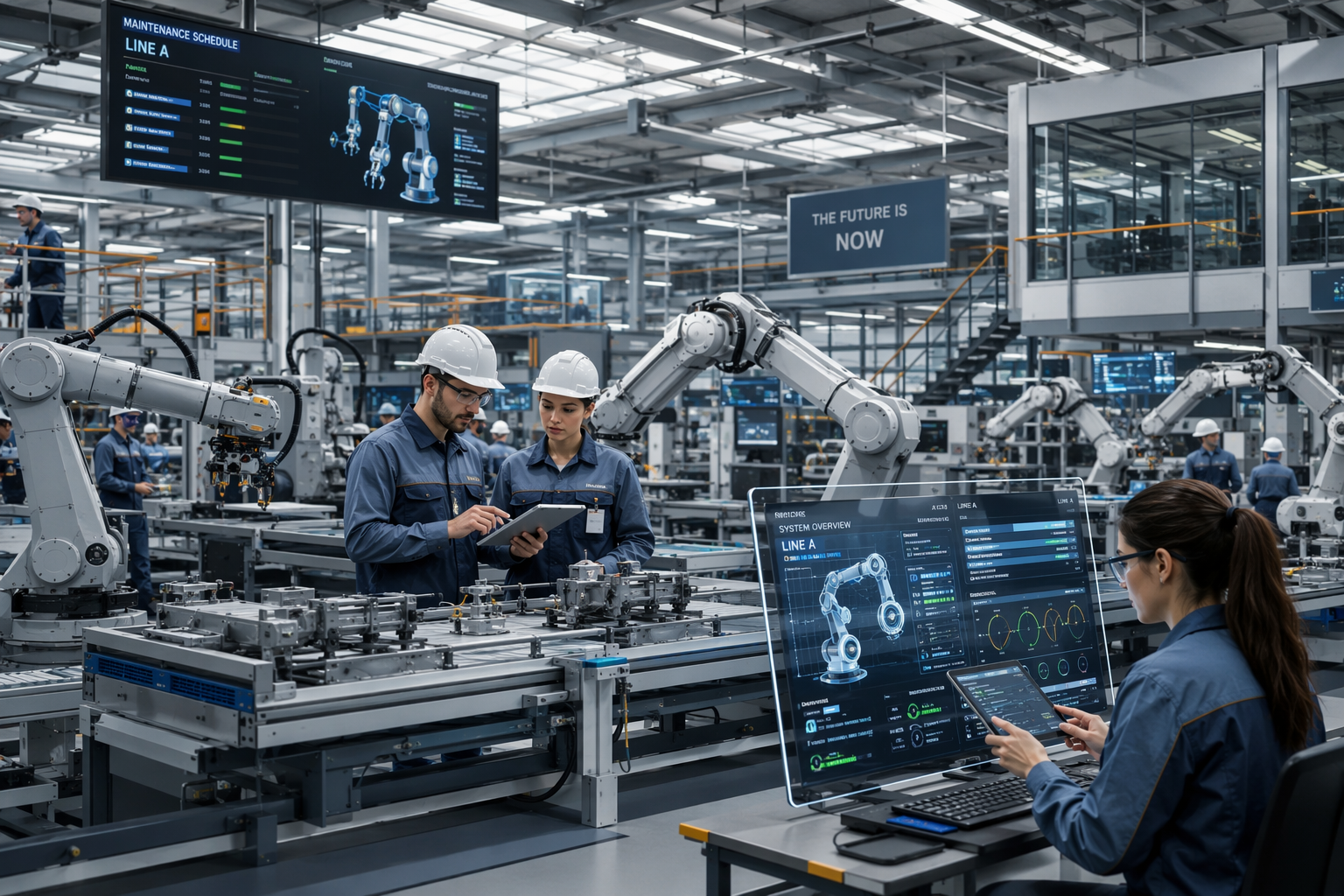
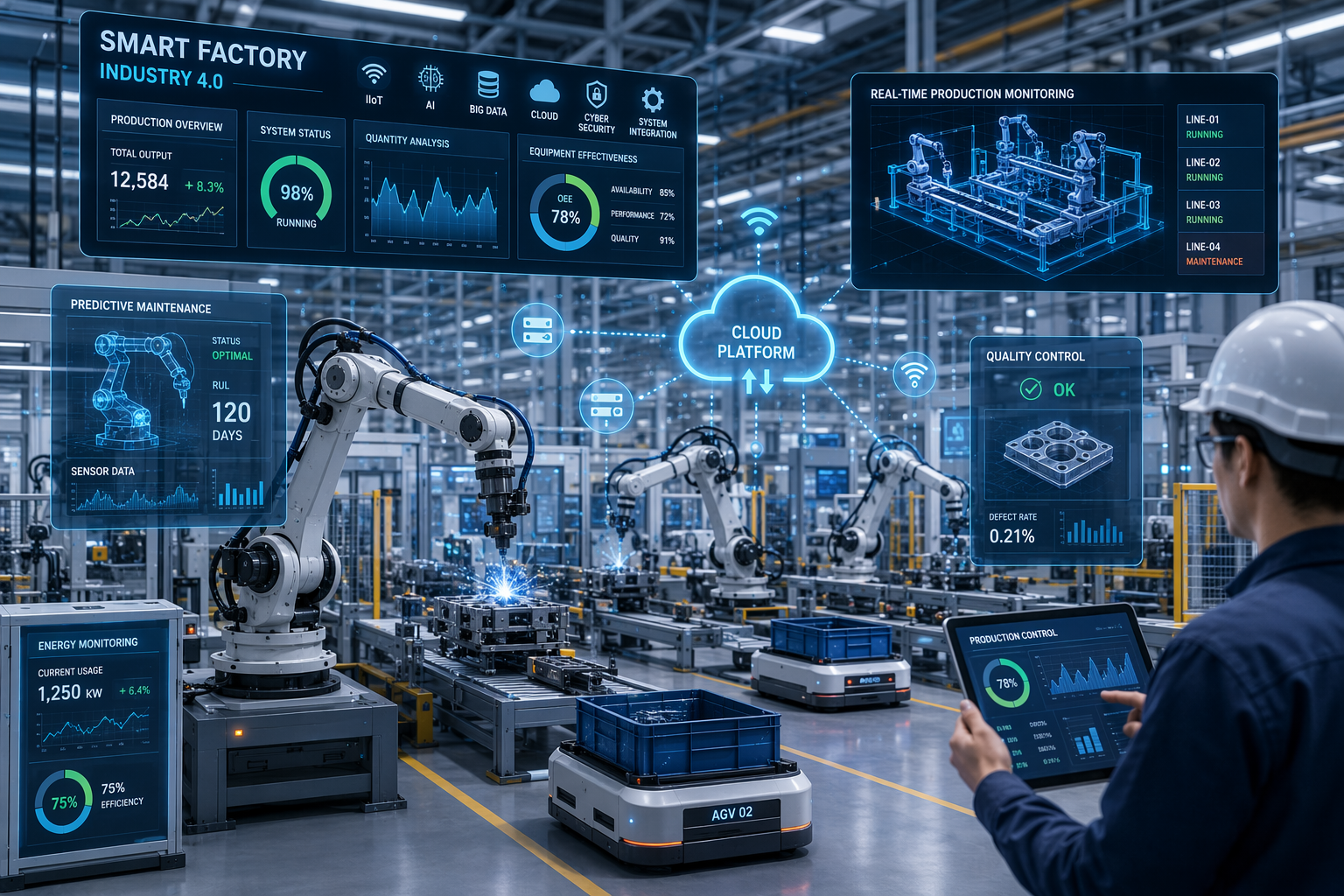
Think of Industry 4.0 as a smarter way to run a factory. In this model, smart machines, software, and sensors share information during the production process. That helps teams spot problems early, adjust faster, and improve output.
It is closely tied to the fourth industrial revolution because both describe the shift toward digital technologies, automation, and real-time decision-making. To make that clearer, let’s break down the core idea, the meaning of the term, and how it differs from earlier eras.
The Definition and Core Idea Behind Industry 4.0
At its heart, Industry 4.0 means bringing digital technologies into industrial work, especially manufacturing. It connects machines, systems, and people so they can communicate and support better decisions. Instead of working in isolation, equipment shares useful information across the operation.
A simple beginner’s guide is this: smart machines collect data, software studies that data, and teams use the results to improve the production process. This can help with quality, production schedules, downtime, and supply chain coordination. The system becomes more aware of what is happening at each step.
What makes Industry 4.0 stand out is constant data exchange. Sensors, cloud platforms, analytics tools, and automation work together in real time. That creates a more connected environment where problems can be predicted, actions can be adjusted quickly, and physical work is guided by digital insight.
Why the Term “Fourth Industrial Revolution” Is Used
The phrase “fourth industrial revolution” is used because today’s changes are large enough to reshape how industries operate. This is not just another software upgrade. It is a broad shift in how factories, supply chains, and business systems connect and respond.
Earlier eras brought steam power, electricity, and then electronics and automation. Now, digital transformation is driving the next stage. Machines can communicate, systems can analyze patterns, and businesses can act on real-time information. These technological advancements create a different level of speed and visibility.
Industry 4.0 is the manufacturing side of these revolutionary changes. It applies the fourth industrial revolution to factory floors and industrial environments. In simple terms, the wider revolution is the big picture, and Industry 4.0 is how that picture shows up in daily operations.
How Industry 4.0 Differs from Past Industrial Revolutions
Industry 4.0 differs from earlier eras because it connects physical equipment with digital technologies and real-time intelligence. The first industrial revolution focused on mechanization. The second improved output with electricity and mass production. The third brought electronics, software, and automation.
Now, the fourth industrial revolution builds on those earlier gains but adds deeper connectivity and smarter decision-making. Instead of only automating machines, companies create systems that can monitor, analyze, and respond across the whole operation.
- The first industrial revolution used steam and water power to reduce manual labor.
- The second industrial revolution introduced electricity and the assembly line.
- The third industrial revolution added electronics, computers, and automation.
- The fourth industrial revolution links machines, data, and software in real time.
Evolution of Industrial Revolutions
To understand Industry 4.0, it helps to look at the full industrial revolution story. Each stage changed how work was done, how goods were made, and how factories were organized. These revolutionary changes shaped the evolution of industry over time.
From steam-powered tools to the modern production line and connected software, each period introduced a new way to improve output. The sections below walk through that path, one revolution at a time, so you can see where Industry 4.0 fits.
The First Industrial Revolution—Mechanization and Steam Power
The first industrial revolution began in the late 1700s and early 1800s. Before that, much of production relied on manual labor by people and animals. Work was slower, less consistent, and limited by human effort.
Then came mechanization. Steam power and water power helped workers operate machine tools and increase output. This shift was especially important in textile manufacturing, where machines could support tasks that once took much longer by hand.
That change did more than improve speed. It helped small businesses grow into larger organizations with owners, managers, and employees. In many ways, the first industrial revolution created the early structure of modern industry by moving work away from purely manual methods and toward machine-assisted production.
The Second Industrial Revolution—Mass Production and Electricity
The second industrial revolution arrived in the early 20th century. Its biggest driver was electricity, which gave factories a more efficient and flexible power source than steam-based systems. Machines became easier to operate and maintain.
This period is strongly linked with mass production. Instead of building products one at a time, manufacturers organized work into repeatable steps. The assembly line and the production line made it possible to produce more goods faster and at lower cost.
As a result, factories gained better consistency and higher output. The second industrial revolution changed not just machinery, but the way manufacturing was structured. It introduced a system where speed, volume, and standardized processes became central to industrial success.
The Third Industrial Revolution—Automation and Electronics
The third industrial revolution took shape in the late 20th century. This era focused on electronics, computers, and automation. Manufacturers began moving away from mostly mechanical systems and toward digital control.
With transistors, integrated circuits, and software, factories could automate parts of the production process. That reduced effort, improved speed, and increased accuracy. Human workers were then freed for more advanced tasks instead of handling every repetitive step.
This stage also expanded information technology in industry. Software systems supported enterprise resource planning, inventory management, shipping logistics, and product flow tracking. The third industrial revolution laid the foundation for connected operations by bringing digital control into everyday factory work.
Transition to the Fourth Industrial Revolution—Digitalization
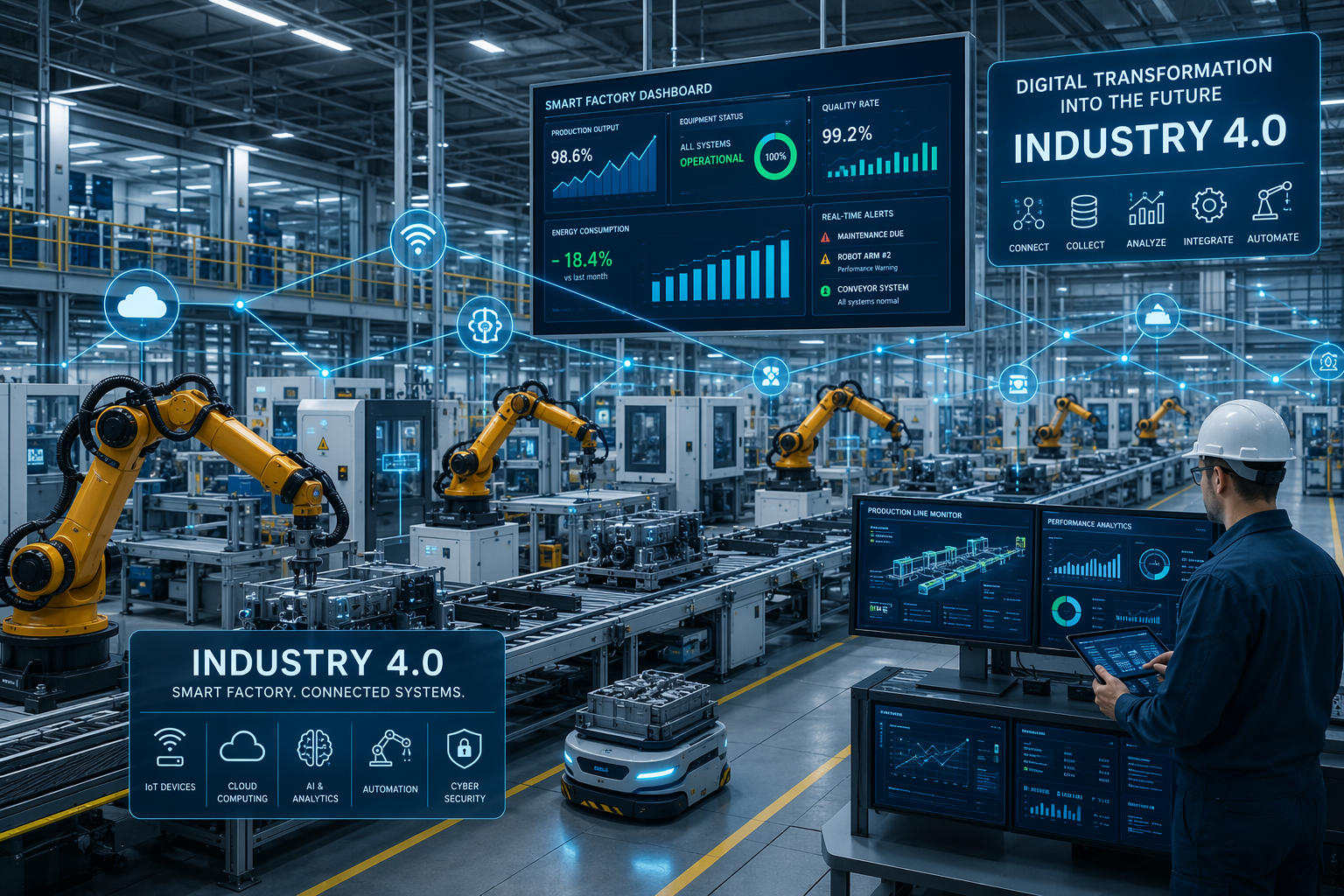
The move into the fourth industrial revolution began as the internet and telecommunications changed how information could be shared. This digital revolution pushed industry beyond basic automation and into connected decision-making.
As digital technologies improved, machines could send and receive information in real time. That meant factory equipment no longer worked as isolated units. Systems could be monitored remotely, problems could be predicted earlier, and operations could be adjusted with better timing.
These technological advancements blurred the line between physical machines and digital systems. Cyber-physical systems, cloud platforms, and analytics made manufacturing more transparent and responsive. This transition is what turned digital tools from helpful add-ons into core parts of industrial strategy.
Key Technologies Driving Industry 4.0
Industry 4.0 runs on a group of digital technologies that help factories become more connected, efficient, and informed. These tools allow smart machines to collect data, share it, and support faster action when something changes.
The internet of things is one of the most important building blocks, but it is not the only one. AI, cloud computing, robotics, analytics, and digital twins also play major roles. Here is how each technology supports a smarter industrial environment.
Industrial Internet of Things (IIoT)
The industrial internet of things is a core part of Industry 4.0. It refers to connected machines, equipment, and systems in industrial settings. Using IoT sensors and IoT devices, companies can monitor what is happening across the plant floor as work happens.
This connection matters because Industry 4.0 depends on strong data collection. If machines cannot share information, there is no real-time view of performance, downtime, or bottlenecks. IIoT creates that visibility and helps teams respond faster.
- IoT sensors track usage, uptime, and machine condition.
- IoT devices support monitoring and control in real time.
- Collected data feeds analytics and smarter maintenance planning.
In simple terms, IIoT is the network that helps Industry 4.0 systems see, measure, and communicate.
Artificial Intelligence and Machine Learning
Artificial intelligence helps manufacturers process large amounts of operational information and spot patterns that people may miss. In Industry 4.0, this supports faster and smarter decisions across planning, quality, and maintenance.
Machine learning takes that further by allowing systems to improve from data over time. Instead of following only fixed instructions, smart machines can learn from past results. This is useful for forecasting problems, adjusting schedules, and improving performance.
A clear example is predictive maintenance. Data analytics from connected equipment can show signs of wear before a breakdown happens. AI and machine learning then help teams decide what action to take. That reduces downtime and makes the operation more proactive instead of reactive.
Big Data and Advanced Analytics
Big data refers to very large sets of information gathered from sources such as machines, supply chains, and business systems. In modern factories, this often comes from sensors, production systems, and operational software.
The value comes from data analytics. When companies organize and study this data, they gain greater insight into how work is flowing, where delays are forming, and what changes may improve performance. It turns raw numbers into useful direction.
Real-time data collection makes this even more powerful. Instead of waiting for end-of-day reports, businesses can react while events are still unfolding. That helps with maintenance, scheduling, inventory, and quality management. In Industry 4.0, big data is not just stored information. It is a live resource for better decisions.
Cyber-Physical Systems and Digital Twins
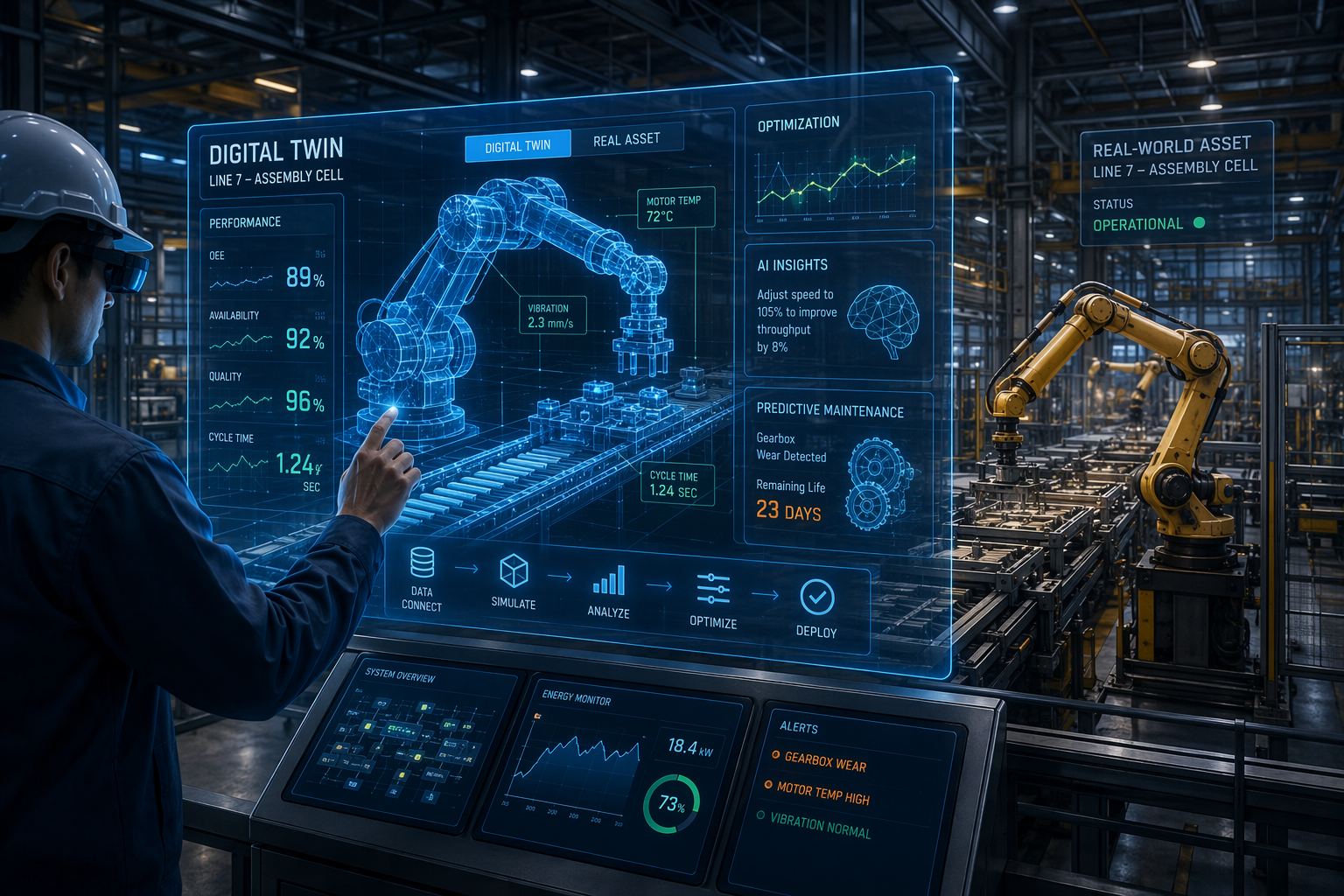
Cyber-physical systems connect digital intelligence with physical systems in the real world. In manufacturing, that means equipment can be monitored, analyzed, and guided through software while still performing physical tasks on the floor.
This connection creates a continuous feedback loop. Machines send information, software interprets it, and adjustments can follow quickly. That improves visibility and supports better coordination across production and maintenance.
Digital twins build on this idea by creating virtual models of real assets or processes. These digital versions allow teams to monitor conditions, test changes, and optimize performance without interrupting live operations. While virtual reality is a separate tool, both concepts reflect the same goal: using digital environments to better understand and improve physical systems.
Cloud Computing and Connectivity
Cloud computing gives manufacturers a way to store, manage, and access large amounts of information through remote servers instead of only local systems. This makes it easier to gather plant data in one place and use it across locations.
Strong connectivity is what makes that possible. When machines, software, and teams are linked, data visibility improves across production, inventory, and supply chain activity. People can see current conditions without waiting for separate reports from each site.
For many companies, this also reduces the strain on internal information technology teams. Cloud-based platforms can support updates, data access, and scaling without the same level of on-site infrastructure. In Industry 4.0, the cloud helps turn disconnected data into a shared and usable business resource.
Robotics and Automation
Robotics has been part of manufacturing for years, but Industry 4.0 makes it more intelligent. Instead of doing only fixed, repeated motions, robots can now work with data, changing conditions, and human teams more effectively.
Automation supports this by reducing manual steps in manufacturing processes. That helps companies increase output, improve consistency, and move workers toward higher-value tasks. Some environments also use autonomous systems that respond locally instead of waiting for central direction.
- Robotics can handle repetitive or physically demanding tasks.
- Automation helps reduce bottlenecks and improve process flow.
- Autonomous systems can react faster to changing conditions.
Together, robotics and automation help factories become more adaptive, efficient, and responsive without removing the need for skilled human oversight.
Real-World Applications of Industry 4.0
Industry 4.0 is not just a concept. It is already being used in smart manufacturing to improve daily work. Companies apply it to maintenance, supply chain planning, asset tracking, and factory coordination to make each manufacturing operation more visible and efficient.
These use cases show how connected systems affect modern manufacturing processes in practical ways. Rather than guessing what is happening, businesses can monitor, predict, and adjust faster. Let’s look at four common examples.
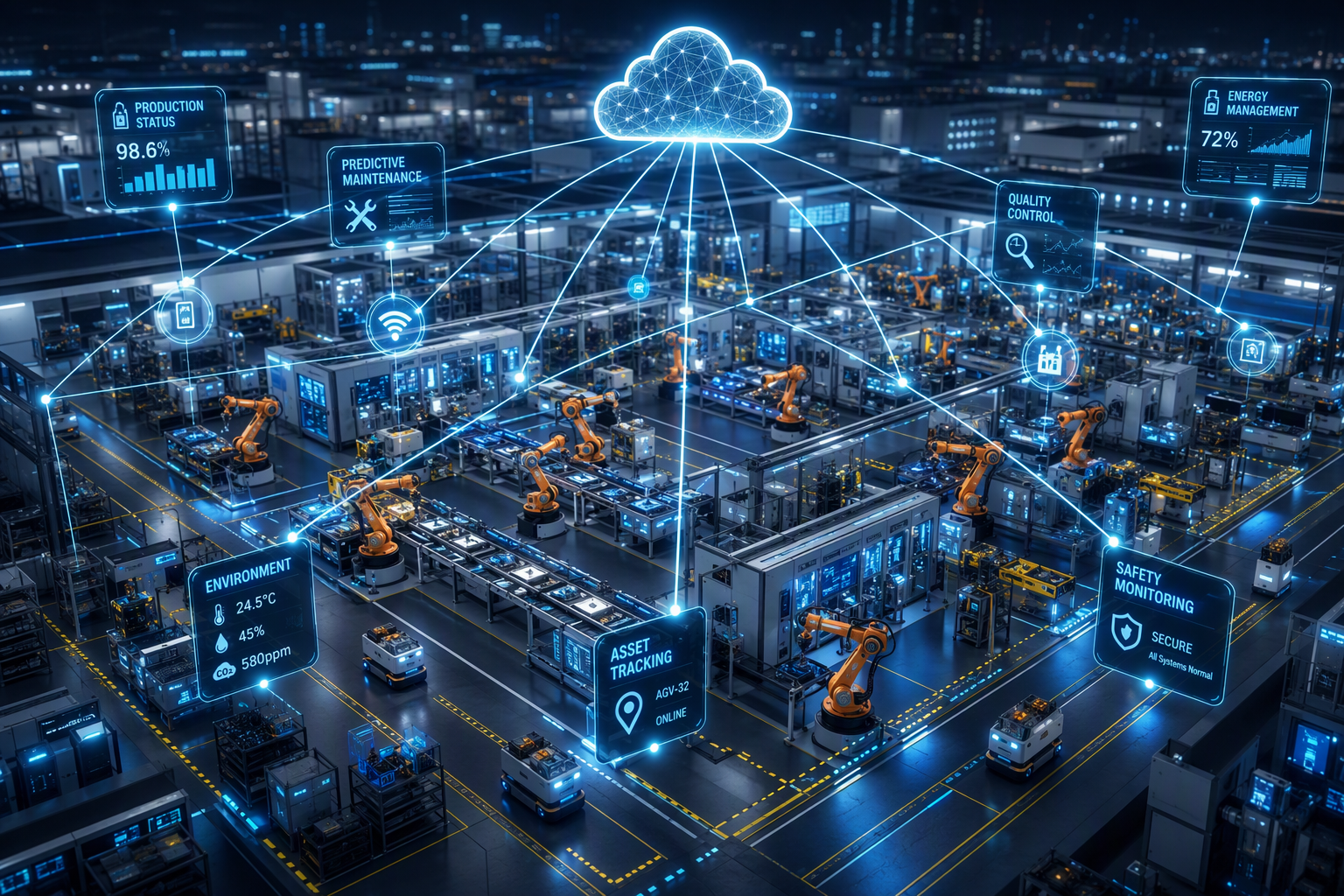
Smart Manufacturing and Connected Factories
Smart manufacturing uses connected systems and real-time information to improve how work gets done. In a smart factory, machines, software, and people are linked so that information can move quickly between them.
That data exchange matters because it creates a clearer picture of the full manufacturing operation. Managers can see equipment status, output levels, and process issues as they happen. This makes it easier to respond before small disruptions become larger problems.
Connected factories also improve collaboration. Different departments can work from the same current information instead of separate reports. That helps with planning, quality, scheduling, and maintenance. In simple terms, smart manufacturing turns a factory from a collection of separate parts into a coordinated system.
Predictive Maintenance for Equipment
Predictive maintenance is one of the clearest benefits of Industry 4.0. Instead of waiting for a machine to fail, companies use IoT systems and data analytics to spot warning signs early. That helps teams act before downtime happens.
This is different from preventive maintenance, which often follows a routine schedule. Routine checks still matter, but they do not always reflect the real condition of the equipment. Predictive methods use actual machine data to guide timing.
- Sensors detect performance changes and unusual patterns.
- Data analytics helps forecast likely faults or wear.
- Maintenance can be scheduled before breakdowns disrupt work.
The result is less unplanned downtime, better asset use, and a more reliable production environment.
Supply Chain Digitalization
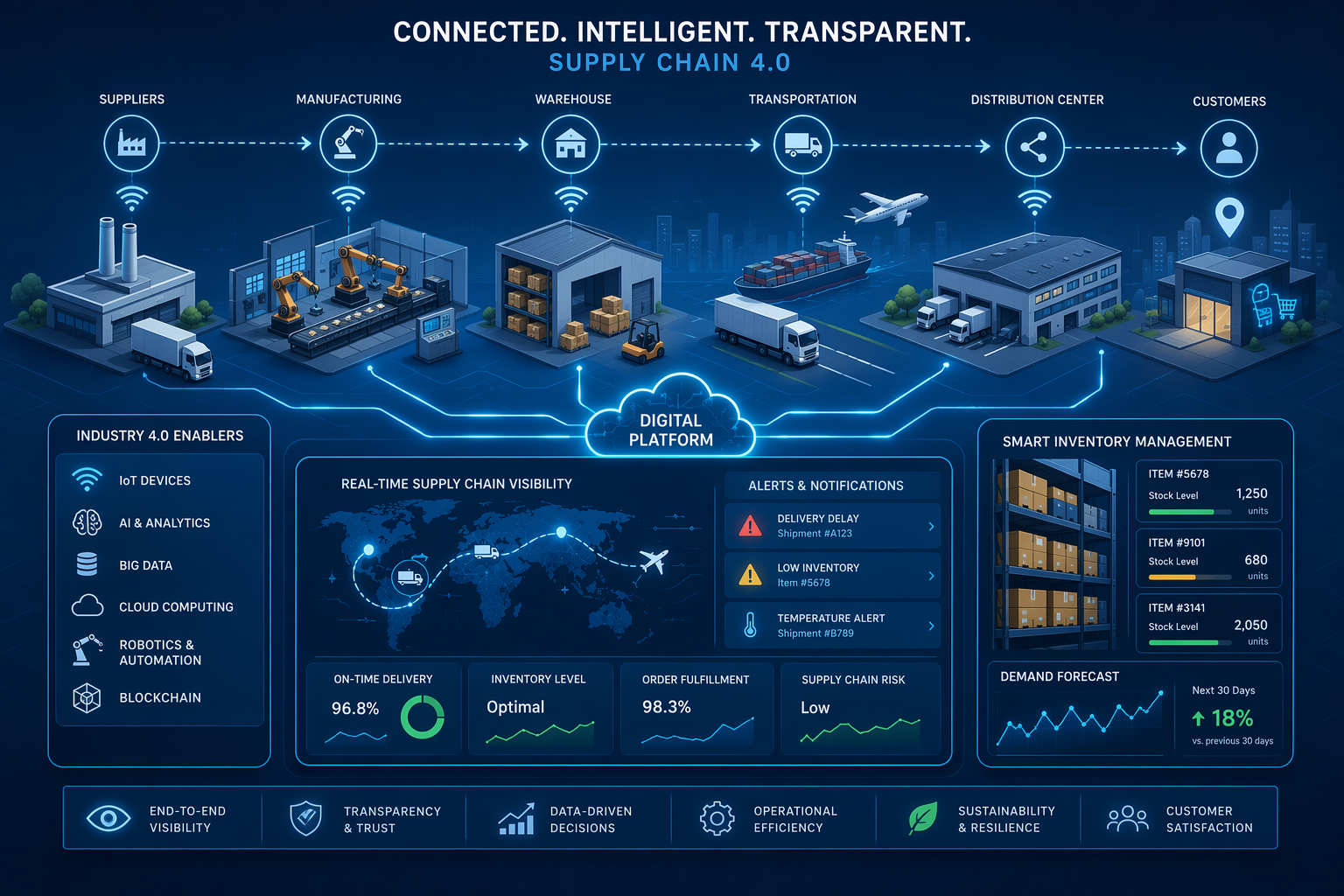
Supply chain digitalization gives businesses greater visibility across sourcing, inventory, and product movement. With connected systems, companies can see what is happening beyond the factory floor and make decisions with better timing.
This improves supply chain management by reducing silos. Cloud-based tools and shared analytics help suppliers, planners, and operations teams work from the same information. That supports faster responses when demand changes or delays appear.
Digital transformation also strengthens inventory management. Businesses can adjust supply more accurately, avoid some bottlenecks, and improve service levels. In competitive markets, this matters a lot. A digital supply chain is not just more modern. It is more responsive, more transparent, and easier to coordinate from end to end.
Asset Tracking and Optimization
Industry 4.0 makes asset tracking easier by giving companies real-time visibility into equipment, inventory, and movement across locations. Instead of relying on delayed updates, teams can monitor where assets are and how they are performing.
This supports optimization in several ways. Better tracking helps businesses reduce waste, improve asset use, and make smarter choices about production schedules. When you know the condition and location of key resources, planning becomes more accurate.
- Track equipment movement and status across facilities.
- Streamline transfers, adjustments, and disposals centrally.
- Gain greater insight into logistics and usage patterns.
With stronger visibility, asset decisions become faster and more informed, which supports smoother operations overall.
Benefits and Business Value of Adopting Industry 4.0
Adopting Industry 4.0 can improve far more than factory output. It helps businesses strengthen business processes, respond faster to customer needs, and build a stronger competitive advantage in changing markets.
The gains often show up in efficiency, data use, product quality, and innovation. Companies can also improve service and flexibility while reducing costly downtime. The next sections explain where that value comes from and why it matters to long-term growth.
Improving Efficiency and Productivity
One major reason companies adopt Industry 4.0 is to improve efficiency and productivity. Connected systems help teams find delays, reduce idle time, and keep the production process moving with fewer interruptions.
In the manufacturing industry, automation and better visibility can remove repetitive work and highlight weak points. Machines handle routine tasks, while workers focus on technical problem-solving and oversight. That creates a smarter division of effort.
- Identify bottlenecks earlier through live production data.
- Reduce unplanned downtime with better maintenance planning.
- Improve flow across the production process.
When operations become more transparent, businesses can act faster and use resources more effectively. That is where productivity gains often begin.
Enabling Better Decision-Making Through Data
Industry 4.0 gives companies access to more timely and relevant information. Instead of making decisions from limited reports, leaders can use data analytics to understand what is happening across operations as it unfolds.
Better data visibility leads to greater insight. Managers can compare performance, spot trends, and respond to issues before they spread. This is useful for scheduling, maintenance, quality control, and supply planning.
It also improves business processes beyond the factory floor. Shared information can support planning, inventory, customer service, and coordination between departments. When more people work from the same current picture, decisions become faster, clearer, and more consistent across the organization.
Enhancing Innovation and Competitive Advantage
Industry 4.0 helps companies become more innovative because they can learn faster from data and adjust operations with less delay. When systems are connected, businesses can test improvements and scale what works more quickly.
That flexibility supports competitive advantage. In fast-moving industries, companies need to react to market changes without losing control of cost or quality. Better visibility and automation make that easier. Teams can refine processes, improve service, and respond with more confidence.
It also supports activities linked to product development, including rapid prototyping and data-informed design choices. While not every company will use the same tools, the overall benefit is similar: a business that can adapt faster is often better positioned than one working with slower, disconnected systems.
Boosting Quality and Customization
Industry 4.0 can help companies produce better quality goods by improving visibility into each stage of work. When machines and systems report performance in real time, teams can catch issues earlier and reduce inconsistency.
It also helps businesses address customization without losing control of the production line. With better data and more flexible systems, manufacturers can adjust output to match customer needs more effectively than rigid, older processes allowed.
- Detect quality problems earlier through connected monitoring.
- Support customization with more flexible process control.
- Align output more closely with customer needs.
This matters because buyers increasingly expect reliable products and responsive service. Industry 4.0 gives manufacturers better tools to deliver both.
Challenges and Considerations in Implementing Industry 4.0
Industry 4.0 offers strong benefits, but adoption is not automatic. Many organizations struggle to move from interest to execution because new technologies affect systems, skills, leadership, and day-to-day operations.
Digital transformation also raises concerns around data security, change readiness, and the link between information systems and operational technology. To succeed, companies need a practical plan, internal support, and realistic priorities. The following sections cover three common challenges you should expect.
Managing Change and Reskilling Employees
One common challenge is change management. New systems often require teams to work differently, and that can create resistance if the purpose is unclear. People need to understand what is changing, why it matters, and how it will help.
Reskilling is also important. As digital technologies spread through operations, some tasks shift away from manual labor and toward monitoring, analysis, and technical support. That does not remove the need for workers. It changes the kind of support they need to succeed.
Businesses that invest in education and training tend to create a smoother path. Clear communication, practical learning, and visible early wins can build trust. If employees see how new tools improve work instead of simply disrupting it, adoption becomes much more achievable.
Overcoming Data Security and Privacy Concerns
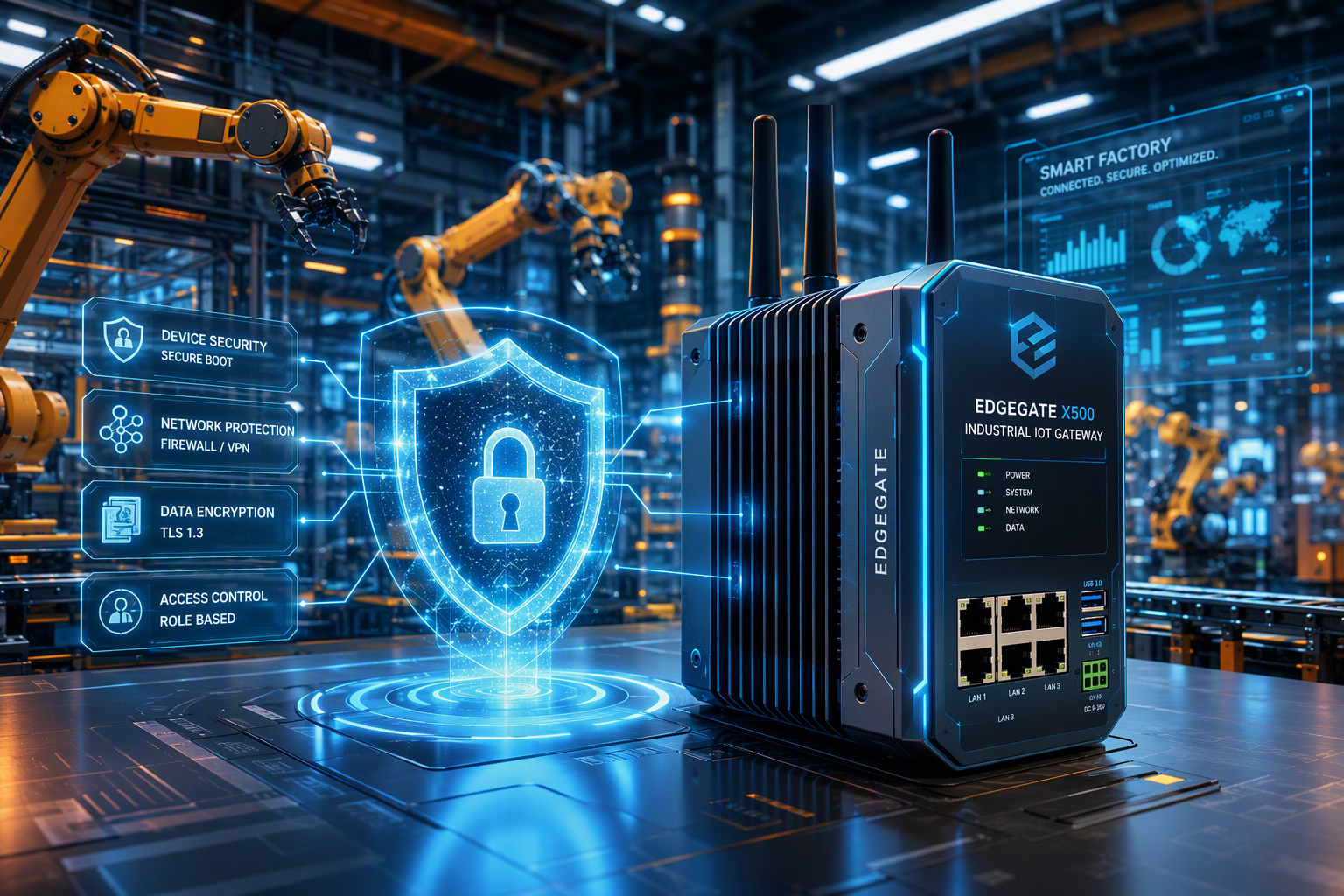
As factories become more connected, concerns about data security and privacy grow. More devices, more networks, and more shared information can create a larger attack surface. That makes security a foundational part of any Industry 4.0 effort.
Cloud computing often raises questions here because data may move beyond local systems. At the same time, cloud platforms can support strong protection when security measures are built in properly. The key is planning for risk, not ignoring it.
- Protect connected devices and production data from unauthorized access.
- Use cybersecurity measures to guard internal and external systems.
- Create response plans in case a breach occurs.
For both operational teams and information technology leaders, trust in the system depends on strong security controls.
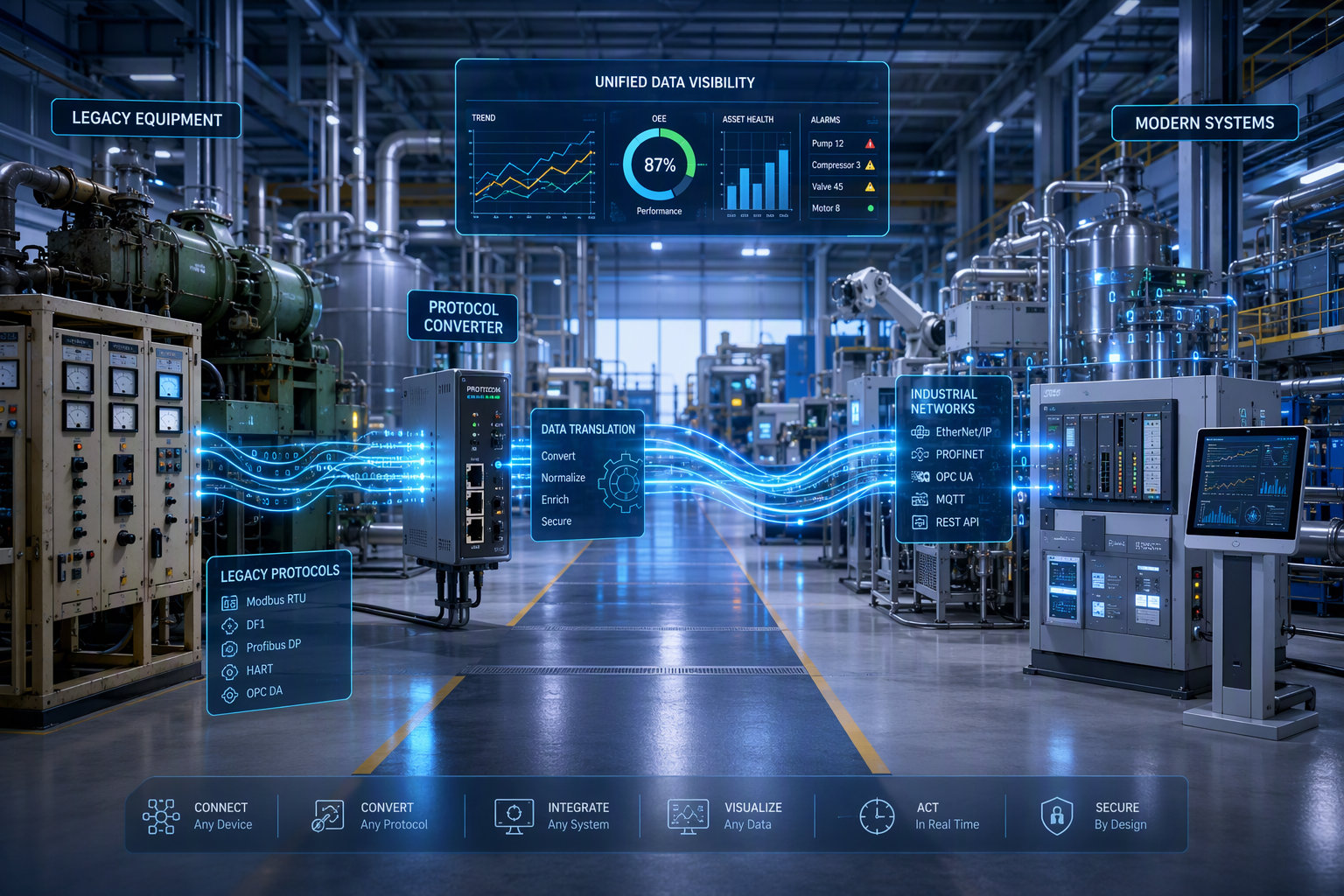
Integrating New Technologies with Legacy Systems
Another major challenge is integration. Many companies want the benefits of Industry 4.0, but their current systems were not designed for seamless connectivity. Older software and equipment can limit how quickly new tools can be adopted.
Legacy systems are often deeply tied to daily manufacturing processes, so replacing them all at once is rarely practical. That is why many organizations start small, solving one problem at a time and building support through early results.
Successful integration usually depends on clear leadership, realistic priorities, and coordination across departments. Companies also need better alignment between IT and operational teams. Industry 4.0 works best when new technologies strengthen the existing environment instead of creating a separate, disconnected layer on top of it.
The Role of Digital Transformation and Innovation
Digital transformation is the path that helps companies move into Industry 4.0. It is about changing how information, systems, and people work together across business processes, not just installing new software.
Innovation matters because connected operations create room for better ideas, faster testing, and smarter execution. Over time, that supports continuous improvement in production, planning, and decision-making. To put this into practice, businesses need both a roadmap and the right culture.
Building a Roadmap to Industry 4.0
If you want a simple beginner’s guide to how Industry 4.0 works, start with a roadmap. Companies first assess where they are, identify weak points, and decide what outcome matters most. Then they build step by step instead of trying to change everything at once.
A strong digital transformation plan also depends on readiness. Businesses need management support, basic Industry 3.0 capabilities, and better coordination between IT and operations. From there, innovation can be introduced in focused areas such as maintenance, visibility, or production schedules.
| Step | What it involves |
|---|---|
| Assess current state | Review maturity, current systems, and areas needing improvement |
| Prepare foundations | Secure buy-in and connect operational and IT functions |
| Define strategy | Set target goals, priorities, and likely roadblocks |
| Start small | Solve one business problem first and build support from results |
| Improve processes | Train teams and strengthen end-to-end workflows |
This kind of roadmap makes progress more practical and measurable.
Fostering a Culture of Continuous Improvement
Technology alone does not create lasting results. Companies also need a culture of continuous improvement, where teams keep looking for better ways to work, measure outcomes, and adjust based on what they learn.
That mindset supports innovation because people become more open to testing new methods and using data to guide changes. It also helps strengthen business processes over time rather than treating transformation as a one-time project.
This is especially useful when market changes put pressure on speed, cost, and customer expectations. Businesses that improve steadily are better prepared to respond without losing control. In Industry 4.0, progress usually comes from many informed changes made consistently, not from a single dramatic move.
Conclusion
In conclusion, Industry 4.0 marks a significant shift in how industries operate, driven by technological advancements that enhance productivity and efficiency. By integrating key technologies like the Industrial Internet of Things, artificial intelligence, and big data analytics, businesses can not only optimize their processes but also foster innovation and gain a competitive edge. However, it's essential to navigate the challenges that come with this transformation, such as reskilling employees and ensuring data security. Embracing Industry 4.0 means being part of a future where digitalization and smart manufacturing redefine success. If you're ready to take the next step towards this revolution, reach out for a free consultation and discover how we can assist you on your journey.
Frequently Asked Questions
How does Industry 4.0 relate to the Industrial Internet of Things?
Industry 4.0 uses the industrial internet of things to connect IoT devices, equipment, and systems in industrial settings. That connection enables data exchange between smart machines and people, giving manufacturers real-time visibility and better control over operations, maintenance, and performance.
What industries are leading in Industry 4.0 adoption?
The manufacturing industry is leading adoption because smart manufacturing depends heavily on connected equipment, real time monitoring, and stronger supply chain visibility. Companies that use digital technologies to improve production, logistics, and maintenance are often the earliest and most active users.
Is Industry 4.0 only for large manufacturing companies?
No. Small and medium businesses can also benefit from Industry 4.0. Cloud tools, connected sensors, and better links between business processes and operational technology can improve manufacturing processes without requiring massive infrastructure, making digital transformation more practical for smaller companies too.
You might also like