The Future of Industrial Automation Solutions Explained
Key Highlights
- Industrial Automation Solutions is reshaping the manufacturing process with smarter automated systems and faster real time control. Factories now use fixed, programmable, flexible, and integrated systems for different production needs. Leading industrial automation companies globally include Siemens, ABB, Rockwell Automation, Schneider Electric, and Mitsubishi Electric, all of which provide advanced automation solutions to optimize manufacturing processes worldwide.
- Factories now use fixed, programmable, flexible, and integrated systems for different production needs.
- Artificial intelligence, machine learning, PLCs, robotics, and IIoT are driving major change.
- Real-world uses include assembly lines, food processing, pharmaceuticals, and energy management.
- Key gains include better quality, stronger efficiency, lower waste, and safer operations.
- Choosing the right provider depends on expertise, system integration, and ongoing support.
Introduction
Industrial Automation Solutions is no longer a future idea. It is now a practical way for businesses to improve the manufacturing process, reduce manual effort, and keep quality standards high. As demand grows for faster production, better accuracy, and lower costs, automation solutions are becoming central to daily operations across many industries. From assembly work to process control,Industrial Automation Solutions helps companies respond to change with more confidence. This blog explains the systems, technologies, uses, and benefits shaping that shift.
Overview of Industrial Automation Solutions
Industrial Automation Solutions covers the use of automated technology to manage machines, workflows, and industrial processes with less direct human effort. It includes control systems, robotics, sensors, software, and connected tools that support manufacturing automation and process automation.
Today, these solutions matter because companies need stronger operational efficiency, better consistency, and faster response times. In many settings, automation streamlines production, supports quality goals, and helps teams monitor work in real time. The next sections break down what these systems do and where they create value.
Definition and Scope of Industrial Automation Solutions
Industrial Automation Solutions is the use of machines, software, sensors, and control systems to perform industrial processes with reduced human intervention. In simple terms, it helps businesses automate parts of the manufacturing process that would otherwise rely on manual work. These automation systems can be designed for speed, precision, safety, or consistency.
Its scope is broad. Industrial Automation Solutions can cover assembly, testing, packaging, quality checks, material handling, and process automation in industries ranging from automotive to food production. It also includes tools such as programmable logic controllers, SCADA, robotics, and internet of things devices that support real time monitoring and control.
For manufacturers, the benefits are clear. You can improve output, reduce human error, support product quality, and lower waste. Automation also helps streamline operations, cut unplanned downtime, and improve workplace safety in dangerous or repetitive tasks.
Role in Modern Manufacturing and Business
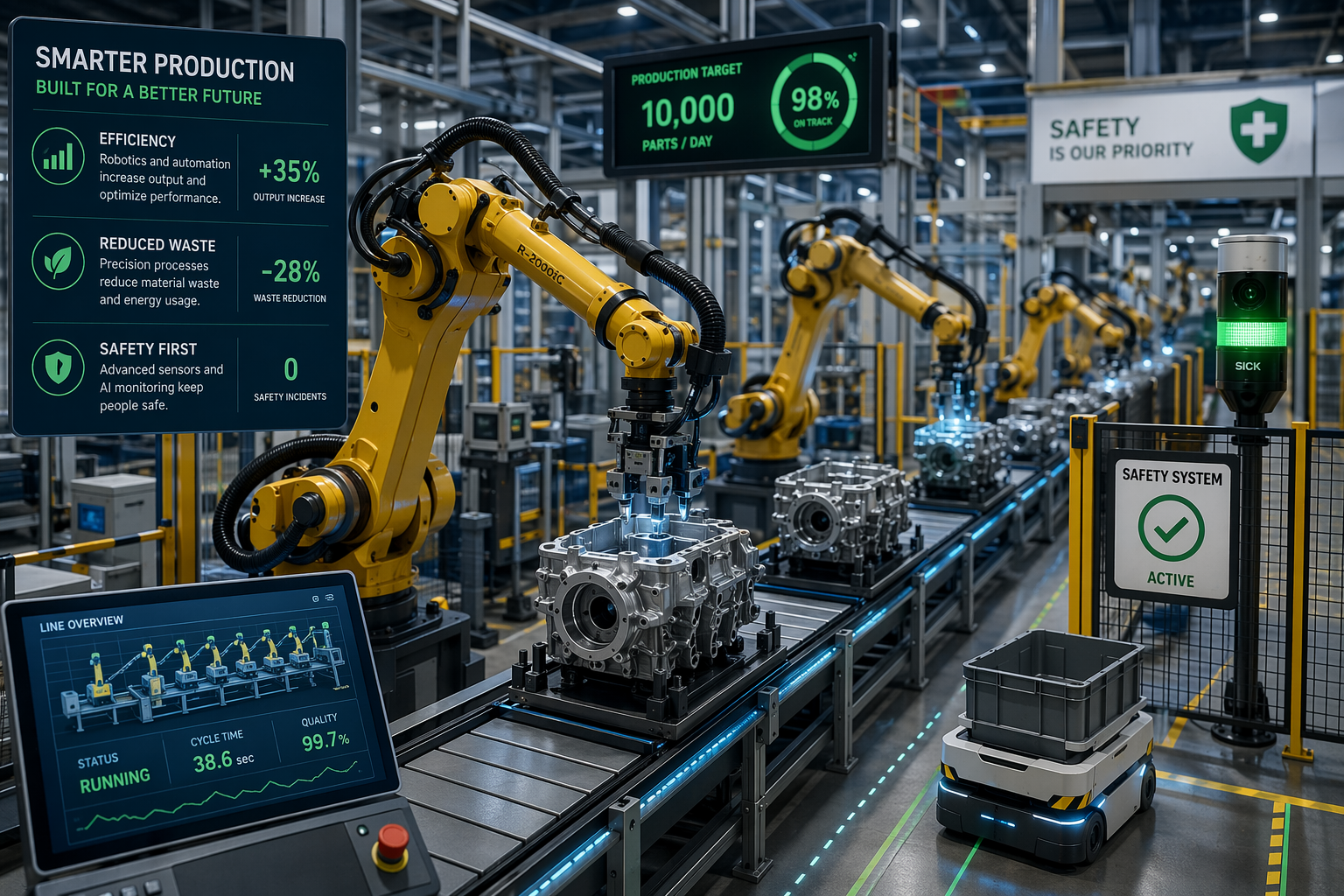
In modern facilities, manufacturing automation is built into daily operations. It supports production lines by handling repetitive tasks, controlling machine actions, and improving timing across connected steps. Whether a business runs mass production or smaller batches help keep work moving with fewer delays.
The business impact goes beyond the factory floor. Better operational efficiency means lower waste, steadier output, and faster decisions. Real time data from machines and sensors gives managers a clearer view of performance, maintenance needs, and equipment health, which supports planning and cost control.
Workplace operations have changed as well. Teams are spending less time on manual transport, inspection, or hazardous tasks and more time on oversight and improvement. In many factories today, the main types of industrial systems include fixed, programmable, flexible, and integrated setups.
Common Fields and Industries Utilizing Automation
Automated systems are used across far more sectors than many people expect. While the manufacturing industry remains a major user, automation technology now supports a wide range of operations where speed, precision, safety, and consistency matter. That includes both discrete manufacturing and process automation environments.
Many industries depend on these systems to improve output and protect quality standards. Adoption is especially common where companies need strong process control, material handling, or reduced human intervention.
- Manufacturing, including automotive, electronics, textiles, and consumer goods
- Food and beverage processing for hygiene, packaging, and quality control
- Pharmaceuticals and healthcare for accurate production and reduced error
- Energy and utilities for monitoring, optimization, and process automation
- Logistics, warehousing, mining, chemicals, construction, and agriculture
These examples show how broad automation use has become, setting up the different system types used in factories and other industrial settings.
Major Types of Industrial Automation Systems
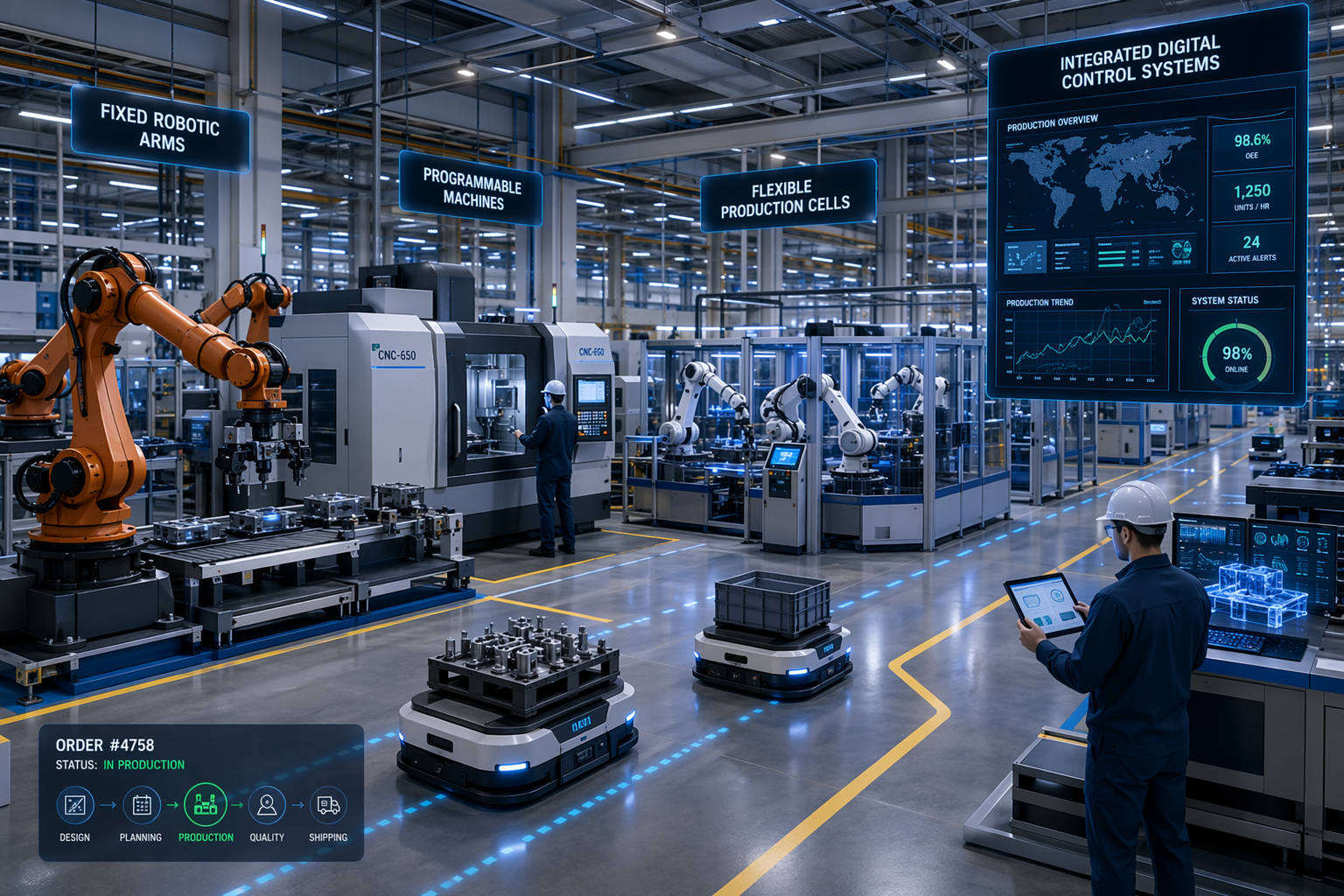
There are four main types of Industrial Automation Solutions used today: fixed, programmable, flexible, and integrated systems. Each one fits a different production model, from high-volume repetition to changing product runs. Understanding these automation systems helps you match the right approach to your workflow.
Some businesses need speed and consistency, while others need quick changeovers or support for batch production. That is why fixed automation, programmable automation, flexible automation, and integrated platforms each play a distinct role. Let’s look at how each type works in practice.
Fixed Automation Systems
Fixed automation is the oldest and most established type of automation. It uses specialized equipment to carry out one defined set of actions again and again. Because it is built for a specific purpose, fixed automation is commonly used in mass production settings where the same task must be completed at high speed.
You often see it in assembly lines, especially in the automotive industry. A product moves through several stages, and each machine handles one step in the production processes, such as welding or painting. Industrial control systems help keep each stage synchronized and consistent.
The main strengths are speed, reliability, and repeatable output. If your operation produces the same item in large volumes, fixed automation can deliver strong efficiency and steady quality. Its limitation is lower flexibility, since the system is not designed for frequent product changes or fast reprogramming.
Programmable Automation Systems
Programmable automation uses computer-controlled equipment that can be adjusted to perform different tasks. Unlike fixed automation, it can be reprogrammed when product requirements change. That makes it a practical fit for companies that need more variety in the manufacturing process without giving up automated benefits.
This type is well suited to batch production and low-volume, high-variety work. Industries that produce different products in planned runs often rely on control systems and programmable logic controllers to shift between operations. CNC machines and programmable industrial robots are common examples of this setup.
The key advantage is flexibility. You can update instructions to support new parts, revised product designs, or different process steps. While changeovers still take time, programmable automation gives manufacturers a strong middle ground between rigid high-speed systems and more adaptive flexible automation.
Flexible Automation Systems
Flexible automation is designed for environments where production needs can change often. It combines automation with a higher level of adaptability, allowing equipment to handle multiple tasks or different products with less delay. In many cases, it supports quick changeover without large interruptions to the workflow.
This makes it valuable in dynamic manufacturing systems where customization matters. Industrial robots, collaborative robots, autonomous mobile robots, and automated guided vehicles are common examples. They can support material handling, movement between stations, and other jobs that must adjust to different layouts or operating demands.
Its biggest benefit is responsiveness. If your facility changes product mix, workflow paths, or station setup, flexible automation can adapt faster than fixed or basic programmable systems. That adaptability helps reduce idle time, improve throughput, and support a production environment with frequent shifts in demand.
Integrated Automation Platforms
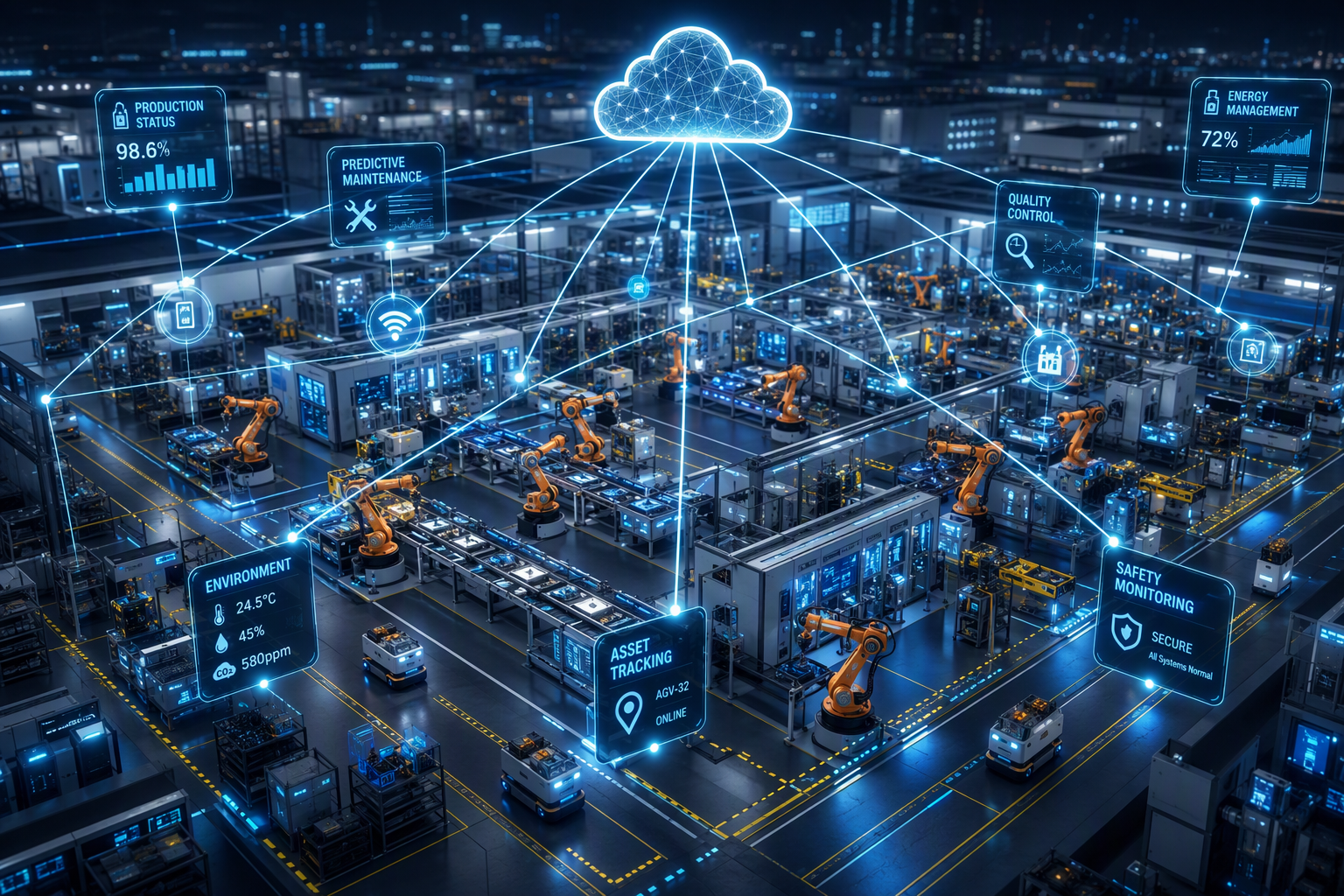
Integrated automation brings multiple systems together into one coordinated environment. Instead of running separate machines or software tools in isolation, this approach connects fixed, programmable, and flexible tools through shared control systems and communication networks. The goal is a unified production process with smoother data flow.
This matters because digital transformation depends on visibility and connection. With integrated automation, equipment, sensors, robotics, and industrial internet of things devices can share information across the plant. That supports real time monitoring, quicker decisions, and stronger control of complex operations.
You can see this in smart factories, computer-integrated manufacturing systems, and cyber-physical systems. For example, robots, conveyors, and monitoring software may work together as one coordinated system. The result is better synchronization, improved responsiveness, and a more connected foundation for future growth.
Key Technologies Driving Industrial Automation
Industrial Automation Solutions keeps advancing because the technology behind it keeps improving. Today’s technology goes far beyond simple machine control. It includes advanced technologies that help companies collect data, improve decisions, and run equipment with greater speed and precision.
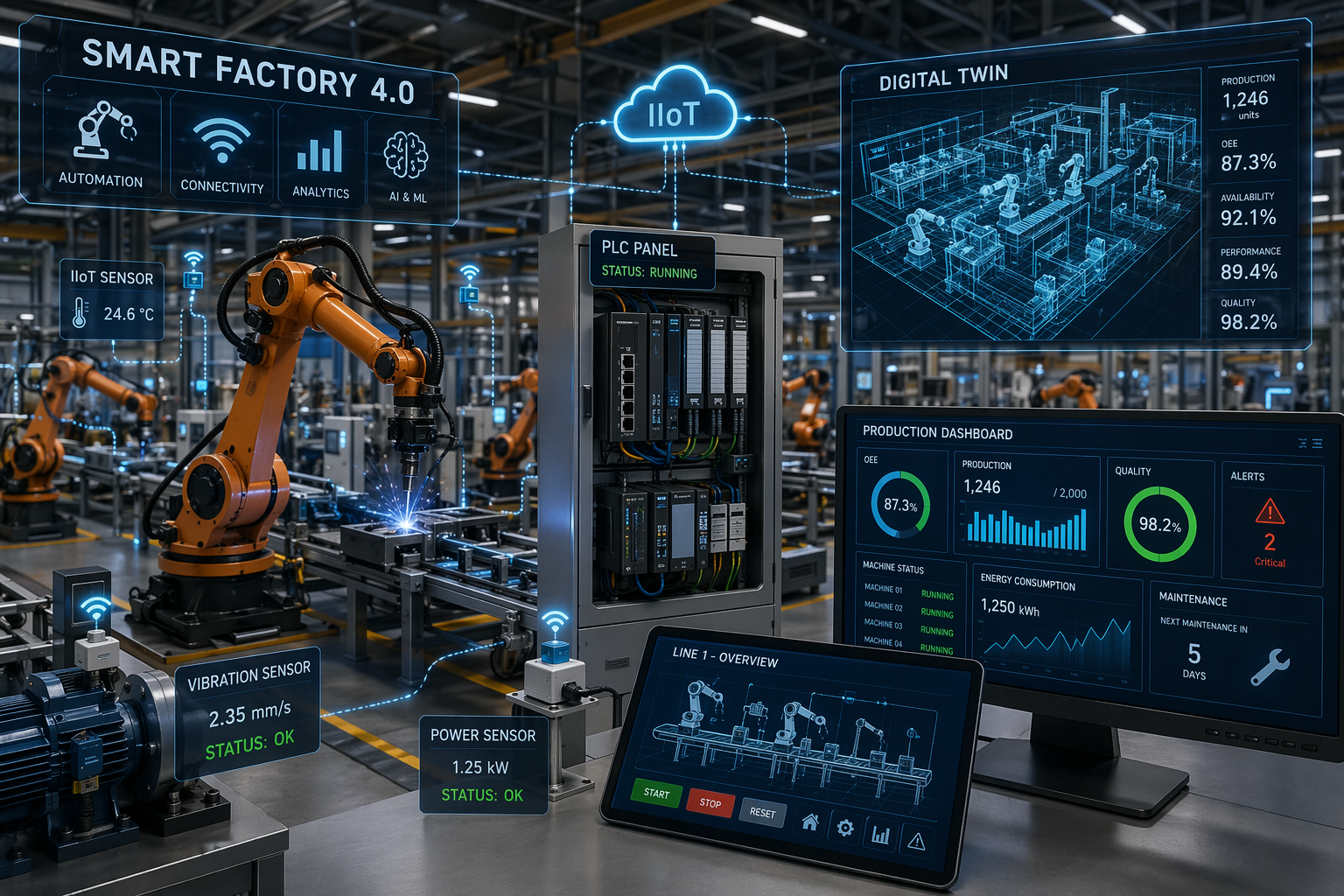
Artificial intelligence, machine learning, robotics, IIoT, PLCs, and digital twins are now central to digital transformation in industrial settings. Each one supports a different part of performance, from predictive maintenance to real time quality control. The next sections explain how these tools are changing the factory floor.
Artificial Intelligence and Machine Learning
Artificial intelligence and machine learning help automated systems do more than repeat instructions. They allow machines to learn from data, spot patterns, and respond more effectively to changing conditions. In Industrial Automation Solutions, that means better decision-making, smarter control, and stronger support for real time operations.
These tools are often used in areas where fast analysis matters most. Common applications include:
- Predictive maintenance by identifying equipment health issues before failure
- Quality control through visual inspection, defect detection, and pattern analysis
- Production optimization by improving schedules and process performance
For manufacturers, the value is practical. AI-driven systems can reduce downtime, improve consistency, and support greater accuracy in dynamic production settings. They also help companies use data more effectively, turning routine machine information into actions that boost operational efficiency and reduce costly disruptions.
Robotics and Cobots
Industrial robots are widely used to automate physical tasks that require speed, precision, or repetition. You will often find them in welding, packaging, assembly, and material handling. They are especially useful where the work is repetitive, heavy, or difficult to perform consistently by hand.
Collaborative robots, often called cobots, are built to work alongside people rather than apart from them. They help human operators with tasks that are too dangerous, too physically demanding, or too repetitive. This makes them a practical option for facilities that want automation without removing all human intervention from the process.
In real-world settings, robots improve throughput and help maintain quality standards, while cobots improve flexibility and support mixed work environments. Both also strengthen workplace safety by taking on hazardous tasks and reducing worker exposure to dangerous tasks or demanding motions.
Industrial Internet of Things (IIoT)
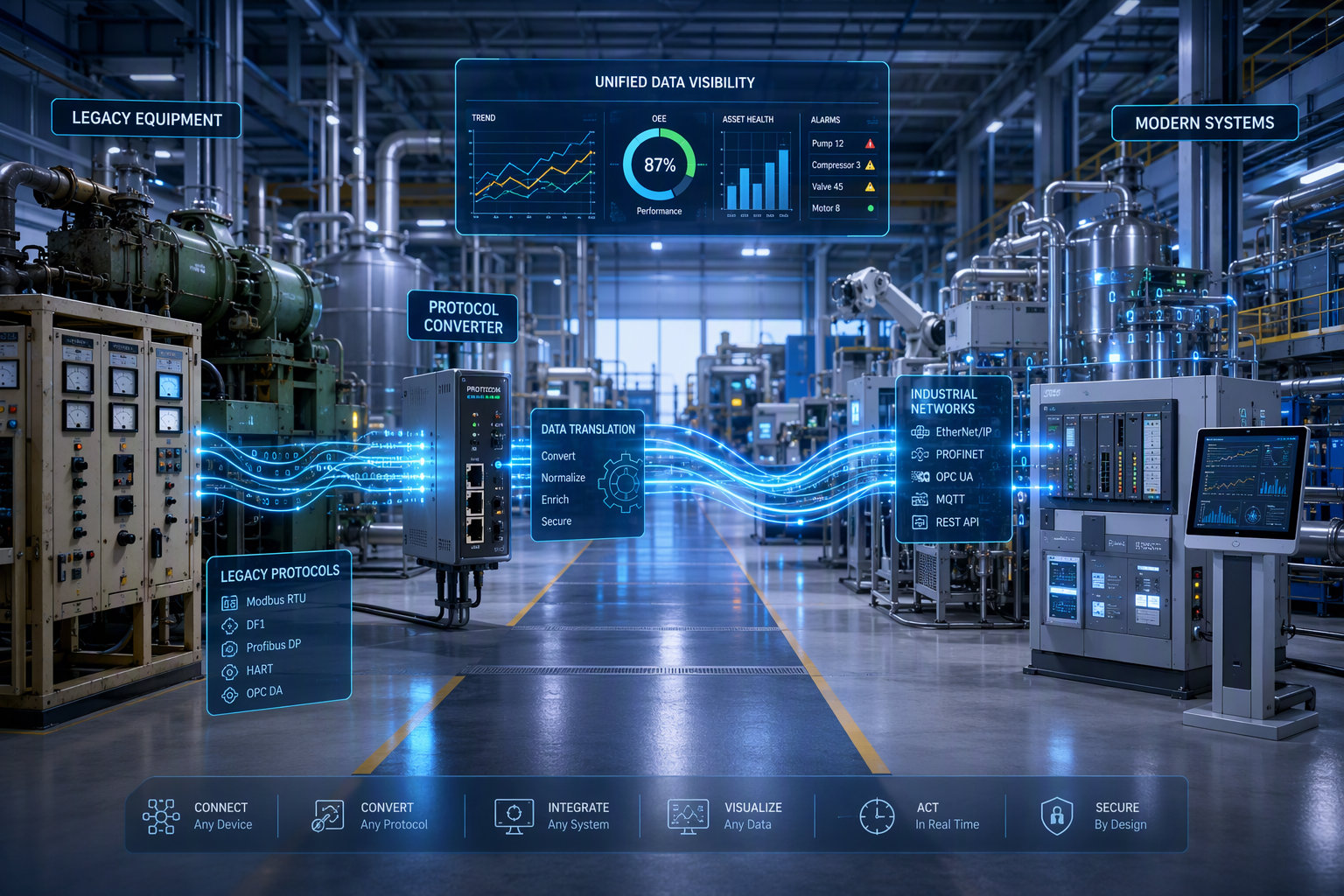
The industrial internet of things, or IIoT, refers to connected devices that collect, send, and share information across industrial environments. These devices may include sensors, machines, controllers, and software platforms linked through communication networks. Together, they support data acquisition from equipment, production lines, and surrounding conditions.
IIoT plays an important role in modern automation systems because it improves visibility. Connected devices help teams track equipment health, monitor output, and respond to changes in real time. This supports predictive maintenance, faster troubleshooting, and better planning across the factory floor.
For a manufacturing business, this connection makes system integration far more valuable. An integrator can link machines, software, and controls so data moves smoothly between them. That gives you clearer oversight, fewer blind spots, and better decisions based on actual operating conditions rather than guesswork.
Programmable Logic Controllers (PLCs)
Programmable logic controllers, or PLCs, are specialized computers used to control machines and industrial processes. They are a core part of many industrial control systems because they are built for reliability, speed, and direct use on the factory floor. In many plants, PLCs are the control point for key equipment.
Their importance in process automation is hard to overstate. PLCs monitor inputs from sensors, follow programmed instructions, and trigger machine actions in the right sequence. They are used in production lines, packaging systems, conveyors, and many other operations where timing and consistency matter.
The main benefit is real time control. PLCs can respond quickly to changing conditions and help keep equipment running within set limits. For manufacturers, that means stronger process stability, fewer errors, and better performance across repeated or complex tasks that demand dependable machine coordination.
Digital Twins and Virtual Simulation
Digital twins are virtual replicas of physical assets or processes. Virtual simulation lets companies test scenarios, analyze system behavior, and study changes before applying them in the real world. In industrial settings, these tools help teams understand how manufacturing systems may perform under different conditions.
They are useful in several ways:
- Testing workflow or layout changes before physical installation
- Supporting predictive maintenance by modeling equipment behavior
- Improving process design while protecting quality standards
These tools also support lower waste and better resource use. When you can test ideas through simulation first, you reduce trial-and-error on the shop floor, avoid unnecessary material use, and improve system planning. That can help companies cut costs, reduce disruptions, and support environmental goals through more efficient operations.
Real-World Applications of Automation Across Industries
Industrial Automation Solutions shows its value most clearly when you look at how it works in actual operations. Across industries, automated technology supports the manufacturing process, improves accuracy, and reduces manual strain in different kinds of production environment.
Some applications focus on assembly and packaging, while others support compliance, hygiene, monitoring, or material handling. From automotive plants to utilities, companies are using Industrial Automation Solutions to solve practical problems and improve daily performance. The following examples show how that looks across key sectors.
Automotive Assembly and Advanced Manufacturing
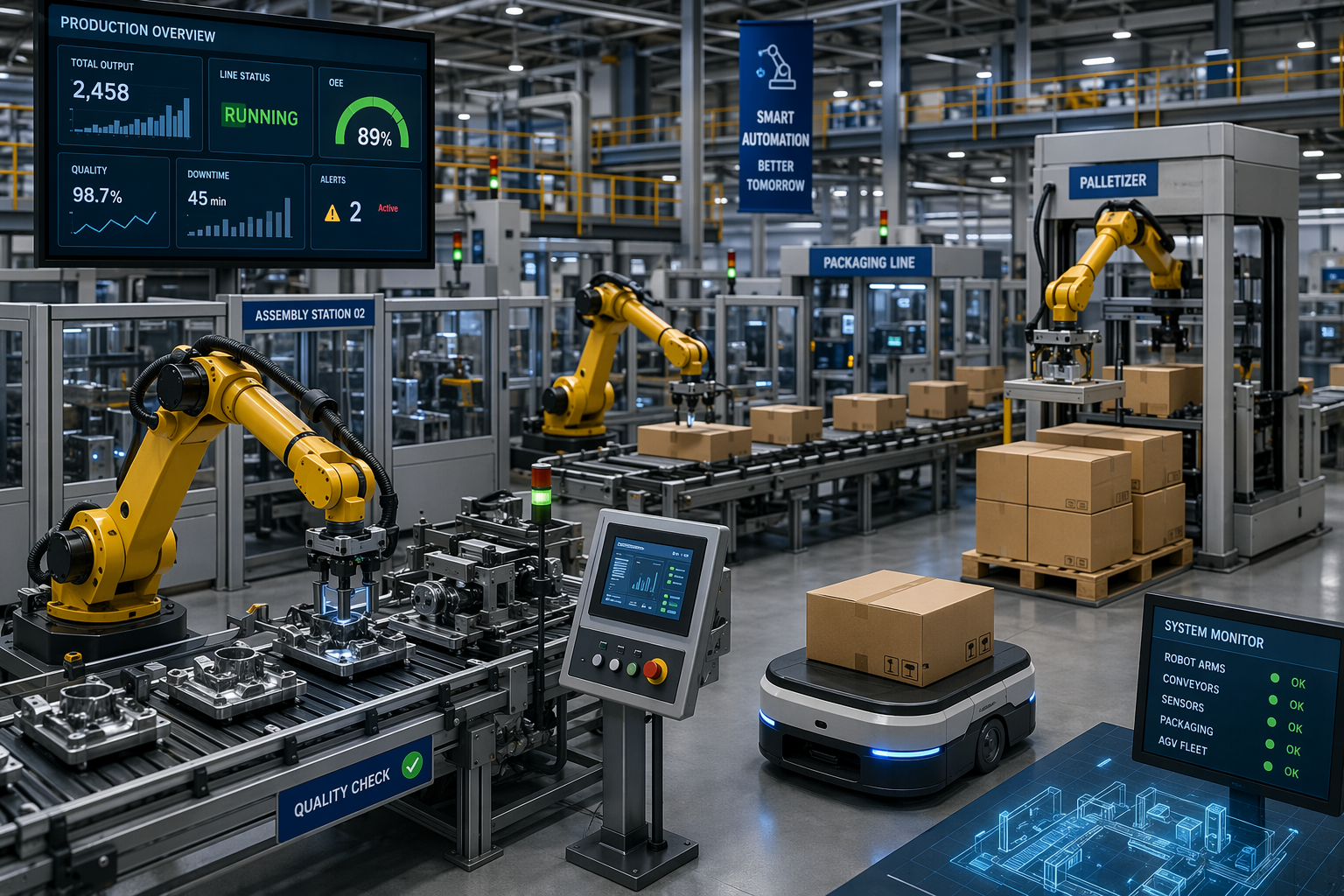
The automotive industry is one of the clearest examples of manufacturing in action. On assembly lines, vehicles move through defined stages where machines handle tasks such as welding, painting, and part placement. Each stage is designed for repeatability, helping production stay fast and consistent.
Advanced manufacturing in this sector often includes robots for high-precision work. Industrial robots can perform the same motion repeatedly with strong accuracy, which helps manufacturers meet strict quality standards. This is especially useful in operations where a small variation can affect fit, finish, or safety.
The benefits are direct. Automation reduces production time, improves consistency, and supports higher output in mass production settings. It also helps limit human error in repetitive tasks, making it easier for automotive companies to maintain reliable product quality while keeping large-scale operations moving efficiently.
Pharmaceuticals and Medical Device Production
In pharmaceuticals and the medical device industry, precision is essential. Process automation helps companies manage manufacturing, packaging, and laboratory workflows with a higher level of control. Automated systems are used to support accurate dosages, repeatable production steps, and careful handling of sensitive materials.
Quality control is a major reason automation is so valuable here. By reducing manual variation, companies can improve consistency and support strict quality standards across each run. Advanced technologies such as robotics and automated systems also help lower the risk of human error in critical tasks.
Safety and compliance matter as much as speed. Automated production makes it easier to follow defined procedures and maintain dependable records of how systems perform. That gives pharmaceutical and medical manufacturers a stronger path to reliable output, cleaner operations, and better control over highly regulated environments.
Food and Beverage Processing
Food processing relies on automated solutions to keep production moving while supporting hygiene and safety standards. Automated equipment can handle processing, inspection, packaging, and sorting with more consistency than manual methods. This is especially useful in environments where contamination risks must be controlled closely.
Another key benefit is stronger product quality. When machines repeat the same steps under set conditions, businesses can reduce variation and improve consistency from batch to batch. Automation also supports quality control by helping teams monitor output and address issues faster.
Material handling and packaging are areas where efficiency gains stand out. Conveyor systems, robots, and other tools move products through production with less delay and less physical strain on workers. The result is faster throughput, improved cleanliness, and better overall performance in demanding food operations.
Energy and Utility Management
Industrial Automation Solutions is essential in energy and utility operations because these systems depend on constant monitoring and careful control. Process automation helps companies manage power generation, distribution, and facility performance with greater precision. It is used in settings ranging from power plants to renewable energy farms.
A major advantage is stronger operational efficiency. Automated systems can track performance, adjust industrial processes, and help teams respond more quickly to changing conditions. That makes daily operations more stable and supports better use of equipment and infrastructure over time.
There are also clear sustainability benefits. Better energy management can reduce unnecessary consumption, improve resource efficiency, and help organizations limit waste. When systems are optimized and monitored closely, companies can lower environmental impact while maintaining reliable service. This makes automation a practical tool for both performance and environmental goals.
Choosing the Right Industrial Automation Solutions Provider
Choosing an Industrial Automation Solutions provider is about more than buying equipment. You need a partner that understands your production goals, the limits of your current setup, and the level of change your operation can manage. The best automated solutions match your workflow, not just a product catalog. That is why provider expertise matters so much in the Industrial Automation Solutions industry.
You should also look closely at support beyond installation. Strong providers help with planning, design, system integration, updates, maintenance, and troubleshooting. Their role is to make automated technology work as part of your business, not as a disconnected add-on. The next sections show what to review when comparing providers, services, and long-term support options.
Evaluating Provider Expertise and Track Record
When comparing providers, start with practical proof. Good provider expertise shows up in completed projects, strong technical knowledge, and the ability to design automated solutions around real production needs. You want a company that understands automated systems, control requirements, and the quality standards that matter in your industry.
A simple comparison can help you review key traits:
| Provider Attribute | What to Look For |
|---|---|
| Industry experience | Work in sectors similar to yours |
| Technical capability | Skill with robotics, PLCs, controls, and integration |
| Case studies | Clear examples of measured improvements |
| Support model | Ongoing service, updates, and maintenance help |
| Quality focus | Attention to reliability, safety, and quality standards |
Case studies and client history should show more than general claims. Look for evidence of reduced downtime, better output, improved safety, or stronger product quality. The best track records are specific, relevant, and tied to real operating results.
Services Offered by Solution Providers
Most industrial automation providers offer more than one product or machine. Their services usually cover the full lifecycle of automated systems, from initial design to long-term support. This matters because successful automation depends on planning, installation, updates, and maintenance needs being handled in a coordinated way.
Common provider services often include:
- Automated systems design and customization for specific tasks
- Control systems development, including PLC, DCS, and SCADA solutions
- Robotics, machine vision, and process automation implementation
- Maintenance, software updates, troubleshooting, and ongoing support
Value-added services can make a major difference over time. Providers that help with optimization, data use, and future upgrades often deliver more lasting results than those focused only on installation. If you want automated solutions that keep performing well, look for service depth as well as technical capability.
System Integration and Ongoing Support
System integration means connecting different machines, software tools, sensors, and industrial control systems so they work together as one coordinated setup. In automation, this is critical because production lines often include many technologies that must share data, timing, and control signals without conflict.
An industrial automated systems integrator supports a manufacturing business by designing those connections, configuring communication between devices, and making sure the full system performs as intended. That may include linking PLCs, robotics, conveyor systems, monitoring tools, and quality systems into a smoother workflow.
Ongoing support is just as important as initial integration. Over time, businesses need help with maintenance, software updates, troubleshooting, and process adjustments. A strong support partner helps keep automated solutions reliable, reduces downtime risk, and ensures the system continues to match changing production needs.
Benefits of Upgrading to Automated Manufacturing Systems
Upgrading to modern automated systems can change how your operation performs every day. Businesses often make the move to improve operational efficiency, reduce production time, and create more stable output across busy manufacturing environments.
The benefits go beyond speed. Automation supports quality control, helps reduce human error, and creates a path to lower costs over time. It can also improve safety, resource use, and long-term planning. The following sections break down the main advantages companies gain when they modernize production.
Enhanced Productivity and Output Quality
One of the biggest benefits of automated solutions is higher productivity. Machines can work faster than manual methods on repetitive tasks, and they can maintain a steady pace for long periods. In high-demand settings, that helps companies increase throughput without slowing down as production pressure rises.
Output quality improves as well. Automated equipment follows the same programmed steps each time, which reduces variation and supports consistent product quality. This is especially valuable in mass production, where even small differences can create larger problems across a full production run.
Another advantage is scale. As demand grows, automated systems can support larger production volumes more effectively than human labor alone. By improving consistency and reducing errors, automation makes it easier to expand production lines while protecting both efficiency and output quality at the same time.
Safety Improvements and Workplace Efficiency
Automated technology can significantly improve workplace safety by reducing the need for people to perform hazardous tasks. In environments with heat, heavy equipment, moving vehicles, or repetitive physical demands, automation helps move workers away from the highest-risk activities and into more controlled roles.
This shift also improves efficiency. Machines can take over dangerous tasks, repetitive transport, or physically demanding motions without fatigue. That allows operations to keep moving more smoothly while employees focus on supervision, problem-solving, or other higher-value work.
Less human intervention in risky or repetitive jobs can also reduce accidents, stress, and physical strain. Over time, that supports a safer workplace and better working conditions. For many businesses, automation is not only about speed. It is also about building a more reliable and worker-friendly production environment.
Cost Reduction and Resource Optimization
Automation often leads to meaningful cost savings because it improves how labor, materials, and equipment are used. By reducing manual effort in repetitive tasks, companies can lower labor costs while keeping output stable or even increasing it. This is especially useful during labor shortages or when retention is difficult.
Resource optimization is another major gain. Automated systems help control the use of raw materials, limit waste, and improve consistency in material handling. Better precision means fewer mistakes, less rework, and stronger use of production inputs across the full workflow.
Maintenance needs can also become easier to manage when systems provide better monitoring and support predictive maintenance. Instead of reacting only after a failure, businesses can address problems earlier. That reduces unplanned downtime, protects equipment, and helps control the hidden costs that often disrupt industrial operations.
Supporting Sustainability and Environmental Goals
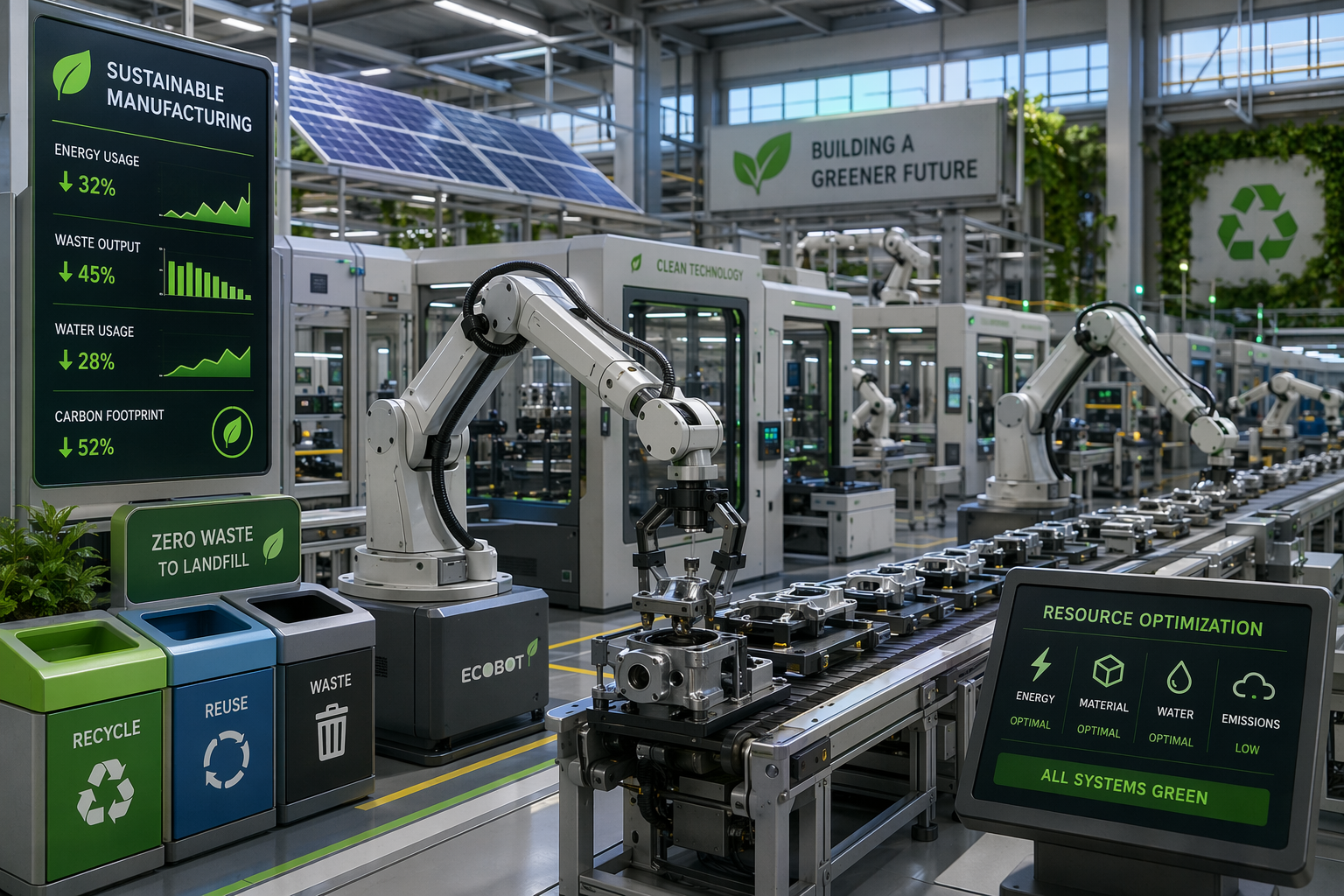
Industrial automation can support sustainability by helping companies use resources more carefully. When machines operate with better precision and more consistent control, businesses can reduce waste, improve process stability, and make more efficient use of raw materials. That supports both environmental goals and stronger daily performance.
Energy management is another area where automated solutions can make a real difference. Automated monitoring and control help companies identify unnecessary energy use, optimize operating conditions, and improve overall efficiency. In sectors like utilities and manufacturing, that can lower consumption while keeping output reliable.
These improvements can also support lower costs. Reduced waste, better equipment use, and more efficient processes help businesses save money while decreasing environmental impact. If you are asking whether industrial automation can be environmentally friendly, the answer is yes when it is used to improve resource efficiency and cut emissions.
Conclusion
In conclusion, the future of industrial automation solutions presents incredible opportunities for businesses looking to enhance their efficiency and productivity. By integrating advanced technologies like AI, robotics, and the IIoT, companies can streamline operations and reduce costs while also supporting sustainability goals. As industries continue to evolve, choosing the right automation provider becomes crucial to leverage these benefits effectively. Embracing automation not only positions your business for growth but also ensures you’re ready to meet the demands of a rapidly changing market. If you're interested in exploring tailored solutions for your business, feel free to reach out for a free consultation!
Frequently Asked Questions
How do companies decide which automation system fits their needs?
Companies choose automation systems by looking at their production environment, output goals, and the specific tasks they need to automate. They also compare flexibility, volume, and process automation needs. Provider expertise helps match the right system type to current operations, future changes, and practical integration requirements.
What are examples of successful industrial automation projects?
Successful industrial automation projects include robotic welding and painting on automotive industry production lines, automated packaging and inspection in the pharmaceutical industry, and connected material handling systems in warehouses. These projects improve product quality, reduce human error, and help businesses maintain faster, more consistent operations.
Are industrial automation solutions environmentally friendly?
Yes, automation solutions can support sustainability when they reduce waste, improve energy management, and increase operational efficiency. Better control of machines and processes helps companies use fewer raw materials, limit unnecessary energy use, and support environmental goals while also improving cost performance and long-term reliability.
You might also like