How Much Does Downtime Cost
How Much Does Downtime Cost? Calculating the True Impact on Manufacturing
When a production line goes down, you can usually hear the silence. But what you can't hear is the money evaporating. Most plant managers know downtime is expensive, but when asked for a specific dollar amount per hour, they usually offer a wild guess based purely on lost product.
Understanding the true cost of downtime is critical. It is the number you use to justify hiring more maintenance staff, upgrading obsolete PLCs, or purchasing industrial data historian software. If you underestimate it, you’ll never get the budget to fix your problems. Here are the most common mistakes manufacturing plants make when calculating the cost of downtime, and how to capture the true financial impact.
Mistake #1: Calculating Only Direct Labor and Lost Product
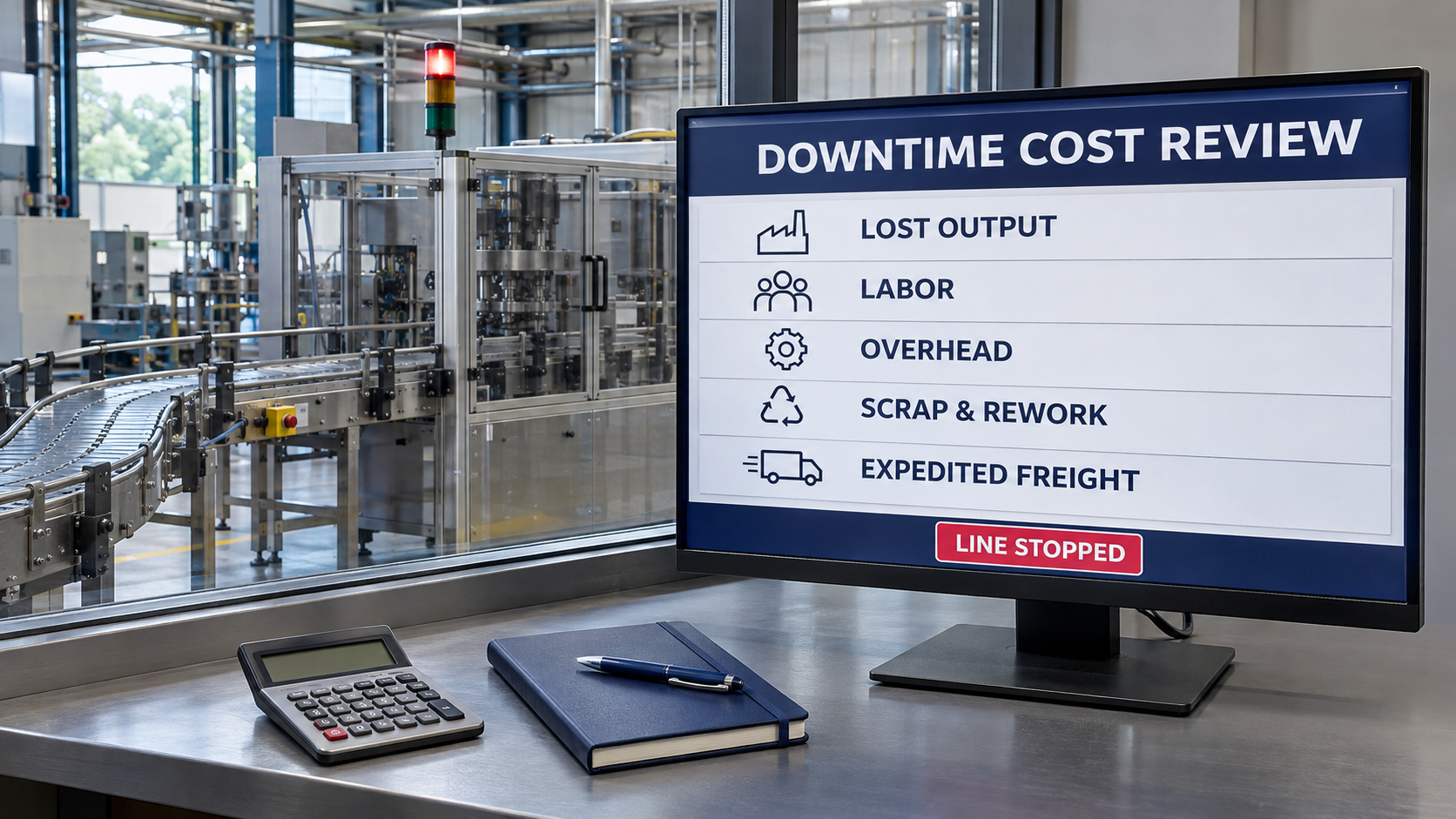
Why it happens: It’s the easiest math to do. If a line produces 100 widgets an hour at $10 each, and it takes 3 operators at $25/hour to run it, the baseline assumption is that an hour of downtime costs $1,075.What it costs: You leave massive amounts of money out of the equation, making it impossible to justify the ROI on a SCADA upgrade or automated alarm notification system.The fix: Include all fixed and variable overhead. When the machine stops, you are still paying for plant lighting, HVAC, management salaries, insurance, and taxes. The factory overhead allocation must be factored into the per-hour cost of that specific machine center.
Mistake #2: Ignoring the Cost of Scrap and Rework
Why it happens: Downtime is viewed purely as a measure of time, not quality.What it costs: Many machines, particularly in food & beverage, chemical, or extrusion processes, destroy the product currently in the machine when they stop suddenly. If an oven stops, the batch inside burns. If an extruder stops, the plastic hardens. Furthermore, starting the machine back up often generates more scrap before steady-state is reached.The fix: Track scrap correlating directly to downtime events. By using a Data Historian integrated with your SCADA, you can trend scrap rates during the 15 minutes following a restart and attribute those material costs to the downtime event itself.
Mistake #3: Forgetting the Ripple Effect on Downstream Equipment
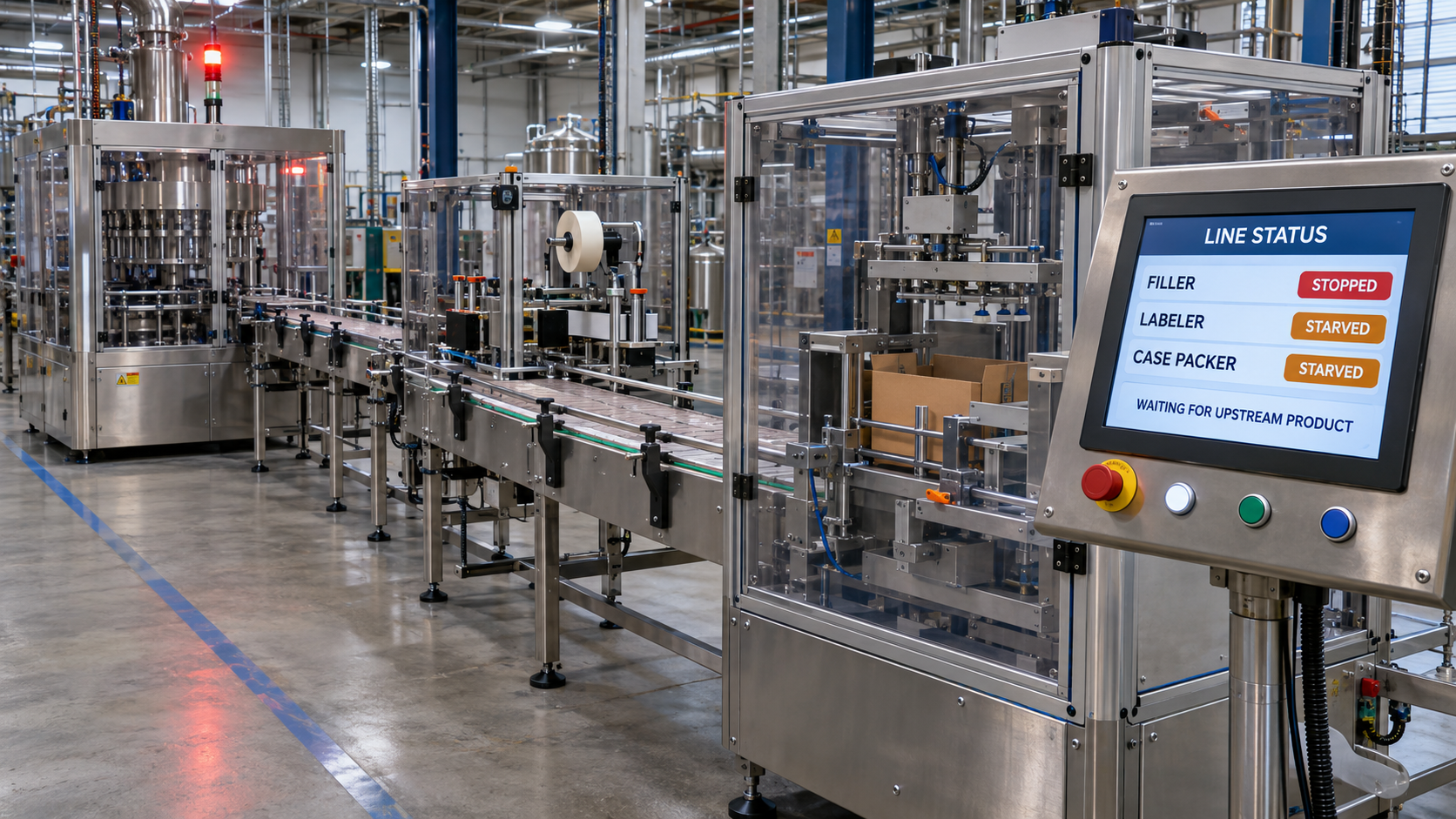
Why it happens: Teams calculate the cost of downtime isolated to the specific machine that failed (e.g., the filler).What it costs: If the filler goes down for an hour, eventually the labeler, case packer, and palletizer will starve and stop running too. You aren't just losing the output of the filler; you are paying the operators on the back half of the line to stand around with brooms.The fix: Map the interdependencies of your line in your production models. HMI and SCADA visualization tools can track exactly when downstream equipment enters a "starved" state due to an upstream failure, allowing you to capture the holistic cost of the line stoppage.
Mistake #4: Omitting Intangible Business Costs (SLA Penalties and Expediting)
Why it happens: Plant floor engineering doesn't always talk to logistics or sales.What it costs: If unplanned downtime causes a missed shipment, your company may face financial penalties from major retailers. To avoid this, logistics might ship the late product via expedited overnight freight instead of standard LTL. That extra freight cost is a direct result of the machine breaking down.The fix: Break down silos between IT and OT. Using IoT Connectors and API integration, Empowered Automation can help bridge the gap between plant floor PLCs and enterprise ERP systems, allowing management to see the exact financial correlation between factory performance and supply chain costs.
The True Cost Formula
To get a more accurate picture, use this framework:True Cost = (Lost Revenue) + (Wasted Labor) + (Overhead Allocation) + (Scrap/Material Loss) + (Expediting/Penalties)
Once you calculate this number, a $50,000 SCADA upgrade or a new Data Historian server suddenly looks like a bargain compared to losing $15,000 an hour to unplanned stoppages.
Quick Audit Checklist for Downtime Costs
- Have accounting provide the overhead burden rate per line.
- Automate scrap counting via PLCs during machine restarts.
- Identify bottlenecks to understand how one machine failing impacts the whole line.
- Track expedited shipping costs caused by production delays.

Conclusion
Downtime is not just a maintenance problem; it is a profound business problem. The mistakes outlined above artificially shrink the pain of downtime, resulting in underfunded automation and control systems. By calculating the true cost, you arm yourself with the financial data needed to modernize your plant.
Ready to Stop the Bleeding?
Empowered Automation Solutions provides the PLC programming, SCADA architecture, and Managed Services required to minimize downtime and maximize profitability. If your control systems are holding back your output, contact our Yorkville, IL office today at (630) 553-0411 or info@empoweredautomation.com.
Frequently Asked Questions
What is the average cost of downtime in manufacturing? While it varies by industry, studies frequently cite averages between $10,000 to over $250,000 per hour depending on the scale and nature of the facility (e.g., automotive vs. discrete machining).
How do I justify an automation upgrade? Calculate your true hourly cost of downtime. If an automation upgrade (like a new SCADA or PLC system) can reduce your downtime by just 5%, calculate the annual savings. The ROI is usually measured in months, not years.
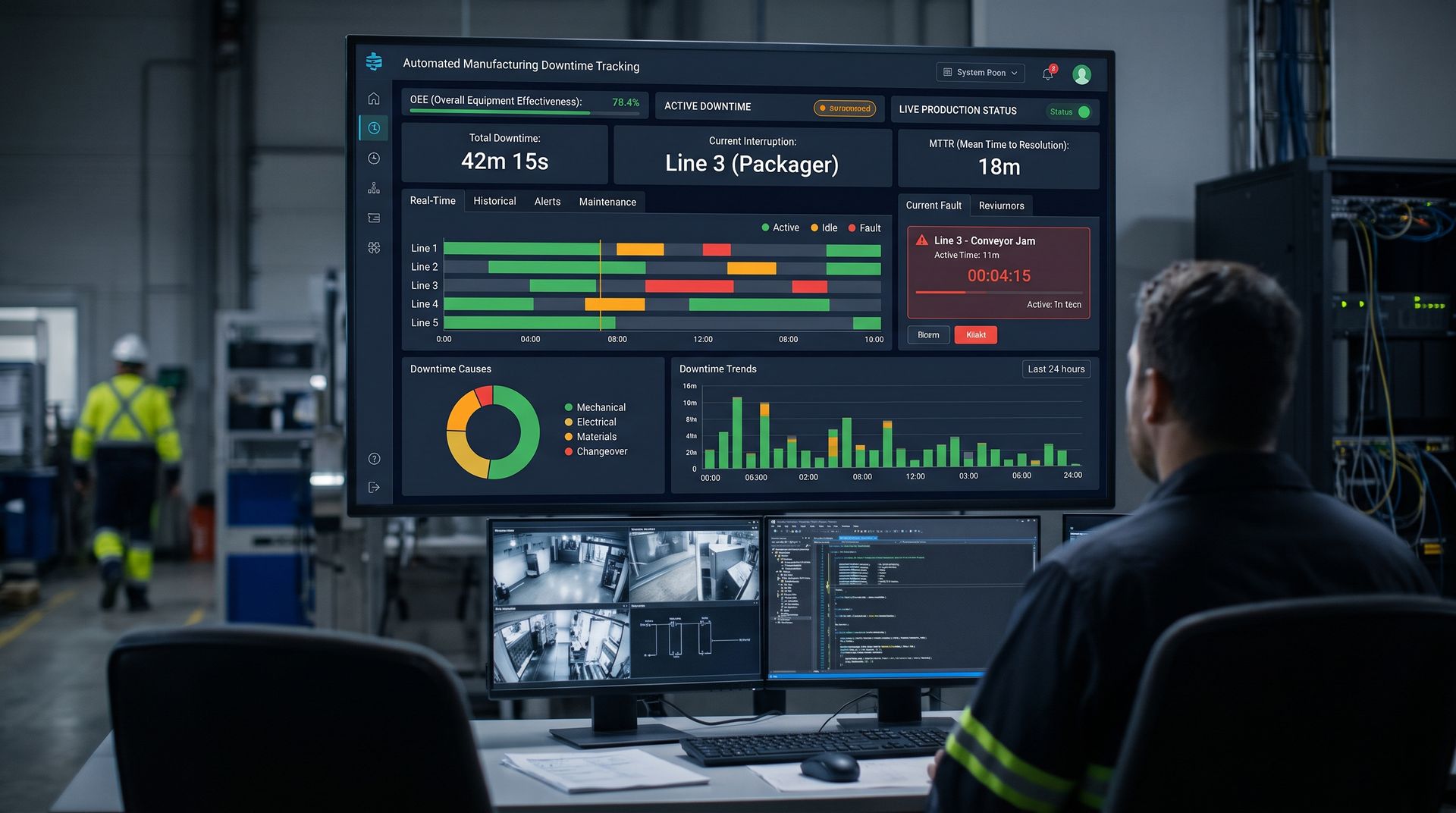
Can software help track downtime costs? Yes. Modern MES, SCADA, and Data Historians can automatically log downtime durations and tie them to financial variables in real-time, displaying live "dollars lost" metrics on control room HMIs.
You might also like