MTBF and MTTR
MTBF and MTTR: The Core Metrics of Plant Reliability and How to Optimize Them
If you walk into any manufacturing plant and ask the engineering team how reliable their equipment is, you’ll likely get a subjective answer: "Line 2 is solid, but the filler on Line 3 is a nightmare." While intuition is helpful, it doesn't justify capital expenditures or drive continuous improvement. That is where MTBF (Mean Time Between Failures) and MTTR (Mean Time To Repair) come in.
These two metrics are the foundational pillars of industrial reliability. However, calculating them accurately—and more importantly, using them to drive actual improvements—is incredibly difficult without the right automation architecture. If your plant is struggling to keep equipment running, or you are looking to upgrade your SCADA and historical data systems to get better insights, here is a deep dive into MTBF and MTTR, the most common mistakes plants make when tracking them, and exactly how to fix them.
Understanding the Metrics: MTBF and MTTR
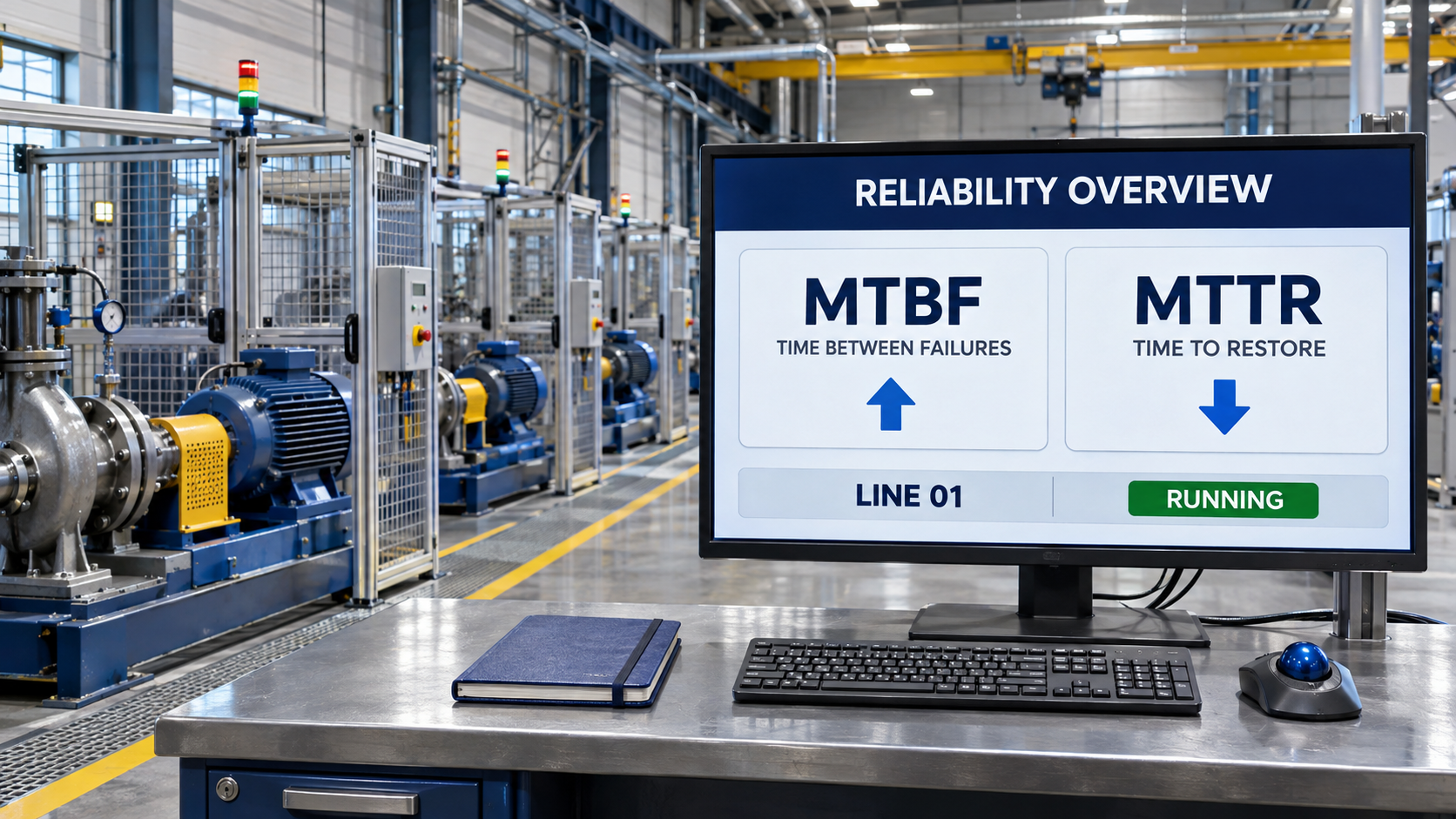
- MTBF (Mean Time Between Failures): The average time a machine operates continuously before experiencing an unplanned failure. It is calculated by dividing total operational time by the number of failures. A higher MTBF means a more reliable system.
- MTTR (Mean Time To Repair): The average time it takes to diagnose, repair, and recover from a failure. It is calculated by dividing total maintenance time by the number of repairs. A lower MTTR means your maintenance and operations teams are highly efficient at recovering from faults.
Tracking these numbers is one thing; tracking them correctly is another. Here are the most common mistakes we see.
Mistake #1: Relying on Manual Operator Input for Failures
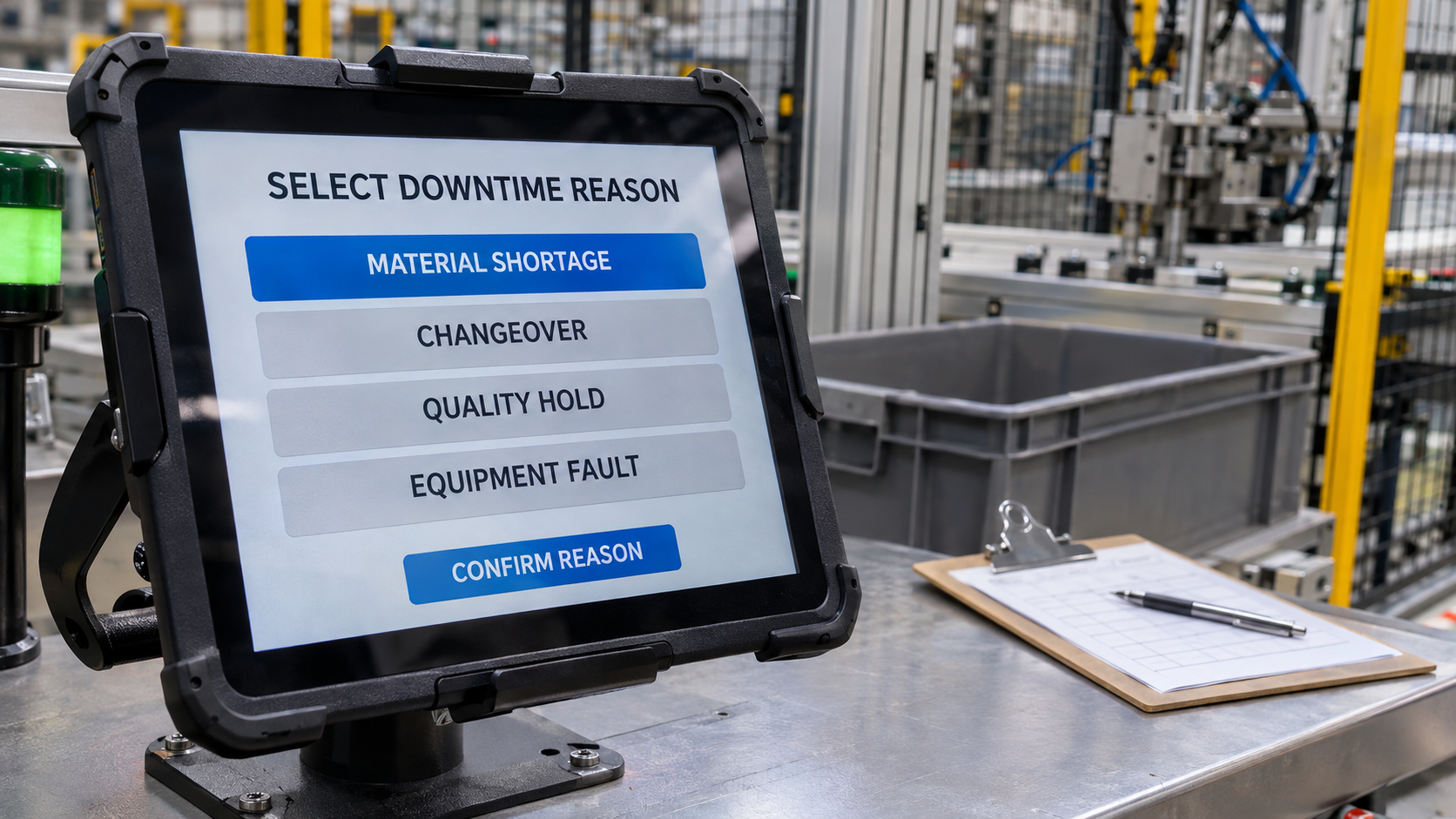
Why it happens: In many facilities, operators log downtime events on a clipboard or a whiteboard at the end of the shift, estimating when the machine went down and when it came back up.What it costs: Human memory is flawed. A 4-minute micro-stop gets forgotten, while a 20-minute jam is rounded up to 30 minutes. This creates heavily skewed MTBF data, hiding the chronic micro-stops that are quietly destroying your shift's output.The fix: Automate the downtime collection directly from the PLC. Empowered Automation Solutions integrates PLCs with SCADA systems to log the exact second a machine faults and the exact second it resumes running.
Mistake #2: Lumping Preventative Maintenance into MTTR
Why it happens: When pulling maintenance logs from an overarching CMMS system, some teams fail to separate planned maintenance (like a scheduled motor swap) from unplanned repairs (a motor blowing out mid-shift).What it costs: MTTR is supposed to measure your response to unexpected breakdowns. If you include scheduled maintenance in this metric, your MTTR will artificially inflate, making your maintenance response team look much slower than they actually are.The fix: Configure your Data Historian and reporting systems to categorize downtime by fault code. Planned stops (like sanitization or PMs) should be tagged via the HMI as "Planned" and excluded from MTTR calculations entirely.
Mistake #3: Poor Alarm Diagnostics Slowing Down MTTR
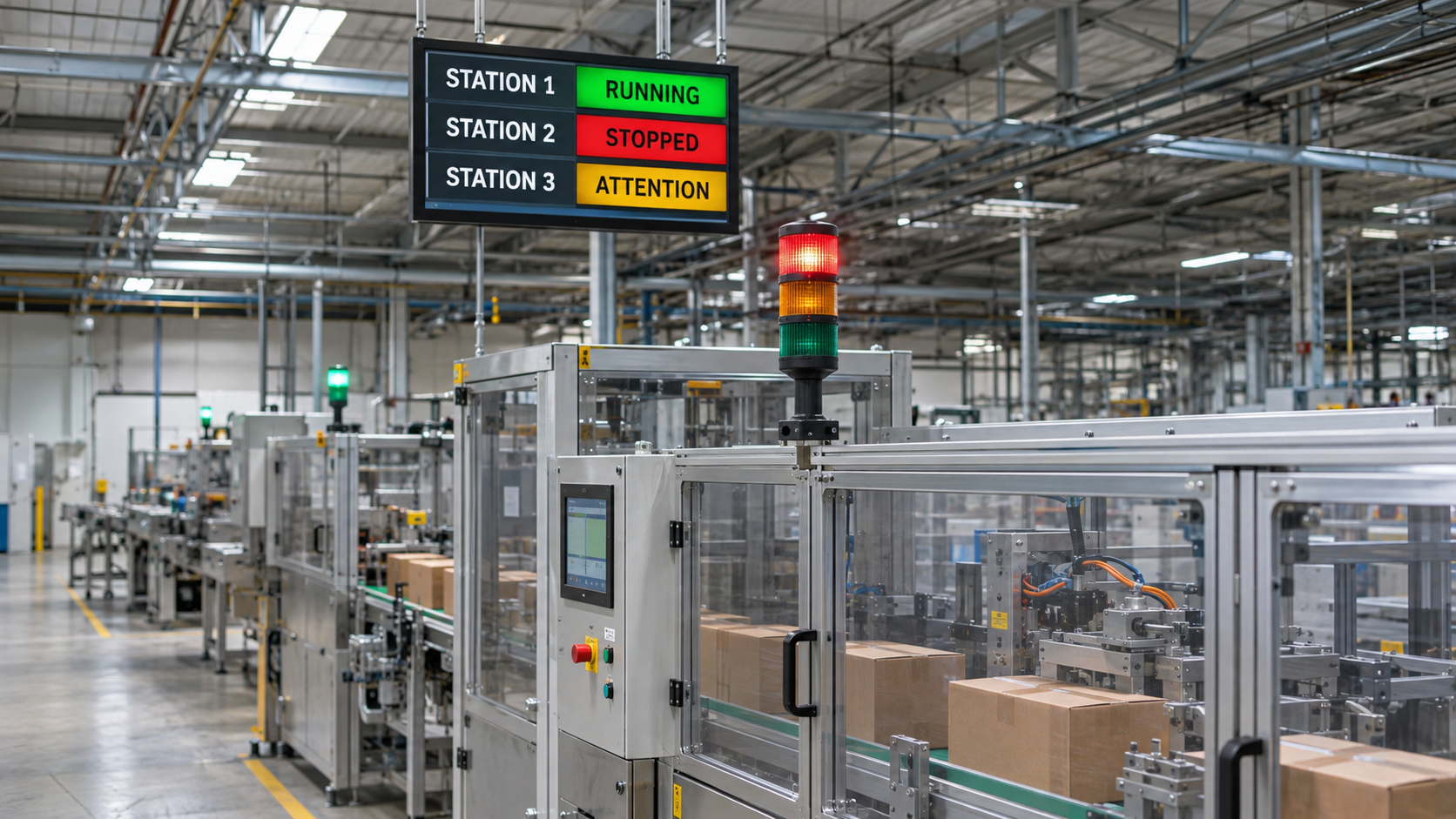
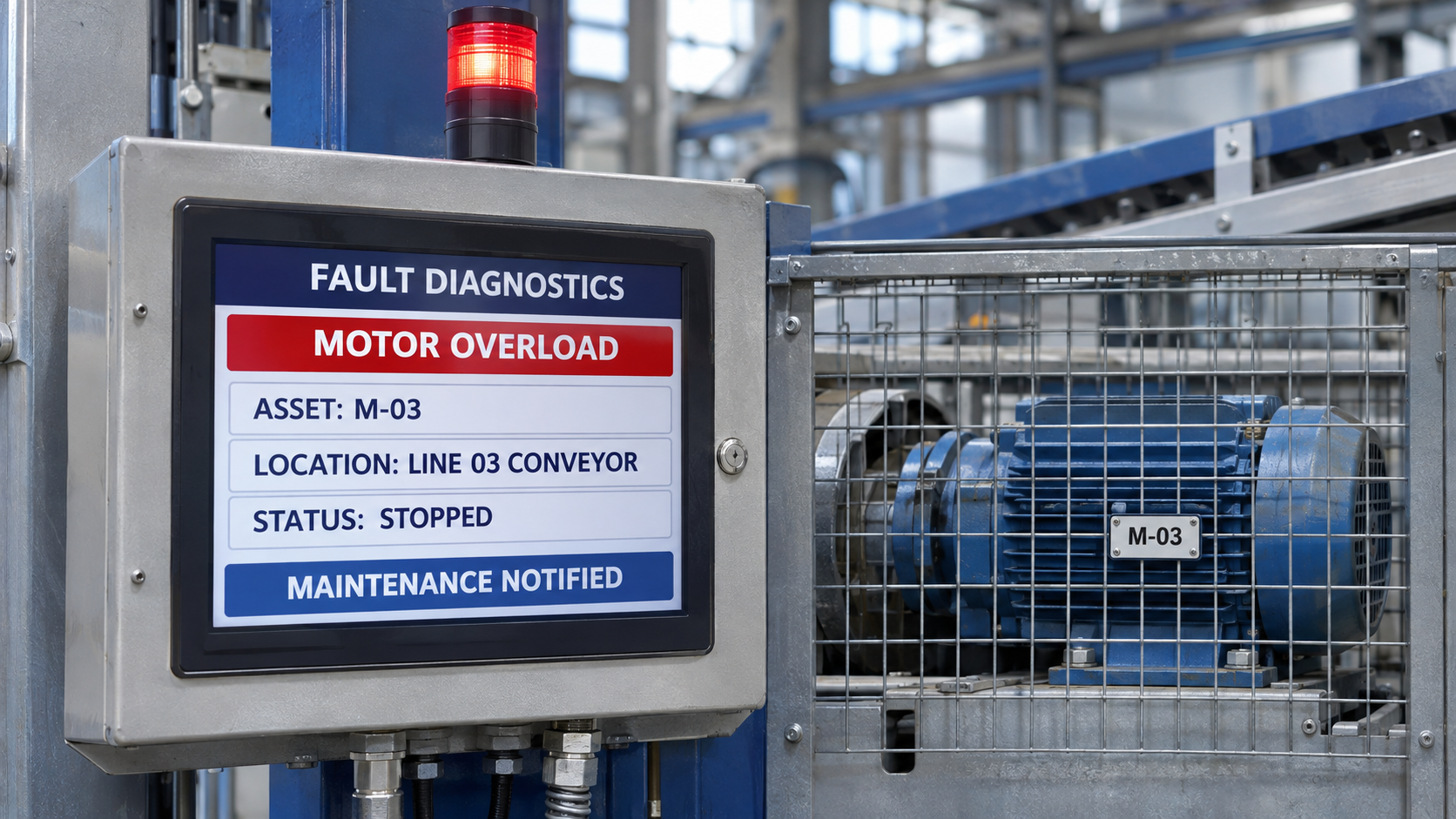
Why it happens: A machine stops, a generic "Fault" light flashes, and maintenance has to spend 20 minutes opening panels, checking drives, and tracing wires just to figure out what went wrong before they can even start repairing it.What it costs: The diagnostic phase often takes longer than the physical repair. If it takes 20 minutes to find a tripped overload that takes 30 seconds to reset, your MTTR is severely compromised by bad diagnostics.The fix: Implement robust HMI/SCADA design and Alarm Logging & Notification software. When an overload trips, the HMI should immediately display the exact device, location, and potential cause. Empowered Automation can program HMIs and setup automated text/email alerts to maintenance, cutting diagnostic time down to seconds.
Mistake #4: Ignoring "Wait Time" in MTTR Calculations
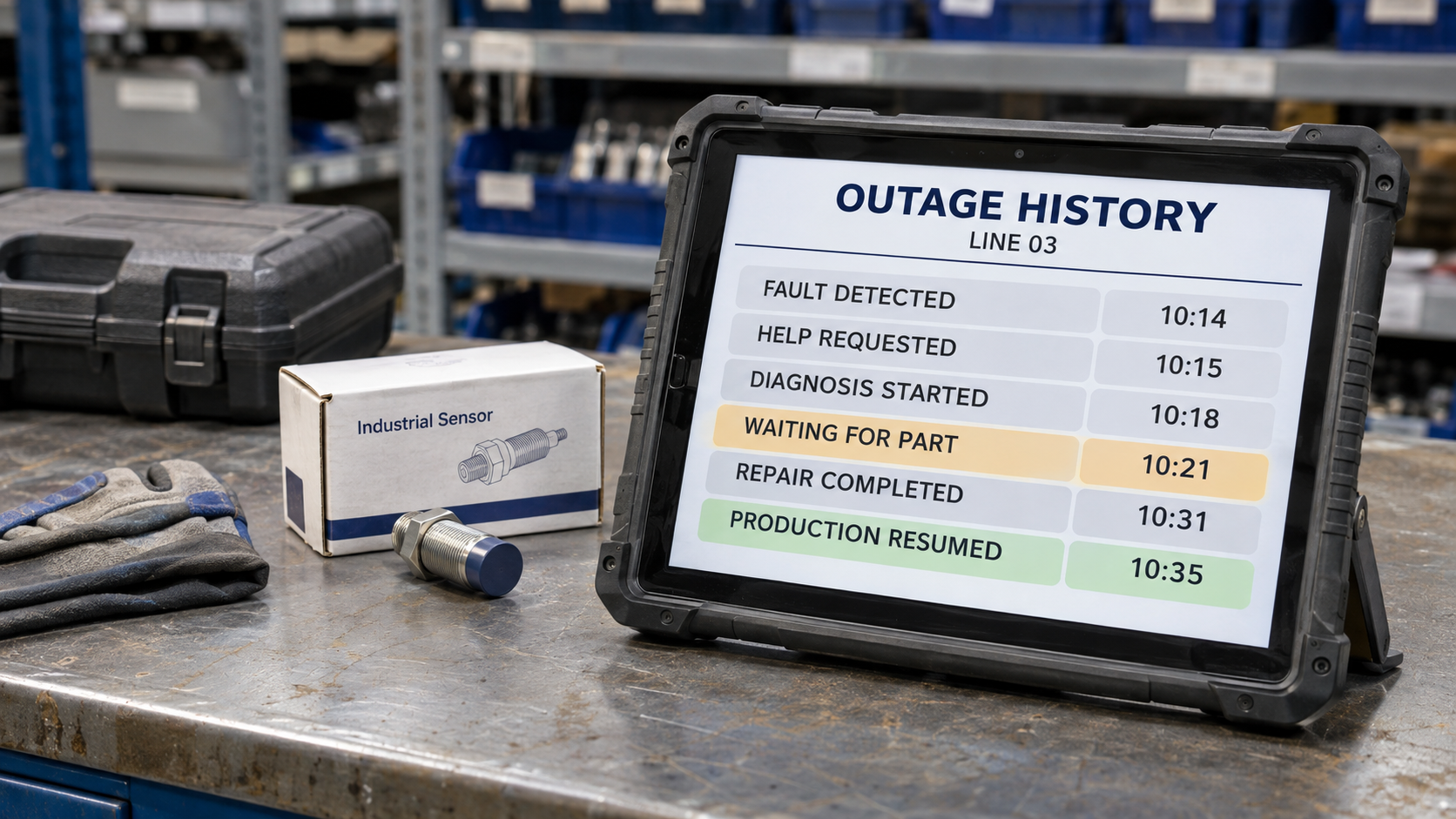
Why it happens: Maintenance measures repair time from the moment they turn the first wrench to the moment they turn the machine back on.What it costs: This ignores the time the machine sat idle while the operator tracked down the maintenance tech, or the time spent waiting for a replacement part from the crib. This leads to a false sense of efficiency.The fix: Track the entire failure lifecycle. With proper SCADA and device connectors, you can log the exact timestamp the fault occurred, the timestamp the operator requested maintenance via the HMI, and the timestamp the machine resumed.
How Automation and Analytics Improve MTBF and MTTR
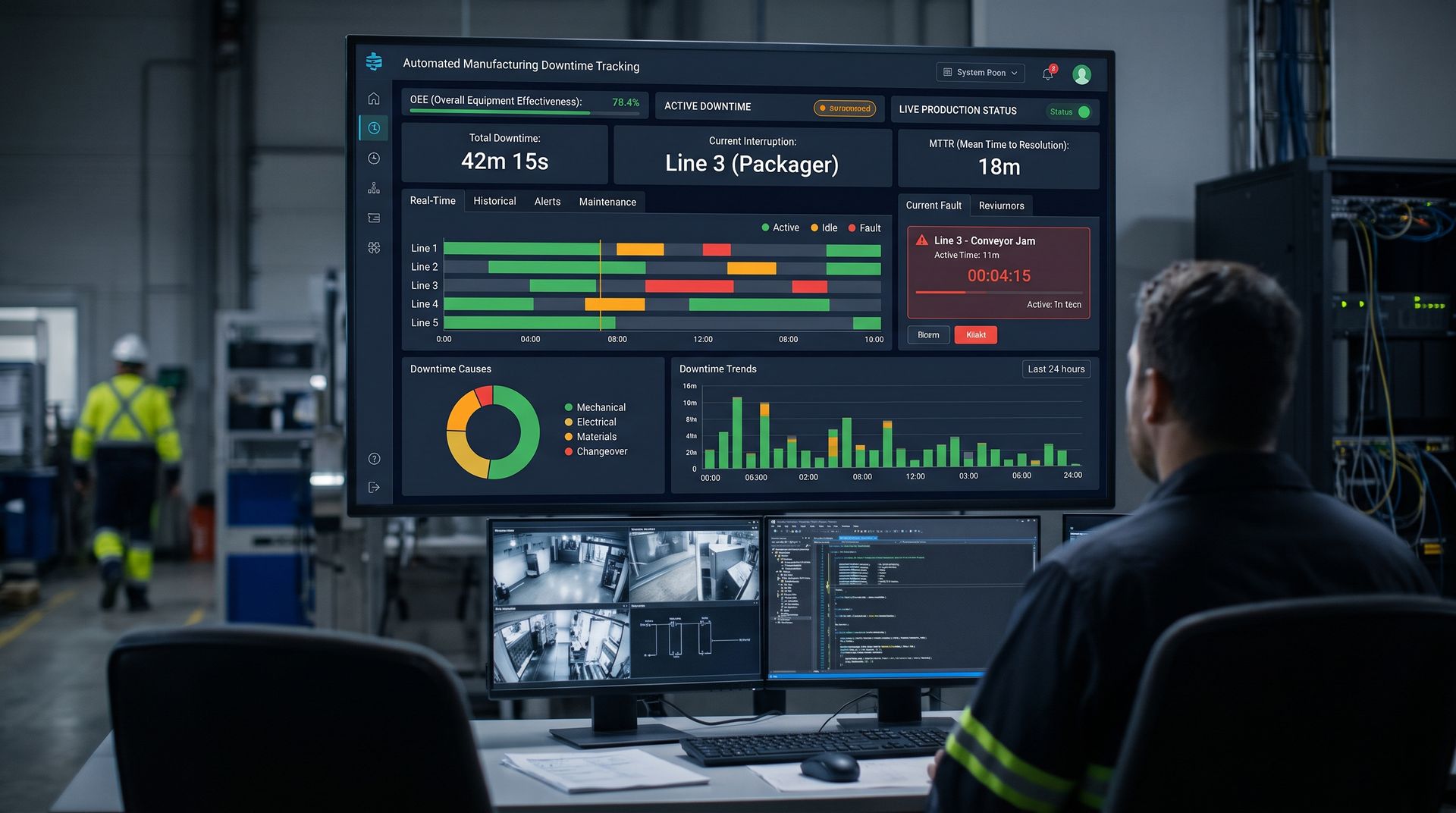
A good starting point is to treat your Data Historian and SCADA network as the foundation for reliability. When data collection is automated, engineers can trust the numbers. High MTTR often points to a lack of visualization tools or poorly written PLC logic that makes troubleshooting difficult. Low MTBF points to failing components that predictive analytics—fed by a high-resolution historian—could catch before they break.
Quick Audit Checklist for MTBF & MTTR
- Confirm that downtime is triggered by PLC bits, not manual entry.
- Verify that your HMI provides exact fault locations to reduce diagnostic time.
- Check that planned downtime is filtered out of your MTTR reports.
- Ensure critical alarms are routed directly to mobile devices via Alarm Notification software.
Conclusion
Improving MTBF and MTTR isn't about working harder; it's about having better visibility. The most predictable result of poor automation infrastructure is a plant that runs entirely on reactive firefighting. By updating your control systems and historizing your data correctly, you can shift from reactive to proactive.
Ready to Get Your Reliability Metrics Right?
Empowered Automation Solutions builds industrial SCADA, PLC programs, and Data Historian architectures for plants that need reliable, long-term process data. Whether you're dealing with cryptic alarms or blind spots in your downtime data, our engineers can help you configure systems that drive real improvements. Call us at (630) 553-0411 or email info@empoweredautomation.com to schedule a call.
Frequently Asked Questions
What is a good MTBF in manufacturing? It varies wildly by industry and equipment type. The goal is continuous improvement against your own baseline, rather than an arbitrary industry standard.
Does MTTR include diagnostic time? Yes. MTTR encompasses the entire outage period: notification, diagnosis, repair, testing, and resumption of production.
How does a Data Historian help with MTBF? A historian logs process variables (like motor current or vibration) over long periods. Engineers can analyze this historical data to identify the precursors to a failure, allowing them to perform maintenance before the breakdown occurs, thereby increasing MTBF.
You might also like