Planned Downtime Scheduling
Planned Downtime Scheduling: How to Stop Maintenance Overruns from Cannibalizing Production
Every plant manager understands that machinery requires periodic maintenance. Bearings must be lubricated, cutting knives replaced, timing belts tensioned, filter elements swapped, and safety interlocks validated. Planned downtime is the designated vehicle for this work: a controlled, scheduled pause in production designed to preserve the physical health of your assets.
The challenge is that planned downtime rarely stays inside its designated box.
A scheduled four-hour maintenance window on a critical packaging line quietly stretches into six hours because a replacement drive was missing from the parts crib. An eight-hour changeover and sanitation shutdown on a beverage filler overruns by three hours because technicians ran into unexpected electrical issues when powering the machine back up.
When planned downtime overruns its schedule, it ceases to be an organized maintenance activity—it becomes unplanned downtime wearing a different label.
These overruns blow through production schedules, create panic among supply chain planners, inflate maintenance overtime budgets, and force plant leadership to make short-sighted decisions, such as skipping the next scheduled maintenance window to catch up on lost production.
Here are the primary reasons planned downtime overruns its allotted window, what it costs your plant, and how to use modern automation and data architectures to keep scheduled maintenance strictly on track.
Mistake #1: Scheduling by Calendar Time Instead of Runtime and Cycle Telemetry
Why it happens: Maintenance intervals are typically set using calendar-based schedules dictated by generic OEM manuals: "Replace drive belts every 90 days; grease bearings every 30 days."
What it costs: Calendar schedules ignore operational reality. Over a 90-day period, a line running high-volume orders on a 24/7 schedule accumulates more than 2,000 operating hours, while a secondary line running low-volume specialty products might only accumulate 400 hours.
Calendar scheduling leads to two equal disasters: either you tear down healthy machinery prematurely (wasting money and introducing maintenance-induced defects), or you run heavily utilized equipment to the point of catastrophic failure weeks before its next scheduled calendar service date.
The fix: Drive maintenance scheduling dynamically using real-time machine run-hours and cycle counts collected directly by your PLC and Data Historian.
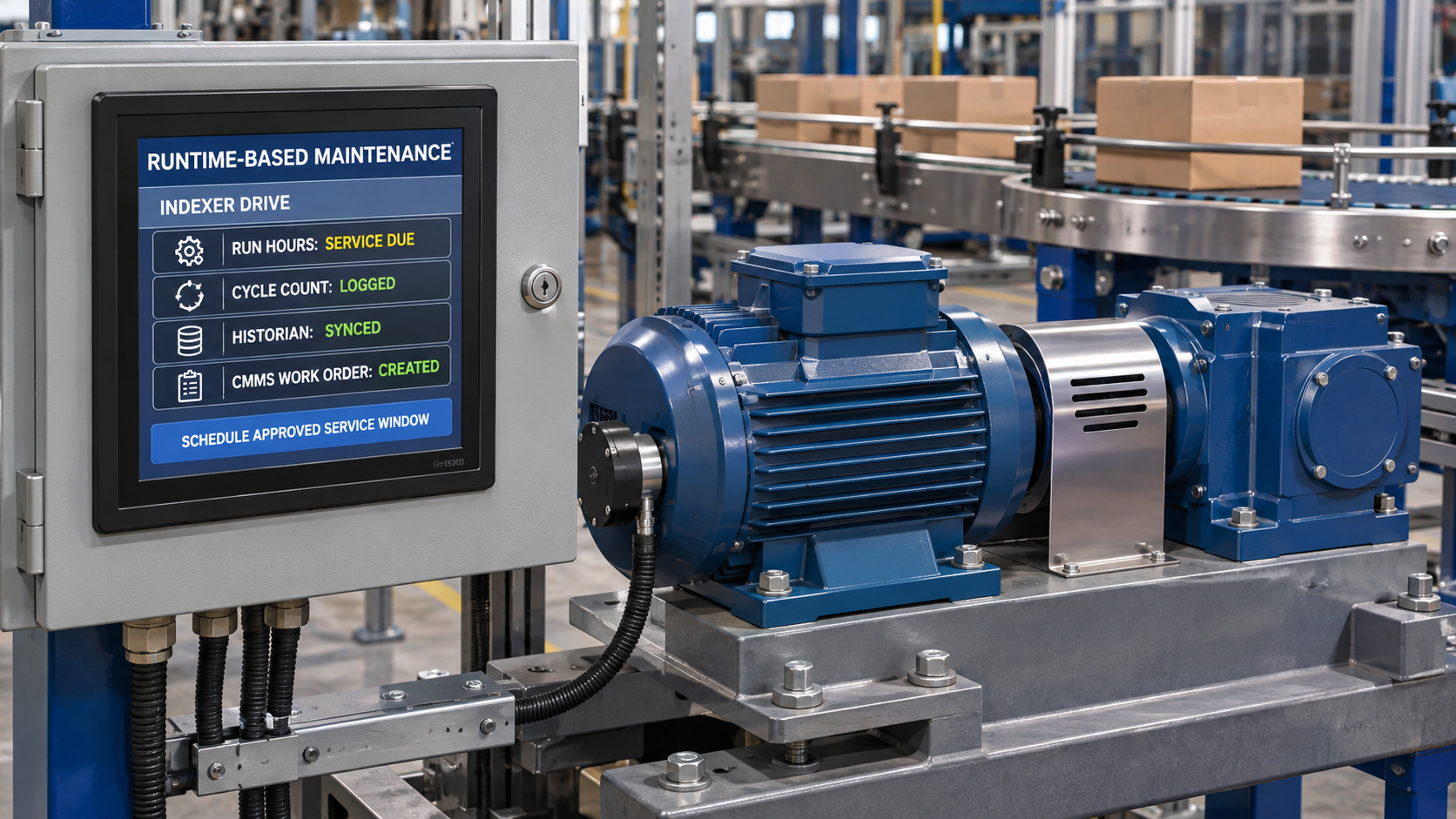
Empowered Automation integrates automated runtime counters in the PLC ladder logic: when a motor reaches exactly 1,500 active run hours, or when an indexer executes its 500,000th cycle, the SCADA system automatically triggers a planned maintenance work order inside your CMMS.
Maintenance is performed exactly when the mechanical physics demand it—never too early, and never too late.
Mistake #2: The "Open the Machine and See What We Find" Approach
Why it happens: Maintenance teams shut down a machine for a scheduled PM without a detailed, pre-staged bill of materials or a strict task breakdown. The machine is taken apart, and only then do technicians begin inspecting components to see what needs replacement.
What it costs: Extensive schedule overruns. The technician discovers that a driven sprocket is severely worn, walks to the parts crib, discovers the part is out of stock, and spends the next two hours fabricating a temporary solution or waiting on an emergency courier. A task planned for two hours stretches into an all-day shutdown, leaving the machine disassembled and unavailable for production.
The fix: Enforce a strict "Pre-Flight" kitting protocol linked to machine telemetry. Before a machine is taken down for a scheduled PM, the CMMS and SCADA platforms must verify that every required spare part, specialized tool, and replacement seal is physically scanned and staged at the machine cell.
Furthermore, historical vibration, thermal, and motor current trends from the Data Historian should be reviewed prior to shutdown to anticipate which internal mechanical components are showing signs of wear, eliminating surprises once the guards are removed.
Mistake #3: Lack of Real-Time Overrun Tracking and Automated Alarms
Why it happens: When a line enters a scheduled four-hour shutdown, the operations team turns their focus elsewhere. There is no automated mechanism monitoring how the maintenance window is progressing against the clock.
What it costs: Operational blind spots. The line supervisor returns at the four-hour mark expecting the line to be ready for production, only to discover that the maintenance team is still in the middle of reassembling the drive train and needs an additional three hours.
Production operators who were scheduled to begin running the line stand idle, downstream packaging lines are starved, and logistics teams are caught completely unprepared for missed customer shipments.
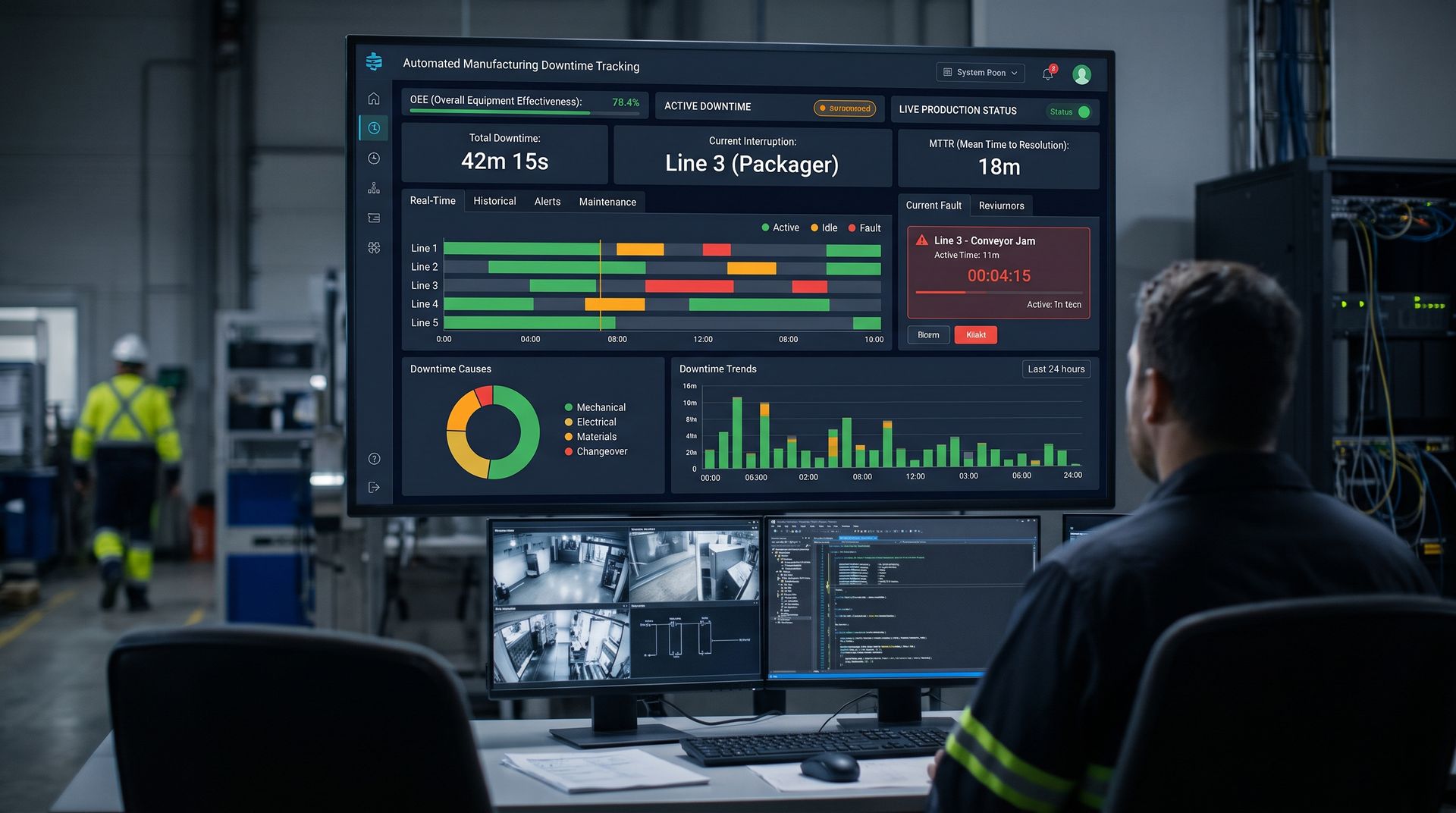
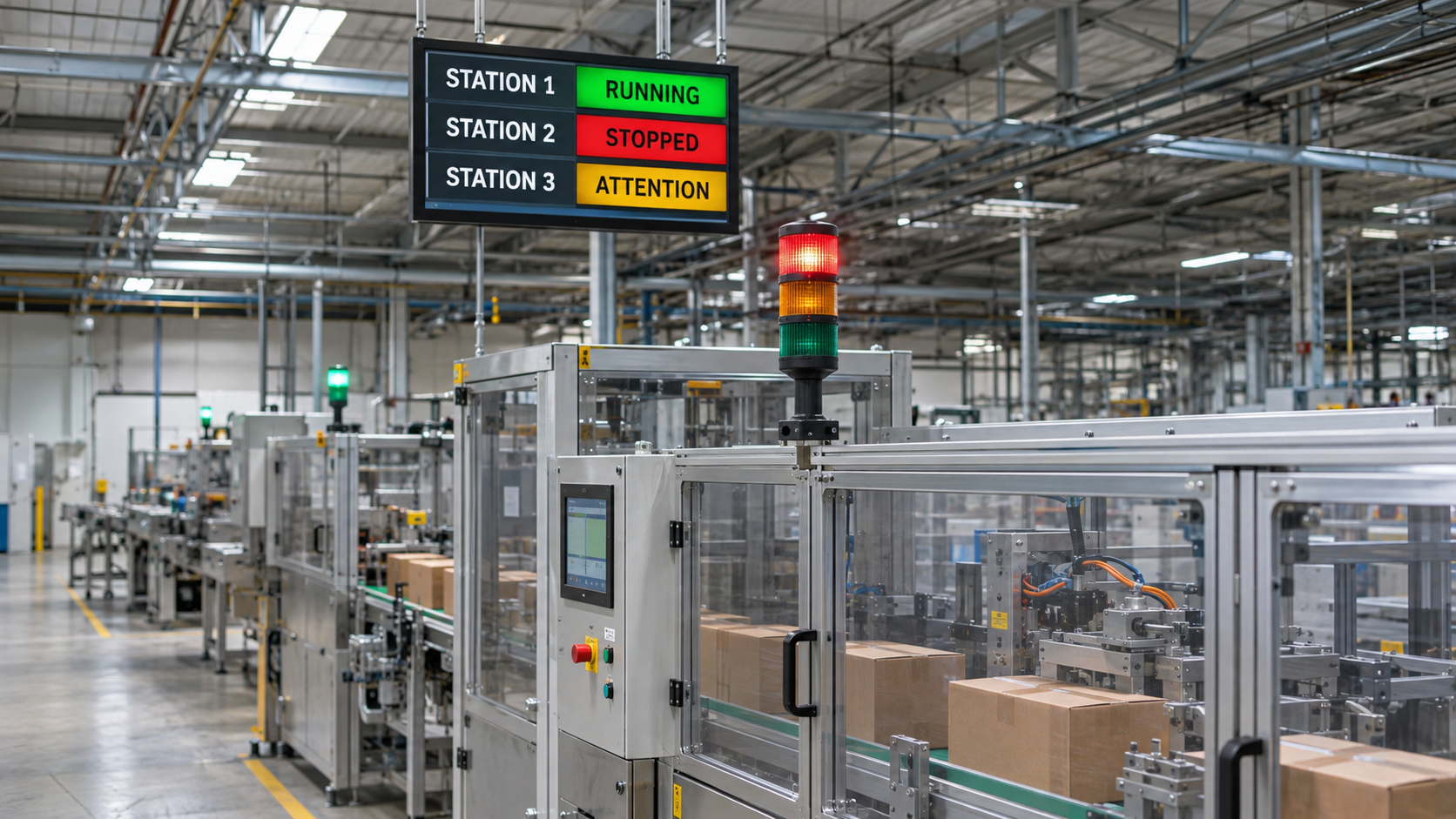
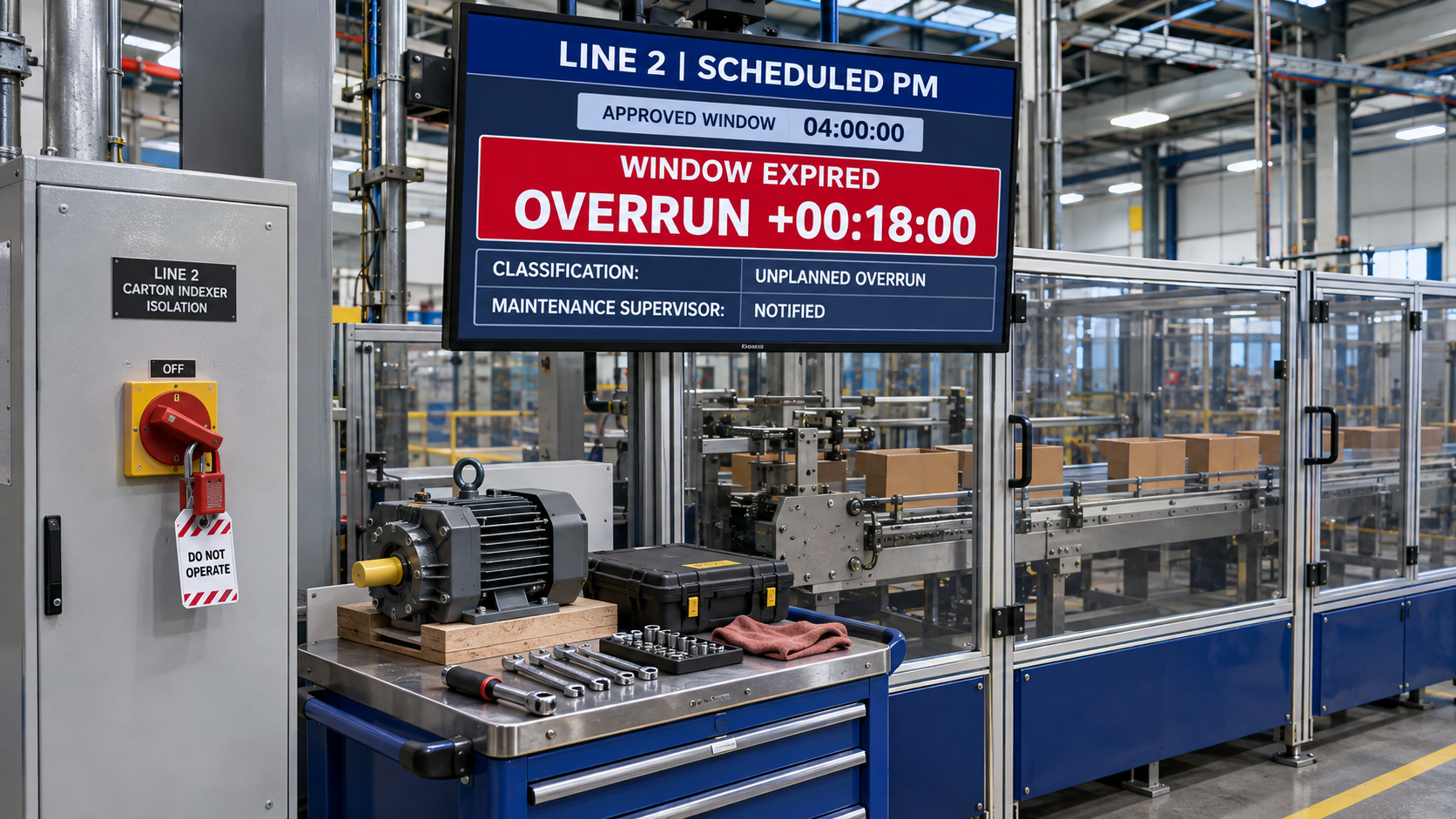
The fix: Build active "Planned Downtime" countdown timers into your SCADA visualization screens. When an operator or technician places a line into "Scheduled PM" mode on the HMI, they must enter the approved duration target. The SCADA system displays a high-visibility countdown timer on plant-floor overhead displays.
If the work reaches the 75% time threshold and the machine is not yet entering reassembly, the system automatically sends a notification alert to the maintenance supervisor. If the scheduled time expires, the SCADA platform automatically reclassifies the excess time as Unplanned Overrun Downtime, preserving metric integrity and driving accountability.
Mistake #4: Skipping Post-Maintenance Pre-Flight Validation Routines
Why it happens: When a scheduled PM is running behind schedule, technicians rush through the final reassembly. In an effort to hand the line back to production immediately, they skip dry-run testing, power up the system, and invite operators to start loading raw materials right away.
What it costs: The "Restart Crash." Guards were installed slightly misaligned, an optical sensor was bumped out of position, or a newly tensioned belt slips under load. The machine trips immediately on the first container, jamming the infeed and causing secondary mechanical damage.
The maintenance window, which was already over schedule, now plunges into an extended emergency breakdown repair.
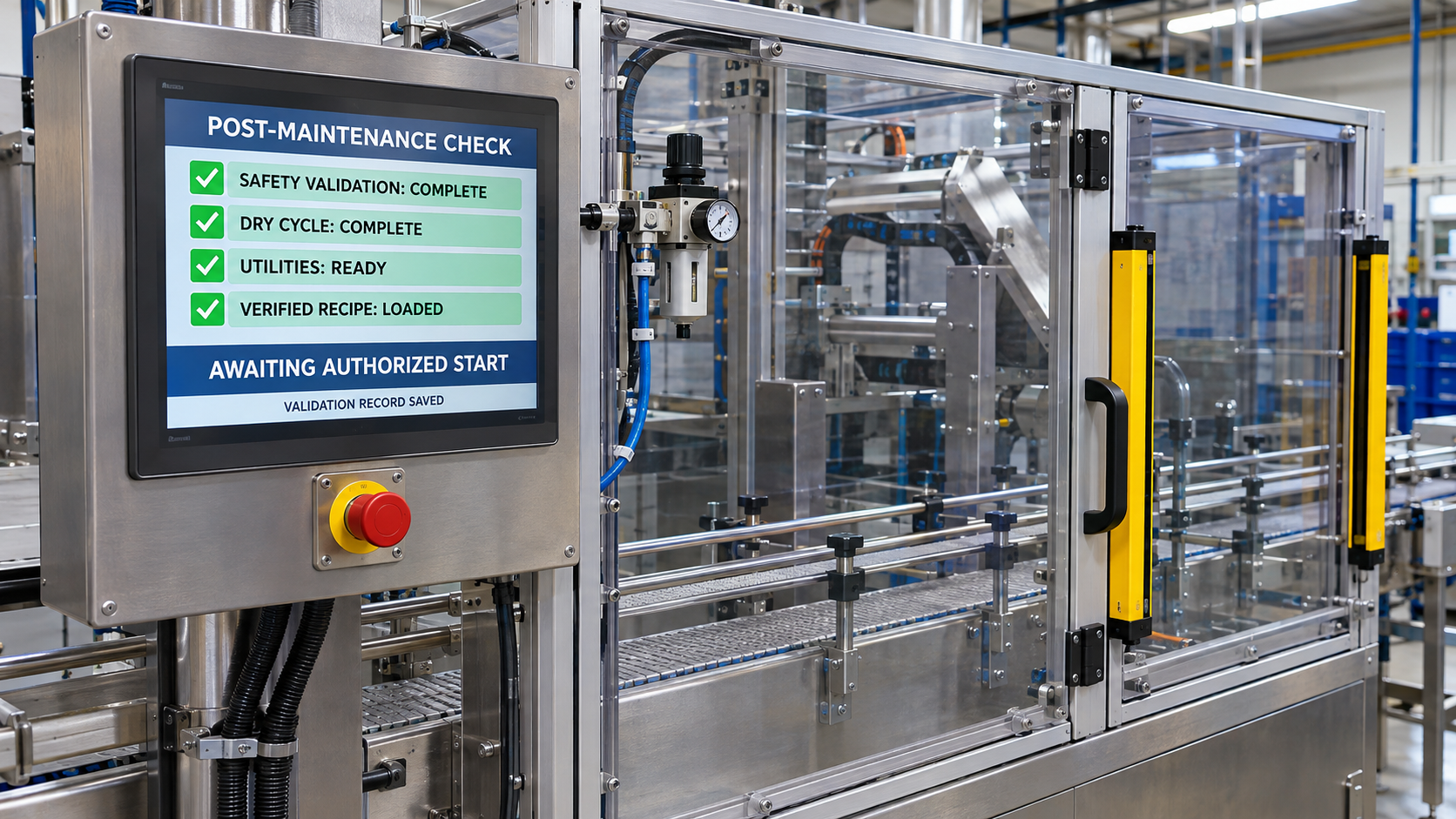
The fix: Program structured, automated "Pre-Flight Check" sequences into the machine PLC and HMI. Before the control system allows the line to enter "Automatic Production" mode following a planned stop, it forces the user to step through an engineered validation sequence:
- Safety Circuit Validation: Verifying all E-stops, pull cords, and safety light curtains cycle cleanly.
- Dry Jog / Index Cycle: Jogging mechanical stations at low speed without product to verify sensor clearances and mechanical freedom.
- Utility Verification: Checking that pneumatic pressures, vacuum levels, and heat zones are within steady-state tolerances.
- Automated Recipe Re-Push: Downloading verified setpoints from the SCADA recipe manager to overwrite any manual setpoint adjustments made by technicians during the repair.
Only when all pre-flight interlocks pass does the system unlock full-speed production.
The Closed-Loop Planned Downtime Architecture
Executing planned downtime without schedule slip requires complete coordination across four plant platforms:
[ Data Historian / PLC ] ──► Tracks actual runtime hours, cycle counts, and thermal wear.
│
▼
[ CMMS / Inventory ] ──► Auto-generates work order; verifies required spare parts staged in cell.
│
▼
[ SCADA Platform ] ──► Coordinates shutdown; displays countdown timers and alerts supervisors on delay.
│
▼
[ Machine HMI ] ──► Enforces automated "Pre-Flight Validation" before permitting full-speed restart.
Planned Downtime Scheduling Audit Checklist
Assess your plant’s planned downtime execution against these critical operational standards:
- [ ] Telemetry-Driven Triggers: Are preventative maintenance tasks triggered by PLC run-hours and cycle counts rather than pure calendar intervals?
- [ ] Parts Kitting Enforcement: Is there an enforced policy verifying that replacement parts are physically present at the machine before shutdown begins?
- [ ] Automated Overrun Alarming: Does your SCADA system alert leadership when a scheduled maintenance window exceeds its approved duration?
- [ ] Metric Separation: Does your reporting system automatically classify time beyond the scheduled window as unplanned downtime?
- [ ] Pre-Flight Interlocks: Does the PLC require an automated functional validation run before allowing operators to resume high-speed production?
Conclusion
Planned downtime is an investment; unplanned overruns are a waste of capital. Treating scheduled maintenance as a loose, unmonitored window of time is a recipe for chronic production delays and inflated maintenance costs.
By driving maintenance intervals using real-time machine telemetry, kitting parts in advance, enforcing active countdown timers on your SCADA displays, and requiring automated pre-flight checks before restart, you can keep your scheduled maintenance windows tightly bounded, protect your production schedule, and ensure your equipment returns to full-speed operation without incident.
Ready to Master Planned Downtime Execution?
Empowered Automation Solutions helps manufacturers optimize equipment reliability through advanced automation integration. From programming runtime-based maintenance triggers inside PLC code to designing centralized SCADA dashboards that monitor scheduled tasks in real-time, our engineering team provides the tools needed to keep your maintenance windows on schedule.
Contact our team today to discuss your plant’s control systems:
- Phone: (630) 553-0411
- Email: info@empoweredautomation.com
- Address: 1905 Marketview Dr., Suite 138, Yorkville, IL 60560
Frequently Asked Questions
How do we transition from calendar-based maintenance to runtime-based maintenance?
The transition starts in the PLC. Empowered Automation adds non-volatile runtime and cycle-count registers to your machine logic for major mechanical assemblies (motors, indexers, pumps, heaters). These values are polled by the SCADA system and synchronized with your CMMS via automated APIs to generate work orders only when real operating thresholds are reached.
What should we do if a planned PM cannot be finished within its allotted window?
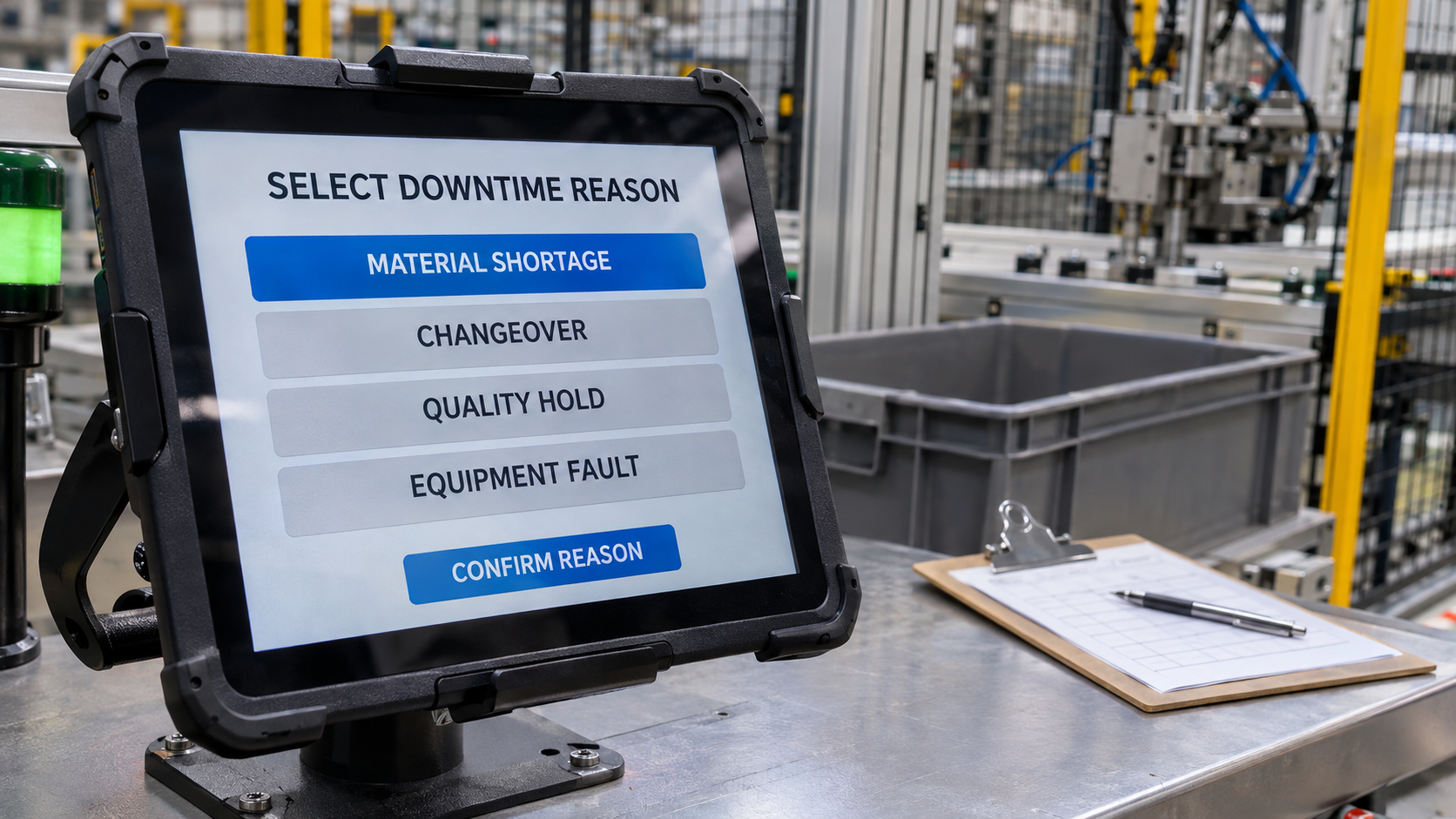
When an overrun is unavoidable, the maintenance lead must document the technical justification in the SCADA terminal immediately. The system should automatically recalculate downstream production schedules, alert operations management, and record the excess hours under a dedicated "PM Overrun" code rather than blending it into standard maintenance time.
Can SCADA systems prevent technicians from skipping preventative maintenance?
Yes. For safety-critical or regulatory-mandated maintenance (such as food contact seal swaps or pharmaceutical filter changes), the PLC can be programmed with an operational interlock: if the machine exceeds its approved runtime limit without a completed, verified PM sign-off in the SCADA system, the line will safely prevent operators from initiating a new production run.
You might also like