Reducing Unplanned Downtime
Reducing Unplanned Downtime: Moving from Firefighting to Engineered Reliability
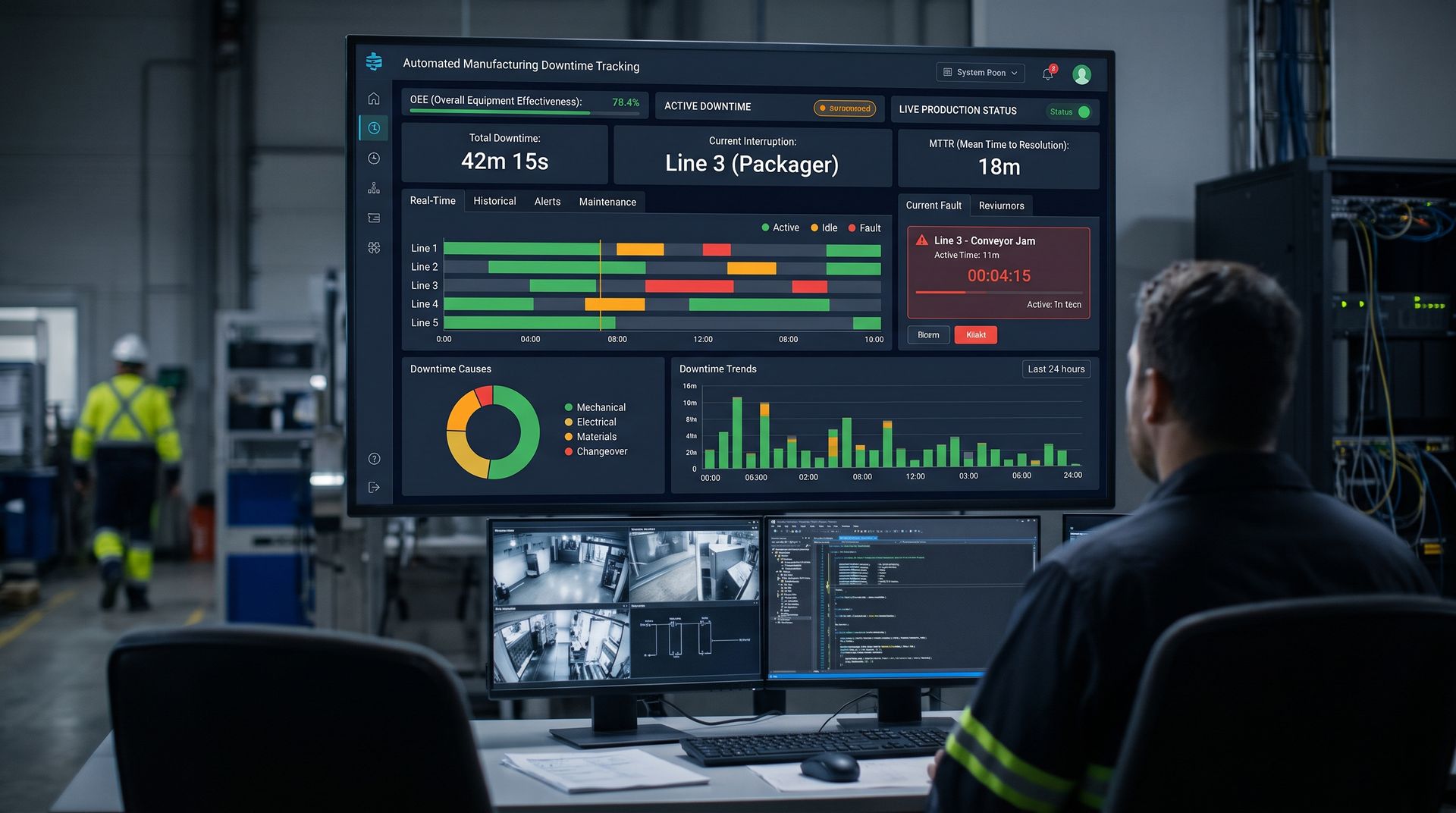
When an unexpected shutdown occurs on a production line, the plant floor instantly enters emergency response mode. Maintenance technicians sprint across the facility with toolbags, operators gather around the main console speculating on the cause, and production supervisors pull up shift schedules to see how many hours of overtime will be needed to hit the day’s volume targets.
Unplanned downtime is the single most expensive operating failure in manufacturing. Beyond the obvious loss of direct output, unexpected stops trigger a cascade of secondary costs: damaged tooling, thermally shocked machinery, scrap generation during restarts, and elevated safety risks as personnel rush to clear jams and bypass interlocks.
Yet, in many facilities, unplanned downtime is treated as an unpredictable act of nature—an inevitable cost of doing business. In reality, modern control architectures and industrial data platforms make the vast majority of equipment breakdowns preventable. Plants that successfully drive unplanned downtime down to world-class levels do not work harder during breakdowns; they engineer their control systems, telemetry, and automated escalations so that equipment rarely stops unexpectedly in the first place.
Here are the most common architectural and cultural mistakes that keep manufacturing plants trapped in a reactive maintenance loop, and the automation solutions required to eliminate them..
Mistake #1: Treating Downtime as Exclusively a Maintenance Problem
Why it happens: When a machine trips, the standard protocol is to notify maintenance. Operations steps back, hands over the line, and waits for a technician to complete the repair. As a result, management metrics treat downtime as an isolated maintenance key performance indicator (KPI).
What it costs: Mechanical and electrical wear do not happen in a vacuum. A significant portion of equipment breakdowns are directly induced by upstream operational issues: running machines past their rated recipe speeds, feeding out-of-spec raw materials, improper operator adjustments to mechanical guides, or poor sanitation routines that allow washdown chemicals to penetrate sealed enclosures. Treating downtime as purely a maintenance failure blinds the organization to the operational and procedural roots of equipment wear.
The fix: Build cross-functional machine health tracking into your SCADA system. Connect operational variables (active operator shifts, recipe settings, raw material lot numbers, and cleaning cycles) directly to machine downtime logs. When a machine trips, your data platform should correlate the failure with operating parameters over the prior three hours. If a motor consistently trips on overcurrent only when running a heavy-gauge packaging film or after a specific shift takeover, the issue is operational and procedural—not an inherent maintenance flaw.
Mistake #2: Replacing Failed Components Without Evaluating Electrical Precursors
Why it happens: A variable frequency drive (VFD) throws an overvoltage fault, or a three-phase motor burns out a stator winding. The maintenance crew pulls a spare from the crib, replaces the component, powers the unit on, and checks that the motor spins. The repair is logged as complete, and the line is handed back to production.
What it costs: The replaced component was merely the casualty; something else was the executioner. If the motor burned out because of subtle phase unbalance, high harmonic distortion from an aging power supply, or a failing mechanical coupling putting continuous radial load on the shaft, the newly installed spare will suffer the exact same fate within weeks. Replacing damaged components without understanding the pre-fault electrical and mechanical signatures burns through expensive spare parts inventory without improving reliability.
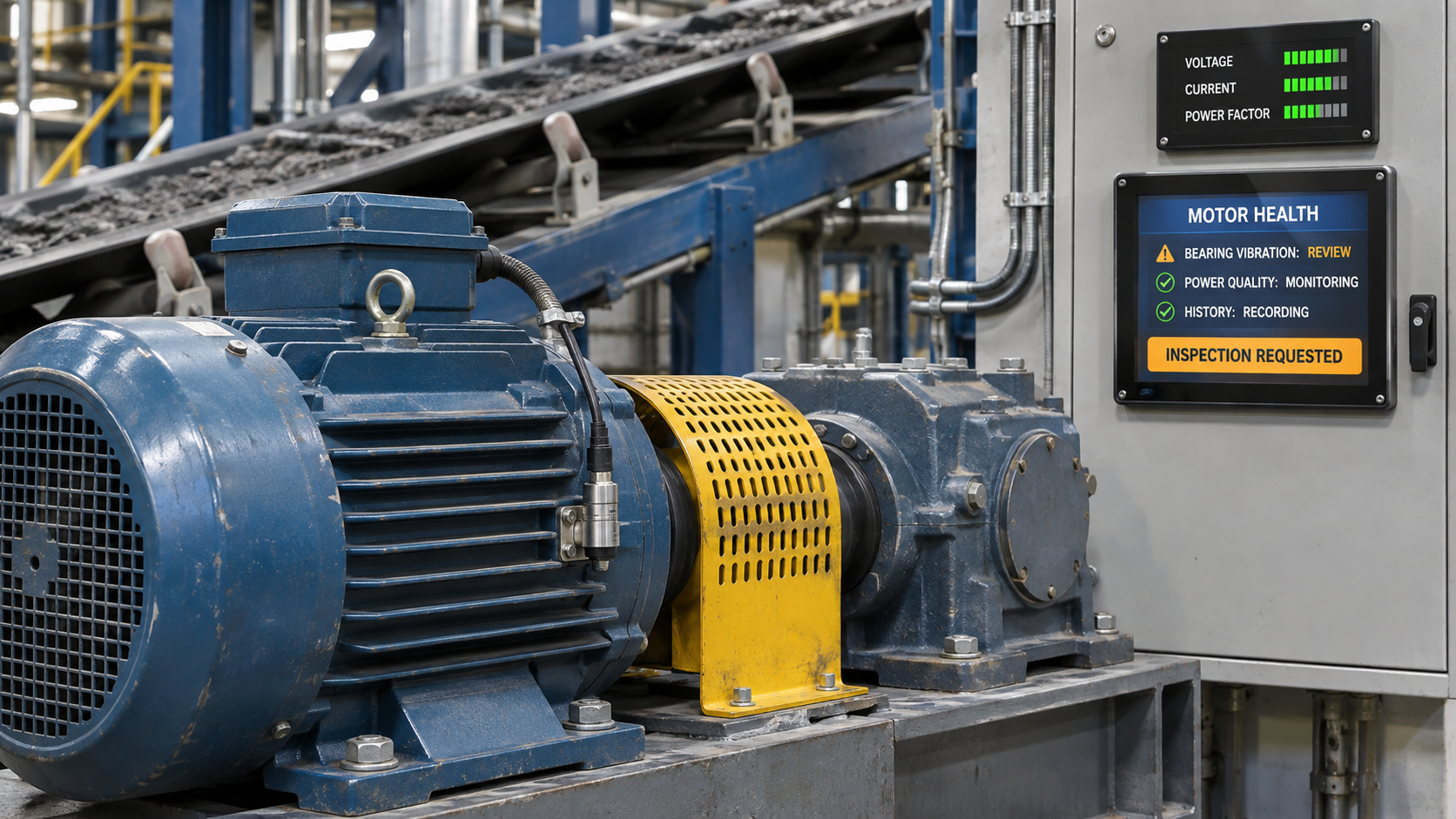
The fix: Deploy continuous power quality and mechanical telemetry via industrial device connectors. Modern smart overload relays, digital power monitors, and IO-Link vibration sensors stream real-time voltage, current balance, power factor, and vibration spectra into your Data Historian.
Empowered Automation integrates automated warning thresholds inside the SCADA layer: if current unbalance across phases exceeds 2%, or if high-frequency bearing vibration drifts above baseline, the system logs an engineering alert days before the insulation breaks down or the bearing seizes, allowing technicians to fix the root cause during a scheduled window.
Mistake #3: Lack of Automated, Real-Time Escalation Protocols
Why it happens: When a machine stops, notification relies on human communication. The operator checks the line, walks over to find the line lead, the lead calls the maintenance shop, and the maintenance tech finishes their current coffee or task before heading over to investigate.
What it costs: The "dead time" between when a machine physically stops and when a qualified technician turns the first wrench frequently exceeds the actual repair time. On high-speed lines, a 15-minute notification latency represents thousands of units in unrecoverable output. If the technician discovers they need a specialized tool or spare part from the warehouse, the latency doubles.
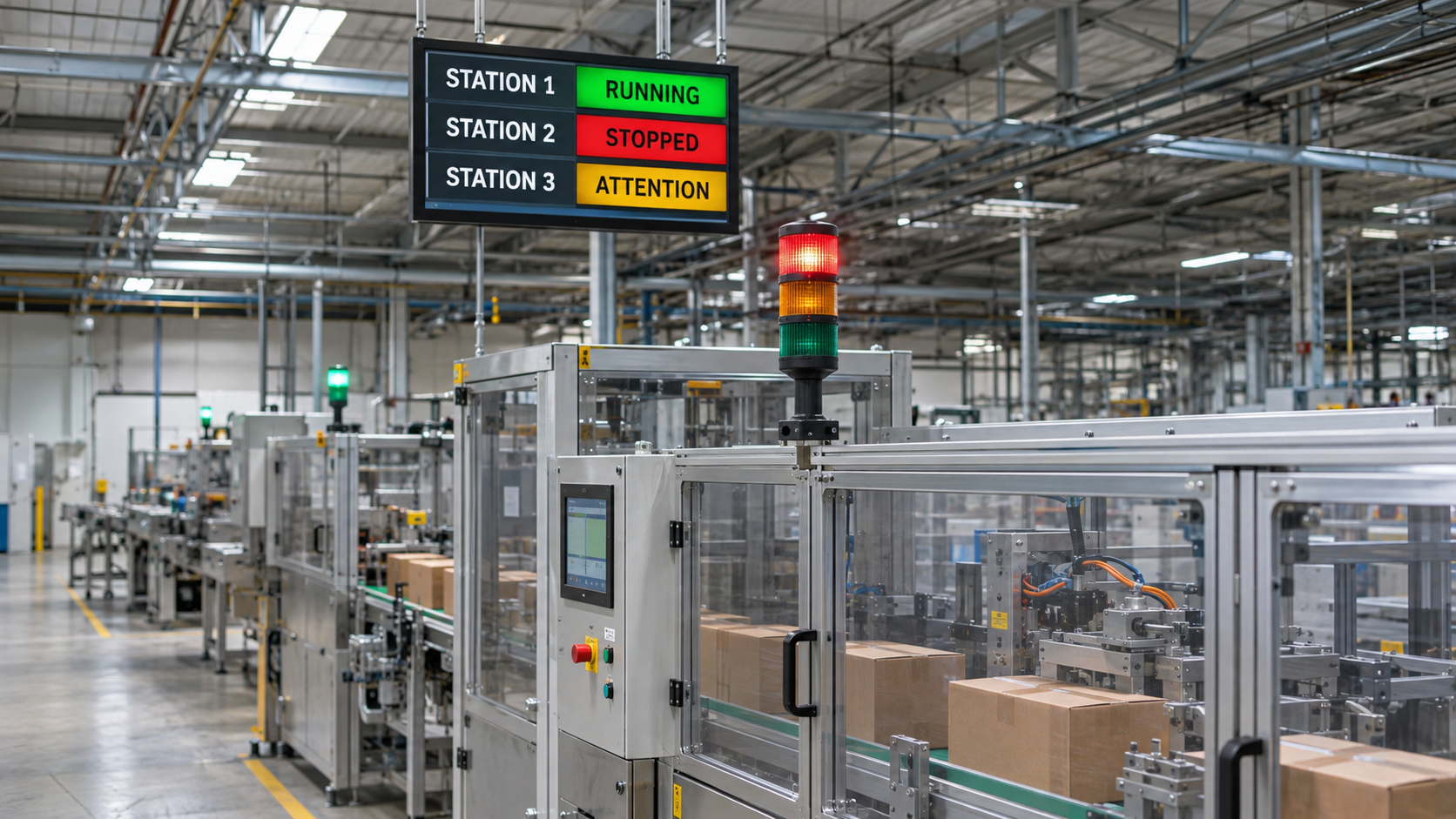
The fix: Implement automated, rule-based alarm notifications. Modern SCADA and Alarm Logging software tracks stoppage duration automatically. If an unplanned stoppage is not cleared within three minutes, the SCADA system automatically dispatches an SMS or push alert directly to the on-duty maintenance technician’s radio or mobile device, specifying the exact machine, station, and PLC fault code.
If the stop exceeds 10 minutes without an active maintenance login on the local HMI, the system escalates the notification to the maintenance supervisor and plant operations manager.
Mistake #4: Floating Interlocks and Cascading Fault Logic in Legacy PLC Code
Why it happens: Over decades of plant modifications, PLC programs undergo countless additions, hot-fixes, and temporary software bypasses written by different controls engineers and contractors. Ladder logic rungs become cluttered with undocumented bits, unlatched safety contacts, and nested interlocks.
What it costs: When an unexpected stop occurs, the HMI screen displays a generic error message, or worse, no error message at all because the fault rung dropped out momentarily without latching the source. Technicians are forced to connect a programming laptop, open the PLC software, and trace ladder logic rungs online while production stands idle.
Finding an unlatched interlock in 5,000 rungs of undocumented code turns a 30-second sensor adjustment into a two-hour investigative ordeal.
The fix: Standardize and modernize PLC alarm logic using structured first-out trapping and latching routines. Empowered Automation refactors legacy PLC logic to guarantee that whenever a safety circuit, motor overload, or process interlock opens—even for a single program scan (10 ms)—the exact bit is latched and recorded in an alarm FIFO (First-In, First-Out) buffer. The HMI immediately displays the primary root event, preventing secondary alarms from obscuring what caused the line to drop.
Mistake #5: Ignoring Utility Degradation as a Primary Stoppage Cause
Why it happens: Plants monitor production equipment closely but treat plant utilities (compressed air, cooling water, chilled glycol, steam, and incoming electrical power) as passive, unchanging resources that take care of themselves.
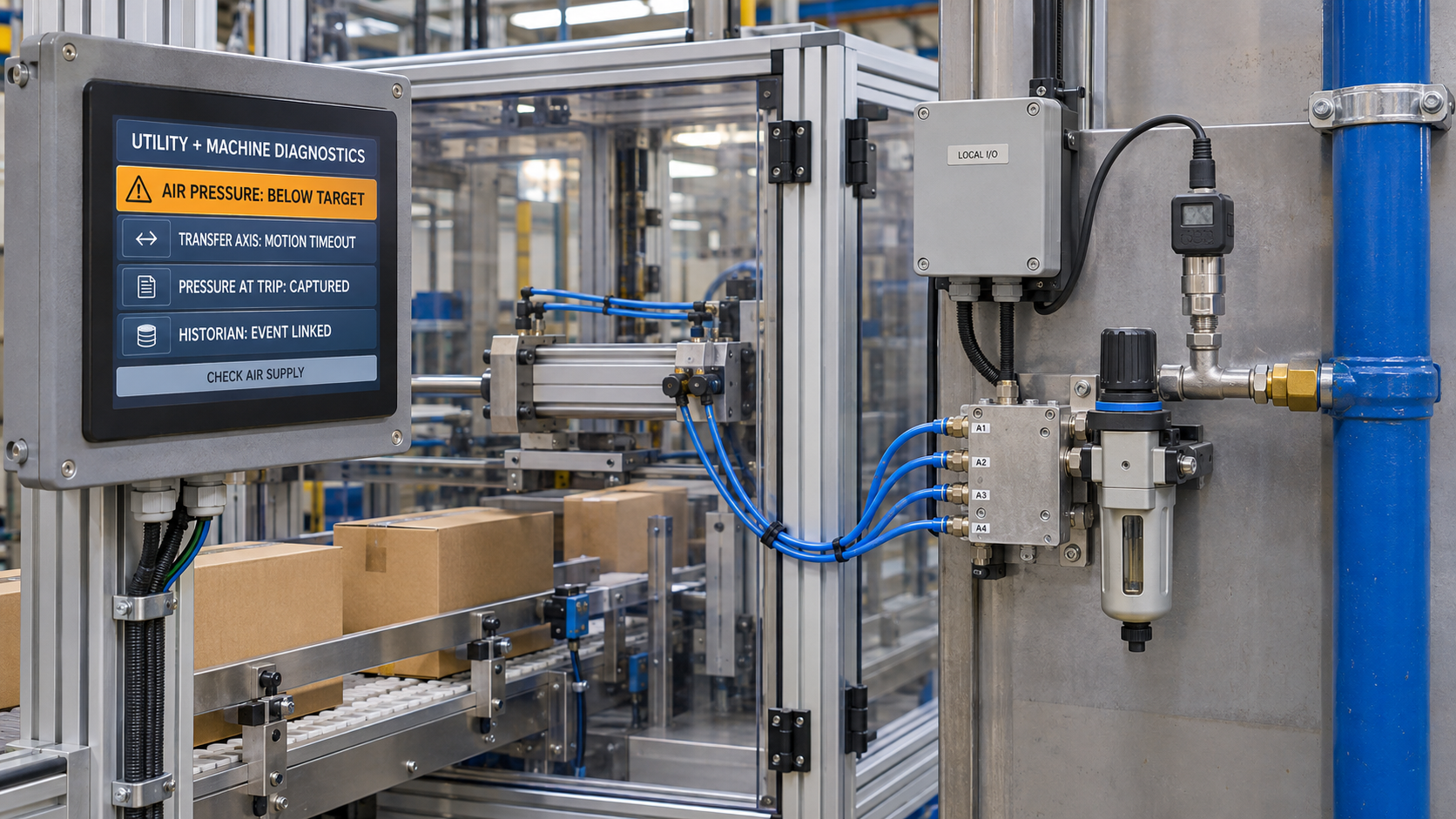
What it costs: Industrial machines rely heavily on stable utilities. If the main plant compressed air header pressure drops from 90 PSI to 72 PSI during peak plant demand, pneumatic pick-and-place actuators slow down, failing to extend within their PLC timer windows. The machine faults on a "motion timeout."
The maintenance team spends hours tweaking PLC timers and adjusting flow controls on the machine, unaware that the real culprit is a failing compressor or a clogged desiccant dryer across the facility.
The fix: Integrate plant utility monitoring directly into your primary SCADA architecture. Log utility pressures, temperatures, flow rates, and electrical bus stability inside your central Data Historian alongside machine production tags.
When a machine throws an unexpected motion fault, the SCADA system should automatically display the line's instantaneous air pressure and cooling temperature at the moment of the trip, instantly confirming or ruling out utility-level root causes.
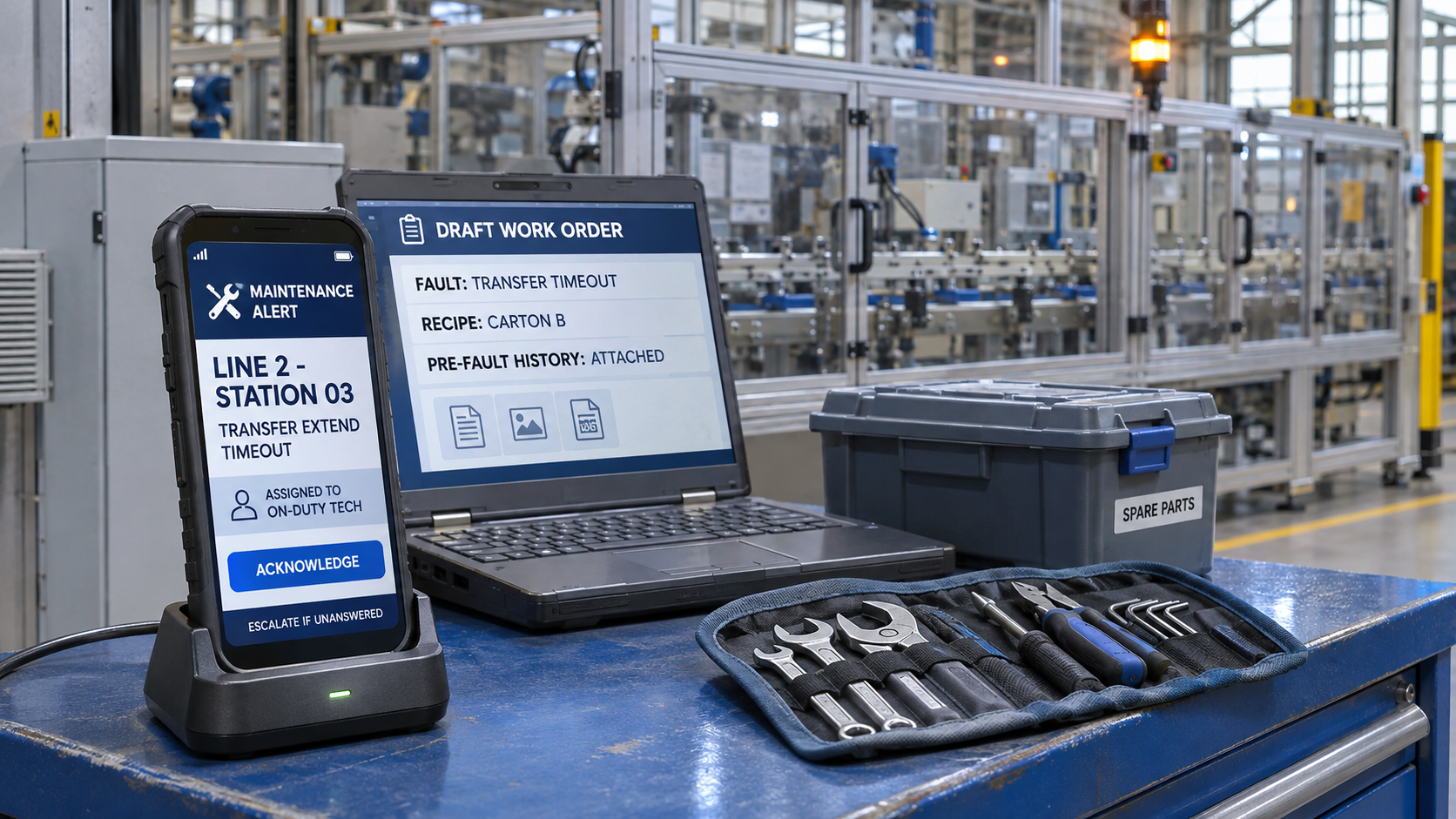
The Engineered Unplanned Downtime Elimination Loop
Eliminating unplanned stops requires an automated system that closes the loop between event detection, immediate response, and permanent engineering correction:
[ Step 1: Real-Time Event Detection ]
PLC captures millisecond first-out fault; latches initiating interlock bit.
│
▼
[ Step 2: Automated Alarm Escalation ]
SCADA triggers automated SMS/page to technician if stop > 3 minutes; includes fault context.
│
▼
[ Step 3: High-Resolution Data Capture ]
Historian archives 60 seconds of pre-fault electrical, mechanical, and utility telemetry.
│
▼
[ Step 4: Closed-Loop RCA Integration ]
Automated draft work order generated in CMMS; linked to exact PLC fault and operating SKU.
│
▼
[ Step 5: Engineering Refactoring ]
Systemic repeat offenders flagged on weekly Pareto charts for permanent PLC or mechanical redesign.
Unplanned Downtime Reduction Audit Checklist
Use this audit checklist to assess your plant’s defensive capabilities against unexpected shutdowns:
- [ ] First-Out Latching: Does every PLC program latch the initiating fault bit, even if the physical sensor contact flickers for only a single scan?
- [ ] Automated Technician Paging: Does your alarm system automatically notify maintenance via SMS/mobile if a machine remains halted beyond a defined threshold?
- [ ] Pre-Trip Telemetry: Is your data historian recording high-frequency motor current, bus voltage, and mechanical vibration on critical drive assets?
- [ ] Utility Integration: Are compressed air header pressures, cooling water temperatures, and power quality parameters logged in the same historian as production line tags?
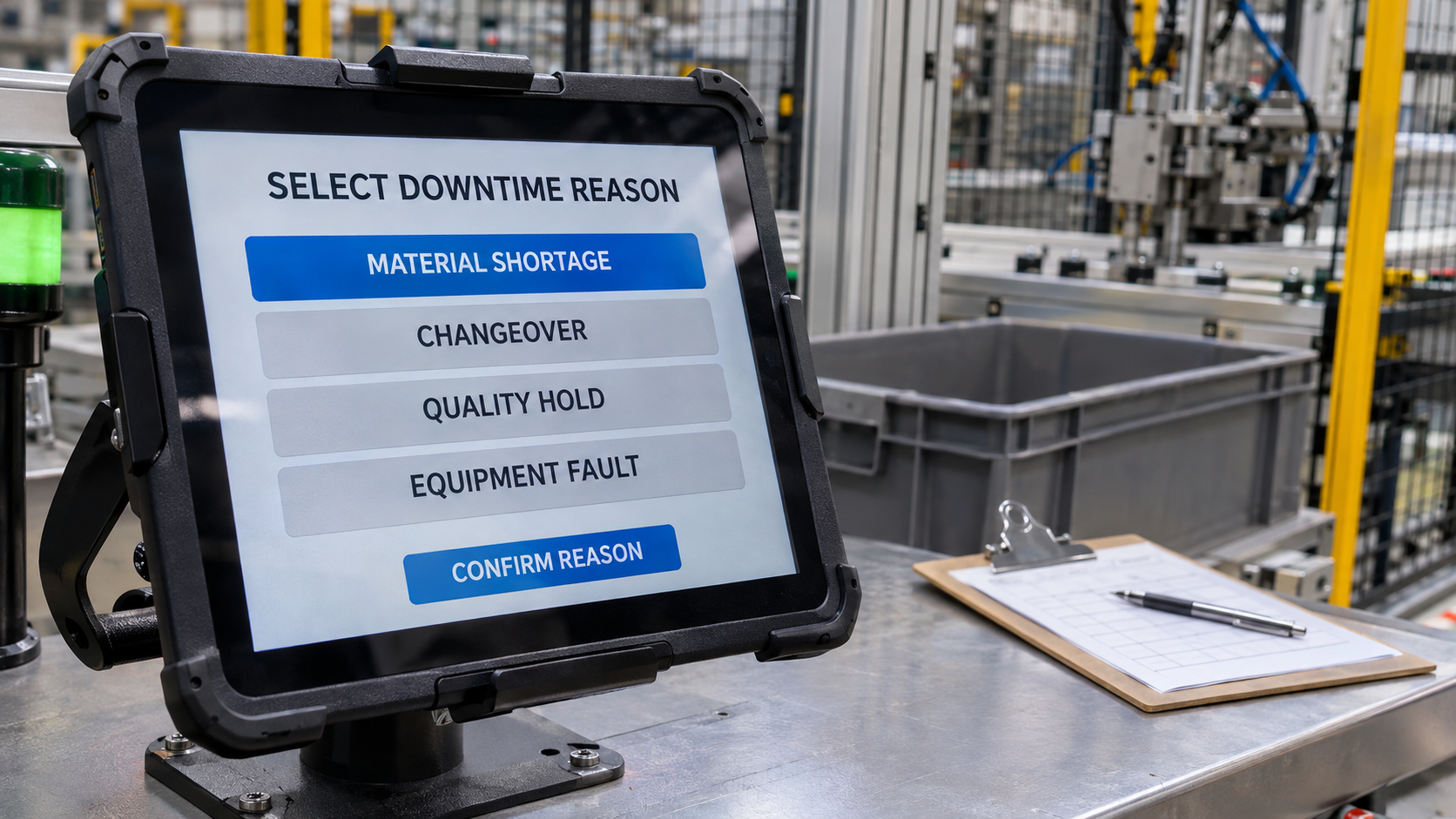
- [ ] Cross-Department Context: Does your downtime database correlate machine stops with active recipes, operators, and raw material lots?
Conclusion
You cannot reduce unplanned downtime through sheer willpower or by asking maintenance technicians to run faster when an alarm sounds. High-reliability manufacturing is engineered, not wished for.
By eliminating legacy PLC code ambiguities, capturing pre-fault electrical and mechanical signatures, integrating plant utilities into your control architecture, and automating response workflows, you strip away the chaos of unexpected breakdowns and build a plant floor that operates with predictable, profitable stability.
Ready to Reduce Your Plant’s Unplanned Downtime?
Empowered Automation Solutions designs and implements the automation, PLC logic, SCADA platforms, and data architectures that help manufacturers eliminate unexpected shutdowns. From modernizing legacy PLC alarm routines to deploying enterprise-wide Data Historians and automated alarm notification tools, our engineering team helps you turn downtime data into permanent reliability gains.
Get in touch with our team to evaluate your facility's control systems:
- Phone: (630) 553-0411
- Email: info@empoweredautomation.com
- Address: 1905 Marketview Dr., Suite 138, Yorkville, IL 60560
Frequently Asked Questions
What is the fastest way to start reducing unplanned downtime on a legacy line?
Start by standardizing the alarm logic inside the PLC. Most legacy machines have unlatched faults or generic alarm bits that force technicians to guess during a stoppage. Refactoring the PLC code to implement first-out fault latching and routing those alarms to a clear, descriptive HMI screen immediately cuts diagnostic time in half.
How does an industrial data historian help prevent unplanned breakdowns?
A data historian continuously records process variables (such as motor temperatures, pump discharge pressures, drive torques, and line speeds) over months and years. By trending this data, engineers can spot the subtle, gradual degradation of mechanical and electrical components long before they trigger a catastrophic machine shutdown.
Can SCADA systems automate maintenance dispatching?
Yes. Modern SCADA platforms integrate directly with alarm notification software (such as WIN-911 or native SCADA notification engines). When an unplanned stoppage occurs and exceeds a defined time threshold, the system automatically routes alerts via text, email, or voice call to the designated technician based on the active shift schedule.
What is the difference between reducing downtime duration and reducing downtime frequency?
Downtime duration is addressed primarily by improving diagnostics, HMI visualization, spare parts availability, and technician response times (lowering MTTR). Downtime frequency is addressed by eliminating root causes, improving preventive maintenance schedules, and stabilizing utility and process parameters (increasing MTBF). A comprehensive reliability strategy targets both simultaneously.
You might also like