SCADA Basics: A Comprehensive Guide for Beginners
SCADA Basics: A Comprehensive Guide for Beginners
Key Highlights
- Supervisory Control and Data Acquisition (SCADA) is a control system architecture for industrial automation.
- A SCADA system enables real-time supervisory control and data acquisition from industrial processes.
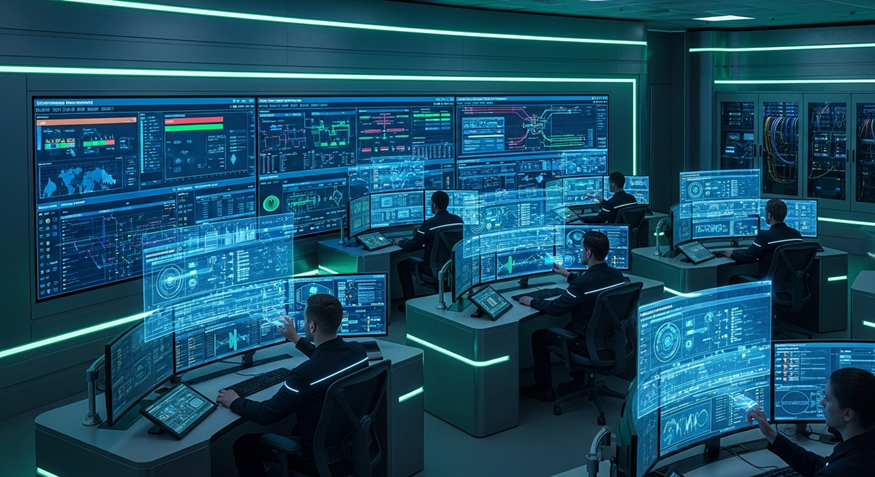
- It combines hardware and software to monitor and manage critical infrastructure from a central control room.
- Core functions include data collection, process control, and alarm monitoring for operational efficiency.
- SCADA is crucial for industries like energy, water management, and manufacturing.
- These systems use components like PLCs, RTUs, and HMI software to function effectively.
Introduction
Welcome to the world of industrial automation! If you've ever wondered how large-scale industrial processes are managed so smoothly, the answer often lies in a SCADA system. Understanding SCADA basics is the first step toward appreciating how modern industries achieve efficiency and control. This guide will introduce you to the fundamental concepts of this powerful control system, explaining how it uses data collection and automation to oversee everything from a city's water supply to a factory's production line.
Understanding SCADA: Definition and Historical Background
So, what exactly is a SCADA system? At its core, it's an architecture that allows organizations to monitor and manage industrial operations. This control system architecture uses computers and networks to provide high-level supervision over machines and processes, improving operational efficiency.
The goal is to gather data from various points in a facility or across remote sites. This data acquisition process feeds information into a central system, which then helps operators make smart decisions. Over time, SCADA has evolved, storing historical data to help analyze trends and optimize performance. Let's explore its name and journey.
What Does SCADA Stand For?
SCADA is an acronym that stands for Supervisory Control and Data Acquisition. Breaking down this name helps clarify what the system does. "Supervisory Control" refers to the system's ability to oversee and manage entire operations from a high level, rather than controlling every individual component directly.
"Data Acquisition" is the process of gathering information. A SCADA system collects process data from sensors and other devices in the field. This information is then sent to a central location where operators can monitor everything. This allows for a comprehensive view of the entire operation in one place.
Essentially, the SCADA system watches over the process, collects data, and allows operators to issue commands based on that information. The system can also use pre-programmed control logic to perform certain actions automatically, making it a powerful tool for managing complex industrial environments.
Evolution of SCADA Systems and Key Milestones
SCADA systems have come a long way since their inception. The history of this industrial control system is marked by several key milestones that have shaped how we manage critical infrastructure today. Early systems were isolated and proprietary, but they have evolved into the highly connected architectures we see in modern industrial automation.
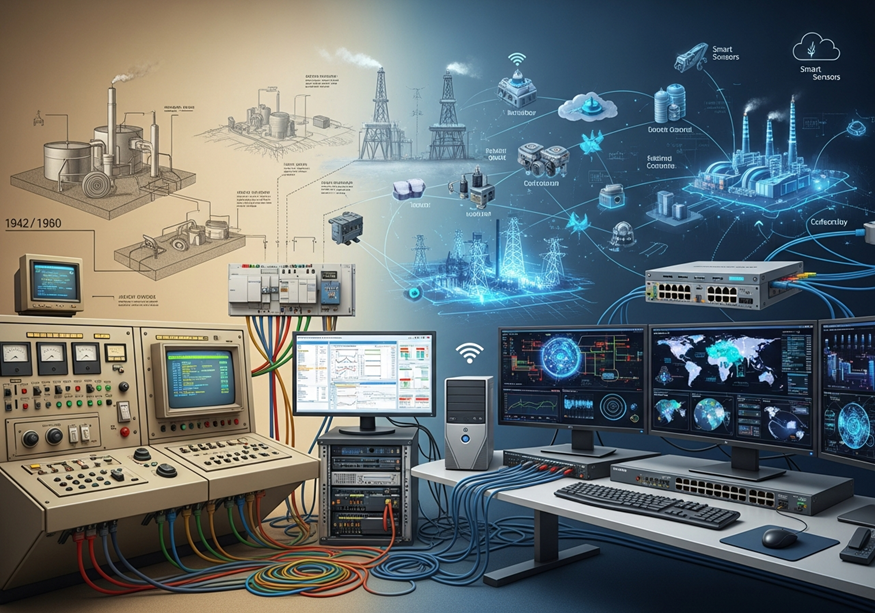
The journey began with monolithic systems and progressed through distributed and networked models. Each generation introduced new capabilities, from local network communication to wide-area connectivity, making systems more scalable and efficient. This evolution has been crucial for industries managing complex operations.
The latest evolution leverages the Internet of Things (IoT) and cloud computing, offering unprecedented remote access and analytical power. Here's a look at the major stages in the evolution of SCADA.
| SCADA Type | Characteristics |
|---|---|
| Monolithic SCADA | Operated on standalone mainframe computers with no network connectivity. These were proprietary and not scalable. |
| Distributed SCADA | Used Local Area Networks (LANs) to connect multiple computers, improving redundancy but limited to local sites. |
| Networked SCADA | Introduced Wide Area Networks (WANs) and standard protocols, enabling remote monitoring and enterprise integration. |
| IoT SCADA | Leverages cloud computing for advanced analytics, remote access from anywhere, and predictive maintenance capabilities. |
Core Functions of a SCADA System
A SCADA system is designed to perform several essential functions that help organizations manage their industrial processes effectively. Its primary purpose is to provide real-time data and control, enabling operators to make smarter, faster decisions. From remote monitoring to automated control, these functions ensure efficiency and safety.
These systems are the eyes and ears of an industrial facility, constantly watching over operations. Whether it's gathering data or responding to an alarm, a SCADA system helps streamline complex tasks that would be difficult for humans to manage alone. Let's examine its core functions more closely.
Real-Time Monitoring and Data Acquisition
One of the most critical functions of a SCADA system is real-time monitoring. This involves the continuous monitoring of industrial equipment and processes. The system achieves this through data acquisition, where it collects information from sensors and other field devices. This sensor data provides a live look at what's happening on the plant floor or at a remote site.
The collected process data can be analog (like temperature readings) or digital (like the on/off status of a valve). This information is gathered and sent to a central computer, where it's processed and displayed for operators. This gives them a complete and up-to-the-minute view of the entire operation.
This data-centric approach is what makes SCADA so powerful. It enables operators to:
- Observe key performance indicators as they happen.
- Track trends over time to spot irregularities.
- Receive instant updates on machine status and production output.
Automation and Remote Process Control
Beyond just watching, SCADA systems enable automation and remote process control. While many actions are automated, operators can also intervene manually from a central control room. This remote access is crucial for managing large-scale operations or facilities spread across different remote sites.
For example, if a pressure sensor in a pipeline reports a reading that is too high, the control system can be programmed to automatically open a release valve. Alternatively, an operator can see the alarm on their screen and issue the command to open the valve remotely, no matter where they are located.
This capability significantly enhances operational control. With a SCADA system, organizations can:
- Automate routine tasks, freeing up personnel for more critical duties.
- Control equipment at remote sites without needing staff on-site.
- Respond quickly to changing conditions to maintain stability and safety.
Main Components of SCADA Systems
To understand how a SCADA system works, it's helpful to know its key components. The SCADA architecture is made up of both hardware and software elements that work together seamlessly. These system components are responsible for gathering data, communicating it, and presenting it in a way that operators can use.
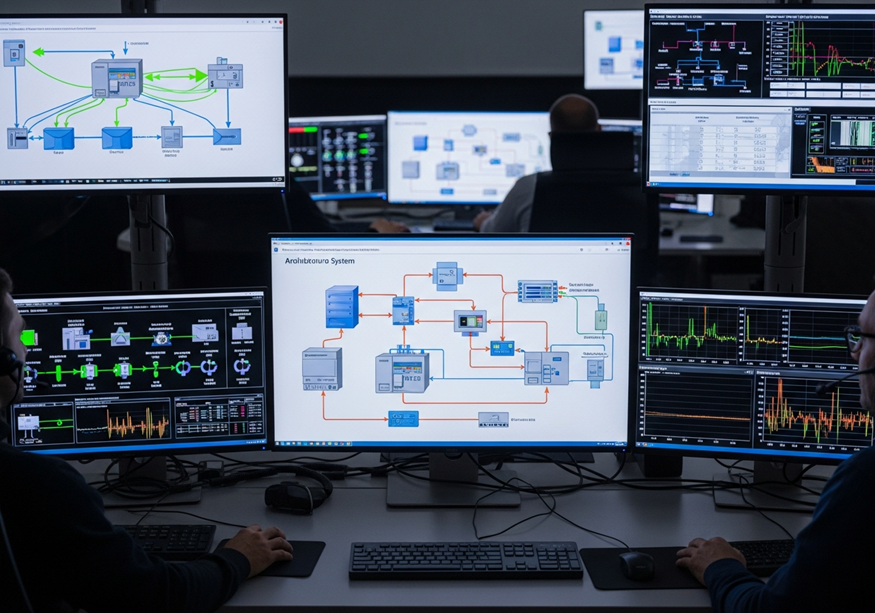
From the field devices collecting data on the factory floor to the software that displays it on a screen, each part plays a vital role. This combination of hardware and software forms a complete control system. Let's break down the main hardware and software elements.
Hardware Elements: RTUs, PLCs, and Field Devices
The hardware of a SCADA system is its foundation, interacting directly with the industrial equipment. Field devices are the first link in the chain and include sensors and actuators that measure variables like pressure and temperature or perform actions like opening a valve.
This information is collected by either Remote Terminal Units (RTUs) or Programmable Logic Controllers (PLCs). These are small, rugged computers designed for industrial environments. RTUs are excellent at collecting data from widespread locations, while PLCs are masters of high-speed control logic for specific machines.
These hardware elements are essential for data collection and control. Key hardware includes:
- Sensors and actuators that measure and control processes.
- PLCs that execute control logic for machines and equipment.
- RTUs that gather data from remote sites and transmit it to the central system.
Software Components: HMI and SCADA Applications
The software components of a SCADA system are what bring all the data to life for the operator. The most visible part is the Human-Machine Interface (HMI). HMI software provides a graphical user interface that displays data in an easy-to-understand format, such as charts, diagrams, and dashboards. This allows operators in the control room to monitor processes at a glance.
Behind the HMI, the main SCADA software application does the heavy lifting. It communicates with the hardware, processes the incoming data, logs events, and manages alarms. This software is the brain of the operation, turning raw numbers into actionable information.
Together, these software components create a powerful control and monitoring environment. Key software elements include:
- HMI software that provides a visual representation of the industrial process.
- SCADA applications that process data, handle alarms, and record historical information.
How SCADA Works in Industrial Automation
Now that we know the components, how does a SCADA system fit into the bigger picture of industrial automation? These systems act as the central nervous system for production processes. They provide a high-level overview and control that allows organizations to manage complex operations with precision.
Instead of having workers manually check gauges and operate machines, a SCADA system automates much of this work. This enhances process control and allows for more efficient management of resources. Let's look at how data flows through the system and its role in controlling machinery.
Data Flow: From Sensors to Decision Making
The journey of data in a SCADA system is a continuous loop. It begins with sensors and other field devices that collect raw data about the industrial process. This sensor data could be anything from a flow rate in a pipe to the temperature of an oven. This is the data acquisition stage.
Next, this process data is sent from the PLCs or RTUs to the central SCADA server. This transfer happens over a communication network using specific communication protocols to ensure the data is transmitted securely and accurately. The central server then processes this information, converting it into a more usable format.
Finally, the processed data is presented to operators through the HMI. Here, they can see what is happening in real time, analyze trends, and make informed decisions. Alarms can alert them to problems, allowing for a rapid response to keep the process running smoothly and safely.
Role in Controlling Industrial Machines and Processes
SCADA's role extends beyond simple monitoring; it is an active participant in controlling industrial operations. Based on the data it receives, the system can execute control commands to adjust production processes. This can happen automatically or through manual intervention by an operator.
For example, in a manufacturing plant, the SCADA system might use control logic to speed up or slow down a conveyor belt based on the output of another machine. This ensures that the entire production line remains synchronized and efficient. The system sends control commands to the PLCs, which then directly operate the machinery.
By providing this level of control, SCADA systems are vital for optimizing industrial processes. They help maintain quality standards, reduce waste, and increase output. This ability to directly influence industrial machines makes SCADA an indispensable tool for modern automation.
SCADA Industry Applications in the United States
SCADA systems are incredibly versatile, making them essential across a wide range of industrial operations in the United States. From managing our nation's critical infrastructure to streamlining factory floors, SCADA solutions provide the necessary control and oversight for complex processes.
Almost any industry that relies on automated processes can benefit from a SCADA system. This powerful control system helps ensure reliability, safety, and efficiency. The following sections will explore some specific industries where SCADA plays a crucial role every day.
Water/Wastewater Management and Utilities
In the utilities sector, SCADA is fundamental to water and wastewater management. Water treatment plants use these systems for process control, monitoring everything from chemical dosing to filtration rates. This ensures that the water supplied to homes and businesses is safe and meets regulatory standards.
For wastewater collection systems, SCADA helps manage the flow of water through pipes and pump stations. Operators can monitor tank levels, pump performance, and detect blockages or leaks from a central location. This continuous monitoring helps prevent overflows and ensures the system operates efficiently.
By providing real-time data and control, SCADA systems allow water management firms to optimize their operations, reduce energy consumption, and respond quickly to any issues. This is crucial for maintaining a reliable and safe water supply for entire communities.
Energy, Manufacturing, and Building Automation
The energy sector heavily relies on SCADA to manage power plants and distribution grids. Operators use it to monitor energy consumption, control the output of generators, and manage substations remotely. This helps ensure a stable and reliable supply of electricity to consumers. In manufacturing, SCADA systems boost operational efficiency by overseeing production lines, monitoring machine performance, and tracking output.
In building automation, SCADA systems control HVAC (heating, ventilation, and air conditioning), lighting, and security systems in large commercial buildings. This not only creates a comfortable environment but also helps manage energy consumption, leading to significant cost savings.
Across all these industries, the goal is the same: to improve efficiency, reduce costs, and enhance safety. Whether it is managing the nation's power grid or optimizing a factory floor, SCADA provides the necessary tools for effective control and monitoring.
SCADA vs. Other Automation Systems
It's common to hear terms like SCADA, DCS, and PLC used in discussions about industrial automation. While they all fall under the umbrella of control systems, they serve different purposes. Understanding the distinctions between these different systems is key to choosing the right solution for a specific application.
A SCADA system is typically used for high-level supervision over large geographical areas, while other systems might focus on controlling a process within a single plant or even a single machine. Let's compare SCADA with two other common systems: DCS and PLCs.
Comparison with DCS and PLCs
Programmable Logic Controllers (PLCs) are hardware-based devices designed for real-time control of individual machines. They are the workhorses of the factory floor, executing ladder logic to run equipment. A SCADA system, on the other hand, is a software-based supervisory system that oversees multiple PLCs.
A Distributed Control System (DCS) is another type of industrial control system. Unlike SCADA, which is event-driven, a DCS is process-oriented and focuses on controlling an entire process within a single plant, like a chemical refinery. It integrates control, monitoring, and data logging into one system.
Here are some key differences:
- Scope: SCADA excels at monitoring geographically dispersed assets (like pipelines), while a DCS is better for complex, localized process control.
- Architecture: SCADA is typically more flexible and scalable, often built with components from different manufacturers. A DCS is usually a proprietary, integrated system from a single vendor.
- Function: PLCs execute direct control, while SCADA provides supervision and data acquisition.
Integration Possibilities and Use Cases
One of the great strengths of modern SCADA architecture is its ability to integrate with other systems. It is common for a SCADA system to communicate with and gather data from numerous PLCs. This integration allows for a comprehensive automation strategy where high-level supervision is combined with low-level machine control.
This flexibility opens up a wide range of use cases. For example, a city's traffic management system might use SCADA to monitor traffic flow across the entire city and send commands to PLCs that control individual traffic lights. This integration is key to optimizing complex, large-scale systems.
Following best practices for integration ensures that all components work together seamlessly. Some common integration possibilities include:
- Connecting a SCADA system with an enterprise resource planning (ERP) system to align production with business goals.
- Integrating with maintenance management software to automate work orders based on equipment alerts.
- Using standard automation protocols to ensure interoperability between devices from different vendors.
Conclusion
In conclusion, understanding SCADA systems is essential for anyone interested in industrial automation. These systems not only provide real-time monitoring and control but also enhance operational efficiency across various sectors, including water management, energy, and manufacturing. As you explore the world of SCADA, remember that its integration with other automation systems can lead to even greater efficiencies and innovation. If you’re eager to dive deeper into SCADA solutions or have specific questions, don’t hesitate to reach out. Your journey into the realm of SCADA can start today!
Frequently Asked Questions
What are the benefits of a SCADA system for businesses?
A SCADA system enhances operational efficiency through automation and continuous monitoring. This leads to significant cost savings by reducing downtime and lowering maintenance costs. Businesses also benefit from improved productivity, faster response times to issues, and better decision-making based on real-time and historical data.
How is SCADA software protected from cyber threats?
SCADA security involves multiple layers of protection against cyber threats. Key security measures include encryption, firewalls, and intrusion detection systems. Implementing strict access control policies and user authentication helps prevent unauthorized access to critical systems, safeguarding them from potential attacks. Regular security updates are also crucial.
What are some popular SCADA software solutions today?
Many companies offer powerful SCADA software and HMI software solutions. Some popular providers include Schneider Electric, Siemens, Rockwell Automation, and AVEVA. These software solutions come from different manufacturers and offer a range of features to suit various industrial needs, from simple monitoring to complex enterprise-wide control.