SCADA: Key to Smart Industrial Automation Solutions
SCADA: Key to Smart Industrial Automation Solutions
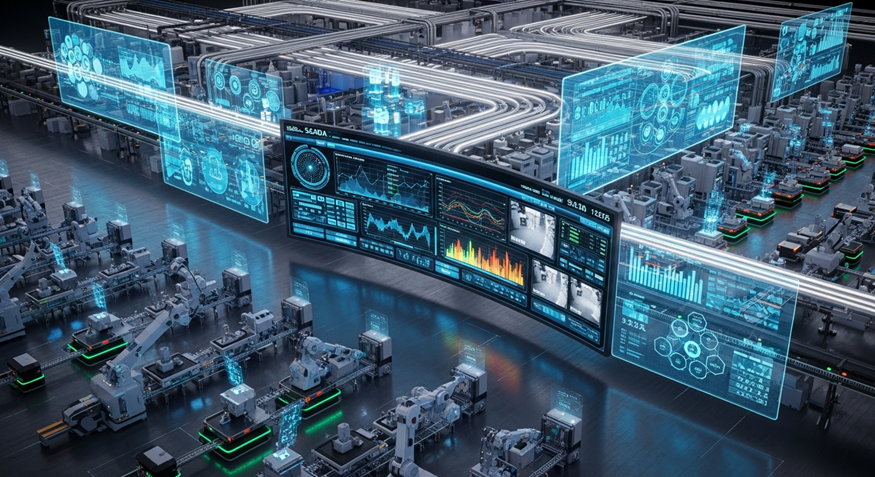
Key Highlights
- SCADA, which stands for supervisory control and data acquisition, is a system used for remote monitoring and process control in industrial automation.
- A SCADA system gathers data from industrial processes and presents it to a human operator, allowing for high-level supervision.
- Core functions include data collection, automated control actions, and real-time monitoring to improve operational efficiency.
- Key industries like energy, water management, and manufacturing rely on SCADA for managing critical infrastructure.
- Modern SCADA solutions integrate with IoT and feature advanced analytics for predictive maintenance.
- Cybersecurity is a major concern, requiring robust security measures to protect these vital systems from threats.
Introduction
Welcome to the world of smart industrial automation! Have you ever wondered how large-scale industries like power plants or water treatment facilities manage their complex operations seamlessly? The answer often lies in a powerful control system known as SCADA. This technology is the backbone of modern industry, providing the tools needed to monitor, manage, and optimize vast industrial processes from a central location. This blog will explore what a SCADA system is and why it's so crucial for today's automated world.
Understanding SCADA: Supervisory Control and Data Acquisition
SCADA is an acronym that stands for Supervisory Control and Data Acquisition. At its core, it is an architecture of software and hardware elements that allows industrial organizations to monitor and manage their processes. Think of it as the central nervous system for industrial operations.
From a centralized control room, operators can use a SCADA system to supervise everything from a single machine to an entire plant. This high-level oversight of industrial processes is essential for maintaining efficiency, safety, and productivity across the board.
SCADA Meaning and Historical Evolution
So, what is SCADA and how does it work? A SCADA system is an industrial control system that monitors and controls infrastructure processes by communicating with devices and equipment. It gathers process data, records historical data, and presents it to operators through graphical interfaces. This allows organizations to oversee their critical infrastructure, making smarter decisions based on real-time information.
Historically, SCADA systems began as monolithic, standalone systems running on mainframe computers. These early versions were isolated and lacked network connectivity, making them inflexible. As technology advanced, they evolved into networked architectures.
This evolution led to modern, interconnected systems that leverage cloud computing and the Internet of Things (IoT). Today's SCADA systems offer greater scalability, remote access, and advanced analytics, making them indispensable for managing complex industrial operations efficiently and securely.
Core Functions of SCADA Systems
The primary purpose of a SCADA system is to enhance operational efficiency through several key functions. These systems are designed to automate and simplify the management of industrial environments that would be too complex for humans to handle manually.
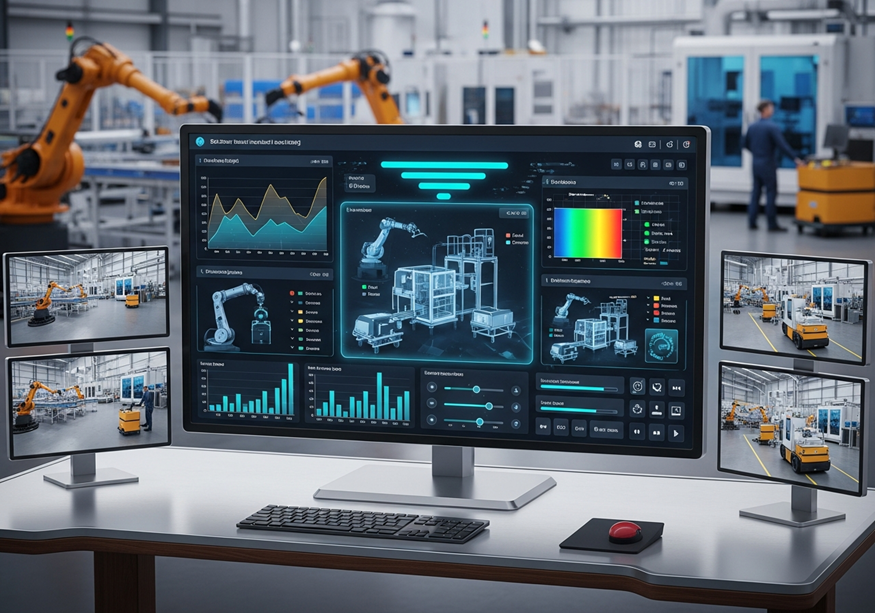
SCADA systems excel at providing real time supervision and control. They use sensors and measuring devices to automatically detect alarms or abnormal behavior, triggering a programmed control function in response. For example, if pressure in a line gets too high, the system can automatically open a release valve. The core functions include:
- Data collection: Gathering real time data from sensors and devices.
- Process control: Enabling automated or operator-initiated control over equipment.
- Alarm management: Notifying operators of hazardous conditions or system deviations.
- Remote access: Allowing for monitoring and control from a central location.
These capabilities help organizations maintain smooth operations, make informed decisions, and prevent costly downtime.
How SCADA Works in Industrial Automation
In the field of industrial automation, a SCADA system acts as a central hub for managing and overseeing complex industrial processes. It functions by continuously collecting data from the plant floor and translating it into meaningful, actionable information for operators. This process of data acquisition happens in real time, ensuring that the information is always current.
This constant flow of information allows for precise monitoring and control. Operators can view the status of all connected equipment, identify potential issues before they become critical, and make adjustments as needed. This capability makes a SCADA system an essential tool for optimizing performance and maintaining safety. Now, let's look closer at how it handles data and remote control.
Data Collection and Real-Time Monitoring
A core strength of SCADA in industrial automation is its robust data collection and real-time monitoring capability. Systems gather various types of data from the field, including analog sensor data like temperature and pressure, as well as digital data that might trigger an alarm. This process data is collected from field devices and transmitted to the central system for processing.
Once collected, the information is displayed on user-friendly dashboards, often as graphs or charts. This visualization allows operators to monitor system performance at a glance and quickly detect any anomalies. The ability to see what’s happening in real time is crucial for maintaining operational efficiency and preventing disruptions.
Furthermore, this continuous stream of process data can be archived and used for advanced analytics. By analyzing historical trends, organizations can optimize processes, predict maintenance needs, and make more informed, data-driven decisions to improve overall performance.
Remote Process Control and Supervision
Beyond just monitoring, a SCADA system provides powerful capabilities for remote process control. Operators can issue control commands from a central location to adjust equipment settings, start or stop machinery, or respond to alarms. This remote access eliminates the need for personnel to be physically present at every machine or remote site.
These control actions are sent from the central supervisory system through the communication network to field devices like PLCs and RTUs. For instance, an operator can remotely open a valve, adjust a pump's speed, or shut down a system if a safety hazard is detected. This ensures a rapid response to changing conditions.
This combination of remote monitoring and control is what makes a SCADA system so valuable. It allows a small team to manage large, geographically dispersed operations efficiently and safely, ensuring that industrial processes run smoothly and within their desired parameters.
Main Components of a SCADA System
A SCADA system is not a single piece of technology but rather an industrial control system comprised of several interconnected parts. These key components work together to gather, transmit, and display data, enabling operators to effectively manage their operations. Understanding these parts is essential to grasping how the entire control system functions.

From the software that operators interact with to the hardware devices out in the field, each element plays a critical role. Let's explore the main system components that make up a typical SCADA architecture, including the user interface, field controllers, and communication networks.
Human-Machine Interface (HMI) and Supervisory Software
The Human-Machine Interface (HMI) is the component of the SCADA system that you can see and interact with. It's a user interface, or dashboard, that presents process data to a human operator in a graphical format. This HMI software can run on computer monitors, tablets, or built-in screens, providing a visual window into the industrial process.
Through the HMI, operators can monitor key performance indicators, track production trends, and view alarms. The visual display makes it easy to understand the status of the equipment and the overall system. For example, an operator could use the interface to see the temperature of a water tank or check the performance of a pump.
The supervisory software is the brains behind the HMI. This SCADA software collects the data from the field, processes it, and sends it to the HMI for display. It’s also where operators issue commands to control the machinery, making it a central point of interaction for the entire system.
Remote Terminal Units (RTUs) and Programmable Logic Controllers (PLCs)
At the field level, a SCADA system relies on smart devices to interact with machinery. Two of the most important are Remote Terminal Units (RTUs) and Programmable Logic Controllers (PLCs). These are small, ruggedized computers designed for industrial environments that connect directly to sensors and actuators.
PLCs are mini-computers that execute control logic. They monitor inputs from sensors—like the speed of a motor—and make decisions based on their programming to control outputs, such as sending a signal to slow that motor down. They are the workhorses that perform the automated control actions in the system.
RTUs serve a similar purpose but are typically used at remote sites where there is less infrastructure. They collect data from sensors and store it until the central SCADA system requests it. Both RTUs and PLCs act as the crucial link between the central supervisory station and the field devices on the plant floor.
Communication Networks and Field Devices
For a SCADA system to function, all its components must be able to talk to each other. This is where communication networks come in. These SCADA networks are the pathways that transmit data between the field devices, RTUs/PLCs, and the central supervisory computer. They can consist of fiber optic cables, wireless connections, or even traditional twisted-pair cables.
These networks must be reliable and secure, especially when connecting remote locations. They use various communication protocols—like Modbus or DNP3—which are standardized languages that ensure different devices can understand each other. This interoperability is key to building a cohesive and efficient system.
Finally, the field devices themselves are the eyes and ears of the system. These include sensors that measure variables like temperature, pressure, and flow, as well as actuators that execute commands, such as opening a valve or starting a motor. They are responsible for gathering the raw sensor data that fuels the entire SCADA system.
SCADA Architectures and Types
Not all SCADA systems are built the same way. Over the years, the SCADA architecture has evolved significantly, moving from simple, self-contained setups to complex, interconnected networks. The control system architecture you choose depends on the scale and needs of your operation.
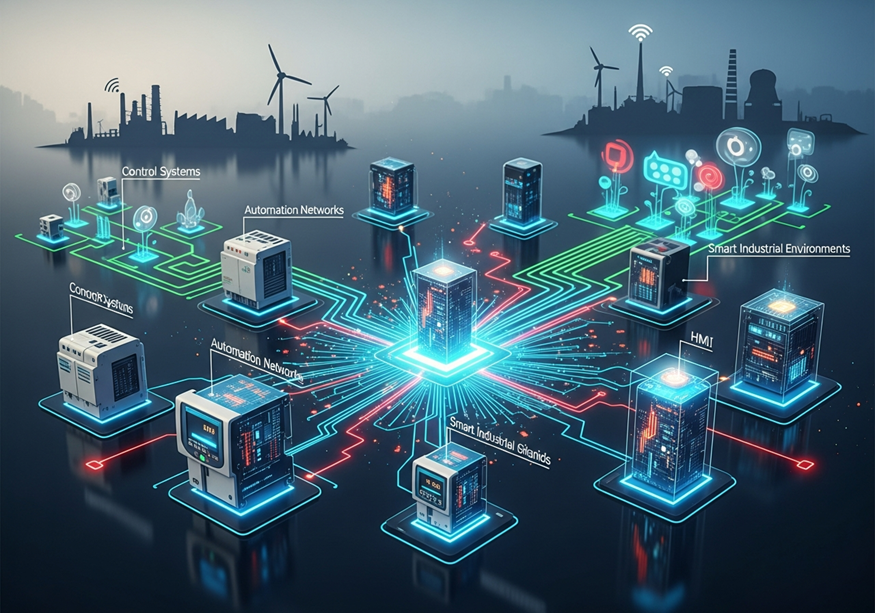
Early systems were isolated, but the introduction of networking created more flexible and powerful options. We'll examine the different types of SCADA systems, from monolithic to modern networked SCADA systems, and see how they integrate with today's technologies like the Internet of Things (IoT).
Monolithic, Distributed, and Networked SCADA Systems
SCADA architectures have undergone a significant transformation. The earliest form was the monolithic SCADA system, which operated on standalone mainframe computers. These systems offered centralized control but were proprietary, expensive, and not connected to any network, making them obsolete today.
The next generation was distributed SCADA systems. These used Local Area Networks (LANs) to connect multiple stations, allowing for distributed control. This improved redundancy and efficiency compared to monolithic systems, but their reach was still limited to a local facility.
Networked SCADA systems represent a major leap forward, using Wide Area Networks (WANs) and standard protocols to enable remote monitoring across vast distances. This architecture allows for enterprise-wide integration and is more cost-effective. These different systems show a clear progression toward greater connectivity and flexibility.
| SCADA Type | Characteristics | Advantages/Disadvantages |
|---|---|---|
| Monolithic | Standalone mainframe, no network connectivity. | Highly centralized but inflexible and obsolete. |
| Distributed | Multiple stations connected via LAN. | Improved redundancy but limited to local networks. |
| Networked | Uses WANs and standard protocols for remote access. | Highly scalable and integrated, but requires cybersecurity. |
Integration with IoT for Modern Automation
The latest evolution in industrial automation is the integration of SCADA with the Internet of Things (IoT). Modern SCADA solutions leverage cloud computing and IoT devices to bring unprecedented levels of connectivity and data analysis to industrial operations. This combination creates a powerful, intelligent system.
By connecting with a vast network of IoT sensors, SCADA systems can gather more granular data than ever before. This data is often processed in the cloud, enabling advanced analytics and predictive maintenance on a massive scale. This integration allows for real-time data analysis and remote access from virtually anywhere.
Using standard automation protocols, these hybrid systems balance flexibility, security, and performance. IoT-enabled SCADA solutions are available in public, private, or hybrid cloud models, offering businesses scalable and cost-effective ways to optimize their operations and embrace data-driven decision-making.
Key Industries Using SCADA Solutions in the United States
SCADA solutions are the backbone of many critical infrastructure sectors across the United States. From managing the power grid to ensuring clean water, these systems are essential for the smooth running of daily life. The versatility of this control system makes it applicable to a wide range of industrial operations.
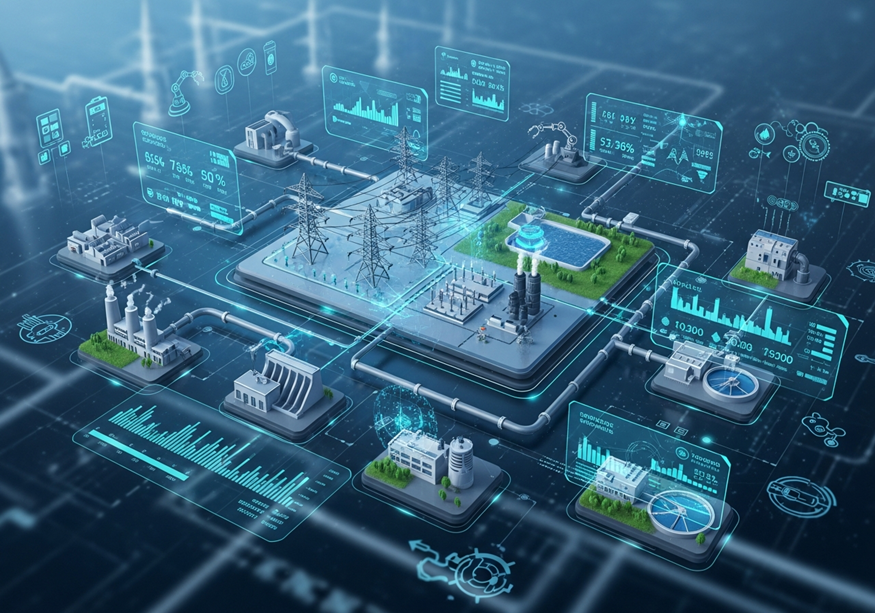
The ability of SCADA to provide centralized monitoring and control over large, complex systems makes it invaluable for any industry that relies on industrial automation. Let's explore some of the key sectors where SCADA plays a crucial role in maintaining efficiency and safety.
Energy, Water, and Wastewater Management
The energy sector heavily relies on SCADA to manage power plants and distribution grids. These critical systems help utility companies monitor energy consumption, ensure reliability, and intervene manually if operations deviate from the norm. SCADA provides the real-time monitoring and alarm processes needed to maintain a continuous and stable power supply.
In water and wastewater management, SCADA systems are just as vital. They are used to operate water treatment plants efficiently, monitor storage tank levels, and manage pump stations. This oversight ensures that water quality standards are met and that the distribution network functions correctly.
For wastewater collection systems, SCADA helps manage the flow and treatment processes, preventing overflows and ensuring environmental compliance. The ability to monitor these critical systems remotely and automatically is crucial for public health and safety.
Manufacturing, Food and Beverage, and Pharmaceuticals
In the manufacturing industry, SCADA systems are used to oversee and optimize production processes. They monitor industrial equipment performance, track production metrics, and help maintain quality standards. By collecting and analyzing process data, manufacturers can improve efficiency, reduce waste, and minimize downtime.
The food and beverage industry uses SCADA to ensure production quality and consistency. These systems help manage everything from ingredient mixing to packaging, helping companies reduce costs and maximize the yield of their products. They also play a role in monitoring refrigeration and other critical systems to maintain safety.
Similarly, pharmaceutical and biotech firms rely on SCADA to ensure their industrial equipment operates at optimal levels. This is critical for maximizing production processes while adhering to strict regulatory and quality standards. Accurate process data helps reduce maintenance costs and ensures product integrity.
SCADA and Cybersecurity Challenges
As SCADA systems have become more networked and connected to the internet, SCADA security has become a paramount concern. These systems control critical infrastructure, making them attractive targets for cyberattacks. A breach could have devastating consequences, from power outages to public safety crises.
Therefore, critical infrastructure protection is a top priority for any organization using SCADA. Implementing robust security measures, including strong access control and continuous monitoring, is no longer optional. Let’s look at the common threats and the best practices for securing these vital systems.
Common Threats to SCADA Systems
SCADA networks face a variety of cybersecurity threats that can compromise the integrity of critical infrastructure. Unauthorized access is one of the most significant risks, where malicious actors could gain control of industrial processes. This can be achieved through hacking, insider threats, or exploiting software vulnerabilities.
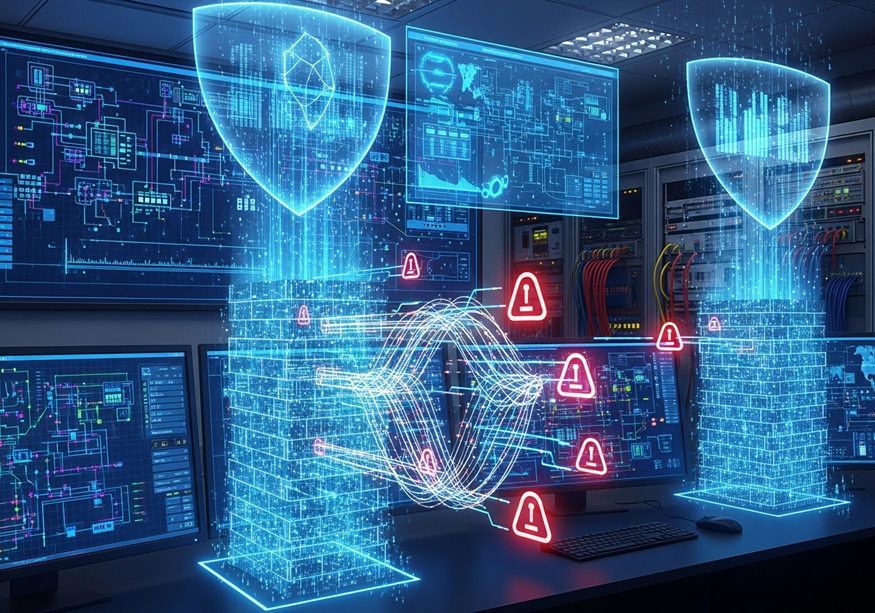
A lack of regular maintenance or software updates can create security gaps that attackers can exploit. For example, the Stuxnet worm famously targeted a specific industrial control system by taking advantage of unpatched vulnerabilities. Another weakness is a lack of security training for employees, who may inadvertently introduce malware or fall for phishing attacks. Common threats include:
- Malware and ransomware designed to disrupt operations.
- Zero-day attacks that exploit previously unknown vulnerabilities.
- Insider threats, both malicious and unintentional.
- Denial-of-service (DoS) attacks that overwhelm SCADA networks.
These threats highlight the need for a multi-layered security approach to protect these essential systems.
Best Practices for Enhancing SCADA Security
Enhancing SCADA security requires a proactive and comprehensive strategy. One of the first steps is to document and map where systems connect to the internet and internal networks. This helps identify all potential entry points for an attack and allows for better monitoring.
Implementing strong security measures is also crucial. This includes network segmentation to isolate critical systems, using firewalls, and ensuring robust access control to prevent unauthorized users from making changes. Organizations must also have procedures in place for a rapid response in case a breach is detected.
Some of the best practices for protecting your SCADA systems include:
- Regularly updating and patching all software and hardware.
- Implementing strict access control and user authentication.
- Conducting regular security audits and vulnerability assessments.
- Providing comprehensive cybersecurity training for all employees.
By following these guidelines, organizations can significantly reduce their risk and improve their overall SCADA security posture.
Comparing SCADA With Other Industrial Automation Systems
The world of industrial automation includes several different types of automation systems, and it's easy to get them confused. While a SCADA system is a powerful tool for high-level supervision, it's not the only player on the field. Other systems, like PLCs and DCS, have their own specific roles and strengths.
Understanding the differences is key to choosing the right solution for your needs. Different manufacturers may specialize in one type of system over another, so it's helpful to know how they compare. We'll explore the distinctions between SCADA and other common industrial automation systems.
Differences Between SCADA, PLCs, and DCS
While SCADA, Programmable Logic Controllers (PLCs), and Distributed Control Systems (DCS) are all used in industrial automation, they serve different functions. A SCADA system is primarily a supervisory system, focused on high-level monitoring and data acquisition over large geographical areas.
PLCs, on the other hand, are hardware-based controllers that execute specific control logic for individual machines or processes. They run programs, often written in ladder logic, to directly manage field devices in real time. A DCS is more like a hybrid—it provides distributed control over an entire plant or a large, complex process, integrating control, monitoring, and data acquisition in a single system.
Here are the key distinctions:
- SCADA: Focuses on supervision, data gathering, and remote control over wide areas.
- PLC: Executes real-time control logic for specific machines.
- DCS: Manages an entire plant-wide process with a tightly integrated control system.
In many cases, these systems work together, with PLCs handling local control and a SCADA system providing the overall supervisory layer.
Use Cases for Each Automation System
The best control system for a job depends on the specific industrial operations involved. SCADA systems are ideal for applications that require remote monitoring over large areas. This includes oil and gas pipelines, electrical power grids, and municipal water systems, where centralized supervision of geographically dispersed assets is essential.
PLCs are the go-to choice for controlling individual machines and small-scale automation tasks. You’ll find them everywhere in manufacturing, controlling conveyor belts, robotic arms, and assembly line equipment. Their rugged design and real-time processing make them perfect for the factory floor.
A DCS is typically used for complex, continuous process control within a single facility, such as a chemical plant, oil refinery, or power generation station. These systems manage thousands of I/O points in a tightly integrated environment, ensuring the entire process runs as a unified whole.
Top SCADA Software Solutions Today
Choosing the right SCADA software is a critical decision that will impact the efficiency and scalability of your operations. The market is filled with a variety of software solutions, each offering different features and capabilities. These software components are the core of your system, providing the interface and analytics you need.
When evaluating options, it's important to consider factors like ease of use, integration capabilities, and security features. We'll take a look at some of the leading SCADA platforms available today and what you should look for when making your selection.
Leading SCADA Platforms in the Market
The SCADA software market features several prominent players that offer robust and reliable software solutions for a wide range of industries. Companies like Siemens, Rockwell Automation, and AVEVA are well-known leaders, providing comprehensive platforms that handle everything from HMI design to data historization and alarm management.
Schneider Electric is another major name in the space, offering powerful SCADA software designed for critical systems in energy, water, and infrastructure. These platforms are built to be scalable, secure, and highly customizable to meet the specific needs of different manufacturers and industrial sectors.
When exploring these options, you'll find that each has its own strengths. Some may excel in ease of use and rapid deployment, while others might offer more advanced analytics and integration with enterprise systems. The best choice often depends on your industry, the scale of your operation, and your long-term strategic goals.
Features to Consider When Selecting SCADA Software
When you're ready to select a SCADA software platform, there are several key components and features to evaluate. A modern, intuitive user interface (HMI) is essential. It should be easy for operators to visualize data, navigate through screens, and issue control commands without extensive training.
Scalability is another critical factor. Your chosen software should be able to grow with your business, whether that means adding more devices, connecting to more sites, or handling larger volumes of data. Look for solutions that support both small-scale projects and large, enterprise-wide deployments.
To make an informed decision, consider these features:
- Advanced analytics: Does the software offer tools for trend analysis, reporting, and predictive maintenance?
- Connectivity: Does it support the communication protocols you need to connect to your existing hardware?
- Security: What security measures are built-in to protect against cyber threats?
- Mobile access: Does it provide options for remote monitoring and control via tablets or smartphones?
Benefits of Implementing SCADA in Industrial Automation
Implementing SCADA solutions in your industrial automation strategy can unlock a host of significant benefits. The most immediate and impactful is a boost in operational efficiency. By providing a clear, real-time view of your processes, SCADA empowers your team to make faster, smarter decisions.
This leads directly to tangible cost savings, from reduced maintenance costs to optimized resource use. Through continuous monitoring and automation, SCADA helps you get the most out of your assets while minimizing waste and downtime. Let's dig into how SCADA achieves these impressive results.
Boosting Operational Efficiency and Productivity
One of the primary benefits of a SCADA system is its ability to dramatically improve operational efficiency. By automating complex industrial processes, SCADA reduces the need for manual intervention, which in turn minimizes the chance of human error. This leads to more consistent and reliable production processes.
Access to real-time process data allows operators to fine-tune operations on the fly. They can optimize machine runtimes, regulate flow rates, and adjust settings to maximize output and reduce energy consumption. This level of precise control helps streamline workflows and boost overall productivity.
Furthermore, by analyzing historical process data, businesses can identify bottlenecks and inefficiencies in their production processes. Addressing these issues leads to smoother operations, lower maintenance costs, and a more competitive edge in the market.
Achieving Scalability and Data-Driven Decision Making
Modern SCADA systems are designed with scalability in mind. Whether you are starting with a single production line or managing a network of facilities across the country, a SCADA system can be tailored to fit your needs and expand as your business grows. This flexibility makes it a future-proof investment.
The wealth of process data collected by SCADA systems is the foundation for data-driven decision-making. Instead of relying on guesswork, managers can use hard data to guide their choices. This enables more strategic planning and resource allocation.
This data also fuels advanced analytics for applications like predictive maintenance. By analyzing trends in equipment performance, SCADA can help predict potential failures before they happen, allowing you to schedule maintenance proactively. This reduces unplanned downtime and extends the life of your valuable assets.
Conclusion
In conclusion, SCADA systems play a pivotal role in transforming industrial automation by enhancing efficiency, productivity, and remote monitoring capabilities. By integrating SCADA with IoT and adopting best practices for cybersecurity, industries can navigate modern challenges while optimizing their operations. The evolution of SCADA technology not only supports real-time data collection and analysis but also empowers decision-makers to act swiftly based on accurate information. As you consider implementing SCADA solutions, remember the significant advantages they bring to various sectors, from energy management to manufacturing. Ready to take your industrial processes to the next level? Get in touch for a free consultation today!
Frequently Asked Questions
How does SCADA help industries monitor and control their processes remotely?
A SCADA system enables remote monitoring by collecting real-time data from field devices and displaying it on a central console. Through remote access, operators can issue control actions to adjust equipment from anywhere, making it a powerful tool for process control without needing to be physically on-site.
What are the main cybersecurity risks facing SCADA systems?
The main cybersecurity risks to SCADA systems include unauthorized access by hackers, malware infections like ransomware, and insider threats. Because they manage critical infrastructure, these systems are prime targets, and a breach can lead to significant operational disruptions. These common threats make SCADA security a top priority.
How do SCADA systems integrate with existing industrial equipment?
A SCADA system integrates with existing industrial equipment through PLCs and RTUs that connect to sensors and actuators. The control system uses standard communication protocols and flexible software components, allowing for seamless integration with a wide variety of hardware from different manufacturers, creating a unified monitoring environment.
You might also like