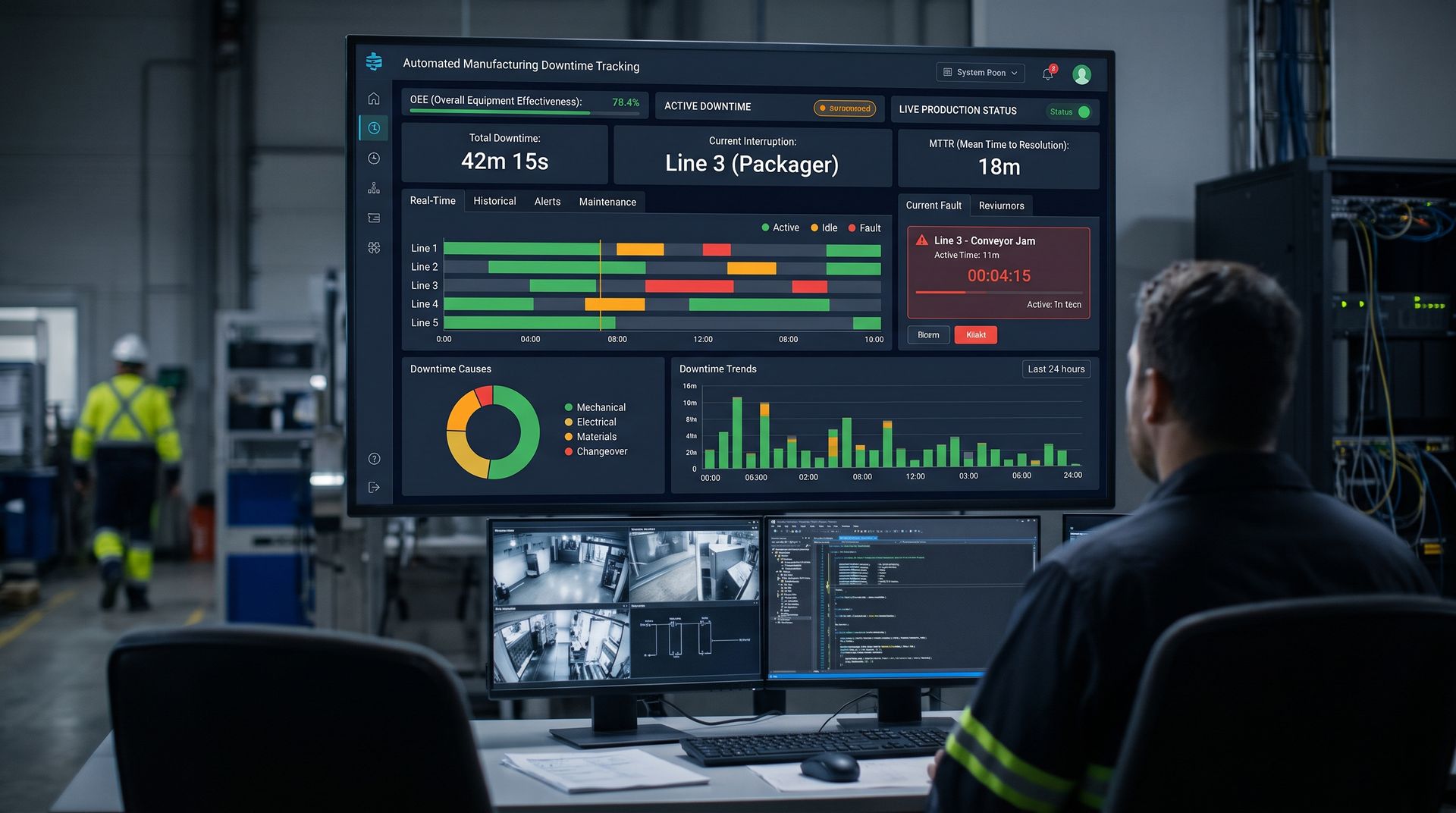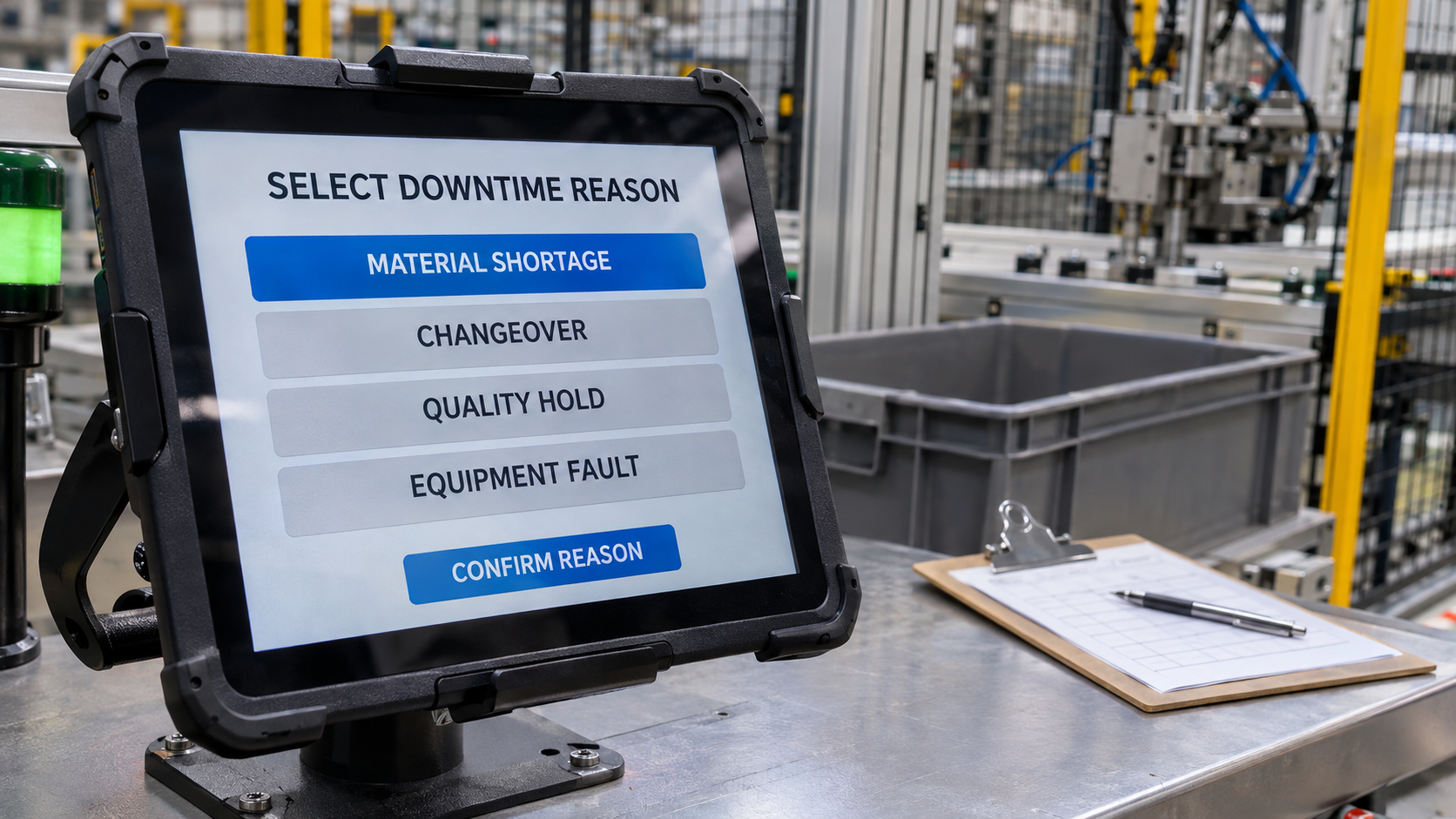
Spare Parts and MRO
Spare Parts and MRO: Linking Inventory Management to PLC Fault Telemetry
When an unexpected breakdown occurs on a high-speed production line, the clock is ticking. The maintenance technician arrives at the machine, performs rapid electrical and mechanical diagnostics, and isolates the root cause within ten minutes: a three-phase conveyor drive motor has suffered an internal winding short.
The technician walks briskly to the maintenance, repair, and operations (MRO) parts crib. They type the motor part number into the inventory system, which proudly reports:
QTY ON HAND: 2 | LOCATION: BIN C-14
.
The technician walks over to Bin C-14. The bin is completely empty.
One motor was used three weeks ago by the night shift and never logged out of the system. The second motor was taken by a contractor yesterday for a separate project. The plant is out of stock. The local distributor has a four-day lead time, and expediting a replacement unit via hot-shot courier will cost $3,500 in freight alone—while the line sits dead for the next 18 hours.
The "ghost inventory" crisis is an all-too-common reality in manufacturing plants. Facilities spend immense resources optimizing PLC ladder logic, fine-tuning OEE dashboards, and training technicians, yet ignore the physical supply chain that underpins mechanical uptime.
A world-class control system cannot fix a machine if the replacement parts do not exist on the shelf.
Here is why traditional MRO inventory management fails industrial plants, the cost of operating with disconnected parts data, and how to link your spare parts strategy directly to real-time PLC telemetry and SCADA intelligence.
Mistake #1: Operating MRO in a Complete Data Silo
Why it happens: In most industrial facilities, maintenance inventory is managed inside an isolated module of an enterprise ERP system (like SAP or Oracle) or a standalone CMMS. This system has zero connection to the operational technology (OT) network—the PLCs, SCADA systems, and Data Historians that monitor the physical equipment.
What it costs: Blind procurement decisions. The purchasing department sets reorder points based on generic, historical purchasing patterns rather than actual equipment operational stress.
If a packaging machine is running high-wear abrasive materials on double shifts, its drive belts, bearings, and pneumatic cylinders are wearing out twice as fast as historical ERP averages suggest. Because the MRO system has no visibility into machine run-hours, reorder triggers lag behind actual physical wear, guaranteeing stockouts during critical breakdown windows.
The fix: Connect your MRO inventory platform directly to your plant Data Historian via automated IoT connectors and REST APIs.
Empowered Automation builds data pipelines that feed real-time machine run-hours, cycle counts, and operating hours directly into the inventory database. When a machine's main indexer crosses 500,000 cycles, the inventory system automatically checks the crib stock for the designated overhaul kit, flagging a purchase order weeks before the components are scheduled for replacement.
Mistake #2: Unlinked Bill of Materials (BOM) Inside Machine Fault Codes
Why it happens: When a machine trips, the HMI displays a fault code:
FAULT: SERVO DRIVE AXIS 3 OVERCURRENT
. To find the correct replacement part, the technician must locate the paper machine manual, find the electrical prints, search through a 200-page schematic, identify the manufacturer's part number, cross-reference it with the plant’s internal crib stock number, and then search the inventory database.
What it costs: Severe diagnostic latency. Technicians spend 30 to 45 minutes searching through binders, schematics, and dirty crib shelves just to identify which specific part number they need.
In many cases, they pull the wrong revision of a drive or sensor, walk all the way back to the machine, discover the mounting bracket or voltage rating doesn't match, and have to start the search over again.
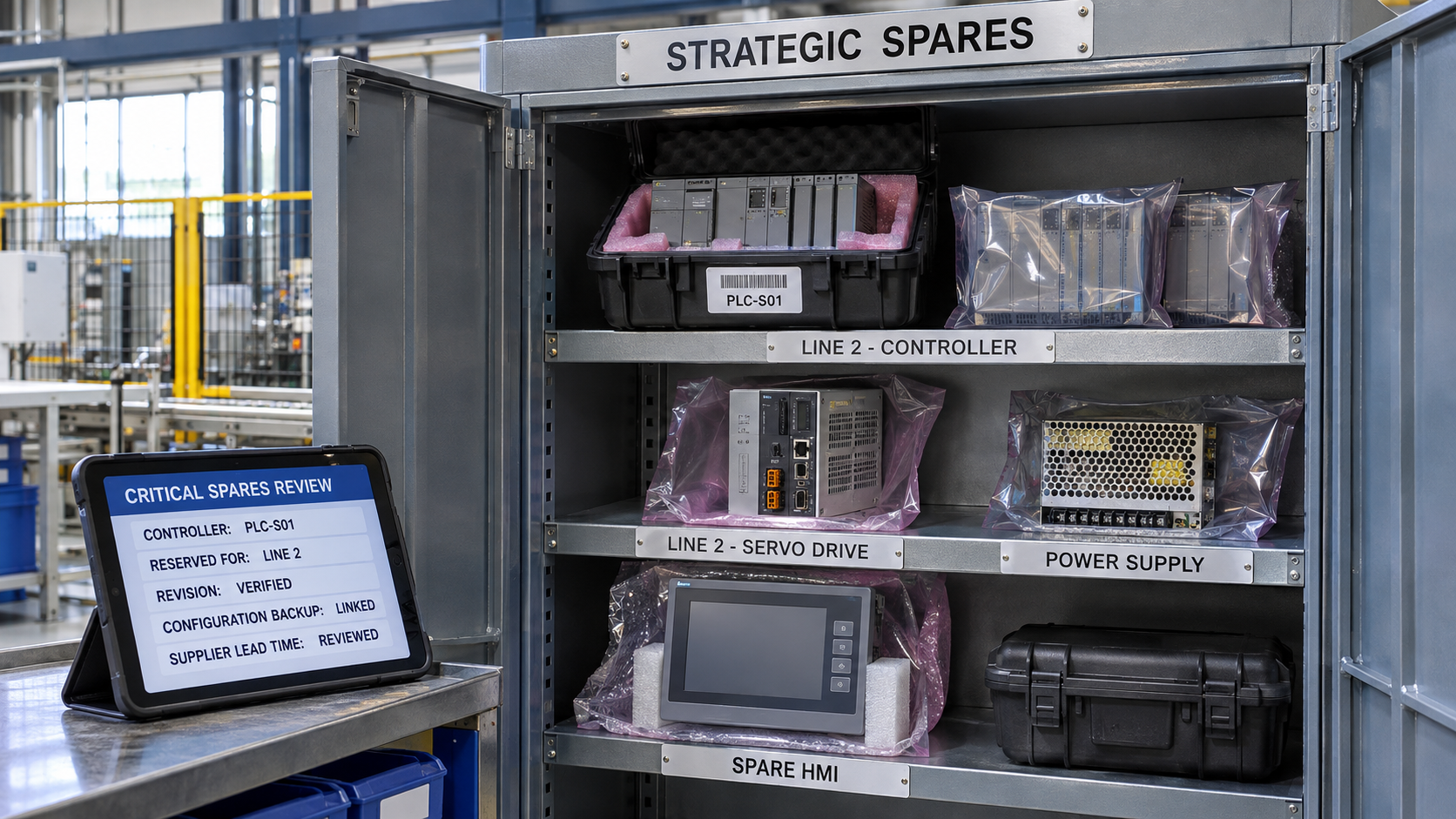
The fix: Embed interactive, digital Bills of Materials directly into your SCADA alarm screens. When an axis faults on the HMI, tapping the alarm banner should open an integrated component panel displaying:
- Exact physical component name and description.
- OEM part number and internal plant stock-keeping unit (SKU).
- Real-time inventory count in the parts crib.
- Precise crib bin location (e.g.,
Aisle 3, Shelf B, Bin 12).
By linking the PLC fault tag directly to the inventory database, you collapse a 45-minute parts search into a 5-second digital lookup.
Mistake #3: The "Workbench Squirrel" Phenomenon
Why it happens: Because technicians have experienced the frustration of empty crib bins during midnight breakdowns, they develop defensive habits. When a shipment of high-turnover components (such as photo-eyes, proximity sensors, pneumatic solenoids, or small VFDs) arrives at the plant, technicians grab two or three spares and stash them inside their personal toolboxes, under workbenches, or inside machine control enclosures.
What it costs: Complete inventory distortion. The official inventory management system shows zero stock, prompting purchasing to order more expensive spares. Meanwhile, thousands of dollars worth of critical automation components sit hidden across the plant floor, gathering dust and aging out of warranty.
When another technician needs that exact sensor at 3:00 AM on a different line, they cannot find it, and the machine sits idle despite the part being physically present inside the building.
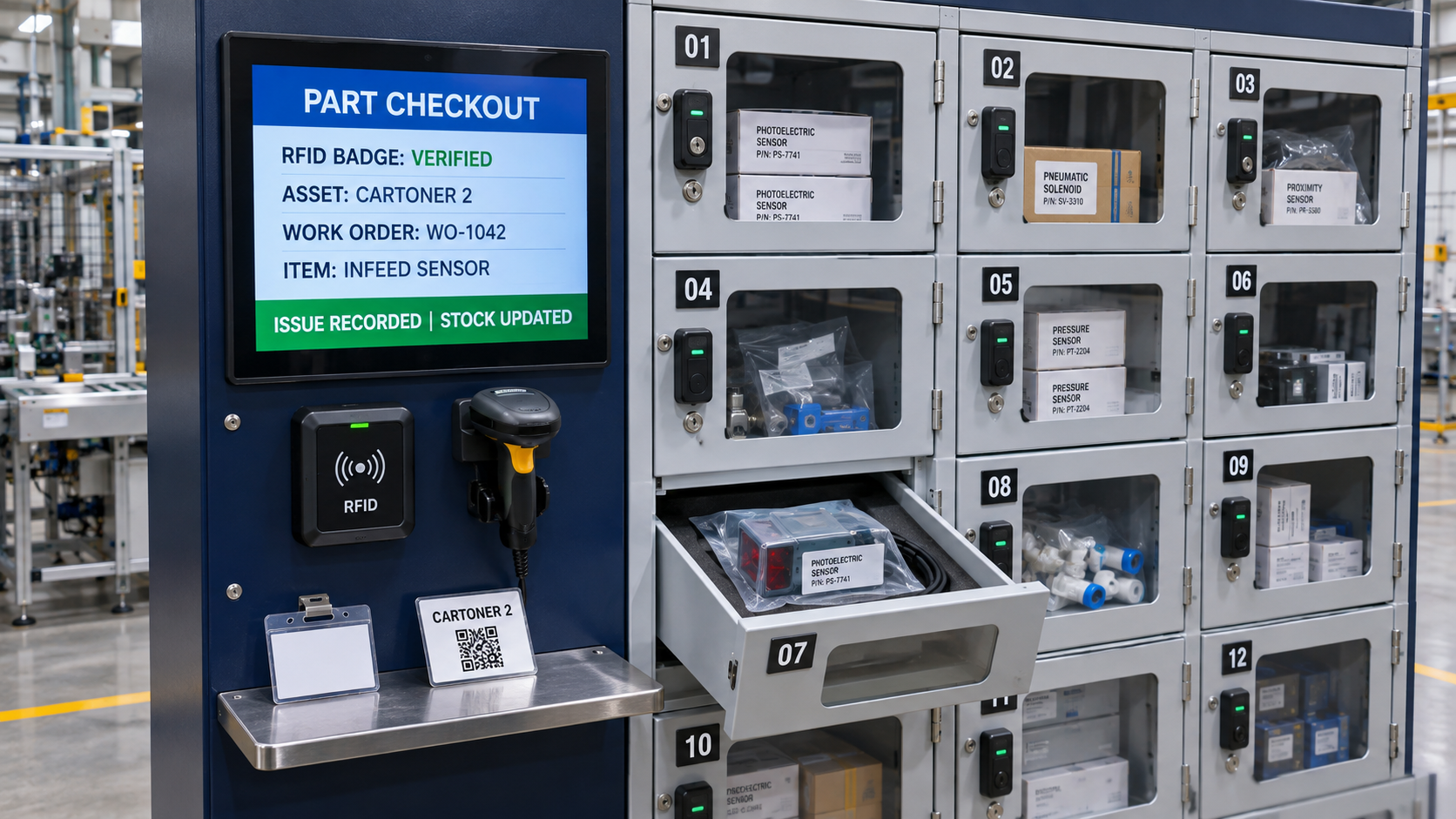
The fix: Deploy automated, badge-authenticated parts dispensing systems (smart lockers or carousel cabinets) integrated with the SCADA/CMMS architecture.
To pull a sensor, the technician swipes their employee RFID badge and scans the machine QR code. The system automatically associates the pulled part with the active work order and decrements inventory immediately. Combine this with strict operational culture and regular 5S workplace audits to eliminate informal stash points.
Mistake #4: Ignoring Lead-Time Volatility on Critical Automation Hardware
Why it happens: Purchasing departments review Minimum/Maximum (Min/Max) inventory levels once every three years. They assume that if an Allen-Bradley PLC processor, a Siemens servo drive, or an SMC pneumatic valve manifold had a two-week lead time when the line was commissioned, that lead time remains valid forever.
What it costs: Catastrophic, multi-week outages. Global supply chain disruptions, semiconductor shortages, and component obsolescence can cause lead times on specialized automation hardware to surge from two weeks to 26 weeks or more without warning.
If a critical, single-point-of-failure controller blows an internal power supply and the plant does not have a spare on the shelf, the entire line is dead for months. The cost of carrying a $4,000 spare PLC processor is negligible compared to losing $50,000 a day in plant capacity while waiting on factory backorders.
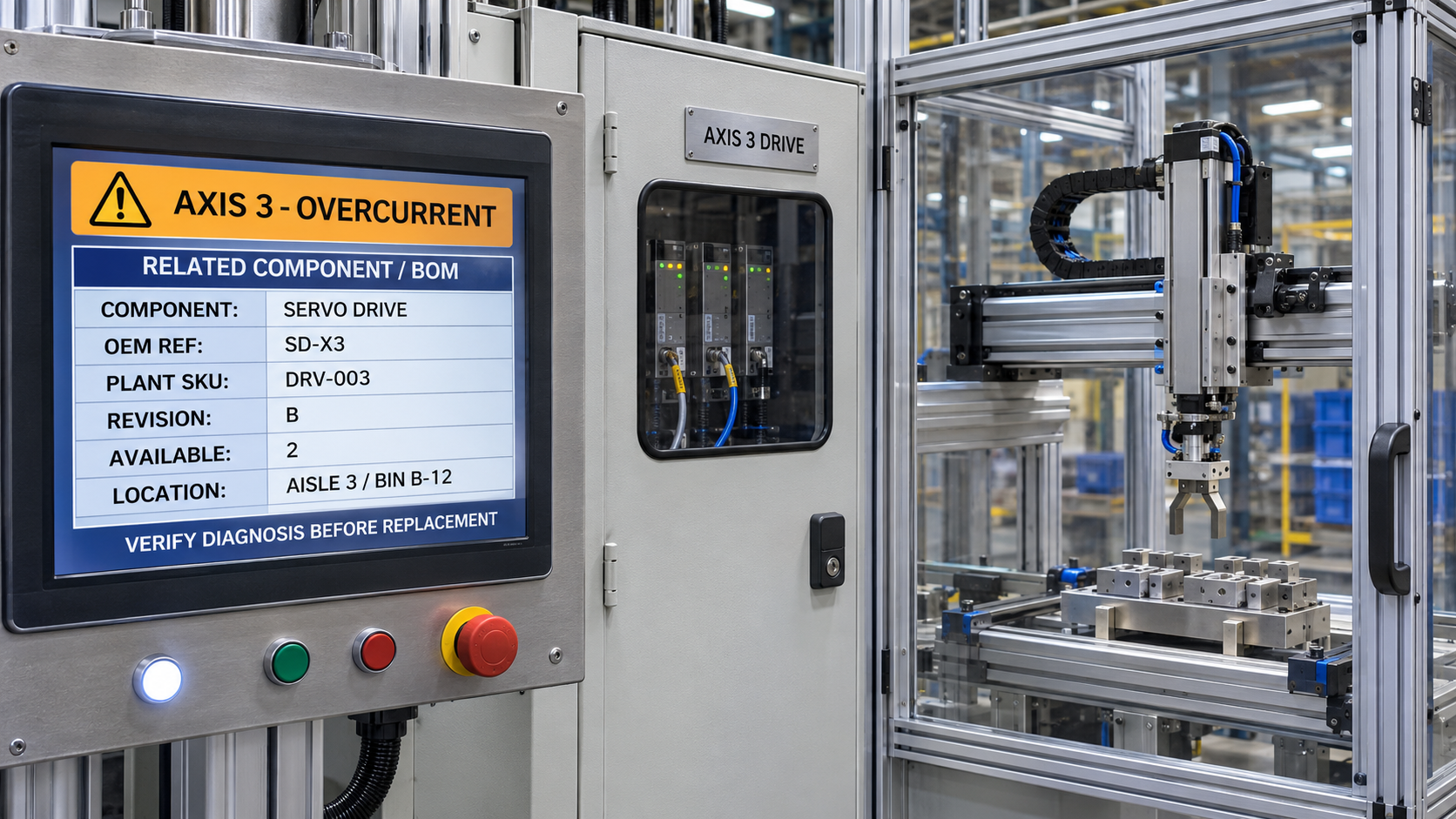
The fix: Implement dynamic criticality scoring and automated lead-time tracking for all automation assets. Classify spare parts into four strict quadrants based on Operational Criticality vs. Supply Chain Lead Time:
High Criticality
│
QUADRANT II │ QUADRANT I
CRITICAL │ STRATEGIC SPARES
SHORT LEAD │ (Must Have on Shelf!)
│ Long Lead (>6 wks) + High Impact
─────────────────┼─────────────────
│
QUADRANT IV │ QUADRANT III
STANDARD │ PLANNED REORDER
OFF-THE-SHELF│ Non-Critical + Long Lead
│
Low Criticality
───────────────────────────────────► Lead Time
Any component that is a single point of failure on your bottleneck line and has a verified supplier lead time exceeding 48 hours must be categorized as a Mandatory Strategic Spare and maintained physically in the on-site crib at all times.
Telemetry-Driven MRO Inventory Architecture
Linking your physical parts supply chain to plant-floor automation creates an autonomous, self-balancing inventory loop:
[ Plant Floor: PLC / SCADA ]
• Tracks real-time machine run-hours, cycle counts, and fault codes.
• Flags component end-of-life thresholds dynamically.
│
▼
[ Integration Layer: APIs / MQTT ]
• Streams telemetry to the central Data Historian and CMMS database.
• Maps active PLC fault tags directly to machine Bill of Materials (BOM).
│
▼
[ MRO / Inventory Platform ]
• Displays real-time crib bin locations and stock counts on the machine HMI.
• Auto-generates purchase requisitions based on real machine wear, not calendar days.
│
▼
[ Purchasing & Supply Chain ]
• Reorders components dynamically based on vendor lead times and criticality scores.
• Eliminates "ghost inventory" and unauthorized personal work-bench stashes.
MRO & Spare Parts Integration Audit Checklist
Assess whether your spare parts strategy is properly integrated with your plant automation:
- [ ] Digital BOM Mapping: Can technicians view the exact OEM part number and crib bin location directly from the HMI fault screen?
- [ ] Telemetry-Driven Reorders: Are high-wear replacement parts reordered based on actual PLC run-hours and cycles rather than calendar estimates?
- [ ] Criticality Classification: Have all automation components (PLCs, drives, HMIs, power supplies) been scored for lead-time volatility and single-point-of-failure risk?
- [ ] Strategic Automation Spares: Does your facility physically stock on-site backups for all critical, programmed controllers and servo drives?
- [ ] Traceable Check-Out: Are spare parts checked out using automated badge-scanning or barcode systems linked to active work orders?
Conclusion
A high-performance manufacturing plant is a tightly coupled ecosystem of software, electrical logic, mechanical hardware, and physical inventory. Treating your MRO parts crib as an isolated administrative storeroom is an expensive mistake that guarantees extended, catastrophic downtime when unexpected failures strike.
By mapping your machine bills of materials directly into your HMI alarm screens, driving inventory reorder thresholds using real-time PLC cycle counts, and maintaining a disciplined inventory of long-lead strategic automation spares, you eliminate the frantic search for missing parts and ensure your maintenance team can execute rapid, permanent repairs every single time.
Ready to Modernize Your Plant's Automation and MRO Integration?
Empowered Automation Solutions helps manufacturers build resilient, fully integrated control systems. From designing HMI screens that embed component bills of materials to integrating PLC runtime telemetry with enterprise CMMS and Data Historian platforms, our systems integration team ensures your factory operates with complete clarity and maximum uptime.
Contact our engineering team to evaluate your facility’s automation architecture:
- Phone: (630) 553-0411
- Email: info@empoweredautomation.com
- Address: 1905 Marketview Dr., Suite 138, Yorkville, IL 60560
Frequently Asked Questions
How do we handle spare parts for obsolete legacy PLCs and drives?
The best strategy is a phased migration plan. While sourcing refurbished components from third-party surplus vendors can provide short-term emergency coverage, it is a high-risk gamble. Empowered Automation specializes in legacy control retrofits—engineering planned, drop-in upgrades that replace obsolete PLCs and drives with modern platforms during scheduled maintenance windows, eliminating the risk of unsourceable spare parts.
Can modern HMIs display electrical schematics and PDF manuals directly on the screen?
Yes. Modern web-based SCADA and HMI platforms (such as Ignition) support document viewers and web browser components. When an alarm triggers, the operator or technician can view the exact PDF page of the electrical schematic or mechanical exploded-view drawing directly on the HMI terminal, complete with component part numbers and wiring pinouts.
How does tracking component cycle counts prevent catastrophic machine damage?
Mechanical components like pneumatic cylinders, cutting dies, and high-speed solenoids have predictable physical fatigue limits. By tracking their actual actuations inside the PLC ladder logic and alerting maintenance before they reach their rated fatigue threshold, you replace the worn component smoothly during a planned changeover, preventing it from snapping mid-shift and destroying surrounding machine tooling.
You might also like