The Importance of Automation in Modern Industries Today
The Importance of Automation in Modern Industries Today
Key Highlights
- Automation uses technology to perform tasks with minimal human intervention, aiming to streamline processes and boost efficiency.
- Key automation technologies include industrial automation, robotic process automation (RPA), and business process automation.
- Businesses benefit from automation through increased operational efficiency, higher productivity, and enhanced product quality.
- Real-world examples range from industrial robots on assembly lines to software robots handling data entry.
- The future of automation involves smarter systems powered by AI and the Internet of Things (IoT).
- While automation changes job roles, it also creates new opportunities that require different skills.
Introduction
Welcome to the world of automation, where the use of technology is revolutionizing how we work and live. In simple terms, automation is about letting machines and software handle tasks that once required constant human intervention. This approach streamlines processes, improves efficiency, and reduces the chance of errors. From manufacturing floors to your own home, automation is reshaping industries and daily routines. Are you ready to see how this powerful technology is making a difference?
Defining Automation in Modern Industries
So, what exactly is automation? It is formally defined as the application of technology to carry out tasks or processes with little to no human involvement. The goal is to create systems that can operate on their own, making operations faster, more reliable, and more consistent across the board.
Various automation solutions are designed to replace manual effort, especially in repetitive or complex activities. By programming machines and software to execute specific functions, businesses can free up their teams to focus on more strategic work. Let's explore the core principles and history of this transformative technology.
Understanding the Core Concept of Automation
At its heart, automation involves using tools and systems to perform jobs without continuous manual input. Think of it as programming a computer or a robot to mimic human actions, especially those that involve a high degree of repetition. This technology-driven approach aims to streamline operations and boost productivity.
The core of automation lies in the algorithms and code that developers create. These instructions tell a machine exactly how to behave under different conditions, ensuring the process runs smoothly and accurately. This allows for tasks to be completed around the clock with minimal human intervention.
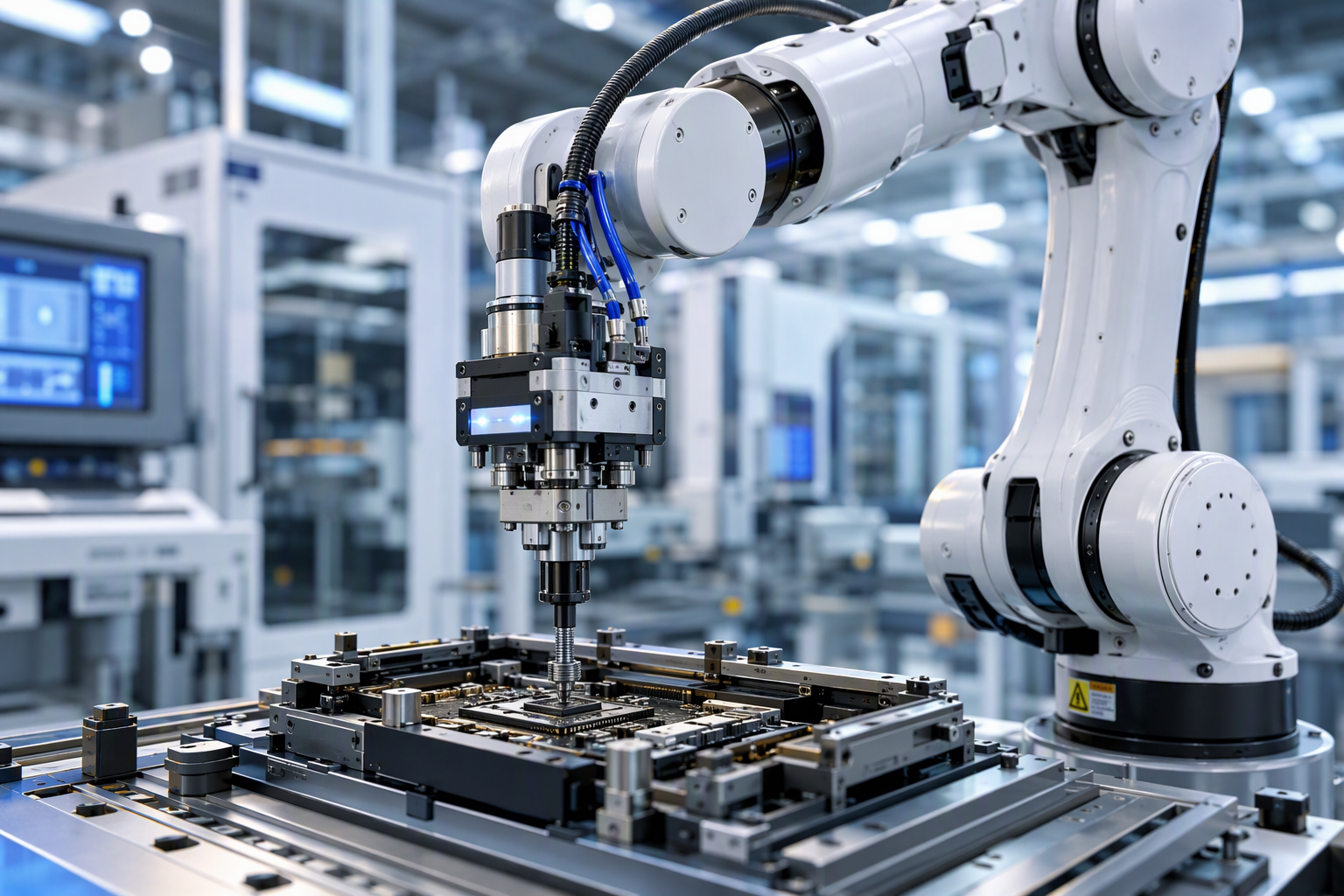
For example, a manufacturing plant might use robots to assemble products on a line. These robots follow precise commands to weld, tighten, or paint parts, which not only speeds up production but also guarantees consistency. This is a classic illustration of how automation takes over tasks that are predictable and routine.
Evolution and Milestones in Automation Technology
The concept of automation isn't new. The term itself was first coined by the automotive company General Motors back in 1946 to describe the automatic handling of parts in their manufacturing plants. Since then, technological advances have expanded its application far beyond the factory floor.
Over the decades, automation has hit several key milestones. It started with fixed machinery designed for single, repetitive tasks and evolved into more flexible and intelligent systems. The rise of computers, software, and artificial intelligence has continuously pushed the boundaries of what automation technologies can achieve.
This evolution reflects a shift from simple mechanical systems to complex, software-driven solutions. Each stage introduced new capabilities, making automation more versatile and powerful.
| Milestone | Description |
|---|---|
| Fixed Automation | Early systems using machinery to perform a single, repetitive task in high-volume production. |
| Programmable Automation | Machinery that can be reprogrammed to handle different tasks, ideal for batch production. |
| Flexible Automation | Advanced systems that can switch between various tasks with minimal setup, enhancing productivity. |
| AI-Powered Automation | Modern systems using AI and machine learning to perform complex tasks that require decision-making. |
Major Types of Automation Used Today
As technology has advanced, different types of automation have emerged to solve specific challenges across various sectors. Each form of automation is designed with a particular purpose in mind, from managing industrial machinery to streamlining office work. This diversity allows businesses to choose the right solution for their needs.
Understanding these categories, such as industrial automation, robotic process automation, and business process automation, is key to seeing the full scope of its impact. Let’s look at some of the major types of automation that are shaping modern industries.
Industrial Automation Systems
Industrial automation focuses on using control systems, machinery, and industrial robots to manage processes in manufacturing and other industrial settings. You'll find it on automotive assembly lines, in power plants, and within large-scale production facilities. Its main purpose is to handle tasks like assembly, packaging, and quality control with speed and precision.
This type of automation works by integrating hardware and software to operate machinery without direct human control. For instance, industrial robots can be programmed to perform precise welding or heavy lifting, tasks that might be dangerous or difficult for a person. This improves both safety and efficiency on the factory floor.
Beyond manufacturing, industrial automation also includes building automation systems. These systems manage a building's heating, lighting, and security to optimize energy use and ensure a comfortable environment. This shows how automation can manage complex physical environments effectively.
Robotic Process Automation (RPA)
Robotic Process Automation, or RPA, uses software robots—often called "bots"—to automate digital tasks that are typically done by humans. These bots are programmed to mimic human actions by interacting with digital systems. They can perform repetitive tasks like data entry, filling out forms, or processing transactions.
The main advantage of RPA is its ability to handle rule-based activities quickly and accurately, significantly reducing human error. Imagine a bot that can log into an application, copy data from one system, and paste it into another without any mistakes. This is particularly useful for back-office operations in industries like finance and banking.
For example, companies use RPA to automate invoice processing. A bot can extract information from an invoice, enter it into the accounting system, and route it for approval. This frees up employees from tedious, manual work and allows them to focus on tasks that require more critical thinking.
Business Process and Workflow Automation
Business Process Automation (BPA) takes a broader approach by automating entire business processes that span multiple tasks and departments. Unlike RPA, which focuses on individual tasks, BPA aims to optimize complex business processes from start to finish. This is often achieved through workflow automation software that streamlines operations and reduces manual effort.
The goal of process automation is to improve efficiency and consistency across an organization. It helps orchestrate the flow of information and tasks between different people and systems, ensuring that everything runs smoothly. By implementing workflow automation, you can eliminate bottlenecks and improve overall productivity.
Organizations implement this type of automation to manage various functions, including:
- Document approvals and management
- Employee onboarding processes
- Customer support ticket routing
- Supply chain management and order processing
Key Benefits of Automation for Businesses
Adopting automation offers a wide range of advantages for businesses of all sizes. By modernizing processes, companies can significantly improve operational efficiency and gain a competitive edge. The benefits extend beyond just cost savings and touch nearly every aspect of business process management.
From boosting productivity to ensuring higher quality standards, the advantages of automation are clear. These improvements help businesses adapt to market changes and meet customer demands more effectively. Let’s explore some of the key ways your business can benefit from implementing automation.
Improving Efficiency and Productivity
One of the most significant benefits of automation is the boost it gives to operational efficiency. Automated systems can work 24/7 without breaks, which dramatically increases production rates and output. When you streamline processes with automation, you can get more done in less time.
By taking over repetitive tasks, automation allows your employees to shift their focus to more strategic and creative work. This not only improves productivity but also enhances job satisfaction. For example, automating data entry frees up an administrator to analyze that data for valuable insights.
This increase in efficiency is seen across industries. In manufacturing, robots accelerate assembly lines, while in logistics, automated systems speed up order fulfillment. Ultimately, a more efficient operation leads to faster delivery times and a stronger bottom line for your business.
Enhancing Quality and Consistency in Production
Automation plays a crucial role in improving the quality and consistency of products and services. Machines and software execute tasks with a high degree of precision, reducing the errors commonly associated with manual labor. This consistency is vital for maintaining high standards in quality control.
With minimal human intervention, automated systems perform tasks the same way every single time. This is especially important in sectors like manufacturing, where even small variations can lead to defects. For example, an automated irrigation system in agriculture can deliver the exact amount of water needed, optimizing crop growth consistently.
This reliability ensures that every product leaving the assembly line meets the same quality specifications. In education, automated grading systems can provide fair and consistent assessments, removing any potential for human bias. By ensuring consistency, automation builds trust in your brand and products.
Real-World Examples of Automation Applications
Automation is no longer a futuristic concept; it's all around us. The practical use of technology is transforming countless industries and aspects of our daily lives. From how products are made to how we receive customer service, automation applications are becoming increasingly common and sophisticated.
These real-world examples show just how versatile automation can be. You can see it in action in factories, hospitals, retail stores, and even your own home. Let's look at some specific instances of how automation is being applied today.
Automation in Manufacturing and Logistics
Manufacturing and logistics are two industries that heavily rely on automation. In automotive manufacturing, companies like Tesla use robots extensively in their Gigafactories to handle assembly, painting, and transporting parts. This allows them to maintain high production rates and consistent quality on their automotive assembly lines.
Agriculture has also seen a rise in automation. A great example is John Deere’s autonomous tractors, which use GPS and sensors to perform tasks like planting and soil analysis without a driver. This technology helps farmers increase their yields and use resources more efficiently.
In logistics, e-commerce giants like Amazon have revolutionized their warehouses with robotic fulfillment centers. Autonomous robots move inventory, optimize storage, and speed up the order fulfillment process. This level of automation is what enables faster shipping times and greater accuracy in getting products to your doorstep.
Healthcare, Retail, and Everyday Life Automation
Beyond the factory, automation is making a significant impact in sectors that touch our daily lives. In healthcare, it's improving patient care through innovations like robotic surgery systems, which assist surgeons in performing complex procedures with greater precision. AI-powered tools also help radiologists analyze medical images more efficiently.
The retail industry is using automation to boost customer satisfaction. Cashier-less stores like Amazon Go use sensors and computer vision to let you shop and leave without waiting in line. In your daily life, home automation systems with smart devices like Google Home or Amazon Alexa allow you to control lighting, thermostats, and security with your voice.
While some complex tasks still require human intelligence, automation excels at handling routine functions. Here are a few more examples:
- Chatbots providing 24/7 customer service for banks and retailers.
- Self-checkout kiosks at grocery stores.
- Automated appointment booking systems used by businesses.
- Smart appliances that can operate without continuous human intervention.
Core Technologies Powering Automation
The incredible capabilities of modern automation are made possible by a set of powerful core technologies. These innovations are the brains and nervous system behind today's automated systems, allowing them to perform increasingly complex tasks. Key among these are artificial intelligence (AI), machine learning, and the Internet of Things (IoT).
These automation technologies work together to create systems that are not just automated but also smart and responsive. From IT automation that maintains computer networks to AI that enables decision-making, technology is the engine driving this revolution. Let's explore how these core components power the world of automation.
Artificial Intelligence and Machine Learning in Automation
Artificial intelligence and machine learning are at the forefront of the most advanced forms of automation. Unlike basic automation that follows pre-set rules, AI-powered systems can learn from data, make decisions, and adapt over time. This enables them to handle complex tasks that traditionally required human cognitive abilities.
Technologies like computer vision allow automated systems to "see" and interpret the world around them, as seen in self-driving cars and cashier-less stores. Meanwhile, natural language processing (NLP) gives machines the ability to understand and respond to human language, which is the technology behind chatbots and virtual assistants like Google's Duplex.
Machine learning algorithms analyze vast amounts of data to identify patterns and make predictions. In manufacturing, this is used for predictive maintenance, where the system can forecast when a machine will need repairs before it breaks down. This integration of AI makes automation smarter, more flexible, and more powerful.
The Role of IoT and Smart Devices
The Internet of Things (IoT) plays a vital role in expanding the reach of automation. IoT consists of a network of interconnected smart devices equipped with sensors that collect and exchange data in real time. This constant flow of information allows automated systems to monitor and control physical environments with incredible precision.
In a smart home, IoT devices like thermostats and light bulbs connect to a central hub, enabling home automation that boosts convenience and energy efficiency. You can control your entire home from your phone, or set routines that automatically adjust settings based on your schedule. This connectivity is often managed through cloud automation platforms.
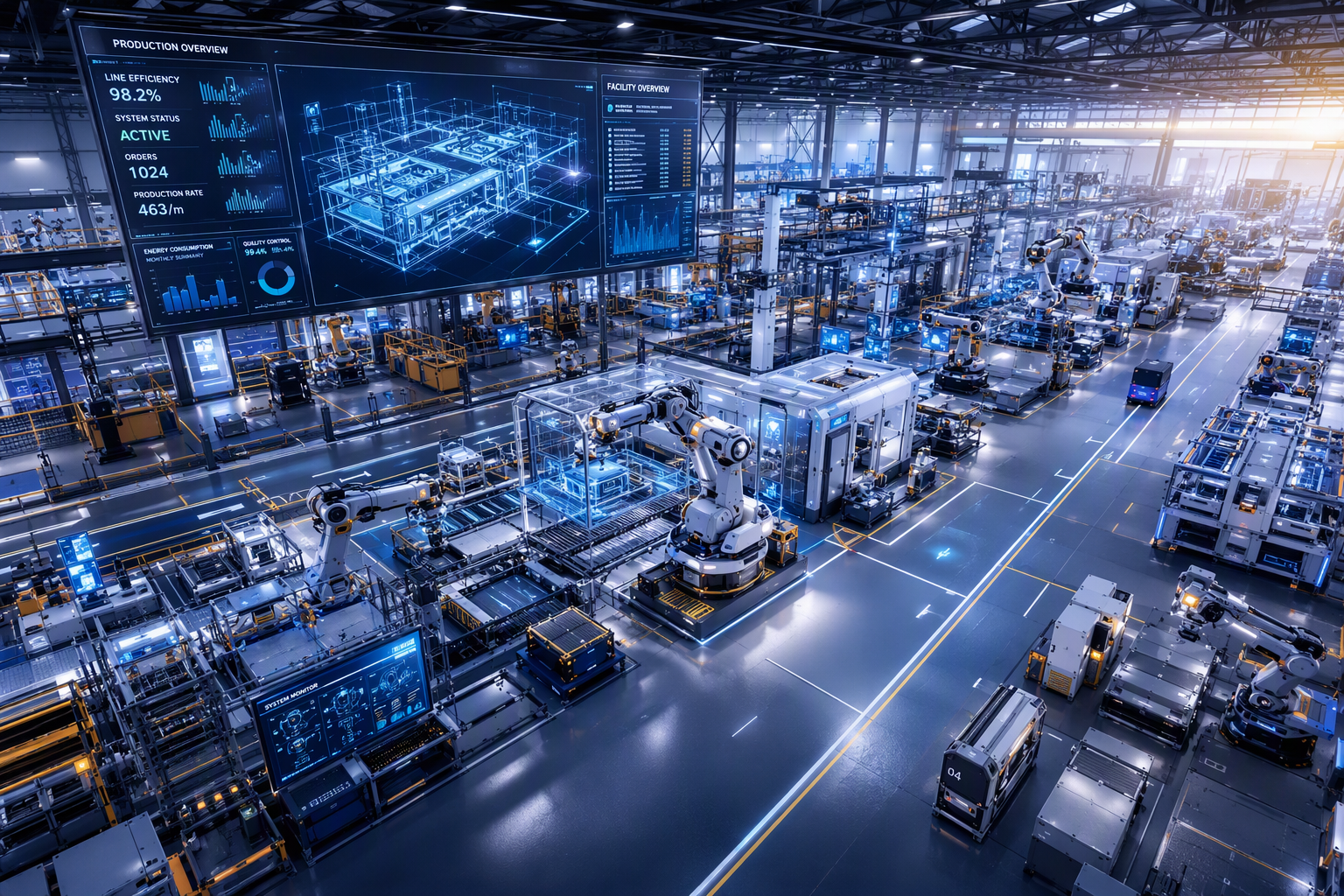
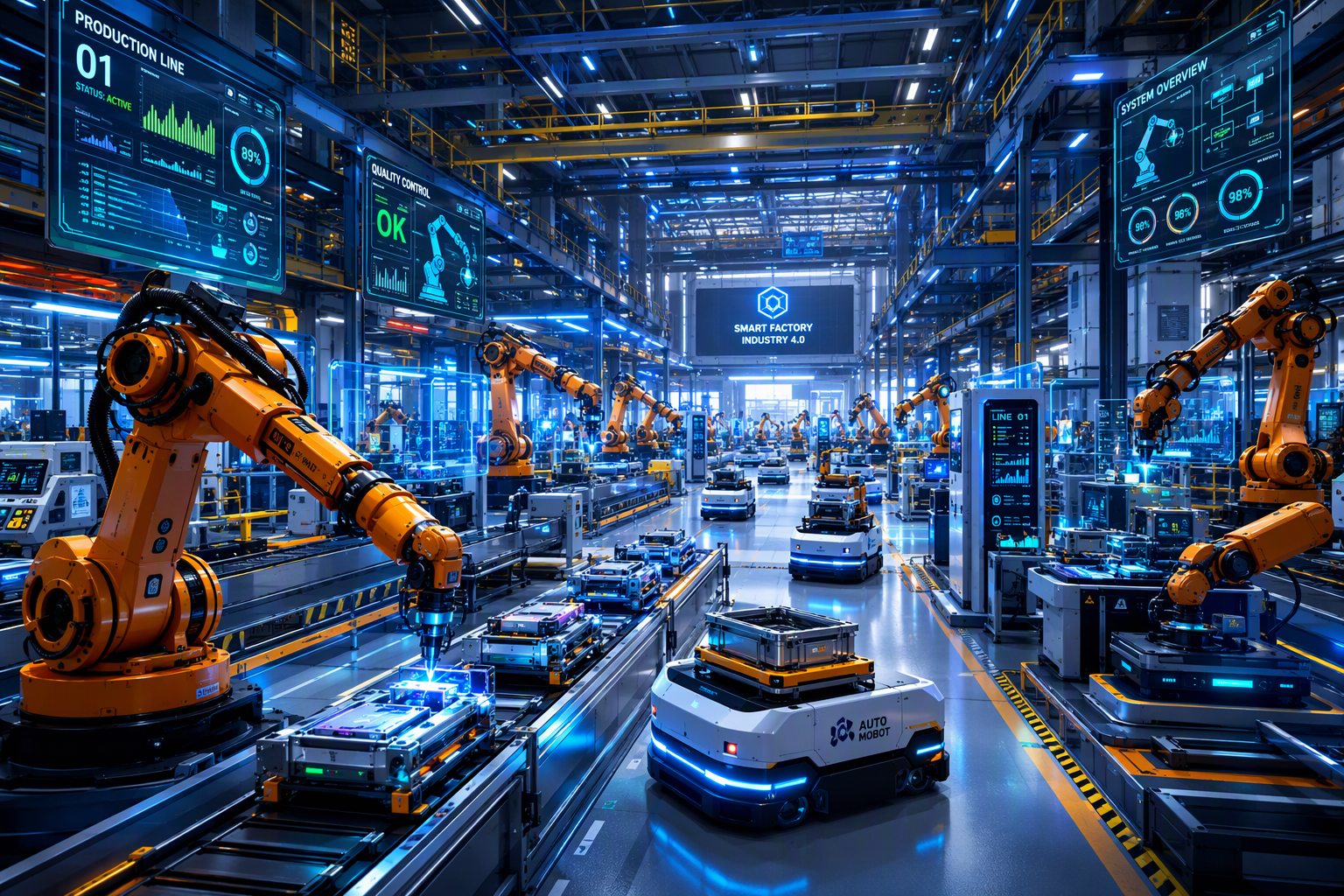
In industrial settings, IoT sensors are used for system monitoring. They can track the performance of machinery, detect potential issues, and send alerts for maintenance. This real-time data exchange between devices is what enables smart factories and other advanced automated systems to function efficiently and reliably.
Conclusion
In conclusion, automation is not just a trend; it has become an essential component of modern industries, revolutionizing how businesses operate. From improving efficiency and productivity to ensuring quality and consistency in production, the benefits are undeniable. As we continue to witness advancements in technologies like artificial intelligence, machine learning, and the Internet of Things, the potential for automation will only grow, paving the way for more innovative solutions across various sectors. Embracing automation can enhance operational capabilities and position businesses for future success. If you're ready to explore how automation can transform your operations, reach out for a free consultation to see what solutions suit your needs best!
Frequently Asked Questions
What are the main challenges or drawbacks of automation?
The primary challenge of automation is its impact on the workforce, as it can displace jobs that involve manual tasks. This creates a need for upskilling and reskilling employees to adapt to new roles. While process automation reduces human error, the initial cost of implementation and maintenance can also be a significant drawback for some businesses.
How does industrial automation work and who benefits most?
Industrial automation works by using control systems and industrial robots to manage manufacturing processes with minimal human input. This type of automation significantly boosts operational efficiency, quality, and safety. The manufacturing, automotive, and logistics industries benefit the most by achieving higher production rates and reducing operational costs.
What is process automation and how is it used in organizations?
Process automation involves using software applications to streamline entire business processes from start to finish. It is used in organizations to manage and optimize workflow automation across departments. This improves business process management by handling tasks like document approvals, data transfers, and customer onboarding through information technology systems.
You might also like