The Rise of Automation in Modern Industries
The Rise of Automation in Modern Industries

Key Highlights
- Automation technologies use machines to perform tasks with minimal human intervention, streamlining processes across industries.
- The main types of automation include industrial automation for manufacturing and robotic process automation (RPA) for digital tasks.
- Key benefits of automation are increased efficiency, higher productivity, reduced costs, and fewer errors.
- Automation is transforming sectors like healthcare, retail, and finance, improving operations and customer satisfaction.
- The rise of automation is creating new job opportunities that require different skills, shifting the focus from manual to analytical work.
Introduction
Have you ever wondered how companies produce goods so quickly or how your online order arrives so fast? The answer often lies in automation. In simple terms, automation is the use of technology to get tasks done with little to no human intervention. These powerful automation technologies are a cornerstone of digital transformation, helping businesses streamline their operations, boost efficiency, and reduce errors. Automation is reshaping how work gets done in nearly every industry, from the factory floor to your smartphone.
Understanding Automation in Modern Industries
At its core, automation is all about making things run more smoothly. By leveraging various automation technologies, businesses can implement process automation to handle repetitive or complex jobs that were once done by people. This not only speeds things up but also significantly reduces the potential for human error.
To truly grasp its impact, it's helpful to look at its formal definition, its journey through history, and the specific terms that describe its different forms. Let's explore these foundational concepts to see how automation became the powerhouse it is today.
Official definitions and core concepts of automation
So, what exactly is automation? Officially, automation is defined as the use of technology to perform tasks with minimal human input. Think of it as giving a robot or a computer a set of instructions to carry out activities that people used to handle manually. This technology-driven approach is designed to make processes more efficient and reliable.
The heart of these automation technologies lies in programming and algorithms. Developers write instructions that tell a machine how to behave in different situations, ensuring the process automation works perfectly. For example, robots on an assembly line are programmed to weld or tighten bolts with incredible precision, something that would be difficult to replicate manually over and over.
In some cases, automation is enhanced by artificial intelligence, which allows systems to analyze data and make decisions. This data-driven approach helps companies personalize customer experiences or optimize marketing campaigns, showing just how versatile and powerful automation can be.
Historical evolution and milestones of automation
The idea of automation isn't new; its historical evolution has been a long and fascinating journey. One of the earliest milestones was in 1785 when Oliver Evans developed a fully automatic flour mill. This was one of the first examples of a continuous industrial process operating without any human help.
However, the actual term "automation" wasn't coined until much later. In 1946, an engineering manager at the Ford Motor Company, D.S. Harder, used the word to describe the increased mechanization on production lines. The automotive industry, including companies like General Motors, quickly became a leader in adopting these new automation technologies to improve manufacturing rates.
Another key moment came in 1948 with the development of the first autonomous robots. These early milestones paved the way for the sophisticated systems we see today, transforming industries and changing the way we think about work itself.
Key terms used in automation technology
As you explore the world of automation, you'll come across several key terms. Understanding this vocabulary makes it easier to see how different types of automation are applied. These terms help categorize the various automation systems and their specific functions.
The field of process automation is broad, and each term represents a unique approach to streamlining tasks. From automating entire workflows to using software to mimic human actions, each has a distinct purpose.
Here are some of the most common terms you should know:
- Industrial Automation: The use of control systems and machinery, like robots, in manufacturing environments.
- Robotic Process Automation (RPA): Using software robots, or "bots," to automate repetitive, rule-based digital tasks.
- Business Process Automation (BPA): Automating entire business workflows that involve multiple tasks and departments.
- IT Automation: Automating routine IT tasks like system monitoring, backups, and software updates.
- Cognitive Automation: Integrating artificial intelligence and machine learning to handle complex tasks that require thinking and decision-making.
- Home Automation: Integrating smart devices in a household to automate functions like lighting, temperature, and security.
Main Types of Automation Technology
Automation isn't a one-size-fits-all solution. There are several main types of automation, each designed for different purposes but all aimed at improving processes and efficiency. These automation technologies range from physical robots on a factory floor to intelligent software that can make decisions.
Understanding these different categories helps clarify how process automation is applied across various sectors. Let's look at some of the most prominent types of automation technology in use today, including industrial systems, software bots, and smart manufacturing.
Industrial automation systems
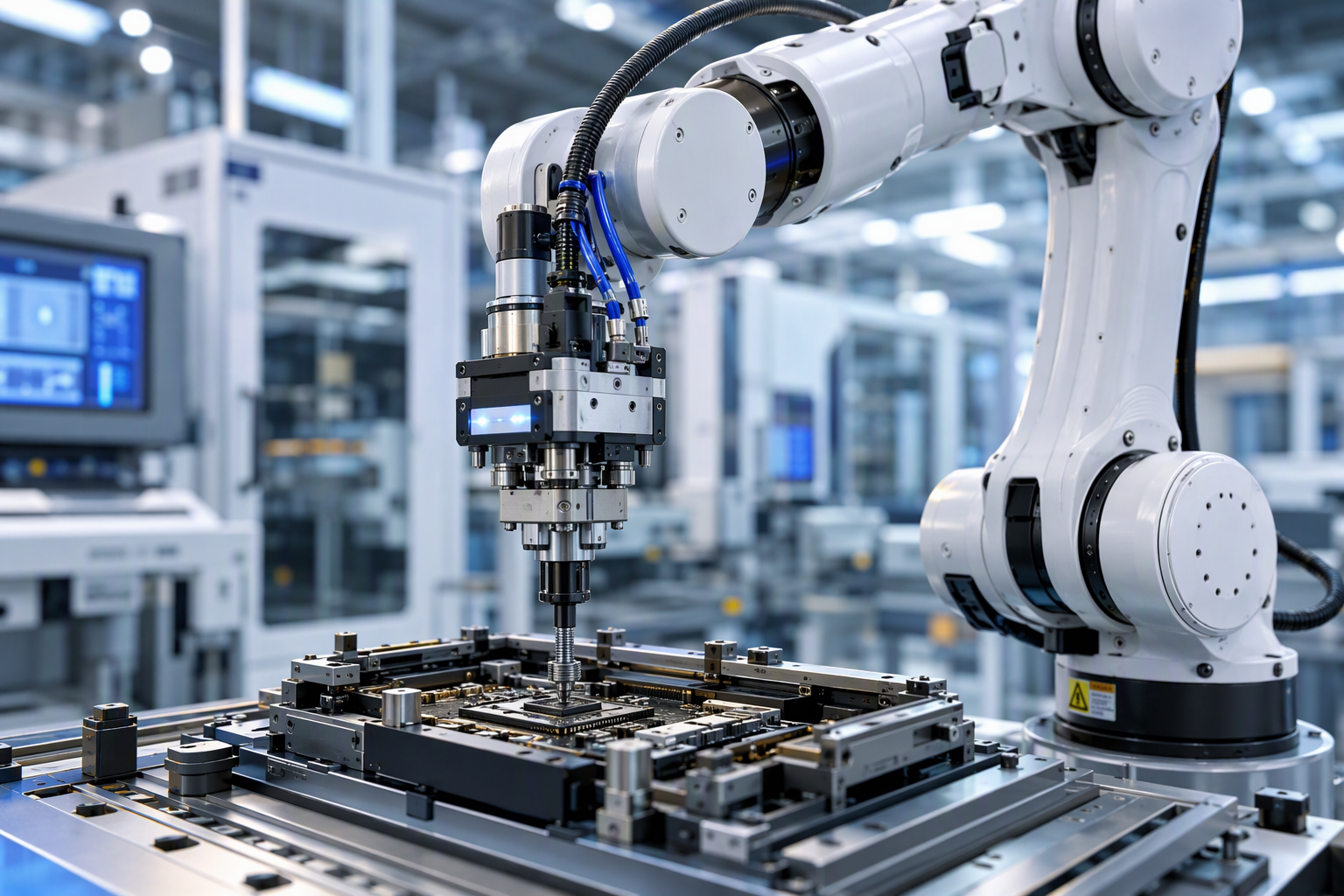
Industrial automation is what most people picture when they think of automation—robots in a factory. This type of automation involves using machinery, control systems, and robots to handle tasks in manufacturing and other industrial settings. It is designed to perform jobs like assembly, packaging, and quality control with speed and precision.
A classic example is the automotive industry, where robotic arms on assembly lines perform tasks like welding, painting, and assembling parts. These automation systems are programmed to execute their functions flawlessly, ensuring consistency and high quality in the final product.
By using industrial automation, companies can run their production lines around the clock with minimal human intervention. This not only boosts output but also improves workplace safety by assigning dangerous or physically demanding tasks to machines.
Robotic process automation (RPA)
Unlike the physical robots in factories, robotic process automation (RPA) uses software robots, often called "bots," to handle digital tasks. These bots are programmed to mimic human actions on a computer, such as logging into applications, entering data, filling out forms, and extracting information from documents.
RPA is one of the most popular automation solutions for businesses looking to streamline back-office operations. It's perfect for automating rule-based, repetitive tasks that are time-consuming and prone to error when done manually. For instance, in finance, RPA can automate invoice processing, dramatically reducing errors and speeding up payment cycles.
Companies like UiPath and Automation Anywhere provide RPA platforms that are now widely used across many industries. These software robots can work 24/7 without a break, freeing up human employees to focus on more strategic and creative work.
Cognitive and software automation
Cognitive automation takes automation a step further by incorporating artificial intelligence (AI) and machine learning. Unlike RPA, which follows strict rules, cognitive automation technologies can handle complex tasks that require human-like cognitive abilities, such as judgment and learning.
These advanced systems are capable of analyzing unstructured data like emails, documents, and images. They can identify patterns, make decisions, and even learn from their experiences to improve over time. This makes cognitive automation incredibly powerful for data analytics and decision-making processes.
A great example is in healthcare, where AI systems can analyze medical data to help doctors with diagnoses and treatment plans. By processing vast amounts of information quickly, cognitive automation provides valuable insights that support human experts and drive innovation.
Smart manufacturing and integrated automation
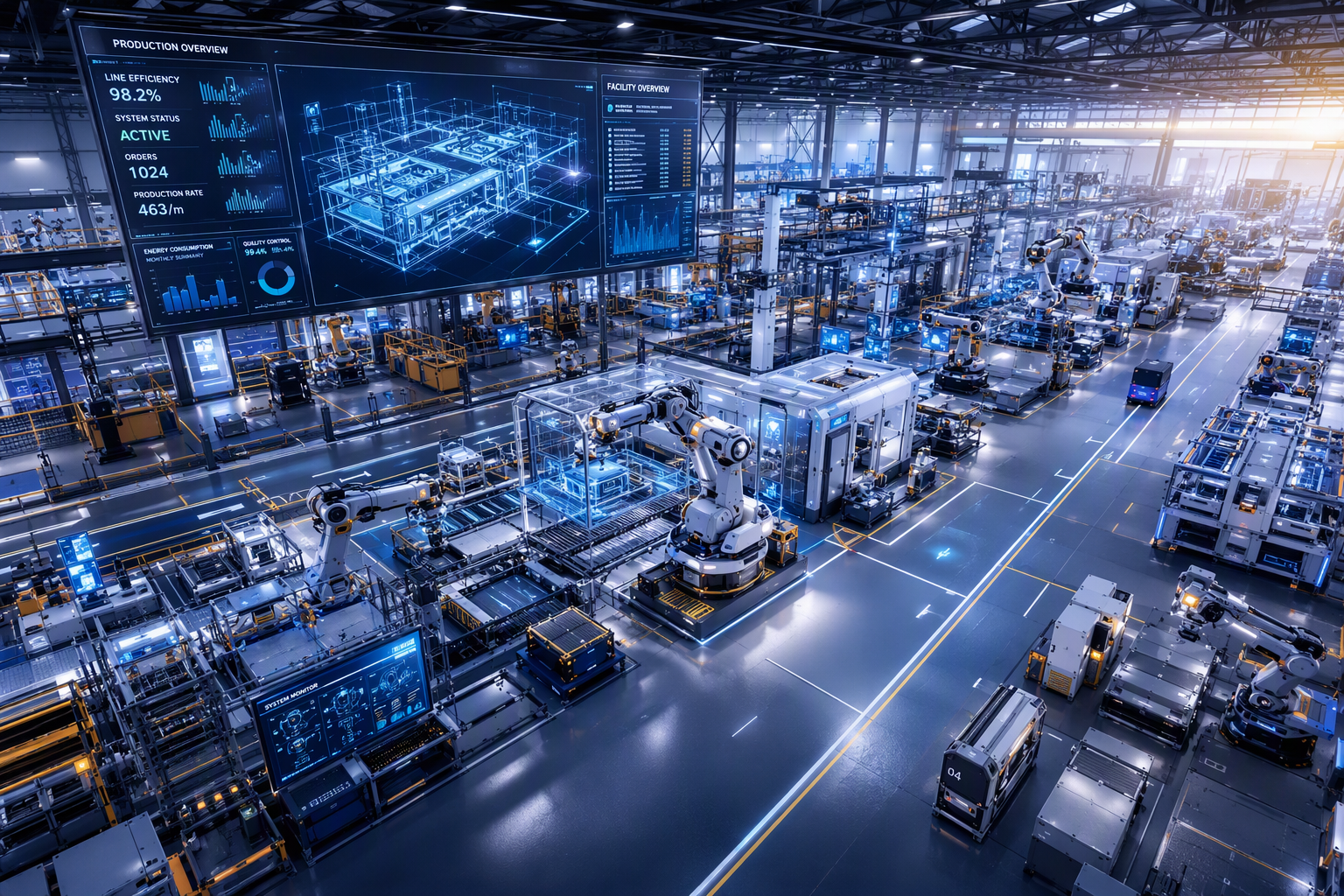
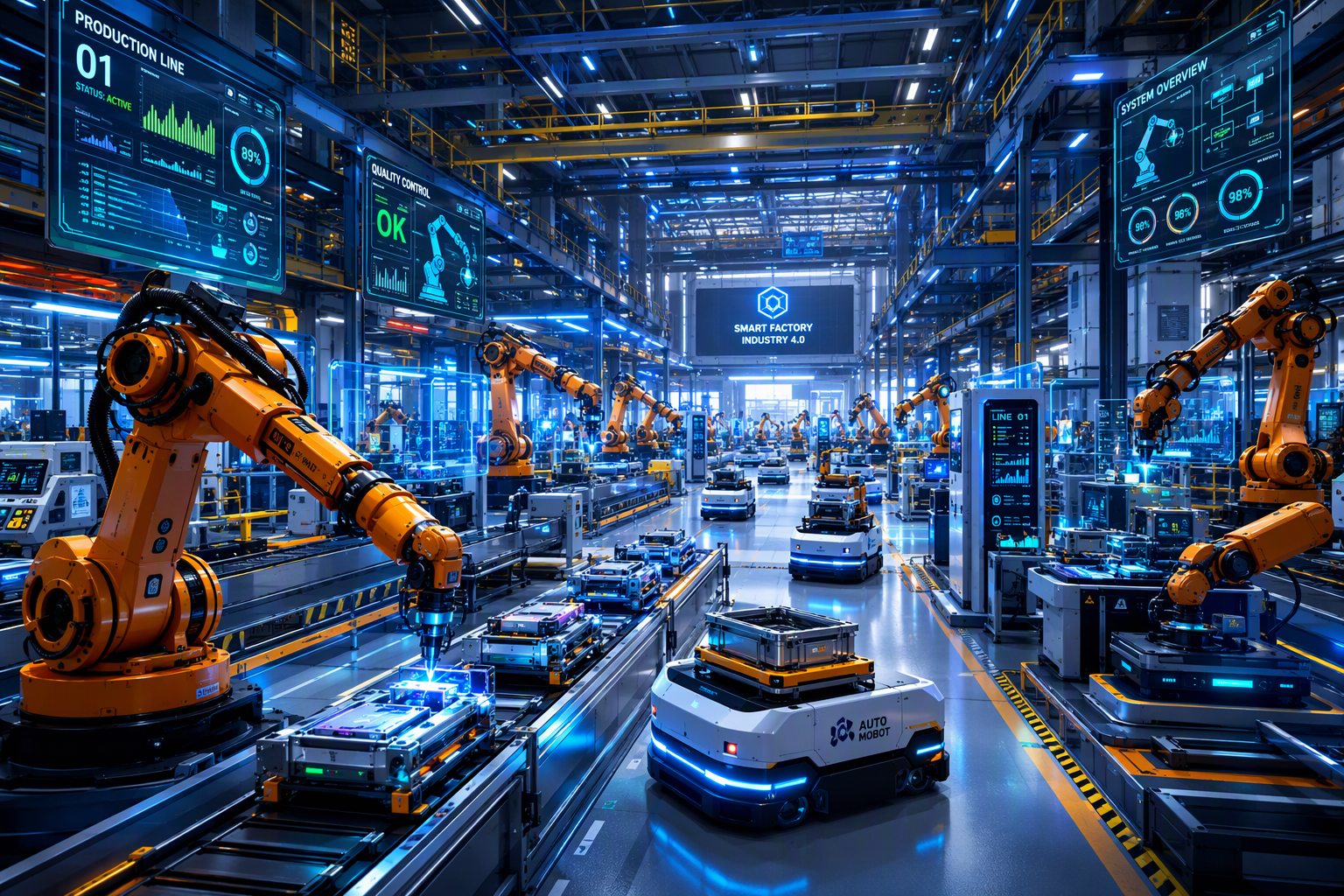
Smart manufacturing represents the next wave of industrial automation, acting as a key component of the digital transformation in the production sector. It involves creating a fully connected and flexible system by integrating advanced technologies like artificial intelligence (AI), the Internet of Things (IoT), and data analytics into the manufacturing process.
In a smart factory, all machines and systems are interconnected, allowing them to communicate with each other in real-time. This level of integration enables automation solutions that can optimize operations, predict when maintenance is needed, and adapt to changes in production with minimal human intervention.
The goal of smart manufacturing is to create a highly efficient and responsive production environment. By combining different automation systems under one holistic framework, companies can reduce complexity, streamline communication between processes, and make their operations more agile and competitive.
How Automation Works Across Different Industries
The impact of automation extends far beyond a single sector. It's a transformative force that is reshaping business processes in nearly every industry you can think of. From managing inventory in massive fulfillment centers to assisting doctors in hospitals, automation systems are being deployed in creative and powerful ways.
The versatility of this technology allows it to be adapted to unique challenges and goals. Let's look at some specific examples of how automation works in manufacturing, healthcare, and retail to improve efficiency and drive innovation.
Manufacturing and production lines
In manufacturing, automation has completely revolutionized production lines. The use of industrial robots and other automated machinery has led to unprecedented levels of efficiency and precision. These systems are designed to handle repetitive and physically demanding tasks, allowing factories to operate faster and more consistently.
Process automation is key to this transformation. For example, in a car factory, industrial robots perform tasks like welding, painting, and assembling components with a degree of accuracy that humans can't match over long periods. This not only increases the speed of production but also enhances quality control, as each step is performed exactly the same way every time.
By automating these key processes, manufacturers can increase their production rates, reduce waste, and improve the overall quality of their products. This frees up human workers to oversee the systems and handle more complex problem-solving tasks.
Healthcare technology and automated diagnostics
Automation is also making significant inroads in healthcare technology, where it helps with everything from patient care to medical research. One of the most exciting areas is in automated diagnostics, where AI-powered tools assist medical professionals in identifying diseases and abnormalities more efficiently.
Using machine learning algorithms, these systems can analyze medical images like X-rays and CT scans to spot potential issues that might be missed by the human eye. This doesn't replace doctors but acts as a powerful assistant, helping them make more accurate diagnoses faster. For instance, radiology platforms can quickly flag suspicious areas in scans for a radiologist to review.
Beyond diagnostics, robotic systems are used in surgery to perform minimally invasive procedures with incredible precision. By reducing the need for complete human involvement in every aspect of care, healthcare automation is improving outcomes and making medical services more accessible.
Retail, ecommerce, and logistics automation
Retail automation is changing how you shop, both online and in stores. In the world of ecommerce, logistics automation is essential for managing the massive volume of orders. Giant fulfillment centers use autonomous robots for inventory management and order fulfillment, zipping around warehouses to pick and pack items. This speeds up the entire supply chain and gets products to your door faster.
This technology also enhances the customer experience in physical stores. Innovations like cashier-less checkout systems use sensors and computer vision to let you simply grab what you need and walk out, making shopping more convenient. These systems automatically track what you take and charge your account.
Effective retail and logistics automation relies on connecting various systems to work together seamlessly. Here’s a look at how automation impacts different areas of the retail supply chain:
| Area of Retail | How Automation Helps |
|---|---|
| Inventory Management | Automated systems track stock levels in real-time, preventing out-of-stock situations and optimizing storage. |
| Order Fulfillment | Robots in warehouses pick, pack, and sort orders, reducing processing time and manual labor. |
| In-Store Experience | Cashier-less stores and self-checkout kiosks streamline the payment process for a better shopping experience. |
| Customer Service | AI-powered chatbots provide instant support and answer common questions, improving customer satisfaction. |
Benefits of Automation for Businesses
Adopting automation is more than just a trend; it's a strategic move that offers significant advantages. The benefits of automation are clear, ranging from immediate operational improvements to long-term financial gains like cost savings. For any company looking to stay competitive, implementing automation solutions is becoming essential for business growth.
By taking over routine and labor-intensive tasks, automation frees up valuable resources and allows businesses to focus on what truly matters: innovation and customer value. Let’s explore some of the top benefits, including boosts in efficiency, accuracy, and scalability.
Boosting efficiency and productivity
One of the most significant advantages of automation is the dramatic increase in operational efficiency. By streamlining workflows and automating repetitive tasks, businesses can complete processes much faster than they could with manual labor alone. This acceleration directly leads to higher productivity across the board.
Think about process automation in a logistics company. Automating order processing and dispatch allows for quicker deliveries without sacrificing accuracy. Since automated systems can work around the clock without breaks, they can handle a much higher volume of work, which in turn boosts production rates.
When routine tasks are handled by machines, your employees are free to concentrate on more complex and strategic initiatives. This shift not only makes your business more productive but also allows your team to contribute in more meaningful ways.
Enhancing accuracy and consistency
Humans are great at creative thinking and problem-solving, but we can make mistakes when performing the same task over and over. Automation systems, on the other hand, execute tasks with precision and reliability every single time. This consistency is crucial for reducing human error and ensuring high-quality results.
In fields where precision is vital, automation is a game-changer. For example, in manufacturing, automated quality control systems can inspect products with a level of detail that would be impossible to maintain manually. This minimizes the chance of manual errors and ensures that every product meets the same high standard.
By reducing the need for constant human intervention in repetitive processes, businesses can deliver a more consistent product or service. This not only improves customer satisfaction but also reduces the costs associated with fixing mistakes.
Cost savings and scalability
While there can be an upfront investment to implement automation technologies, the long-term cost savings are often substantial. Automation reduces the need for human labor in routine tasks, which can significantly lower labor costs over time. It also optimizes resource use, such as energy, leading to further savings.
Beyond direct savings, automation offers incredible scalability. Automated systems can easily handle increases in demand without the need to hire and train large numbers of new employees. This flexibility allows your business to scale its operations up or down quickly in response to market changes.
This ability to adapt and grow efficiently is a major driver of business growth. A company that can manage a surge in orders without a corresponding surge in costs is better positioned for long-term success and competitiveness in a fast-paced market
Everyday Examples of Automation
Automation isn't just for big factories and corporations; it's all around us in our daily lives. From home automation that controls your lights and thermostat to the customer service chatbots that answer your questions online, this technology is making life more convenient. It's quietly replacing manual labor in many areas.
Tasks like data entry and invoice processing are now frequently automated, which improves efficiency and customer satisfaction. Let's dive into some common examples of automation you might encounter at home, in your banking, and even in public services.
Automation at home and in consumer technology
The digital transformation has officially entered our living rooms through home automation. This type of consumer technology integrates smart devices and systems to automate tasks like adjusting your thermostat, turning lights on and off, and managing your security system.
Think about smart assistants like Amazon Alexa or Google Home. These devices allow you to control various aspects of your home with just your voice. Similarly, smart thermostats can learn your schedule and adjust the temperature automatically, saving you energy and money without you having to lift a finger.
These everyday automation solutions are designed for convenience and efficiency. They take care of small, routine tasks so you can focus on more important things, showcasing how automation is becoming an integral part of modern life.
Use of automation in banking and finance
The banking and finance industry relies heavily on automation to manage a wide range of tasks efficiently and securely. Banking automation helps streamline back-office operations, such as data entry for new accounts and invoice processing for business clients, reducing manual errors and processing times.
Financial institutions use automation platforms like Automation Anywhere to deploy software robots that handle these repetitive processes. This allows for faster transactions and better compliance with regulations, all with minimal human intervention. For customers, this often means quicker loan approvals and faster responses to inquiries.
AI-powered chatbots are another common example, providing instant answers to customer questions 24/7. This improves customer satisfaction by offering immediate support without making people wait. By automating these processes, banks can reduce operational costs and provide a better overall experience.
Agriculture, energy, and public infrastructure applications
Automation's reach extends into foundational sectors like agriculture, energy, and public infrastructure. In agriculture automation, autonomous tractors use GPS to plant seeds and harvest crops with precision, while drones monitor crop health from above. These automation solutions help improve yields and optimize resource use.
In the energy sector, smart grids use automation for better energy management, efficiently distributing power and integrating renewable sources. Automation also enables predictive maintenance on power plants and equipment, preventing downtime by identifying potential issues before they cause a failure.
These applications are critical for effective supply chain management and public services. For instance, automated systems can manage traffic flow in cities or monitor water treatment facilities. This shows how automation is not only improving businesses but also making our public infrastructure smarter and more reliable.
Conclusion
The rise of automation in modern industries is transforming the way we work and interact with technology. By embracing various forms of automation—from industrial systems to smart manufacturing—we can significantly enhance efficiency, accuracy, and cost-effectiveness across diverse sectors. As we continue to integrate these technologies into our daily operations, we pave the way for a future where businesses can adapt, scale, and thrive in an increasingly competitive landscape. The potential of automation is immense, and staying informed will empower you to make the most of these advancements. If you're eager to explore how automation can benefit your business, feel free to reach out for more insights!
Frequently Asked Questions
What are the most important benefits of industrial automation?
The main benefits of industrial automation include higher production rates and greater operational efficiency. It leads to significant cost savings by reducing labor needs and material waste. It also enhances product quality and consistency by minimizing human error, making manufacturing processes more reliable and productive.
How do automation platforms like Automation Anywhere support companies?
Automation platforms like Automation Anywhere provide tools for business process automation. They allow companies to build and deploy software robots that mimic human actions to handle repetitive digital tasks. This helps streamline process automation, accelerate digital transformation, and free up employees to focus on more valuable work.
Are there any potential drawbacks or challenges with automation?
Yes, automation presents challenges. It shifts the demand for human labor, requiring workers to develop new skills as manual tasks become obsolete. Integrating new technology with legacy systems can be complex and expensive. Managing the transition away from established business processes also requires careful planning to ensure a smooth change with minimal disruption.
You might also like