The Future of Automation: Trends and Innovations Ahead
The Future of Automation: Trends and Innovations Ahead

Key Highlights
- Automation technologies use machines to perform tasks with minimal human intervention, aiming to streamline processes.
- Process automation is driven by tools like Robotic Process Automation (RPA) and artificial intelligence (AI).
- Key benefits of automation include higher efficiency, reduced human error, and significant cost savings.
- Automation spans numerous industries, from manufacturing and healthcare to finance and retail.
- The integration of AI is creating smarter automation systems capable of complex decision-making.
- Adopting automation is crucial for business growth and maintaining a competitive edge in the modern market.
Introduction
Welcome to the world of automation, a key driver of modern digital transformation. Automation is the use of technology to get tasks done without much human help. It's about making things faster, more efficient, and more accurate. Fueled by advancements in artificial intelligence and other smart technologies, automation is reshaping how we work, live, and do business. Are you ready to see how this powerful trend is creating new opportunities and innovations for the future?
Understanding Automation: Definition and Scope
At its core, automation refers to the use of technology to perform tasks with minimal human involvement. Think of it as programming a computer or a robot to handle activities that people traditionally performed. The main goal is to streamline process automation, boost efficiency, and reduce the chance of human error.
These automation systems are not just for factories; they are used across many different industries. From managing IT tasks and processing financial transactions to assisting in complex medical procedures, automation technologies are changing how work gets done everywhere, making operations smoother and more reliable.
Official Definitions from Leading Industry Sources
The term "automation" has a history that dates back to the mid-20th century. It was first coined by the car company General Motors in 1946 to describe the automatic handling of parts during manufacturing. This original definition focused heavily on the industrial side of things, where machines took over repetitive physical labor on assembly lines.
However, the official definition of automation has grown significantly since then. Today, it encompasses a much broader range of technologies and applications. It is now understood as the process of using technology to carry out tasks that require little to no human direction. This includes various types of automation, from simple scripts to complex AI-driven systems.
This modern understanding covers a wide array of automation solutions and tools used in software development, finance, healthcare, and beyond. The focus has shifted from just physical tasks to include digital and knowledge-based work, reflecting how deeply automation is integrated into our world.
Core Principles and Processes of Automation
The fundamental goal of automation is to streamline processes and make them more efficient. This is achieved by designing systems that can operate with minimal human intervention. By handing over routine or complex tasks to machines, businesses can free up their employees to focus on more strategic and creative work.
A key principle of process automation is the reduction of human error. Automated systems follow programmed instructions precisely every time, which leads to greater consistency and quality in the final output. Whether it's assembling a product or processing data, automation technologies ensure tasks are done correctly.
This approach is vital for businesses and manufacturing for several reasons:
- It significantly speeds up operations, leading to higher productivity.
- It ensures tasks are performed with accuracy, improving overall quality.
- It allows companies to scale their operations up or down quickly without massive hiring efforts.
Key Types of Automation in Technology Today
Automation technologies come in many forms, each designed for different needs. The main types of automation range from simple, fixed systems for repetitive tasks to highly intelligent ones that can learn and adapt. Understanding these variations helps clarify how automation can be applied in different scenarios.
You'll find everything from industrial robots on a factory floor to software-based solutions like Robotic Process Automation (RPA). More advanced forms even incorporate machine learning to handle complex decision-making. Let's explore some of the most common types of automation you'll encounter in the tech world today.
Industrial Automation Systems
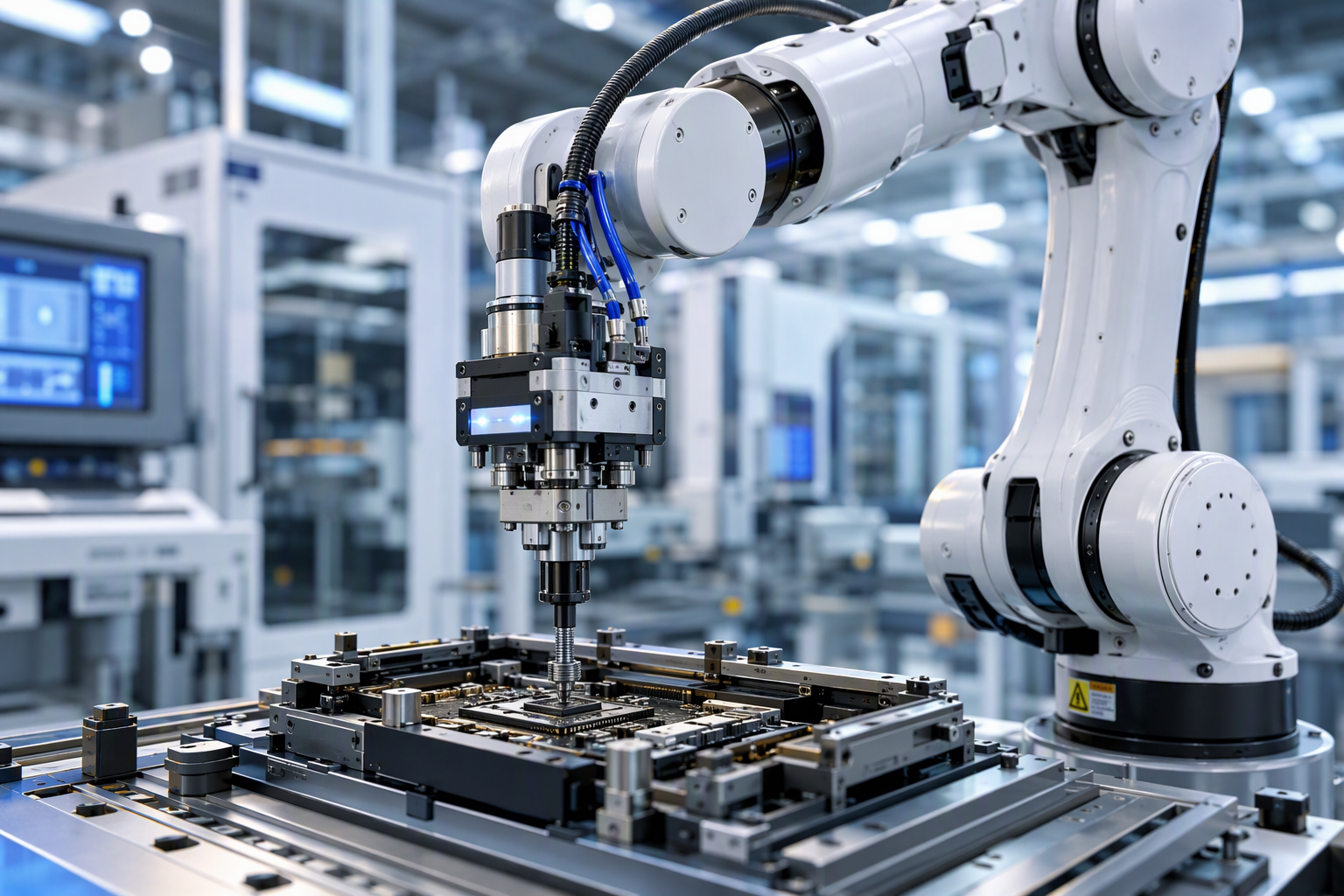
Industrial automation is all about using control systems, machinery, and robots in manufacturing and production settings. In factories, you'll see these automation systems performing tasks like assembly, welding, and packaging on production lines. For example, robotic arms can handle heavy lifting or perform delicate assembly with a level of precision that is difficult for humans to match.
These systems are crucial for maintaining high production rates and ensuring consistent quality control. There are different kinds of industrial automation, each suited for specific production needs. Fixed automation is great for high-volume, unchanging tasks, while programmable and flexible automation allow for more variety in the products being made.
This table breaks down the common types found in
industrial settings:
| Automation Type | Description | Best For |
|---|---|---|
| Fixed Automation | Machinery dedicated to a single, repetitive task. | High-volume production with no changes. |
| Programmable Automation | Equipment that can be reprogrammed for different tasks. | Batch production with moderate variety. |
| Flexible Automation | Systems that can switch between tasks with minimal downtime. | High product variability and quick changeovers. |
Robotic Process Automation (RPA)
Robotic Process Automation, or RPA, uses "software robots" to automate digital tasks that are typically repetitive and rule-based. These bots aren't physical robots; they are software programs that mimic human actions on a computer. Think of them logging into applications, filling out forms, extracting data, or processing transactions without anyone needing to touch a keyboard.
This type of process automation is especially useful for back-office operations where employees handle a high volume of repetitive tasks. By deploying software robots, companies can significantly reduce the time spent on manual data entry and other routine work, which in turn helps lower labor costs and frees up staff for more valuable activities.
Tools from companies like Automation Anywhere and UiPath provide the platforms for businesses to build and manage these bots. They help companies streamline workflows like invoice processing and payroll management, leading to faster processing times, fewer errors, and improved overall efficiency. This allows organizations to operate more smoothly and competitively.
Cognitive and Artificial Intelligence Automation
Cognitive and Artificial Intelligence (AI) automation represents a major leap forward from simple, rule-based systems. This advanced form of automation integrates AI and machine learning to perform complex tasks that traditionally require human intelligence. These automation solutions can analyze unstructured data, make decisions, and even learn from experience.
The power of this technology lies in its ability to handle jobs that go beyond simple repetition. For instance, it uses natural language processing to understand and respond to human language, making AI-powered chatbots possible. It also leverages data analytics to identify patterns and insights from massive datasets, which can inform strategic decisions.
One of the most significant benefits of automation like this is its ability to assist in complex fields. In healthcare, for example, IBM's Watson Health uses cognitive automation to analyze medical data and help doctors with diagnoses and treatment plans. This demonstrates how AI-driven automation can enhance human capabilities and drive innovation.
Automation Across Major Industries
Automation technologies are not confined to a single sector; they are making a significant impact across various industries. From the factory floor with industrial automation to the back office with automated business processes, its influence is widespread. This adoption is a core component of the ongoing digital transformation happening globally.
You can see automation at work in manufacturing, healthcare, finance, retail, and more. In each of these fields, it's used to improve efficiency, reduce errors, and create new possibilities. Let's look at some specific examples of how different sectors are harnessing the power of automation.
Manufacturing and Smart Factories
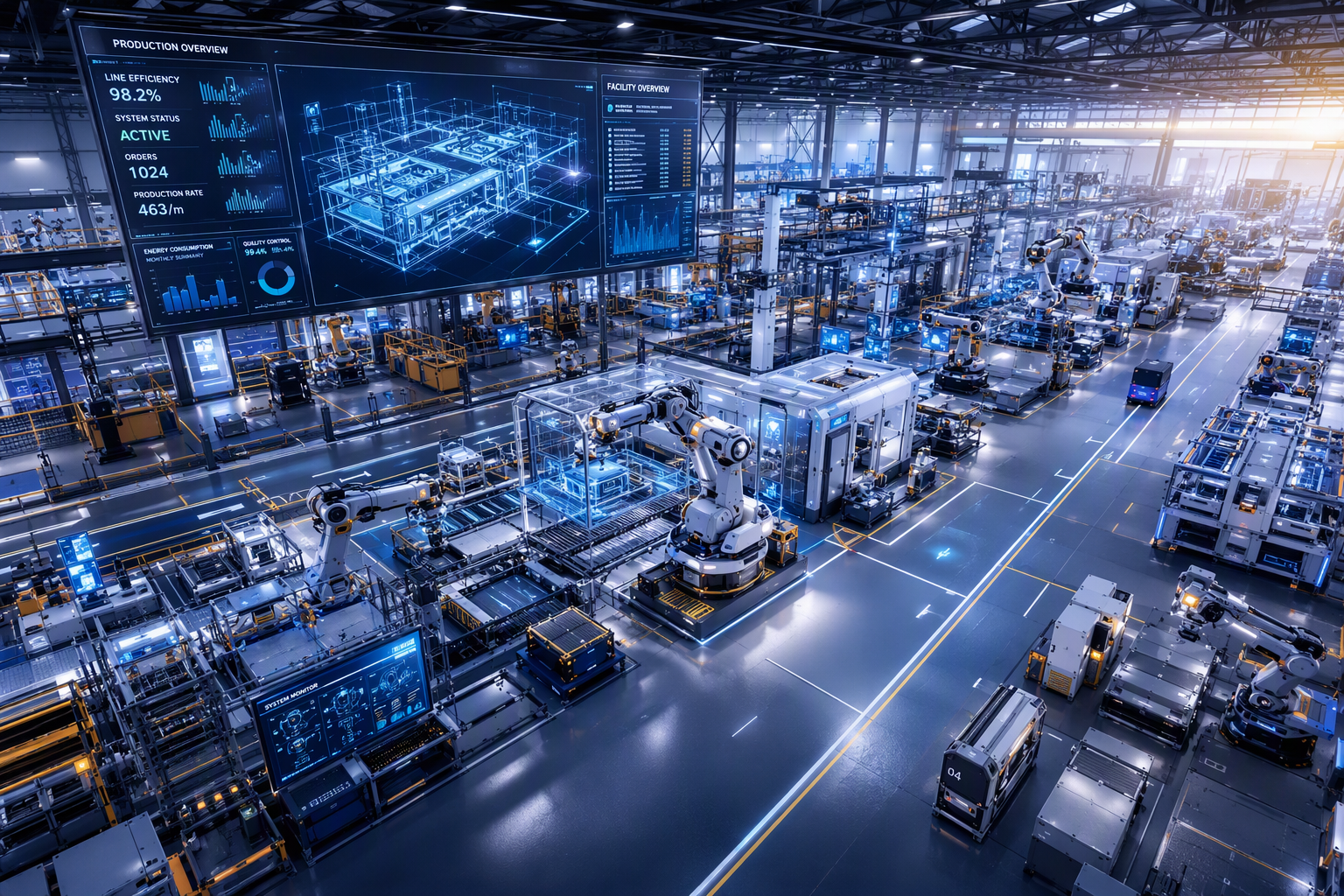
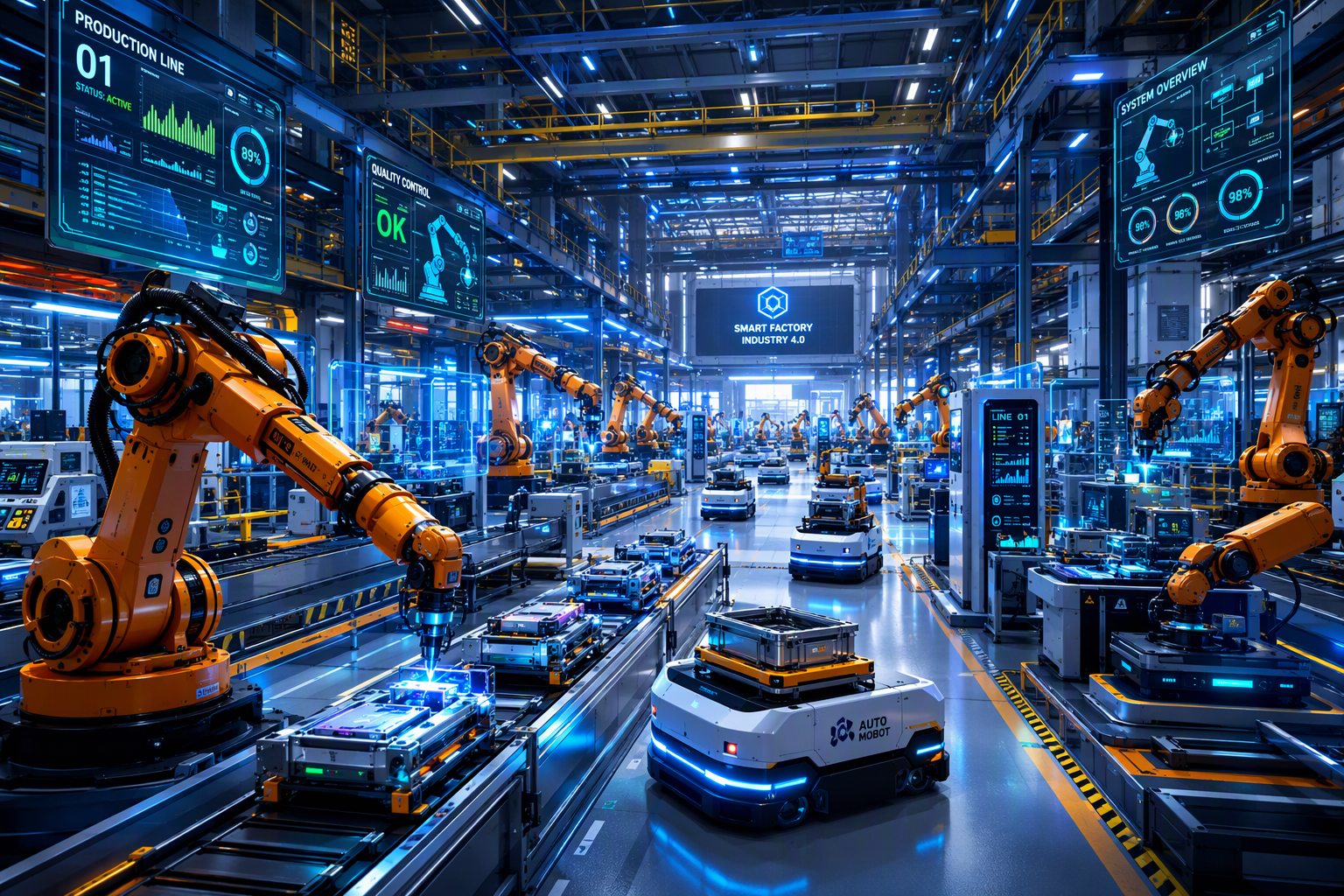
In the world of manufacturing, automation has led to the rise of "smart factories." Smart manufacturing refers to the use of interconnected automation solutions to create a highly efficient and adaptable production environment.
These factories use technologies like AI and the Internet of Things (IoT) to optimize operations from start to finish.
Instead of relying solely on human labor, smart factories employ robots and automated systems to handle assembly, which dramatically increases production rates and maintains high quality standards. A great example is Tesla's Gigafactory, where robots are heavily involved in building electric vehicles, allowing the company to produce cars at an impressive scale.
Furthermore, these automation solutions enable advanced capabilities like predictive maintenance. Sensors on machinery can predict when a part might fail, allowing for repairs before a breakdown occurs. This minimizes downtime and keeps the production lines running smoothly, showcasing a huge advantage over traditional manufacturing methods.
Healthcare and Medical Innovation
The healthcare industry is experiencing a wave of medical innovation thanks to automation. Process automation is being used to streamline everything from patient data management to complex medical procedures, enhancing both efficiency and patient care. These automation technologies are designed to assist medical professionals, not replace them.
One of the most exciting benefits is in surgery. Robotic systems, like the da Vinci Surgical System, allow surgeons to perform minimally invasive procedures with incredible precision. This requires minimal human intervention in the physical act of surgery, reducing recovery times and the risk of complications for patients. This brings a new level of quality control to the operating room.
AI-powered diagnostic tools are another major advancement. These platforms can analyze medical images, such as X-rays and CT scans, to help radiologists spot abnormalities more quickly and accurately. While the potential for error exists if not properly monitored, the primary benefit is a significant improvement in diagnostic speed and accuracy, leading to better patient outcomes.
Financial Services and Banking
Financial services and banking have embraced automation systems as a key part of their digital transformation. Banks use process automation for a huge variety of tasks, from back-office operations to customer-facing services. This helps them stay competitive by speeding up services and reducing operational costs.
A major application is Robotic Process Automation (RPA), which is used to handle repetitive work like data entry, account management, and compliance checks. By automating these tasks, banks can significantly reduce human error and free up employees to focus on more complex customer needs. This improves efficiency and accuracy in their daily operations.
Furthermore, automation platforms use data analytics to gain insights into market trends and customer behavior. AI-powered chatbots, like Bank of America's Erica, provide instant customer support, answering questions and performing simple transactions. This combination of efficiency and enhanced service helps financial institutions adapt to changing customer expectations and maintain a strong position in the market.
Examples of Automation in Everyday Life
Automation isn't just for big industries; it's also a part of our daily routines. You might be surprised by how many automation solutions you interact with without even thinking about it. These technologies are designed to handle repetitive tasks, reduce the need for human intervention, and generally make our lives easier.
From home automation systems that manage your lights and thermostat to the seamless checkout process online, automation is working behind the scenes. It's all about improving the customer experience and giving you back more time. Let’s look at some common examples you likely encounter every day.
Home Automation and Smart Devices
Home automation is one of the most visible ways automation technologies have entered our personal lives. It involves using smart devices and interconnected systems to automate tasks around the house, many of which used to be manual tasks requiring direct human action.
Smart devices are electronics that can connect to the internet and be controlled remotely or programmed to operate on a schedule. Think of smart speakers like Amazon Alexa or Google Home, which can control other connected devices with a simple voice command. These hubs make it easy to manage your smart home ecosystem.
Here are a few ways automation is used in homes:
- Smart thermostats, like those from Nest, learn your schedule and adjust the temperature automatically to save energy.
- Smart lighting can be programmed to turn on or off at certain times or can be controlled from your phone.
- Smart security systems send alerts to your phone if they detect unusual activity, automating home monitoring.
Retail and E-commerce Automation
Retail automation has completely changed the shopping experience, both online and in physical stores. For e-commerce giants and local shops alike, automation is key to managing inventory management, streamlining sales, and keeping customers happy. It helps retailers operate more efficiently and meet consumer demands.
In warehouses, automation is crucial for order fulfillment. Companies like Amazon use fleets of robots in their fulfillment centers to find, pick, and move items for shipping. This drastically speeds up the process from click to delivery and helps manage massive stock levels with incredible accuracy.
Here's how automation improves the retail workflow:
- Automated inventory systems track stock levels in real-time, alerting staff when items are low and even reordering products automatically.
- Cashier-less stores, like Amazon Go, use sensors and computer vision to let shoppers grab items and leave, improving the shopping experience.
- AI-driven recommendation engines suggest products to online shoppers, personalizing their journey and boosting sales.
Transportation and Logistics Solutions
Logistics automation is a cornerstone of modern supply chain management. The journey of a product from the factory to your doorstep is filled with automated processes designed to make it faster, cheaper, and more reliable. This digital transformation has been essential for meeting the demands of a global economy.
Within fulfillment centers, automated systems manage inventory levels and direct the flow of goods. Conveyor belts, robotic sorters, and autonomous vehicles all work together to move packages efficiently. This ensures that orders are processed quickly and accurately, which is critical for companies managing large-scale logistics operations.
Beyond the warehouse, automation is reshaping transportation itself. Companies like Waymo are developing self-driving cars that could revolutionize how goods are moved. Meanwhile, logistics leaders such as DHL and FedEx are experimenting with drone delivery for the "last mile" of a package's journey. These innovations promise to make the entire supply chain more efficient and responsive.
The Evolution of Automation: Past to Present
The story of automation is one of constant evolution. What started as simple mechanical systems has transformed into the intelligent and interconnected automation technologies we see today. Looking back at the historical milestones helps us appreciate how far we've come and where we might be headed.
From early industrial automation systems to the rise of new technologies like AI and machine learning, this journey is a key part of our larger digital transformation. Let's trace the path of automation from its beginnings to the cutting-edge breakthroughs of the present day.
Historical Milestones in Automation
The history of modern automation often begins in the manufacturing sector. One of the most cited historical automation milestones was in 1946 when General Motors established an "automation department." Their goal was to use machines to automatically handle parts on their production lines, a foundational concept for industrial automation.
Over time, automation became more sophisticated. The development of numerical control (NC) in the mid-20th century allowed machines to be controlled by programmed instructions, paving the way for the computer numerical control (CNC) machines that are standard in manufacturing today. This marked a shift from fixed mechanical systems to more flexible, programmable ones.
Key historical use cases that show how automation changed over time include:
- The first industrial robot, Unimate, was installed on a GM assembly line in 1961 to perform dangerous welding tasks.
- The development of Programmable Logic Controllers (PLCs) in the late 1960s made it easier to automate and control industrial processes.
- The expansion of automation into IT and business processes began with the rise of personal computing and software.
Recent Breakthroughs in Automation Technologies
Recent years have seen an incredible acceleration in the development of automation technologies, largely driven by breakthroughs in artificial intelligence and machine learning. These new technologies are making automation smarter, more flexible, and capable of handling tasks that were once thought to be exclusively human.
Robotic Process Automation (RPA) has become a major force in business, allowing companies to automate routine digital tasks quickly and efficiently. But the real game-changer is the integration of AI. When RPA is combined with machine learning, it can handle more complex scenarios, learn from data, and make intelligent decisions.
This fusion of technologies is a key part of the ongoing digital transformation. We're moving toward "hyperautomation," where organizations aim to automate as many business and IT processes as possible using a combination of tools. The future of automation lies in these interconnected, AI-powered systems that will continue to redefine how work gets done.
Business Impact of Automation
The adoption of automation technologies has a profound impact on how businesses operate and compete. For many companies, automation is no longer a luxury but a necessity for survival and business growth. It offers a clear path to significant cost savings and improved operational efficiency.
By automating processes, businesses can produce more, reduce errors, and respond faster to market demands. This gives them a powerful competitive edge in a fast-paced world. Let's examine a couple of the key ways automation is making a difference on the bottom line.
Improved Efficiency and Productivity
One of the most immediate impacts of automation is a dramatic improvement in operational efficiency. Process automation is designed to take over repetitive tasks that are time-consuming and prone to mistakes when done manually. By letting machines handle this work, businesses can complete tasks much faster.
This increased speed directly translates to higher productivity. For example, an automated system can process thousands of invoices in the time it would take a human to do a few dozen. This frees up employees to concentrate on tasks that require creativity, critical thinking, and interaction with customers, adding more value to the company.
Ultimately, this leads to significant cost savings. With fewer instances of human error, companies spend less time and money on corrections. The ability to get more done in less time without sacrificing quality means businesses can scale their operations efficiently, enhancing their profitability in the long run.
Enhanced Data-Driven Decision Making
In today's data-rich world, making informed decisions is critical for success. Automation solutions play a vital role in supporting data-driven decision-making by collecting, processing, and analyzing vast amounts of information far more quickly than humans ever could.
Through the power of data analytics, automation can uncover valuable insights hidden within business processes. For instance, an automated system can track performance metrics in real-time, identify bottlenecks in a workflow, or detect subtle changes in customer behavior. These insights allow managers to make strategic adjustments based on hard evidence rather than intuition.
This capability is a core part of digital transformation. By integrating automation into their workflows, companies can create a continuous feedback loop that improves quality control and optimizes operations. This ensures that business decisions are not only faster but also smarter and more aligned with organizational goals.
Conclusion
As we look towards the future, it's clear that automation will play an increasingly pivotal role across various industries. By understanding the trends and innovations in automation, businesses can enhance efficiency, streamline operations, and drive significant improvements in productivity. From smart factories to home automation, the integration of these technologies not only optimizes processes but also reshapes how we interact with our environments. Embracing these advancements allows companies to remain competitive and responsive to changing market demands. As we continue to adapt to this evolving landscape, staying informed and agile will be key to thriving in the age of automation.
Frequently Asked Questions
What is meant by smart manufacturing in automation?
Smart manufacturing uses interconnected industrial automation solutions to create an efficient and flexible factory. It leverages technologies like AI and IoT to optimize production lines, enable predictive maintenance, and ensure high standards of quality control with minimal human oversight, representing the next step in industrial automation.
How do automation platforms help companies stay competitive?
Automation platforms give companies a competitive edge by streamlining process automation. These automation tools reduce operational costs, increase efficiency, and minimize errors. This allows businesses to respond faster to market changes, improve customer service, and focus on strategic initiatives that drive business growth and innovation.
What are the most significant benefits of automation?
The most significant benefits of automation include major cost savings, enhanced operational efficiency, and a drastic reduction in human error. By taking over repetitive tasks, automation frees up employees for more valuable work, increases output speed, and ensures greater consistency and quality in business processes.
You might also like