What is Industry 5.0 Examples?
What is Industry 5.0 Examples?
Key Highlights
- Industry 4.0, also known as the fourth industrial revolution, refers to the integration of technologies like artificial intelligence and the industrial internet of things into manufacturing, making processes more automated, connected, and efficient. In simple terms, it means using smart technology—such as advanced sensors, internet of things devices, and AI—to improve how factories operate, a vision that aligns with the initiatives of the German government. Industry 5.0 builds on the fourth industrial revolution but adds a stronger human-centric focus. It combines artificial intelligence, advanced robotics, and the industrial internet of things with human skills. The goal is not only faster output, but smarter and more flexible work.
- It combines artificial intelligence, advanced robotics, and smart sensors within the industrial internet of things with human skills.
- The goal is not only faster output, but smarter and more flexible work.
- Businesses use it to improve production, quality, and collaboration in real time.
- Common examples include cobots, personalized production, and smart healthcare manufacturing.
- It also supports sustainability, stronger decision-making, and better customer outcomes.
Introduction
Every industrial revolution changes how work gets done. Today, Industry 5.0 is shaping the next phase by bringing people and new technologies together in a more balanced way, allowing for the creation of new products. Instead of focusing only on automation, it improves production processes through closer cooperation between workers and smart systems. If you are wondering what Industry 5.0 examples look like in real life, the answer includes factories, healthcare production, and customized manufacturing built around speed, quality, and human value. If you are a beginner wanting to learn more about Industry 4.0, a great place to start is by exploring online resources such as educational websites, whitepapers, and introductory courses available on platforms like Coursera, edX, and LinkedIn Learning. Blogs and official manufacturing organization websites often provide accessible guides tailored to those new to the topic.
Evolution from Industry 4.0 to Industry 5.0
Industry 4.0, often called the fourth industrial revolution, introduced digital transformation at scale. It connected machines, data, and systems to improve the manufacturing process through automation, analytics, and real-time visibility.
Industry 5.0 grows from that industrial revolution but shifts the focus. The main difference is that Industry 4.0, a term coined by Klaus Schwab, centers on digital efficiency, while Industry 5.0 adds people back into the design of work. It blends smart technology with human judgment, creativity, and collaboration. To see that clearly, it helps to review the milestones that led here.
Key milestones in industrial revolutions
The path to Industry 5.0 makes more sense when you look at each industrial revolution step by step. The first industrial revolution moved work from hand production to machines powered by steam power and water power. The second industrial revolution introduced the modern production line and mass production. The third industrial revolution, also known as the digital revolution, brought computers, data analysis, and programmable logic controllers into factories.
| Industrial Revolution | Main Shift |
|---|---|
| First Industrial Revolution | Hand production changed to machine use in textile manufacturing, mining, and agriculture |
| Second Industrial Revolution | Railroads, telegraph networks, and the technological revolution expanded the modern production line, enhancing mass production. |
| Third Industrial Revolution | Computers, advanced telecommunications, and early factory digitization improved automation |
| Fourth Industrial Revolution | Connected systems, data exchange, IoT, and digital transformation reshaped operations |
What makes the fourth industrial revolution different from earlier stages is connectivity. Previous eras improved power, scale, or automation. Industry 4.0 connected machines, systems, and people in real time, creating smart manufacturing environments that could respond faster and operate with deeper data visibility.
Distinctions between Industry 4.0 and Industry 5.0
At a basic level, Industry 4.0 uses digital technologies to automate, connect, and optimize operations with intelligent, autonomous systems. It relies on data analytics, IoT, AI, and robotics to increase efficiency, reduce downtime, and improve quality across the factory floor.
Industry 5.0 keeps those same tools but changes the purpose. It is more human-centric, aiming for stronger cooperation between workers and machines instead of removing people from decisions. That means technology supports skill, safety, and adaptability, not just speed.
Key distinctions include:
- Industry 4.0 focuses on connected automation and digital transformation.
- Industry 5.0 adds human-centric design, flexible work, and collaboration.
- Industry 5.0 uses the gains from Industry 4.0 to support better business models and more responsive production.
Core Principles of Industry 5.0
Two ideas sit at the center of Industry 5.0: people matter, and efficiency should not come at the cost of long-term value. That is why the model is human-centric and designed to improve how employees work with machines.
At the same time, it supports sustainable manufacturing by using advanced technologies more carefully across business processes, including enterprise resource planning systems. Instead of chasing output alone, companies aim for smarter resource use, stronger resilience, and better collaboration. These principles become clearer when you look at how they play out on the factory floor.
Human-centric approach
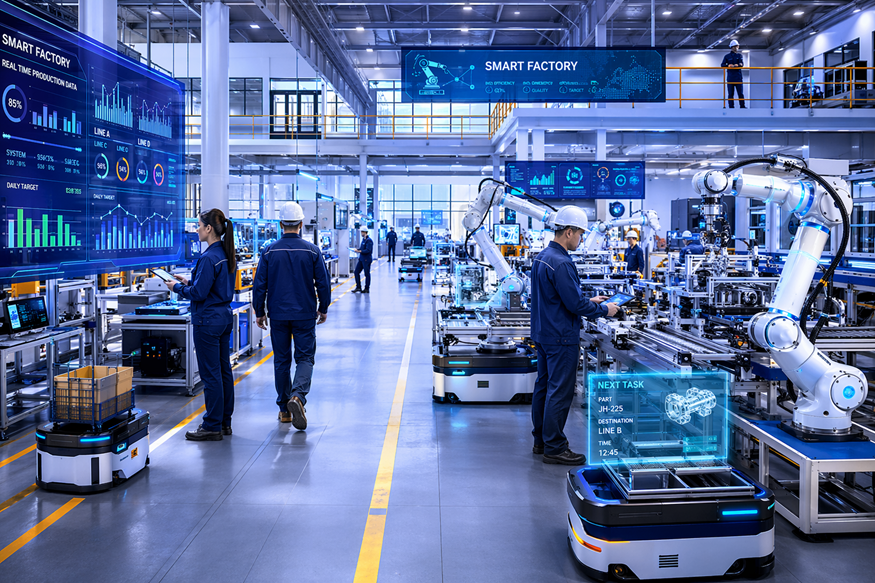
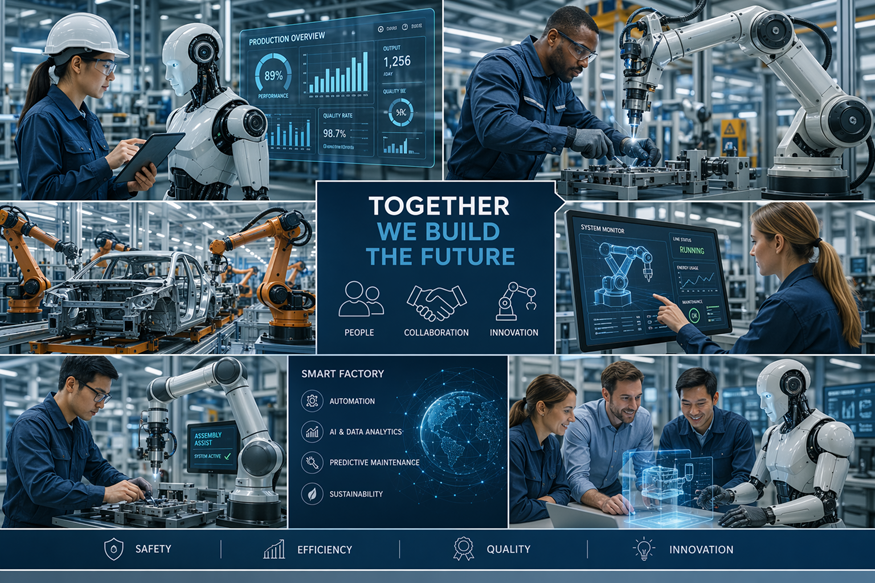
A human-centric approach means people are no longer treated as separate from technology. In Industry 5.0, workers and machines are designed to support each other. Advanced robotics can handle repetitive or risky tasks, while people focus on judgment, oversight, and problem-solving.
This changes the role of humans in manufacturing in a practical way. Instead of replacing manual labor entirely, companies reduce the hardest parts of it and create more efficient collaboration. Workers gain better tools, clearer data, and safer conditions while staying central to the manufacturing process.
For you as a business leader, that means technology becomes a partner. Human skills still matter for quality checks, decision-making, and adapting to change. Industry 5.0 does not remove people from production. It gives them a stronger role beside automation.
Sustainable manufacturing practices
Sustainable manufacturing in Industry 5.0 is about using resources with more precision. Data-driven systems help improve resource allocation, reduce avoidable waste, and support better planning across production processes. That creates a more balanced operation without losing speed.
Another important area is the supply chain. Real-time visibility, tracking, and analytics help businesses respond faster to disruption and make smarter inventory and logistics decisions. This supports efficiency while lowering unnecessary delays and overuse of materials.
Still, businesses face challenges when trying to implement this model. They must align digital transformation goals, manage change, connect systems, and control maintenance costs. Sustainable manufacturing works best when tools, people, and planning improve together rather than in isolated projects.
Technologies Driving Industry 5.0
Industry 5.0 depends on many of the same tools that powered Industry 4.0, including cloud computing. The difference is how those tools are used. Advanced robotics, artificial intelligence, and the internet of things help companies connect operations, reduce downtime, and improve decisions in real time.
Digital platforms also play a major role by linking workers, machines, and business data across locations in the development of smart cities. When these technologies work together, they create a smarter environment where people can act faster and with more confidence. The next sections show how each one contributes.
Advanced robotics and human-machine collaboration
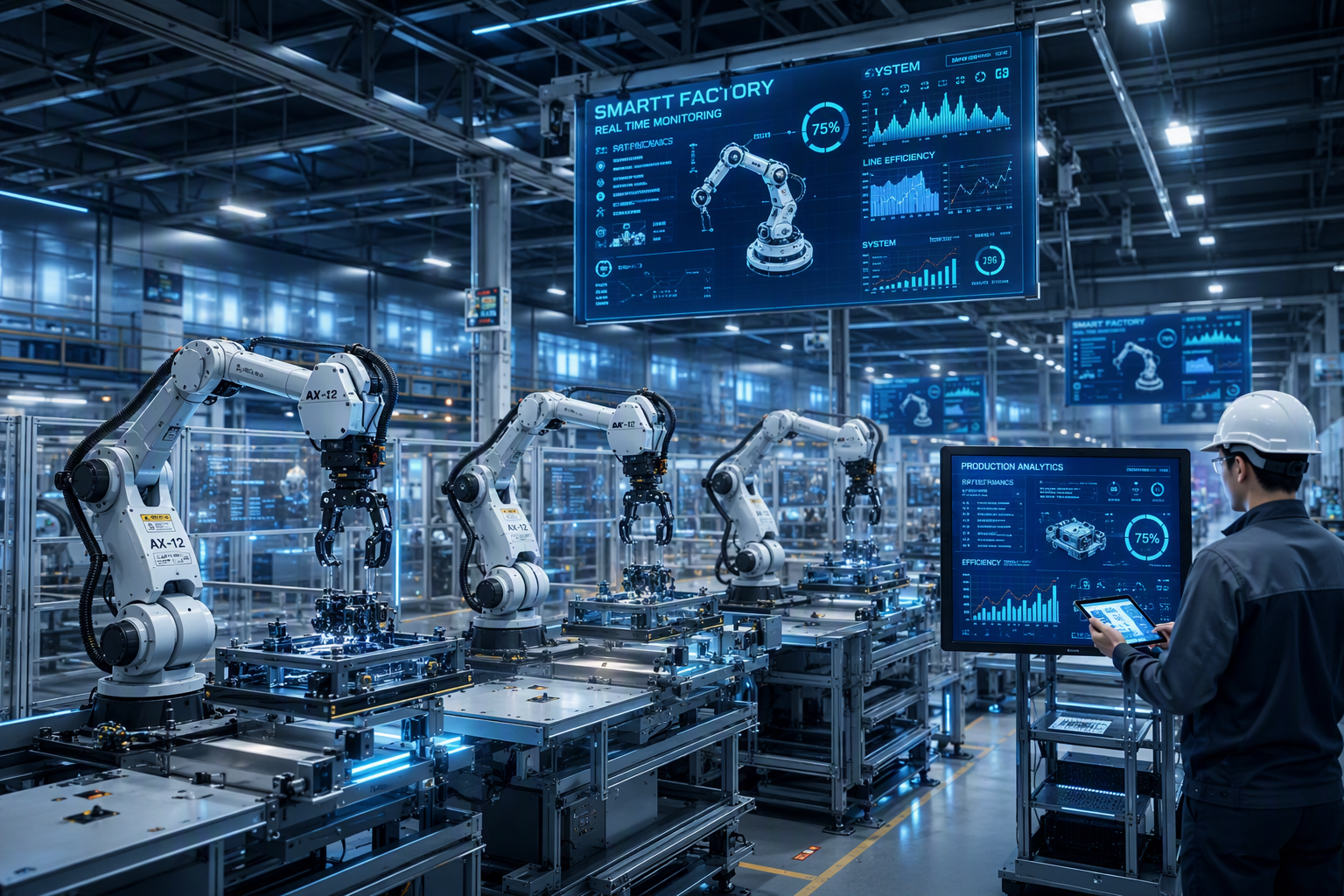
Advanced robotics are a key part of modern manufacturing, but in Industry 5.0 they are used in a more human-centric way. The goal is not just automation. It is efficient collaboration, where robots support workers in real time and improve safety, consistency, and speed.
This changes daily work in clear ways. Robots can take over repetitive motions, monitor equipment, and help maintain stable output, while people manage adjustments, quality decisions, and exceptions. That balance makes operations more responsive without removing human oversight.
In practice, advanced robotics can:
- Assist workers during repetitive tasks to reduce strain
- Support real-time monitoring of equipment and performance
- Improve human-machine collaboration in connected work cells
Artificial intelligence integration
Artificial intelligence is one of the main technologies included in Industry 4.0, and it remains essential in Industry 5.0. When paired with machine learning, it helps businesses detect patterns, improve forecasts, and support faster decision-making across operations.
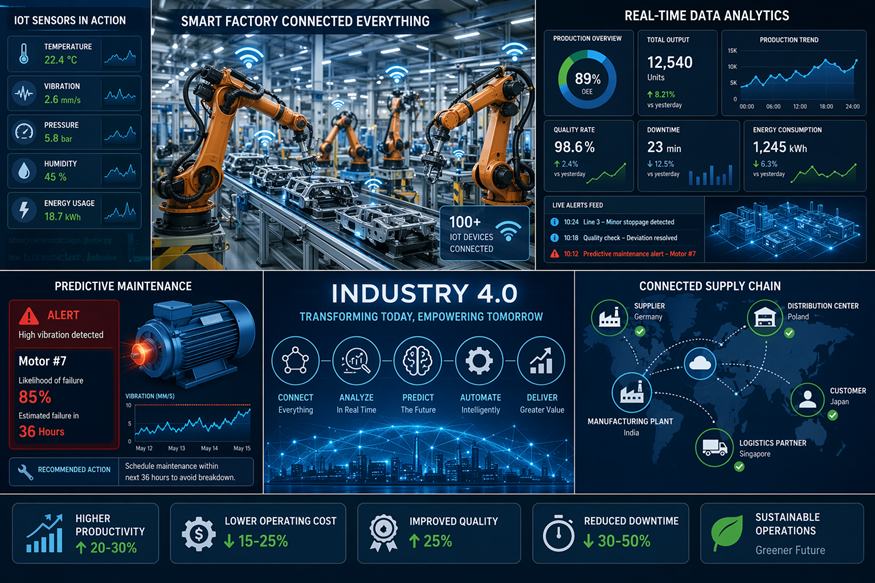
One of the most useful applications is predictive maintenance. By combining AI with sensor data and data analysis, companies can detect early failure signals before machines break down. This helps reduce unplanned stoppages, control maintenance costs, and protect equipment performance.
AI also improves planning and quality. It can support better production schedules, identify weak points, and provide insights that help employees respond faster. In short, artificial intelligence does not just automate tasks. It helps people make better operational choices with stronger confidence.
Industrial Internet of Things (IIoT) applications
The Industrial Internet of Things (IIoT) is transforming manufacturing processes through smart factory technologies. By leveraging IoT sensors, companies can collect real-time data, enhancing equipment performance and product quality. Applications such as predictive maintenance utilize data analytics and machine learning to anticipate equipment failures, significantly reducing maintenance costs. Additionally, IIoT enables efficient collaboration across supply chain management, allowing for flexible manufacturing and better resource allocation. This digital transformation leads to innovative business models that prioritize customer satisfaction and drive the future of manufacturing.
Real-World Examples of Industry 5.0
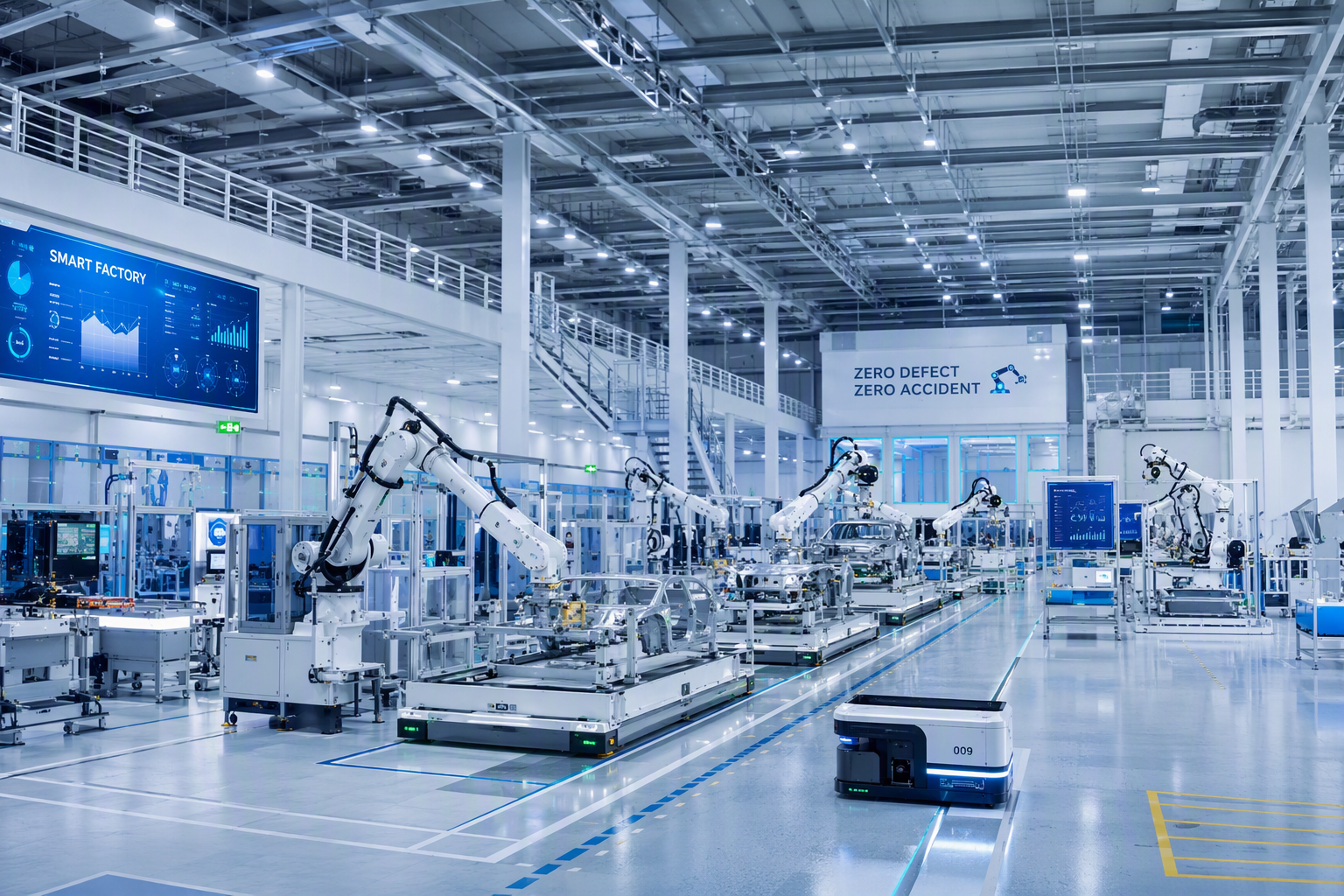
So what does Industry 5.0 look like outside theory? It appears in real workplaces where digital transformation supports both performance and effective data collection for people. Common examples include collaborative robots on factory floors, personalized production in the automotive sector, and smart healthcare manufacturing systems.
Each example shows the same pattern. Technology handles speed, tracking, and precision, while humans guide decisions, customization, and quality. That mix is what makes Industry 5.0 practical rather than abstract. Let’s look at where you can already see it in action.
Collaborative robots (cobots) in factories
Collaborative robots, or cobots, are one of the clearest real-world examples of how Industry 4.0 tools support Industry 5.0 goals. Unlike traditional robots that work in isolation, collaborative robots are designed to operate alongside people during the manufacturing process.
They fit well into factories because they combine advanced robotics with flexibility. Cobots can help with repetitive assembly, support inspections, and improve equipment performance through steady, precise movement. Workers then focus on supervision, adjustments, and higher-value decisions.
You can see their value in several ways:
- They improve consistency in repetitive production tasks
- They support safer and more balanced factory work
- They help maintain equipment performance and stable output in connected operations
Personalized production in automotive industry
The automotive industry is a strong example of personalized production within the manufacturing industry. In the past, manufacturers relied heavily on mass production with limited variation. Industry 4.0 technologies changed that by making production lines more connected, flexible, and responsive to changing customer needs.
Industry 5.0 pushes that idea further through stronger product customization. Real-time data, digital tools, and agile systems help manufacturers adjust options without losing efficiency. This allows companies to produce vehicles with more tailored features while keeping quality and timing under control.
For businesses, the value is clear. Personalized production helps meet individual demand while preserving operational discipline. For customers, it improves satisfaction because products feel better matched to their needs. That balance between scale and customization is a major Industry 5.0 advantage.
Smart healthcare manufacturing solutions
Smart healthcare manufacturing is another useful example of Industry 5.0 in action. It uses connected systems, automation, and data analytics to improve production processes while keeping workers involved in oversight, compliance, and quality decisions.
Many technologies included in Industry 4.0 support this model, such as IoT, AI, predictive maintenance, and digital platforms. These tools help monitor conditions, reduce delays, and improve coordination. In healthcare-related production, that matters because precision and reliability are essential.
The result is better product quality and more consistent output. Smart healthcare solutions show how digital tools, including a digital twin approach, can strengthen operations without making the process less human. Instead, employees use stronger data and smarter systems to protect standards and respond faster when something shifts.
Benefits for Businesses with Industry 5.0
For businesses, Industry 5.0 offers more than technical upgrades. It supports enhanced productivity by combining automation with human-machine synergy, helping teams work faster without losing adaptability. That leads to stronger operations, fewer disruptions, and better use of resources.
It also creates room for new business models built around flexibility, service, and customization. When companies respond faster to customer needs and maintain quality, customer satisfaction improves as well. These advantages become easier to see when you look at productivity and customization more closely.
Enhanced productivity through human-machine synergy
One of the main benefits of adopting Industry 4.0 tools, and extending them into Industry 5.0, is enhanced productivity. Human-machine synergy helps businesses move faster because machines manage repetitive work while people handle decisions, exceptions, and improvement efforts.
This productivity gain reaches beyond the shop floor. Better visibility and connected systems improve supply chain management, support smarter scheduling, and reduce avoidable delays. As a result, businesses can lower lead times and respond more quickly to changes in demand or disruptions.
The biggest gains often include:
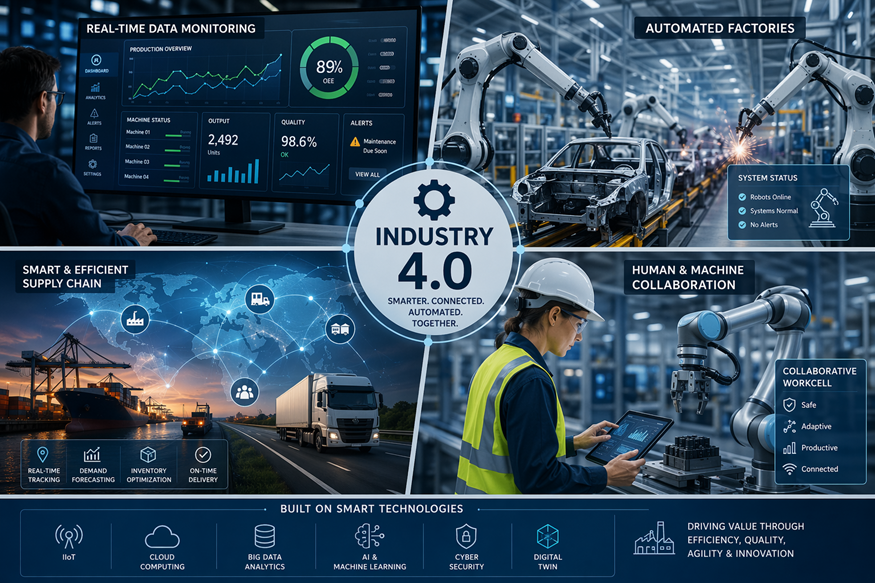
- Faster issue detection through real-time data
- Better coordination across supply chain management activities
- Shorter lead times through a stronger balance of automation and human oversight
Improved product customization
Improved product customization is a major business benefit of Industry 5.0. Connected systems and digital technologies give manufacturers more control over production changes, which makes it easier to respond to individual customer demands without creating major inefficiencies.
That is where flexible manufacturing becomes important. Instead of relying only on fixed, high-volume output, companies can adapt workflows, settings, and scheduling more easily. This allows them to offer variation while still protecting consistency and cost control.
For your business, that can strengthen customer satisfaction in a direct way. People want products that fit their needs, not just generic options. Industry 5.0 makes that more realistic by combining flexibility, visibility, and smarter decision-making across production.
Conclusion
In conclusion, Industry 5.0 represents a transformative shift in manufacturing, emphasizing collaboration between humans and advanced technologies. This human-centric approach, coupled with sustainable practices, not only enhances productivity but also fosters personalized solutions tailored to individual needs. As we witness real-world applications, such as collaborative robots in factories and smart healthcare solutions, it's clear that the future of manufacturing is bright and full of potential. Embracing these innovations will allow businesses to stay competitive and relevant in an ever-evolving market. If you're eager to explore how Industry 5.0 can benefit your organization, don't hesitate to reach out for a consultation!
Frequently Asked Questions
How does Industry 5.0 change the role of humans in manufacturing?
Industry 5.0 makes manufacturing more human-centric by shifting people away from repetitive manual labor and toward oversight, problem-solving, and quality decisions, incorporating a higher degree of automation. Advanced robotics support efficient collaboration, so workers stay central to the manufacturing process instead of being pushed out of it.
What challenges do businesses face when implementing Industry 5.0?
Businesses often struggle with digital transformation, system integration, and change management. They also need stronger data analytics, better supply chain coordination, and careful planning around maintenance costs. In many cases, companies must rethink operations and support new business models at the same time.
What are the main differences between Industry 4.0 and Industry 5.0?
The fourth industrial revolution focuses on automation, connectivity, and digital technologies that improve efficiency. Industry 5.0 builds on that base but becomes more human-centric. It combines smart systems with human skills and supports is supported by leaders such as the executive chairman of the World Economic Forum, Klaus Schwab, who emphasizes business models that value flexibility, collaboration, and customization.
You might also like