An Introduction to SCADA: Key Concepts and Uses
Key Highlights
Here's a quick look at what we'll cover in this introduction to SCADA:
- A SCADA system stands for Supervisory Control and Data Acquisition, a key part of industrial automation.
- It enables the remote monitoring and process control of industrial processes in real time.
- The system uses hardware and software for data acquisition to manage equipment and operations.
- Key components include PLCs, RTUs, and a human-machine interface (HMI).
- SCADA is crucial for industries like energy, water treatment, and manufacturing.
- It helps improve efficiency, safety, and decision-making by providing critical operational data.
Introduction
Welcome to the world of industrial automation! Have you ever wondered how massive industrial operations, like power grids or water treatment plants, are managed so smoothly? The answer often lies in a powerful technology called SCADA. SCADA, which stands for supervisory control and data acquisition, is a system of software and hardware elements that allows organizations to monitor and manage industrial processes from a central location. It's the backbone that keeps many essential services running efficiently and safely.
Defining SCADA and Its Key Concepts
At its core, a SCADA system is a powerful control system architecture designed to oversee large-scale industrial processes. It combines hardware and software to give operators a high-level view of what’s happening across an entire operation, whether it's a factory floor or a sprawling utility network.
The primary goal is to gather information through data acquisition and present it in a way that helps people make smart decisions. Let's explore what SCADA is in more detail and break down its two main functions: supervisory control and data acquisition.
What is SCADA?
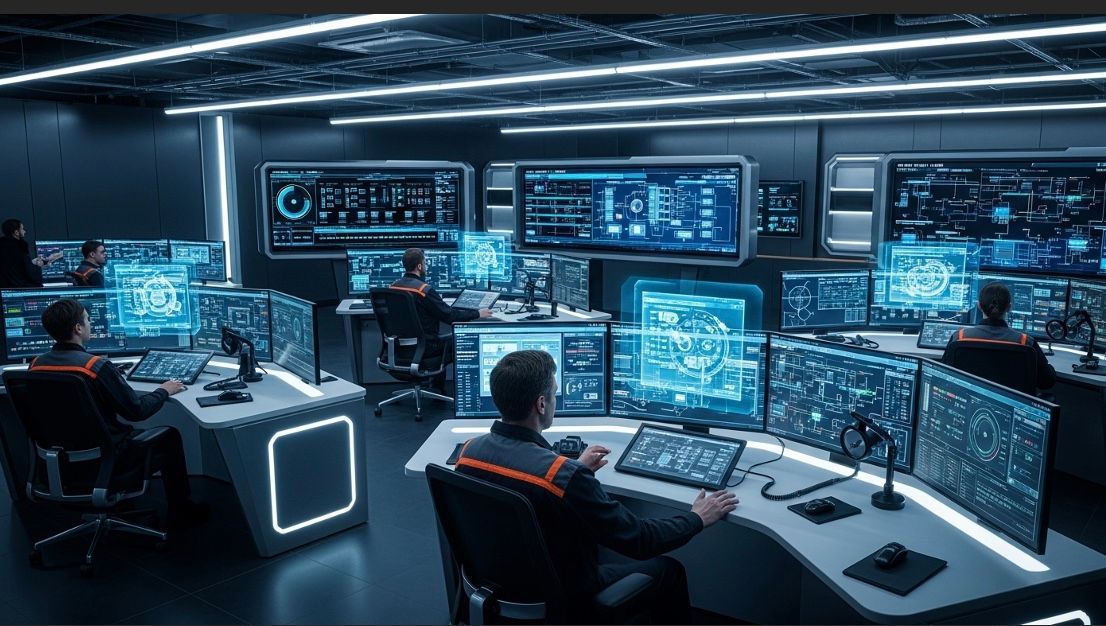
In simple terms, a SCADA system is a type of industrial control system that lets you monitor and control infrastructure and machinery. Think of it as a central command center for industrial automation. From a control room, operators can oversee equipment, processes, and field devices that might be spread across vast distances. This remote access is crucial for managing everything from a single water pump to an entire power plant.
The system is built for supervisory control, meaning it provides high-level management rather than direct, second-by-second machine operation. It uses data acquisition to collect information from various sensors and devices. This information is then sent to a central computer where operators can view it.
This capability makes SCADA indispensable for process control in many industries. It allows organizations to automate complex tasks, ensure everything is running smoothly, and respond quickly to any issues that arise, all from a centralized location.
Supervisory Control and Data Acquisition Explained
The term "Supervisory Control and Data Acquisition" perfectly describes what a SCADA system does. Let's break it down. Data acquisition is the process of gathering process data from sensors and equipment in the field. This can include information like temperature, pressure, flow rates, or the status of a machine. This live data is collected in real time to give you an up-to-the-minute view of your industrial operations.
Next comes supervisory control. Once the data is collected, the SCADA system allows operators to issue control commands. For example, if the data shows that a tank's pressure is too high, an operator can send a command to open a release valve. This control is "supervisory" because it's typically initiated by a human operator or based on high-level automated rules, rather than the system making constant, low-level adjustments.
Finally, the system logs and stores this information as historical data. This is incredibly valuable for analyzing trends, troubleshooting problems, and optimizing industrial operations over time. Your SCADA system essentially provides a complete picture of both current and past performance.
Fundamental Components of a SCADA System
To make industrial automation possible, a SCADA architecture relies on several interconnected parts working together seamlessly. These key components can be broadly categorized into hardware devices that physically interact with the machinery and software applications that process and display the data for human operators.
Understanding these elements is the first step to grasping how a SCADA system functions as a whole. We will look at the essential hardware like RTUs and PLCs, the software that drives the user interface, and the communication networks that tie everything together.
Hardware Elements: RTUs, PLCs, and HMIs
The hardware forms the physical backbone of any SCADA system, connecting the central control room to the plant floor. These devices are responsible for collecting data and executing commands. The most important hardware elements are Remote Terminal Units (RTUs) and Programmable Logic Controllers (PLCs).
These devices act as the "hands and ears" in the field. They connect to field sensors and other field devices to gather data and carry out control logic.
- Programmable Logic Controllers (PLCs): These are small, rugged computers that directly control individual machines or processes. They monitor inputs from sensors and make decisions based on their programming to control outputs.
- Remote Terminal Units (RTUs): These are microprocessor-controlled devices that collect data from sensors and transmit it to the central SCADA system. They are often used in remote locations.
Another crucial hardware component is the Human-Machine Interface (HMI). This is the screen or dashboard that operators use to interact with the system. It visually displays data and allows operators to monitor the system and issue commands, providing a window into the entire operation.
Software Elements and User Interfaces
While hardware gathers the data, it's the SCADA software that makes it useful. These software components are the brains of the operation, processing the incoming information and presenting it to operators in an understandable format. The central SCADA software runs on a computer in the control room and manages the entire system.
A key part of this is the HMI software, which creates the graphical user interface that operators see. This interface displays real-time data through charts, graphs, and diagrams of the industrial process. It's designed to be intuitive, allowing operators to quickly assess the status of the system and respond to alarms or make adjustments.
Modern software solutions offer more than just basic monitoring. They often include a data historian for archiving information, reporting tools, and even advanced analytics capabilities. These features help you analyze trends, optimize performance, and make smarter, data-driven decisions for your operations.
Communication Networks and Protocols
The communication network is the vital link that connects all the hardware and software components of an industrial control system. It allows data to flow from field devices at remote sites back to the central control room and enables commands to be sent out to the machinery. Without a reliable network, remote management and data collection would be impossible.
These networks can use various technologies, from wired connections like fiber optics to wireless and internet-based solutions. The choice depends on the distance, environment, and amount of data being transmitted. Common communication protocols are used to ensure that different devices can "talk" to each other.
- Modbus: A widely used protocol in industrial environments.
- DNP3: Often used in utilities like electric and water companies.
- TCP/IP: The standard protocol for the internet, increasingly used in modern SCADA systems.
As the Internet of Things (IoT) becomes more integrated into industrial settings, these communication networks are becoming even more critical, enabling greater connectivity and more sophisticated data analysis.
How SCADA Systems Operate in Industrial Environments
Now that you understand the components, let's see how a SCADA control system works in action. In any industrial environment, the goal is to maintain efficiency, safety, and productivity. SCADA achieves this through a continuous cycle of data collection, monitoring, and control, making it a cornerstone of modern industrial automation.
The system provides real-time visibility into complex industrial processes, allowing for remote monitoring and precise process control. This section will explore the day-to-day operational flow of a SCADA system, from how it gathers data to how it helps automate responses and alert operators to important events.
Data Collection and Real-Time Monitoring
The first step in any SCADA operation is data collection. The system continuously gathers vast amounts of raw data from sensors and devices located throughout the facility or across remote locations. This sensor data can measure anything from temperature and pressure to flow rates and equipment status.
This information is transmitted in real time to the central system, where it is processed and converted into meaningful process data. This live data is then displayed on the HMI, giving operators an immediate and accurate picture of what's happening. The benefits of this include:
- Instant Visibility: Operators can see the status of the entire system at a glance.
- Remote Access: You can monitor operations from a central control room, regardless of where the equipment is located.
- Informed Decisions: Access to live data allows for quick and accurate decision-making.
This constant stream of information is crucial for maintaining operational awareness. Without real-time monitoring, operators would be blind to emerging issues, making it difficult to prevent downtime or respond to problems effectively.
Control Mechanisms and Automation
Beyond just monitoring, SCADA systems provide powerful control capabilities. Based on the data collected, operators can issue control commands to adjust the industrial equipment. For example, if a tank level is too low, an operator can use the HMI to activate a pump to fill it. This level of process control allows for precise management of the entire operation.
In many cases, these control actions are automated. The PLCs in the field are programmed with control logic, often using a language like ladder logic, to respond automatically to certain conditions. For instance, if pressure in a line exceeds a setpoint, the PLC can automatically open a relief valve without any human intervention. This automation is key to handling complex or fast-moving processes that would be difficult for a person to manage manually.
The role of the human operator is often to supervise this automation, set the operating parameters, and intervene when unexpected situations arise. This combination of automated control and human oversight ensures that industrial processes run smoothly, efficiently, and safely.
Alarms, Events, and Reporting Features
A critical function of any SCADA system is its ability to notify operators of abnormal conditions through alarms and events. The system constantly compares real-time data against predefined thresholds. If a parameter goes outside its normal operating range, an alarm is triggered. This immediately alerts operators to a potential problem, allowing them to take corrective action before it leads to a bigger issue.
Event logging works alongside alarms to create a detailed record of all system activities. Every alarm, operator command, and system change is logged with a timestamp. This information is invaluable for troubleshooting, analyzing incidents, and improving operational efficiency. Key reporting features include:
- Trend Analysis: Using historical data to identify patterns and optimize processes.
- Compliance Reports: Generating documentation to prove adherence to quality standards and regulations.
- Performance Dashboards: Visualizing key metrics to track efficiency and productivity.
These features also support predictive maintenance strategies. By analyzing trends and recurring alarms, you can anticipate equipment failures and schedule maintenance proactively, reducing downtime and extending the life of your assets.
Comparing SCADA with Other Industrial Control Systems
The term industrial control system (ICS) covers several types of systems, and it's helpful to understand where a SCADA system fits in. While SCADA is excellent for high-level supervision over large areas, other systems like PLCs and Distributed Control Systems (DCS) have different strengths and are used for different purposes in process control.
Knowing the differences can help you understand why a particular control system is chosen for a specific application. Let's compare SCADA to two other common systems to clarify their unique roles.
SCADA vs. PLC: Differences and Integration
While a SCADA system and Programmable Logic Controllers (PLCs) are often used together, they serve very different functions. A PLC is a hardware device designed for real-time control of a specific machine or process on the factory floor. In contrast, SCADA is primarily a software solution that supervises and monitors multiple PLCs and other devices from a central location.
Think of it this way: the PLC is the hands-on worker executing tasks, while SCADA is the supervisor overseeing the entire team. SCADA collects data from PLCs to provide a big-picture view, but the PLCs handle the direct, fast-acting control processes.
| Feature | SCADA | PLC |
|---|---|---|
| Function | Supervises and monitors large-scale processes | Controls specific machines in real time |
| Scope | Centralized, overseeing many devices | Localized, interacting with field devices |
| Architecture | Primarily software-based | Hardware-based controller |
| User Interaction | Provides an HMI for operator interaction | Often runs autonomously |
The power of modern automation comes from the seamless integration of these two systems. SCADA sends high-level commands to PLCs, and PLCs report their status back to SCADA, creating a complete and efficient control loop.
SCADA vs. DCS: Key Distinctions
Another important comparison is between SCADA and a Distributed Control System (DCS). While both are used to manage complex processes, they have different architectural philosophies. A SCADA architecture is typically event-driven and focuses on intermittent, high-level supervision over geographically dispersed assets, like a pipeline or power grid. Operators in a central control room monitor the system and respond to alarms as they occur.
A DCS, on the other hand, is process-oriented and designed for continuous, real-time control within a single plant or facility, like a chemical plant or refinery. In a DCS, control is distributed among multiple controllers throughout the plant, which are tightly integrated and managed as one system. The system components in a DCS work together continuously to keep the process within desired parameters.
In short, SCADA excels at monitoring widespread operations, while a DCS is better suited for managing intricate, self-contained processes that require constant, fine-tuned adjustments.
Industries Utilizing SCADA Technology
SCADA technology is incredibly versatile, making it essential for a wide range of industrial organizations. It is the backbone of many critical infrastructure sectors, from public utilities to manufacturing. Any industry that needs to monitor and control production processes or manage industrial equipment spread over a large area can benefit from a SCADA system.
Its ability to provide centralized oversight and control helps these industries improve efficiency, ensure safety, and maintain high-quality output. Let's look at some of the specific sectors where SCADA plays a crucial role every day.
Utilities, Manufacturing, and Energy
Some of the most common applications for SCADA are found in the utilities, manufacturing, and energy sectors. These industries often manage vast networks and complex processes that require constant monitoring, much of which is in remote locations.
In the energy sector, SCADA systems are vital for managing power grids. They monitor power distribution, detect faults in substations, and help operators balance electrical loads to prevent outages. Similarly, water treatment plants use SCADA to monitor water levels, control pump stations, and manage the chemical dosing process to ensure water quality.
Manufacturing facilities also rely heavily on SCADA. On the plant floor, these systems oversee production lines, monitor machine performance, and track energy consumption. This helps optimize production, reduce waste, and ensure a safe working environment.
- Energy: Manages power grids and monitors substations.
- Water Treatment: Controls pump stations and ensures water quality.
- Manufacturing: Oversees production lines and machine performance.
Food Processing, Water Management, and More
The use of SCADA extends far beyond utilities and manufacturing. In the food processing industry, for example, SCADA systems are essential for maintaining strict quality standards. They monitor and control temperatures, cooking times, and packaging processes to ensure product consistency and safety. This helps companies improve quality, reduce waste, and lower maintenance costs on industrial equipment.
Water management is another key area. Beyond municipal water treatment, SCADA is used to manage large-scale irrigation systems and monitor water levels in reservoirs and rivers, often across many remote sites. Other industries that benefit from SCADA include:
- Pharmaceuticals: To ensure equipment operates at optimal levels and production processes meet strict regulatory requirements.
- Building Management: To control HVAC, lighting, and security systems in large commercial buildings.
- Transportation: To manage traffic light systems and monitor railway networks.
In all these applications, SCADA provides the centralized control needed to run operations efficiently and safely.
Conclusion
In summary, SCADA systems are integral to the efficient operation of various industries. Through real-time monitoring and control capabilities, SCADA not only enhances productivity but also ensures safety and compliance. Understanding the fundamental components and functionality of these systems can empower organizations to leverage technology for better decision-making. As industries continue to evolve with advancements in technology, staying informed about SCADA and its applications will be essential. If you're interested in exploring how SCADA can benefit your operations, feel free to reach out for a consultation!
Frequently Asked Questions
What security risks are associated with SCADA systems?
SCADA security is a major concern because these systems control critical infrastructure. Key risks include unauthorized access from hackers or insider threats, which could lead to operational disruption or physical damage. Strong security measures, such as network segmentation, access control, and regular updates, are essential to protect any industrial control system from cyberattacks.
How has SCADA technology evolved over time?
SCADA has evolved from isolated, standalone systems to modern, networked architectures. Early systems were proprietary, but today's solutions leverage IT standards, cloud computing, and the Internet of Things. Modern SCADA offers enhanced remote access, advanced analytics for processing historical data, and greater scalability, making it more powerful and flexible than ever.
Are there popular SCADA software options available today?
Yes, there are many popular SCADA software solutions available from different manufacturers. Companies like Schneider Electric, Siemens, and Rockwell Automation offer widely used platforms for both small and large SCADA systems. The best choice often depends on the specific industry, application, and existing hardware in the facility.
You might also like