What Is Industry 4.0 in Simple Words?
Key Highlights
- Industry 4.0 means using digital technologies to create smart manufacturing systems.
- It is called the fourth industrial revolution because it builds on earlier industrial changes.
- Key tools include the internet of things, artificial intelligence, machine learning, cloud computing, and big data.
- Smart factories use connected smart machines, data analytics, and real time insights to improve decisions.
- Businesses can boost productivity, improve product quality, cut maintenance costs, and support mass customization.
- The shift also changes skills, business processes, and the future of industry.
Introduction
If you have heard people talk about Industry 4.0 and wondered what it actually means, you are not alone. In simple words, Industry 4.0 is the digital transformation of manufacturing and industrial work. It is often called the fourth industrial revolution because it connects machines, data, and people in smarter ways. The goal is clear: help companies make, improve, and distribute products with better speed, flexibility, visibility, and decision-making.
Understanding Industry 4.0 in Simple Terms
Think of Industry 4.0 as smart manufacturing powered by digital technologies. Machines, sensors, software, and connected systems work together to share information and improve how things are made.
Why does that matter to modern manufacturing? Because Industry 4.0 helps companies see problems faster, respond in real time, and run operations with greater efficiency. It supports better quality, less downtime, and more flexible production, which makes it important for businesses trying to meet changing customer needs.
Defining Industry 4.0 for Beginners
At its core, Industry 4.0 is the fourth industrial revolution. It is the next stage after the digital revolution, where manufacturing moves beyond basic automation into connected, intelligent operations. Instead of machines working alone, systems now share data and support faster decisions.
A big part of this shift is the internet of things. Machines on the factory floor use sensors and network connections to collect and exchange information. These physical systems can report performance, signal issues, and help companies understand what is happening as work takes place.
That is what turns a plant into a smart factory. In a smart factory, equipment, software, and people are linked through data. This makes manufacturing more responsive, more visible, and more efficient. For beginners, the easiest way to understand Industry 4.0 is this: connected systems help factories think and act smarter.
Why Industry 4.0 Matters Today
Manufacturers face pressure to move faster, improve output, and meet changing demand. That is why digital transformation matters now. Industry 4.0 gives businesses better visibility into operations, helping them react quickly instead of waiting until a problem becomes expensive.
Data is central to this change. When machines, production systems, and enterprise tools share information, companies can improve quality control and keep equipment running longer through predictive maintenance. Better data also supports smarter planning across the business.
Here are a few reasons it matters in the future of industry:
- It helps companies offer mass customization without losing efficiency.
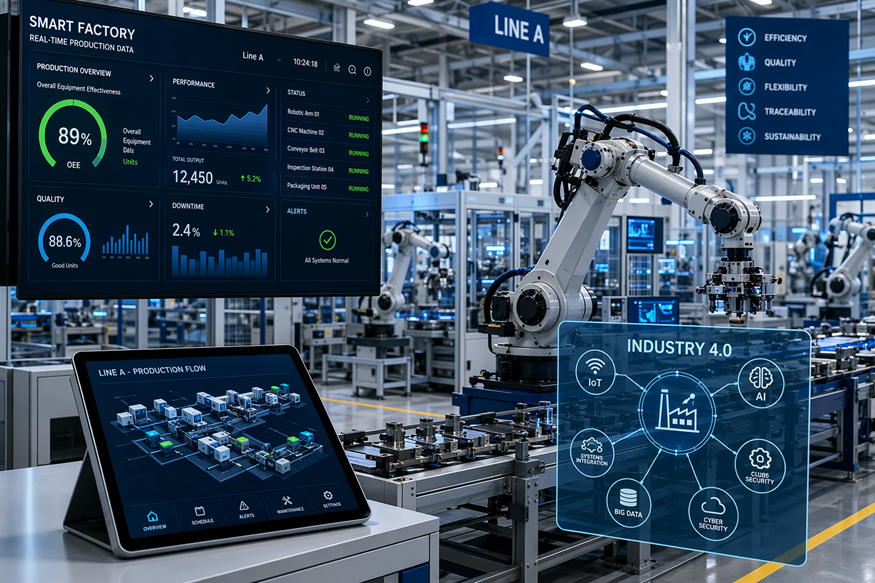
- It improves quality control by spotting defects earlier.
- It supports predictive maintenance, which reduces downtime and waste.
The Evolution of Industrial Revolutions
Industry 4.0 makes more sense when you look at the full industrial revolution timeline. Each stage changed how goods were made, and each one introduced new tools, energy sources, or systems that improved output.
The evolution of industry moved from steam-driven machines to assembly lines, then to computers and automation, and now to connected intelligence. These technological advancements are what set Industry 4.0 apart. It does not just automate tasks. It connects machines, data, and decisions across the whole operation.
The First Industrial Revolution
The first industrial revolution began in Britain in the late 18th century. Before that, most work depended on manual labor and animal power. Goods were made slowly by hand, and production was limited by human effort.
Then came machines powered by water power and steam power. These new energy sources changed how industries worked, especially in textile manufacturing, iron, agriculture, and mining. Work that once took long hours by hand could now be done faster with equipment.
This was the first big shift in industrial production. It marked the move from hand-built goods to machine-made output. Compared with Industry 4.0, this stage was about replacing physical effort. Today’s systems go much further by adding connected data, digital visibility, and smarter control to manufacturing processes.
The Second Industrial Revolution
About a century later, the second industrial revolution changed manufacturing again. This period introduced oil, gas, and electric power, along with better communication through the telephone and telegraph. Factories became larger, faster, and more organized.
The biggest change was mass production. The assembly line made it possible to build goods in a steady, repeatable flow. That improved production processes and helped companies make more products at lower cost. Some degree of automation also started to appear.
This stage differed from Industry 4.0 because the focus was scale, not intelligence. Factories learned how to produce more, but systems were not yet connected through real time data. Quality control improved, yet decisions still relied heavily on people rather than digital systems that could analyze and respond instantly.
The Third Industrial Revolution
The third industrial revolution began in the middle of the late 20th century. This was the digital shift, when computers, advanced telecommunications, and data analysis entered factories and changed how production was managed.
During this period, digital technologies were added to industrial equipment. Manufacturers started using programmable logic controllers to automate specific tasks and collect information from machines. That made automation more reliable and reduced the need for constant manual control.
Even so, this stage was still different from Industry 4.0. The third industrial revolution brought digitization, but many systems remained separate. Industry 4.0 builds on that base by linking machines, software, and business operations together. In other words, Industry 3.0 automated individual processes, while Industry 4.0 connects and improves the whole system.
The Fourth Industrial Revolution (Industry 4.0)
Now we are in the fourth industrial revolution, also known as Industry 4.0. This stage combines connectivity, automation, and intelligence. It does not only use machines to perform tasks. It helps systems learn, communicate, and support better decisions across production and business activities.
The internet of things plays a major role here. Sensors and connected devices gather data from machines and equipment, while cloud computing helps store, process, and share that information across the enterprise. This gives companies broader visibility and faster access to insights.
Artificial intelligence adds another layer of value by finding patterns, supporting predictive maintenance, and improving workflows. Together, these tools create the smart factory. That is the key difference from earlier revolutions: Industry 4.0 connects digital and physical operations in ways that make manufacturing more flexible, informed, and responsive.
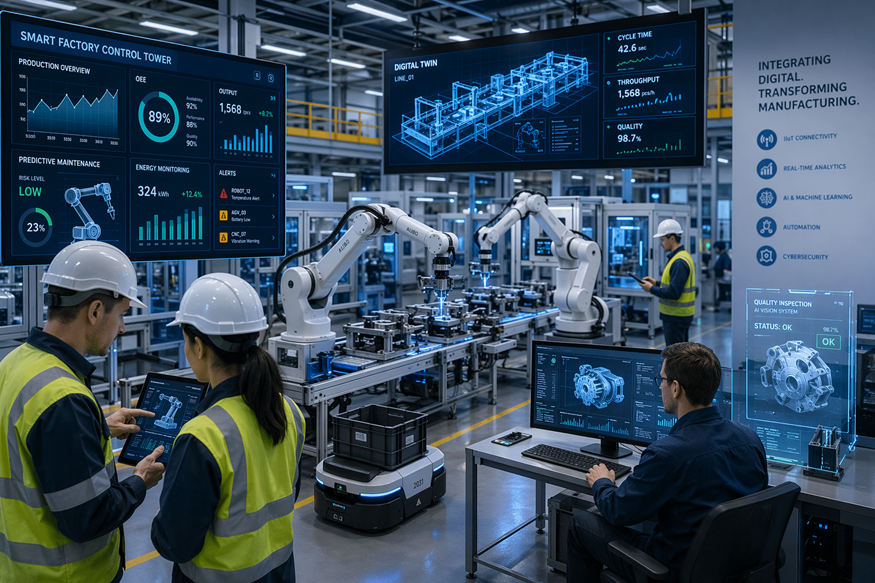
Key Technologies Driving Industry 4.0
Industry 4.0 runs on a group of digital technologies that help factories collect, share, and use information better. These tools turn ordinary equipment into smart machines that can support faster action and stronger control.
The main drivers include connected sensors, artificial intelligence, cloud systems, and platforms that handle big data. Some analysis also happens close to the source for quicker response. Together, these advanced digital technologies help manufacturers improve uptime, visibility, and accuracy. The next sections explain the most important ones in simple terms.
Internet of Things (IoT) and Connected Devices
The internet of things is one of the foundations of Industry 4.0. In manufacturing, this often becomes the industrial internet of things, where machines and equipment are fitted with iot sensors and network connections. These devices collect useful information from the factory floor as work happens.
Because the data is captured in real time, companies can monitor performance, spot issues early, and respond faster. When this information connects to cloud computing systems, it becomes easier to store, analyze, and share across different parts of the business.
Here is what IoT and connected devices help do:
- Track machine conditions and performance in real time.
- Share data between equipment and enterprise systems.
- Improve visibility for faster decisions and smoother operations.
Artificial Intelligence (AI) and Machine Learning
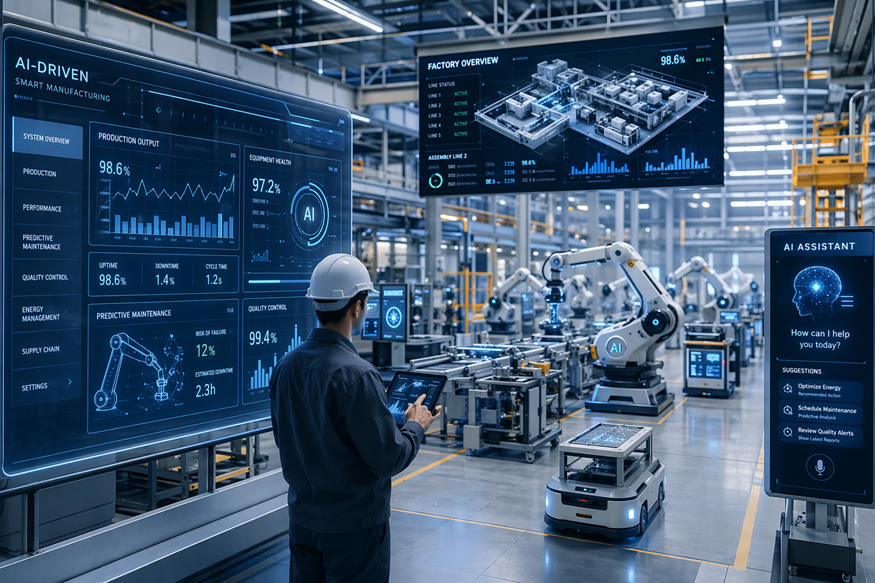
Artificial intelligence helps manufacturers make better use of the huge amount of information created across operations. In smart manufacturing, AI can review data from machines, business units, partners, and other sources to support faster and more accurate decisions.
Machine learning is especially useful because it learns from patterns in data analysis. If a machine usually shows certain signals before it fails, the system can recognize those signs and help teams act early. That is why AI is closely linked to predictive maintenance.
These technologies often support:
- Better predictions about equipment health and downtime.
- Improved visibility into operations and business processes.
For manufacturers, this means fewer surprises, more uptime, and smarter planning. Instead of reacting after a breakdown, teams can prevent problems before they interrupt production.
Cyber-Physical Systems
Cyber-physical systems connect software, sensors, and machines with real-world industrial activity. In simple terms, they link digital controls with physical processes so equipment can be monitored, managed, and improved through data.
One useful example is the digital twin. A digital twin is a virtual copy of a process, production line, factory, or supply chain. It is built using data from connected devices and control systems. Manufacturers can use it to test changes, reduce downtime, and improve workflows before making adjustments in the real environment.
These systems also support more advanced operations, including autonomous systems that react with less human input. Similar ideas appear in smart grids and other connected infrastructures. In Industry 4.0, cyber-physical systems matter because they bring digital insight directly into physical operations, making control more informed and responsive.
Smart Factories and Their Role in Industry 4.0
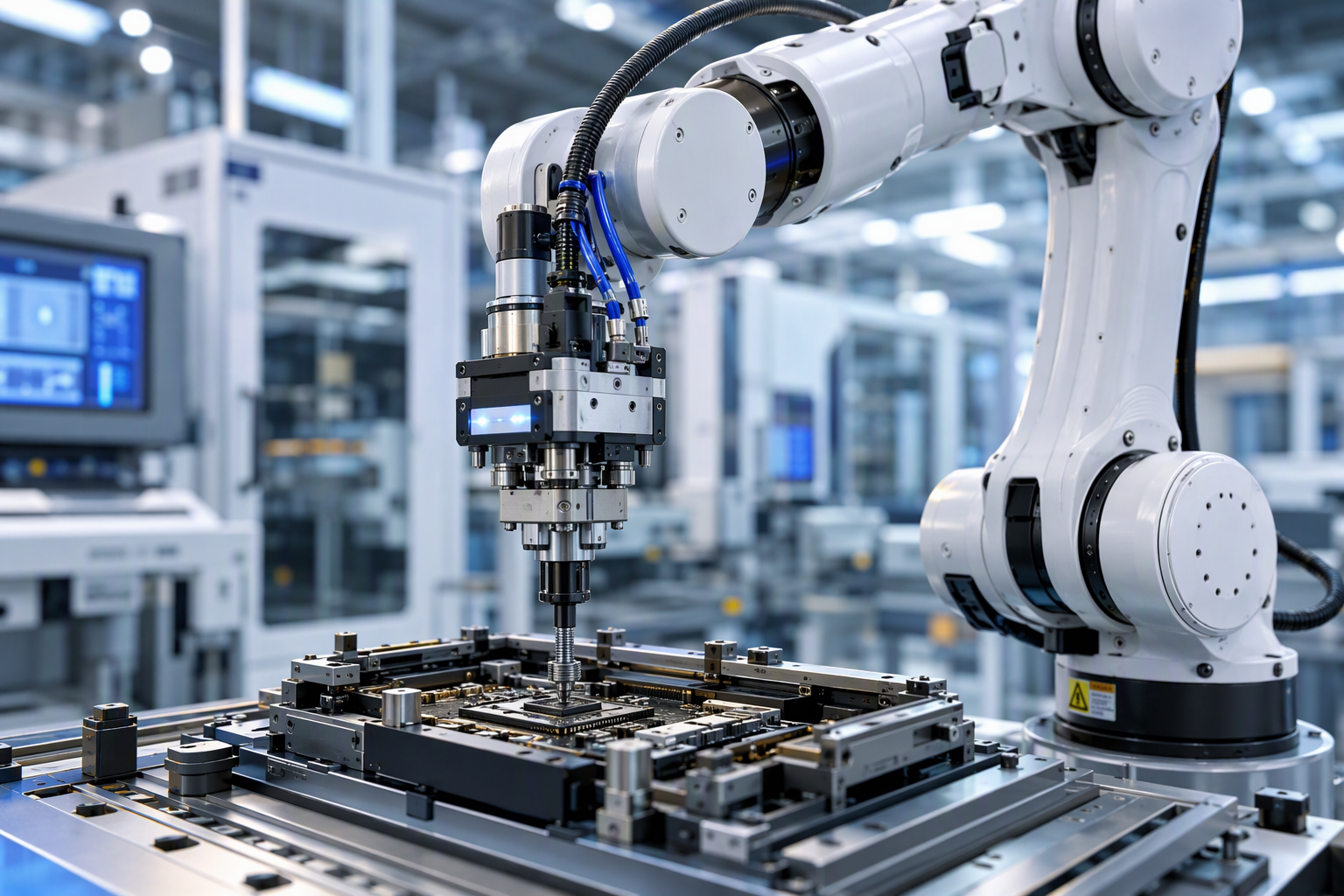
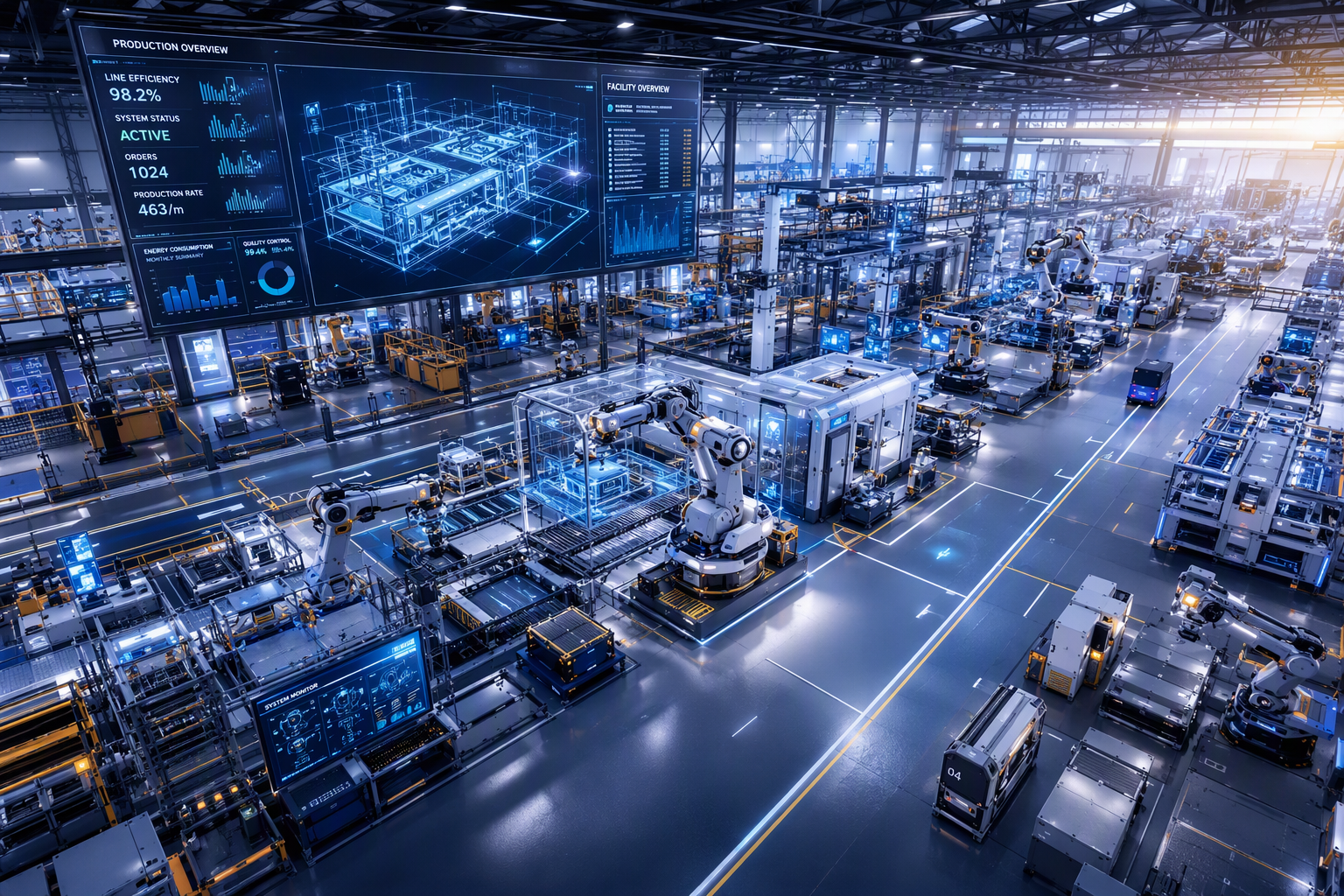
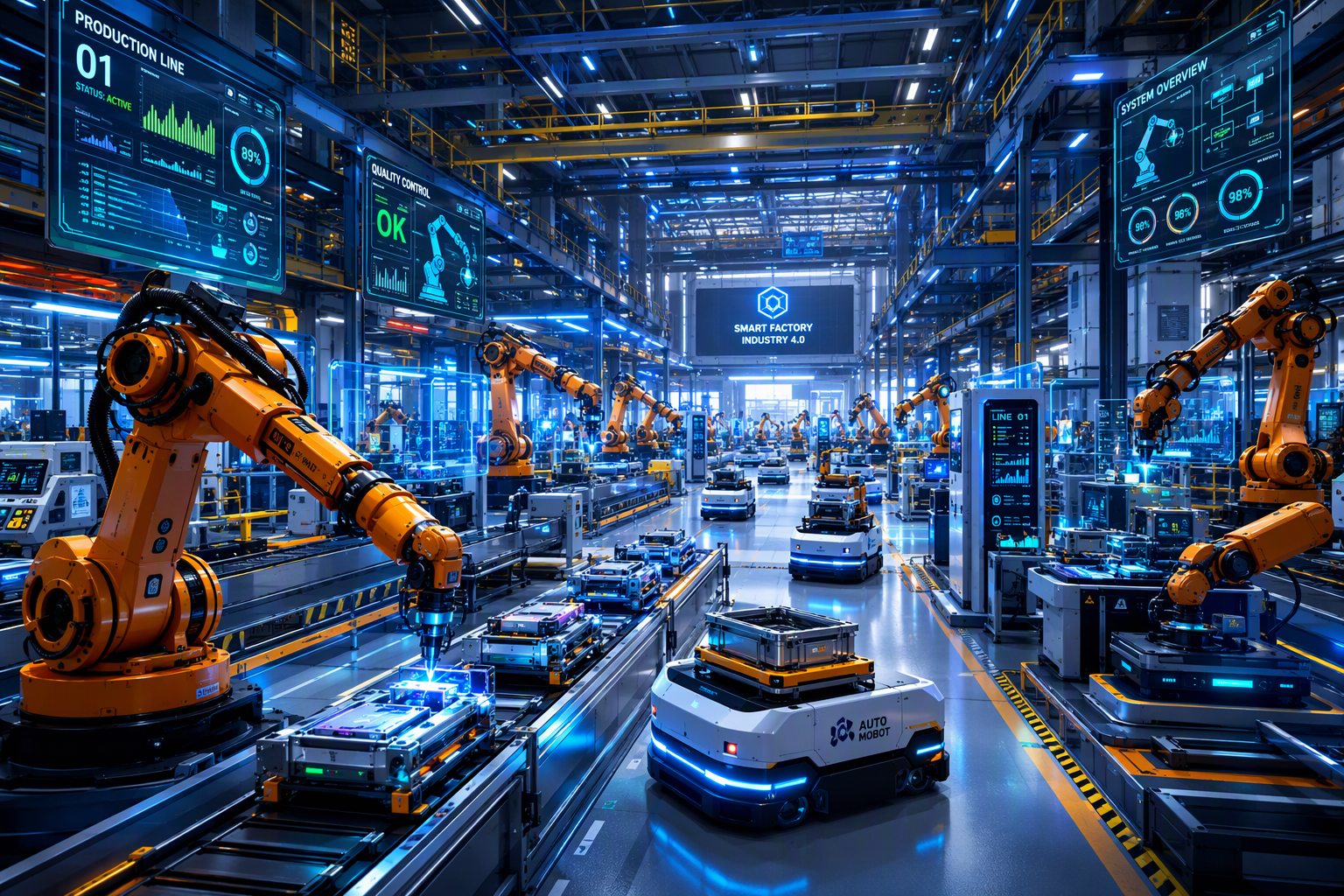
A smart factory is where Industry 4.0 becomes real. It brings connected machines, software, and people together so the manufacturing process can be monitored and improved as it happens.
What makes this possible is integration. Data from production facilities does not stay trapped in one machine or one team. It flows across systems and supports better decisions through data analytics. IoT helps gather the information, while the smart factory uses it to coordinate actions, improve performance, and respond quickly to change.
Characteristics of a Smart Factory
A smart factory is built around connected operations and informed decisions. It uses smart machines, embedded sensors, and software to collect data from the shop floor and turn that information into action. This creates a higher degree of automation than traditional factories.
The smart factory also links physical systems with data from other parts of the business. That wider view helps teams plan better, improve workflows, and respond faster when something changes. It can also support the design and production of innovative products in smaller, more specific batches.
Common characteristics include:
- Interconnected machines that share data automatically.
- A high degree of automation supported by software and analytics.
- Better decision-making across physical systems and operations.
That is why smart factories are central to Industry 4.0. They are not just automated sites. They are connected environments that keep learning and improving.
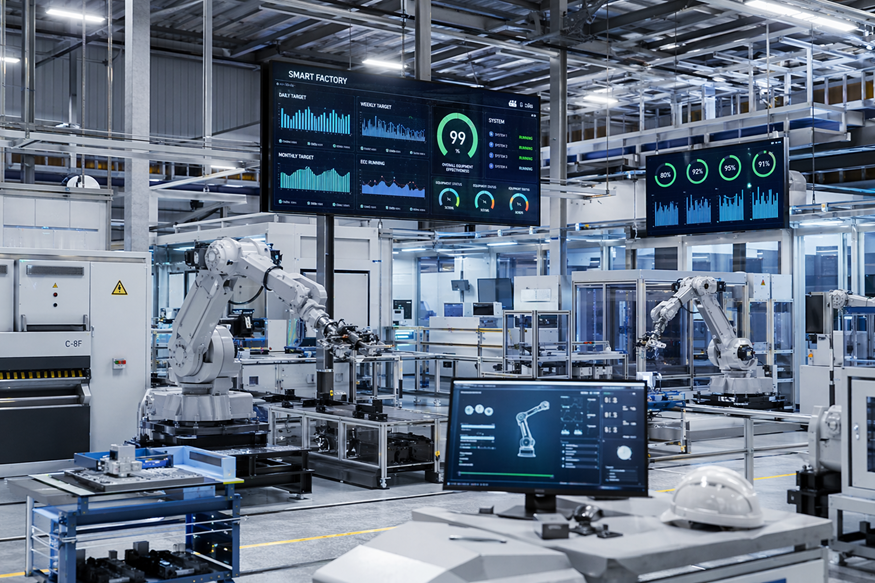
Integration of IT and OT
One major part of Industry 4.0 is IT integration with OT. IT covers information systems such as business software, while OT includes the machines and controls that run the production line. In the past, these areas often worked separately.
Today, smart factories work better when both sides are connected. Real time information from sensors and equipment can be shared with enterprise systems, including planning and management tools. That helps companies align production with wider business processes, not just what is happening on one machine.
This connection improves visibility and response time. When data analytics are applied across IT and OT, manufacturers can make stronger decisions about schedules, equipment, and output. Instead of isolated systems, the factory becomes part of a larger digital operation that supports speed, coordination, and better performance.
Data Analytics in Manufacturing
Data analytics is one of the reasons Industry 4.0 creates value. The manufacturing industry now gathers huge amounts of information from sensors, machines, and connected systems. That big data becomes useful when companies can study trends, spot patterns, and act on what they learn.
This matters because data supports better decisions across operations. Teams can use it for predictive maintenance, which helps reduce unexpected equipment failures. They can also use it to improve quality control by identifying errors earlier, before repair work becomes more costly.
Data is important in Industry 4.0 because connected systems need information to function well. Without reliable data, smart tools cannot guide action. With strong data analytics, manufacturers gain real time visibility, reduce waste, and improve how the whole operation runs from equipment performance to final output.
Benefits of Industry 4.0 for Businesses
The biggest benefits of industry 4.0 come from better visibility, faster decisions, and more connected business operations. When systems share information, companies can reduce delays, improve output, and respond more quickly to changing demand.
That means real gains for the business. Manufacturers can boost productivity, improve customer satisfaction, and lower maintenance costs through smarter planning and earlier problem detection. Industry 4.0 also supports more flexible production, which helps companies stay competitive. The next sections break down these business benefits in practical terms.
Improving Efficiency and Productivity
Industry 4.0 helps manufacturers boost productivity by connecting machines, people, and systems. In smart manufacturing, data from operations can be combined with information from planning, service, and the supply chain. That gives companies a clearer view of what is slowing them down.
Once problems become visible, teams can improve efficiency across production processes. Downtime can be reduced, scheduling can become more accurate, and resources can be used more effectively. This makes output steadier and helps businesses respond faster.
Here is a simple view:
| Area | How Industry 4.0 Helps |
|---|---|
| Equipment uptime | Supports predictive action to reduce disruptions |
| Production processes | Improves flow through connected monitoring and insights |
| Supply chain | Helps align deliveries and production timing |
| Workforce decisions | Gives teams better information for quicker action |
Enhancing Product Quality and Safety
Industry 4.0 can improve product quality by helping companies detect defects earlier. Connected systems, sensors, and AI-powered visual monitoring make it easier to catch errors during production instead of finding them at the end when repairs cost more.
Safety also improves when companies can monitor equipment and conditions remotely. Predictive maintenance reduces the chance of machine failure, which helps protect workers and keeps operations more stable. At the same time, businesses need to protect sensitive data because connected systems create new security risks.
Key improvements include:
- Stronger quality control through earlier error detection.
- Better safety through monitoring and predictive maintenance.
- Greater awareness of cybersecurity needs around sensitive data.
For many manufacturers, this means fewer defects, safer operations, and better trust in daily performance.
Cost Reductions and Flexible Production
One of the strongest business benefits of Industry 4.0 is lower operating cost. When companies use connected systems and data analysis to monitor machines, they can reduce waste, avoid unnecessary stoppages, and bring down maintenance costs over time.
Another major advantage is flexible production. Manufacturers can react faster to demand changes because systems provide better visibility into processes, scheduling, and equipment status. This makes it easier to shift output without losing control of efficiency or quality.
Industry 4.0 also supports mass customization. Instead of making only large runs of identical goods, companies can produce smaller batches tailored to customer needs. Tools such as additive manufacturing and advanced simulation make that easier. So businesses do not just save money. They also gain the flexibility to offer more personalized products in a practical way.
Conclusion
In conclusion, Industry 4.0 represents a transformative shift in how businesses operate, integrating advanced technologies like IoT, AI, and data analytics to enhance efficiency and productivity. As we move further into this new era, understanding its implications can empower organizations to stay competitive and innovative. Embracing smart factories and cyber-physical systems is crucial for not just improving product quality and safety but also enabling cost reductions and flexibility in production processes. As leaders in your field, now is the time to explore the potential of Industry 4.0. If you're ready to take the next step, we invite you to schedule a free consultation with our experts to discuss how you can implement these advancements in your business.
Frequently Asked Questions
What challenges do companies face when adopting Industry 4.0?
Companies often struggle with building a clear business case, managing maintenance costs, and protecting sensitive data as systems become more connected. Digital transformation also requires changes in human resources, since teams need new skills and must adapt to new tools, workflows, and ways of working.
What real-world examples showcase Industry 4.0 in action?
Real examples include a smart factory using sensors to monitor machines, an assembly line adjusting deliveries when disruptions happen, and industrial companies applying predictive maintenance to reduce downtime. Manufacturers also use digital twins and connected production systems to improve workflows and support innovative products more efficiently.
What skills are needed for the workforce in an Industry 4.0 environment?
Workers in Industry 4.0 need comfort with digital technologies, basic understanding of data analytics, and the ability to work with smart machines. Familiarity with machine learning concepts can help, but strong problem-solving and awareness of how technology affects business operations are just as important.
You might also like