Industrial Automation Sector: A Comprehensive Overview
Industrial Automation Sector: A Comprehensive Overview
What are the emerging trends in industrial automation and robotics?
Emerging trends in the industrial automation sector include increased adoption of artificial intelligence, IoT integration for smarter operations, collaborative robots (cobots) working alongside humans, and advanced data analytics. These innovations enhance efficiency, reduce costs, and improve safety, driving the future of manufacturing and production processes.
Key Highlights
- Industrial automation utilizes control systems and technologies like artificial intelligence to run industrial processes with minimal human input.
- The four primary types of automation systems are fixed, programmable, flexible, and integrated, each serving different manufacturing needs.
- Key benefits include enhanced productivity, improved product quality, greater consistency, and a safer workplace.
- The industrial automation market is growing, driven by the need for efficiency and advancements in technology.
- Automation helps streamline the manufacturing process, from material handling to final product delivery.
Introduction
Industrial automation has moved from a futuristic idea to a present-day reality, transforming how businesses in the manufacturing industry operate. It involves using advanced technology to automate different stages of industrial processes, from handling materials to delivering the final product. Today, industrial automation is widely adopted across various industries, including automotive, healthcare, and logistics, proving its value in the modern world. Have you ever wondered how these automated systems are reshaping manufacturing?
Defining the Industrial Automation Sector in the Modern Era
So, what exactly is industrial automation? In simple terms, it's the use of automation technology, such as robots, computers, and control systems, to manage industrial processes with little human involvement. This shift represents a move from people operating machines to machines operating themselves, with humans guiding the overall strategy.
Process automation is at the heart of modern smart manufacturing. It's not just about simple mechanization; it's about creating intelligent systems that can monitor conditions, process data, and respond in real time, making it crucial for today's competitive industries.
Evolution of the Industrial Automation Sector in Manufacturing
The journey of industrial automation has been remarkable. What began as simple mechanization of repetitive tasks, like assembly line production, has evolved into highly sophisticated systems. These modern automation systems integrate advanced technologies, including artificial intelligence, machine learning, and industrial robots.
This evolution is driven by the rise of Industry 4.0 and the Internet of Things (IoT). For example, in automotive manufacturing, robotic arms handle welding and painting with incredible precision. Food and beverage plants use computerized systems for mixing and packaging, ensuring consistency.
Even in electronics assembly, high-speed machines place tiny components on circuit boards faster than any human could. These applications show how automation is transforming the manufacturing process across different sectors, from car factories to warehouses using autonomous mobile robots.
Why the Industrial Automation Sector Is Crucial for Today’s Industries
The importance of industrial automation in today's industries cannot be overstated. It offers a powerful way for companies to optimize production, enhance safety, and reduce costs. By integrating various machines, sensors, and systems, automation allows for more efficient processes with less human intervention.
This technology has become essential for staying competitive. The benefits of automation are clear, especially when a facility faces challenges. Consider automation if you're experiencing:
- Frequent downtime
- Inconsistent product quality
- Labor shortages
- Safety risks in industrial environments
Ultimately, automation helps create a more streamlined, reliable, and profitable operation. It provides the tools for companies to achieve significant cost savings and improve their overall performance in a fast-paced market.
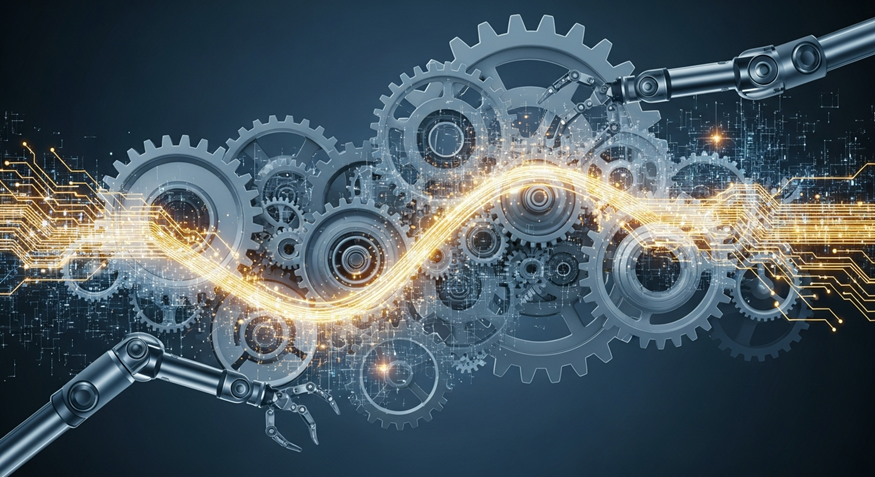
Core Types of Industrial Automation Sector Systems
When exploring automation solutions, it's helpful to understand the different types of industrial automation available. Each type is suited to different production needs and offers unique advantages based on the manufacturing process.
Generally, these systems are categorized into four main types: fixed, programmable, flexible, and integrated. Understanding the differences between these types will help you determine the most appropriate automation solution for your specific production goals and market demands. Let’s look at each one in more detail.
Fixed (Hard) Automation
Fixed automation, also known as "hard" automation, is the oldest form of this technology. It uses specialized equipment designed to perform a specific set of repetitive tasks. Once set up, these systems run continuously with minimal adjustments, making them perfect for high-volume production.
You'll often find fixed automation on a production line where the process remains consistent. For example, in automotive manufacturing, a machine might be dedicated solely to welding a specific part of a car's frame. This system is built for one job and does it extremely efficiently.
Because these systems are designed for a single purpose, they offer incredible speed and efficiency. This makes fixed automation the ideal choice for mass production environments where the goal is to produce a large quantity of identical products quickly and at a low cost per unit.
Programmable Automation
Programmable automation offers more flexibility compared to its fixed counterpart. This type of automation uses computer-controlled machines that can be reprogrammed to perform a range of different tasks or produce different product variations, making it suitable for batch production.
Programmable automation systems are a key component in industries where product designs change periodically. For instance, an electronics manufacturer might use a programmable machine to produce several different models of a product in separate batches. A vital component here is the Programmable Logic Controller (PLC), which allows for the easy programming and control of these automated processes.
The ability to reprogram these systems allows companies to switch between products or adjust the production process to meet changing demands. This makes programmable automation an excellent choice for businesses that need a moderate level of customization and operate with low-to-medium production volumes.
Flexible (Soft) Automation
Flexible automation, sometimes called soft automation, is the most adaptable form available. It combines the benefits of both fixed and programmable automation by using advanced robotic systems that can handle multiple production tasks without human intervention and with minimal downtime between changes.
This type of automation is designed to be easily reprogrammed and can quickly adjust to changes in workflow or production requirements. Unlike programmable automation that relies on software changes, flexible automation often involves hardware that can be reconfigured to accommodate new technologies or different products on the same production line.
Industries that require high levels of customization and frequent product changes, such as consumer goods or small-batch production, benefit greatly from flexible automation. Collaborative robots (cobots), autonomous mobile robots (AMRs), and adaptive assembly lines are all examples of this highly versatile and efficient solution.
Integrated Industrial Automation Sector Systems
Integrated automation systems represent the future of manufacturing by bringing together multiple machines, processes, and control systems into one unified platform. Instead of having isolated work stations, every part of the production process communicates and works in sync. This is the foundation of the modern smart factory.
These advanced automation solutions rely on industrial networks and IoT devices to monitor and adjust production in real time. From robots on the line to sensors and data systems, everything is connected. This coordination ensures that all activities, including those managed by various automated systems, are performed seamlessly.
While implementing integrated automation requires a significant upfront investment and expertise, the benefits are substantial. It reduces downtime, improves consistency, and allows operations to scale more efficiently. Examples include computer-integrated manufacturing (CIM) systems and cyber-physical systems that optimize the entire production flow.
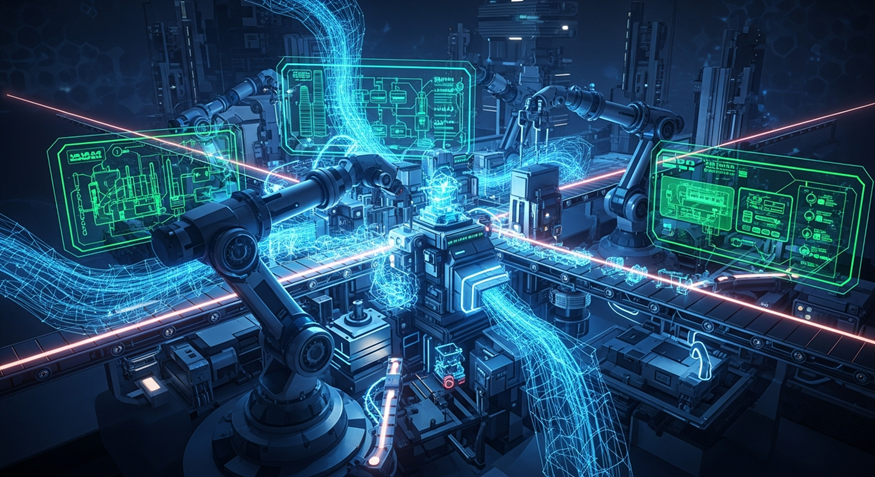
Essential Components and Technologies in the Industrial Automation Sector
Industrial automation systems are composed of several critical components and technologies that work together to control and monitor processes. At its core, automation technology relies on a continuous feedback loop where machines monitor conditions, process data, and respond in real time.
This system is built on a foundation of sensors that detect what's happening, controllers that make decisions, and actuators that perform physical actions. Understanding these essential parts helps clarify how automation achieves its impressive results. We will now explore some of these key components.
Sensors, Actuators, and Controllers
Every automated process is built on a predictable chain of events involving sensors, actuators, and controllers. These components form a closed-loop system that allows machines to operate with high precision and minimal human oversight, which is essential for quality control.
The process begins with sensors, which act as the "eyes and ears" of the system. They detect physical properties like temperature, pressure, or position and convert them into signals. This data is then sent to the central decision-making units. The core components include:
- Sensors: Detect what is happening on the machine or production line.
- Controllers: Receive signals from sensors and make decisions.
- Actuators: Execute the physical movements based on commands from the controllers.
Once a controller makes a decision, it sends a command to an actuator. Actuators, such as motors and robotic arms, carry out the physical tasks, like moving a part or adjusting a valve. This seamless interaction allows the system to respond automatically and maintain optimal performance.
Programmable Logic Controllers (PLCs) and Human-Machine Interfaces (HMIs)
At the heart of many automation systems are Programmable Logic Controllers (PLCs). These rugged industrial computers are designed to control manufacturing processes. PLCs receive data from sensors, execute a programmed logic, and send output commands to actuators, making them the "brain" of the operation.
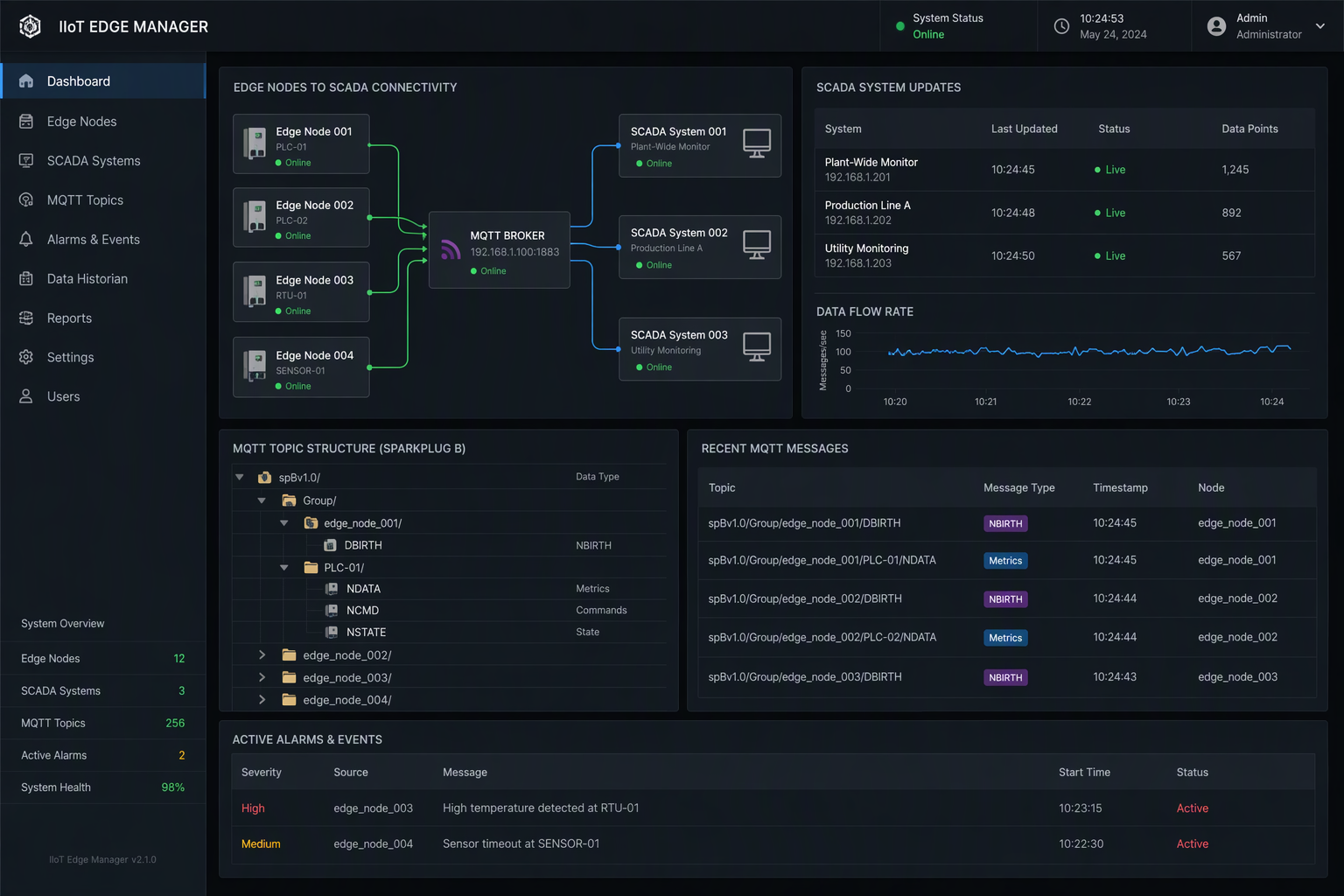
To give operators insight and control over these systems, Human-Machine Interfaces (HMIs) are used. An HMI is a user-friendly dashboard that provides a real-time view of the production process. It allows operators to monitor the status of machinery, adjust settings, and respond to alarms, simplifying data acquisition and system management.
Together, PLCs and HMIs form a powerful duo. They are often part of larger SCADA systems, which supervise and control entire industrial sites. This combination of hardware and software ensures that operators have both the automated control and the visibility needed to run complex processes efficiently.
Industrial Networks and IoT Integration
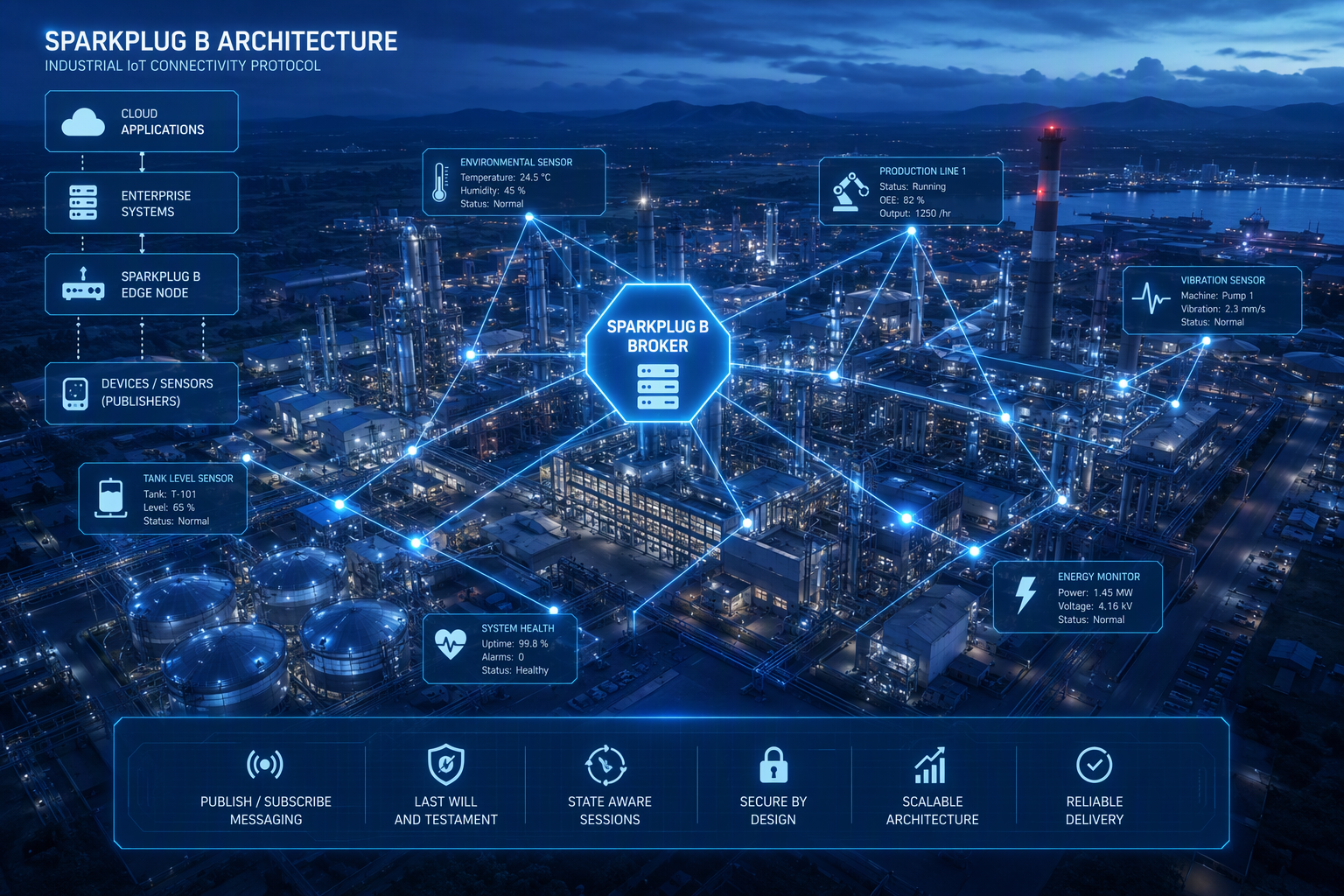
For all the components in an automated system to work together, they need to communicate. This is where industrial networks come in. These networks are the communication backbone that keeps all devices, from sensors to controllers, connected and sharing information in real time.
The integration of the Internet of Things (IoT) has taken this connectivity to the next level. IoT integration allows for the collection of vast amounts of data from machines and processes. This data can be analyzed to identify patterns, predict maintenance needs, and optimize performance.
Thanks to IoT, smart factories can make real-time decisions and continuously improve production. This connectivity not only reduces downtime but also allows operations to scale more efficiently. As companies embrace Industry 4.0, robust industrial networks and IoT integration have become essential for building a truly connected and intelligent manufacturing environment.
Key Benefits Driving the Industrial Automation Sector Adoption
Manufacturers are increasingly adopting automation solutions because they address real operational challenges and deliver significant improvements. The benefits of industrial automation range from boosting operational efficiency to enhancing worker safety, making it a compelling investment for businesses of all sizes.
These advantages show how automating industrial processes can transform productivity and quality in manufacturing. In the following sections, we will examine some of the key benefits that are driving the widespread adoption of industrial automation across various industries.
Improving Productivity and Efficiency
One of the most significant advantages of industrial automation is the dramatic increase in productivity and efficiency. In the past, companies might hire hundreds of workers for multiple shifts to keep a plant running. However, even with this approach, the facility still needed to close for holidays and maintenance.
Automation changes this equation entirely. An automated system can operate 24 hours a day, 7 days a week, all year long without breaks or fatigue. This relentless operation leads to a substantial increase in a company's productivity and a much higher output.
By automating repetitive and tedious tasks, businesses can optimize their manufacturing processes. This not only reduces the time required to complete tasks but also lowers labor costs associated with manual work. The result is a streamlined operation that can produce more in less time.
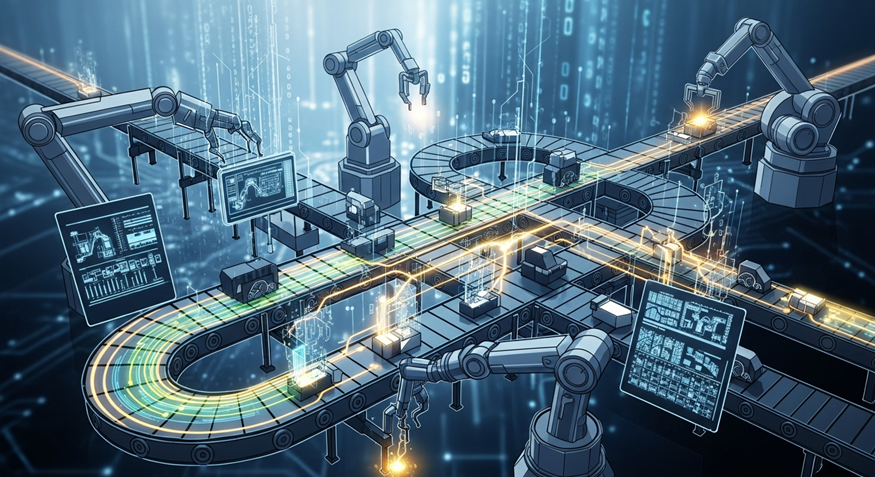
Enhancing Product Quality and Consistency
Maintaining high product quality and consistency is a top priority for any manufacturer. Industrial automation provides a powerful solution by minimizing the human error associated with manual labor. Unlike humans, industrial robots and automated machines do not get tired or bored, which means they can perform tasks with the same precision every time.
This consistency is crucial for meeting strict quality standards. For example, in the automotive industry, manual assembly of certain parts once had an error rate of 1-1.5%. Today, automated machinery performs the same task with an error rate of just 0.00001%. This level of accuracy is simply unattainable with human labor alone.
By implementing automation, companies can standardize their manufacturing processes and eliminate variations. The continuous control provided by these systems allows for rapid detection and correction of any deviations, ensuring that every product meets the desired quality standards and enhancing overall quality control.
Achieving Cost Reduction and Waste Minimization
Another key benefit of industrial automation is its ability to deliver significant cost reduction and minimize waste. Automation helps optimize the use of resources like energy, raw materials, and labor, leading to substantial long-term cost savings.
By executing tasks with heightened precision, automated systems reduce material waste and ensure that raw materials are used efficiently. This is especially true in areas like material handling, where automation can control the flow of materials with great accuracy. The financial benefits are clear:
- Lower operating costs by reducing healthcare, paid leave, and other expenses associated with human operators.
- Reduced material waste due to precise and consistent operations.
- Lowered data collection costs through automated information gathering.
While the initial investment can be high, the savings on monthly wages and the reduction in waste quickly lead to a positive return. This makes automation a smart financial decision for companies looking to improve their bottom line.
Boosting Workplace Safety and Sustainability
Improving workplace safety is one of the most critical benefits of industrial automation. Automated systems can take over dangerous tasks that might put human workers at risk. This includes operating in hazardous environments with high temperatures, heavy moving vehicles, or toxic substances.
By deploying robots to handle these jobs, companies can significantly enhance worker safety and reduce the number of accidents. For example, forklift-related accidents and injuries from slips, trips, and falls are common in warehouses, but automation can mitigate these risks. This not only protects employees but also reduces the costs associated with accidents.
Furthermore, automation contributes to sustainability by optimizing resource use. Efficient use of energy and raw materials reduces waste and minimizes the environmental footprint of manufacturing operations. This focus on safety and sustainability creates a better working environment and helps companies meet their corporate responsibility goals.
Current Trends and Market Insights in the U.S. Industrial Automation Sector
The industrial automation market in the U.S. is expanding rapidly, driven by several key factors. Growing competition in the global marketplace is pushing businesses to streamline operations, reduce costs, and boost productivity to stay ahead. Automation offers a proven path to achieving these goals by enabling 24/7 operations, ensuring consistent quality, and minimizing errors. As companies strive to meet evolving market demands, automation has become a crucial strategy for success.
Advancements in new technologies, particularly in robotics, artificial intelligence (AI), and the Internet of Things (IoT), have made automation more accessible and powerful than ever. AI systems can now optimize processes in real-time, while IoT devices gather valuable data for better decision-making. As these trends continue, the industrial automation sector is set to play an even larger role in shaping the future of manufacturing.
Market Size, Adoption Statistics, and Future Growth Projections
The global industrial automation market is already a significant force in the world economy, and its growth is accelerating. The latest adoption statistics show a clear trend: businesses are increasingly turning to automation to gain a competitive edge. This has fueled impressive market growth in recent years.
Looking at the numbers provides a clear picture of this expansion. The market has seen steady growth, driven by the increasing need for efficiency and the falling costs of technology. Here’s a snapshot of the market's recent performance:
| Market Snapshot | Value (USD) | Growth Rate |
|---|---|---|
| 2021 Global Market | $196.6 Billion | - |
| 2022 Global Market | $213.49 Billion | 8.59% |
The future of the Industrial Automation Sector looks even brighter. Projections show that the market is expected to continue its upward trajectory, reaching an estimated $395.09 billion by 2029. This rapid growth indicates that automation is not just a trend but a fundamental shift in how industries will operate for decades to come.
Conclusion
In conclusion, the industrial automation sector is a dynamic and essential part of modern manufacturing that continually evolves to meet the demands of efficiency, productivity, and safety. Understanding the core types, technologies, and benefits of industrial automation helps industries navigate this rapidly changing landscape and leverage its advantages. As businesses adopt these systems, they not only enhance their operational capabilities but also contribute to a more sustainable and innovative future. Embracing automation can lead to significant improvements in quality and cost-effectiveness, positioning companies for long-term success. If you're ready to explore how industrial automation can transform your operations, don't hesitate to reach out for a consultation.
You might also like