Unlocking Efficiency: Industrial Automation Sector Insights
Unlocking Efficiency: Industrial Automation Sector Insights
Key Highlights
Here's a quick look at what we'll cover in this post about industrial automation:
- Industrial automation uses control systems and software to manage tasks with minimal human input, transforming the manufacturing process.
- The main types of automation systems include fixed, programmable, flexible, and integrated, each serving different production needs.
- Adopting automation leads to better productivity, enhanced product quality, and increased operational efficiency.
- Industrial automation is a cornerstone of Industry 4.0, driving the development of smart factories.
- Key benefits include lower operating costs, improved workplace safety, and greater consistency in production.
Introduction
Industrial automation is no longer a concept from the future; it's a reality that is reshaping how businesses operate today. It involves using advanced technologies and machinery to handle various stages of production, from handling materials to delivering the final product. As companies look for better ways to improve efficiency, automation solutions are becoming essential. This technology allows organizations to streamline their processes, improve quality, and reduce costs, making it a critical part of modern industry.
Understanding Industrial Automation in the Modern Era
Industrial automation has moved beyond simple mechanization. It now represents a sophisticated system where machines operate themselves with human oversight guiding the overall strategy. This evolution is central to modern smart manufacturing, driven by advancements in automation technology.
At its core, industrial automation is about using computer-controlled systems to manage industrial processes with minimal human involvement. This shift is key to improving speed, safety, and consistency. Let's explore the fundamental principles and how these systems function in a real-world setting.
Definition and Core Principles of Industrial Automation
At its most basic, industrial automation is the use of control systems, like computers or robots, and information technologies to handle different processes and machinery in an industry to replace a human operator. The goal is to streamline the manufacturing process with reduced human intervention, allowing workers to focus on more strategic tasks.
The core principle is a closed-loop system where feedback is continuously used to make adjustments. Sensors gather data from the production process, and controllers analyze this information to make decisions. This allows the system to operate autonomously, ensuring tasks are completed efficiently and accurately.
This approach transforms the production process from a series of manual steps into a self-regulating workflow. By minimizing the need for direct human intervention, industrial automation boosts efficiency, reduces errors, and allows for operations that can run around the clock without interruption.
How Industrial Automation Systems Work in Practice
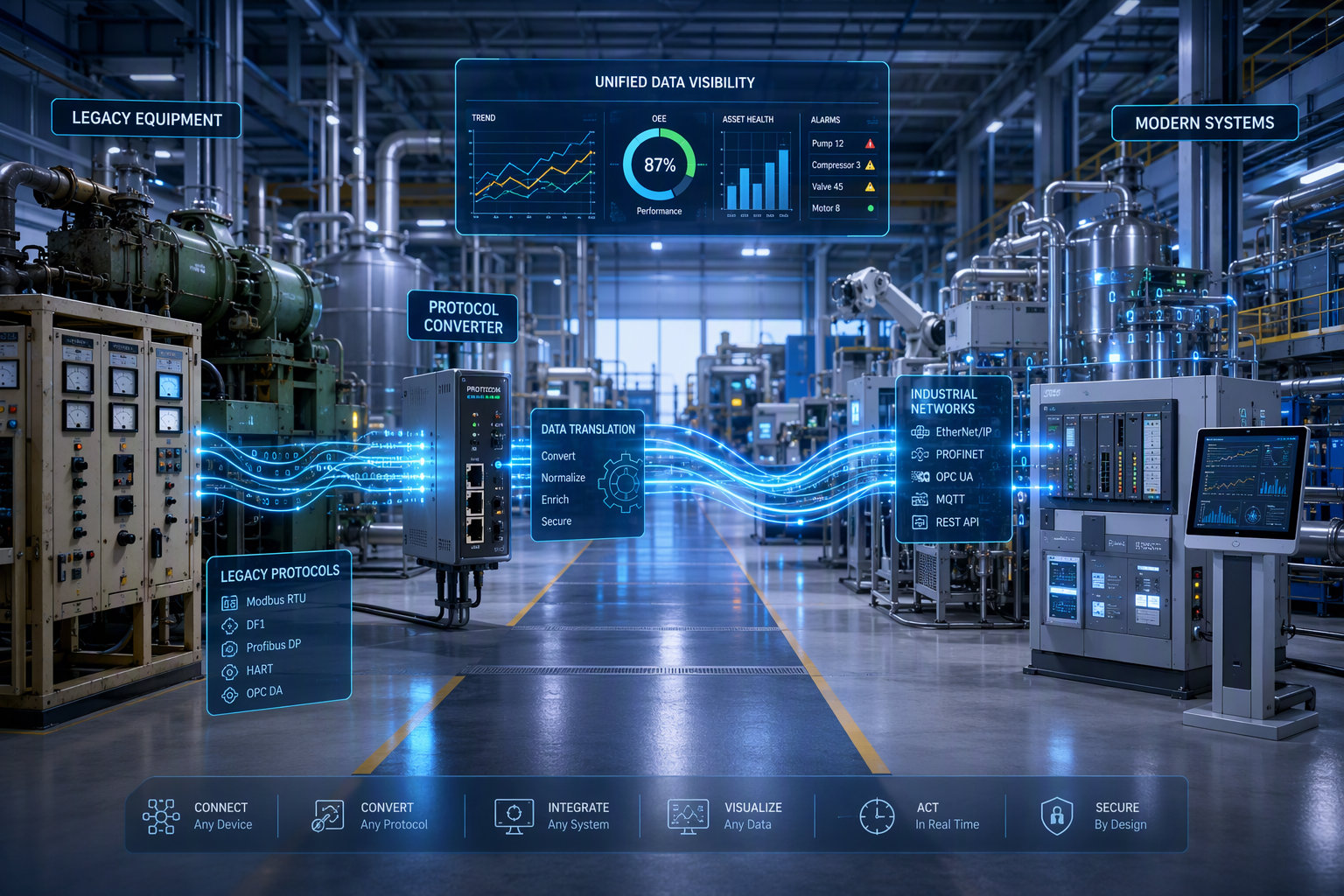
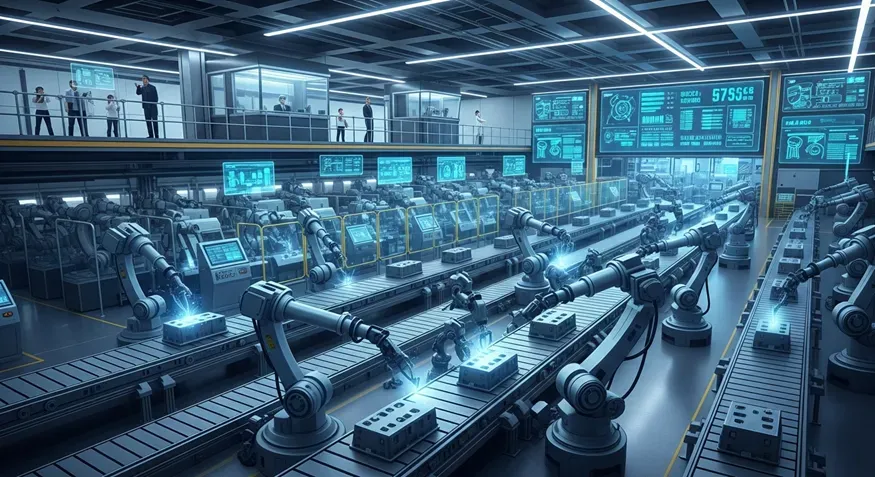
In a practical sense, automation systems function through a predictable and coordinated sequence. It all starts with sensors, which act as the eyes and ears of the system, detecting what is happening on the production line. These sensors send signals to controllers, such as programmable logic controllers (PLCs), which are the brains of the operation.
These controllers process the incoming data and make decisions based on their programming. Once a decision is made, the controllers send commands to actuators, motors, and industrial robots, which then perform the physical actions. This could involve anything from material handling and assembly to welding or painting. These machines are designed to execute repetitive tasks with incredible precision and speed.
All these components are connected through industrial networks, allowing for seamless communication. Operators can monitor the entire process in real-time through software and human-machine interfaces (HMIs), ensuring everything runs smoothly. The result is a faster, safer, and more consistent production environment.
Key Types of Industrial Automation Technologies
When discussing industrial automation, it’s helpful to know that not all automation technology is the same. Different types of automation systems are designed to meet specific production needs, from high-volume manufacturing to highly customized product runs. Each type of automation has unique characteristics and functionalities that make it suitable for certain applications.
Understanding these differences is crucial for any business looking to implement automation. The main categories are fixed, programmable, flexible, and integrated automation. Let's look at each one to see how they fit into different manufacturing environments.
Fixed and Hard Automation Explained
Fixed automation, also known as "hard automation," is designed for high-volume, repetitive tasks. It uses specialized equipment built for a single, specific purpose within the production process. Think of a traditional assembly line where the same operation is performed over and over without any variation. This type of automation is perfect for mass production environments.
In sectors like automotive manufacturing, fixed automation is a common sight. For example, a machine might be dedicated solely to welding a specific part of a car's frame as it moves down the line. Once set up, these systems run continuously with minimal adjustments, processing raw materials into finished parts at high speed.
While it's not flexible, fixed automation offers incredible efficiency and cost savings for companies that produce a large quantity of a single product. Its strength lies in its ability to perform a dedicated task faster and more consistently than any other method, making it a cornerstone of mass production industries.
Programmable Automation and Flexible Automation
Unlike fixed systems, programmable automation offers more versatility. It's ideal for batch production, where a company needs to manufacture different products using the same equipment. These systems use machines that can be reprogrammed to perform a variety of tasks. For example, a CNC machine can be given new software instructions to create different parts.
Flexible automation takes this adaptability a step further. It is designed for rapid changes between different products without significant downtime. This form of automation is perfect for industries that need to respond quickly to market demands or produce customized items. It often uses robotic systems and smart software to make adjustments on the fly. Key differences include:
- Programmable Automation: Best for producing different products in batches with some downtime for reprogramming.
- Flexible Automation: Allows for near-instant changeovers between different tasks, minimizing production interruptions.
Both of these automation solutions provide a level of adaptability that fixed automation lacks, making them suitable for a wider range of manufacturing scenarios.
Integrated Automation Systems in Industry
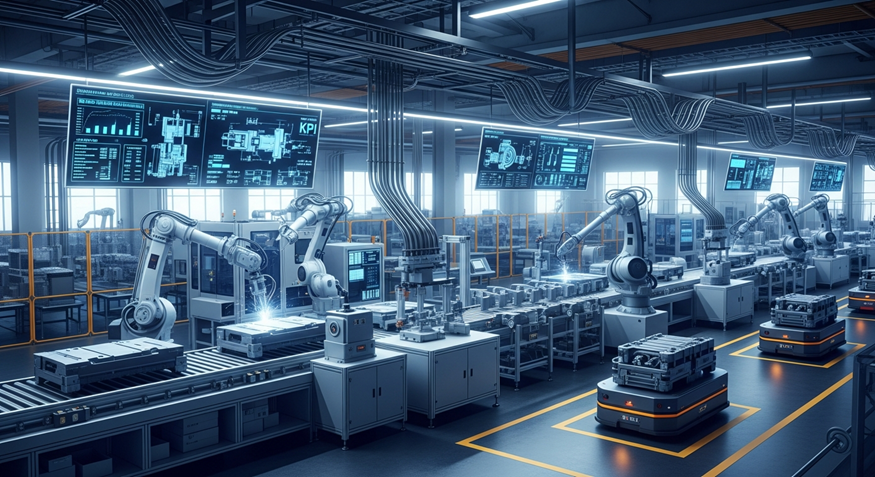
Integrated automation represents the most advanced approach, bringing together various machines, processes, and control systems into a single, unified platform. Instead of having isolated workstations, every part of the production line communicates and works in sync. This is the foundation of the modern smart factory.
These systems use advanced software, industrial PCs, and networks to coordinate all activities. From robots on the line to sensors monitoring quality control, everything is connected. This level of process automation allows for real-time monitoring and adjustments, ensuring that the entire operation runs as efficiently as possible.
While implementing integrated automation requires a significant upfront investment and specialized expertise, the benefits are substantial. It reduces downtime, improves consistency, and enables operations to scale more effectively. This comprehensive approach ties all aspects of production together, from initial input to final quality control.
Why Industrial Automation Matters for Manufacturing
In today's competitive market, industrial automation is more than just a buzzword; it's a critical strategy for success in manufacturing. By automating parts of the manufacturing process, companies can address key operational challenges and significantly improve their performance across the board. The focus has shifted from simply lowering labor costs to enhancing product quality and flexibility.
Automation allows for a level of precision and consistency that is difficult to achieve with manual labor alone. This leads to higher-quality products and greater operational efficiency. Let's examine how it specifically boosts productivity and enhances consistency in production.
Boosting Productivity and Product Quality
One of the most significant impacts of automation is the dramatic increase in productivity. Automated systems can operate 24/7 without breaks, holidays, or fatigue. This allows manufacturing plants to maximize their output and meet demanding production goals that would be impossible with a purely manual workforce.
Furthermore, automation greatly improves product quality. Machines excel at performing repetitive tasks with a high degree of precision, which minimizes errors. For example, in the automotive industry, automated machinery can install engine parts with an error rate of just 0.00001%, a massive improvement over the 1-1.5% error rate of manual installation. This ensures consistent quality in every product that leaves the line. Key advantages include:
- Higher Throughput: Automated systems work faster and longer, leading to a substantial increase in overall productivity.
- Consistent Quality: Machines eliminate human error and fatigue, ensuring every product meets the same high standards.
Enhancing Flexibility and Consistency in Production Processes
Beyond just speed, automation brings a new level of flexibility to the production process. In the past, changing a task on an assembly line required retraining human operators. Now, with programmable and flexible types of automation, robots can be reprogrammed to perform new tasks quickly, making the manufacturing process much more adaptable to changing demands.
This flexibility doesn't come at the cost of consistency. Automation technology ensures that even as tasks change, the quality remains high. Automated quality control systems can monitor production in real-time, detecting any deviations from standards and correcting them instantly. This continuous oversight helps maintain a consistent output, regardless of the product being made.
By combining the ability to adapt with the assurance of steady quality, industrial automation allows companies to be more responsive to the market. Whether it's switching product lines or introducing custom features, automation provides the tools to do so efficiently and reliably.
Leading Benefits of Industrial Automation Adoption
Adopting industrial automation brings a host of benefits that directly address real-world operational challenges. Companies that invest in automation solutions often see significant improvements in operational efficiency and substantial cost savings. These advantages go beyond simply replacing human workers and extend to creating a more streamlined and resilient operation.
From reducing waste to creating safer working environments, the impact of automation is felt across the entire organization. Let's dive into some of the most compelling reasons why manufacturers are embracing this technology.
Reducing Operational Costs and Waste
A major advantage of industrial automation is its ability to lower operational costs. While the initial investment can be high, automation technology eliminates ongoing expenses like wages, benefits, and paid leave associated with manual labor. Over time, these cost savings can be substantial, leading to a strong return on investment.
Automation also leads to significant waste reduction. Automated systems for material handling and production are incredibly precise, ensuring that raw materials are used efficiently and minimizing scrap. Furthermore, automated data collection provides accurate information about the production process, helping managers identify areas where waste can be further reduced and processes can be improved.
Maintenance costs for automated machinery are also often lower than anticipated. These systems are built for durability and do not fail often. When they do, repairs are typically handled by specialized engineers, streamlining the maintenance process and reducing downtime.
Improving Workplace Safety and Labor Utilization
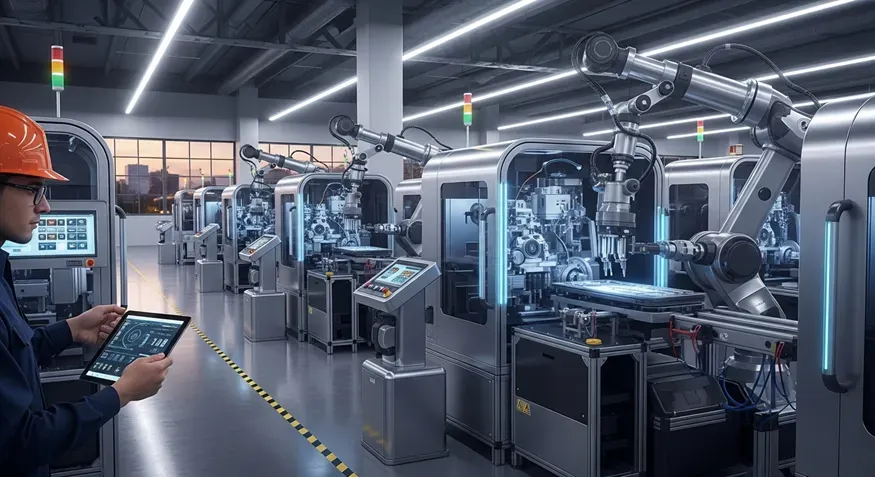
Enhancing workplace safety is one of the most critical benefits of industrial automation. Automated systems, including collaborative robots, can take over tasks that are dangerous, strenuous, or performed in hazardous environments. This removes human workers from harm's way, reducing the risk of accidents and injuries related to factors like high temperatures or heavy lifting.
This shift also improves labor utilization. Instead of performing repetitive and physically demanding tasks, employees can be retrained for higher-value roles that require critical thinking, problem-solving, and system management. This not only makes their jobs more engaging but also allows the company to leverage their skills more effectively. This leads to two key outcomes:
- A Safer Workplace: Deploying robots to handle hazardous conditions drastically improves safety on the production floor.
- Better Use of Human Labor: Automation frees up workers from mundane tasks, allowing them to focus on more complex and valuable responsibilities.
Trends Shaping the Industrial Automation Sector in 2025
The industrial automation sector is constantly evolving, with new trends poised to reshape manufacturing by 2025. The move toward smart factories is accelerating, driven by the broader digital transformation happening across industries. Technologies like the Internet of Things (IoT) are connecting machinery and systems like never before.
At the forefront of this evolution are artificial intelligence (AI) and machine learning (ML), which are making automation systems smarter and more autonomous. These trends are not just about improving existing processes but about creating entirely new possibilities for efficiency and innovation. Let's look at how these technologies are making their mark.
Smart Factories, IoT, and Digital Transformation
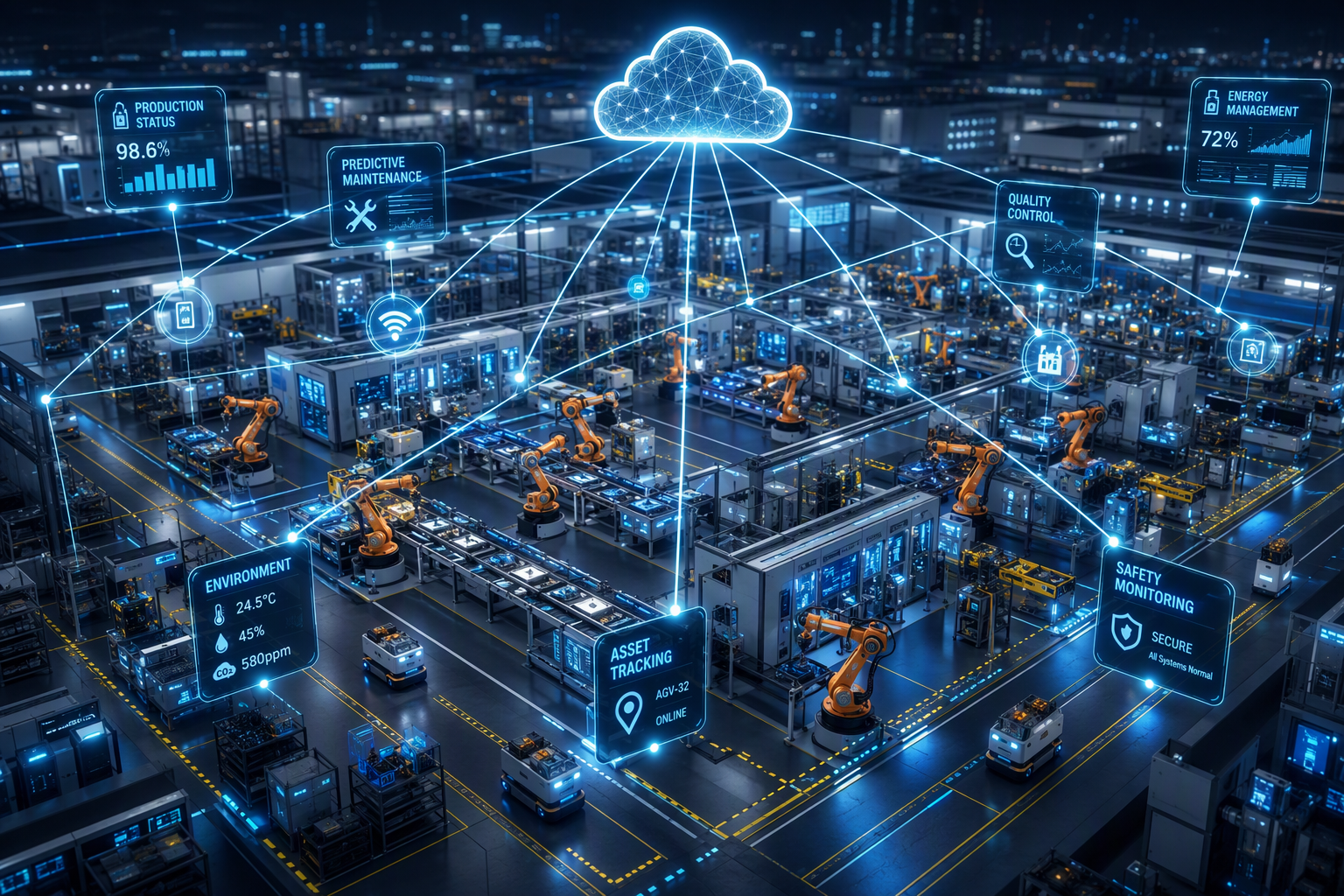
The concept of the smart factory is at the heart of the current digital transformation in manufacturing. Smart factories use a network of interconnected devices, machinery, and production systems that continuously collect and share data. This is made possible by the Internet of Things (IoT), which allows every component on the factory floor to communicate.
These IoT devices generate massive amounts of data, which can be processed in real time to optimize operations. Technologies like edge computing allow for data processing to happen closer to the source, enabling faster decision-making without having to send everything to a centralized cloud. This creates a highly responsive and agile manufacturing environment.
Ultimately, the goal of the smart factory is to create a fully integrated and automated system that can self-optimize. By harnessing the power of IoT and real-time data, companies can reduce downtime, improve efficiency, and gain a significant competitive advantage in a rapidly changing market.
Artificial Intelligence and Machine Learning Applications
Artificial intelligence (AI) and machine learning (ML) are taking industrial automation to the next level. These technologies enable machines to learn from data, adapt to new situations, and make intelligent decisions without human programming. This is revolutionizing everything from process automation to quality control.
One of the most powerful applications is predictive maintenance. By analyzing data from sensors on equipment, ML algorithms can predict when a machine is likely to fail. This allows maintenance to be scheduled proactively, preventing costly unplanned downtime and extending the life of the equipment. Machine vision systems powered by AI can also inspect products with superhuman accuracy, identifying defects that would be missed by the human eye.
These technologies are making factories smarter and more efficient.
| AI/ML Application | Description |
|---|---|
| Predictive Maintenance | Analyzes equipment data to forecast failures and schedule maintenance before breakdowns occur. |
| Process Automation | Optimizes production schedules and workflows in real time for maximum efficiency. |
| Machine Vision Systems | Uses AI-powered cameras to perform high-speed quality inspections and identify defects. |
Industrial Automation Market Growth & Outlook in the United States
The industrial automation market in the United States is experiencing rapid growth, driven by a strong push for increased efficiency and competitiveness. The industrial automation industry is expanding as businesses across various sectors recognize the need to streamline their operations. This growth is fueled by several key market drivers and a rising demand for advanced automation solutions.
As technology becomes more accessible and powerful, the adoption of automation is no longer limited to large corporations. The trends in global industrial automation point toward continued expansion, with new opportunities and challenges emerging. Let's look at the factors pushing this growth and what the future holds.
Key Market Drivers and Adoption Trends
Several key market drivers are fueling the adoption of industrial automation. One of the biggest is the increasing pressure on businesses to streamline their supply chain and reduce operational costs. In a competitive global marketplace, companies are constantly looking for ways to become more efficient, and automation solutions offer a direct path to achieving that goal.
The rapid advancement of technologies like robotics, AI, and IoT has also made automation more capable and affordable than ever before. These advanced technologies are enabling new applications and making it easier for companies of all sizes to implement some type of automation. As a result, adoption is growing across a wide range of industries, from manufacturing and logistics to food and beverage.
Furthermore, a growing emphasis on product quality and consistency is pushing more companies to automate. Automated systems can perform tasks with a level of precision that is difficult to match manually, ensuring that every product meets strict quality standards. This is a crucial advantage in markets where customers demand high quality and reliability.
Emerging Challenges and Future Opportunities
Despite the many benefits, adopting industrial automation does present some challenges. The high upfront costs of purchasing and implementing new automation technology can be a significant barrier for some companies. Additionally, the need for skilled workers to maintain and operate these advanced systems can be difficult to meet, especially with ongoing labor shortages in technical fields.
However, these challenges also create future opportunities. The rise of "Robotics as a Service" (RaaS) models allows companies to adopt automation on a subscription basis, reducing the initial investment. Furthermore, the push for automation is creating new jobs in areas like robotics, data analysis, and system management, driving the need for upskilling and reskilling programs. Key points to consider:
- Challenges: High upfront costs and a potential shortage of skilled labor can slow adoption.
- Opportunities: New business models like RaaS and the creation of new technical roles offer a path forward.
As automation technology continues to evolve, industrial automation solutions will become even more accessible and integral to modern industrial operations.
Conclusion
In conclusion, the industrial automation sector is rapidly evolving, driven by advancements in technology and the need for enhanced efficiency in manufacturing. Understanding the core principles and types of automation can help businesses leverage these innovations to boost productivity, reduce costs, and improve workplace safety. As we look to the future, trends like smart factories and AI integration are set to redefine industry standards and practices. Embracing these changes not only supports sustainability but also prepares organizations to navigate emerging challenges and seize new opportunities. Stay informed about these trends to ensure your business thrives in this dynamic landscape.
Frequently Asked Questions
What are some real-world examples of industrial automation in action?
Real-world examples of industrial automation are all around us. In automotive manufacturing, robots assemble car bodies with precision. In the consumer goods sector, automation systems package products at high speed. Many factories also use machine vision to inspect items for defects, ensuring quality without slowing down the line.
How does industrial automation support sustainability in manufacturing?
Industrial automation supports sustainability by making manufacturing more efficient. Precise process automation reduces the consumption of raw materials and energy, leading to significant waste reduction. This not only results in cost savings but also minimizes the environmental footprint of production, helping companies achieve their sustainability goals.
Where can I find recent statistics about the industrial automation sector?
To find recent statistics on the industrial automation sector, you can consult market research firms that specialize in the industrial automation industry. Reports from organizations like Fortune Business Insights, MarketsandMarkets, and the International Federation of Robotics often provide detailed data on the global industrial automation market and trends in smart manufacturing.
You might also like