Automation: Transform Your Workflow for Greater Efficiency
Automation: Transform Your Workflow for Greater Efficiency

Key Highlights
- Automation technologies use machines and software to perform tasks with minimal human help.
- Process automation is key to streamlining workflows and handling repetitive tasks efficiently.
- Business process automation boosts productivity and reduces the chance of human error.
- You can find a wide range of use cases in industries like manufacturing, healthcare, and finance.
- Implementing automation can significantly improve the overall customer experience and satisfaction.
- Different types of automation, including robotic and cognitive, offer unique benefits.
Introduction
Are you looking for ways to make your work more efficient? Automation could be the answer. It's a key part of the ongoing digital transformation that is changing how we live and work. By using technology to handle tasks, you can streamline your business processes, boost productivity, and get ahead of the competition. This guide will walk you through what automation is, how it works, and the powerful impact it can have on your daily operations.
What is Automation? Understanding the Basics
At its core, automation is the use of technology to perform tasks that once required human intervention. Think of it as teaching a machine or a computer program to handle repetitive or complex jobs for you. This approach is used across many industries, from manufacturing cars to managing IT systems, to make processes faster and more reliable.
The goal is to increase efficiency and reduce mistakes. The benefits of automation are clear: it saves time, lowers costs, and frees you up to focus on more strategic work. There are several types of automation, each suited for different kinds of tasks. Let's explore its official definition and core concepts.
The Official Definition of Automation
When you look for an official definition, leading sources describe automation as the process of using technology to accomplish tasks with minimal human input. It is a technology-focused strategy designed to make workflows smoother, enhance efficiency, and minimize the mistakes that can come from manual work.
This concept was first applied in an industrial setting. In 1946, General Motors coined the term to describe the automatic handling of parts. The idea was to replace demanding human labor with machines that could perform the same actions repeatedly and accurately.
Today, that principle has expanded far beyond the factory floor. Whether it's software that processes invoices or a robot that assembles a product, the fundamental goal remains the same: to carry out a process automatically and consistently, reducing the need for constant human oversight.
Core Principles and Concepts
Understanding the core automation principles helps clarify how it works. The central idea is to design a system that can operate on its own, requiring only minimal human intervention. This is achieved by creating a set of rules or instructions for a machine or software to follow.
Process automation is built on this foundation. It involves identifying tasks within a workflow that are repetitive and rule-based, then programming a system to execute them. The level of human involvement can vary, from simple systems that need periodic checks to fully autonomous ones that operate independently.
Key concepts that guide this technology include:
- Executing tasks without continuous manual input.
- Using programming and algorithms to dictate behavior.
- Leveraging data to make decisions or trigger actions.
- Ensuring precision and consistency in outcomes.
The Evolution of Automation in Technology
The journey of automation technologies is a fascinating story of innovation. What started in manufacturing has become a cornerstone of our modern digital transformation. The constant development of new technologies has allowed automation to move from simple mechanical tasks to complex, intelligent operations that can learn and adapt.
This evolution has reshaped industries and created new possibilities for how work gets done. From the first assembly lines to today's AI-powered bots, automation has continuously pushed the boundaries of efficiency. Let's look at some key moments in this journey and its effect on today's workflows.
Historical Milestones in Automation
Tracing the historical milestones of automation shows how far we've come. The concept gained significant traction during the industrial revolution, but the term itself has a more recent origin. It was in the mid-20th century that modern industrial automation truly began to take shape.
General Motors is credited with first using the word "automation" in 1946 to describe its advanced assembly line processes. This marked a shift toward systems where machines didn't just assist workers but handled entire stages of production. Another major step was the development of numerical control (NC) machines, which could be programmed to perform precise cuts and shapes.
These early innovations paved the way for the sophisticated systems we see today. Here are a few key developments:
| Milestone | Description |
|---|---|
| The term "Automation" | Coined by General Motors in 1946 to describe automatic parts handling. |
| Numerical Control (NC) | Developed to program machines for precise manufacturing tasks. |
| Industrial Robots | Introduced to assembly lines for welding, painting, and assembly. |
| Robotic Process Automation (RPA) | Emerged to automate digital, rule-based tasks on computers. |
Automation’s Impact on Modern Workflows
The introduction of workflow automation has been a game-changer for modern businesses. By taking over repetitive tasks, it allows your team to redirect its energy toward more creative and strategic initiatives. This not only boosts morale but also significantly improves operational efficiency.
One of the biggest advantages is the reduction of human error. Automated systems follow their programming precisely every time, which is crucial for tasks requiring high accuracy, such as data entry or quality control. This consistency leads to higher-quality outcomes and more reliable processes.
Ultimately, automation is important because it helps you do more with less. It streamlines operations, cuts down on wasted time, and helps your business adapt quickly. Key impacts include:
- Accelerating task completion and overall productivity.
- Ensuring greater accuracy and consistency in results.
- Freeing up human workers for high-value activities.
Main Types of Automation in Today’s World
Not all automation is the same. Today, there are several main types of automation, each designed for specific purposes. These range from physical robots on a factory floor to intelligent software that can make decisions. Understanding these categories helps you see the wide range of benefits of automation.
The most common types include industrial automation, robotic process automation (RPA), and cognitive automation. Each plays a distinct role in transforming how tasks are performed in different environments. Let's examine these types to see how they work and where they are used.
Industrial Automation Systems
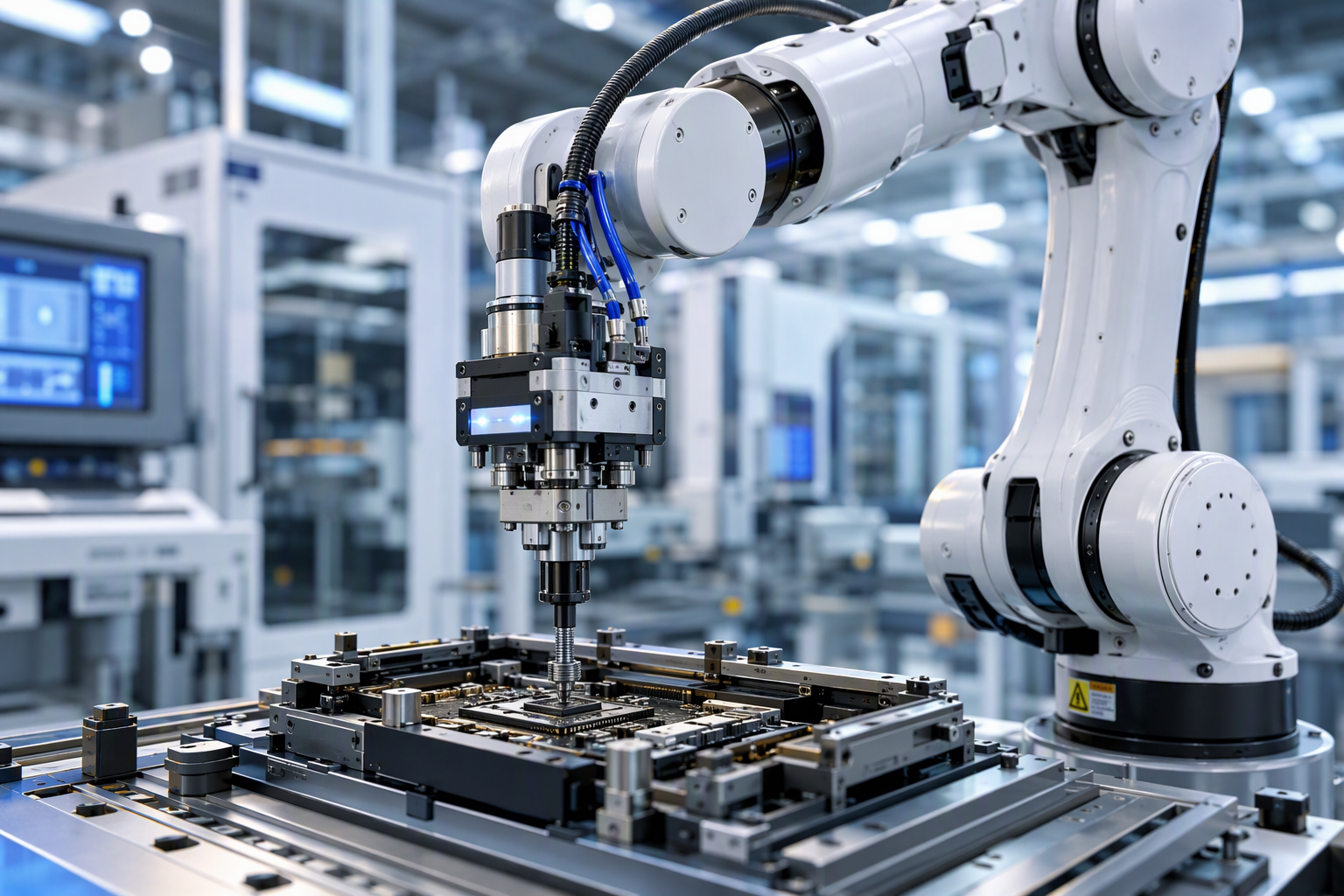
Industrial automation involves using machinery and control systems to manage physical processes in manufacturing and production settings. This is likely what you picture when you think of a modern factory, with machines working on assembly or production lines. The goal is to increase production speed and ensure consistent quality.
These automation systems can include everything from simple conveyor belts to complex robotic arms. In a factory, robots might be programmed to perform tasks like welding, painting, or assembling parts. These machines can work around the clock without getting tired, leading to a massive increase in output.
Companies like ABB and Fanuc specialize in creating these systems for the automotive and electronics industries, among others. By automating these physical, repetitive jobs, factories can operate more efficiently, safely, and with a higher degree of precision than would be possible with manual labor alone.
Robotic Process Automation (RPA)
Robotic Process Automation, or RPA, is a form of business process automation that uses "software robots" to perform tasks on a computer. These bots mimic human actions to interact with digital systems. Imagine a bot logging into an application, copying and pasting data, and filling out forms, all without human help.
RPA is ideal for repetitive tasks that are rule-based and don't require human judgment. It's widely used in back-office operations to handle jobs like invoice processing, payroll management, and customer data updates. This frees up employees from tedious work and reduces the risk of costly errors.
Platforms from companies like UiPath and Automation Anywhere are popular for implementing RPA. Here are some common tasks that software robots can handle:
- Data entry and migration between systems.
- Generating reports and sending automated emails.
- Processing transactions and updating records.
- Validating information across different sources.
Cognitive and Artificial Intelligence Automation
Taking automation a step further, cognitive and artificial intelligence automation uses technologies like machine learning and natural language processing to handle complex tasks. Unlike RPA, which follows strict rules, cognitive automation can analyze unstructured data, learn from patterns, and even make decisions.
This type of automation is designed to simulate human thinking. For example, in healthcare, systems like IBM's Watson Health can analyze vast amounts of medical data to help doctors with diagnoses. It understands context and nuance, allowing it to perform tasks that typically require human intelligence.
This advanced form of automation is also behind AI-powered chatbots that can understand and respond to customer questions, or recommendation engines that personalize your online shopping experience. It represents a shift from simply doing tasks to understanding and interpreting them, opening up new possibilities for efficiency and innovation.
Key Industries Embracing Automation
Automation solutions are making a huge impact across various industries. From the factory floor to the hospital room, businesses are finding innovative ways to apply this technology. The use cases are incredibly diverse, showing just how flexible and powerful automation can be.
We see industrial automation revolutionizing manufacturing, while software-based automation is changing finance, retail, and customer service. Let's look at some specific examples in manufacturing, healthcare, and other key sectors to understand how they are benefiting from this transformation.
Manufacturing and Smart Factories
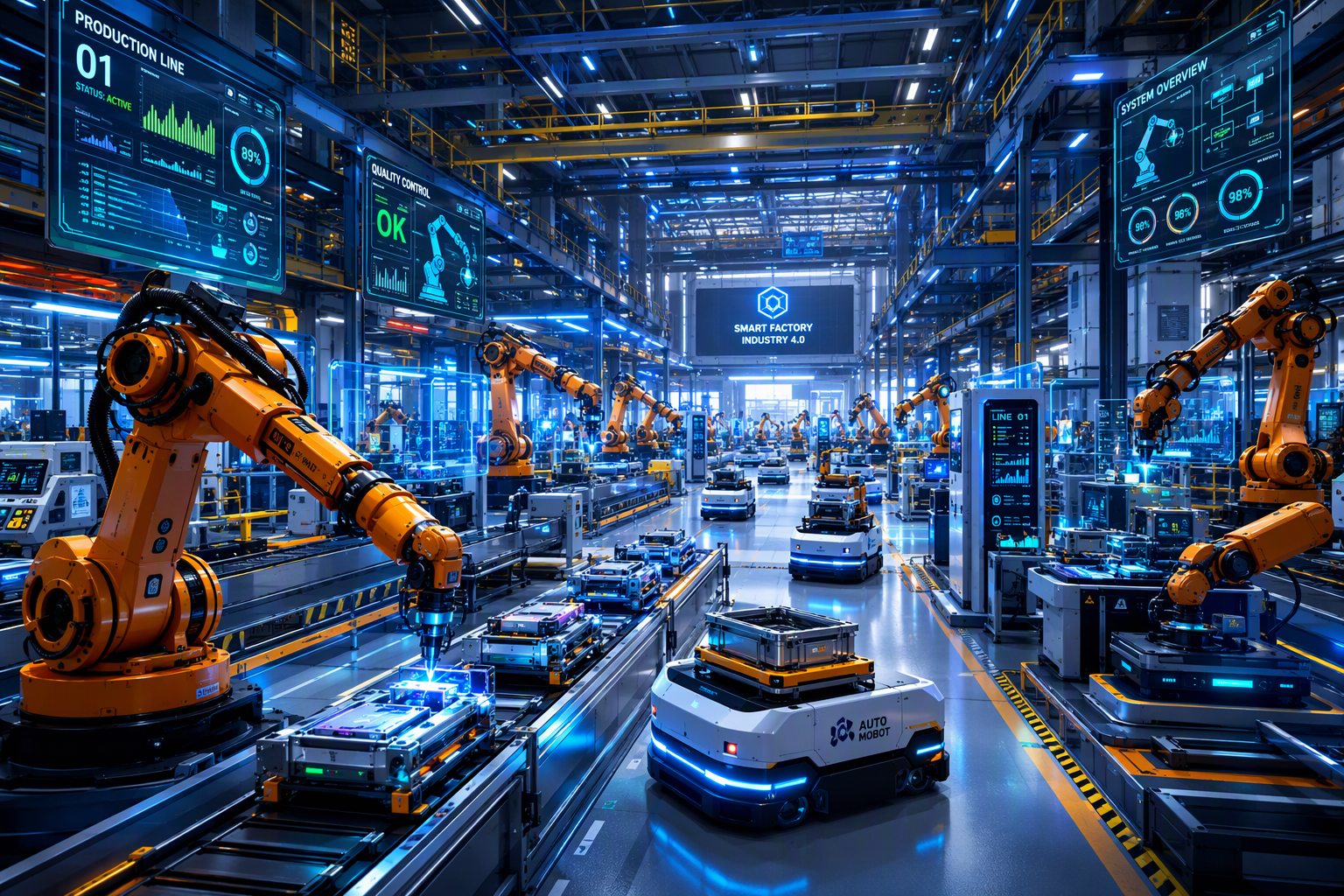
In manufacturing, the concept of "smart factories" is becoming a reality thanks to automation. These factories use interconnected systems, industrial robots, and AI to optimize the entire production process. It’s about more than just speeding up assembly; it's about making the entire operation more intelligent and responsive.
For instance, sensors can monitor machines and predict when maintenance is needed, a practice known as predictive maintenance. This prevents unexpected downtime and keeps production running smoothly. Automated systems can also manage stock levels, ensuring that materials are always available without overstocking.
Companies like Tesla have heavily integrated automation into their Gigafactories, using robots for everything from assembly to painting. This level of automation allows them to produce vehicles at an impressive rate while maintaining high-quality standards, defining what it means to be a smart manufacturing leader.
Healthcare and Life Sciences
Healthcare automation is transforming patient care, diagnostics, and administrative tasks. By using process automation, hospitals and clinics can streamline workflows, reduce the potential for error, and improve the overall patient and customer experience. It helps medical professionals focus more on patients and less on paperwork.
One of the most advanced examples is robotic surgery. Systems like the da Vinci Surgical System allow surgeons to perform complex, minimally invasive procedures with incredible precision. In diagnostics, AI-powered tools can analyze medical images like X-rays to help radiologists spot abnormalities more quickly and accurately.
Data analytics also plays a huge role. Healthcare automation can:
- Assist in diagnosis by analyzing patient data.
- Streamline patient appointment scheduling and records management.
- Automate billing and insurance claim processing.
- Monitor patients remotely and alert staff to potential issues.
Finance, Retail, and Customer Service
The finance, retail, and customer service sectors have enthusiastically adopted automation to enhance efficiency and customer satisfaction. In banking, RPA is used to automate back-office tasks like data entry and compliance checks, reducing manual errors and speeding up processing times. Major banks like JPMorgan Chase use it to streamline their operations.
In retail, automation is key to managing inventory and order fulfillment. Amazon's fulfillment centers are a prime example, where robots move inventory to speed up the shipping process. Retail automation also includes self-checkout kiosks and cashier-less stores, which improve the shopping experience for customers.
For customer service, AI-powered chatbots are now common. They can provide instant answers to common questions 24/7, freeing up human agents to handle more complex issues. This not only cuts costs but also leads to quicker resolutions and happier customers.
Everyday Examples of Automation
Automation isn't just for big corporations or factories; it's also a part of our daily lives. The use of technology to perform tasks with minimal human intervention is all around us, from the smart devices in our homes to the software we use at work. These tools are designed to make our lives easier and more efficient.
You might be using automation without even realizing it. Home automation systems and office productivity tools are two of the most common ways people interact with this technology. Let's explore how these everyday examples are changing the way we live and work.
Home Automation and Smart Devices
Home automation is all about using smart devices to control and automate household functions that used to require manual human actions. With smart thermostats, lights, and security systems, you can create a home that responds to your needs, often without you having to lift a finger.
For example, a smart thermostat like a Nest can learn your schedule and adjust the temperature automatically, leading to significant cost savings on your energy bills. Smart speakers like Amazon Alexa or Google Home allow you to control various devices with just your voice, from playing music to turning off the lights.
This technology offers both convenience and efficiency. Some popular home automation features include:
- Programming lights to turn on or off at certain times.
- Adjusting the thermostat remotely from your phone.
- Receiving alerts from smart security cameras.
- Automating your vacuum cleaner to clean on a schedule.
Office Productivity and Workflow Tools
In the modern office, automation tools have become essential for boosting productivity. These applications are designed to handle the time-consuming, repetitive tasks that can slow down your workday. This is a key part of the digital transformation that helps businesses become more agile and efficient.
Consider how much time is spent on manual data entry or managing emails. Workflow automation tools like Zapier or Microsoft Power Automate can connect different apps and automate these processes. For instance, you could set up a workflow to automatically save email attachments to a cloud storage folder.
By automating these smaller tasks, you and your team can focus on work that requires creativity and critical thinking. This not only improves efficiency but also reduces the risk of burnout from tedious, manual work, making the workday more fulfilling and productive.
How Automation Tools Transform Workflows
So, how do automation tools actually make a difference in a business? They are specifically designed to streamline processes, reduce manual effort, and cut down on labor costs. By handling routine tasks, they free up your employees to focus on activities that drive business growth and innovation.
These platforms can integrate with your existing software and systems, making it easier to automate workflows without a complete overhaul. Let's look at how tools like Automation Anywhere and others enable companies to enhance collaboration and support new ways of working.
Streamlining Processes with Automation Anywhere and Similar Platforms
Platforms like Automation Anywhere provide a powerful way to implement process automation across an organization. They offer tools to create and manage software robots that can perform a wide variety of tasks. These bots can interact with different applications, websites, and even legacy systems, just like a human would.
This capability is especially useful for companies that rely on older software that doesn't have modern integration options. The software robots can bridge the gap, extracting data from one system and entering it into another, automating a workflow that was previously manual.
Using these platforms, you can automate many different business processes. Some examples include:
- Automating loan processing in a bank.
- Managing inventory and restocking alerts.
- Processing customer orders and generating invoices.
- Streamlining HR tasks like onboarding new employees.
Enhanced Collaboration and Remote Work Enablement
Beyond just completing tasks, automation technologies are also playing a crucial role in improving collaboration, especially with the rise of remote work. When processes are automated, information flows more smoothly between team members, regardless of where they are located.
For example, an automated workflow can ensure that when one person completes a task, the next person in the chain is immediately notified and given the information they need. This reduces delays and miscommunication, leading to better operational efficiency. It also provides a clear, transparent view of where a project stands at any given moment.
By handling the administrative side of teamwork, automation allows your team to focus on meaningful collaboration. It supports a flexible and efficient remote work environment, ensuring that productivity remains high even when team members are not in the same office.
Conclusion
In conclusion, embracing automation can be a game changer for your workflow efficiency. By understanding the core principles and types of automation, you can implement systems that not only streamline processes but also enhance collaboration and productivity. Whether it's through robotic process automation or cognitive technologies, the benefits are evident across various industries. As you navigate the future of work, consider how these tools can transform your everyday tasks and reduce the burden of repetitive activities. If you're ready to take the next step in optimizing your workflow, don’t hesitate to reach out for a free consultation to explore tailored automation solutions for your needs.
Frequently Asked Questions
What are the top benefits and possible challenges of automation?
The top benefits of automation include increased efficiency, reduced labor costs, and fewer manual errors. Process automation minimizes human error in repetitive tasks. A primary challenge is the potential for job displacement, which highlights the need for employees to develop new skills to work alongside automated systems.
How does industrial automation function in modern factories?
In modern factories, industrial automation uses robotic systems to increase production rates and improve quality. These automation systems also enable predictive maintenance to prevent downtime and are integrated into the supply chain to manage inventory and logistics, creating a highly efficient and connected manufacturing environment.
Why is automation so important for future business growth?
Automation is vital for future business growth because it drives operational efficiency, allowing companies to do more with fewer resources. By adopting automation technologies, businesses can adapt more quickly to changing market demands, innovate faster, and ultimately gain a significant competitive edge in their industry.
You might also like