Challenges Facing the Industrial Automation Industry Today
Challenges Facing the Industrial Automation Industry Today
Key Highlights
- Industrial automation uses automation systems to run production with less human intervention. In 2023, the global industrial automation market was valued at more than $200 billion and is projected to grow at a compound annual growth rate (CAGR) of around 8% through 2030. Modern smart factories connect machines, software, and data in real time. The main benefits include better quality, stronger safety, and lower operating strain.
- Modern smart factories connect machines, software, and data in real time.
- The main benefits include better quality, stronger safety, and lower operating strain.
- Companies still face hurdles like supply chain delays, skills gaps, and integration issues.
- Predictive maintenance and connected devices help reduce downtime and improve output.
- Growth continues as manufacturers seek flexible, scalable systems for changing demand.
Introduction
Industrial automation is changing how you manage the manufacturing process, from basic machine control to connected automation systems that support faster and more consistent output. Today, automation technology is not just about replacing effort on the floor. It is also about improving quality, flexibility, and decision-making. To understand the challenges facing this space, it helps to first look at how industrial automation works, where it is growing, and how the main types fit different production needs.
Industrial Automation Industry
Understanding Industrial Automation in Today’s Manufacturing Landscape
At its core, industrial automation is the use of machines and software to manage a manufacturing process with minimal human intervention. It helps handle repetitive tasks with greater speed and consistency than manual methods.
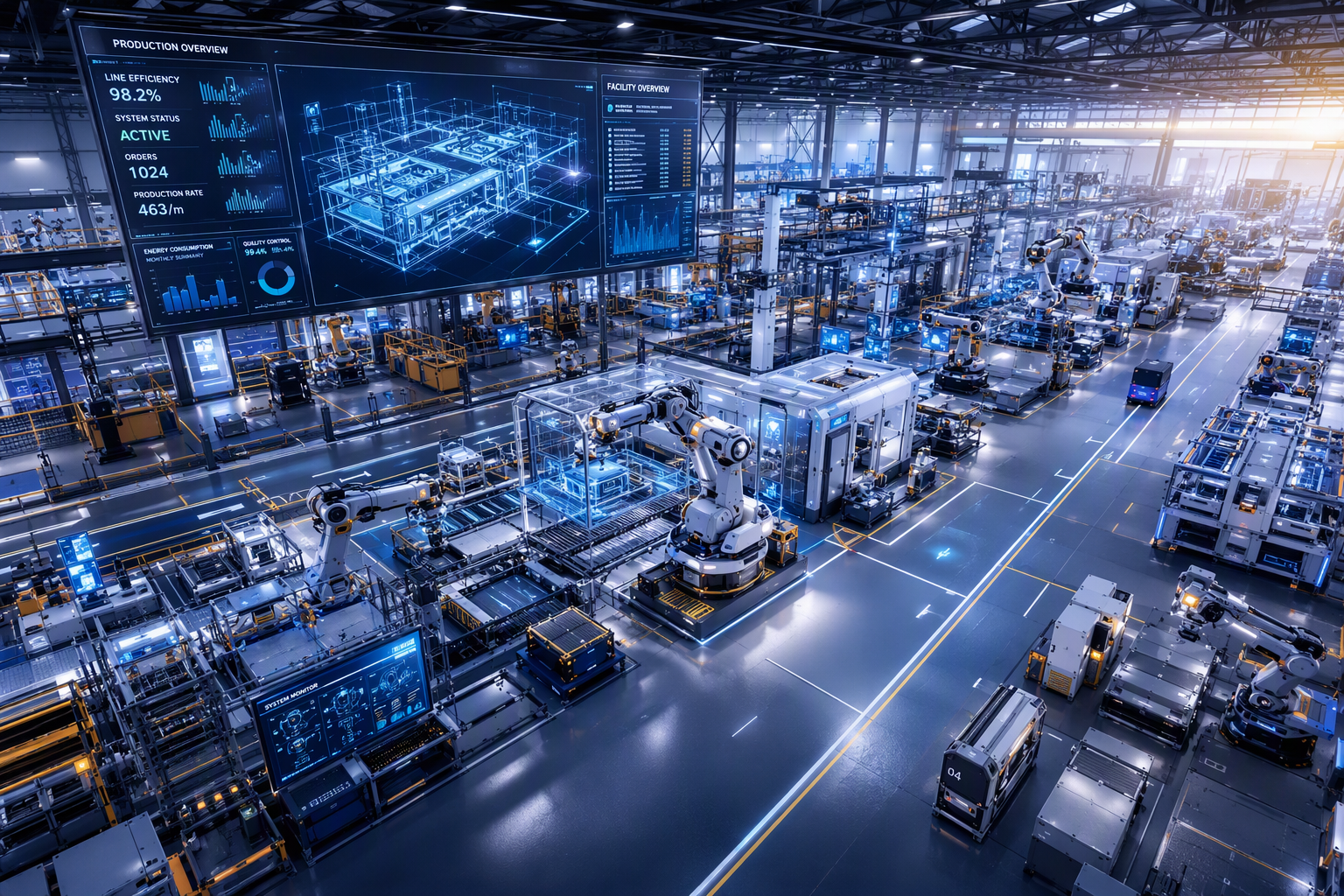
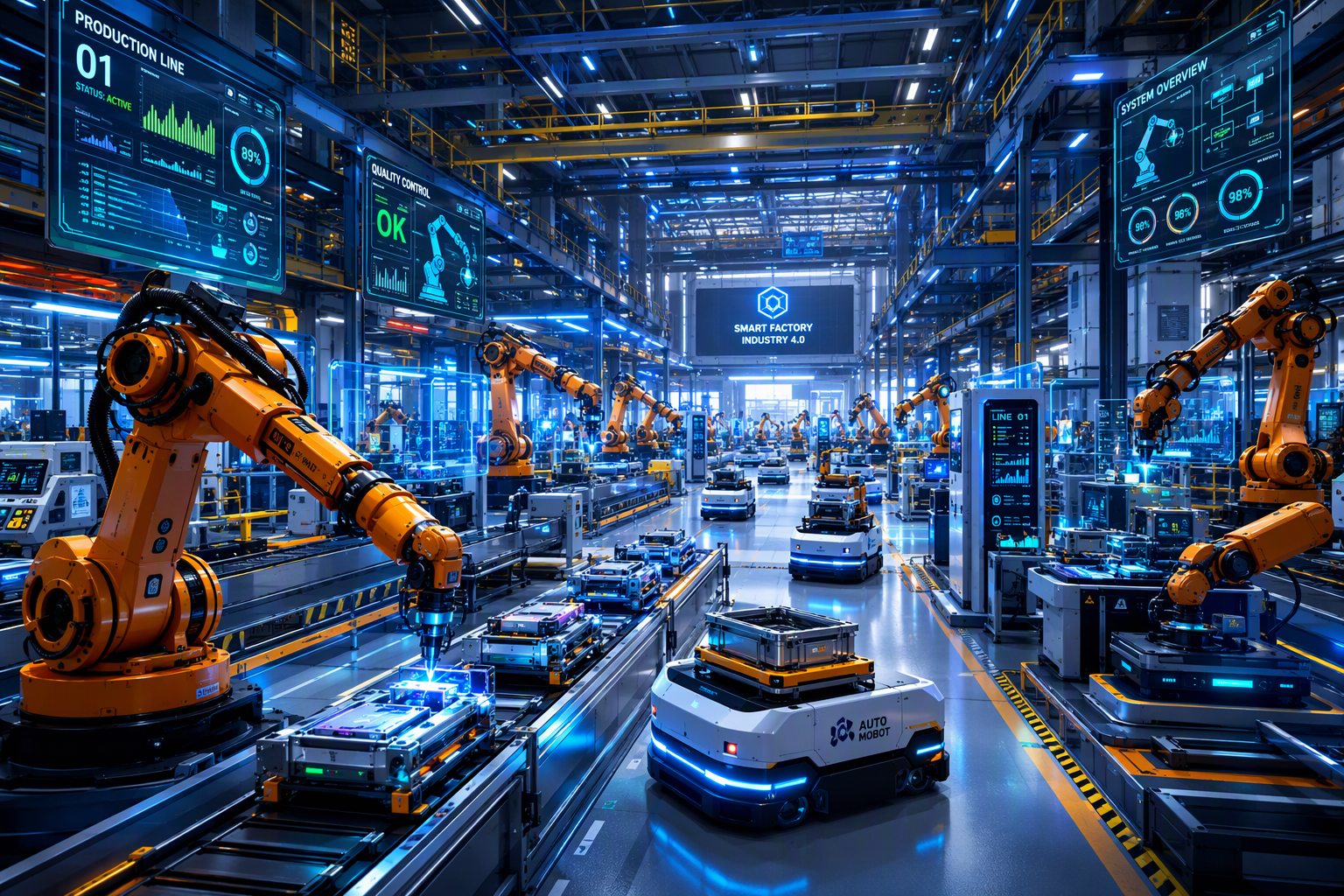
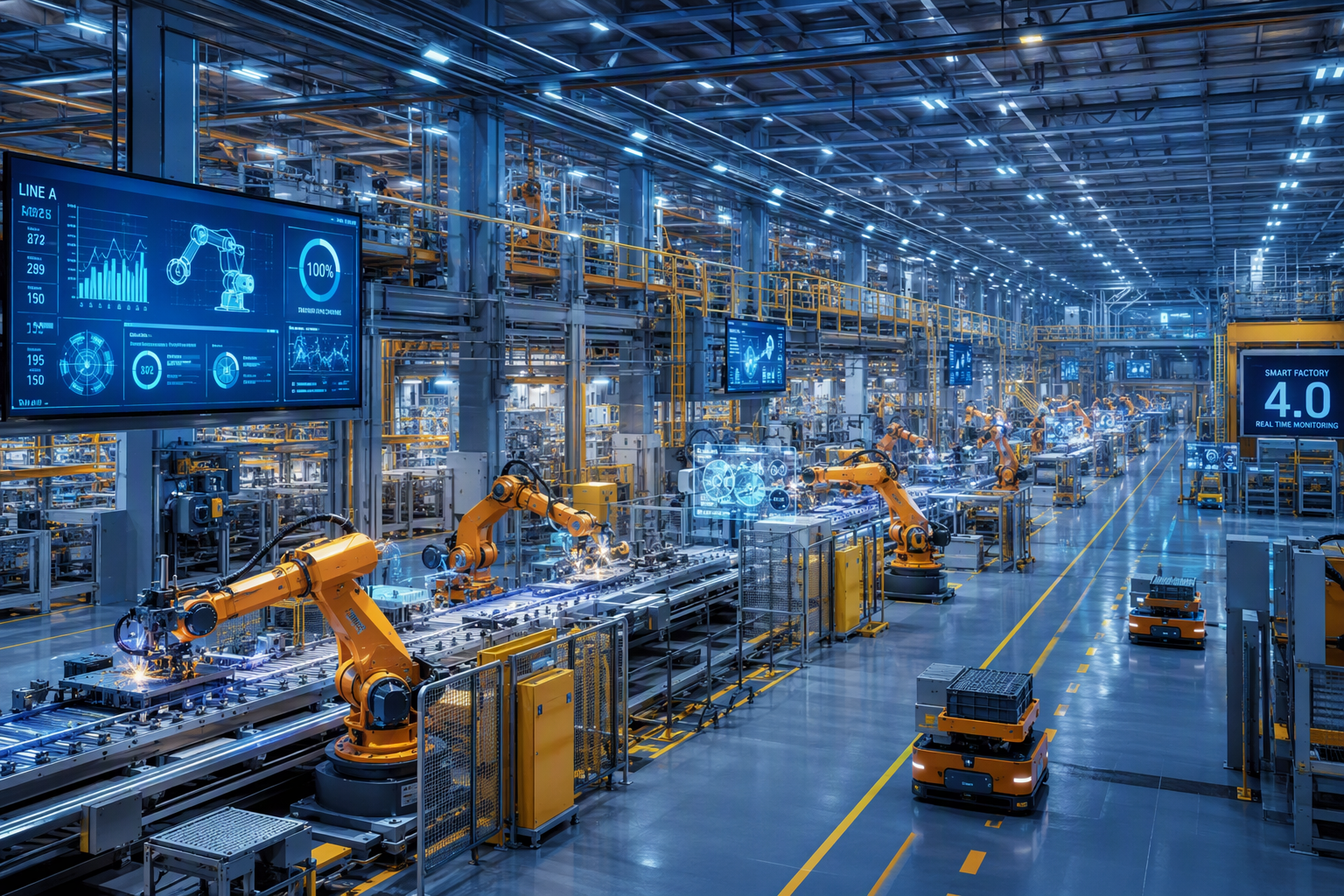
In practice, control systems receive information from equipment, make decisions, and trigger actions across the line. That is how industrial automation works in many manufacturing settings today. It creates a connected process where machines respond in real time, support stable output, and reduce constant operator input. The next sections break down its role, parts, and operation.
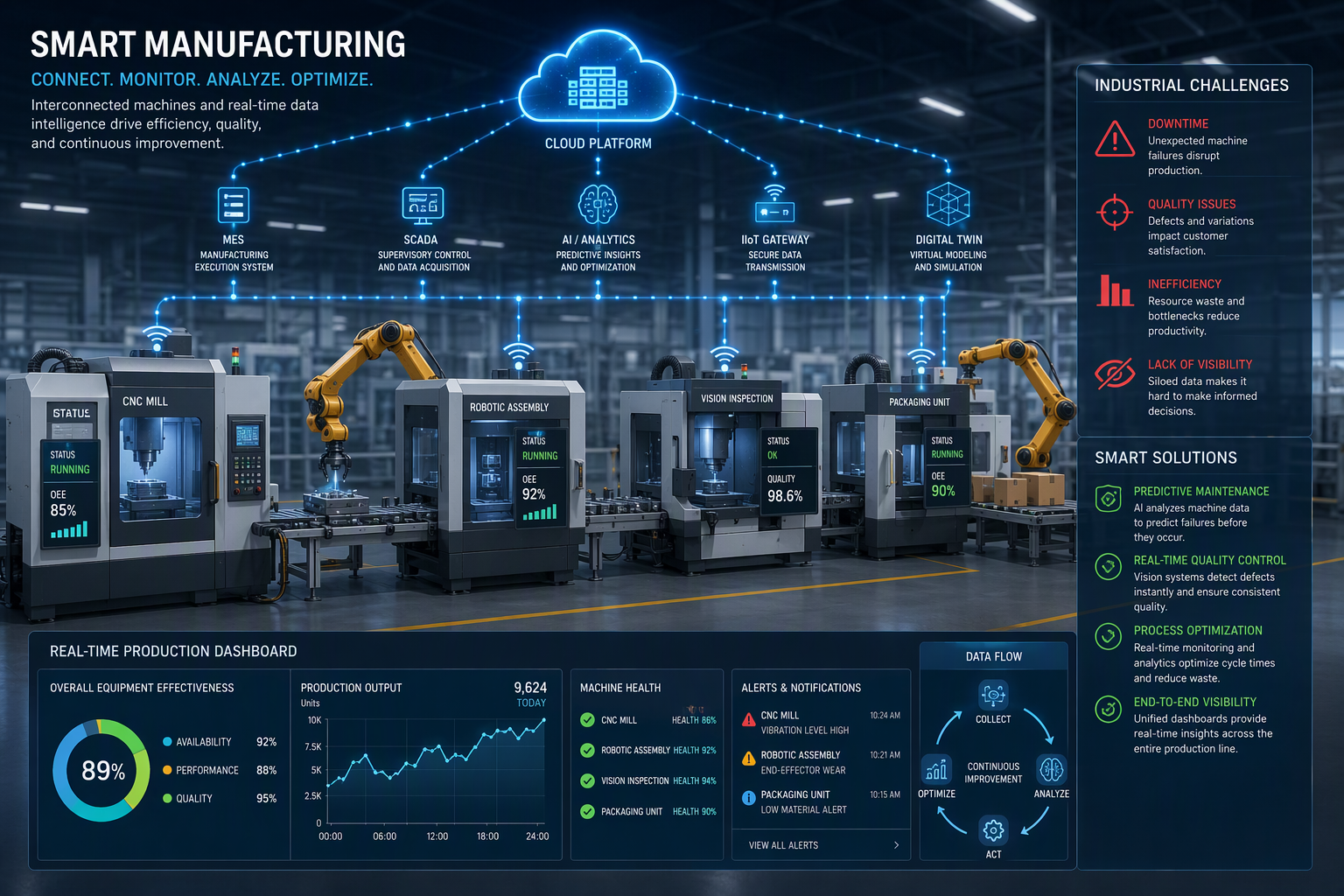
Defining Industrial Automation and Its Role in Modern Industries
Industrial automation means using computer-based tools to run industrial processes with limited direct input from people. These tools often include robots, software, and other automation systems built to keep production moving with accuracy and speed.
What makes this possible is the use of control systems. They collect signals from machines, process the information, and send commands back to equipment. Instead of relying on constant human intervention, the system manages routine actions on its own while people focus on planning, oversight, and improvement.
That role is now central in modern industries. Industrial automation supports better quality, safer operations, and stronger output across production environments. It goes beyond simple mechanization because it links machines, data, and decisions into one working system. In manufacturing, that means more reliable performance and fewer disruptions during day-to-day operations.
Key Components and Technologies Powering Industrial Automation
Every automated setup depends on a group of connected technologies working together. The goal is simple: detect conditions, make decisions, and carry out actions quickly and accurately. That is why control systems sit at the center of industrial automation.
Common building blocks include the following:
- Programmable logic controllers that read inputs and execute control decisions
- Field devices such as sensors and actuators that detect changes and trigger responses
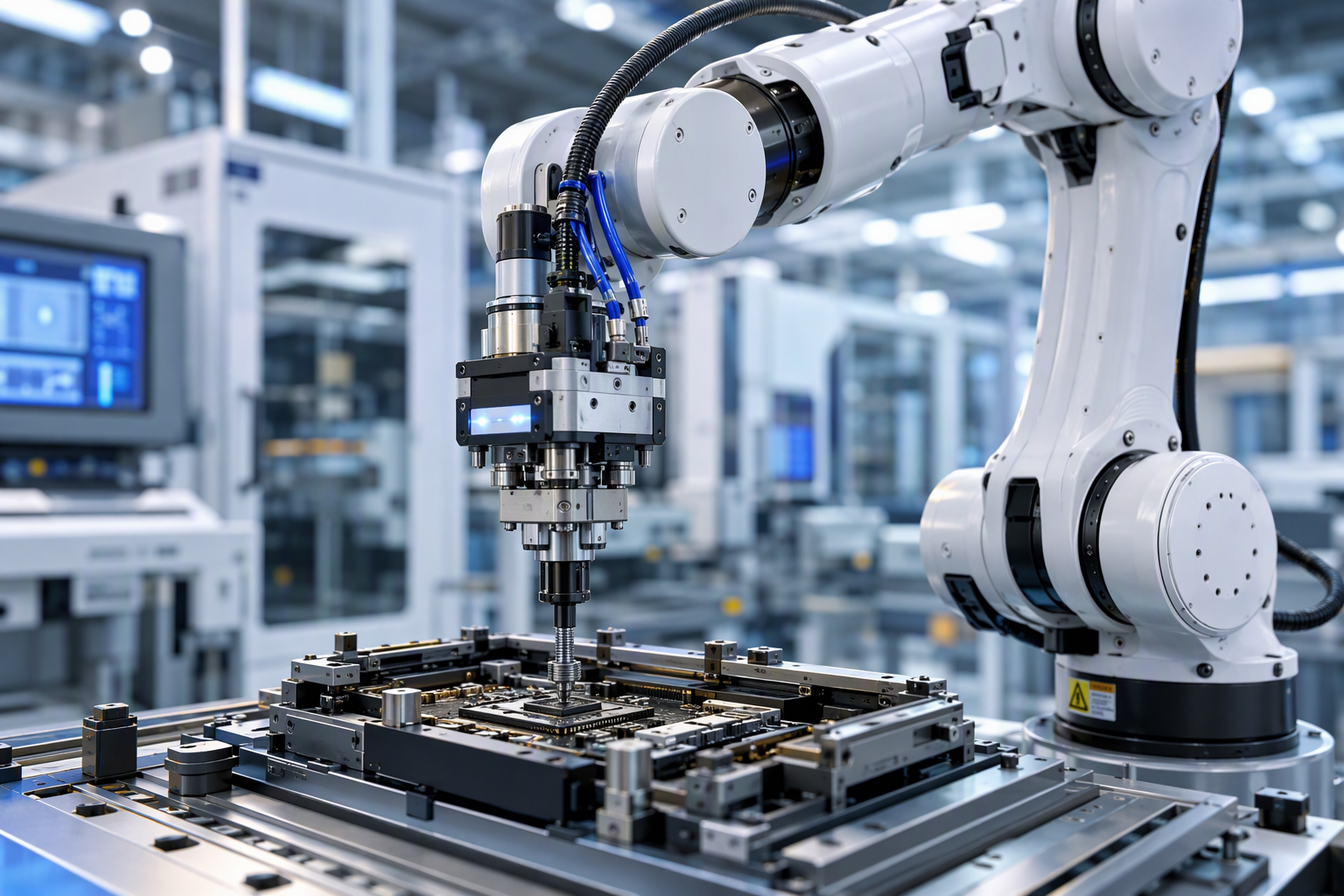
- Industrial robots that handle tasks like welding, painting, assembly, or movement
- Tools for process control and motion control that keep machines stable and precise
You can see these technologies in real-world systems across car plants, food packaging lines, electronics assembly, and automated warehouses. In each case, machines share data and follow logic that keeps output consistent. When these parts work together well, production becomes faster, safer, and easier to scale.
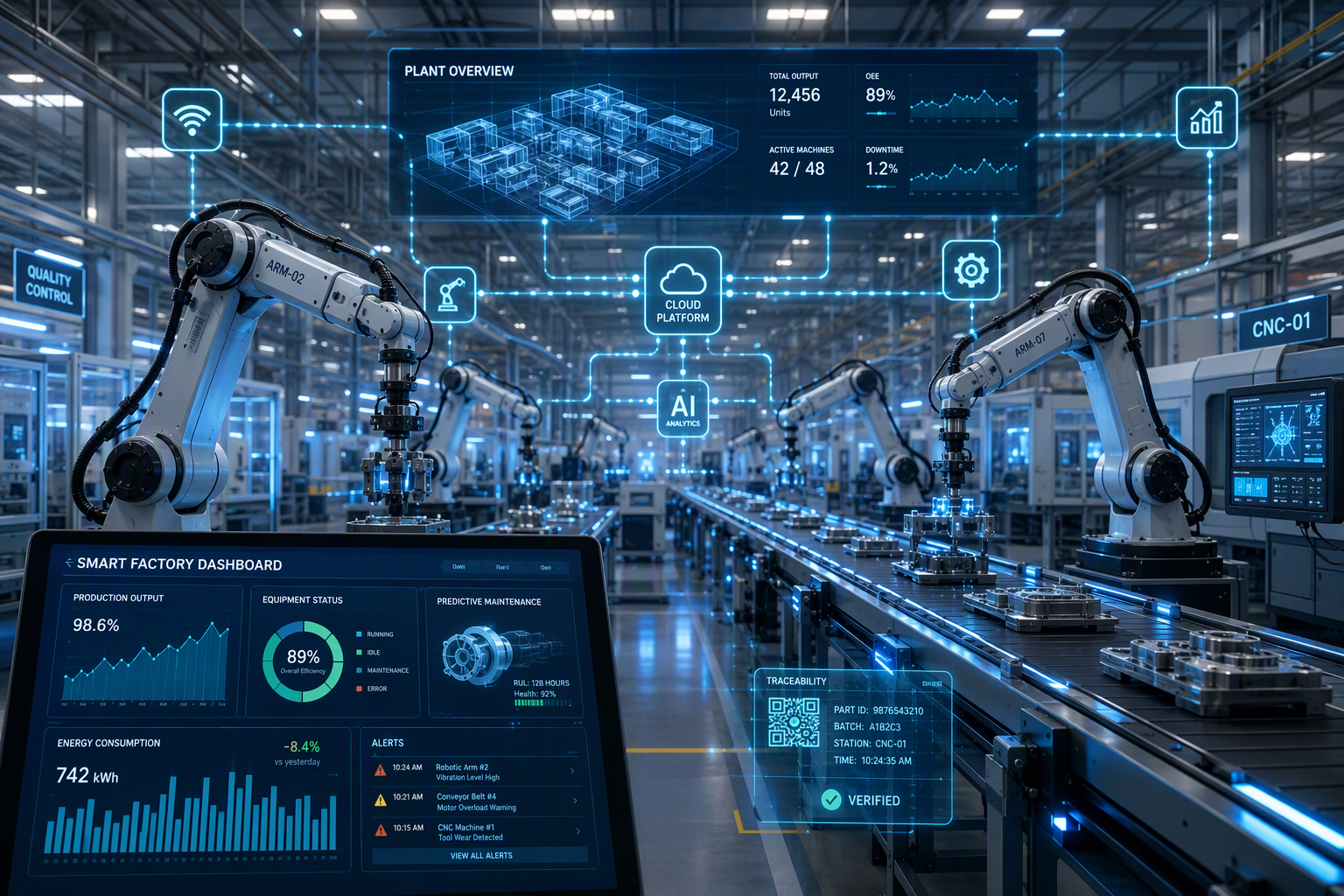
How Industrial Automation Works in Manufacturing Processes
An automated manufacturing process usually follows a closed-loop pattern. Sensors detect what is happening on the line, controllers review that input, and equipment responds based on pre-set control logic. This cycle keeps repeating, which allows the system to react in real time.
Different production needs call for different approaches. Hard automation works best for high-volume, fixed tasks where the process rarely changes. Programmable automation fits batch production because machines can be reprogrammed between runs for different products.
Then there is flexible automation, which supports quicker changeovers and greater adaptation to market demand. It is useful when manufacturers need to switch among product variations without major downtime. Across all three models, the purpose stays the same: reduce manual effort, improve consistency, and help the plant maintain efficient production under changing conditions.
The Global Industrial Automation Market: Size, Growth & Trends
The industrial automation market is expanding as businesses look for practical automation solutions that improve uptime, consistency, and flexibility. Growth is being pushed by global competition, rising pressure on costs, and the need to strengthen performance across production and supply chain operations.
While exact market size figures are not provided here, the direction is clear. Industrial automation continues to grow across major manufacturing economies, with projected growth tied to adoption of connected systems, AI, IoT, and predictive tools. The next sections look at leading regions, adoption drivers, and sectors seeing the biggest impact.
Current Market Size and Leading Regions in the United States
In the United States, the automation industry continues to gain momentum because manufacturers want stronger output, better quality, and more resilience. The compiled information does not give a fixed market size number, but it does show broad growth across production environments that need speed, accuracy, and flexibility.
Leading regions in the United States are best understood through the industries adopting automation most aggressively. Automotive manufacturing, electronics, food processing, and warehousing all use the main types of automation to improve throughput and reduce manual strain.
| Area of activity in the United States | What drives automation adoption |
|---|---|
| Automotive manufacturing | Repetitive assembly work, precision needs, and high-volume output |
| Electronics production | Fast product cycles, batch changes, and accuracy requirements |
| Food and beverage plants | Consistent filling, packaging, and quality demands |
| Warehousing and logistics | Faster sorting, inventory flow, and safer material handling |
Projected Growth by 2024 and Factors Driving Adoption
Projected growth by 2024 is tied to a simple reality: manufacturers need to do more with fewer delays and fewer errors. Industrial automation keeps gaining ground because it helps plants run longer, improve consistency, and respond more effectively to changing demand.
Another key driver is the wider availability of automation solutions built around robotics, AI, and connected devices. These tools support better monitoring, real-time adjustments, and earlier detection of equipment issues. That makes adoption easier to justify when companies want measurable operational gains.
Supply chain pressure also plays a big role. When labor shortages, downtime, or material delays disrupt output, automated systems can help stabilize workflows and support better planning. As a result, projected growth is linked not just to innovation, but to the practical need for resilience, efficiency, and scalable production across many industries.
Key Sectors Benefiting from Industrial Automation
Industrial automation is delivering value across sectors where speed, precision, and consistency matter most. The main types of industrial automation allow businesses to match the right setup to the right manufacturing process, whether they need fixed output, batch changes, or flexible production.
Several sectors stand out:
- Automotive manufacturing uses robotics for welding, painting, and assembly line work
- Consumer goods operations benefit from flexible automation for quick product changeovers
- Electronics plants use programmable systems for batch production and accurate component placement
- Warehousing uses connected equipment to move and sort products in real time
These use cases point to future trends in the United States as well. More businesses are adopting connected systems that improve visibility, reduce bottlenecks, and help them adjust faster. The result is not just higher output, but production environments that can respond more smoothly to customer needs and operating pressure.
Major Benefits of Industrial Automation for Businesses
For many businesses, industrial automation solves daily production problems in a direct way. It supports stronger quality control, improves operational efficiency, and helps teams produce more without adding the same level of manual strain.
It also creates measurable cost savings over time and improves workplace safety by shifting hazardous tasks away from people. These gains matter when you are trying to reduce waste, limit downtime, and keep output consistent. The next three sections explain how automation boosts productivity, lowers operating pressure, and changes labor use on the factory floor.
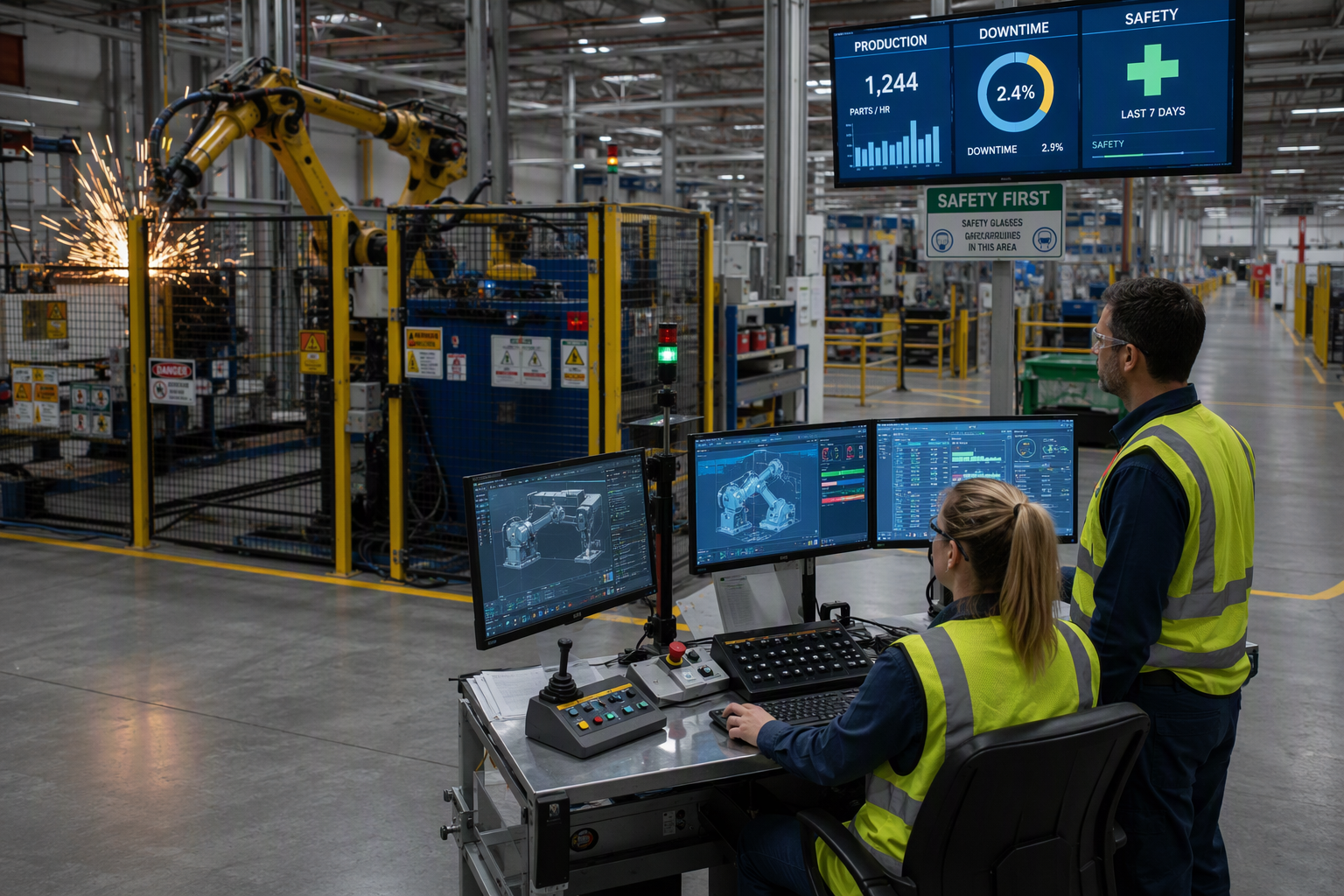
Increased Productivity and Consistent Quality
One of the clearest advantages of industrial automation is higher productivity. Automated equipment can run longer hours with fewer pauses, which helps facilities increase output without building the same dependence on large manual crews or multiple shifts.
Just as important, automation strengthens quality control. Machines do not tire during repetitive tasks, so they can repeat the same action with very small variation. That consistency helps improve product quality and reduce scrap, rework, and production errors.
You can see the value in highly repetitive assembly work. In automotive production, automated machinery can perform precision tasks with a far lower error rate than manual methods. When you combine better accuracy with longer run time, the result is a production line that works faster and produces more dependable results. That is a strong business case for adoption.
Enhancing Operational Efficiency and Cost Savings
Automation improves operational efficiency by reducing slowdowns, tightening process control, and helping equipment run with less interruption. When automation systems manage routine actions with minimal human intervention, plants can maintain steadier output and make better use of available capacity.
Long-term cost savings often follow from those improvements. Businesses can lower labor-related overhead, reduce waste, and avoid some losses tied to inconsistent production. Better monitoring also supports smarter decisions around maintenance and process adjustments.
Common efficiency gains include:
- Faster cycle times across the production line
- Reduced scrap and fewer unplanned shutdowns
- Better energy use through more controlled operation
- Higher throughput without adding the same level of labor
These outcomes matter because they improve margins while also making the operation more stable. Over time, that balance of performance and cost control becomes one of the main reasons companies invest in automation.
Improved Workplace Safety and Labor Utilization
Safety is a major reason companies turn to industrial automation. Robots and automated equipment can take over dangerous tasks in harsh or hazardous conditions, which lowers the risk placed on human labor during daily operations.
That shift also changes labor utilization. Instead of focusing mainly on repetitive manual labor, workers can move into monitoring, programming, troubleshooting, and system support. Automation does not simply remove effort from the floor. In many cases, it creates new roles tied to more technical and supervisory work.
For businesses dealing with labor shortages, this is especially useful. It helps keep production running while allowing teams to focus where people add the most value. Better workplace safety and smarter labor utilization together create a stronger operating model, especially in facilities that want both resilience and long-term workforce development.
Key Challenges Facing the Industrial Automation Industry
Even with strong benefits, industrial automation comes with real implementation challenges. Many companies struggle with high startup costs, integration complexity, and the need to fit new tools into older production environments without causing new disruptions.
On top of that, supply chain disruptions and a growing skills gap make adoption harder. You may know automation is the right move, but getting the systems, people, and timing aligned is not always simple. The next sections look at the biggest barriers companies face when moving from interest to execution.
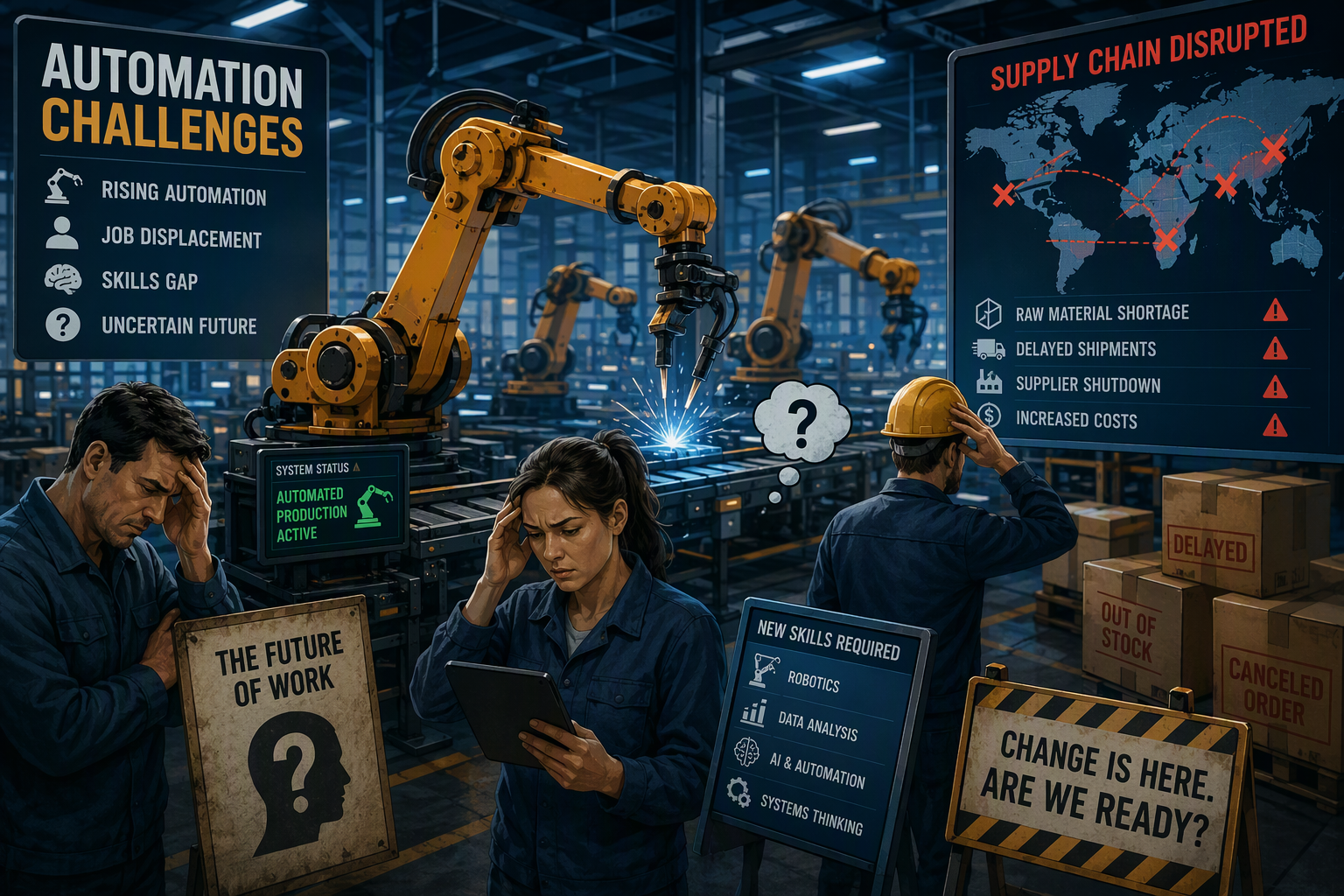
High Initial Investment and Integration Complexities
The first barrier is often cost. A full shift to automation technology can require a high initial investment in equipment, software, installation, and employee training. For many companies, that upfront spending feels risky even when long-term returns look promising.
Integration adds another layer of difficulty. New automation systems must fit the existing production process, communicate with current equipment, and support reliable day-to-day operation. If that fit is poor, rollout can create bottlenecks instead of solving them.
Common pressure points include:
- Upfront spending on hardware, software, and setup
- Integration work needed to connect old and new systems
- Training costs tied to operating more advanced tools
These issues do not mean automation is a bad choice. They mean planning matters. Businesses need a clear path for introducing automation without interrupting core operations or stretching resources too thin during the transition.
Skills Gap and Workforce Training Needs
Technology can only deliver results if people know how to use it well. That is why the skills gap remains a major challenge in automation adoption. Many facilities need technicians, programmers, and support staff who can manage increasingly advanced systems.
At the same time, labor shortages are already affecting production. This creates a double challenge. Companies adopt automation solutions to reduce dependence on hard-to-fill roles, but they still need qualified people to install, maintain, and optimize those systems after launch.
Workforce training becomes the bridge. Human workers need reskilling opportunities so they can move into maintenance, robotics support, system monitoring, and other technical roles. Without that effort, companies may invest in good equipment but still struggle to get full value from it. Strong training plans help close the gap between buying technology and using it successfully.
Supply Chain Disruptions and Component Shortages
Supply chain issues can slow even well-planned automation projects. When key parts are delayed, installation schedules move, budgets tighten, and production goals become harder to meet. This is especially true when projects depend on specialized equipment or tightly coordinated delivery windows.
Component shortages are a direct problem because automation solutions rely on many connected parts. If controllers, sensors, or other field devices are unavailable, the whole rollout can stall. Longer lead times also make it harder to plan upgrades in a predictable way.
Typical supply chain pain points include:
- Delayed delivery of field devices and related components
- Longer lead times for new automation equipment
- Project slowdowns caused by gaps in parts availability
For manufacturers, this turns procurement into a strategic issue. Automation is not just about engineering anymore. It also depends on timing, sourcing, and the ability to manage uncertainty in the broader supply chain.
Technology-Driven Challenges in Automation
As automation technology becomes more connected, technical risks become harder to ignore. Companies now rely on industrial networks, shared data flows, and software-driven controls that must stay secure and dependable under daily production pressure.
That creates a new set of concerns around cybersecurity, interoperability, and the speed of change. Tools like digital twins and connected platforms offer value, but they also raise expectations for integration and technical oversight. The next sections cover the biggest technology-driven challenges that can affect performance, reliability, and long-term investment decisions.
Cybersecurity Threats to Connected Industrial Systems
Connected production brings clear benefits, but it also increases exposure to cybersecurity threats. When automation systems rely on industrial networks, shared software, and connected controls, weak protection can create openings for disruption.
This matters because modern operations often connect process control tools with sensors, controllers, and iot devices. If those links are not properly secured, companies risk downtime, data loss, and interference with critical plant functions. In highly automated environments, even a small breach can create large operational problems.
Key cybersecurity concerns include:
- Unprotected industrial networks that expose connected equipment
- Vulnerable automation systems linked to wider plant operations
- Security gaps created by expanding use of iot devices
For businesses, the issue is not whether to connect systems. It is how to do so safely. Strong protection is essential if you want the benefits of connected automation without adding unnecessary operational risk.
Ensuring System Interoperability and Data Integration
A connected plant only works well when systems can share information clearly. That is why interoperability matters so much in industrial automation. Machines, controllers, software, and monitoring tools all need to exchange data in a way that supports stable operation.
Data integration is part of the same challenge. Plants collect large volumes of sensor data, but that information is only useful if it can be brought together, understood, and applied to process control decisions. If systems stay isolated, operators lose visibility and performance suffers.
This becomes especially difficult when companies mix legacy equipment with newer digital tools. Older machines may not communicate easily with modern platforms, which creates gaps in reporting and coordination. Better interoperability helps businesses turn raw production signals into practical insight, improve consistency, and support faster response when conditions on the floor begin to shift.
Rapid Evolution of Technology and Keeping Pace with Innovation
The pace of change in automation can be difficult to manage. New platforms, smarter software, and more advanced analytics continue to reshape industrial automation solutions, which means companies must make decisions in an environment that rarely stands still.
Innovation creates opportunity, but it also creates pressure. Businesses may worry about investing in automation systems that could feel outdated too quickly. At the same time, keeping up with tools like machine learning requires both technical skill and ongoing planning.
Common challenges tied to technology evolution include:
- Choosing systems that will remain useful as innovation continues
- Training teams to work with newer digital capabilities
- Updating processes without causing avoidable disruption
For many manufacturers, the real issue is balance. You want to benefit from innovation, but you also need stable operations. The strongest approach is usually steady adoption with clear business goals, not chasing every new feature as it appears.
The Impact of Artificial Intelligence and IoT on Industrial Automation
Artificial intelligence and connected iot devices are now major forces in industrial automation. They help systems monitor conditions, spot issues early, and support faster decisions across production environments that are becoming more digital and more data-driven.
In smart factories, industrial iot supports constant visibility while AI strengthens predictive maintenance and process improvement. Together, these tools make operations more responsive and efficient. Still, they also introduce new concerns around managing, protecting, and using growing volumes of data. The following sections explain both the advantages and the tradeoffs.
AI Applications in Predictive Maintenance and Process Optimization
Artificial intelligence is being used in industrial automation to improve how plants monitor equipment and refine operations. One of the clearest examples is predictive maintenance, where systems identify patterns that suggest a problem may be developing before a breakdown happens.
That matters because unplanned downtime is expensive. With machine learning, automated systems can review performance signals in real time and help teams act earlier. This supports better maintenance planning, longer equipment life, and more stable output.
Common AI-driven benefits include:
- Predictive maintenance that reduces surprise equipment failures
- Process optimization based on real-time production data
- Faster identification of performance issues through machine learning
These applications are practical, not theoretical. Businesses use them to improve uptime, reduce waste, and support more informed decision-making. When AI is applied well, it helps operations become more proactive instead of constantly reacting after a problem has already disrupted production.
Leveraging the Industrial Internet of Things (IIoT) for Smart Operations
The industrial iot improves operations by connecting machines, sensors, and software across the plant. This constant exchange of information helps automation systems track conditions, monitor performance, and support faster action when something shifts on the floor.
In smart factories, that connection creates better data acquisition. Sensor data from machines, conveyors, filling equipment, or robots can be collected and viewed continuously. Operators gain a clearer picture of what is happening, which helps them make better decisions and reduce blind spots in production.
IoT technology impacts industrial automation by making systems more aware and responsive. Instead of waiting for manual checks, connected equipment can signal changes immediately and support real-time adjustments. That improves consistency, helps limit downtime, and strengthens coordination across production. The result is a more visible, more flexible operation that can respond faster to both problems and opportunities.
Challenges in Data Management and Security with AI and IoT
As AI and connected tools expand, companies must handle much more information. That makes data management a serious issue. Large volumes of operating data need to be collected, organized, and used in ways that support decisions without overwhelming teams or systems.
Data security is just as important. When automation systems connect with artificial intelligence platforms and iot devices, the number of digital touchpoints grows. More connections can mean more risk if protections are weak or inconsistent across the plant.
Main concerns often include:
- Data management challenges caused by growing system complexity
- Data security risks tied to connected iot devices
- Difficulty protecting automation systems while keeping them accessible
These issues do not erase the value of AI and IoT. They simply show that smarter operations require smarter controls. Businesses need reliable ways to manage information and secure connected environments if they want digital gains to remain sustainable.
Industry Leadership and Professional Resources
As industrial automation grows, people in the field need strong professional resources to keep pace. That includes access to organizations, industry events, training paths, and communities that support practical learning and long-term career development.
These resources matter for both employers and workers. Companies need skilled teams, and professionals need ways to build new technical abilities as roles change. In a market shaped by connected systems, robotics, and digital tools, learning is no longer optional. The next sections highlight useful forms of support for staying active and competitive in this evolving field.
Notable Organizations, Events, and Communities in the U.S.
In the United States, professionals in industrial automation often benefit from staying connected to industry organizations, events, and peer communities. The compiled information does not name specific groups, but it makes one thing clear: growth in the automation industry depends on shared knowledge, technical learning, and access to current best practices.
Events and communities are useful because they help people track changes in robotics, controls, AI, and connected production. They also create space for problem-solving with others facing similar implementation or workforce challenges in industrial automation.
Helpful professional resources often include:
- Industry organizations focused on manufacturing technology
- Trade events covering automation industry trends and tools
- Peer communities where professionals share practical experience
- U.S.-based networking groups tied to operations and engineering roles
If you work in this field, these connections can sharpen your knowledge and help you adapt faster as systems, expectations, and job requirements continue to change.
Training, Certifications, and Career Development in Industrial Automation
Training is one of the most important investments in today’s automation environment. As companies adopt more advanced industrial automation solutions, they need people who can install, monitor, maintain, and improve those systems with confidence.
Certifications can support that goal by helping workers build structured knowledge in controls, robotics, maintenance, and digital tools. While the compiled information does not list named credentials, it strongly supports the need for reskilling as technology changes and more technical responsibilities move into daily operations.
That shift also affects career development. As repetitive jobs decline, new roles open in system support, programming, data analysis, and equipment oversight. Workers who pursue training and certifications are better positioned to move into those opportunities. For employers, that means a stronger talent pipeline. For individuals, it means a clearer path to stay relevant and grow in a changing manufacturing landscape.
Conclusion
In conclusion, the industrial automation industry faces a multitude of challenges that require innovative solutions and strategic management. From high initial investments to the skills gap in the workforce, each obstacle presents unique hurdles that need to be addressed. As technology continues to evolve at a rapid pace, businesses must prioritize cybersecurity and data integration to ensure seamless operations. The integration of AI and IoT offers exciting opportunities for optimization and efficiency, but it also brings forth new complexities. By staying informed and proactive, industry leaders can navigate these challenges and harness the full potential of automation. Embracing continuous learning and seeking professional development will be vital for staying ahead in this dynamic environment.
Frequently Asked Questions
What are some real-world examples of industrial automation systems?
Common industrial automation systems include robotic welding lines in automotive plants, automated filling systems in food production, pick-and-place machines in electronics assembly, and smart warehouse conveyors. These automation solutions use control systems and industrial robots to improve the manufacturing process with better speed, consistency, and safety.
How is artificial intelligence changing the industrial automation industry?
Artificial intelligence is improving automation technology by helping systems detect issues earlier, support predictive maintenance, and refine process optimization. With machine learning, plants can analyze operating conditions in real time, reduce downtime, and make better decisions that improve performance without relying only on manual monitoring.
What trends are shaping the future of industrial automation in the United States?
Key trends include wider use of industrial iot, growth in smart factories, stronger interest in flexible automation, and continued focus on operational efficiency. Businesses in the United States are also adopting more connected automation technology to improve visibility, adapt faster to change, and keep production more resilient.