Industrial Automation Industry Statistics: Market Size and Growth Data
Industrial Automation Industry Statistics: Market Size and Growth Data
Key Highlights
- Industrial automation uses automation systems to reduce manual work across the manufacturing process.
- The global market size reached $196.6 billion in 2021 and $213.49 billion in 2022.
- Current growth rate data shows strong momentum, with 2022 expanding by 8.59%.
- Long-term projections point to continued expansion, reaching $395.09 billion by 2029.
- Fixed, programmable, flexible, and integrated automation each support different production needs.
- AI, machine learning, robotics, and smart factories are reshaping industrial automation adoption.
Introduction
Industrial automation is changing how companies run the manufacturing process, move materials, and improve output. You can see its impact in factories, warehouses, and supply chain operations where automation systems now handle work that once depended on constant manual effort. That shift matters because businesses want better speed, stronger quality, and lower costs. In this guide, you’ll get a clear look at market data, growth patterns, major segments, and the technologies pushing industrial automation forward.
Industrial Automation Solutions
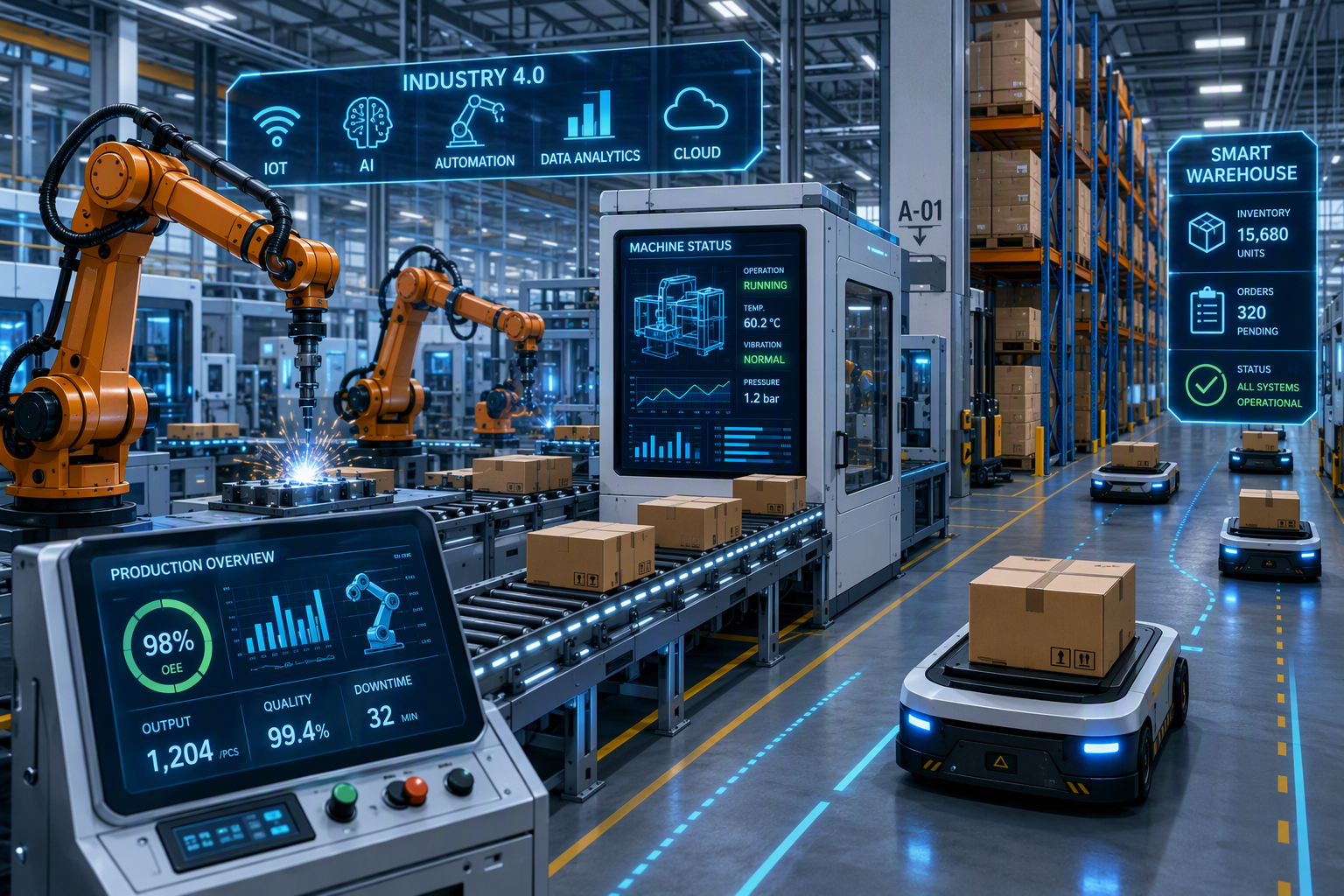
Overview of the Industrial Automation Industry
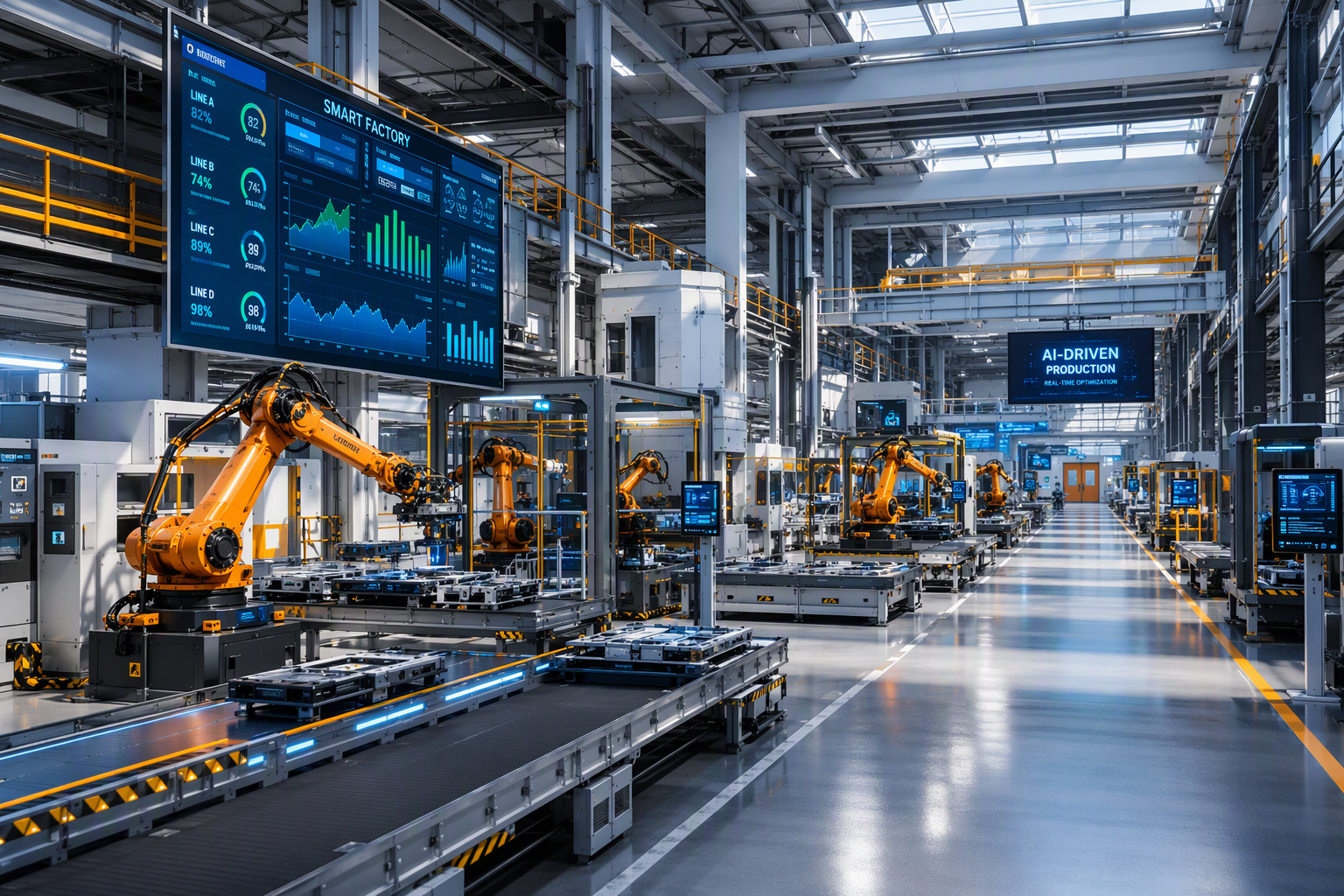
Industrial automation is now a practical business tool, not a future concept. It uses automation technology to streamline industrial tasks, reduce manual effort, and improve consistency across production and logistics environments.
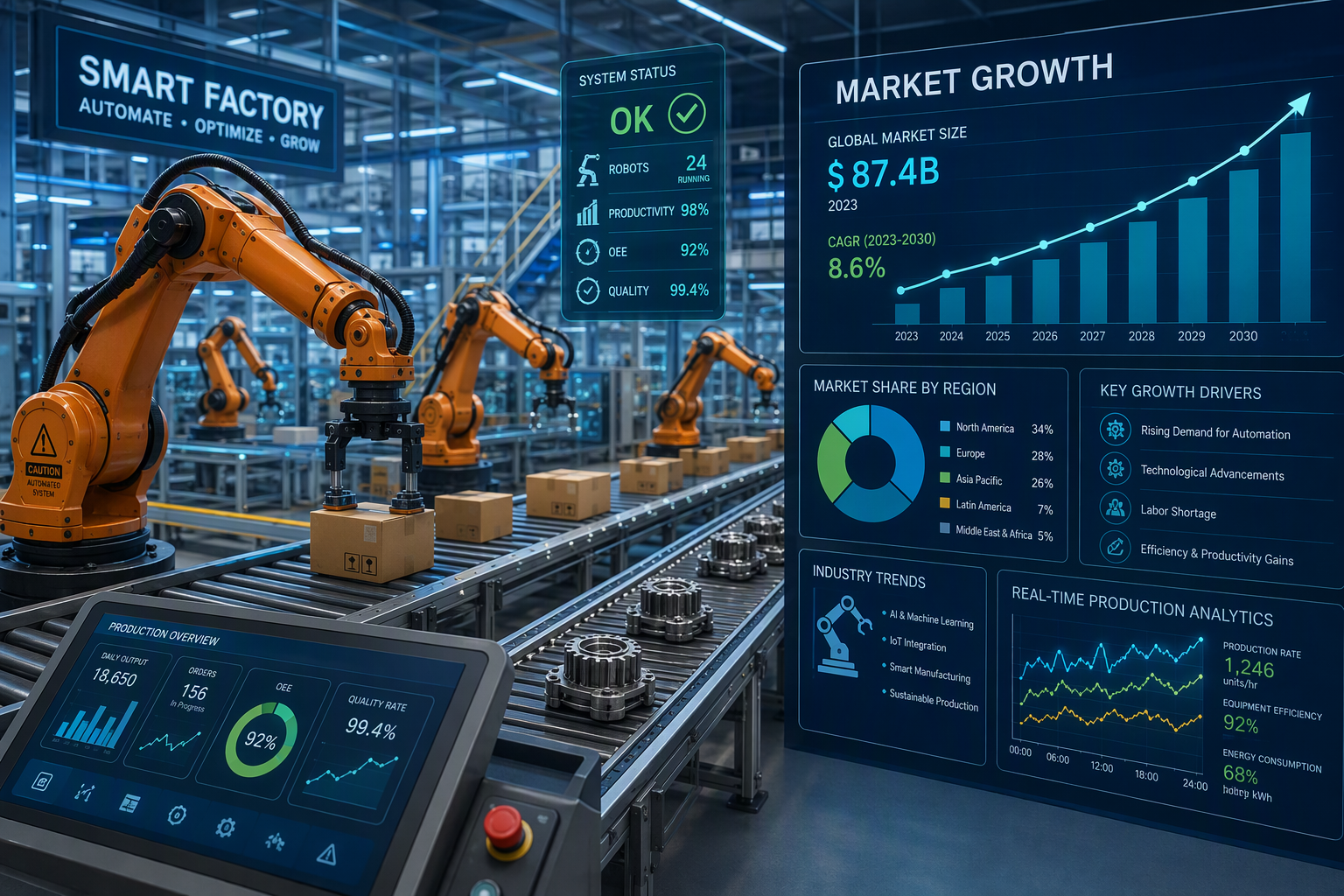
Across many sectors, companies rely on automation systems to manage repetitive work, support safer operations, and improve process performance. If you want a broader view of the industrial automation industry, the next sections explain what it is, how it works, and why it matters in modern manufacturing.
Defining Industrial Automation and Its Functioning
Industrial automation is the use of advanced technology and machinery to streamline industrial tasks with less human intervention. In simple terms, it connects machines, sensors, and software so a facility can run repetitive tasks with greater speed and consistency.
At its core, industrial automation works through automation systems that monitor conditions, respond to feedback, and adjust activity during production. This setup depends on control logic, sensor input, and machine responses that keep work moving from material handling to final delivery.
You can think of it as a step beyond simple mechanization. Early systems handled basic repeated actions. Today’s setups support smarter decisions, better coordination, and more adaptive performance. That is why industrial automation now plays a bigger role in manufacturing, logistics, healthcare, automotive, and other industrial environments.
Core Components of Automation Systems
Automation systems rely on several connected parts that help a facility monitor, control, and optimize operations. The basic structure usually includes sensing devices, machine controls, and software that coordinate how work gets done across industrial environments.
In many setups, programmable logic controllers act as the decision-making layer. These controllers take signals from field devices, process that information, and trigger the right machine response. Together, they form part of a larger control system that keeps equipment aligned with production goals.
The main types of system design in the compiled information include fixed, programmable, flexible, and integrated approaches. While each type of automation serves different needs, they all depend on connected devices, feedback, and coordinated actions. That common foundation is what allows automation systems to improve output, timing, and process stability.
The Role of Industrial Automation in Modern Manufacturing
In modern manufacturing, industrial automation helps companies run the manufacturing process with greater speed and control. It reduces the burden of repetitive work, keeps production lines moving, and supports more stable output across changing operating conditions.
For many businesses, the biggest value comes from how automation solutions reduce errors tied to fatigue and routine work. When less human labor is spent on tedious tasks, teams can focus on higher-value work while systems handle repeated motion, transport, or machine actions.
It also strengthens quality control. Automated equipment can repeat the same task with steady precision, helping products meet the same standards every time. Facilities benefit through higher throughput, fewer disruptions, and more consistent quality checks. That mix of productivity and stability explains why automation remains central to modern production strategies.
Market Size of the Industrial Automation Industry
The industrial automation industry has posted clear gains in recent years. Based on the compiled data, global market size reached $196.6 billion in 2021 and rose to $213.49 billion in 2022, showing strong demand for smarter production tools.
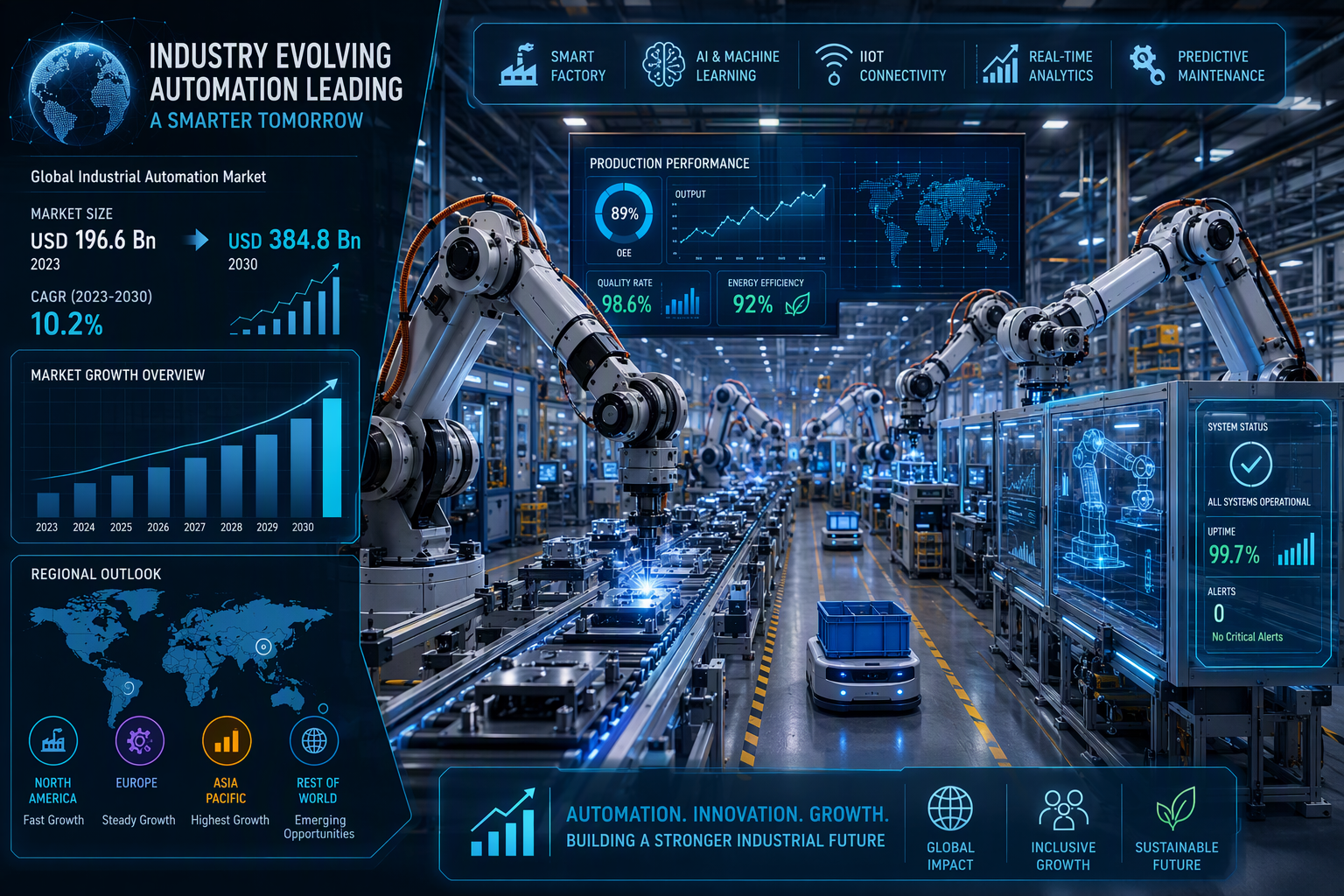
The growth outlook also points upward. Projections in the source material show the market reaching $395.09 billion by 2029, supported by Industry 4.0, IoT adoption, and rising use of advanced automation technology. The next sections break down current valuation, the United States view, and forecast trends.
Current Global Market Valuation
Current data shows a sizable global market size for industrial automation. The compiled information places the market at $196.6 billion in 2021 and $213.49 billion in 2022. That jump reflects strong interest in systems that improve performance across production settings.
Why is this happening? Businesses in industrial environments want tighter control, lower waste, better quality, and more predictable output. Automation technology supports each part of the production process, from assembly and transport to monitoring and equipment coordination.
The broader growth outlook remains strong. Source material says the market is expected to reach $395.09 billion by 2029, with a compound annual growth rate of 9.8%. That suggests industrial automation is not slowing down. Instead, it is becoming a larger part of everyday operations across manufacturing, logistics, healthcare, and other sectors.
Breakdown of Market Size in the United States
The compiled information does not provide a separate market size figure for the United States. Still, it does show that U.S. manufacturing and supply chain operations are deeply affected by automation demand, labor pressure, and the need for higher efficiency.
In the United States, adoption is tied to different types of operational needs. Companies use automation systems to improve throughput, reduce labor strain, and handle repetitive work more effectively. The source also notes that open manufacturing roles could cost the U.S. economy more than $1 trillion if they remain unfilled.
Here is a simple United States-focused view based on the compiled material:
| U.S. Market Area |
What the Compiled Information Shows |
|---|---|
| Manufacturing pressure |
Labor shortages are a major challenge |
| Economic impact |
Unfilled roles could cost over $1 trillion |
| Use of automation systems |
Supports efficiency, safety, and output |
| Different types in use |
Fixed, programmable, flexible, integrated |
Forecasted Growth Rates Through 2026
The compiled source does not give a specific 2026 market size number. What it does provide is a clear long-range forecast for the automation industry: projected growth to $395.09 billion by 2029, with a 9.8% compound annual growth rate.
That forecast suggests steady expansion through 2026 as well. The same source links growth to Industry 4.0, the Internet of Things, and broader use of smart systems for control, monitoring, and data acquisition across industrial operations.
If you are assessing market size direction, the signal is strong even without a single 2026 figure in the source. Demand continues because manufacturers want more visibility, better uptime, and stronger process control. Those needs support ongoing investment in automation tools, connected systems, and scalable industrial software through the middle of the decade.
Key Segments within the Industrial Automation Market
The industrial automation market includes several important segments, each built for a different operating need. Some environments favor stable, high-volume output, while others need faster changeovers and more adaptable automation solutions.
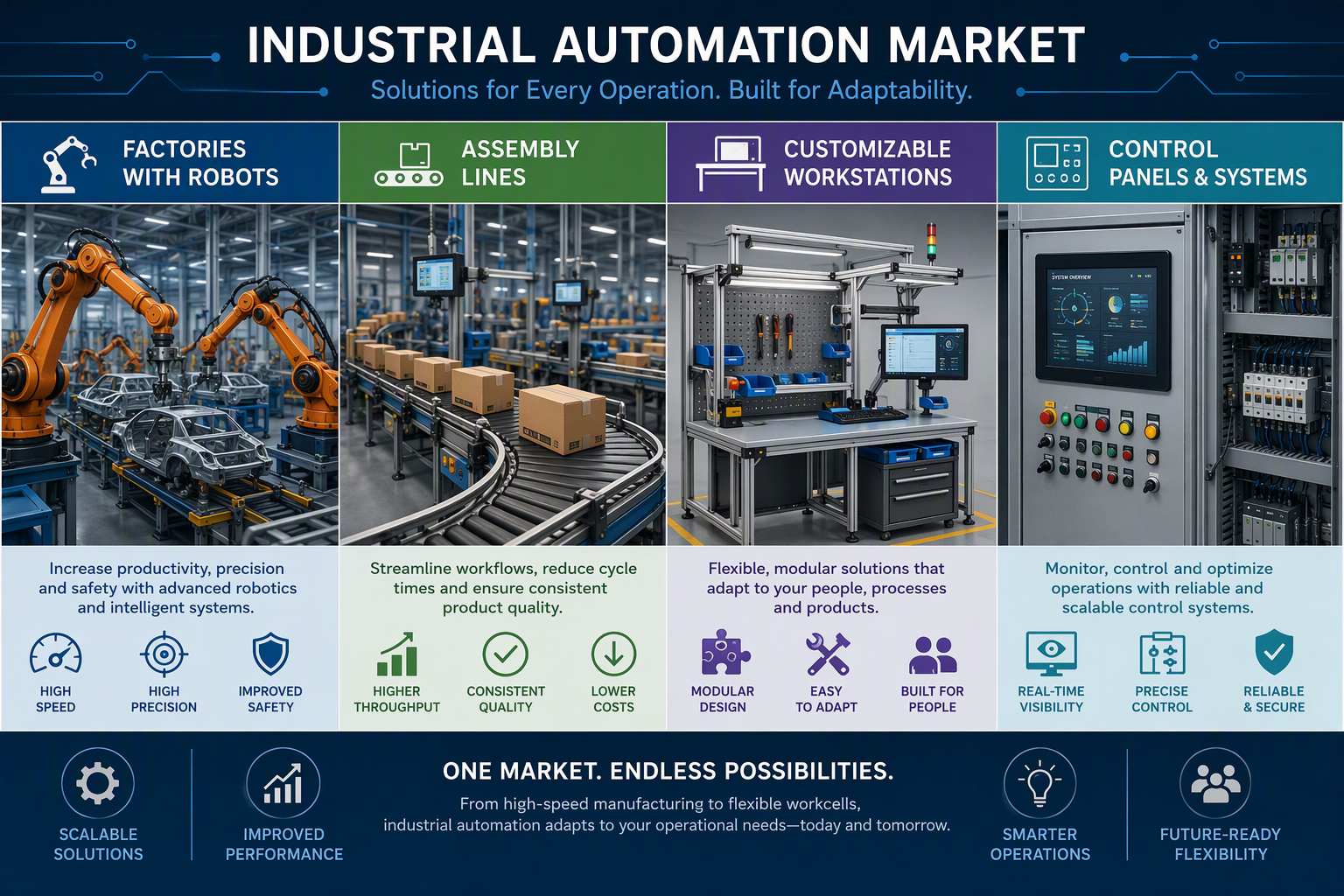
That is why understanding the main types of automation matters. Fixed, programmable, flexible, and integrated setups each support different production goals. Product categories and software also play a major role in how facilities build their systems. The next sections break down these segments in a practical way.
Fixed vs. Programmable vs. Flexible Automation
The compiled information identifies several types of industrial automation, with fixed automation, programmable automation, and flexible automation standing out as the clearest core models. Each one fits a different production style, cost structure, and level of change on the factory floor.
Fixed automation is built for one repeated task and high-speed output. Programmable automation can be reprogrammed for different products. Flexible automation takes adaptability further by supporting rapid changes in workflow or layout with less delay.
Here is a quick comparison:
- Fixed automation suits mass production and repeated assembly line work.
- Programmable automation works well for low-volume, high-variety or batch production.
- Flexible automation supports frequent product changes and customization.
- Common flexible examples include cobots, AMRs, AGVs, and adaptive assembly lines.
Leading Automation Product Categories
When you look at leading product categories, the compiled material points to a mix of machine control, robotics, transport automation, and connected software. These tools work together inside automation systems to support production, movement, and monitoring.
Some of the most visible technologies include programmable logic controllers, industrial robots, and CNC machines. The source also discusses autonomous vehicles, conveyors, and smart factory tools that help facilities coordinate more complex operations with lower manual effort.
Examples named or clearly supported in the source include:
- Programmable logic controllers for programmable automation control
- Industrial robots for repeated production tasks
- CNC machines for different products through software changes
- Smart factory and integrated software tools that can connect with SCADA systems or similar supervisory platforms
Service and Software Segment Insights
Software and service layers are becoming more important as automation matures. The compiled source describes systems that use advanced computer software programs to coordinate robots, conveyors, and other production tools in one connected environment.
This matters because a modern control system is not only about hardware. Automation software helps organizations monitor performance, adapt workflows, and manage assets more effectively. In many cases, that software supports supervisory control functions and links operations with broader information technology needs.
Companies that use these tools well can gain a competitive advantage. Better visibility, easier coordination, and more flexible deployment all help. The source also highlights analytics and fleet management capabilities for autonomous vehicles, showing how software-driven control is becoming a bigger part of industrial automation solutions.
Recent Growth Statistics and Projections
Recent numbers show that the automation industry is growing from a strong base. The global market size increased from $196.6 billion in 2021 to $213.49 billion in 2022, which represents an 8.59% growth rate.
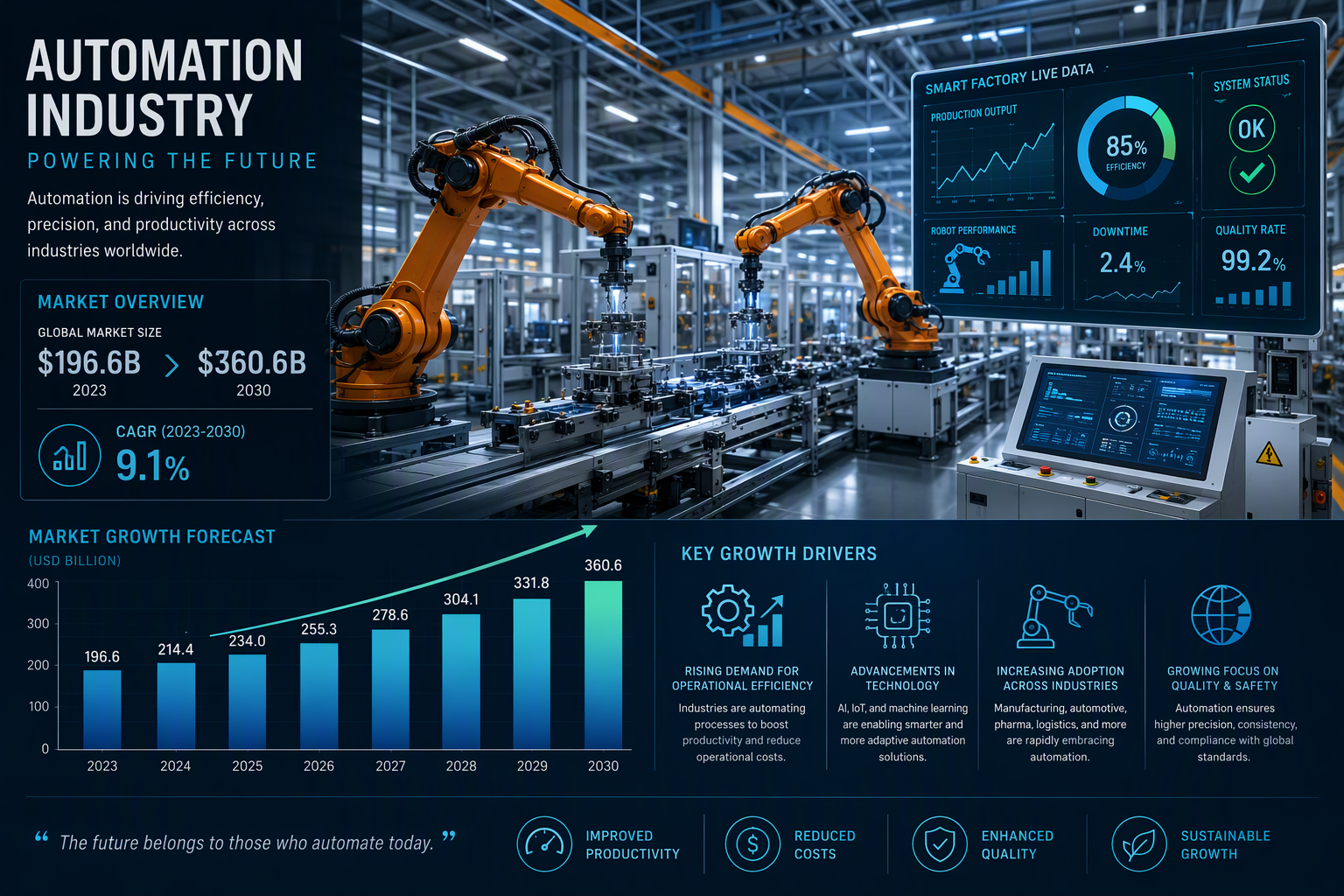
Longer-term projections remain positive as well. The compiled material expects the market to reach $395.09 billion by 2029 with a 9.8% CAGR. That combination of recent gains and forward momentum gives you a useful picture of where the market is heading next.
Annual Growth Trends (Past Five Years)
The compiled information does not provide a year-by-year set of annual trends for the full past five years. It does, however, give two strong benchmark points that show how the automation industry has been expanding in a meaningful way.
The market size moved from $196.6 billion in 2021 to $213.49 billion in 2022, which equals an 8.59% growth rate. That increase signals rising demand for tools that improve the production process, cut error rates, and support better plant performance.
When those recent figures are paired with the 2029 forecast, the direction becomes clear. Even without a full five-year annual series in the source, the pattern supports a market that is gaining traction. Businesses across sectors continue to invest because automation helps improve speed, quality, and operational control.
Anticipated CAGR and Investment Patterns
The compiled source gives a clear long-term CAGR for the automation industry: 9.8% through 2029. That is a strong signal for companies tracking market size and trying to understand where industrial spending is heading.
Investment patterns in the source point to practical priorities rather than hype. Businesses are putting money into systems that improve productivity, reduce downtime, support quality, and respond to labor shortages. In other words, spending is tied closely to measurable operating value.
Key investment themes include:
- Industrial automation solutions that reduce repetitive labor
- Smart factory and integrated system upgrades
- AI and machine learning for better decisions and maintenance planning
- Flexible deployment models such as subscription-based automation services
Factors Driving Revenue Expansion
Revenue expansion in this market is tied to clear business needs. Companies want higher productivity, fewer errors, better safety, and lower waste. That is why automation solutions continue to spread across manufacturing, logistics, and other industrial settings.
The compiled material also points to technology shifts that support growth. Smart factories, robotics, artificial intelligence, and machine learning are making automation systems more capable and more useful in daily operations. These tools help facilities monitor assets, improve workflows, and respond faster to change.
Major growth drivers include:
- Demand for higher output and stronger consistency
- Need to address labor shortages and worker retention
- Interest in predictive maintenance and uptime improvement
- Expansion of smart factories and connected industrial tools
Market Share by Segment and Application
Market share in industrial automation is shaped by system type, end-use industry, and regional demand. Some automation solutions are built for stable mass production, while others fit fast-changing environments that need flexibility.
Because of that, market share does not sit in one place. It shifts across the types of automation, the industries buying these systems, and the regions building advanced production capacity. The next sections outline where adoption is strongest based on the compiled information.
Market Share by Automation Type
The compiled information does not provide numerical market share percentages by automation type. What it does show is how each type of automation serves a distinct business need, which helps explain where demand is concentrated.
Fixed systems remain important in mass production. Programmable automation supports moderate customization and different product runs. Flexible automation has become more attractive where facilities need quick adaptation, frequent changes, and less downtime during transitions.
A practical market share view looks like this:
- Fixed automation is strong in repeated, high-volume work
- Programmable automation fits varied production and software-based changeovers
- Flexible automation is gaining attention for adaptability
- Integrated industrial automation solutions bring multiple systems together for broader plant optimization
Top Industries Adopting Industrial Automation
Industrial automation is used across various industries, but some sectors stand out in the compiled source because of their heavy operational demands, quality needs, and repeated workflows. These sectors often adopt automation earlier because the return is easier to see.
The source specifically mentions manufacturing, automotive, healthcare, logistics and supply chain, consumer goods, food and beverage, mining, oil and gas, aerospace and defense, and pharmaceuticals and chemicals. Each one benefits from better consistency, safer operations, and faster throughput.
Top adopting sectors listed in the source include:
- Automotive for assembly line and specialized machine work
- Pharmaceuticals for controlled production and quality needs
- Consumer goods for repeatable, scalable output
- Food and beverage for consistent production and process handling
Geographic Regions with Highest Demand
The compiled information does not provide a ranked list of geographic regions with the highest demand. It focuses on the global market size and gives examples from the United States, along with industries that are driving adoption across different industrial environments.
Even without a region-by-region split, you can still see why demand appears broad. Industrial automation supports the production process in sectors that exist worldwide, including automotive, manufacturing, logistics, and pharmaceuticals. That broad use suggests demand is spread across many developed and expanding industrial markets.
Based on the source, geographic demand is supported by:
- Global market expansion from 2021 to 2022
- United States labor and manufacturing pressure
- Widespread use across major industrial environments
- Need for higher output, better safety, and lower waste worldwide
Technological Advances in Industrial Automation
Technology is a major reason industrial automation keeps advancing. What started as simple mechanization has moved into connected, data-driven systems that use robotics, software, and intelligent decision support.
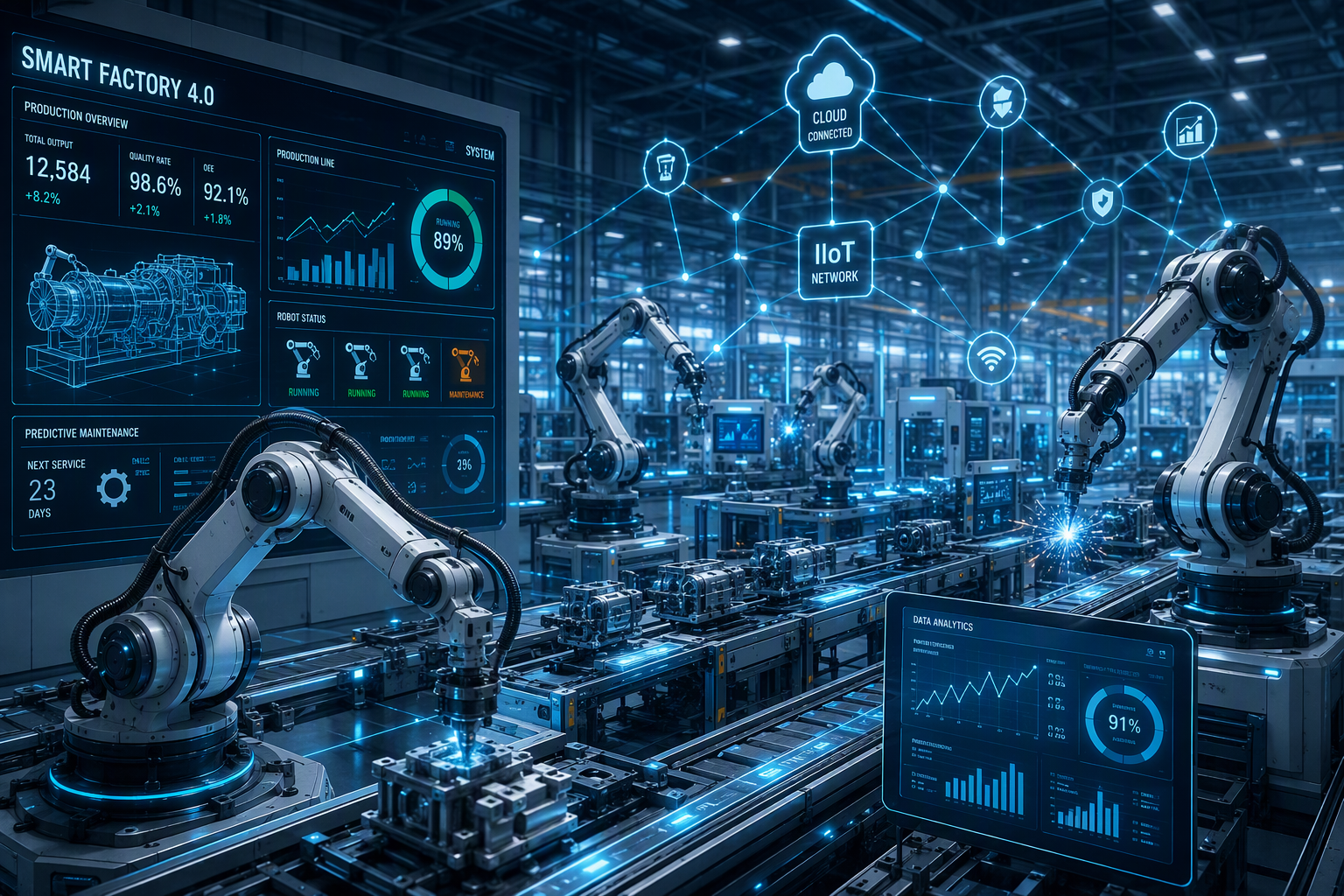
The compiled information highlights artificial intelligence, machine learning, smart factories, and autonomous systems as key areas of change. These tools are helping companies improve productivity, maintenance planning, and plant flexibility. The next sections look at robotics, IIoT-driven intelligence, and the software layer behind secure operations.
Robotics and Collaborative Robots
Robotics is one of the clearest signs of progress in industrial automation. The compiled source shows that industrial robots and vehicle-based automation already support production, transport, and warehouse activity in ways that reduce strain on workers.
Collaborative robots are especially important because they are designed to work alongside people. Instead of fully replacing human operators, they assist with repetitive tasks, dangerous work, or physically demanding movement. That makes them useful in changing workflows and mixed environments.
Examples from the source include:
- Industrial robots for repeated assembly and production work
- Collaborative robots that support people on the floor
- Automated guided vehicles for material handling
- Autonomous mobile solutions that adapt to layouts and commands
AI, Machine Learning, and Industrial IoT
Artificial intelligence and machine learning are becoming more important in industrial automation because they help systems learn from data and respond more effectively. The compiled source connects these technologies directly to the next stage of smarter operations.
This shift supports smart factories and better equipment decisions. AI can improve production scheduling, monitor equipment health, and identify issues before they become serious. That creates a path toward predictive maintenance and more efficient day-to-day management.
Key technology roles named in the source include:
- Artificial intelligence for better decision-making
- Machine learning for adaptation and pattern recognition
- Industrial IoT and connected systems linked to Industry 4.0
- Predictive maintenance through equipment monitoring and analytics
Automation Software and Cybersecurity
Automation software plays a central role in connecting machines, analytics, and plant coordination. The compiled material describes software platforms that manage assets, monitor operations, and support flexible control across autonomous and integrated systems.
That software matters because it shapes the control logic behind plant behavior. It also enables data analysis, helping teams identify patterns, improve flow, and make more informed operating decisions. In practical terms, software turns equipment activity into usable business insight.
The compiled information does not directly discuss cybersecurity in detail. Still, as software becomes more central to each control system, secure and reliable system design becomes more important. If you depend on connected automation software, you also depend on stable, well-managed digital operations to keep production moving safely.
Key Trends Shaping the Industrial Automation Industry
Several new trends are shaping how industrial automation develops. The compiled information points to smarter connected systems, more adaptable machines, and better digital visibility across production and logistics environments.
You can see this in the growth of AI, cobots, smart factories, and digital twins. These changes are not abstract. They affect how facilities run, how workers interact with machines, and how businesses plan future investment in automation technology. The next sections cover three of those trends in more detail.
Growing Adoption of Edge Computing
The compiled information does not directly mention edge computing by name. Still, it does describe systems that rely on fast sensing, feedback, and control close to operations, which aligns with why edge approaches matter in industrial settings.
In practice, facilities want real time responses during production, transport, and machine coordination. Fast data acquisition from sensors and machines helps automation systems detect change quickly and respond without long delays across industrial networks.
Based on the source, the trend points toward:
- Real time decision-making near the field level
- Faster data acquisition from connected devices
- Better responsiveness in industrial networks
- Improved control where machines, sensors, and software must act together
Sustainability and Green Automation Initiatives
Sustainability is not called out as a separate market trend in the compiled source, but several of the described benefits support green automation goals. When companies reduce waste, improve consistency, and optimize resources, they often reduce environmental strain at the same time.
The source specifically notes better use of raw materials, lower waste output, and improved efficiency through automation. Stronger process control also helps organizations avoid unnecessary variation, rework, and downtime. Those improvements matter if you want tighter resource management.
Green automation, in this context, is tied to smarter operations rather than marketing claims. Less waste, better energy use, and minimal human intervention in repeated or hazardous tasks can support cleaner production. For many facilities, practical efficiency gains are the starting point for more sustainable performance.
Digital Twin Technology Integration
Digital twins are one of the clearest future-facing tools in the compiled information. The source describes them as virtual replicas of physical assets that companies can use to simulate and optimize industrial processes before making real-world changes.
That creates real value for automation systems. Teams can test scenarios, adjust workflows, and improve decisions without disrupting active production. It also supports predictive maintenance because companies can study system behavior, identify likely issues, and plan action earlier.
Digital twins can also improve quality checks and broader production process planning. If you can model how a change affects timing, flow, or equipment behavior, you make better decisions before money and output are at risk. That is why digital twins are becoming a meaningful part of advanced automation strategies.
Benefits of Industrial Automation for Businesses
Industrial automation gives businesses practical gains that are easy to understand. It can lift output, improve product quality, reduce downtime, and help teams work more safely. Those are strong reasons why adoption continues to expand.
For many companies, the bigger picture is just as important. Better automation technology can create a competitive advantage by improving consistency, lowering waste, and helping workers focus on higher-value tasks. The next sections show how those benefits appear in day-to-day operations.
Boosting Productivity and Efficiency
One of the strongest business benefits is improved productivity. The compiled source explains that automation systems increase output by taking over repetitive tasks that slow people down or lead to fatigue-related mistakes over time.
That also improves efficiency. When process control is more consistent, companies reduce delays, keep lines moving, and spend less time correcting preventable problems. A cited example in the source showed a 33% increase in efficiency when an autonomous vehicle was compared with an electric pallet jack in a warehouse setting.
Key productivity gains include:
- Faster completion of repetitive tasks
- More stable process control across operations
- Higher throughput with fewer interruptions
- Better use of worker time on higher-value responsibilities
Enhancing Product Quality and Consistency
Product quality improves when repeated work is done with the same motion, timing, and precision each time. The compiled material highlights this clearly: automation reduces variation caused by fatigue, inconsistency, and manual error.
That matters on production lines where small differences can lead to defects, rework, or missed standards. Automation solutions help standardize tasks so output stays more uniform across shifts and product runs. In many environments, that leads to stronger quality control and fewer avoidable issues.
The source also notes that automated equipment can maintain a constant production rate and support rapid correction when operations drift from standard procedures. Better quality checks and steadier execution help companies protect margins and customer expectations at the same time.
Reducing Costs and Resource Waste
Reducing costs is a major reason companies invest in automation technology. The compiled source explains that better precision lowers waste of raw materials, while automated execution reduces the labor needed for routine tasks.
Resource waste also falls when process control improves. Fewer errors mean less scrap, less rework, and more predictable use of materials. When systems run with tighter coordination, businesses often improve energy use as well, even if the source does not attach a separate number to that result.
The source includes a strong labor example too. In one case, using an autonomous vehicle instead of a pallet jack led to a 64% reduction in labor costs. For businesses facing tight margins, savings like that can make automation investment much easier to justify.
Major Sectors Impacted by Automation Growth
Automation growth is affecting various industries, but the impact is not identical everywhere. Sectors with heavy repetition, strict quality demands, or difficult operating conditions often see the fastest and clearest value.
The compiled information names a wide range of industries already using industrial automation, from automotive and food production to pharmaceuticals and logistics. In the following sections, you’ll see how three major sectors are being shaped by expanding automation use.
Automotive and Transportation
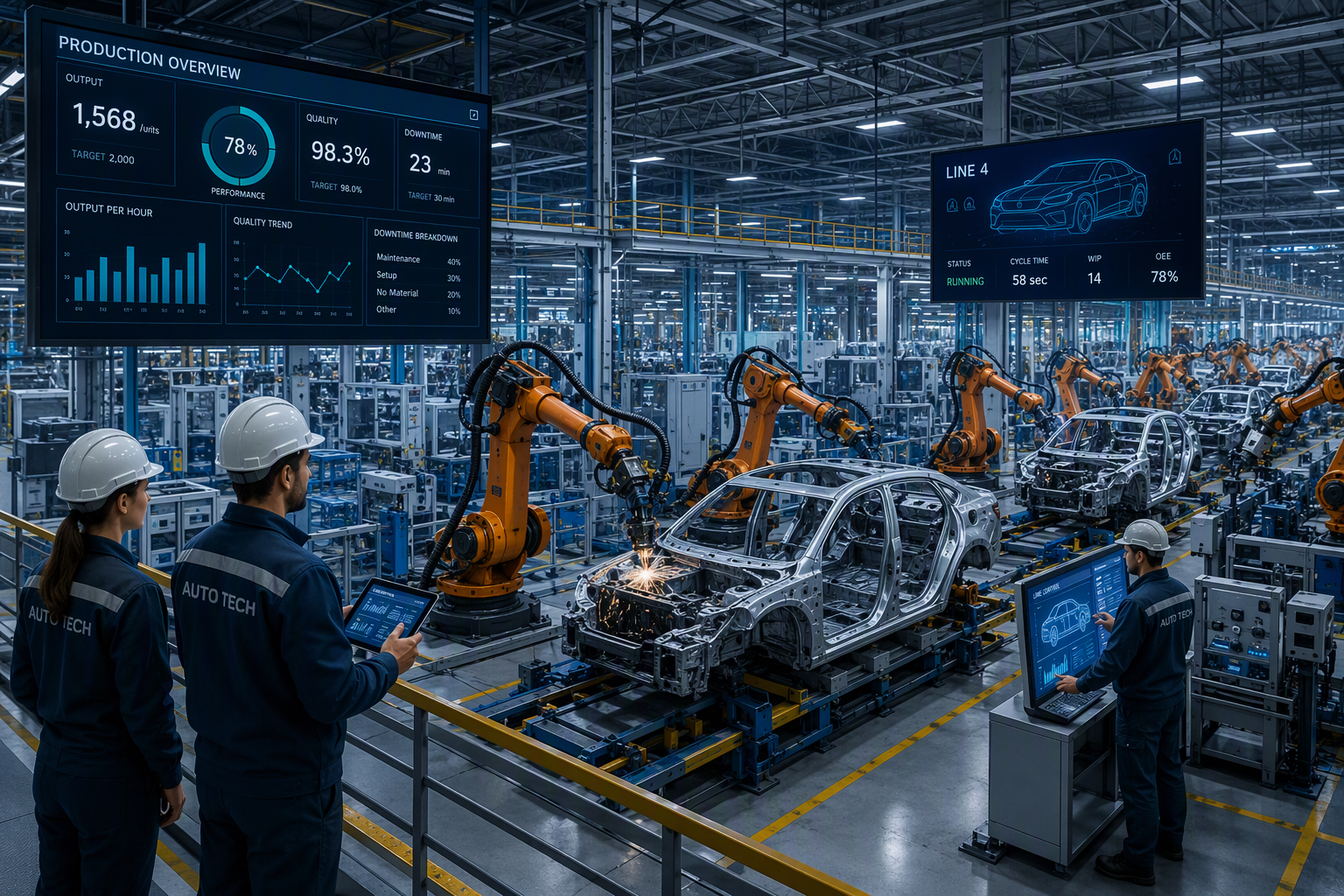
Automotive is one of the clearest examples of strong automation adoption in the compiled material. The source describes how car production is divided into stages, with specialized machines handling each part of the assembly line process.
That model fits automation well because the work is structured, repeated, and time-sensitive. Industrial robots and fixed machinery can weld, paint, and move parts with steady timing. Transportation and internal logistics also benefit through automated vehicles and better material handling tools.
Key automotive and transportation use cases include:
- Assembly line operations with repeated machine tasks
- Industrial robots for welding and related functions
- Automated painting and staged production work
- Material handling support through autonomous industrial vehicles
Food, Beverage, and Consumer Goods
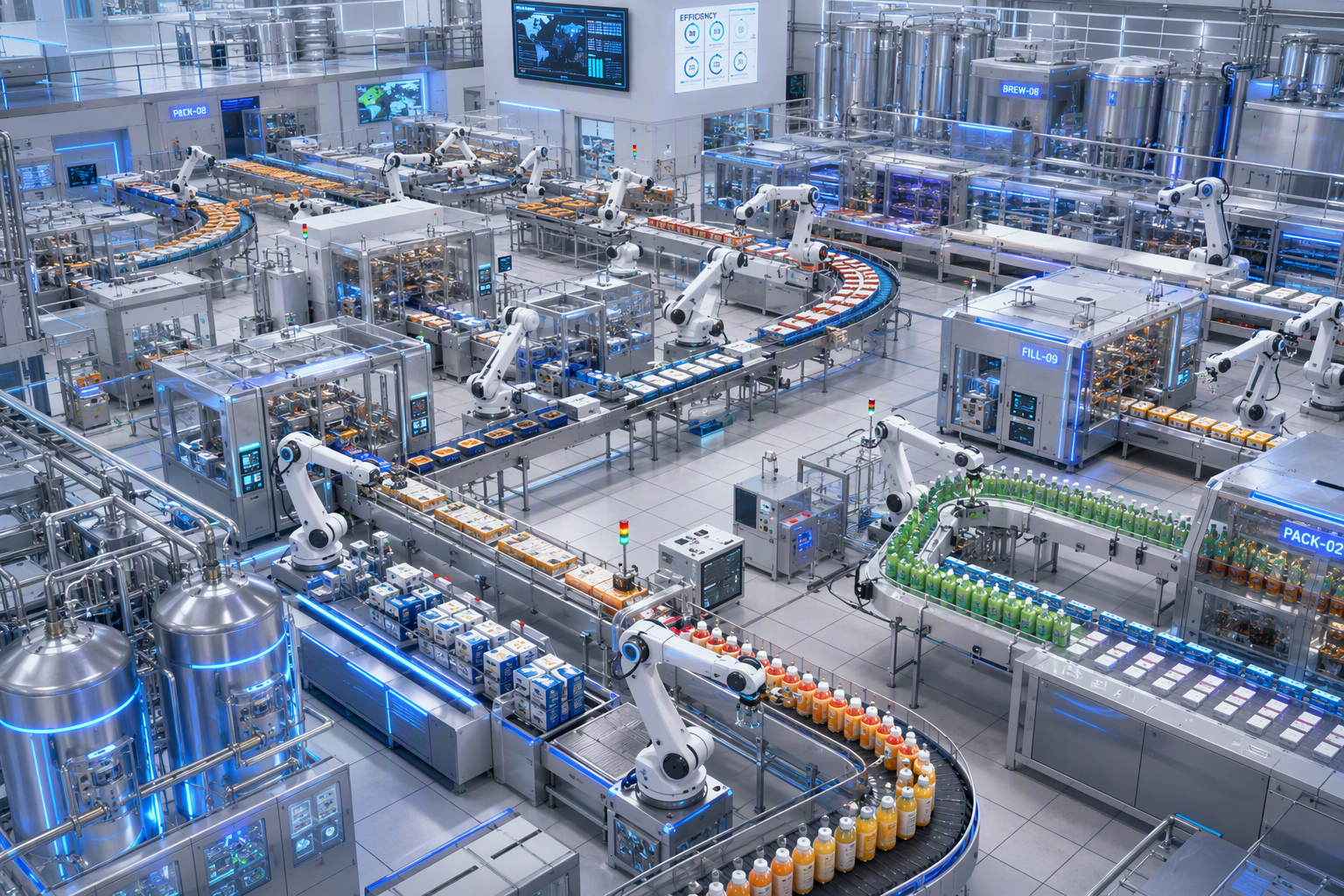
Food & beverage and consumer goods are listed in the compiled source as important adopters of automation. These sectors often depend on repeatable output, speed, and consistent standards across high-volume production.
That makes automation useful for the production process. When equipment handles repeated motion and timing reliably, companies can improve quality control and keep output more uniform. For businesses with changing product runs, programmable systems can also support batch production with better flexibility.
The source does not break down these sectors in deep detail, but it clearly places them among the industries fueling automation growth. For companies in consumer goods and food production, the value is straightforward: steadier quality, better efficiency, and less disruption from repetitive manual tasks.
Pharmaceuticals and Life Sciences
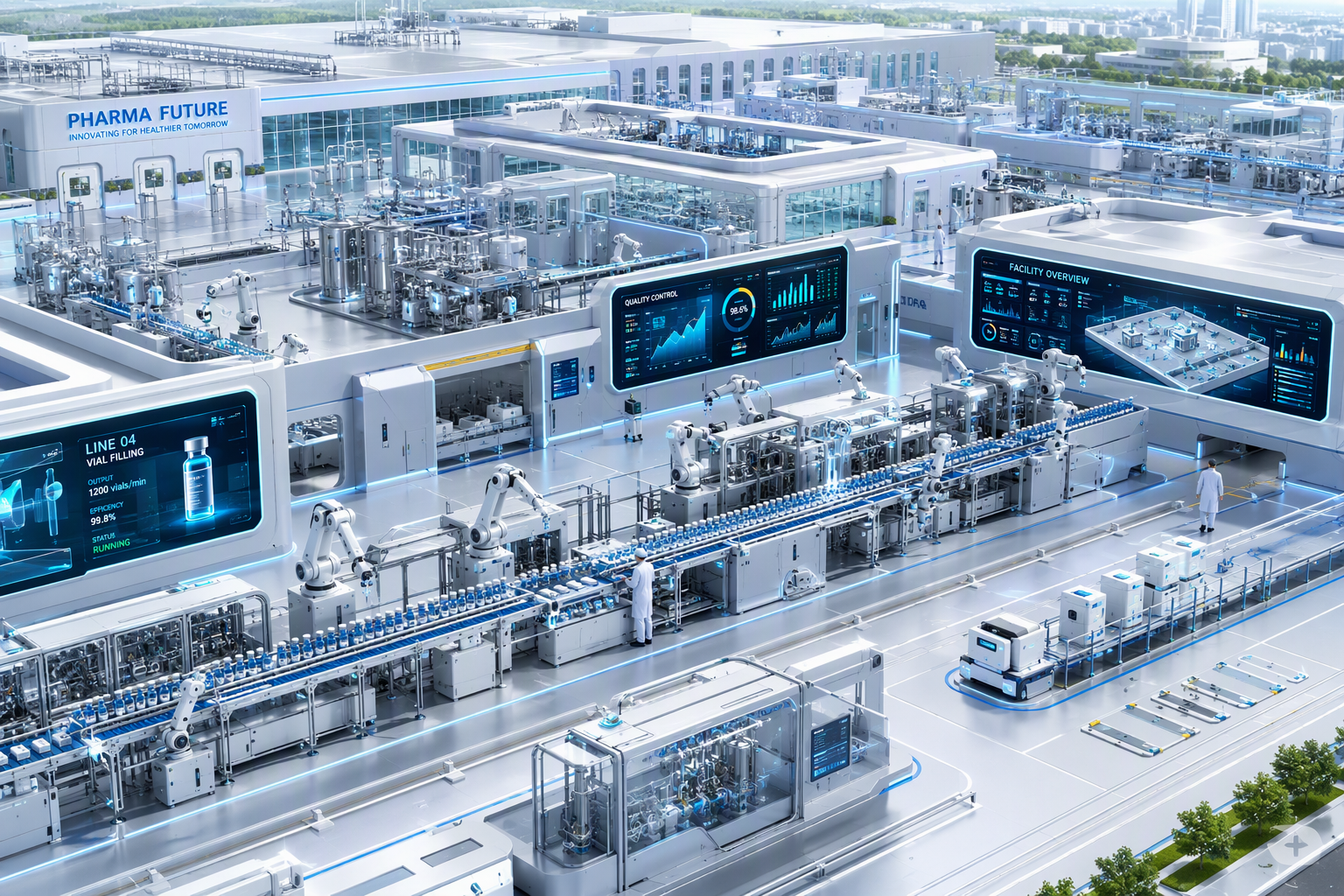
Pharmaceuticals and life sciences appear in the compiled source as key industries using industrial automation. That makes sense because these sectors depend heavily on repeatability, accuracy, and tightly managed operating conditions.
Automation supports those needs through stronger process control and more reliable execution. When systems can repeat actions consistently, companies are better positioned to maintain output standards and manage sensitive production steps with fewer errors.
The source does not provide sector-specific metrics for pharmaceuticals, but it does show why automation solutions fit well here. Better quality control, reduced variation, and improved monitoring all matter in highly controlled environments. For life sciences operations, that combination makes automation a practical operational tool, not just a technology upgrade.
Current Challenges Facing the Industrial Automation Sector
Even with strong growth, industrial automation still faces real challenges. Adoption can be slowed by integration complexity, workforce readiness, and pressure on the supply chain for needed components and systems.
At the same time, labor shortages make automation more necessary while also making deployment harder when skilled people are difficult to find. These challenges do not stop progress, but they do shape how fast companies can move. The next sections look at the biggest barriers described or supported by the compiled information.
Integration Barriers and Workforce Training
One challenge in industrial automation is getting new systems to fit into existing workflows. The compiled source stresses flexibility and adaptation, which suggests that integration barriers matter when facilities try to add automation without disrupting ongoing work.
Workforce training is another key issue. Human operators still matter, especially when businesses adopt collaborative systems or mixed manual and autonomous processes. If teams are not prepared to manage, monitor, and work beside new tools, the value of automation solutions can take longer to realize.
The source also shows that companies want systems that adapt to current operations rather than force a full reset. That is important because supply chain pressure, staffing gaps, and legacy equipment can all make adoption harder. Training and careful rollout remain essential to smooth implementation.
Supply Chain Disruptions and Component Shortages
The compiled material directly highlights supply chain operations as one of the areas affected by industrial automation. It also points to labor shortages as a major challenge for manufacturing, transportation, and supply chain leaders, which puts more pressure on system adoption.
While the source does not give detailed examples of component shortages, it is reasonable within the compiled context to say that automation systems depend on connected equipment, controllers, vehicles, and industrial networks. If any of those pieces are delayed, deployment becomes harder.
Labor shortages make the challenge more urgent. Businesses need automation to offset staffing gaps, yet those same shortages can slow installation, support, and system management. In short, supply chain friction and people constraints can create a difficult cycle for organizations trying to modernize quickly.
Regulatory and Compliance Considerations
The compiled information does not provide a detailed discussion of regulatory or compliance frameworks. Still, it does show that industrial automation is used in sectors such as pharmaceuticals, healthcare, transportation, and manufacturing, where control and consistency are important.
That matters because process control is a central benefit of automation technology. When companies standardize tasks and reduce variation, they are often in a better position to support documented, repeatable operations. Consistency is useful in any environment where standards matter.
So while the source does not list regulations by name, it strongly supports the idea that reliable industrial automation helps businesses manage controlled workflows more effectively. For regulated sectors, the value comes from stable execution, clearer monitoring, and better alignment between expected and actual operating behavior.
Conclusion
In conclusion, understanding the industrial automation industry is crucial for grasping its current dynamics and future potential. This sector not only plays a pivotal role in enhancing productivity and efficiency across various industries but also faces challenges that require strategic adaptation. As we explore key statistics and projected growth rates, it becomes evident that staying informed about trends and innovations will help businesses harness the full benefits of automation. For those eager to dive deeper into this ever-evolving landscape, check out our comprehensive pillar page on the industrial automation industry and explore related insights on market size, growth statistics, and emerging trends. Your journey into the future of industrial automation starts here!
Frequently Asked Questions
How large is the industrial automation market expected to be in 2026?
The compiled information does not give a specific 2026 market valuation. It does show strong growth outlook for industrial automation, with market size rising from $213.49 billion in 2022 to a projected $395.09 billion by 2029, supported by expanding automation technology adoption.
What are the most popular automation technologies in U.S. manufacturing?
Based on the compiled source, leading automation technologies include programmable logic controllers, industrial robots, CNC machines, autonomous vehicles, and flexible automation tools such as cobots and AGVs. SCADA systems are relevant as supervisory platforms, though the source gives stronger detail on controllers, robots, and software-managed systems.
Which industry sectors have the highest automation adoption rates?
The compiled information points to automotive, pharmaceuticals, consumer goods, food and beverage, logistics, manufacturing, and healthcare as major users. In terms of automation adoption, automotive stands out for assembly line work, while pharmaceuticals and consumer goods benefit from repeatability, quality control, and steady output.
Explore More on the Industrial Automation Industry
If you want to keep learning about industrial automation, explore deeper resources on automation solutions, automation technology, market trends, and process control through the Empowered Automation content hub. It’s a useful next step if you’re comparing market data, segment shifts, and practical adoption patterns.
You might also like