Discover Cutting-Edge Industrial Automation Solutions Today
Discover Cutting-Edge Industrial Automation Solutions Today
Key Highlights
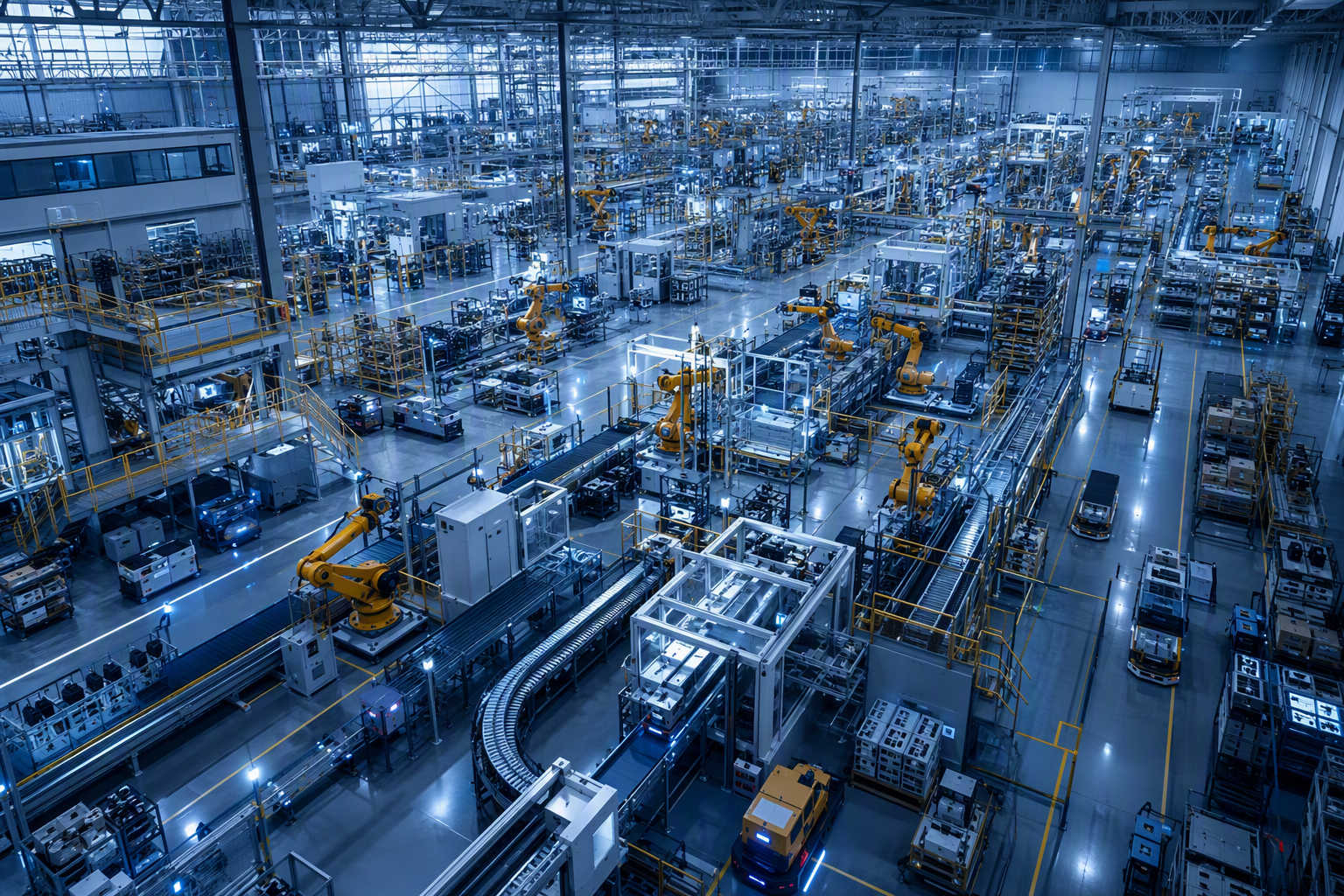
- Industrial automation helps manufacturers improve operational efficiency and keep production processes running with less disruption.
- Modern automation solutions use advanced technologies to raise speed, precision, and product quality across many facilities.
- Industries such as automotive, aerospace, food and beverage, and electronics are investing heavily in automation solutions.
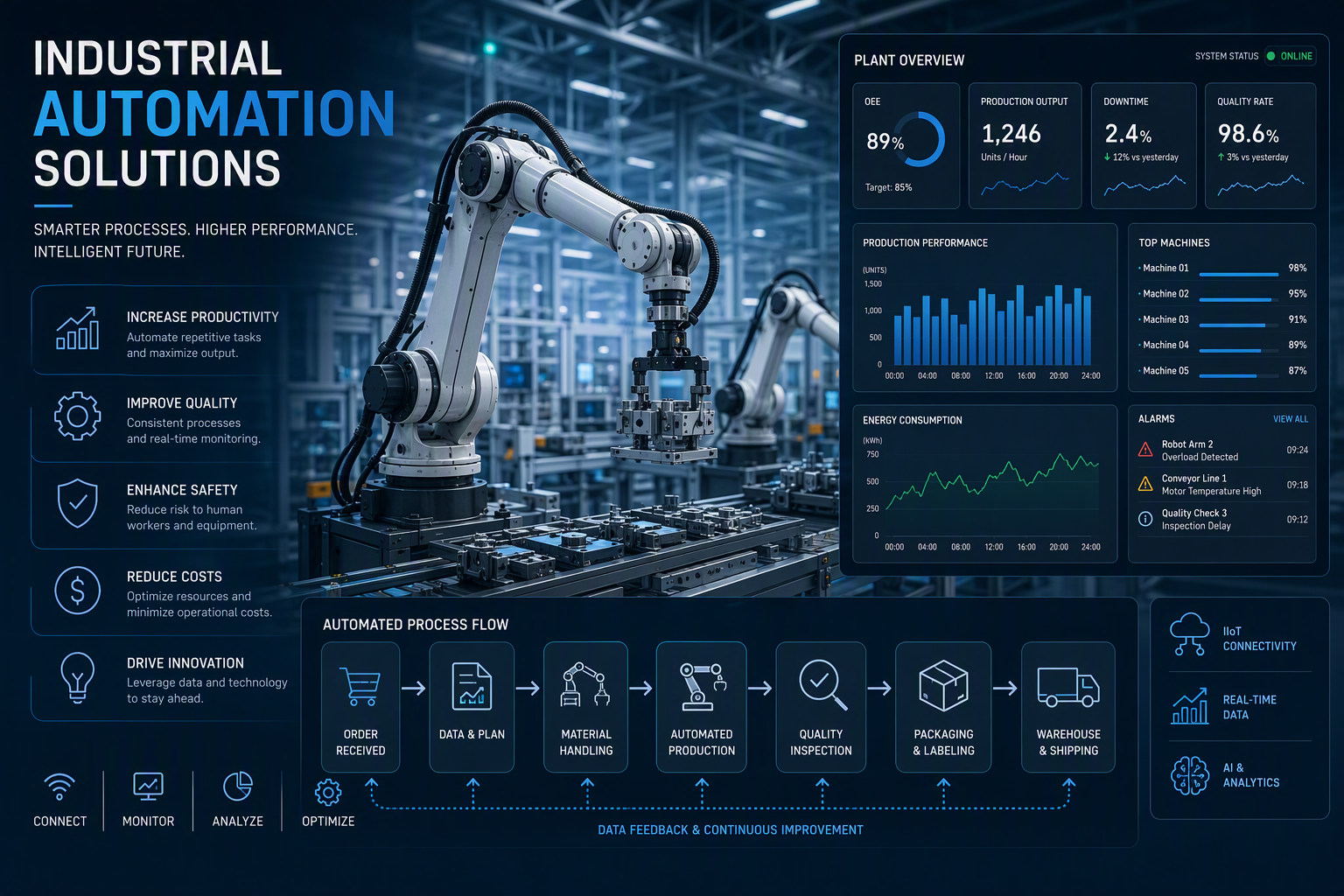
- Core tools include programmable logic controllers, advanced sensors, robotics, and artificial intelligence for better control systems.
- The biggest gains often include lower costs, safer work areas, stronger quality control, and more flexible manufacturing operations.
- Choosing the right provider depends on technical expertise, support services, and fit with your operational needs.
Introduction
Industrial automation is changing how companies run factories, manage repetitive tasks, and improve daily output. If you want better speed, consistency, and fewer manual processes, the right automation solutions can make a real difference. From robotics to smarter control systems, manufacturers now have more practical options than ever. This matters whether you produce auto parts, food products, or electronics. To see what fits your business, it helps to understand the main solution types, benefits, technologies, and provider choices.
Exploring Modern Industrial Automation Solutions
Today’s automation solutions are built to improve the manufacturing process with better control, stronger accuracy, and less human intervention. Many systems now combine hardware, software, and data tools to support faster decisions on the factory floor.
You can see this shift across the global market as companies adopt advanced technologies to stay competitive. Some need full turnkey automation solutions, while others need specific components or process automation support. The next sections explain which solution types are shaping modern plants and which industries are leading adoption.
Types of Automation Solutions Transforming Manufacturing
Across the manufacturing industry, the main types of automation solutions usually fall into a few practical categories. Some businesses need broad platforms from global technology providers. Others rely on specialized integrators to connect different control systems into one working setup.
You will also find distributors and OEM representatives that supply core parts for industrial automation systems, plus consulting firms that guide planning and project execution. Each option supports process automation in a different way, depending on plant size, budget, and complexity.
- Global providers offer broad product lines such as PLCs, sensors, robotics, drives, and software.
- System integrators build custom solutions and connect multi-vendor equipment into one system.
- Local distributors supply components, engineering recommendations, and technical support.
- Consulting firms focus on strategy, feasibility studies, and automation roadmaps.
Key Industries Leading the Adoption of Automation
Several sectors are moving quickly with automation solutions because they need speed, repeatability, and tighter control systems. In Mexico and beyond, manufacturers are using automation to stay competitive as supply chain demands grow and customer expectations rise.
The manufacturing industry has made adoption especially visible in operations where industrial processes must run with high precision and minimal downtime. Companies also want better data from production processes so they can improve planning, quality, and output over time.
- Automotive uses automation for assembly, motion control, and consistent production flow.
- Aerospace depends on accurate systems for demanding manufacturing tasks.
- Food and beverage plants use automation to improve consistency and handling.
- Electronics manufacturers rely on precision and stable process control.
Benefits of Implementing Industrial Automation
The benefits of automation are clear when manufacturers need more output without adding unnecessary delays or waste. Industrial automation helps reduce manual processes, improve consistency, and support stronger operational efficiency across the plant.
At the same time, automation solutions can lower costs over the long term, raise product quality, and create safer work conditions. These gains matter in both large facilities and smaller operations. Next, let’s look at how providers improve productivity first, then how automation strengthens safety and quality standards.
Enhancing Productivity and Operational Efficiency
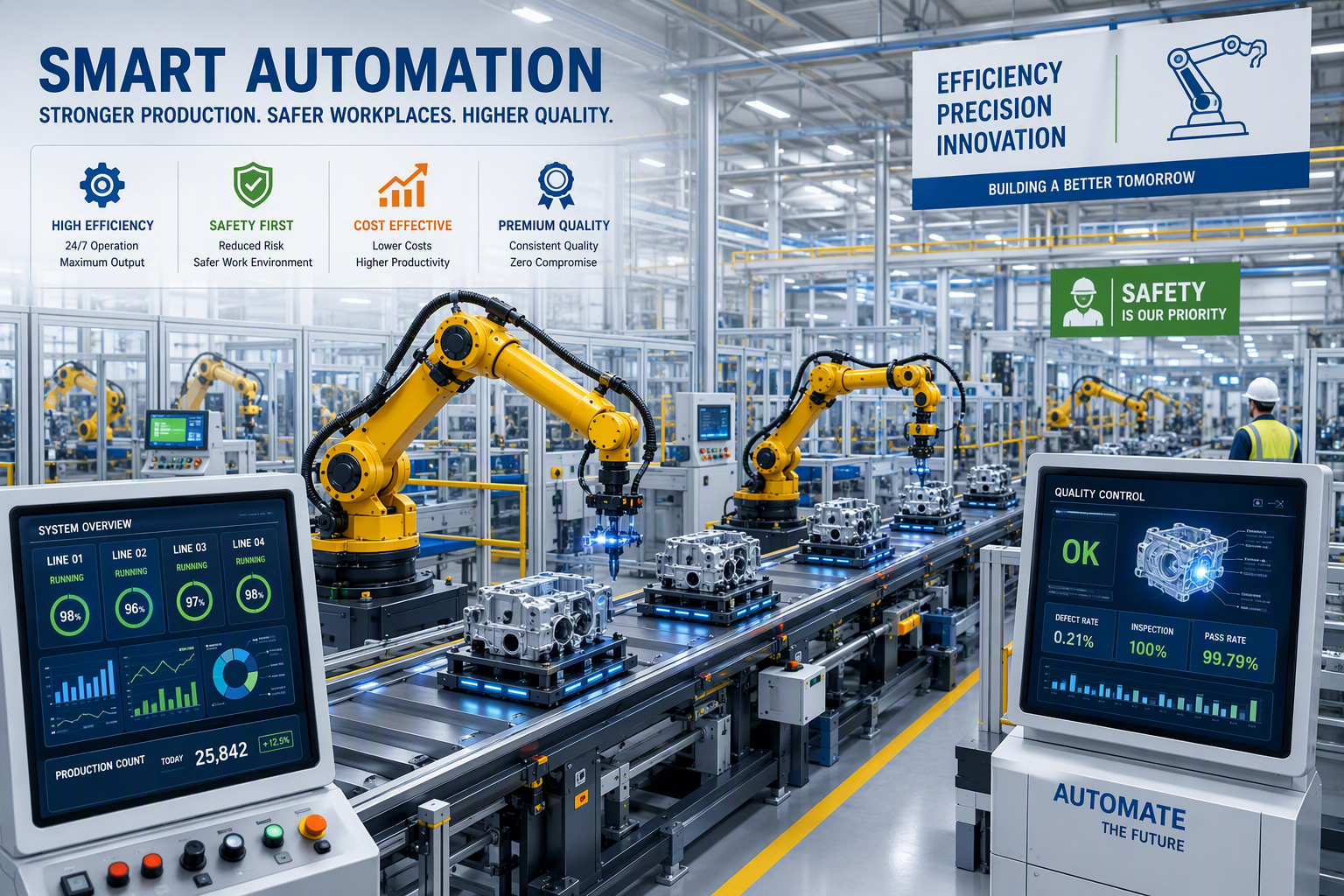
Industrial automation companies help factories improve productivity by designing systems that keep work moving with less interruption. They assess workflows, recommend the right automation solutions, and integrate equipment that can run continuously with minimal human intervention.
That directly improves operational efficiency in production processes. Faster cycle times, fewer errors, and better coordination between machines all support stronger output. While the initial investment can be significant, many manufacturers see cost savings through reduced labor costs, lower waste, and more stable scheduling.
A capable partner often helps by:
- Integrating equipment and software into a smoother production line
- Optimizing workflows to reduce bottlenecks and downtime
- Providing training, technical support, and long-term system improvements
Improving Safety and Quality Standards
Automation technology has a direct impact on workplace safety because it removes people from dangerous tasks and highly repetitive tasks. When machines handle risk-heavy work, companies can reduce exposure to injury and create more stable operating conditions for human workers.
It also supports quality control. Automated equipment performs with better precision, which helps reduce human error and improve product quality. Sensors and feedback systems can detect faults in real time, making it easier to correct issues before they affect a larger batch.
Key safety and quality gains include:
- Safety systems that limit human interaction with hazardous areas
- Better inspection and monitoring for steady product quality
- Less variation in assembly and handling across manufacturing operations
Essential Technologies in Today’s Automation Landscape
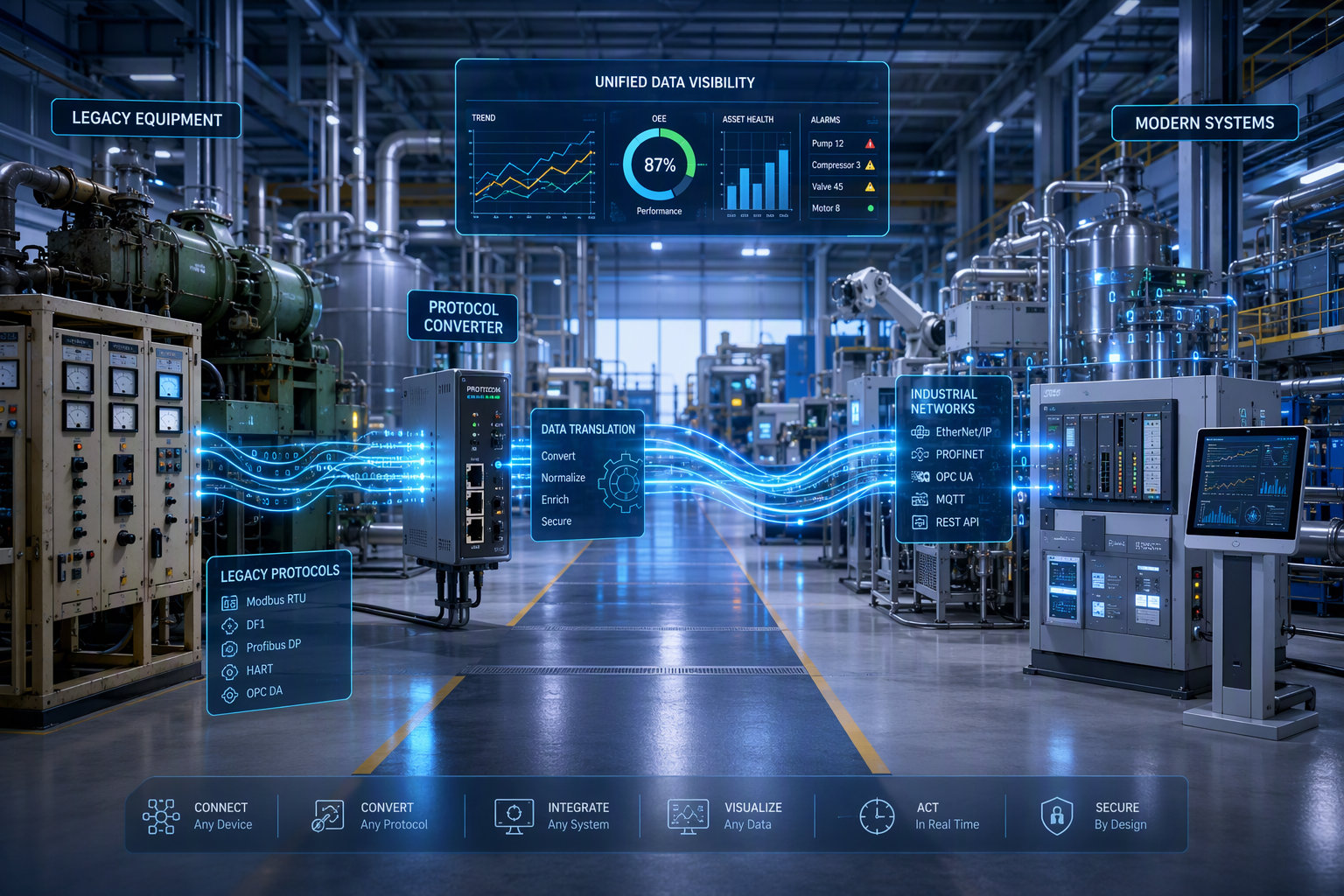
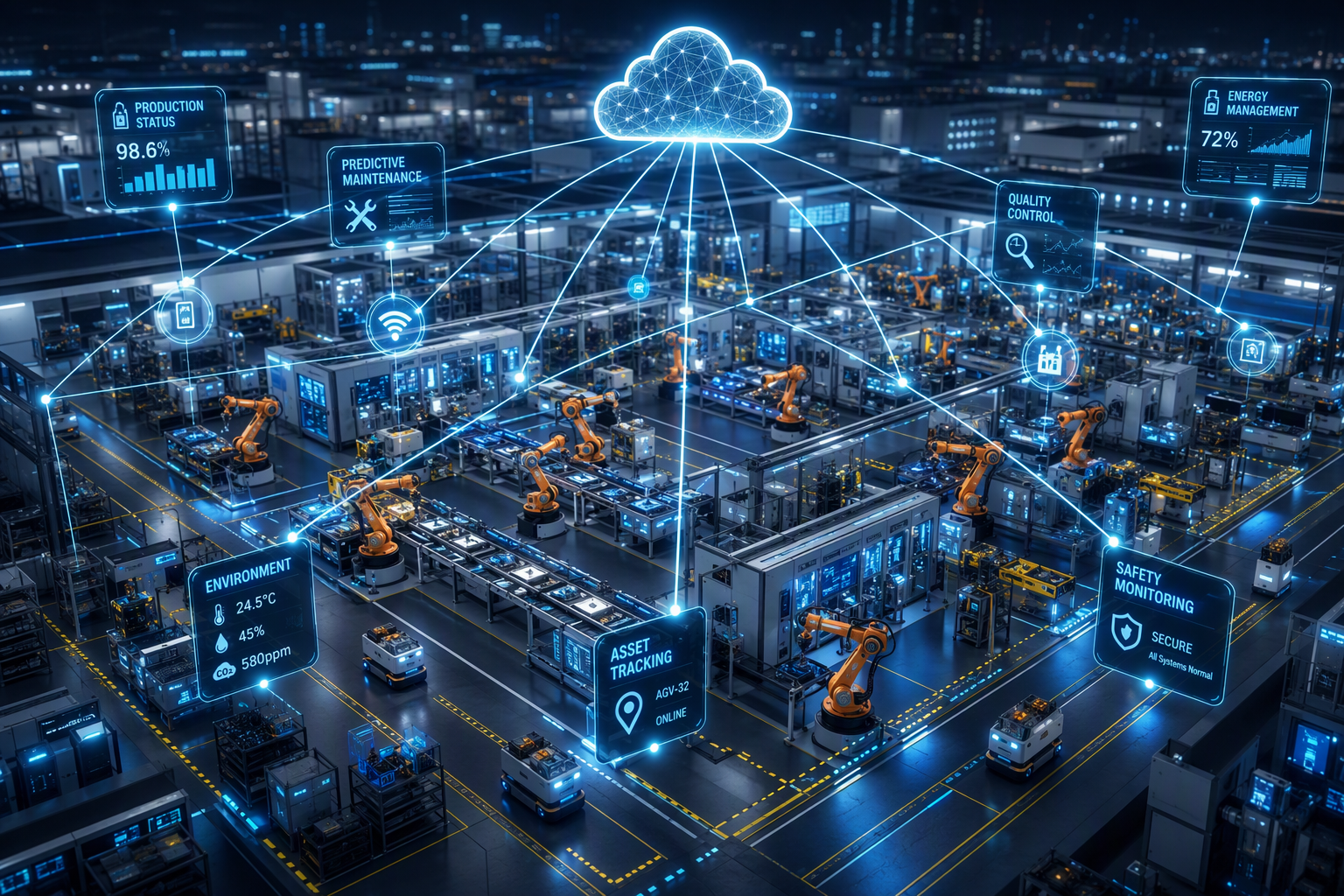
Automation technology now combines several tools that work together instead of operating in isolation. That is why today’s automation solutions often include controls, sensors, software, robotics, and data-driven systems in one coordinated setup.
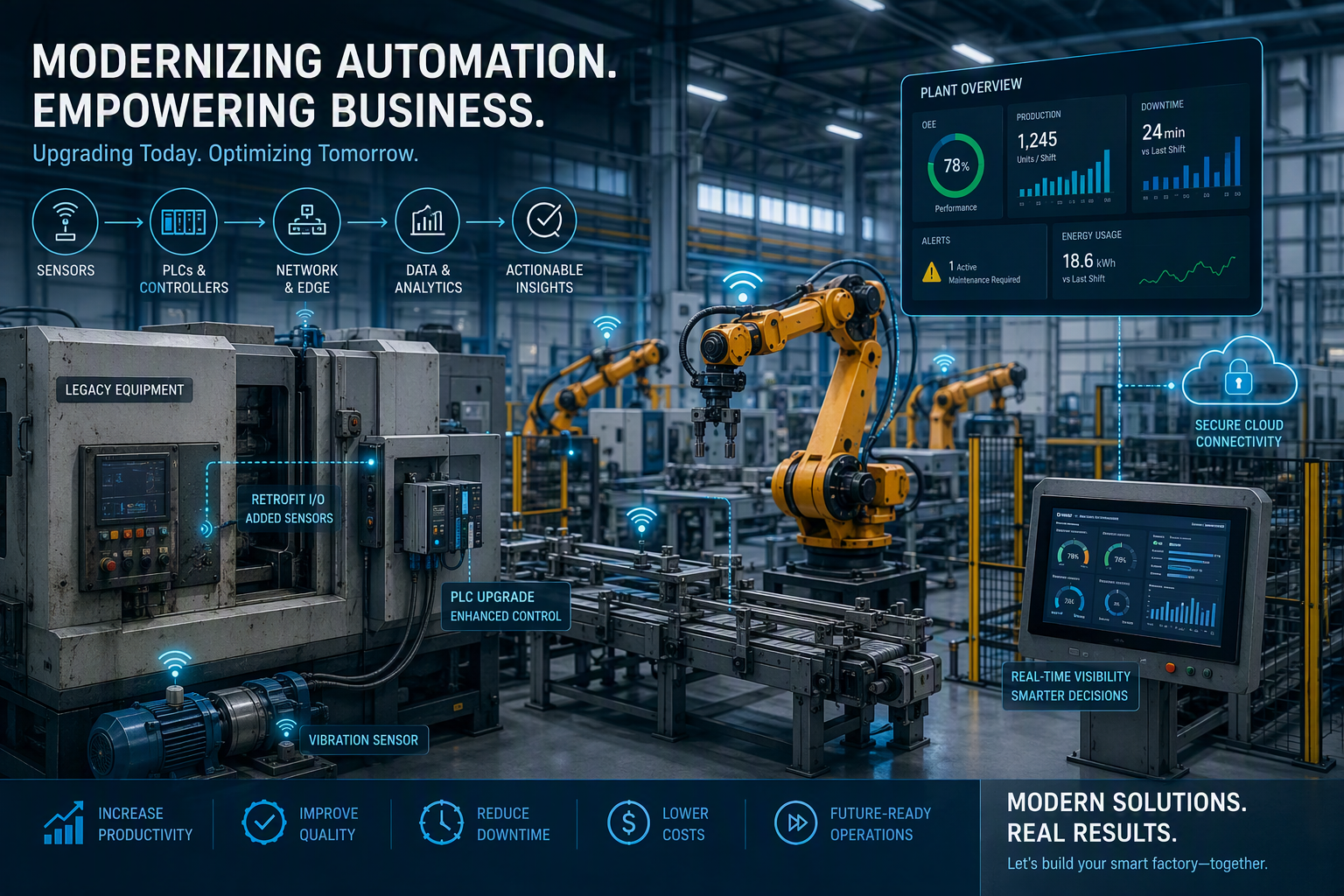
These advanced technologies support faster decisions, better process control, and stronger flexibility on the floor. They also help companies modernize industrial automation components without replacing every part of an existing line at once. The next two sections focus on the technologies driving that change, starting with PLCs and sensors, then moving to robotics and artificial intelligence.
Programmable Logic Controllers and Advanced Sensors
Programmable logic controllers remain central to modern control systems because they manage machine actions, sequences, and responses on the plant floor. In many manufacturing operations, they act as the core decision point between incoming data and outgoing commands.
Advanced sensors add the real-time visibility needed for accurate control. They track conditions such as position, pressure, speed, and temperature, helping systems adjust quickly. Together, these industrial automation components support precise automation processes and more reliable output.
| Technology | Main Role in Manufacturing Operations |
|---|---|
| Programmable logic controllers | Execute logic, coordinate machinery, and manage automated actions |
| Advanced sensors | Collect real time data for monitoring and adjustments |
| Feedback systems | Help machines respond accurately to changing conditions |
| Industrial control systems | Connect devices for stable process control across operations |
The Role of Robotics and Artificial Intelligence
Robotics plays a major role in industrial automation solutions because industrial robots can handle complex tasks with speed, repeatability, and precision. On a busy production line, that helps manufacturers raise output while reducing variation between units.
Artificial intelligence and machine learning add another layer of value. These tools help systems learn from data, support predictive maintenance, improve quality inspection, and optimize decisions in real time. That makes automation more adaptive, not just faster.
You can see the impact in areas such as:
- Robotic systems handling assembly, packaging, and material handling
- Artificial intelligence improving inspection and process optimization
- Machine learning supporting smarter responses to changing production conditions
Choosing the Right Industrial Automation Provider
Choosing an automation provider is a strategic decision, not just a purchasing task. You need a partner that understands your operational needs, offers practical automation services, and can guide the work from design through support.
Strong technical expertise matters, but so does project management. A provider should communicate clearly, manage timelines, and offer reliable follow-up once the system is live. Since provider choice can shape long-term performance, the next sections cover what to evaluate and examples of recognized companies in the industrial automation space.
Factors to Consider for Successful Partnerships
The best partnerships start with a clear match between your operational needs and the provider’s strengths. Before selecting anyone, look at their experience in your industry, their comfort with the technologies you need, and their ability to scale with your business.
Technical expertise should be backed by real execution. You want a team that can design, integrate, install, and support automation solutions without creating unnecessary delays. Good providers also bring structured project management and dependable communication.
Important factors include:
- Industry-specific technical expertise and engineering capability
- Access to reliable solutions and quality components
- Strong support services, training, and maintenance options
- A proven approach to timelines, budget control, and long-term partnership
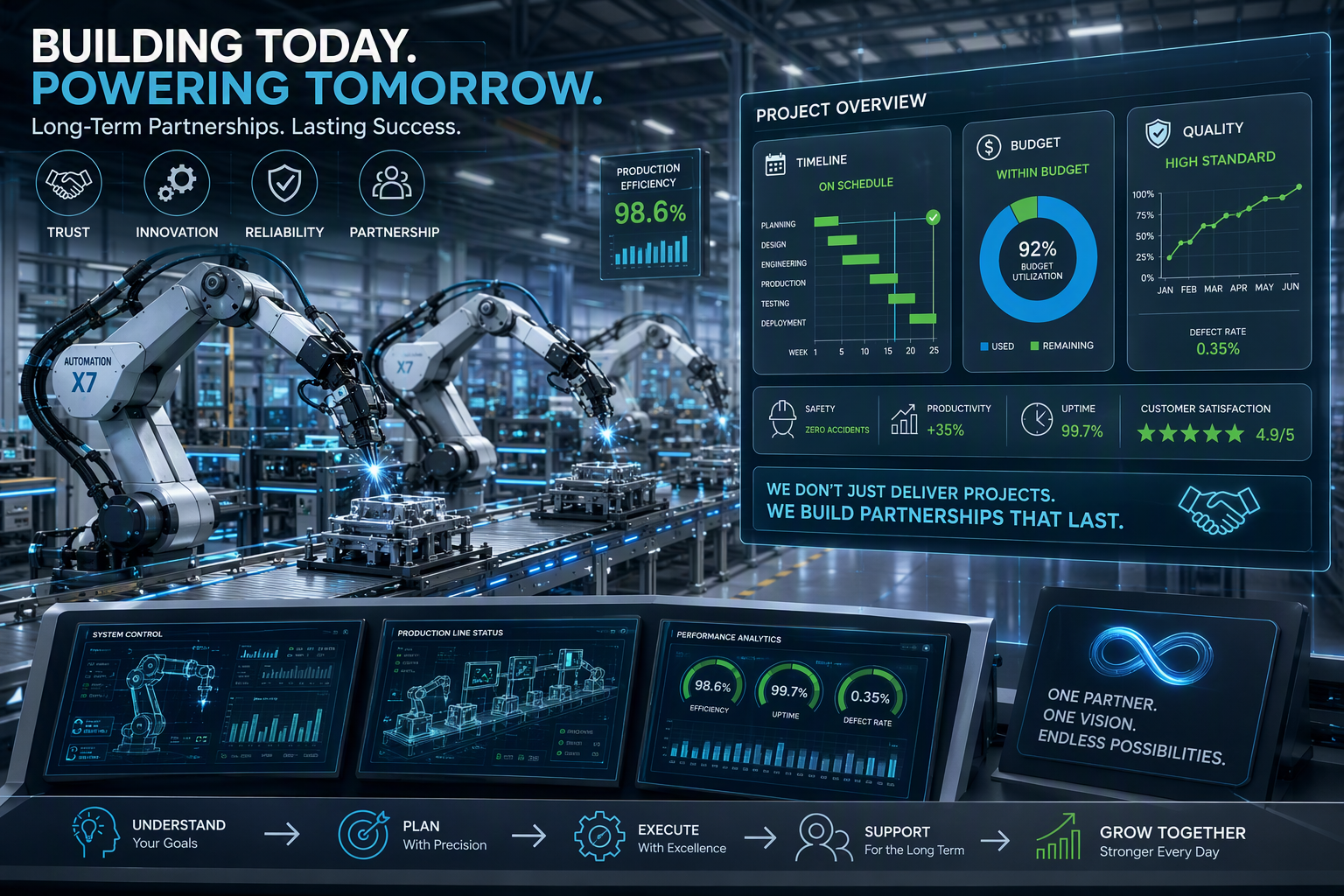
Examples of Leading Global Automation Companies
When people ask about top industrial automation companies, they usually mean large global providers with broad product portfolios, strong research capabilities, and wide support networks. These companies often supply PLCs, robotics, software, sensors, and other core technologies used in industrial automation.
The compiled information highlights that many manufacturers work with globally recognized brands through distributors and integrators. It also specifically references companies such as Schneider Electric and Rockwell Automation as well-known names in the market.
| Company or Type | Typical Strength |
|---|---|
| Schneider Electric | Broad automation solutions and industrial control technologies |
| Rockwell Automation | Strong presence in factory automation and control systems |
| Siemens | Widely used industrial technologies and components |
| Global automation providers | Large portfolios, innovation, and international support networks |
Conclusion
In conclusion, embracing cutting-edge industrial automation solutions is crucial for businesses aiming to enhance productivity, safety, and quality. By understanding the various types of automation technologies and their benefits, companies can make informed decisions that lead to operational efficiencies and sustained growth. As industries evolve, the importance of selecting the right automation provider becomes more apparent, ensuring successful implementation and long-term advantages. Don't wait to transform your operations—discover how these innovative solutions can revolutionize your processes today. If you're ready to take the next step, reach out for a free consultation to explore tailored automation strategies for your business!
Frequently Asked Questions
How does industrial automation support sustainability in production?
Industrial automation supports sustainability by improving production processes and reducing unnecessary waste. Better monitoring and control help manufacturers increase energy efficiency, lower energy consumption, and use resources more carefully. That makes operations cleaner, more consistent, and better aligned with long-term environmental goals.
What are the main challenges when implementing automation solutions?
Common challenges include the initial investment, system integration, and finding the right technical expertise. Companies also need to prepare each human worker for new roles as process automation expands. Training, planning, and provider support are important if you want automation solutions to deliver lasting value.
How are automation solutions evolving to meet future demands?
Automation solutions are evolving through advanced technologies that make systems more connected, adaptive, and data-driven. Machine learning and artificial intelligence are helping manufacturers improve decisions, maintenance, and inspection. As the global market becomes more competitive, companies are adopting smarter tools to stay efficient and responsive.
You might also like