Exploring Industrial Automation Solutions for Your Business
Exploring Industrial Automation Solutions for Your Business
Key Highlights
- Industrial automation helps you reduce human labor, improve consistency, and strengthen control systems across production processes. Common automation solutions include fixed automation, flexible automation, and programmable systems for different output needs. Some leading industrial automation companies worldwide include Siemens, ABB, Rockwell Automation, Schneider Electric, and Mitsubishi Electric. These companies provide a wide range of automation solutions, such as advanced control systems and flexible automation technologies, designed to optimize production processes in various industries.
- Common automation solutions include fixed automation, flexible automation, and programmable systems for different output needs.
- Core parts include sensors, actuators, human machine interface tools, programmable logic controllers, and communication networks.
- These advanced technologies support greater efficiency, lower costs, better quality control, and safer handling of dangerous tasks.
- Industrial robots and process automation can also improve energy efficiency, reduce waste, and support resource optimization.
- When comparing providers, focus on compatibility, flexibility, reliability, support, and fit with your operational needs.
Introduction
Industrial automation is changing how a manufacturing facility runs every day. By using control systems and automation solutions, businesses can automate repetitive tasks, reduce human error, and improve product quality. Growth in this space has been strong because companies want better operational efficiency, safer workplaces, and lower costs. If you are asking about the key benefits of implementing industrial automation solutions in manufacturing, the short answer is simple: more consistent output, stronger safety, and smarter use of time and resources.
Types of Industrial Automation Solutions
Today’s automation solutions usually fall into three main groups: fixed automation, flexible automation, and programmable automation. Each type of automation supports different production goals, from steady, high-volume output to changing batch work.
Your choice depends on how often products change, how much control you need, and how your manufacturing operations are set up. Many systems also rely on programmable logic controllers to keep industrial processes accurate and repeatable. The sections below explain where each option fits best.
Fixed Automation Systems
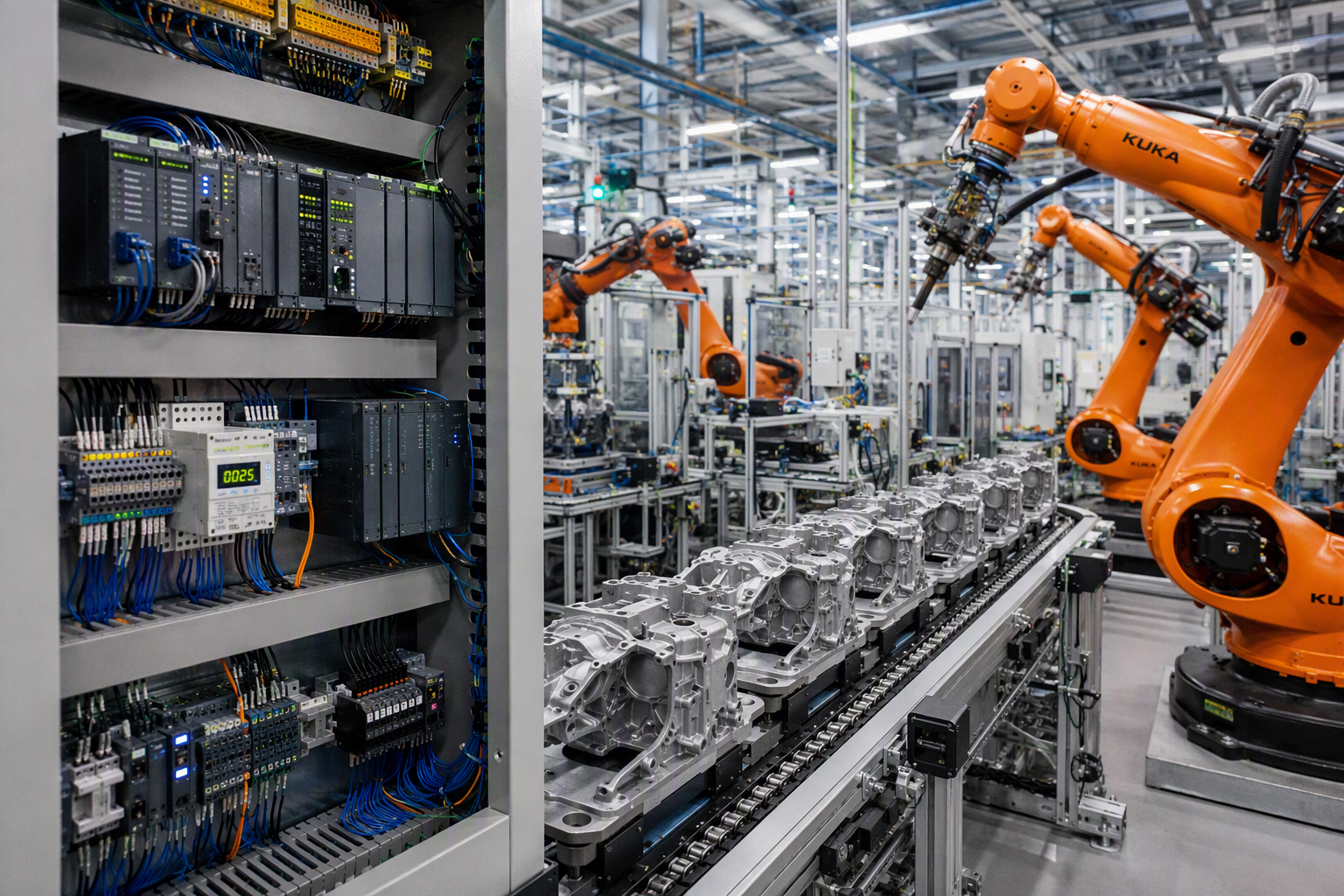
Fixed automation, sometimes called hardwired automation, is designed for high-volume production lines that make the same item for a long time. It works best when your process stays stable and your output needs are predictable.
In this setup, equipment follows programmed commands to complete repetitive tasks with very little human intervention. That makes it useful for mechanical work that needs speed, precision, and consistency. It can also cut labor costs and shorten cycle times across a manufacturing process.
There is a tradeoff, though. Fixed automation is not ideal when product design changes often, because updates can be difficult to make. If your business runs long-life-cycle products and wants reliable performance at scale, this can be a strong fit.
Flexible Automation Systems
Flexible automation is a widely used type of automation because it can adjust more easily to changing production needs. It is often called soft automation and supports a more adaptable production process.
Most flexible automation setups use PLCs connected through communication networks. A primary controller sends instructions to other units so equipment can carry out specific tasks as needed. This makes it useful for material handling, robotic movement, and other jobs that may need frequent changes during operation.
You will often see this automation technology in batch process manufacturing, job shop manufacturing, and discrete manufacturing. Common examples include automatic guided vehicles, automobiles, and CNC machinery. If your business needs variety without giving up control, flexible automation offers a practical balance.
Programmable Automation Systems
Programmable automation systems are a good match for batch production with medium to high output. They are built to handle different runs, but each change requires reprogramming and setup before the next batch starts.
This approach relies on programmable logic controllers and related automation systems to manage process control, sequencing, and specific tasks. Once the instructions are loaded, the equipment can perform repeatable work with dependable accuracy across that batch.
The main limitation is setup time. Reconfiguring equipment and control programs from one batch to another can take a while, so it is not the fastest option for constant change. Even so, CNC machinery, PLC-based systems, and industrial robots make programmable automation a valuable part of many modern operations.
Key Components in Industrial Automation
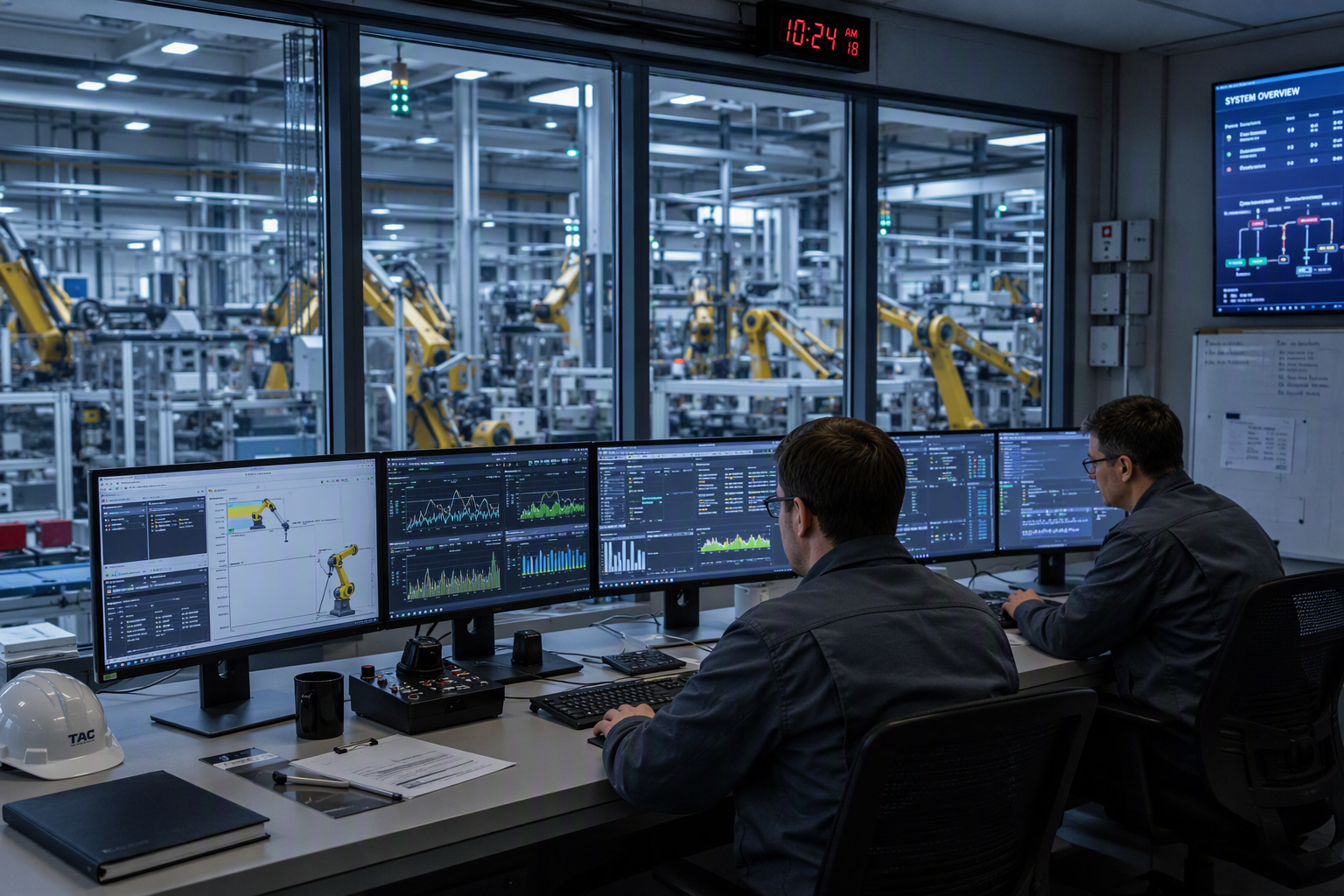
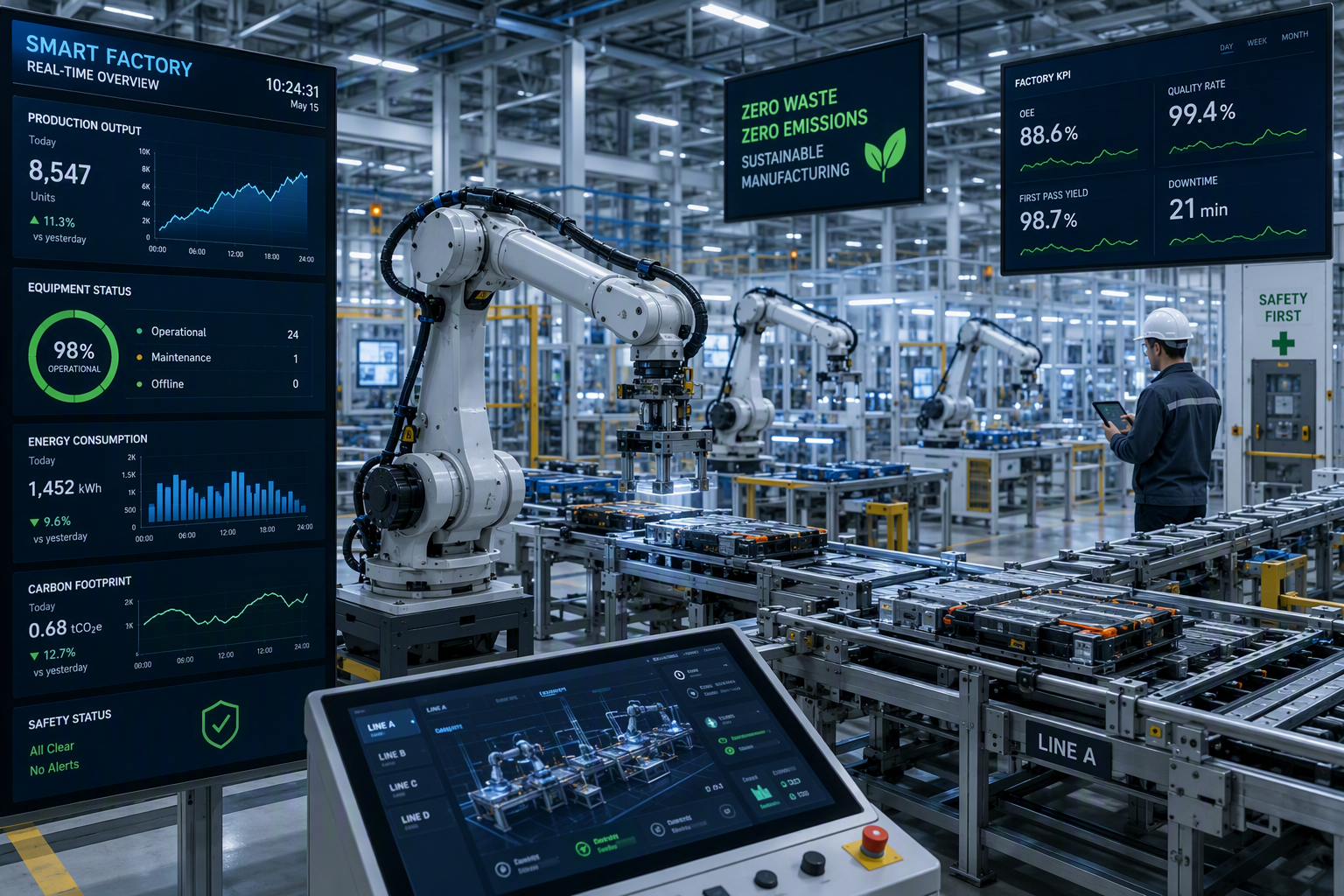
Every industrial automation system depends on a few core parts working together. Sensors collect data, actuators carry out physical actions, and programmable logic controllers process information and send commands.
Just as important, a human machine interface gives operators a clear view of what is happening in real time. Communication networks and larger monitoring tools support seamless data exchange and faster decisions. When industrial automation companies combine these elements well, factories gain stronger productivity, better control, and less downtime. Let’s look at the most important pieces.
Sensors and Actuators
Advanced sensors are the input layer of many automated systems. They monitor conditions such as temperature, pressure, flow, and machine status, giving your operation real-time information about what is happening on the floor.
Actuators are the output side. After the control system receives data, actuators respond by turning motors on or off, opening valves, or moving mechanical parts. That link between sensing and action is what keeps industrial processes running smoothly and with less delay.
Some automation products also include machine vision systems for inspection and alignment tasks. These tools support quality control by helping equipment recognize defects or position items accurately. As automation grows, advanced sensors, actuators, and machine vision are helping drive faster decisions and more reliable performance.
Human-Machine Interfaces (HMIs)
A human machine interface gives operators a visual way to interact with automation systems. Through screens and displays, you can see equipment status, process conditions, and alerts without checking each piece of industrial machinery by hand.
That visibility supports faster responses and better decisions. Operators can monitor trends, make adjustments, and catch issues before they grow into downtime. In busy environments, this kind of seamless data exchange improves control and reduces confusion.
HMIs also support operational safety. When workers can quickly understand what a system is doing, they are less likely to make mistakes around active equipment. Clear process views, alerts, and controls help teams work with machines more safely while keeping production moving.
Programmable Logic Controllers (PLCs)
Programmable logic controllers are often described as the brain of industrial control systems. They receive input from sensors, follow programmed instructions, and send signals to actuators so equipment responds the right way at the right time.
Because PLCs are built for speed and repeatability, they play a crucial role in automation technology. They help manage a manufacturing process with consistent timing, accurate sequencing, and reliable control, even when operations are complex or moving quickly.
PLCs also support sustainability in production. Better control means less waste, fewer process errors, and improved use of energy and materials. When your system runs with fewer interruptions and tighter precision, you reduce unnecessary energy consumption while maintaining steady output.
Benefits of Industrial Automation for Businesses
The benefits of automation are practical and easy to measure. Businesses often see stronger productivity, improved operational efficiency, better product consistency, and meaningful cost savings over time.
You also gain better control over industrial processes, especially where speed, accuracy, and safety matter most. Automation solutions reduce manual effort, limit human error, and help teams focus on higher-value work. The next sections break down how these gains show up in productivity, workplace safety, and sustainability.
Enhanced Productivity and Efficiency
One of the clearest gains from automation is greater efficiency. Automated systems can run longer, move faster, and handle repetitive tasks with steady performance, which helps factories raise output without depending on constant manual input.
Industrial automation companies improve production processes by designing systems that reduce delays and tighten control. Key productivity gains often include:
- Faster cycle times across routine operations
- Less human error in repeated actions
- More consistent quality from batch to batch
- Better use of labor on higher-value work
That combination helps you increase throughput while keeping processes stable. Instead of spending time correcting avoidable mistakes, your team can focus on supervision, planning, and improvement. Over time, that leads to stronger productivity and better return on investment.
Improved Operational Safety and Workplace Conditions
Automation has a direct impact on workplace safety because it removes the human worker from some of the riskiest parts of production. That matters in environments with heavy lifting, hazardous chemicals, or unpleasant operating conditions.
Instead of asking people to stay close to every dangerous motion, automated systems can take over jobs such as:
- Repetitive lifting and material movement
- Work near hazardous chemicals
- Tasks in harsh or unpleasant atmospheres
- Handling around active machinery
This shift improves operational safety while also making day-to-day work more manageable. Workers can monitor equipment, respond through HMIs, and focus on oversight rather than exposure. When dangerous tasks move to machines, workplace safety and working conditions both improve in a real, measurable way.
Sustainability and Resource Optimization
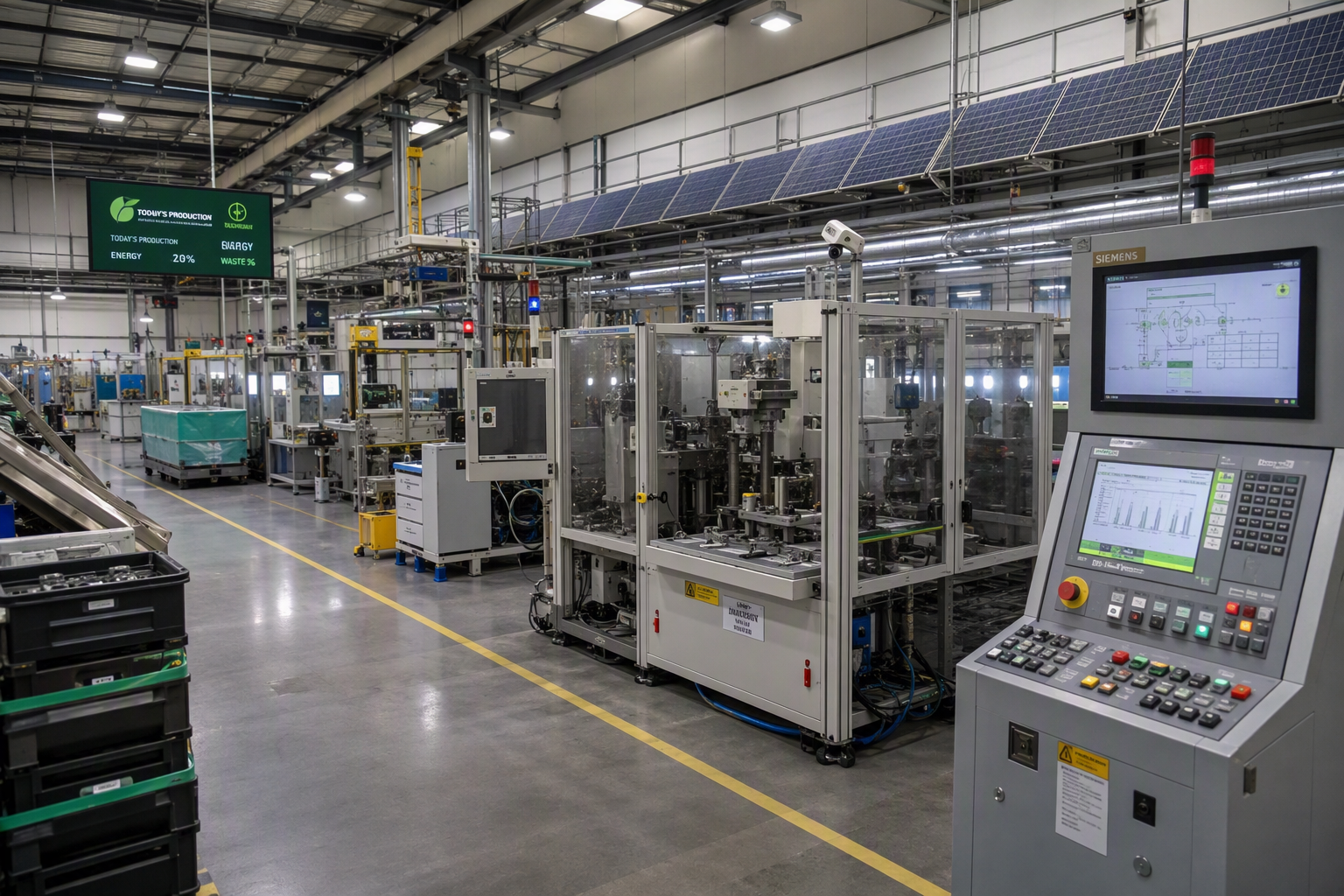
Industrial automation supports sustainability by improving energy efficiency, reducing waste, and making process automation more precise. When machines follow tighter controls, businesses use fewer materials and create more consistent quality with less rework.
That leads to stronger resource optimization and better control of energy consumption across daily operations. Here is a simple comparison:
| Area | Manual or less controlled process | Automated process |
|---|---|---|
| Energy use | Higher variation in energy consumption | More stable energy efficiency |
| Material use | More waste from inconsistency | Better resource optimization |
| Output quality | Greater chance of rework | More consistent quality |
Conclusion
In conclusion, embracing industrial automation solutions can transform your business operations, driving efficiency and productivity while enhancing safety and sustainability. By understanding the various types of automation systems and their key components, you can make informed decisions that align with your company's goals. Whether you're looking to implement fixed, flexible, or programmable automation, the benefits are clear: improved workplace conditions and optimized resource usage. As you explore these innovative solutions, remember that investing in automation is not just about technology—it's about creating a more efficient future for your business. If you're ready to take the next step, consider reaching out to an expert today for guidance tailored to your specific needs.
Frequently Asked Questions
What should companies consider when choosing an industrial automation provider?
Companies should look at operational needs first, then review system compatibility, flexibility, reliability, and long-term support. The best industrial automation providers align solutions with business management goals, existing equipment, and future growth. Strong service and maintenance matter just as much as the technology itself.
How does robotics drive the future of industrial automation solutions?
Robotics helps automated systems handle repetitive, precise, and high-speed work with less direct labor. Industrial robots, combined with advanced technologies such as machine vision, artificial intelligence, and machine learning, support better quality, faster output, and safer operations. That is why robotics remains central to future automation growth.
Which industries commonly use industrial automation solutions in the United States?
Industrial automation companies serve many sectors in the United States, especially the manufacturing industry. Common users include consumer goods, food and beverage, pharmaceuticals, energy and utilities, logistics, mining, chemical processing, agriculture, and defense industries. These businesses use automation to improve manufacturing operations, safety, and consistency.
You might also like