Trends Shaping the Industrial Automation Industry in 2024
Trends Shaping the Industrial Automation Industry in 2024
Key Highlights
- Industrial automation is expanding as companies use automation technology to improve speed, accuracy, and control.
- Artificial intelligence and machine learning are helping teams predict issues and improve daily decisions.
- The automation market is growing as factories modernize production and strengthen the supply chain.
- Industrial IoT, cloud tools, and edge systems are improving real time visibility.
- Robotics, digital twins, and smarter control systems are shaping flexible operations.
- Growth also depends on solving cybersecurity, skills, and legacy integration challenges.
Introduction
Industrial automation is the use of automation technology, control systems, and connected tools to manage industrial processes with less manual effort. It helps businesses improve speed, consistency, and visibility across the production process. In simple terms, machines, software, sensors, and control logic work together to handle tasks that once needed constant human attention. In 2024, this industry matters more than ever because companies want better output, stronger quality control, and more reliable operations.
Overview of the Industrial Automation Industry in 2024
The industrial automation industry in 2024 sits at the center of modern production. Companies across many sectors are investing in systems that connect machines, software, and operational technology to improve control and reduce delays. This shift is changing how work gets done on the shop floor.
At the same time, the automation market is evolving through smarter devices, better data use, and tighter links between information technology and industrial automation. To understand where the market is going, it helps to start with the basics, how these systems work, and where factory automation fits in.
Definition and Scope of Industrial Automation
Industrial automation refers to the use of control systems, software, machines, and field devices to run industrial processes with reduced human intervention. You see it in manufacturing lines, process automation settings, and facilities where repeatable output matters. The goal is simple: make operations more reliable, consistent, and efficient.
Its scope is broad. Industrial automation includes sensors, actuators, control software, supervisory control, data acquisition, and programmable automation controllers. These tools help monitor equipment, manage work orders, and support production requirements in real time. Some systems focus on one machine, while others connect an entire plant.
What makes the industry important is its flexibility across use cases. It supports repetitive tasks, quality checks, motion control, and process optimization. Instead of replacing every person, it often shifts the role of the human operator toward oversight, decision-making, and exception handling.
How Industrial Automation Works: Key Concepts
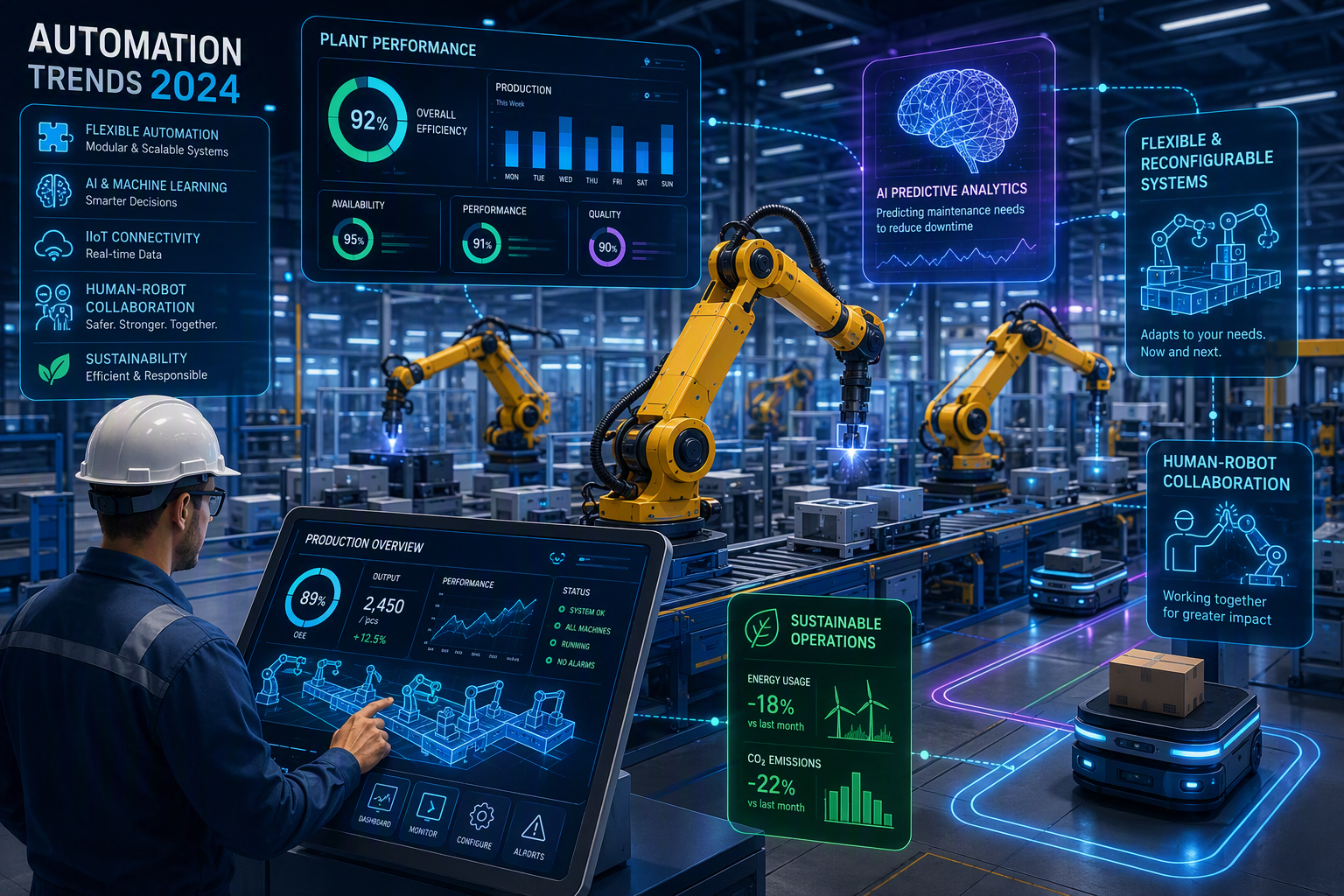
At its core, industrial automation works through automation systems that collect information, process it, and trigger actions. Sensors gather data from machines and industrial processes, while controllers apply control logic to decide what should happen next. That could mean adjusting speed, stopping a line, or changing temperature.
Next, actuators and other devices carry out the command. This is where automation technology turns information into action. Because many systems operate in real time, they can respond quickly to changing conditions on the shop floor. That improves consistency and reduces unplanned downtime.
You can think of it as a loop. Devices observe, software interprets, and equipment responds. In more advanced environments, these systems also connect to cloud computing, edge computing, and ERP systems, giving teams a clearer picture of production, maintenance costs, and output performance.
Factory Automation vs Industrial Automation
Factory automation is one part of industrial automation. It usually focuses on machines, assembly line equipment, and workflows inside a production facility. If a company automates packaging, welding, material handling, or inspection in one plant, that is factory automation.
Industrial automation is wider in scope. It includes factory automation, but it also covers process automation, utilities, field devices, supervisory control, and systems used beyond a single production process. In other words, factory automation is a subset, while industrial automation describes the full operating environment.
The difference matters when you plan investments. A human operator in a factory may supervise robotic cells or servo drives, while broader industrial automation can connect that work to control systems, supply chain planning, and plant-wide visibility. This bigger view helps organizations align performance across the entire operation.
Market Size and Growth Prospects
The automation market is gaining momentum as companies invest in systems that improve productivity, quality, and resilience. Market size is expanding because more businesses want connected control systems, better process optimization, and stronger supply chain performance. Interest is especially high where labor shortages and downtime create costly pressure.
Looking ahead, growth rates should remain healthy as market players add advanced technologies such as industrial IoT, machine learning, and digital twin tools. To see where this growth is coming from, it helps to look at U.S. activity, global direction, and expected movement beyond 2024.
Current U.S. Market Trends
In the United States, the automation market is being shaped by efforts to modernize the manufacturing process. Companies want stronger control systems, more stable output, and faster responses to changes in demand. These needs are pushing investment toward connected equipment, sensors, robotics, and smarter software.
Another clear trend is the blending of operational technology with information technology. U.S. manufacturers are looking for systems that support real time visibility, predictive maintenance, and easier management of work orders. This gives plant teams better control over quality checks, maintenance costs, and daily production targets.
| U.S. market trend | What it means for industrial automation |
|---|---|
| Production upgrades | More investment in automation systems and control systems |
| Labor pressure | Higher interest in tools that reduce repetitive tasks |
| Data visibility | Greater use of cloud computing and edge computing |
| Quality focus | Expanded use of sensors, control software, and inspection tools |
Global Market Outlook
Globally, the automation market is moving forward as companies build more responsive and connected operations. Supply chain uncertainty has pushed organizations to improve production planning, shorten delays, and create better visibility across plants. That has made industrial automation a priority in many regions and industry sectors.
Robotics is an important part of this global picture. The international federation of robotics is often linked with rising attention to industrial robots and collaborative robots in production environments. As robot use expands, businesses are also investing in sensors, motion control, and flexible automation to support changing production requirements.
The global outlook is also supported by broad interest in smart manufacturing and digital transformation. Large market players such as Siemens AG, Schneider Electric, Rockwell Automation, and others operate in a landscape where integrated automation, software connectivity, and scalable automation solutions continue to attract strong demand.
Expected Growth Rates for 2024 and Beyond
Growth rates for the automation market are expected to stay positive in 2024 and beyond because the business case is becoming clearer. Companies want better output, lower waste, fewer delays, and stronger process control. Industrial automation helps address all of these concerns in ways that are measurable.
Another reason for expected growth is the range of available solutions. Market players now offer hardware, software, cloud tools, edge systems, and integrated platforms that fit different budgets and plant sizes. This makes adoption easier for companies that want a gradual rollout instead of one large project.
Future growth also depends on long-term pressures. Labor shortages, rising quality expectations, and the need for more resilient operations are not going away. As organizations respond, they are likely to keep increasing spending on automation technology that supports predictive maintenance, real time visibility, and smarter production planning.
Major Types of Industrial Automation Systems
When people talk about the main types of industrial automation, they usually mean systems built for different production needs. Some automation systems are best for high-volume output, while others are better for changing product mixes or batch runs. The right fit depends on your process, volume, and flexibility needs.
In practice, these categories differ in control logic, equipment design, and how much change the system can handle. The most common types of industrial automation include fixed automation, programmable automation, flexible automation, and integrated automation approaches. Each one supports a different operating model.
Fixed Automation
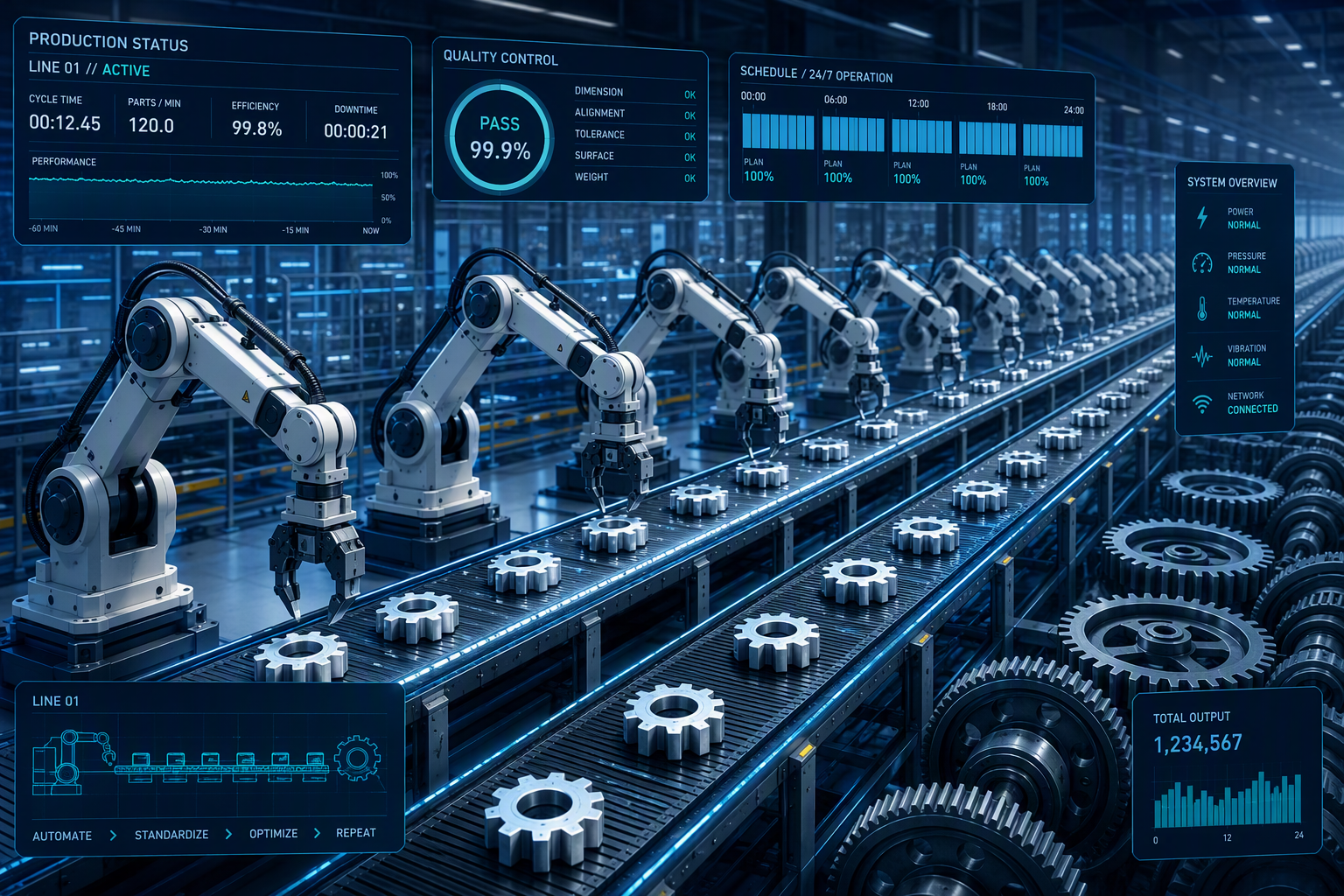
Fixed automation is designed for high-volume, repetitive tasks that follow a stable sequence. You often hear it called hard automation because the equipment and control setup are built around a specific job. This makes it a strong fit for a production line with little variation.
Its biggest advantage is speed and consistency. Once installed, fixed automation can process large numbers of parts with very little delay. That is useful when production requirements stay the same for long periods and the focus is on throughput, quality, and low unit cost.
The tradeoff is flexibility. Because the system is built for a defined task, changing products or workflows can be difficult and expensive. Even so, fixed automation remains important in environments where repetitive tasks dominate and output predictability matters more than rapid changeovers.
Programmable Automation
Programmable automation is built for environments where products change in planned cycles. It works well in batch production because the system can be reprogrammed to support different jobs without replacing the full setup. That makes it more adaptable than fixed automation.
This approach is useful when production requirements shift between runs. A manufacturer may use the same equipment but load different instructions, settings, or automation logic for each batch. These automation solutions support variation while still reducing manual steps and improving control.
You will often find programmable automation in facilities that need a balance between efficiency and changeability. It may not match hard automation for raw speed, but it gives businesses room to respond to market demand. For many plants, that mix of structure and adaptability is highly valuable.
Flexible Automation
Flexible automation supports frequent product changes with minimal human intervention. Unlike systems that require lengthy reprogramming between runs, this model is built to shift more smoothly from one item to another. That makes it useful for companies facing short cycles, varied orders, or changing customer demand.
A key strength of flexible automation is responsive automation logic. The system can adjust settings, sequences, or equipment behavior across the production process without major stoppages. This helps reduce downtime and supports more dynamic use cases on the shop floor.
Common advantages include:
- Faster product changeovers
- Better handling of mixed production requirements
- Lower dependence on manual switching between tasks
- Improved flow with minimal human intervention
For operations that need both speed and variety, flexible automation offers a practical middle ground.
Integrated Automation Approaches
Integrated automation connects different machines, software tools, and control layers into one coordinated system. Instead of treating each device or work cell as separate, this approach links data, workflows, and decision-making across the operation. It is a broader strategy rather than one standalone machine type.
This matters because many plants now use process automation, robotics, sensors, and enterprise software at the same time. Integrated automation helps these pieces work together. It can connect shop floor data with ERP systems, maintenance planning, and quality processes, giving teams a more complete operating picture.
The main benefit is coordination. When systems share information well, companies can reduce delays, improve process optimization, and lower unnecessary human intervention. In 2024, integrated automation is becoming more important because businesses want connected operations, not just isolated machines performing separate tasks.
Industries Leading Adoption of Industrial Automation
Not every industry sector adopts automation at the same pace. The strongest demand usually comes from sectors where quality, speed, safety, and cost control are constant concerns. In those environments, industrial automation offers clear value through better monitoring, lower waste, and more stable output.
Today, leading users of automation solutions include manufacturing, automotive, food processing, healthcare and pharma, and energy and utilities. Each one applies automation differently, based on its production process, compliance needs, and operating pressures. Looking at these sectors shows where adoption is moving fastest.
Manufacturing Sector
The manufacturing sector remains one of the biggest adopters of industrial automation. That makes sense because the manufacturing process often depends on timing, consistency, and tight coordination between machines and people. Automation helps reduce variation and supports smoother workflows across the plant.
Many manufacturers invest in automation to improve operational efficiency. Sensors, control systems, and control software can track output, monitor machine status, and catch issues before they create major disruption. This supports better scheduling, stronger quality control, and fewer production slowdowns.
Another reason adoption stays high is competitive pressure. Manufacturers need to control costs, improve throughput, and respond faster to changing orders. Industrial automation supports these goals by reducing repetitive tasks, increasing real time visibility, and helping teams manage daily operations with greater confidence and precision.
Automotive Industry
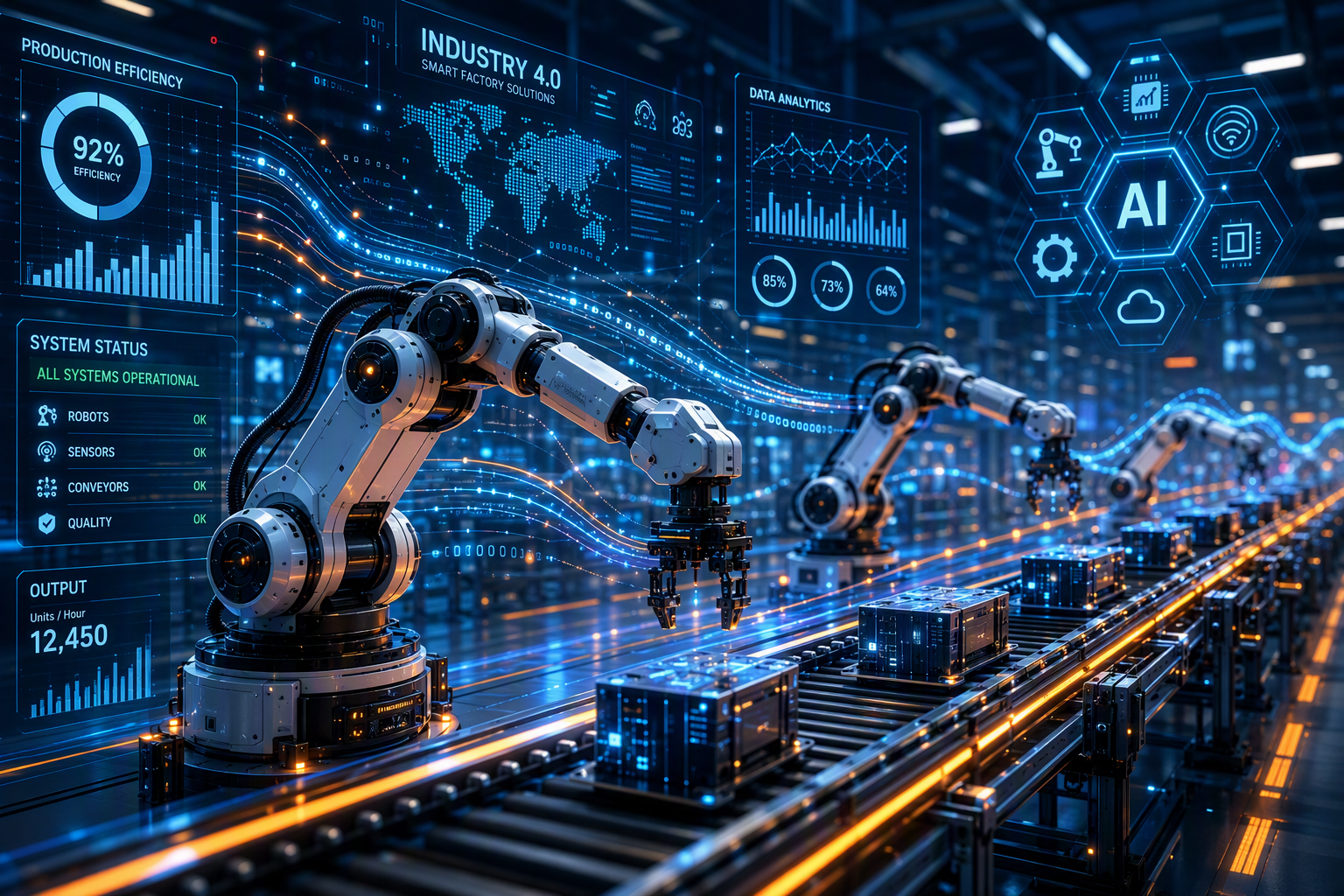
The automotive industry has long been a leader in automation because it relies on repeatable, high-volume production. On an assembly line, even small delays can affect output and cost. Automation systems help maintain speed, alignment, and consistency from one stage to the next.
Robotics plays a major role here. Industrial robots support welding, handling, and other repetitive tasks that require precision. At the same time, collaborative robots are making it easier for a human operator to work alongside automated equipment in controlled settings. This creates a more balanced production model.
Automotive companies also benefit from better data visibility. With connected systems, teams can monitor quality checks, track equipment status, and reduce unplanned downtime. In a sector where efficiency and reliability matter every day, automation helps keep the assembly line moving with fewer disruptions.
Food & Beverage Processing
Food processing is another strong area for automation because product consistency and quality control are essential. Producers need steady output, reliable timing, and close monitoring of variables such as temperature and handling. Automation technology helps manage these requirements with greater precision.
In many facilities, sensors and control systems support real time oversight during mixing, filling, packaging, and inspection. That helps teams maintain standard output while reducing the risk of errors. Quality checks also become easier when systems can detect deviations quickly and trigger a response.
There is also a strong efficiency benefit. Food and beverage companies often work with tight schedules and high throughput demands. Automation technology supports smoother operations, lowers unnecessary waste, and helps plants run more predictably. For this sector, better control directly supports both quality and business performance.
Healthcare and Pharma
Healthcare and pharma are increasing their use of automation technology because these environments depend on precision, traceability, and process optimization. When products and procedures must follow strict standards, automated systems help reduce variation and improve consistency across critical steps.
In pharma settings, automation supports controlled production, better monitoring, and tighter quality management. In healthcare-related operations, it can improve workflow coordination and reduce dependence on manual handling for repeatable tasks. This does not remove people from the process, but it helps teams work with better structure.
Key benefits in healthcare and pharma include:
- More consistent process optimization across repeatable workflows
- Stronger quality control with automated monitoring
- Better support for traceable, rules-based operations
Because the margin for error is low, these sectors continue to see automation as a practical way to improve reliability and performance.
Energy and Utilities
The energy and utilities sector depends heavily on process automation because operations often span large sites, connected assets, and continuous workflows. Teams need reliable visibility into system status, equipment conditions, and operating performance. Automation helps provide that oversight at scale.
Field devices are especially important here. Sensors, actuators, and controllers gather data and support fast responses to changes in pressure, flow, temperature, or system load. This allows operators to monitor distributed infrastructure more effectively and maintain better control over daily performance.
Utilities also value automation because it improves consistency and reduces manual effort in complex environments. When systems can report issues in real time and support more accurate control, operators gain a clearer view of what is happening. In energy operations, that visibility is essential for stable, efficient performance.
Key Technologies Shaping Industrial Automation
Industrial automation is advancing because several technologies are maturing at the same time. Businesses now have access to advanced technologies that improve visibility, decision-making, and equipment performance. Artificial intelligence, machine learning, and industrial IoT are leading this change by helping systems become more connected and responsive.
Still, no single tool defines the market. Progress comes from a mix of software, devices, connectivity, and analytics working together. The technologies below are shaping 2024 by supporting predictive maintenance, better control, and smarter operations across many industrial settings.
Artificial Intelligence and Machine Learning
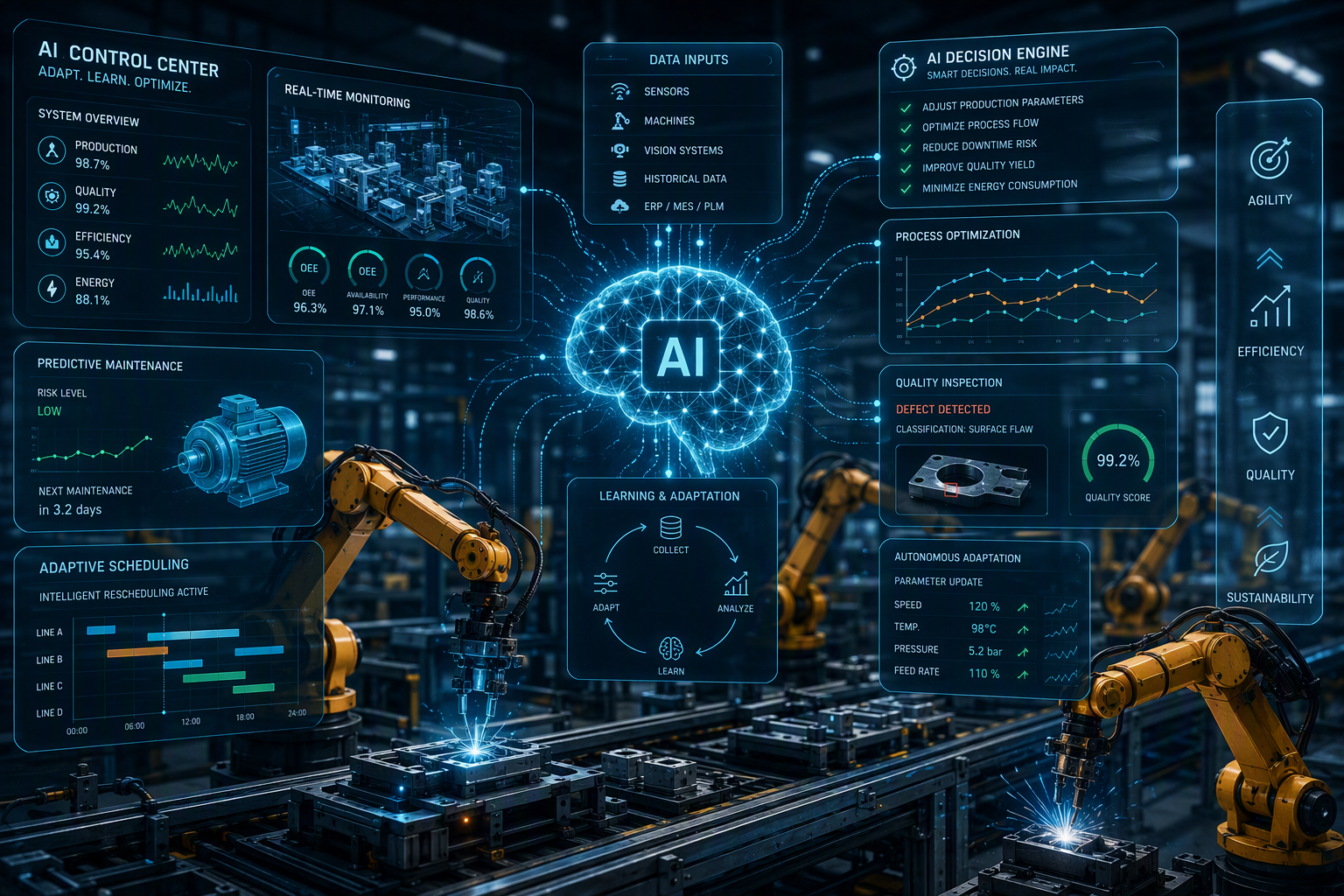
Artificial intelligence and machine learning are changing industrial automation by helping systems recognize patterns, spot risk, and support faster decisions. Instead of relying only on fixed rules, plants can use these tools to learn from operational data and improve how equipment and workflows perform over time.
One of the clearest use cases is predictive maintenance. Machine learning models can review signals from equipment and identify signs of wear before a failure occurs. That helps reduce unplanned downtime, manage maintenance costs, and improve scheduling. For many teams, this is where artificial intelligence delivers immediate value.
There is also growing interest in agentic ai for more adaptive decision support. In industrial settings, that can mean systems that assist with work orders, flag operating issues, or recommend actions based on changing conditions. The role of AI is not just automation, but smarter, more informed automation.
Industrial Internet of Things (IIoT)
Industrial IoT connects machines, sensors, and field devices so data can move more easily through the operation. This matters because industrial automation depends on timely information. When equipment can share status and performance data in real time, teams gain better visibility into what is happening.
In process automation, that visibility supports faster reactions to changing conditions. Operators can monitor temperature sensors, machine status, and output trends while systems respond through control logic and connected software. This creates a more informed production environment with fewer blind spots.
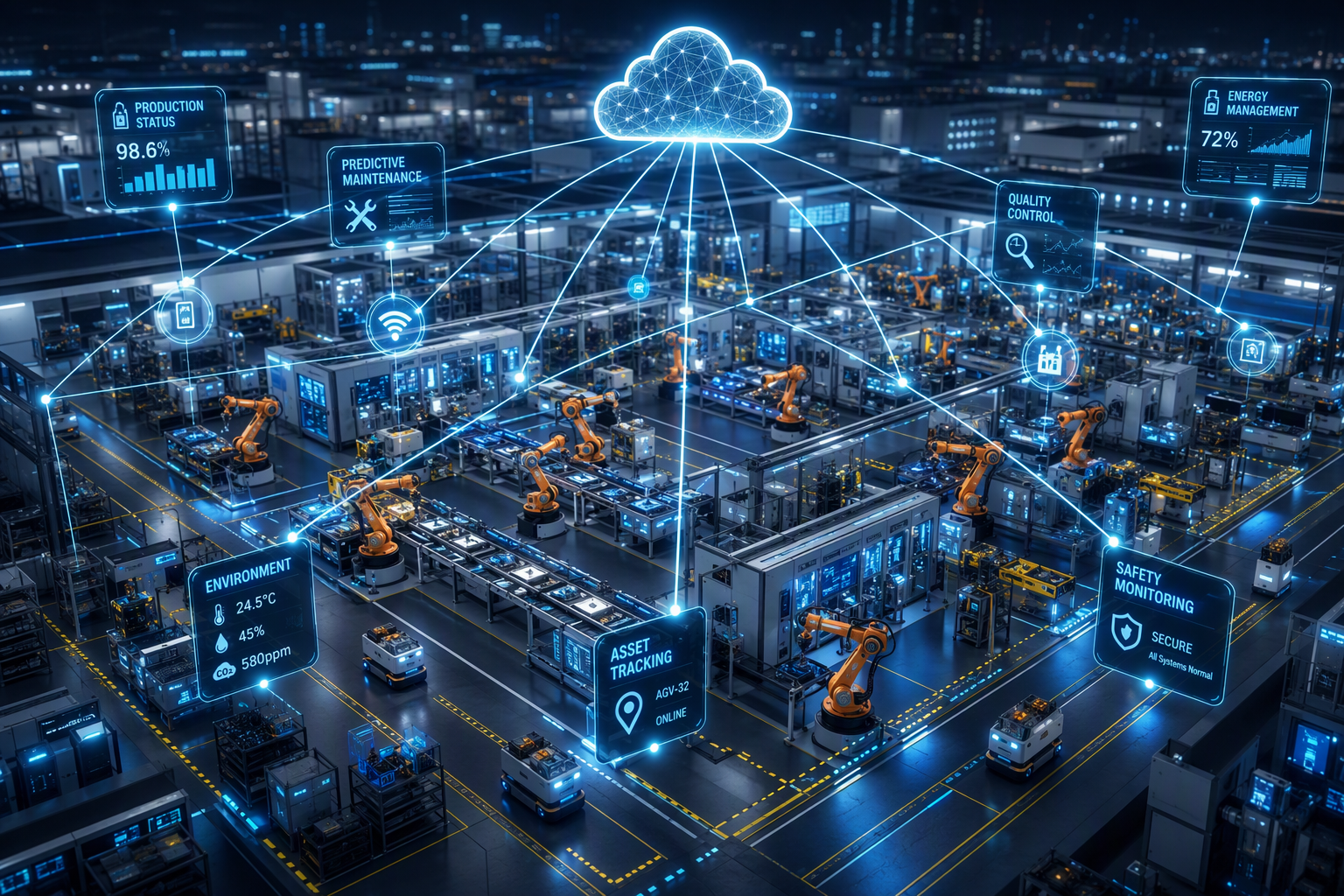
The value of industrial iot also grows when it connects to cloud computing, edge computing, and analytics tools. Data from the shop floor becomes more useful when it can support maintenance decisions, quality checks, and process optimization. In 2024, IIoT remains a core building block for connected automation.
Robotics and Cobots
Industrial robots continue to be a major force in automation because they handle repetitive tasks with speed and consistency. They are widely used in environments where accuracy matters and cycle times are tight. For many plants, robots reduce variation and support better output across demanding production lines.
Collaborative robots add a different value. Unlike traditional robotic cells that work separately, collaborative robots are designed to support a human operator in shared workflows. This can improve flexibility in tasks that still need judgment, setup changes, or close visual checks.
Common robotics benefits include:
- Strong performance on repetitive tasks
- Better support for precision-focused operations
- More flexible teamwork between machines and a human operator
As robot use expands, companies are finding more practical ways to combine automation speed with human oversight.
Digital Twins
A digital twin is a virtual representation of equipment, systems, or processes that reflects what is happening in the real environment. In industrial automation, this helps teams understand performance, test changes, and improve process optimization without interrupting the physical operation.
On the shop floor, digital twin tools can support better planning and troubleshooting. Teams can compare expected behavior with actual machine data, study bottlenecks, and evaluate how control systems respond under different conditions. This makes it easier to identify issues before they become larger operational problems.
The value grows when digital twins connect with artificial intelligence, machine learning, and live operating data. That combination gives businesses a clearer way to simulate outcomes, improve efficiency, and make smarter adjustments. In 2024, digital twin technology is becoming a practical decision-support tool, not just a concept.
Programmable Logic Controllers (PLCs)
Programmable logic controllers, often grouped with programmable automation controllers, remain central to industrial automation. They are trusted devices used to manage control systems, read input signals, and trigger output actions. In many facilities, they form the backbone of machine-level and line-level control.
Their strength comes from dependable automation logic. A PLC can monitor sensor input, apply rules, and command equipment quickly and consistently. This makes it useful for motion control, sequence management, and other time-sensitive tasks where steady response matters.
Even as newer tools enter the market, PLCs remain highly relevant because they integrate well with broader automation systems. They can connect with supervisory control, data acquisition, robotics, and software platforms. For companies building practical automation solutions, PLCs continue to provide a proven foundation.
Cloud Computing and Edge Computing
Cloud computing and edge computing are helping industrial automation become more responsive and more connected. Cloud platforms support broader data storage, analytics, and coordination across sites. Edge computing brings processing closer to equipment, which is useful when speed and local decision-making matter.
This matters because industrial environments now depend on stronger links between operational technology and information technology. Some decisions need immediate action near the machine. Others benefit from broader analysis across systems, plants, or business platforms. Using both approaches gives companies more flexibility.
A simple way to view the difference is:
- Cloud computing supports large-scale visibility, reporting, and centralized analysis
- Edge computing supports faster local response and real time control near equipment
Together, they help teams manage performance, improve visibility, and build smarter automation strategies.
Advanced Sensors & Actuators
Advanced sensors and actuators are essential parts of modern automation solutions. Sensors detect conditions such as motion, pressure, or temperature, while actuators carry out the physical response. Without these components, control systems would have no reliable way to observe conditions or act on decisions.
Temperature sensors are a good example of their importance. In many industrial processes, stable temperature control affects quality, safety, and output. When sensors provide accurate data and actuators respond quickly, the system can maintain tighter operating conditions and reduce unnecessary variation.
These devices also support better process optimization across the shop floor. More accurate sensing improves quality checks, while faster physical response helps machines stay aligned with control logic. As industrial automation grows more connected, advanced sensors and actuators continue to provide the data and movement that make everything work.
Computer Vision Systems
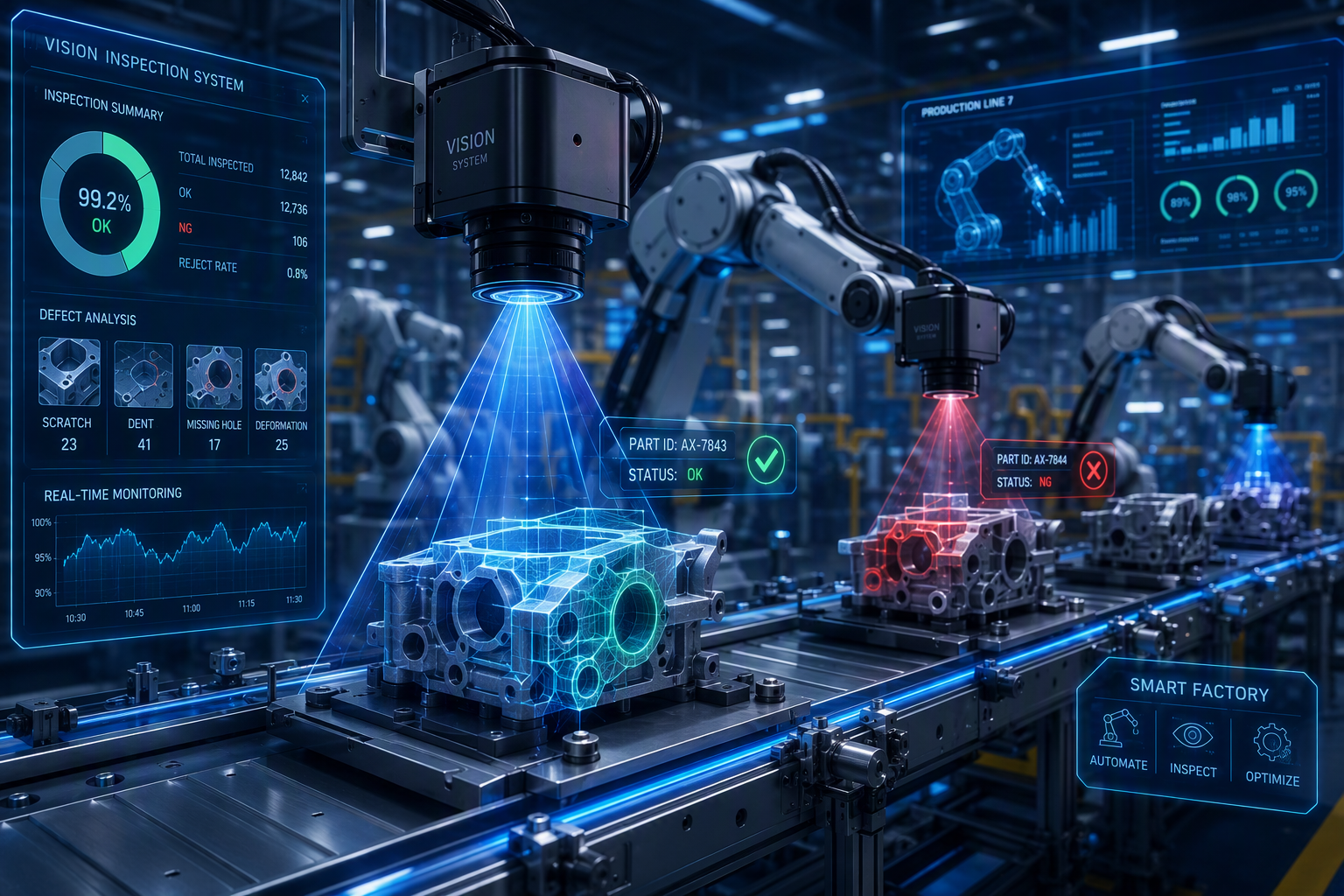
Computer vision systems allow machines to interpret visual information and apply it to inspection, sorting, and process control. On the shop floor, this adds a new layer of visibility that goes beyond basic sensor readings. It is especially useful where products must be checked quickly and consistently.
One major strength of computer vision is support for quality checks. Cameras and control software can detect visible defects, confirm placement, or verify whether a step was completed correctly. This helps reduce manual inspection pressure and improves consistency in high-speed environments.
Common computer vision uses include:
- Automated quality checks during production
- Visual input that supports control software decisions
As visual automation improves, more plants are using computer vision to strengthen inspection accuracy and keep operations moving with fewer interruptions.
Benefits of Industrial Automation Adoption
Businesses adopt industrial automation because the gains are practical and measurable. Automation technology can improve speed, reduce delays, and make operations easier to manage. It also helps companies build stronger quality control by applying the same process rules again and again with fewer inconsistencies.
The benefits go beyond output alone. Industrial automation can support operational efficiency, reduce waste, improve safety, and ease labor pressure in demanding environments. To understand the full value, it helps to look at productivity, product quality, workforce support, cost control, and worker protection separately.
Enhanced Productivity and Efficiency
One of the biggest reasons companies invest in automation is improved operational efficiency. Automation systems can keep tasks moving at a consistent pace, reduce idle time, and help plants run with fewer interruptions. That makes the production process faster and easier to control.
In many settings, efficiency comes from better coordination. Machines, sensors, and software work together to carry out routine actions without waiting for repeated manual input. This helps reduce delays between process steps and keeps materials flowing more smoothly across the line.
There is also a planning advantage. When systems produce clearer data on output, timing, and equipment status, managers can make better decisions about staffing, scheduling, and maintenance. Over time, that stronger visibility supports a more stable production process and better use of available resources.
Improved Consistency and Product Quality
Consistency is a major advantage of automation because machines follow the same programmed steps every time. In a manufacturing process, that reduces variation and helps keep output within expected standards. When tasks are repeated the same way, product quality becomes easier to maintain.
Automation solutions also strengthen quality control through constant monitoring. Sensors, computer vision, and control software can detect deviations more quickly than many manual methods. This means problems can be corrected earlier, before they affect larger volumes of production.
The result is not just fewer mistakes. Companies also gain more confidence in their process. Better consistency improves customer trust, reduces rework, and supports smoother operations across the plant. For manufacturers focused on repeatable output, automation is one of the clearest ways to improve overall product quality.
Labor Shortage Solutions
Labor shortages are pushing many companies to rethink how work gets done. In roles built around repetitive tasks, automation technology can reduce pressure on teams and help operations continue even when hiring is difficult. This makes automation a practical workforce support tool, not just a productivity upgrade.
It is important to note that automation does not always remove people. In many cases, it reduces low-value manual work so employees can focus on oversight, problem-solving, and higher-priority tasks that still need judgment. That shift can improve both output and job quality.
Automation can help with labor shortages by:
- Reducing dependence on constant human intervention for repetitive tasks
- Supporting stable output when staffing is limited
- Allowing workers to move from routine work to monitoring and coordination roles
For many businesses, this is now a key reason to automate.
Cost Reduction and Waste Minimization
Automation can lower costs by improving how the production process is managed. When machines run with better timing and fewer interruptions, companies often reduce scrap, rework, and unnecessary material use. That makes waste minimization an important financial benefit, not just an operational one.
Maintenance costs can also become easier to control. With connected systems and predictive maintenance tools, teams can spot equipment issues earlier and avoid larger breakdowns. That helps reduce emergency repairs, lost production time, and avoidable service expenses.
Over time, these savings add up. Automation solutions support more stable output, better use of resources, and fewer costly surprises. While the initial investment may require planning, the long-term payoff often comes from steady improvements in reliability, waste reduction, and day-to-day operating discipline.
Worker Safety Improvements
Worker safety is a major benefit of industrial automation, especially in environments with hazardous tasks or high-speed machinery. When automated equipment takes over risky motions or difficult handling steps, people spend less time in direct contact with danger. That can lower exposure and improve daily safety conditions.
Many systems are designed to support minimal human intervention in the most sensitive areas of production. This is useful where heat, movement, pressure, or repetitive strain create concerns. By shifting those tasks to machines, companies can build safer routines without slowing down operations.
Safety gains also come from better monitoring. Sensors, alarms, and control systems give operators clearer information about machine status and process conditions. That added visibility helps teams respond faster when something changes. In practical terms, industrial automation supports a workplace that is both more efficient and more protective.
Major Challenges Facing Industrial Automation
Even with clear benefits, industrial automation brings real challenges. Companies must balance performance goals with security, system compatibility, and workforce change. As automation technology becomes more connected through industrial IoT and data-driven tools, the operating environment also becomes more complex.
That complexity affects planning, investment, and daily management. It is not enough to install machines and expect instant results. Businesses also need strong control logic, secure data practices, and teams that can manage new workflows. The main challenges usually fall into four connected areas.
Cybersecurity and Data Protection
Cybersecurity is a growing concern because more automation technology now depends on connected devices, software platforms, and shared data. As systems exchange more information, the potential impact of a breach becomes more serious. This is especially important when control systems support critical operations.
Data protection matters for the same reason. Industrial environments generate valuable operating information about performance, production, and equipment behavior. If that data is exposed, altered, or interrupted, businesses can face downtime, quality problems, or loss of trust in system output.
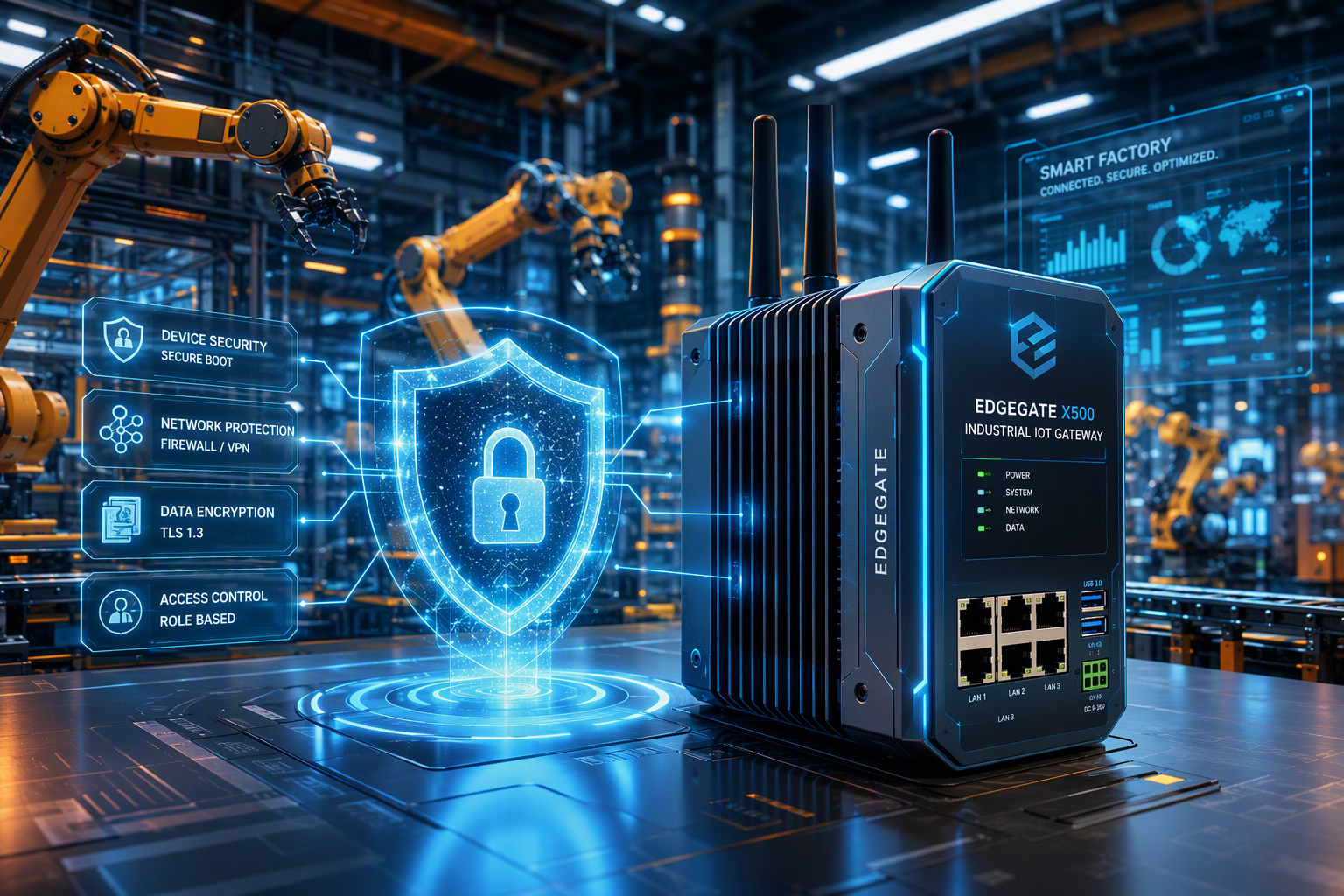
The challenge is building stronger protection without making operations harder to run. Companies need secure access controls, monitored networks, and better awareness of how systems connect across the plant. In modern industrial automation, cybersecurity is no longer a side issue. It is part of keeping production stable and reliable.

Integration with Legacy Systems
Many companies want modern automation systems, but they still rely on legacy systems that were not built for today’s connected environment. This creates a common challenge: how do you improve the manufacturing process without replacing everything at once? For many plants, that question shapes the whole automation strategy.
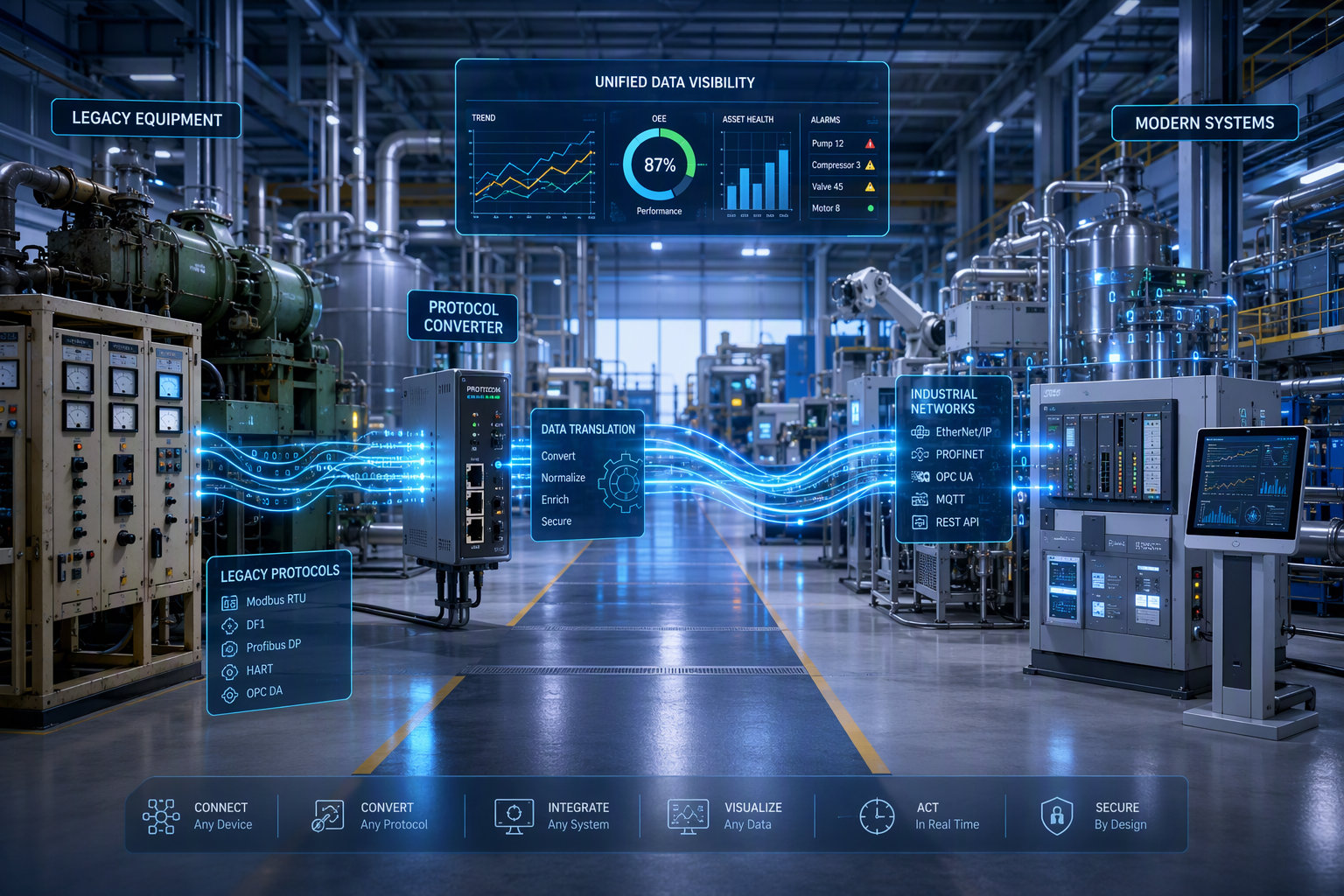
Older equipment may still perform its core task well, but it can be difficult to connect with newer software, sensors, or analytics tools. Differences in communication methods, controls, or data formats can slow adoption and increase project complexity. That makes integration a technical and operational issue.
The best path is often gradual. Businesses may connect selected machines first, add gateways, or modernize one part of the plant at a time. Even so, working around legacy systems takes planning, testing, and patience. Integration is one of the most practical barriers to faster automation progress.
Skills Gap and Workforce Transformation
The move toward industrial automation creates a skills gap because the work itself is changing. As systems take over more routine actions with minimal human intervention, companies need employees who can monitor equipment, interpret data, and manage connected tools. That shift is a major part of workforce transformation.
For some teams, this means moving away from manual labor toward more technical roles. The challenge is not only hiring new talent but also helping current workers adapt. If training does not keep pace with system changes, companies may struggle to get the full value from automation investments.
Common workforce transformation needs include:
- Training workers to manage modern automation systems
- Building data and troubleshooting skills across operations teams
- Supporting role changes as manual labor declines in some tasks
Without that support, the skills gap can slow adoption and limit performance gains.
Regulatory and Compliance Issues
Regulatory issues can make automation projects more complicated, especially in sectors where safety, traceability, and product standards are tightly managed. Companies must make sure that automation technology supports compliance, not just speed. If systems create gaps in documentation or control, the risks can be serious.
This challenge often appears during system design and validation. Businesses need to think about how automation affects the manufacturing process, how records are captured, and how operators confirm that procedures were followed. In regulated industries, these details matter as much as output.
Compliance also affects change management. When companies update machines, software, or workflows, they may need to show that the revised process still meets required standards. That means automation projects must be planned carefully from the start. Strong performance is important, but compliance remains a non-negotiable requirement.
Future Trends & Innovations in Industrial Automation
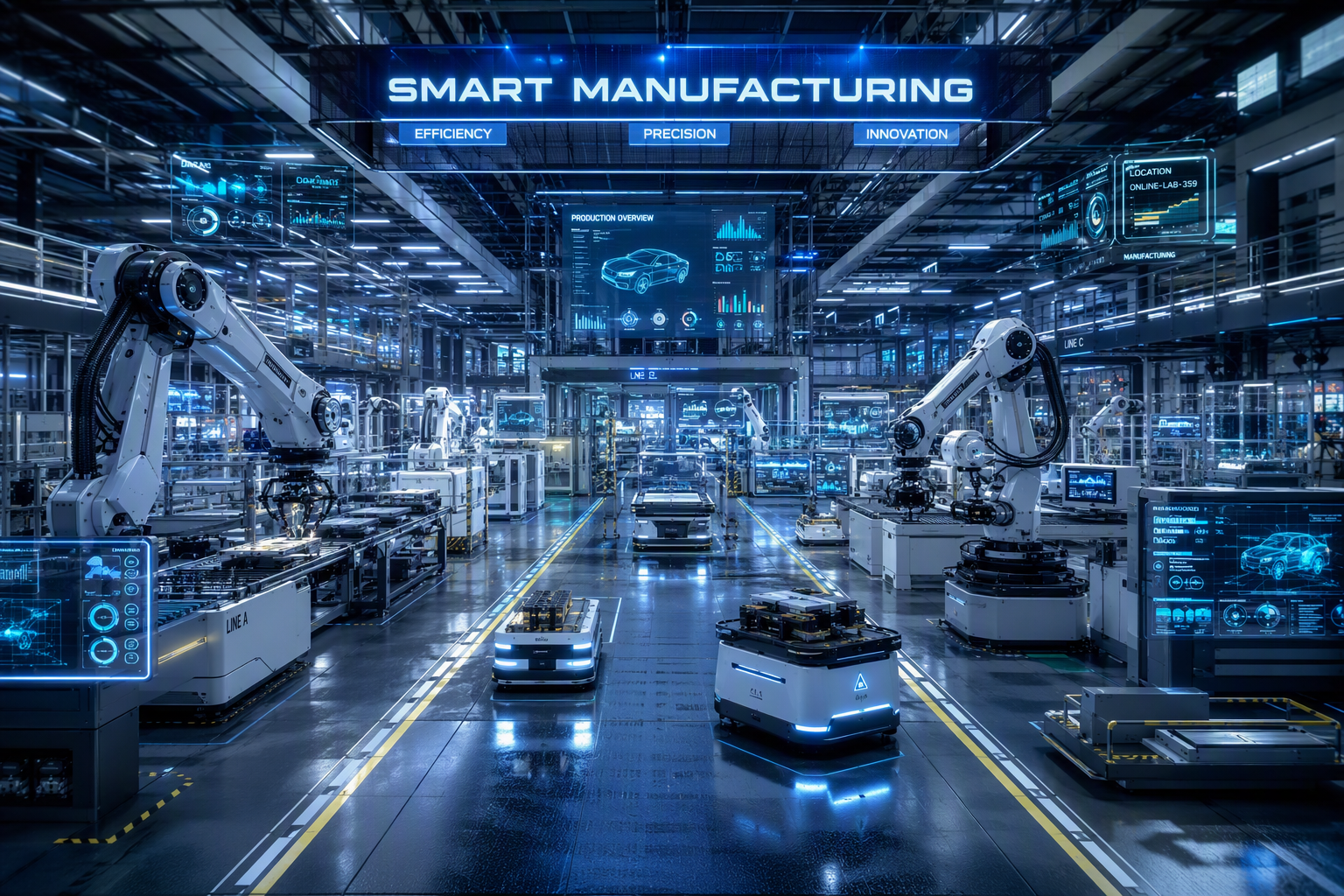
The next phase of industrial automation will be shaped by smarter systems, wider connectivity, and more adaptive operations. Current trends point toward smart factories where machines, software, and people work through shared data and faster decision-making. This is the direction of smart manufacturing in 2024 and beyond.
At the same time, future innovations are not only about speed. Companies also want resilience, sustainability, and better control over changing production requirements. The trends below show how industrial automation is moving toward more intelligent, connected, and efficient operating models over the next decade.
Rise of AI-Driven Automation
AI-driven automation is becoming one of the biggest shifts in the industry. Instead of relying only on fixed commands, systems can now use artificial intelligence and machine learning to identify patterns, adjust recommendations, and support decisions that improve performance over time.
This matters because future operations will need to respond faster to changing conditions. AI-driven automation can help teams predict equipment issues, improve scheduling, and strengthen quality control without depending on constant manual review. As data volumes grow, these tools become more useful and more practical.
Agentic ai may push this further by supporting more autonomous decision assistance in defined workflows. In industrial settings, that could mean systems that prioritize work orders, recommend next steps, or help coordinate resources. The future is not about removing people entirely. It is about giving operations smarter support.
Expansion of Smart Factories
Smart factories are expanding because businesses want more connected, responsive, and visible operations. In these environments, automation systems, sensors, software, and analytics work together to improve how the plant runs. The goal is not just automation, but coordinated intelligence across the operation.
A key feature of smart factories is continuous feedback. Equipment data supports predictive maintenance, while connected controls improve motion control and production timing. This helps companies reduce downtime, improve process flow, and respond more quickly when conditions change on the shop floor.
| Smart factory element | Operational impact |
|---|---|
| Connected automation systems | Better coordination across machines and lines |
| Predictive maintenance tools | Fewer equipment surprises and less downtime |
| Motion control improvements | More precise machine movement and timing |
| Shared data visibility | Faster decisions across teams and processes |
As adoption grows, smart factories will likely become a standard model for modern production.
Conclusion
As we move into 2024, the trends shaping the industrial automation industry promise to revolutionize how businesses operate. From the rise of AI-driven automation to the expansion of smart factories, it's clear that embracing these innovations is essential for staying competitive. Companies that leverage advanced technologies such as the Industrial Internet of Things (IIoT) and robotics can significantly enhance productivity, improve product quality, and address labor shortages. However, with these advancements come challenges, including cybersecurity risks and the need for workforce transformation. By staying informed and adaptable, industries can navigate these complexities and unlock the full potential of automation. If you're ready to explore how these trends can benefit your business, don’t hesitate to reach out for a consultation!
Frequently Asked Questions
What are the most promising technologies in industrial automation for 2024?
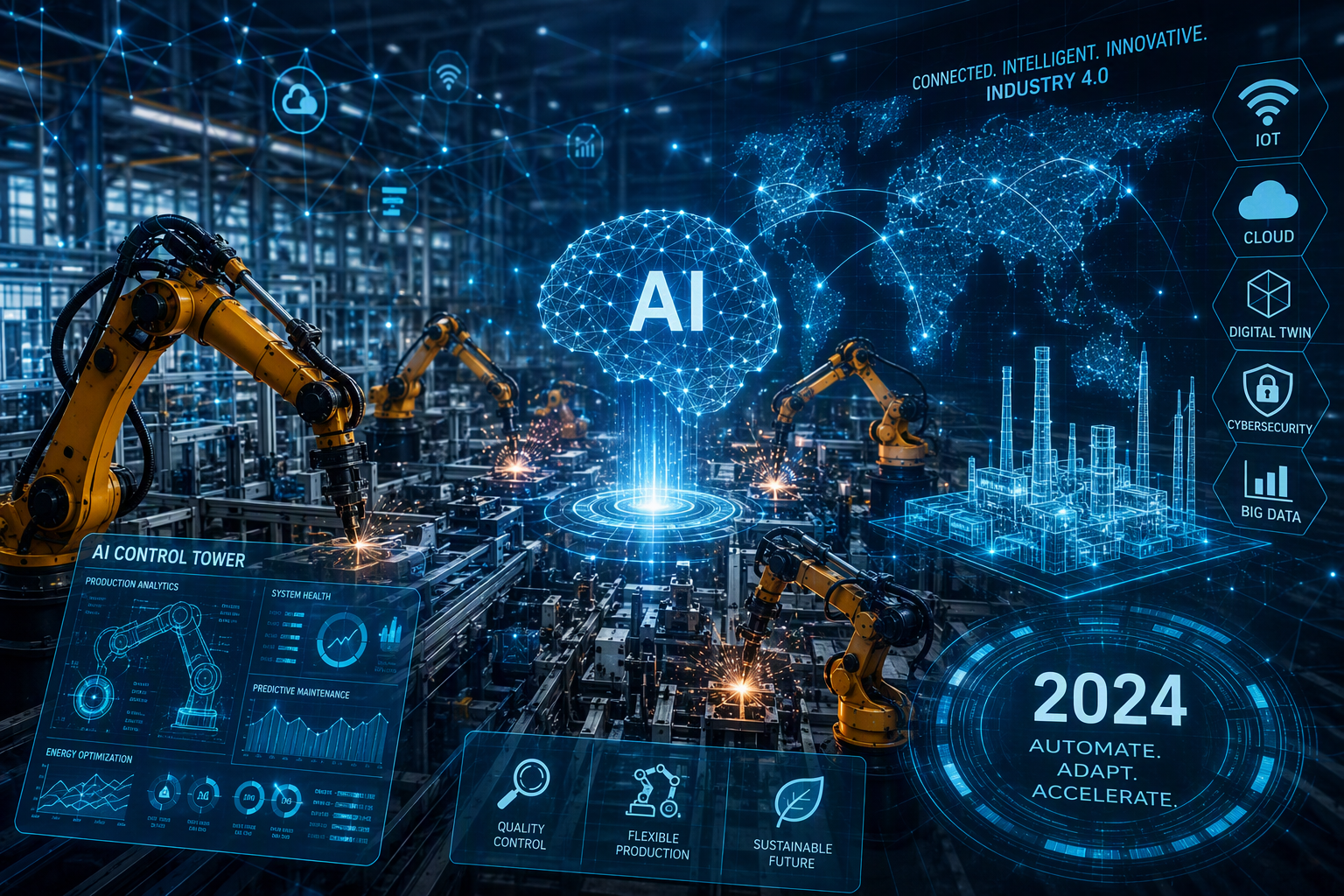
The most promising advanced technologies in industrial automation for 2024 include artificial intelligence, machine learning, industrial iot, robotics, digital twin tools, and edge-connected control systems. These technologies improve visibility, predictive maintenance, and process control, helping companies build smarter and more responsive operations.
How is AI changing the role of workers in the industry?
Artificial intelligence is shifting workers away from routine manual labor and toward monitoring, analysis, and decision support. In industrial automation, this drives workforce transformation by changing job responsibilities. Agentic ai may further assist with recommendations and workflow coordination, while people remain essential for oversight and exceptions.
Which industries benefit most from automation advances?
The industries that benefit most from industrial automation include the automotive industry, general manufacturing process environments, healthcare and pharma operations, food processing, and energy and utilities. These sectors gain from better quality control, stronger efficiency, improved safety, and more consistent performance across critical workflows.
You might also like