Industrial Automation Solutions: Key Benefits Explained
Industrial Automation Solutions: Key Benefits Explained
Key Highlights
- Industrial automation helps manufacturers raise operational efficiency by speeding up routine production work.
- Strong automation solutions support better product quality through steady, repeatable output and fewer mistakes.
- Businesses often see cost savings because automation reduces manual labor needs and limits material waste.
- Worker safety improves when machines handle dangerous jobs in hazardous environments.
- Real-time data and predictive maintenance help reduce downtime and improve planning.
- These systems also support sustainability by lowering energy consumption and waste.
Introduction
Industrial automation is the use of technology to monitor, control, and improve industrial processes with less human intervention. In the manufacturing industry, it has moved from a nice-to-have upgrade to a practical need for staying competitive. Today’s automation solutions help businesses increase output, reduce delays, and improve consistency across the manufacturing process. If you want faster production, safer operations, and clearer data for decisions, automation is often the starting point.
Defining Industrial Automation Solutions
At its core, industrial automation means using machines, software, and connected devices to run industrial processes with greater speed and accuracy. These automation solutions are built to reduce human intervention in repetitive tasks, improve control, and keep production moving with fewer interruptions. In many facilities, industrial automation supports the full manufacturing process, from assembly and testing to packaging and quality inspections.
You will often find process automation built around control systems that manage equipment in real time. Common parts include sensors, industrial robots, programmable logic controllers, machine vision tools, and human machine interface screens that let operators monitor activity. Some systems also use internet of things connectivity, data analysis, and artificial intelligence to track performance, predict maintenance needs, and support better decisions. To understand how all this works, it helps to look at the basic principles first.
Core Principles of Industrial Automation
First, automation is about replacing or reducing manual effort in repetitive tasks. Machines do the same work again and again with steady speed, which helps lower human error and keeps output more consistent. That is the basic definition in action.
Another key principle is the use of control systems to monitor and adjust industrial processes. These systems watch equipment in real time and respond when conditions change. This is a major part of process automation because it keeps operations stable and efficient.
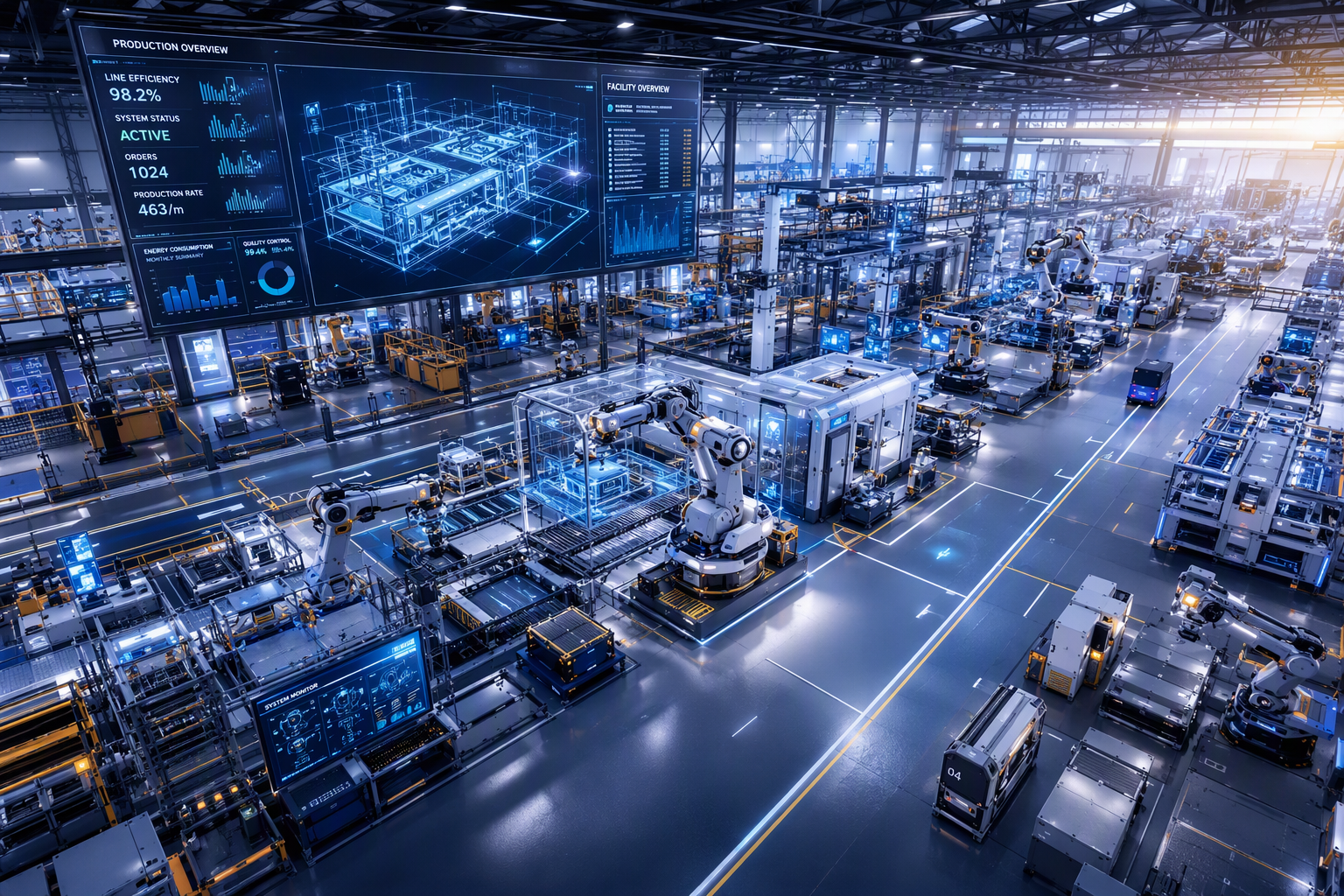
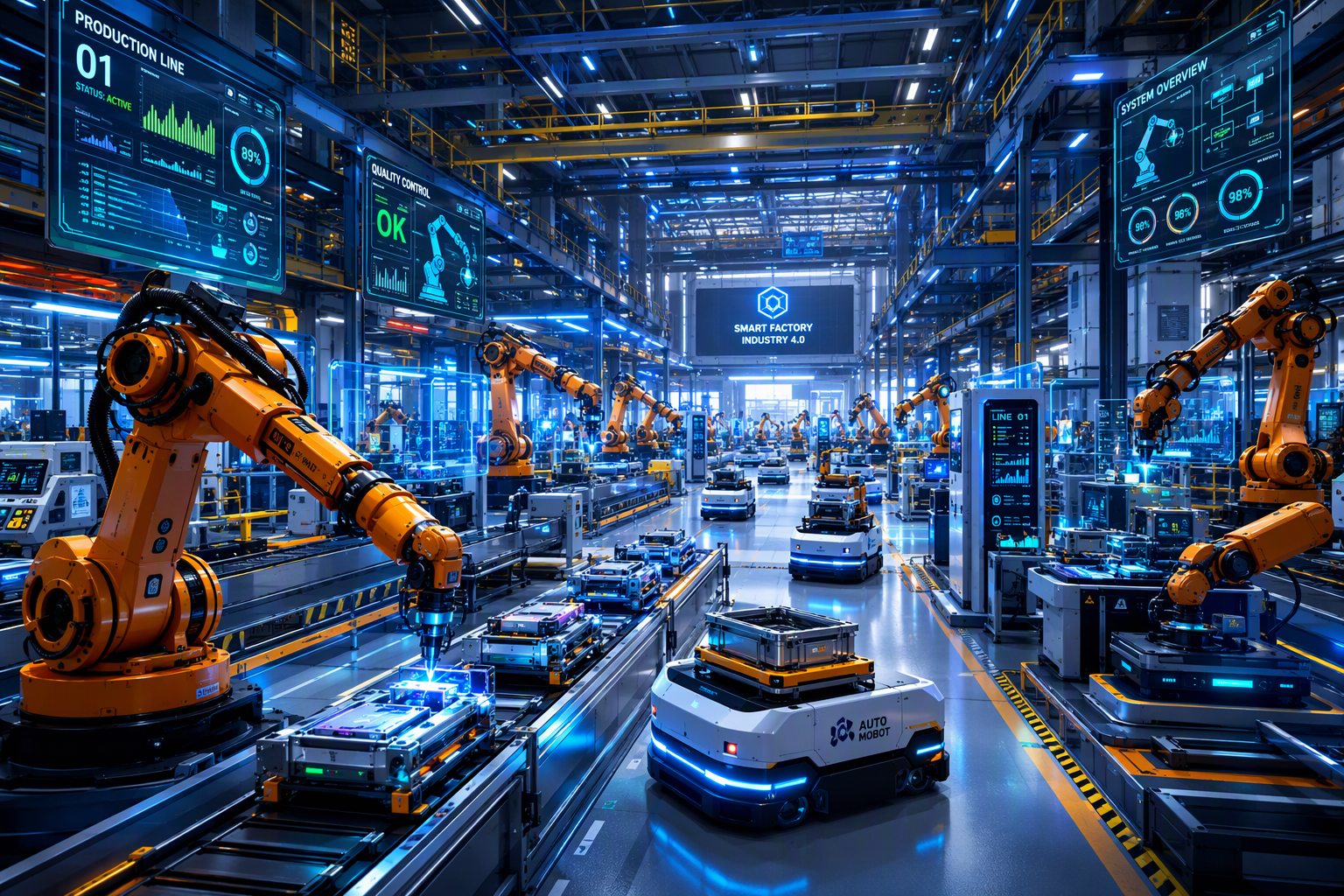
Industry 4.0 builds on these ideas by connecting machines, software, and data across the factory. Industrial robots, sensors, and smart tools can share information and support faster decisions. The result is a more connected production environment with better visibility, less downtime, and stronger operational efficiency.

Common Components and Technologies in Automation Systems
Most automation systems combine hardware and software that work together across the production line. The exact mix depends on the job, but the goal stays the same: better control, faster output, and fewer disruptions in the manufacturing process.
Common technologies include:
- PLCs, or programmable logic controllers, which manage machine actions and process timing.
- Robotics for welding, packaging, material handling, and other repetitive tasks.
- Internet of things devices that collect real time data from equipment and production lines.
- Human machine interface panels that help operators view status, alarms, and controls.
Some systems also include machine vision, SCADA, DCS, and artificial intelligence for data analysis and predictive maintenance. The compiled information highlights technologies rather than ranking providers, though well-known names such as Schneider Electric are often associated with this space. Next, let’s look at the main system types used today.
Key Types of Industrial Automation Systems
Not every automation system works the same way. In the manufacturing industry, businesses choose different setups based on product volume, changeover needs, and operational goals. The right choice can improve operational efficiency without overcomplicating the production environment.
Common automation solutions fall into a few main groups: fixed, programmable, and flexible automation. Each one supports a different style of production. Understanding these types makes it easier to match your automation system to your production line and market demands.
Fixed, Programmable, and Flexible Automation
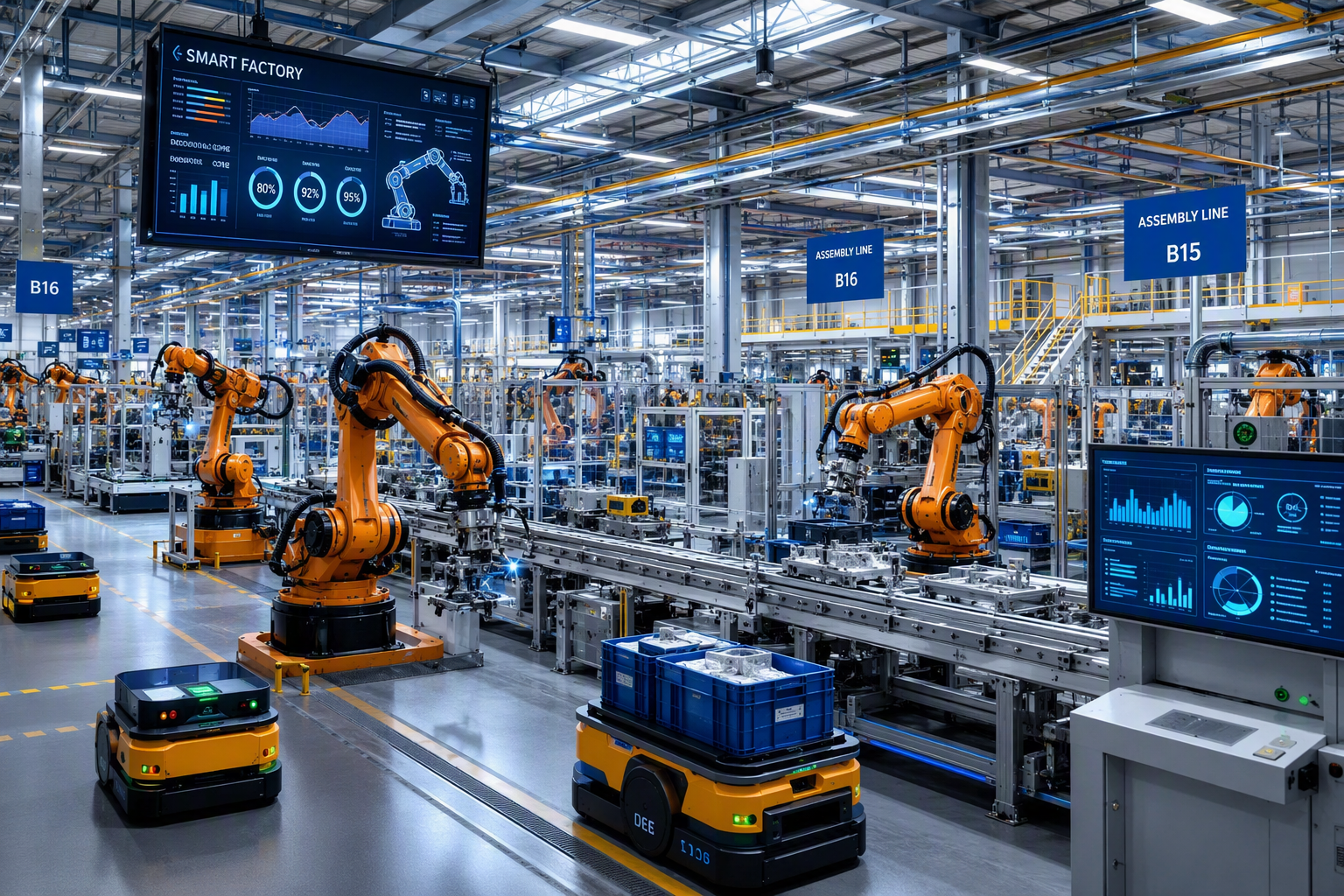
Fixed automation is built for high-volume, repeated work. You often see it on assembly lines where the same product moves through the same production line steps every day. It offers speed and consistency, but it is not ideal when product changes happen often.
Programmable automation fits batch production better. Equipment can be reprogrammed for different tasks, which makes it more adaptable than fixed automation. Flexible automation goes further by allowing faster changeovers and smoother handling of varied products with less disruption.
| Automation Type | Best Use | Main Strength | Main Limitation |
|---|---|---|---|
| Programmable automation | Batch production | Reprogrammable for new runs | Changeovers take time |
| Flexible automation | Mixed or changing production line needs | Quick adjustments, better responsiveness | Higher system complexity |
The Role of Robotics, PLCs, and IoT in Modern Factories
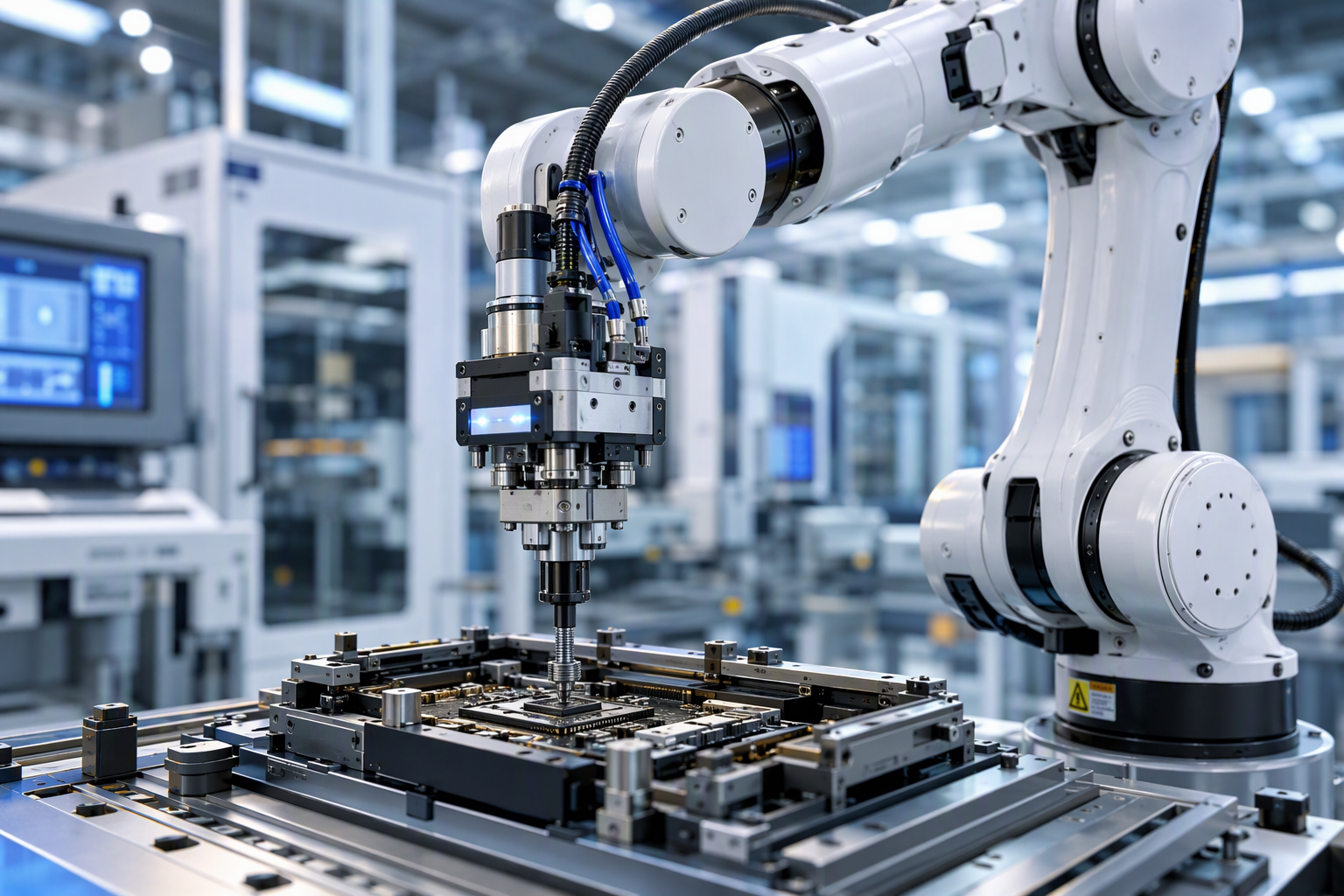
In modern factory automation, industrial robots handle jobs that require speed, accuracy, or nonstop movement. They are widely used for welding, packaging, sorting, and material handling. This helps reduce delays and supports higher efficiency across busy operations.
At the same time, PLCs act as the control center for many machines. They manage timing, signals, and machine responses in real time. IoT adds another layer by connecting equipment and collecting performance data that teams can review and use to improve output.
Together, these tools strengthen automation services by:
- reducing downtime through better system visibility
- supporting predictive maintenance and faster issue detection
- improving consistency in repetitive tasks
- helping factories respond more quickly to changing production needs
Major Benefits of Industrial Automation Solutions
The biggest benefits of automation come down to performance and control. Well-planned automation solutions help manufacturers improve operational efficiency, increase output, and maintain smoother workflows. They also support more reliable scheduling by reducing breakdowns and manual slowdowns.
Just as important, the benefits of automation include stronger product quality, lower labor costs, and meaningful cost savings from reduced waste. Many businesses also use automation to support sustainability goals through better energy efficiency and less material waste. The next sections break down these gains in more detail.

Improving Operational Efficiency and Productivity
One of the clearest gains from automation is improved operational efficiency. Automated equipment works without breaks between tasks, so production keeps moving with fewer pauses. That steady pace increases output and helps projects stay on schedule.
Process automation also improves planning and reduces avoidable disruptions. Systems with sensors, data analysis, and machine learning can identify patterns that point to maintenance needs before a failure stops the line. This makes predictive maintenance a practical tool, not just a trend.
The impact of automation often includes:
- less downtime from earlier maintenance action
- lower labor costs for repetitive and labor-intensive work
- faster production across the manufacturing process
- better decisions through real time performance data
Enhancing Product Quality and Consistency
Quality matters in every production environment, and automation helps keep it steady. Automated systems follow exact instructions, which reduces human error and supports repeatable results. That makes it easier for manufacturers to meet strict quality standards across every shift.
Another advantage is stronger quality control during production, not only at the end. With real time monitoring, manufacturers can catch defects earlier and keep flawed products from moving further down the line. This cuts rework and supports more dependable output.
You can usually expect gains such as:
- improved product quality through precise process control
- more consistent results across batches and shifts
- lower material waste from fewer defects and corrections
- better sustainability through reduced scrap and energy use
Conclusion
In conclusion, embracing industrial automation solutions is not just a trend but a strategic move toward enhancing operational efficiency and productivity. By integrating advanced technologies such as robotics, PLCs, and IoT, businesses can achieve greater consistency in product quality while reducing operational costs. As industries continue to evolve, the importance of automating processes cannot be overstated. Companies that invest in these solutions now will not only improve their competitiveness but also lay the groundwork for sustainable growth in the future. If you're ready to transform your operations through automation, consider reaching out for expert guidance and support.
Frequently Asked Questions
What industries use industrial automation most?
Industrial automation is widely used in the manufacturing industry, but it also supports various sectors such as food and beverage, pharmaceuticals, energy and utilities, aerospace and defense, logistics and warehousing, mining, chemical processing, construction, and agriculture. These automation solutions often improve production, safety, and supply chain management.
How do I select the best industrial automation provider?
Choose a provider that can align automation solutions with your operational goals. Look for experience with digital transformation, system integration, and ongoing technical support. The compiled information also stresses the value of partners with proven automation services, strong implementation skills, and the ability to support continuous improvement.

How does industrial automation contribute to sustainability?
Industrial automation supports sustainability by improving energy efficiency, reducing material waste, and lowering rework through better precision. Process automation helps machines use resources more effectively, while real time monitoring can limit excess energy consumption. Over time, that supports cleaner operations and stronger environmental performance.
You might also like