Transforming the Industrial Automation Industry: Key Trends
Transforming the Industrial Automation Industry: Key Trends
Key Highlights
- Industrial automation uses connected machines and control systems to improve speed, consistency, and operational efficiency. The market for industrial automation is projected to see steady growth in the coming years, driven by the increasing adoption of artificial intelligence, machine learning, and advanced control system technologies. Industry analysts forecast a strong outlook as manufacturers seek to modernize operations, enhance productivity, and remain competitive. Today’s factories combine artificial intelligence, machine learning, sensors, and networks for better visibility. Fixed automation fits long production runs, while programmable automation supports batch changes more easily.
- Today’s factories combine artificial intelligence, machine learning, sensors, and networks for better visibility.
- Fixed automation fits long production runs, while programmable automation supports batch changes more easily.
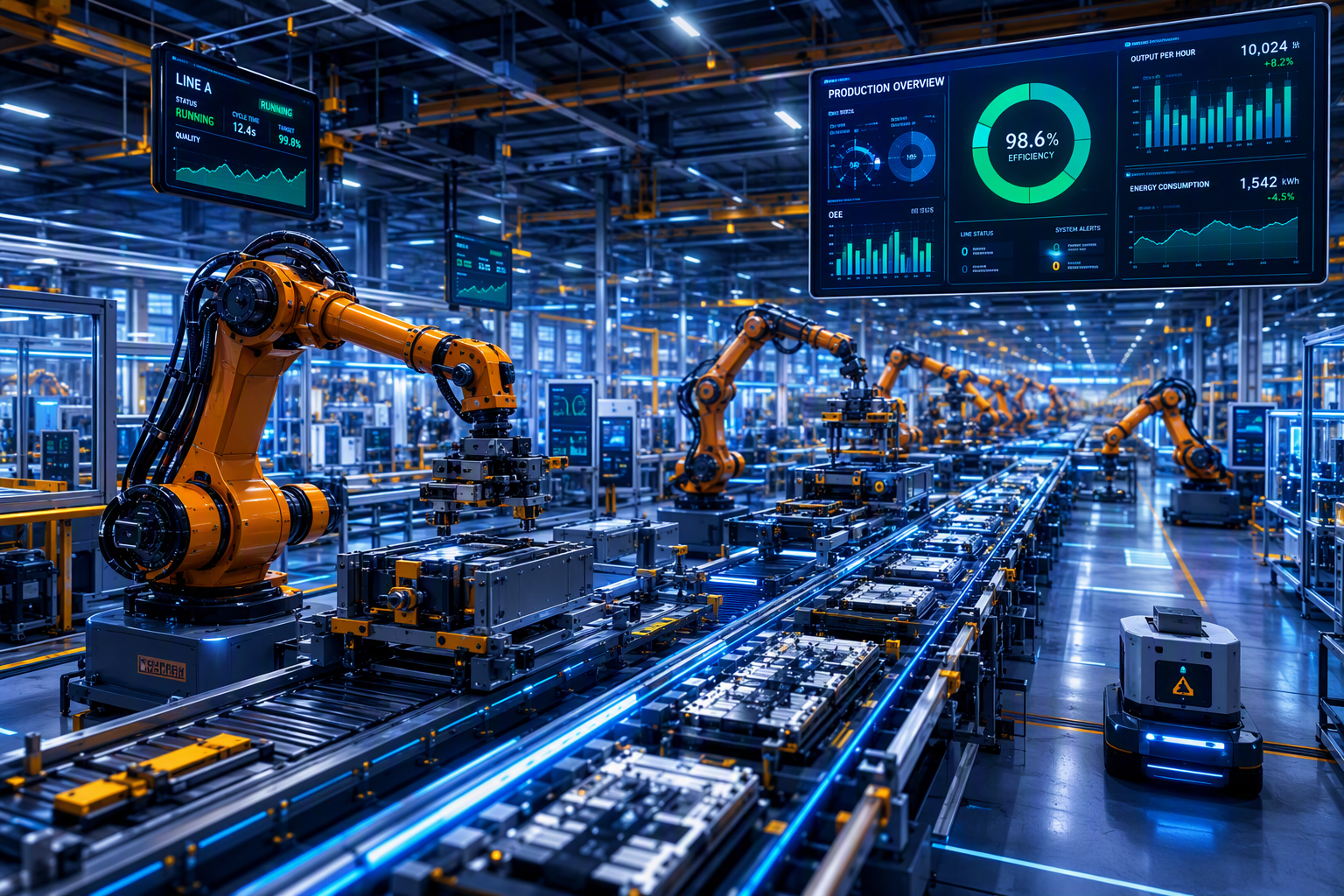
- Real-time monitoring helps teams reduce downtime, improve quality, and support predictive maintenance.
- IIoT, cloud tools, and edge systems turn machine data into faster production decisions.
- Robotics, cobots, and digital models are reshaping modern manufacturing processes.
Introduction
Industrial automation is changing how factories run every production line. Instead of relying on manual checks and isolated machines, manufacturers now connect equipment, data, and software to improve manufacturing processes. That shift matters because you need faster output, fewer errors, and better visibility at every stage. From simple conveyor movement to smart systems that react in real time, industrial automation and information technology are helping companies build more reliable, flexible, and efficient operations. The next sections explain what that looks like today.
Understanding Industrial Automation Industry Today
At its core, industrial automation is the use of automation technology to run tasks with less direct human intervention. Machines, sensors, processors, and machine tools work together to control equipment and automate production steps.
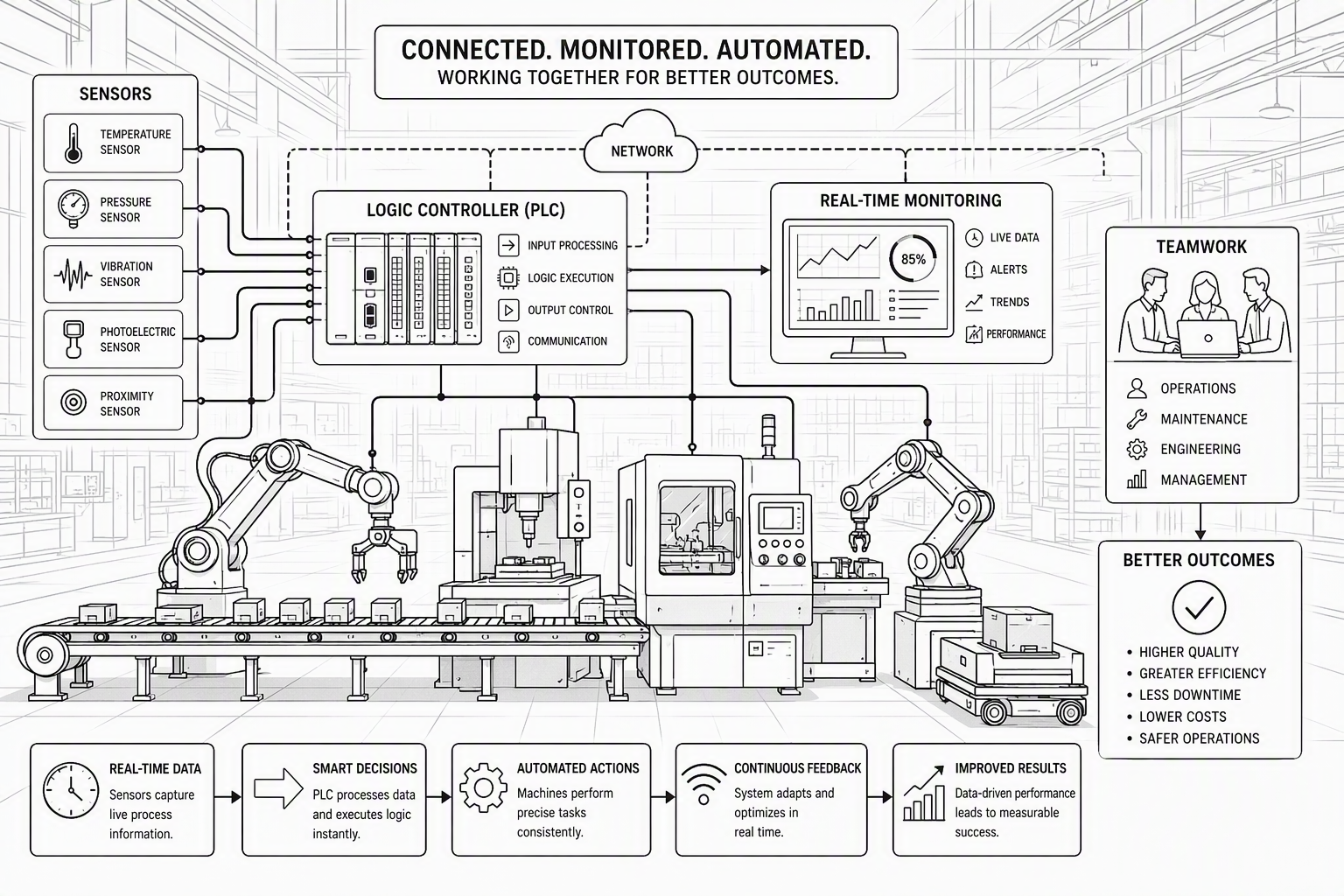
In practice, automation systems gather inputs, apply logic, and trigger actions in real time. That is how industrial automation works on the shop floor, integrating various electrical systems. It helps teams improve consistency, spot issues sooner, and manage output more effectively. To understand it better, start with the definition and the main building blocks.
Defining Industrial Automation
Industrial automation means using a control system to perform tasks that people once handled manually. The goal is not to remove people from every step. It is to reduce repetitive work and make manufacturing processes more consistent.
These automation systems can include machines, actuators, sensors, processors, and networks. Together, they control movement, timing, and actions across a line. When set up well, they support minimal human intervention for routine tasks while giving operators better oversight.
So how does it work? Inputs are collected from equipment and field points, logic is applied, and commands are sent back to machines. That closed loop lets industrial automation manage production with accuracy, repeatability, and faster response to changing conditions.
Core Components and How They Work
A working automation setup depends on several connected parts. Each one supports a different stage of sensing, deciding, or acting. When these parts communicate well, you get steadier output and stronger control at every control level.
Common components include:
- Field devices that gather status and operating signals from machines
- Sensors and actuators that detect conditions and carry out physical actions
- Industrial PCs and controllers that process inputs and apply control logic
- Network links that move data between equipment and supervisory layers
You can see these components in many manufacturing examples, from conveyor systems to CNC equipment and monitored assembly stations. Data comes in from field devices, logic is applied, and machines respond. That sequence keeps operations moving with fewer delays and clearer performance insight.
Historical Evolution of Industrial Automation
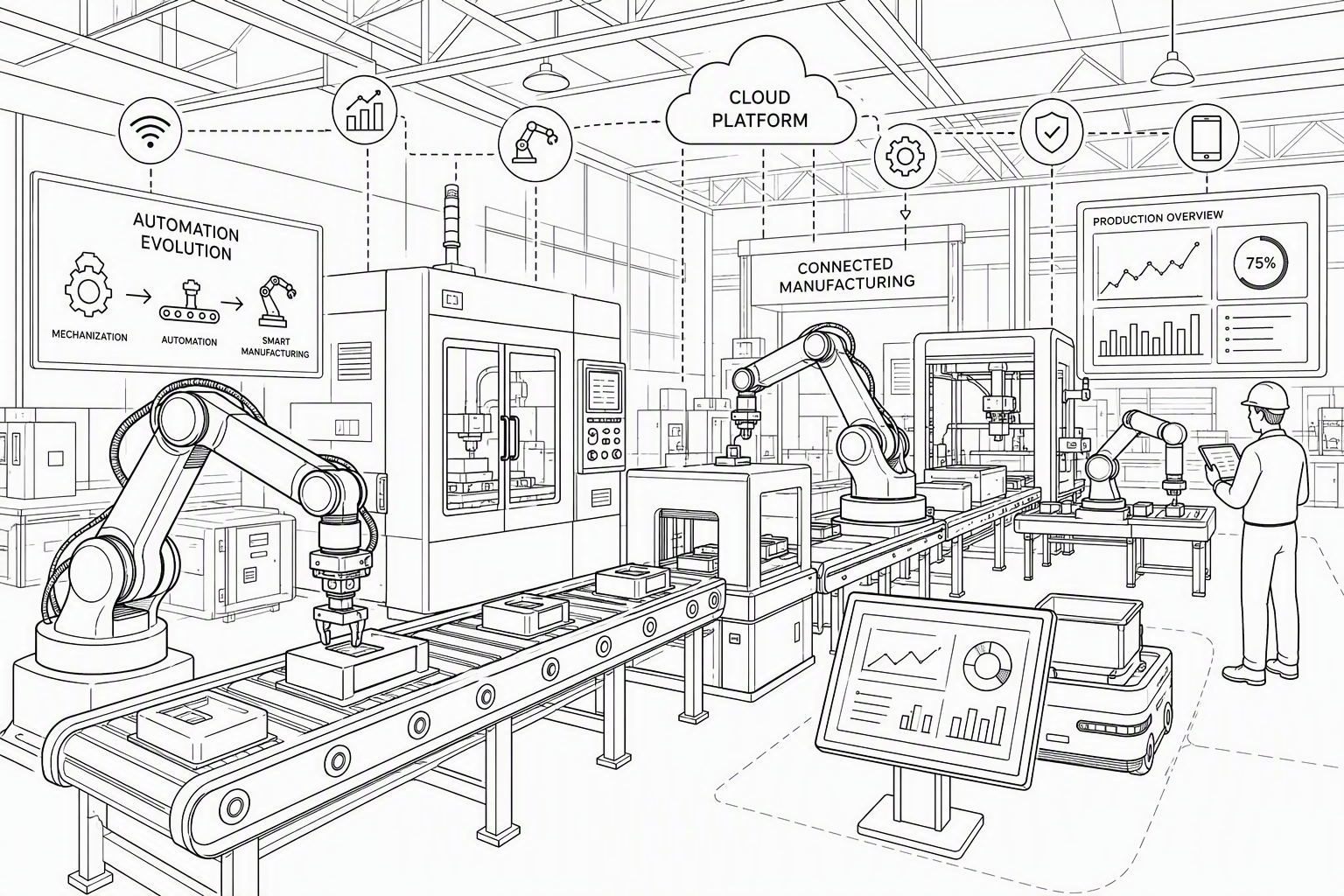
Industrial automation started with simple mechanical movement and basic control logic. Early systems helped reduce manual labor by moving parts through repeatable steps, especially on long production lines.
Over time, automation technology grew from isolated machines into connected automation systems. What began with conveyor-driven tasks now includes software, machine data, and adaptive decision support. That evolution explains how factories moved from fixed control toward more intelligent operations. The next two sections show that shift more clearly.
From Manual Processes to Automated Systems
In the early stages, factories depended heavily on manual labor. Workers handled transport, timing, inspection, and machine adjustments across each production line. Output depended on labor availability and close supervision.
Then came automated systems such as conveyor belts and structured assembly lines. These setups performed repeatable steps more reliably and reduced direct human intervention in routine work. That made production faster and easier to standardize.
The change was important because it created the base for modern automation. Once factories trusted machines to repeat tasks consistently, they could expand beyond simple movement and begin linking operations together. That step-by-step progress led from basic equipment control to broader, connected manufacturing environments.
The Rise of Intelligent Automation Technologies
Factories are now moving past static rules. Artificial intelligence and machine learning add another layer to automation logic by helping systems identify patterns in production data and surface useful actions faster.
This shift is showing up in production intelligence platforms that unify data from machines, ERP, and operator knowledge. Instead of relying only on fixed programming, teams can use AI agents to summarize performance, highlight downtime issues, and support daily decisions.
Agentic AI pushes that idea further by acting like a digital workforce layer across manufacturing operations. It does not replace sound process design, but it helps close execution gaps. That is a major step in the evolution from simple control toward systems that assist, guide, and continuously improve factory performance.
Main Types of Industrial Automation in Practice
The main types of industrial automation used in factories include fixed automation, programmable automation, and flexible automation. Each type fits different production goals, product variety, and changeover needs.
Fixed automation works best for high-volume output, while programmable automation supports batch production with planned adjustments. Flexible automation goes further by reducing downtime between changes and supporting more product variation. Knowing these differences helps you choose the right setup. Let’s look at the two most common approaches in more detail.
Fixed Automation in Mass Production
Fixed automation, often called hard automation, is built for a set task and a continuous workflow. It is common in assembly lines where the same item is produced repeatedly over long production runs.
The strength of fixed automation is consistency. Once the control logic is established, equipment can move at high speed with little variation. That makes it a strong fit for mass production where changes are rare and volume is the priority.
A conveyor-based line is a simple example. The drawback is flexibility. If you need a new product design or frequent shifts in demand, changes can be expensive and slow. That is why many manufacturers use fixed automation only when product stability justifies the investment.
Flexible and Programmable Automation
Programmable automation is widely used for batch production. It works well when a factory produces dozens to thousands of units, then changes setups for the next job. In these settings, production scheduling, batch sizes, and lead times matter a lot.
Flexible automation builds on that idea. It reduces downtime between product changes and supports more variation on the same machine or line. CNC equipment is a useful example because it can handle different jobs with precise electromechanical control.
For you, the key difference is responsiveness. Programmable automation handles planned changes. Flexible automation makes those changes faster and smoother. Both are valuable when product mix shifts often and when manufacturers want higher uptime without losing customization options.
Essential Technologies Powering Industrial Automation
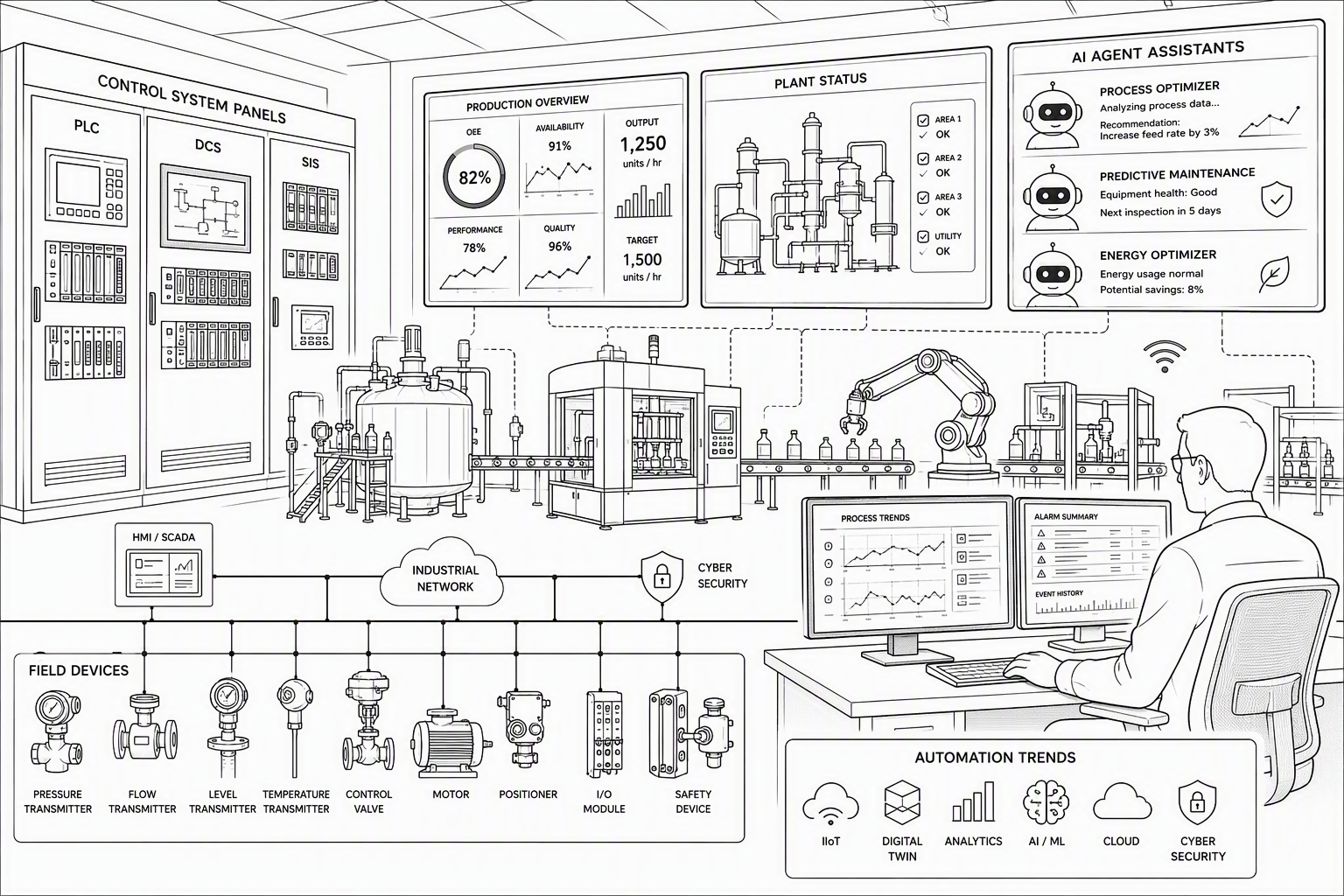
No automation strategy works without the right technology stack. A modern control system depends on hardware at the field level, software for monitoring, and tools that turn data into action.
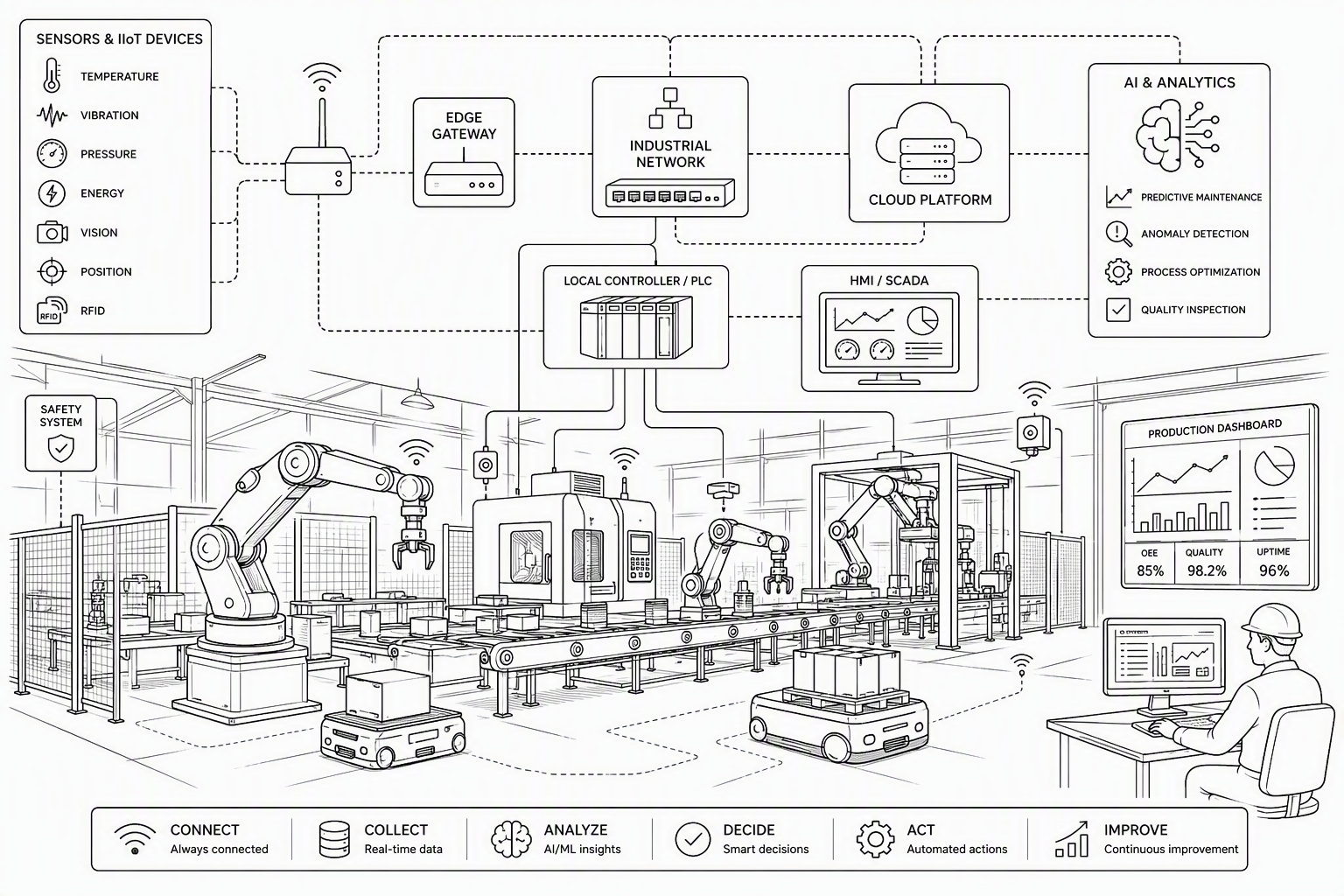
That is where today’s automation solutions stand out. Sensors, networks, processors, and artificial intelligence help factories see more, respond faster, and manage production with better precision. Two technologies matter especially often in real operations: sensing devices and AI-driven analysis.
Role of Sensors and Actuators
Sensors and actuators are among the most important field devices in any automated environment. Sensors measure conditions such as motion, pressure, or heat, while actuators convert commands into physical movement.
Temperature sensors are a clear example. They collect sensor data that helps teams track process conditions and detect problems early. When values move outside limits, the system can alert operators or trigger an automatic response.
This matters for quality control. Connected sensing gives manufacturers better repeatability, faster detection of variation, and stronger visibility across the line. With more reliable data from field devices, teams can reduce waste, catch issues sooner, and keep products closer to required standards before they leave the factory floor.
Artificial Intelligence and Machine Learning Integration
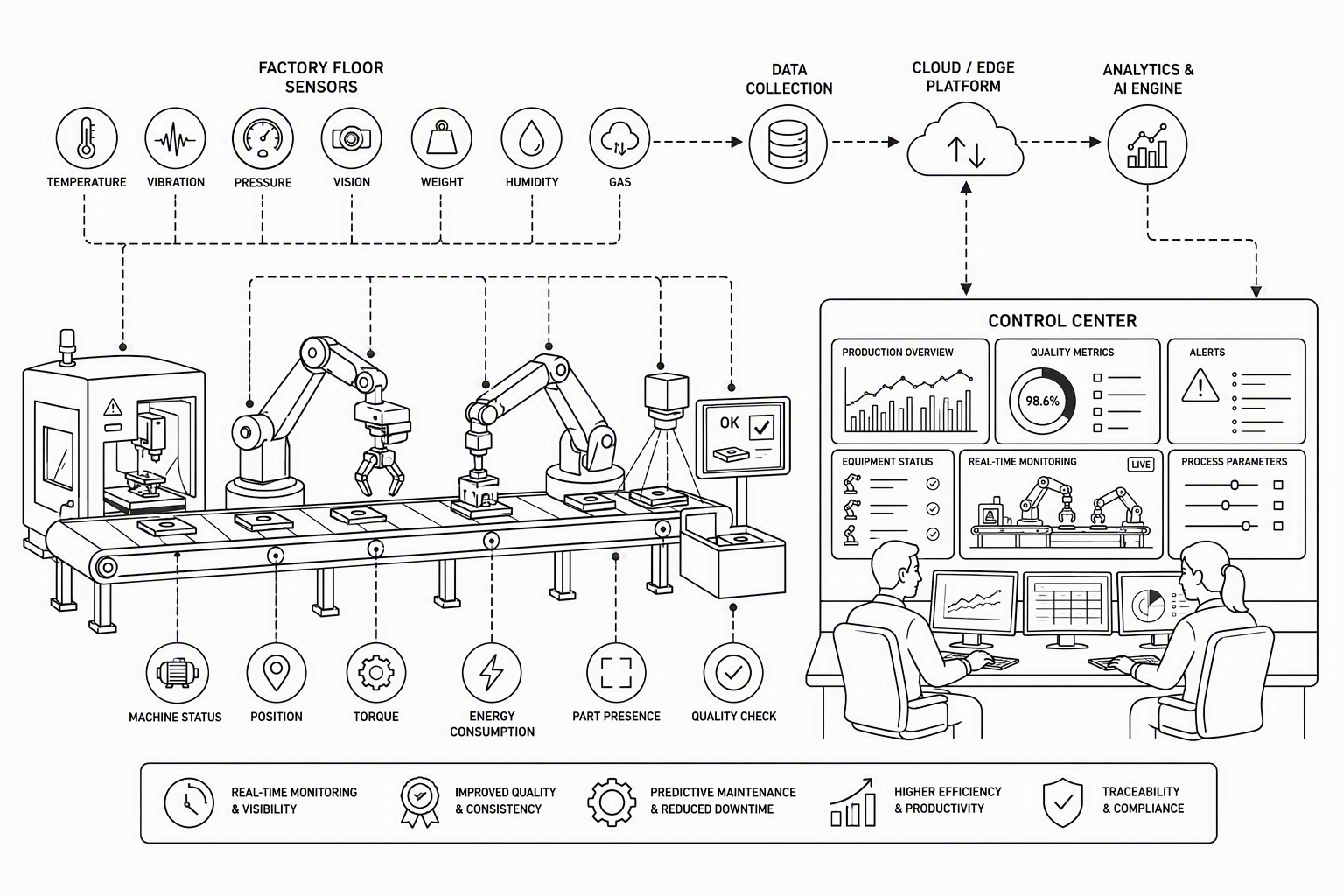
Artificial intelligence and machine learning are becoming practical tools in automated systems, not just future ideas. They help manufacturers interpret machine data faster and make production issues easier to understand.
One major use is predictive maintenance. Instead of waiting for breakdowns, teams can use patterns in performance data to spot downtime risks, performance losses, and root causes earlier. That supports better uptime and lower disruption.
Another growing trend is agentic AI built into manufacturing platforms. It can combine machine signals, ERP information, and shop floor knowledge to produce summaries and guide action. For factories dealing with many machines and constant updates, that makes daily decision-making simpler and more useful.
Industrial Internet of Things (IIoT) Impact
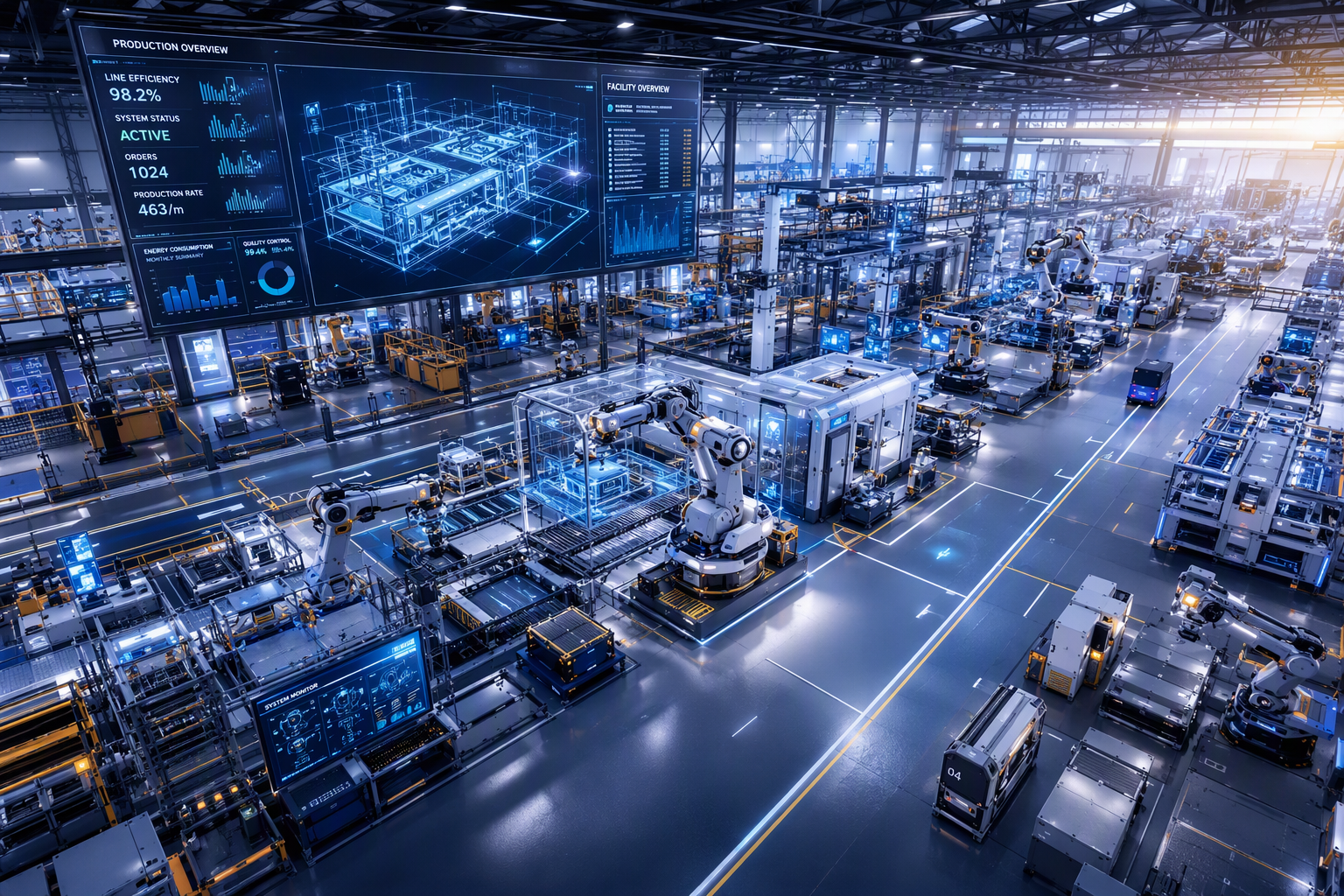
The industrial internet of things connects machines, monitors, and software across the plant. That link matters because connected devices improve visibility and make data collection more useful.
With IIoT in place, automation solutions can react in real time instead of after the fact. Managers can monitor production, adjust labor, and respond to bottlenecks sooner. This connected approach is one of the biggest trends in the industry. The next sections explain how devices, cloud systems, and analytics make it work.
Connected Devices and Real-Time Data
Connected devices are transforming industrial processes by making machine status visible as work happens. Instead of waiting for reports after a shift, teams can see performance, downtime, and output in real time.
That speed changes how factories respond. Sensor data can reveal bottlenecks, slow cycles, or quality drift before they become larger problems. Better data acquisition also helps managers compare assets and identify where automation will create the biggest return.
For you, the benefit is practical. Real-time monitoring supports faster decisions on production, staffing, and maintenance. It also connects separate machines into a broader operating picture, which is essential for any factory trying to move toward a more integrated and responsive model.
Cloud Computing and Data Analytics
Cloud computing helps manufacturers store, organize, and access production data across locations. That makes it easier to monitor assets remotely and share information with the people who need it.
Data analytics then turns that information into something useful. Teams can study downtime, quality issues, and output trends to make informed decisions. This improves process optimization and gives leaders a better view of where delays or waste are coming from.
There is also a wider business benefit. When production data is available beyond isolated systems, manufacturers can support supply chain planning, build better estimates, and respond more clearly to customer needs. Connected data creates a more complete view of operations.
Robotics and Cobots in Modern Factories
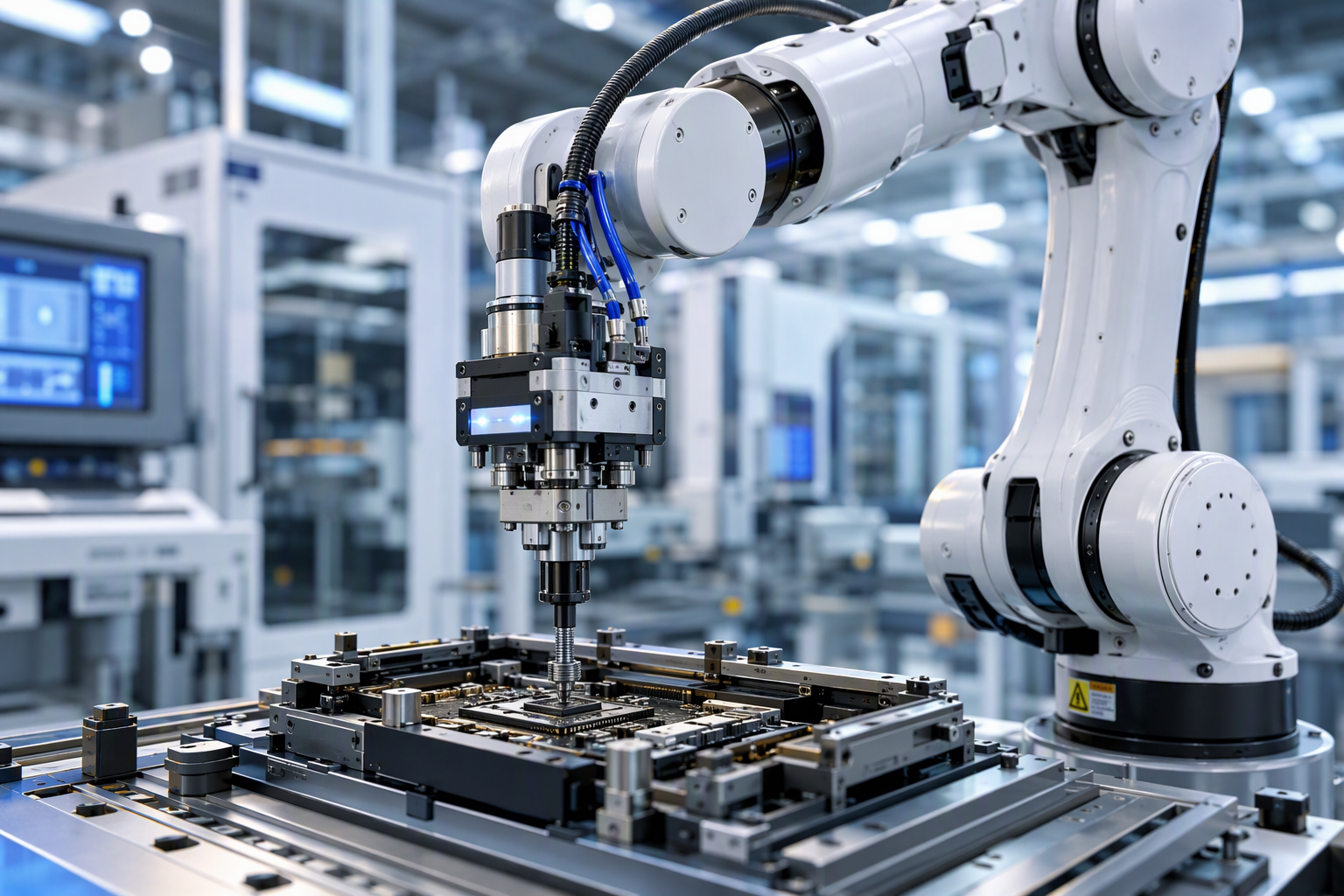
Robotics is one of the clearest examples of automation in action. Autonomous robots and collaborative robots now support repetitive work, movement, and handling tasks across the factory floor.
The difference is in how they operate. Some robots perform fixed, high-speed jobs with little variation. Cobots are designed to work closer to people and assist with complex tasks or checks. Both help manufacturers improve output while using labor more effectively. Here is how each fits modern production.
Autonomous Robots for Manufacturing
Autonomous robots are used for specific tasks that need speed, repeatability, and consistency. On a production line, they can handle movement, positioning, and repetitive actions without constant operator input.
Their value comes from reliable automation logic. Once the process is defined, robots can perform the same motion over and over with fewer errors. That helps manufacturing processes run faster and with more stable output.
These systems are especially useful where the work is dull or physically demanding. They free workers from repetitive tasks and support safer operations. In plants focused on throughput, autonomous robots can play a central role in keeping production steady and predictable.
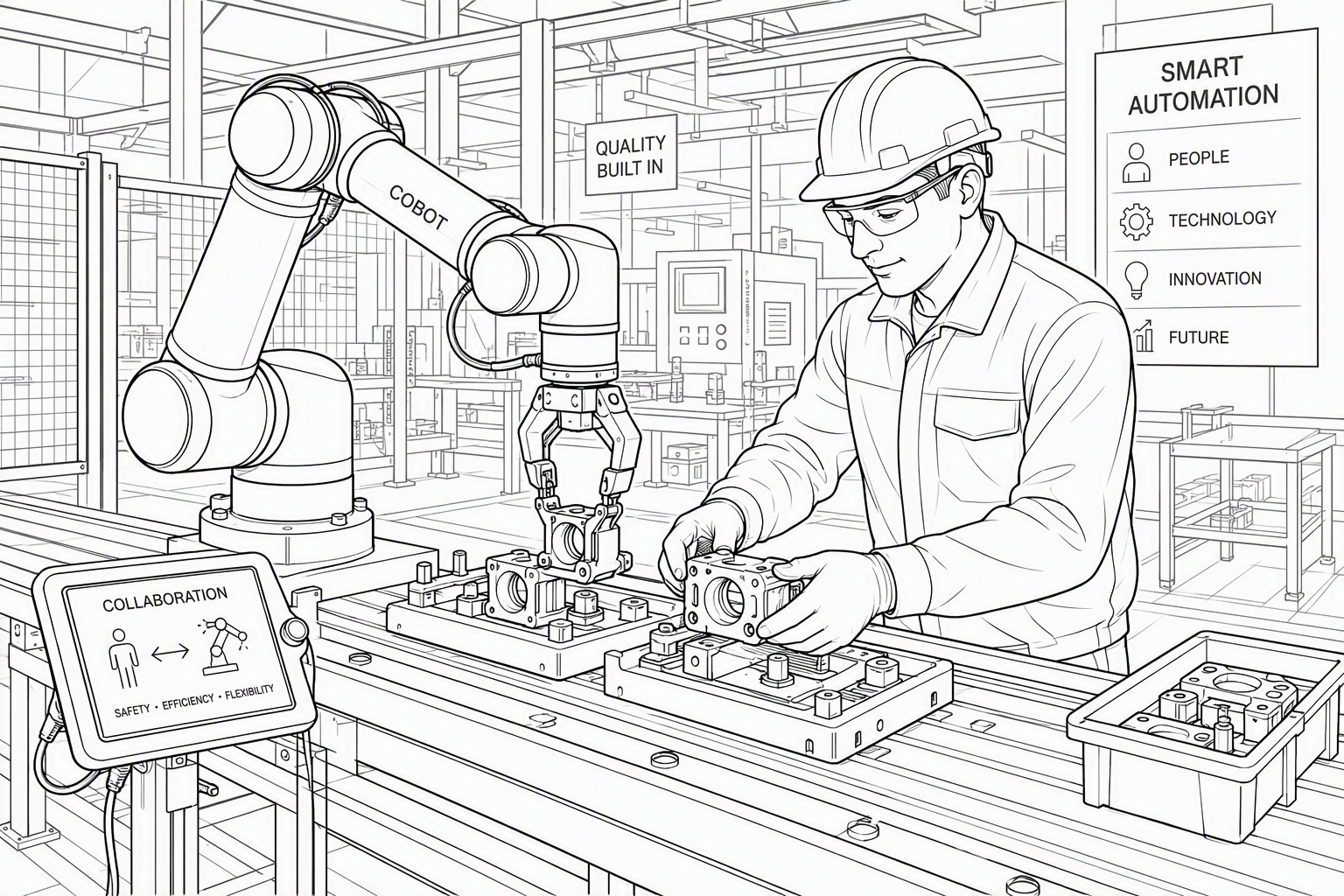
Collaborative Robots (Cobots) on the Factory Floor
Collaborative robots, or cobots, are designed to support people rather than replace them outright. On the factory floor, they help with handling, light assembly, and quality checks where some human intervention still adds value.
That makes cobots useful in mixed environments. A team member can supervise the process, while the cobot takes over repetitive motions or assists with positioning and inspection. The result is less strain and better consistency.
For many manufacturers, cobots offer a practical entry point into automation. They bring some of the benefits of robotics without requiring a fully redesigned operation. When tasks are varied or manual work remains important, cobots help bridge that gap.
Digital Twins and Simulation Tools
Digital twins and simulation tools help manufacturers test ideas before making changes on the floor. That reduces risk and supports better planning.
These tools also improve predictive maintenance and process optimization by making it easier to study machine behavior and workflow performance. When teams can model operations before investing time or capital, they improve design efficiency and avoid preventable disruptions. Two common benefits stand out: maintenance planning and smarter process design.
Enhancing Predictive Maintenance
Predictive maintenance improves when manufacturers can see performance changes before failure occurs. Sensor data makes that possible by showing patterns in downtime, slow cycles, and equipment behavior over time.
This helps reduce maintenance costs because teams can plan work instead of reacting late. It also supports better work orders by showing what needs attention first and where the root problem may be developing.
The approach is useful even when plants have legacy equipment. Monitoring devices that are easy to integrate can bring older assets into a connected system. That allows manufacturers to improve uptime and maintenance planning without replacing every machine at once.
Improving Design and Process Efficiency
Simulation tools help teams test changes to a production line before making them in real operations. That improves design efficiency because weak points can be spotted earlier.
The same tools support process optimization. Manufacturers can examine flow, timing, and bottlenecks to decide where automation will help most. That reduces waste and lowers the chance of costly trial-and-error changes on the floor.
There is also value beyond the line itself. Better process design can support supply chain planning, improve estimates, and align capacity with demand. When production models are more accurate, leaders can make smarter operational choices with less guesswork.
Key Trends Shaping the Future of Industrial Automation
Several future trends are shaping industrial automation right now. Smart manufacturing, AI-supported insights, connected monitoring, and faster data use are changing how factories operate.
What ties these trends together is better visibility and quicker response. Modern automation systems are moving beyond isolated control and toward connected decision-making. Smart manufacturing and edge computing stand out because they directly improve speed, uptime, and action on the shop floor. These two trends deserve closer attention.
Increase in Smart Manufacturing Adoption
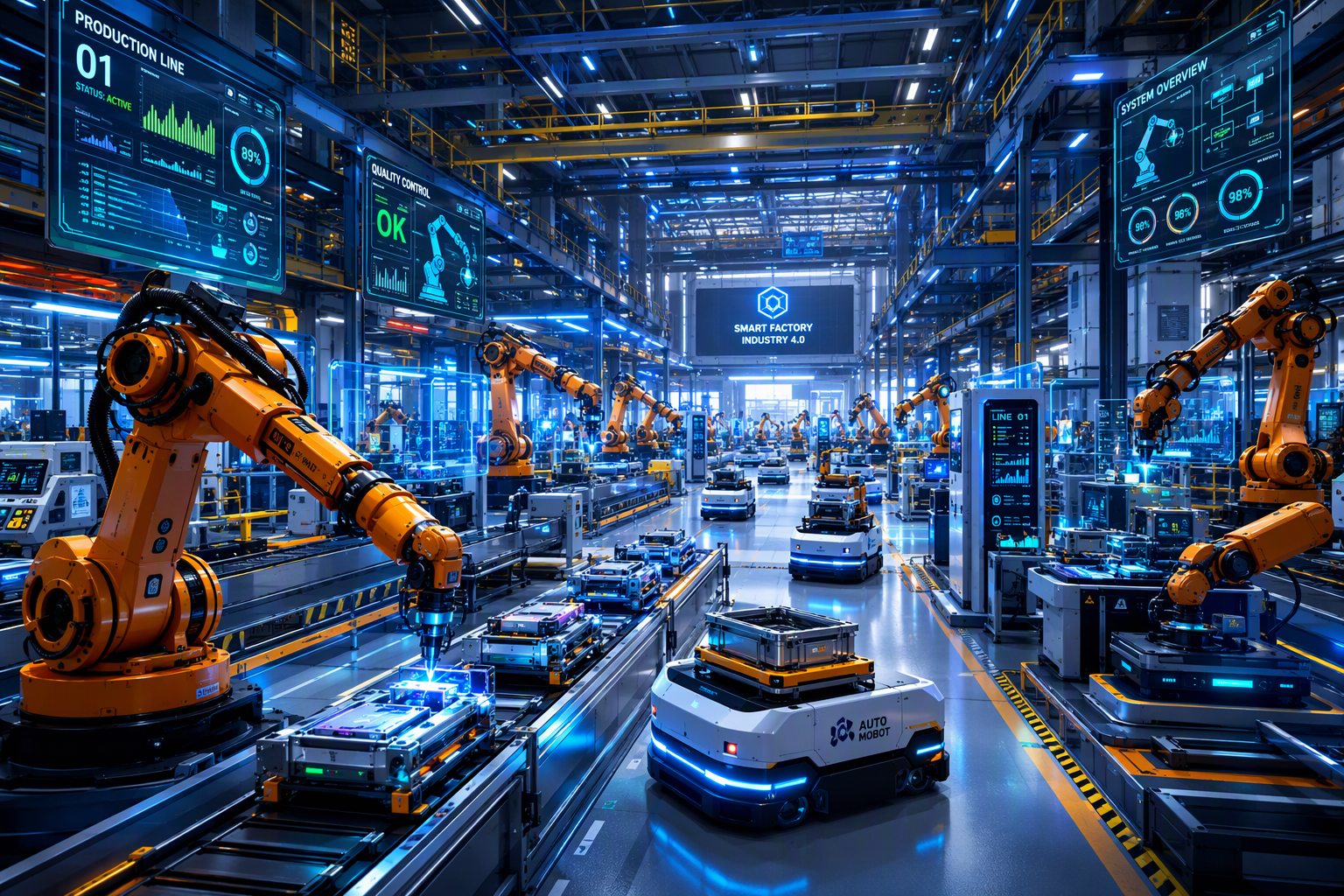
Smart manufacturing connects machines, data, and people so factories can run with more awareness and fewer blind spots. It builds on automation systems by making information easier to use across the operation.
That improves operational efficiency. Managers can see downtime causes, track production performance, and respond sooner when output drifts. Stronger quality control is another advantage because issues can be detected earlier and addressed before they spread.
Over time, these gains support cost reductions. Less waste, fewer interruptions, and better planning all improve results. That is why smart manufacturing adoption is growing. Companies want connected production environments that help them move faster and compete with more confidence.
Growth of Edge Computing Applications
Edge computing brings data processing closer to the machines generating it. On the factory floor, that means faster response than sending everything elsewhere first.
The payoff is real time action. Systems can apply control logic quickly, support monitoring, and help operators respond before minor issues become major losses. For time-sensitive production, that speed matters.
Edge tools also support more informed decisions because they keep critical data available where work is happening. Combined with broader analytics and cloud access, edge computing gives manufacturers a practical way to improve responsiveness without losing visibility across the business.
Industries Benefiting Most from Automation
Smart manufacturing connects machines, data, and people so factories can run with more awareness and fewer blind spots. It builds on automation systems by making information easier to use across the operation.
That improves operational efficiency. Managers can see downtime causes, track production performance, and respond sooner when output drifts. Stronger quality control is another advantage because issues can be detected earlier and addressed before they spread.
Over time, these gains support cost reductions. Less waste, fewer interruptions, and better planning all improve results. That is why smart manufacturing adoption is growing. Companies want connected production environments that help them move faster and compete with more confidence.
Automotive and Aerospace Innovations
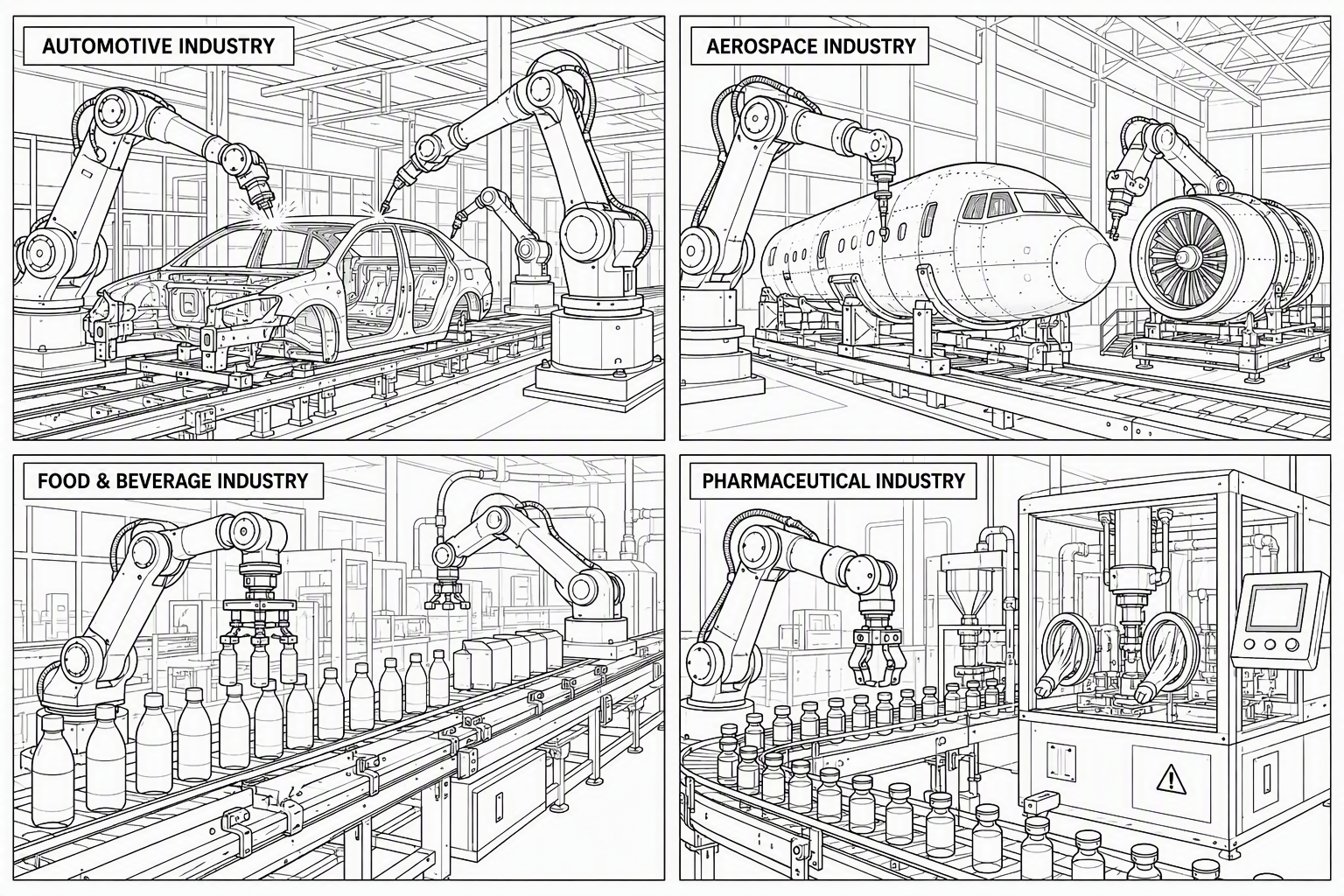
The automotive industry has long relied on automation technology for speed and repeatability. Assembly lines and a tightly managed production line make automation a natural fit.
Aerospace also benefits, though the focus often includes precision, traceability, and strict process control. In both sectors, connected systems help teams improve throughput while maintaining performance standards.
| Industry | Common automation focus | Main value |
|---|---|---|
| Automotive industry | Assembly lines, repeatable movement, high-volume output | Faster production and better consistency |
| Aerospace | Precision processes, monitored equipment, controlled workflows | Stronger accuracy and visibility |
These examples show why both sectors remain leading users of industrial automation in modern manufacturing.
Advances in Food, Beverage, and Pharmaceuticals
Food and beverage producers benefit from automation because output must stay consistent while handling frequent changeovers and strict quality control needs. Automated monitoring helps catch issues earlier and reduce waste.
Pharmaceuticals also rely on strong process discipline. In this space, batch production and verified conditions matter, so automation solutions help maintain repeatability and better oversight across each run.
For both industries, connected monitoring and data visibility improve confidence. Teams can track performance, respond faster to variation, and support cleaner production records. That makes automation especially useful where product integrity and process consistency are central to the business.
Frequently Asked Questions (FAQ)
What are the main types of industrial automation? The most common types include fixed automation, programmable automation, and flexible automation. Each type serves specific manufacturing needs, from high-volume batch production to more adaptable systems. How does machine learning enhance industrial automation? Machine learning algorithms analyze sensor data and operational metrics to optimize production scheduling, improve quality checks, and enable predictive maintenance, ultimately reducing maintenance costs and enhancing operational efficiency. For any further questions, exploring those specific tasks or automation solutions can add clarity and improve your understanding of this evolving field.
What are the main benefits of industrial automation?
Industrial automation improves operational efficiency by reducing delays, stabilizing output, and supporting minimal human intervention in repetitive work. It also helps deliver cost reductions through less downtime and waste, while improving quality control with more repeatable processes and earlier detection of production issues.
Which challenges should companies consider before investing in automation?
Before investing in automation technology, companies should consider implementation complexity, compatibility with legacy equipment, training needs, and ongoing maintenance costs. They should also decide where human intervention still adds value, since not every process benefits from full automation or immediate large-scale change.
What are the leading career opportunities in the industrial automation field?
Strong opportunities exist for people who work with automation systems, control system design, field devices, machine connectivity, and automation solutions. Roles tied to production intelligence are also growing, including positions that support data-driven operations and emerging tools such as AI agents in manufacturing environments.
Conclusion
In conclusion, the industrial automation landscape is rapidly evolving, driven by technological advancements and the increasing demand for efficiency across various sectors. By understanding the key trends, such as the rise of smart manufacturing and the integration of AI and IoT, businesses can stay ahead of the curve. Embracing these changes not only enhances productivity but also fosters innovation in industries ranging from automotive to pharmaceuticals. As you explore opportunities within the industrial automation field, remember that the right knowledge and tools can empower your organization to thrive in this dynamic environment. If you're ready to take the next step in your automation journey, reach out for a free consultation today and discover how we can support your goals!
You might also like