Innovations in the Industrial Automation Sector to Watch
Innovations in the Industrial Automation Sector to Watch
Key Highlights
- Industrial automation utilizes control systems and automation technology to manage processes with minimal human input, driving productivity gains.
- Key market trends include the integration of artificial intelligence and the Industrial Internet of Things (IIoT) to enhance automation solutions.
- The benefits are significant, ranging from improved efficiency and product quality to enhanced workplace safety and sustainability.
- Different types of automation, like fixed and flexible systems, cater to various production needs, from mass production to customized batches.
- While initial costs and integration can be challenging, the long-term advantages make industrial automation a crucial investment for modern industries.
- The global Industrial Automation Sector market is projected to see substantial growth, driven by new technologies and increasing demand for efficiency.
Introduction
The world of manufacturing is changing at a rapid pace, and at the heart of this transformation is industrial automation. This isn't just about robots on an assembly line; it's a complete rethinking of how we produce goods. By using advanced automation systems and sophisticated control systems, companies are boosting efficiency, improving quality, and creating safer work environments. Are you curious about the latest innovations driving this change? Let's explore the exciting developments in the Industrial Automation Sector technology and what they mean for the future of industry.
Defining the Industrial Automation Sector in Today's Landscape
Industrial Automation Sector is the use of computer-controlled systems, like robots and specialized software, to manage industrial processes with very little human involvement. In modern industries, it signifies a shift from people operating machines to machines operating themselves, with humans guiding the overall strategy and direction.
This powerful automation technology is the core of smart manufacturing. By implementing industrial automation systems, businesses can create smarter, faster, and more reliable operations. The right automation solutions help companies stay competitive by optimizing their production from start to finish.
Evolution of Industrial Automation Technologies
The journey of industrial automation has been a fascinating one. It began with simple mechanization, where machines assisted human workers. Over time,the Industrial Automation Sector technology evolved, introducing programmable controllers that could handle more complex sequences. This was a major leap forward from basic, fixed machinery.
With the dawn of the digital age, industrial robots became more sophisticated and capable of performing intricate tasks with precision. These robots, integrated into larger automation systems, could handle everything from welding car frames to assembling tiny electronic components, fundamentally changing the factory floor.
Today, we are in the era of Industry 4.0. This latest phase of industrial automation is defined by interconnected systems, artificial intelligence, and real-time data analysis. Automation is no longer just about performing a task; it's about creating intelligent, self-optimizing manufacturing environments that are flexible and highly efficient.
How Modern Industrial Automation Works
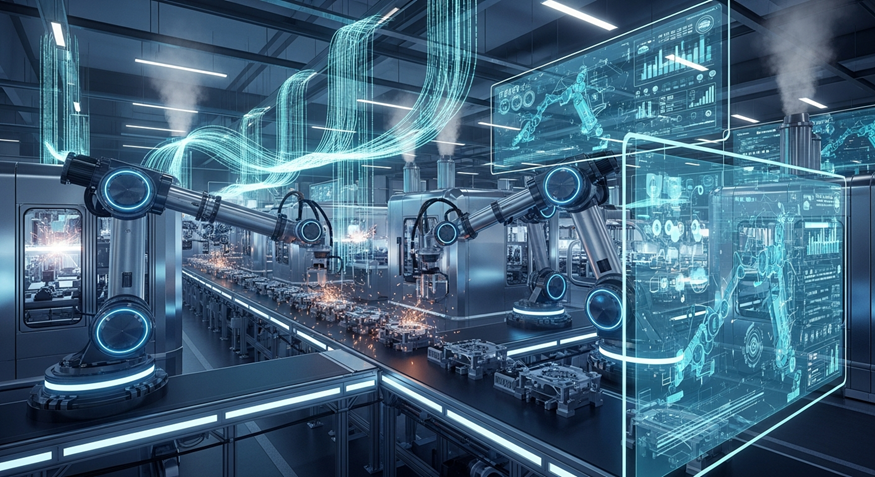
At its core, modern Industrial Automation Sector functions through a continuous feedback loop. Machines and sensors monitor conditions, process that data, and respond in real time. This allows the system to make automatic adjustments to maintain optimal performance without constant human intervention, ensuring consistent product quality.
This process relies on a closed-loop system working in a predictable sequence. First, sensors gather data from the production line. Then, controllers like PLCs receive these signals and make decisions based on their programming. Finally, actuators and robots execute the physical actions, like moving a part or adjusting a setting.
This cycle of sensing, deciding, and acting happens continuously. All the components communicate through industrial networks, while software gives human workers a real-time view of what's happening. The result is a process that is faster, safer, and more consistent than what could be achieved with manual labor alone.
Key Components and Systems in Industrial Automation
Industrial Automation Sector systems are built from several key components working together. At the heart of these systems are control systems, such as Programmable Logic Controllers (PLCs) and Distributed Control Systems (DCS). These act as the "brain," making decisions and directing machinery.
Sensors and actuators are the "eyes" and "hands" of the operation. Sensors detect variables like temperature, pressure, or position, while actuators carry out physical tasks. A Human-Machine Interface (HMI) provides a dashboard for operators to monitor the process and interact with the automation systems, giving them a clear window into production.
Modern industrial automation systems also incorporate advanced software for data analysis and predictive maintenance. By analyzing data from machines, these systems can predict potential failures before they happen, reducing downtime. All these parts connect through industrial networks, ensuring seamless communication across the entire factory floor.
Benefits of Implementing Industrial Automation
Thinking about adopting industrial automation? The benefits of automation are compelling and address many common challenges in manufacturing. By automating industrial processes, companies can significantly lower operating costs, boost productivity, and improve the overall quality of their products. Automation systems transform the production line into a more efficient and reliable operation.
From enhancing safety by having robots handle dangerous tasks to gaining greater flexibility in your manufacturing process, automation delivers a strong return on investment. Let's look closer at how these advantages can directly impact your business's efficiency, quality, and sustainability goals.
Enhancing Efficiency and Productivity
One of the most significant productivity gains from industrial automation comes from its ability to operate around the clock. Unlike a human workforce that works in shifts, automated systems can run 24/7, 365 days a year, only stopping for scheduled maintenance. This continuous operation dramatically increases output and operational efficiency.
Furthermore, automation excels at handling repetitive tasks. Machines can perform the same action thousands of times without fatigue or a drop in performance. This frees up human workers to focus on more strategic and value-added roles that require critical thinking and problem-solving skills.
The result is a more streamlined and productive environment. Key benefits include:
- Faster Cycle Times: Automated systems perform tasks faster and more consistently than manual labor.
- Reduced Downtime: With fewer human errors and predictive maintenance capabilities, unplanned shutdowns are minimized.
- Increased Throughput: Companies can produce more goods without needing to expand their labor force, leading to significant productivity gains.
Improving Quality and Consistency
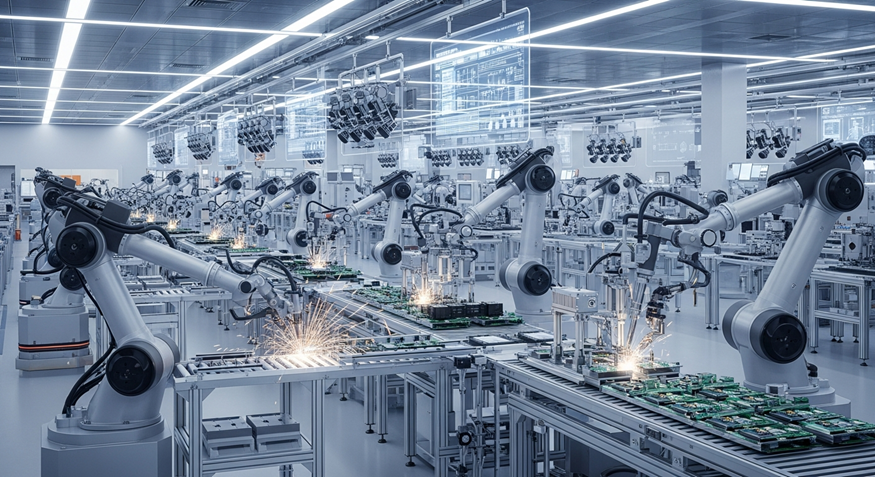
Ensuring high product quality is a top priority for any manufacturer. The Industrial Automation Sector solutions play a crucial role in achieving consistent quality by removing the variability associated with human error. Automated systems perform tasks with incredible precision, every single time.
A great example is in the automotive industry, where manual piston installation had an error rate of 1-1.5%. With automation, that rate has plummeted to an astonishing 0.00001%. This level of precision is simply unattainable with manual industrial processes. Robots don't get tired or distracted, so the quality of the last item produced is identical to the first.
This leads to several quality-related benefits:
- Reduced Scrap and Waste: Higher precision means fewer defective parts, saving materials and costs.
- Enhanced Quality Control: Automated vision systems can inspect products at high speeds, identifying defects that a human eye might miss.
- Consistent Output: Every product meets the exact same specifications, ensuring reliability and customer satisfaction.
Supporting Sustainability in Manufacturing
Beyond efficiency and quality, the Industrial Automation Sector is becoming a key driver of sustainability in manufacturing. Automated systems are designed for optimal resource efficiency. By precisely controlling the manufacturing process, they minimize the use of raw materials, water, and energy, directly reducing the environmental footprint of operations.
Automation also helps reduce waste. With fewer errors and defects, less material is scrapped and sent to landfills. This resource efficiency extends throughout the supply chain, as optimized production schedules mean more efficient transportation and logistics, further cutting down on emissions and energy consumption.
Ultimately, a smarter, more controlled manufacturing process is a greener one. Industrial automation provides the tools for companies to not only improve their bottom line but also meet their environmental, social, and governance (ESG) goals. It's a powerful way to build a more sustainable future for manufacturing.
Market Trends Shaping the Industrial Automation Sector
The Industrial Automation Sector market is dynamic, with several key market trends driving its rapid evolution. The global industrial automation market is expanding as businesses across sectors recognize the need to modernize and stay competitive. Growing demand for efficiency, quality, and flexibility is pushing companies to invest in automation.
New technologies like AI, IoT, and advanced robotics are at the forefront of this transformation. These innovations are making automation more intelligent, accessible, and powerful than ever before. We will now examine the specific growth drivers and emerging sectors that are defining the future of the automation market.
Growth Drivers for the Industrial Automation Sector in the United States
In the United States, several factors are accelerating the growth of the Industrial Automation Sector market. Intense global competition and rising market demands are pressuring manufacturers to find new ways to gain a competitive edge. Automation technology offers a powerful solution by boosting productivity and reducing operational costs.
While labor shortages and increasing labor costs are a challenge for many industries, automation helps mitigate these issues. By automating certain tasks, companies can optimize their workforce and keep production moving smoothly. Government initiatives that support factory modernization also encourage businesses to invest in new automation equipment.
Key drivers for automation adoption in the U.S. include:
- The need to reduce operating expenses, including labor costs.
- The drive for higher productivity to meet market demands.
- The desire to improve product quality and consistency for a better competitive edge.
Emerging Sectors Influenced by Automation
While manufacturing has long been a hub for automation, its influence is rapidly spreading to various sectors. Industrial Automation Sector systems are no longer confined to the factory floor. Warehousing and logistics, for example, have been revolutionized by automated guided vehicles and smart sorting systems that optimize the supply chain.
The food and beverage industry is another area seeing significant adoption. Automation solutions are used for everything from mixing and packaging to quality control, ensuring safety and consistency. Even sectors like energy and pharmaceuticals are leveraging automation for process control and data management.
Some key emerging industrial applications for automation include:
- Agriculture: Automated tractors and drones for precision farming.
- Healthcare: Robotic surgery and automated lab testing.
- Retail: Automated inventory management and checkout systems.
Anticipated Market Growth Through 2030 and Beyond
The future of the Industrial Automation Sector looks incredibly bright. Projections for the global industrial automation market show strong and sustained market growth. Driven by the ongoing adoption of Industry 4.0 technologies and the increasing need for efficiency, the automation market is set to expand significantly in the coming years.
Analysts predict that the market will experience a robust compound annual growth rate (CAGR) as more industries integrate automation into their core operations. This growth is fueled by continuous innovation and the clear return on investment that automation provides. The market trends we see today are just the beginning.
Here is a glimpse of the projected market growth:
| Year | Estimated Market Value (USD) |
|---|---|
| 2026 | $261.23 Billion |
| 2033 | $455.26 Billion |
This data indicates a CAGR of 9.7% from 2026 to 2033, highlighting the powerful momentum behind the future of industrial automation.
Types of Industrial Automation Sector Systems
Not all automation systems are created equal. The right type of automation depends entirely on your specific manufacturing process and production goals. Industrial automation systems are generally categorized into four main types: fixed, programmable, flexible, and integrated. Each offers a different balance of speed, efficiency, and adaptability.
Understanding these distinctions is key to selecting the perfect solution for your needs. Whether you need to mass-produce a single product or quickly switch between different models, there's a type of automation designed for the job. Let's break down some of these systems, starting with fixed versus flexible automation.
Fixed vs. Flexible Automation Solutions
Fixed automation, also known as "hard automation," is designed for a single purpose. It uses specialized automation equipment to perform the same repetitive tasks at high speeds. This approach is ideal for mass production where the production process rarely changes, such as on an automotive assembly line.
On the other end of the spectrum is flexible automation. This type of system is designed for adaptability and can be quickly reprogrammed to handle different products or tasks. It's perfect for batch production or industries where market demands change frequently, allowing for quick changeovers without significant downtime.
Here's a simple comparison:
- Fixed Automation: High volume, low variety. Offers maximum speed and efficiency for a single product.
- Flexible Automation: High variety, lower volume. Provides the agility to produce different items with the same equipment.
- Programmable Automation: A middle ground, suitable for producing different products in batches.
Programmable Logic Controllers (PLC)
Programmable Logic Controllers, or PLCs, are a cornerstone of the modern Industrial Automation Sector. These ruggedized computers are the workhorses of control systems, designed to withstand harsh industrial environments while reliably managing automated processes. They are a fundamental piece of automation technology.
What makes PLCs so popular is their flexibility and ease of use. Engineers use a simple programming language, often ladder logic, to tell the PLC how to control machinery. This allows them to easily sequence complex operations, monitor sensors, and make decisions in real time.
As powerful automation solutions, PLCs can be scaled to control a single machine or an entire factory network. Their modular design means you can add more capabilities as your needs grow, making them an incredibly versatile and cost-effective choice for a wide range of automation applications.
Human-Machine Interfaces (HMI) and Robotics
A Human-Machine Interface (HMI) is the user-friendly dashboard that connects people to machines. It provides operators with a real-time visual overview of the automation systems, allowing them to monitor performance, adjust settings, and respond to alarms. A good HMI makes complex automation technology intuitive and easy to manage.
Industrial robots are another essential component. These machines handle tasks like welding, painting, and material handling with speed and precision. A newer and exciting development is the rise of collaborative robots, or "cobots." These robots are designed to work safely alongside human employees, combining the strengths of both.
Together, HMIs and robotics create a powerful synergy. The HMI gives operators control and insight, while the robots execute the physical tasks. This combination allows for a flexible and efficient production environment where humans and machines can work together seamlessly.
Innovations in Industrial Automation Technologies
The field of industrial automation is constantly being reshaped by groundbreaking innovations. The pace of change is accelerating, thanks to new technologies that are making automation smarter, more connected, and more capable. At the forefront of this movement are artificial intelligence (AI) and machine learning.
These intelligent systems are revolutionizing what's possible with automation technology. From predicting equipment failures to optimizing production in real time, AI is adding a new layer of intelligence to the factory floor. Let's examine how AI, the Internet of Things, and advanced sensors are driving the future of automation.
Artificial Intelligence and Machine Learning Applications
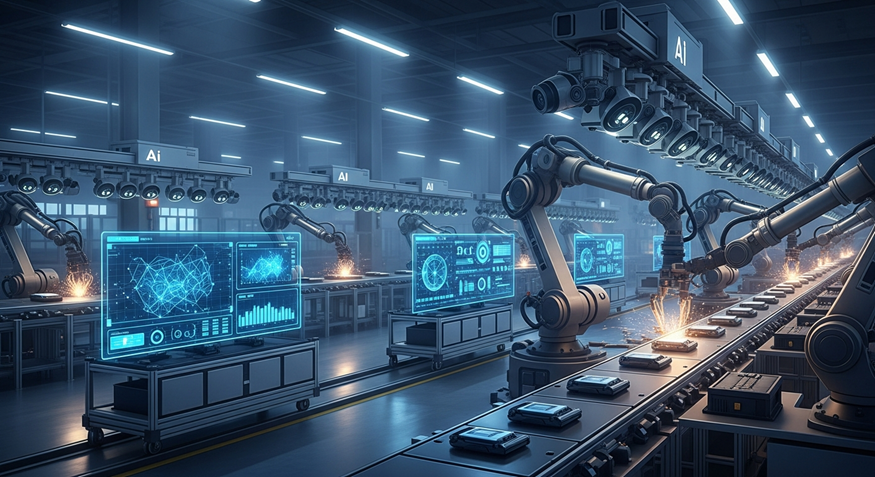
Artificial intelligence (AI) and machine learning are no longer just concepts from science fiction; they are practical tools transforming industrial automation. These technologies enable automation systems to learn from data, identify patterns, and make intelligent decisions without human programming for every scenario.
One of the most impactful applications is predictive maintenance. By analyzing data from sensors on machinery, AI algorithms can predict when a part is likely to fail. This allows maintenance teams to address issues before they cause a costly breakdown, saving time and money.
AI and machine learning are also being used in other powerful ways:
- Process Optimization: Machine learning can analyze production data to find inefficiencies and suggest improvements in real time.
- Quality Control: AI-powered vision systems can detect subtle defects in products with greater accuracy than ever before.
- Product Design: AI can help engineers simulate and optimize product designs for better performance and manufacturability.
Internet of Things (IoT) Integration
The Industrial Internet of Things (IIoT) is the network of interconnected sensors, smart devices, and machines that communicate with each other on the factory floor. This constant stream of data provides an unprecedented level of visibility into every aspect of the production process. Integrating IoT is a game-changer for automation technology.
With IoT, managers can use remote monitoring to check on operations from anywhere in the world. A plant manager could view real-time production data on their tablet, identify a bottleneck, and make adjustments without ever stepping foot in the factory.
This connectivity enables a truly smart factory. Data from thousands of smart devices can be collected and analyzed to optimize workflows, improve energy efficiency, and enhance overall productivity. The IIoT acts as the central nervous system of modern industrial automation, linking everything together into one cohesive, intelligent system.
Advanced Sensors and Smart Devices
The power of AI and IoT would be limited without the data provided by advanced sensors and smart devices. These devices are the foundation of modern automation systems, collecting the crucial real-time information needed to make intelligent decisions. Today's sensors are more capable, durable, and cost-effective than ever before.
Designed to operate in harsh industrial environments, these advanced sensors can measure a huge range of variables, including temperature, vibration, pressure, and chemical composition. They provide the granular data that fuels predictive maintenance algorithms and process optimization engines.
Smart devices take this a step further by including onboard processing power. This allows them to analyze data at the "edge"—right where it's collected—rather than sending everything to a central server. This "edge computing" enables faster responses and reduces the load on the network, making automation systems more efficient and responsive.
Real-World Examples of Industrial Automation
The best way to understand the impact of industrial automation is to see it in action. These automation solutions are not just theoretical concepts; they are actively transforming industries around the world. The industrial applications of automation are diverse, with countless use cases demonstrating its value in improving efficiency, quality, and safety.
From the cars we drive to the food we eat, automation systems play a vital role in our daily lives. Let's explore some specific examples from manufacturing, food processing, and the energy sector to see how automation is making a real-world difference.
Case Studies from Manufacturing
The manufacturing process has been completely reshaped by automation. In automotive manufacturing, for example, the assembly line is a symphony of robotic arms performing tasks like welding, painting, and part installation with incredible speed and precision. This has dramatically improved both the speed and quality of car production.
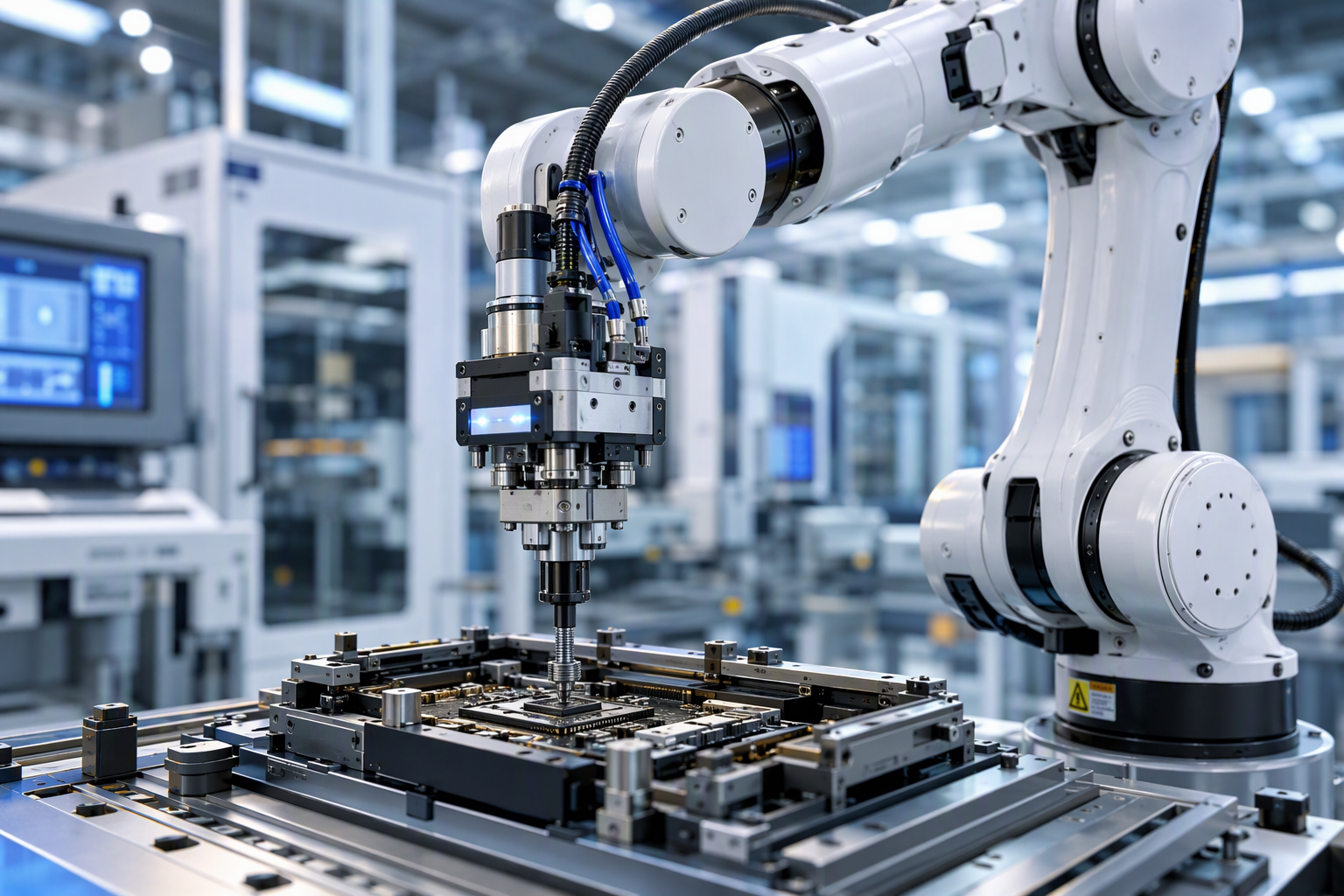
In electronics, high-speed pick-and-place machines are essential. These automation solutions can mount thousands of tiny components onto circuit boards every hour, a task that would be impossible for humans. This enables the mass production of the complex electronics we rely on every day.
These examples highlight key benefits:
- Automotive: Robots on the production line handle hazardous and repetitive tasks, improving safety and consistency.
- Electronics: High-speed automation allows for the cost-effective production of intricate devices.
- Logistics: Automated warehouse systems improve supply chain management by speeding up order fulfillment.
Automation in Food & Beverage Processing
The food and beverage industry relies heavily on process automation to ensure safety, consistency, and efficiency. In this sector, quality control is paramount, and automation provides the precision needed to meet strict standards. Machines can handle tasks like mixing ingredients, filling bottles, and packaging products with minimal human intervention.
For example, automated filling machines can cap thousands of bottles per hour, ensuring each one is filled to the exact same level. This not only increases speed but also reduces product waste. Similarly, in batch production, automated control systems can precisely manage temperatures and mixing times to guarantee a consistent product every time.
These industrial applications are crucial for maintaining food safety and quality. By reducing manual handling, automation minimizes the risk of contamination and ensures that every product leaving the factory meets the highest standards.
Energy and Power Sector Innovations
In the energy sector, automation technology is critical for ensuring reliability and safety. Power plants and utility grids are complex systems that require constant monitoring and control. Automation systems manage the flow of electricity, balance loads, and respond instantly to fluctuations in demand.
Remote monitoring is a particularly valuable application in this field. Operators can oversee vast networks of equipment, including remote wind farms or offshore oil rigs, from a central control room. This improves safety by reducing the need for personnel to be physically present in hazardous environments.
Predictive maintenance is also transforming the energy sector. By analyzing data from turbines, transformers, and other critical equipment, automation systems can predict potential failures before they lead to blackouts. This proactive approach ensures a more stable and reliable power supply for everyone.
Challenges Facing Industrial Automation Adoption
While the benefits of industrial automation are clear, the path to adoption isn't always smooth. Companies often face several challenges, from high initial costs to integrating new automation technology with existing legacy systems. Understanding these potential issues is the first step toward overcoming them.
Successfully implementing automation solutions requires careful planning and a strategic approach. It's not just about buying new equipment; it's about managing integration, training your workforce, and securing your new systems. Let's take a look at some of the main hurdles and how to clear them.
Overcoming Integration and Legacy System Issues
One of the biggest hurdles in automation is integrating new technology with older, legacy systems. Many factories have equipment and control systems that have been in place for decades. These systems often don't "speak the same language" as modern automation equipment, creating communication barriers.
A phased approach is often the best strategy. Instead of a complete overhaul, companies can start by upgrading key areas or implementing industrial automation solutions that are designed to bridge the gap between old and new technologies. Using gateway devices or middleware can help legacy systems communicate with a modern network.
To successfully manage integration, consider these steps:
- Conduct a thorough audit: Understand the capabilities and limitations of your current legacy systems.
- Prioritize upgrades: Focus on areas where automation will have the biggest impact, like implementing predictive maintenance on critical machinery.
- Choose interoperable solutions: Select new automation equipment and software that are built on open standards.
Workforce Adaptation and Training Needs
The introduction of automation systems often raises concerns about job displacement among human workers. However, the reality is more nuanced. While automation does take over repetitive tasks, it also creates new roles that require different skills. The key challenge is managing this transition and preparing the workforce for the future.
Meeting the training needs of your employees is crucial. Workers will need to learn how to operate, maintain, and collaborate with new automation systems. Investing in upskilling and reskilling programs can help your team adapt and thrive in a more automated environment, ensuring workplace safety and effective human intervention when needed.
This shift also empowers employees. By moving away from tedious manual labor, human workers can focus on more engaging and strategic responsibilities, such as process improvement, quality assurance, and managing the overall automation strategy. A well-trained workforce is essential to maximizing the benefits of your automation investment.
Conclusion
In summary, the innovations in the industrial automation sector are transforming how industries operate, making processes more efficient and sustainable. From the integration of artificial intelligence and the Internet of Things to advanced robotics and smart devices, these advancements are paving the way for a future where productivity and quality are paramount. However, as we embrace these technologies, it is crucial to address the challenges that come with them, such as workforce training and cybersecurity risks. By staying informed and adaptable, businesses can harness the full potential of industrial automation. If you want to learn more about how these innovations can benefit your organization, consider signing up for our free trial or consultation today!
Frequently Asked Questions
What are the main benefits of industrial automation for manufacturers?
Industrial automation offers manufacturers significant benefits, including major productivity gains, improved operational efficiency, and enhanced quality control. Automation systems reduce errors, lower operating costs, and create a safer workplace, allowing companies to produce higher-quality goods more consistently and at a lower cost.
How do automation technologies support sustainability?
Automation technology promotes sustainability by improving resource efficiency. It optimizes the manufacturing process to reduce energy consumption, minimize material waste, and streamline the supply chain. This not only lowers the environmental impact but also leads to significant cost savings, making sustainability a smart business decision.
What trends will drive industrial automation in the years ahead?
Looking ahead, key automation trends that will shape the industrial automation market include the deeper integration of artificial intelligence and the Industrial Internet of Things (IIoT). These new technologies will make automation more intelligent, connected, and predictive, driving further efficiency and innovation across all industries.
You might also like