Exploring Automation: Definition, Types, and Benefits
Exploring Automation: Definition, Types, and Benefits

Key Highlights
Here's a quick look at what we'll cover in this guide to automation:
- Automation is the use of technology to perform tasks with minimal human intervention, streamlining processes.
- The main types of automation include industrial automation, robotic process automation (RPA), and cognitive automation using artificial intelligence.
- The key benefits of automation are increased efficiency, higher production rates, reduced costs, and fewer human errors.
- Process automation helps optimize entire business workflows from start to finish.
- You can find automation everywhere, from smart home devices to self-checkout lanes in retail stores.
Introduction
Have you ever wondered how so many tasks get done so quickly and accurately? The answer often lies in automation. In simple terms, automation is the use of technology to handle jobs that were once done by people. Thanks to incredible technological advances, process automation is changing how we work and live. It helps streamline workflows, boost efficiency, and free us up from repetitive tasks. This guide will walk you through what automation is, its different forms, and how it impacts our world.
Understanding Automation: Definition and Scope
So, what exactly is automation? It is defined as the application of technology to perform tasks with minimal human intervention. Think of it as setting up a system, like a computer program or a robot, to handle repetitive or complex activities on its own. The primary goal is to make processes more efficient and reliable.
This technology-driven approach isn't a one-size-fits-all solution. There are many types of automation, each suited for different needs, from simple process automation in an office to complex machinery on a factory floor. We will explore its history, key features, and impact on modern industries.
The evolution of automation technology
The concept of automation isn't new. The term was first coined by the automotive company General Motors back in 1946. They used it to describe the automatic handling of parts during the manufacturing process. This early form of automation was mainly focused on factory work, using machines to perform the same task over and over.
However, as technological advances accelerated, the scope of automation expanded far beyond the factory floor. What started in manufacturing soon found its way into other sectors. Fields like finance, healthcare, and software development began adopting automation to streamline their operations and reduce manual work.
Today, business process automation is a common practice. It involves automating entire workflows to improve efficiency and accuracy. This evolution shows how a concept born from manufacturing has grown to become an essential part of modern business in nearly every industry, thanks to continuous innovation.
Key characteristics of automation systems
All automation systems, regardless of their type, share a few core characteristics that make them so powerful. These features are what allow them to transform industries and boost operational efficiency. At its heart, automation is about creating systems that can function without constant human guidance.
One of the most significant traits is the reduction of direct human intervention. Automation systems are designed to execute pre-programmed instructions. This not only speeds up tasks but also ensures a level of consistency that is difficult to achieve manually.
Here are some key characteristics you'll find in most automation systems:
- Repetitive Execution: They can perform the same task repeatedly with high precision.
- Data-Driven: Many systems use data to make decisions or adjust their actions.
- Scalability: They can be scaled up or down to meet changing demands.
- Reduced Error: By minimizing human involvement, the chance of mistakes is significantly lowered.
How automation has shaped modern industries
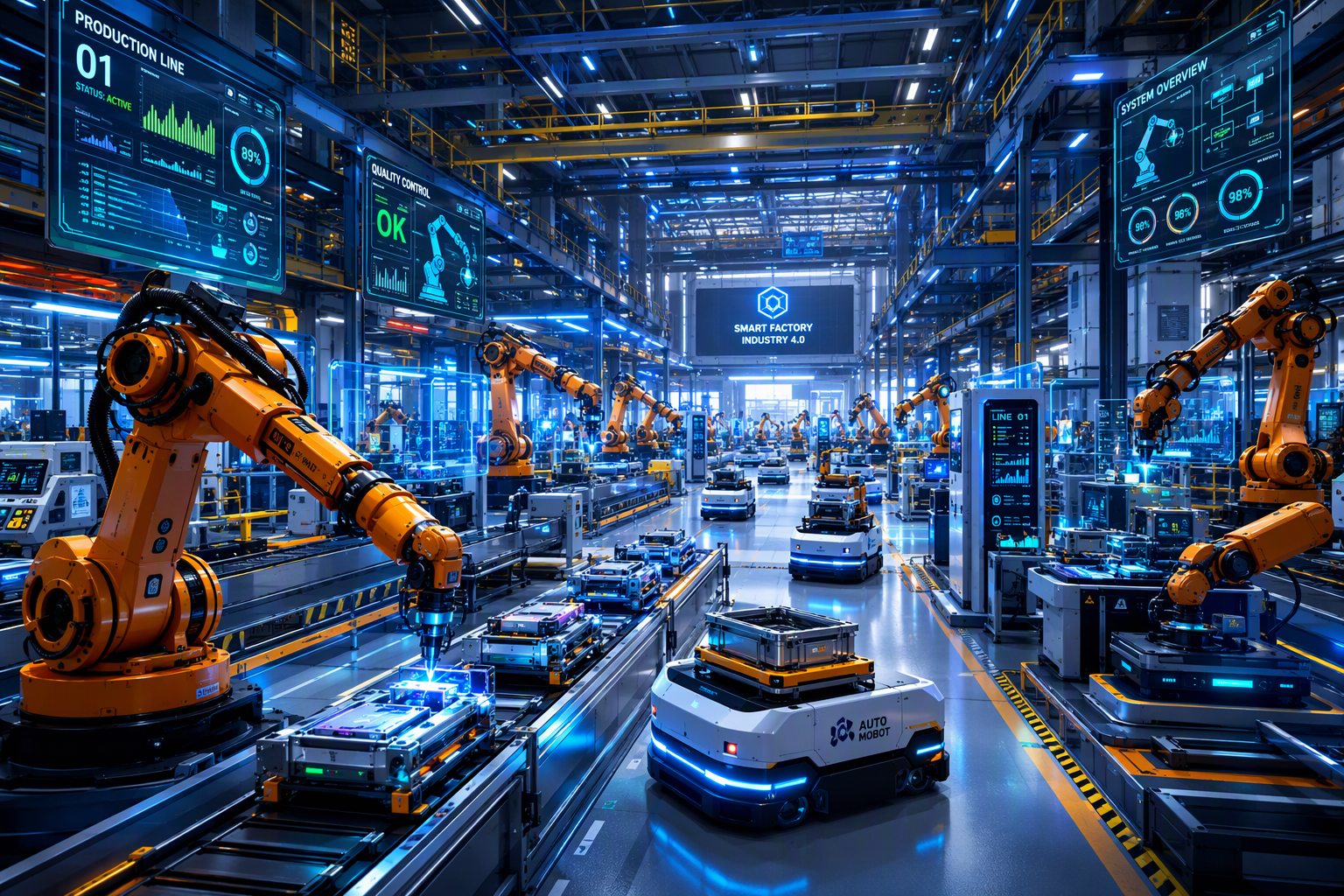
The impact of automation on modern industries is impossible to ignore. From manufacturing to customer service, the use of technology has fundamentally changed how businesses operate. Industrial automation, for example, has revolutionized production lines, enabling faster assembly and higher output than ever before.
This transformation is centered on improving the entire business process. By automating tedious and repetitive tasks, companies can significantly reduce the risk of human error. This leads to better quality control and more consistent products and services. Think about an assembly line where robots perform precise welds—the result is a stronger, more reliable product.
Ultimately, automation allows organizations to reallocate their human workforce to more strategic roles that require creativity and critical thinking. Instead of spending time on manual labor, employees can focus on innovation and problem-solving. This shift not only boosts productivity but also gives businesses a major competitive advantage.
Core Types of Automation in Today’s World
Automation comes in many forms, each designed to tackle different kinds of challenges. Understanding the core types of automation can help you see just how versatile this technology is. From the factory floor to the office, there's a form of automation suited for almost any environment.
We can generally group automation into a few main categories. These include industrial automation, which involves physical machinery; robotic process automation (RPA), which uses software "bots"; and cognitive automation, which leverages artificial intelligence. Let's look at each of these in more detail.
Industrial automation and manufacturing
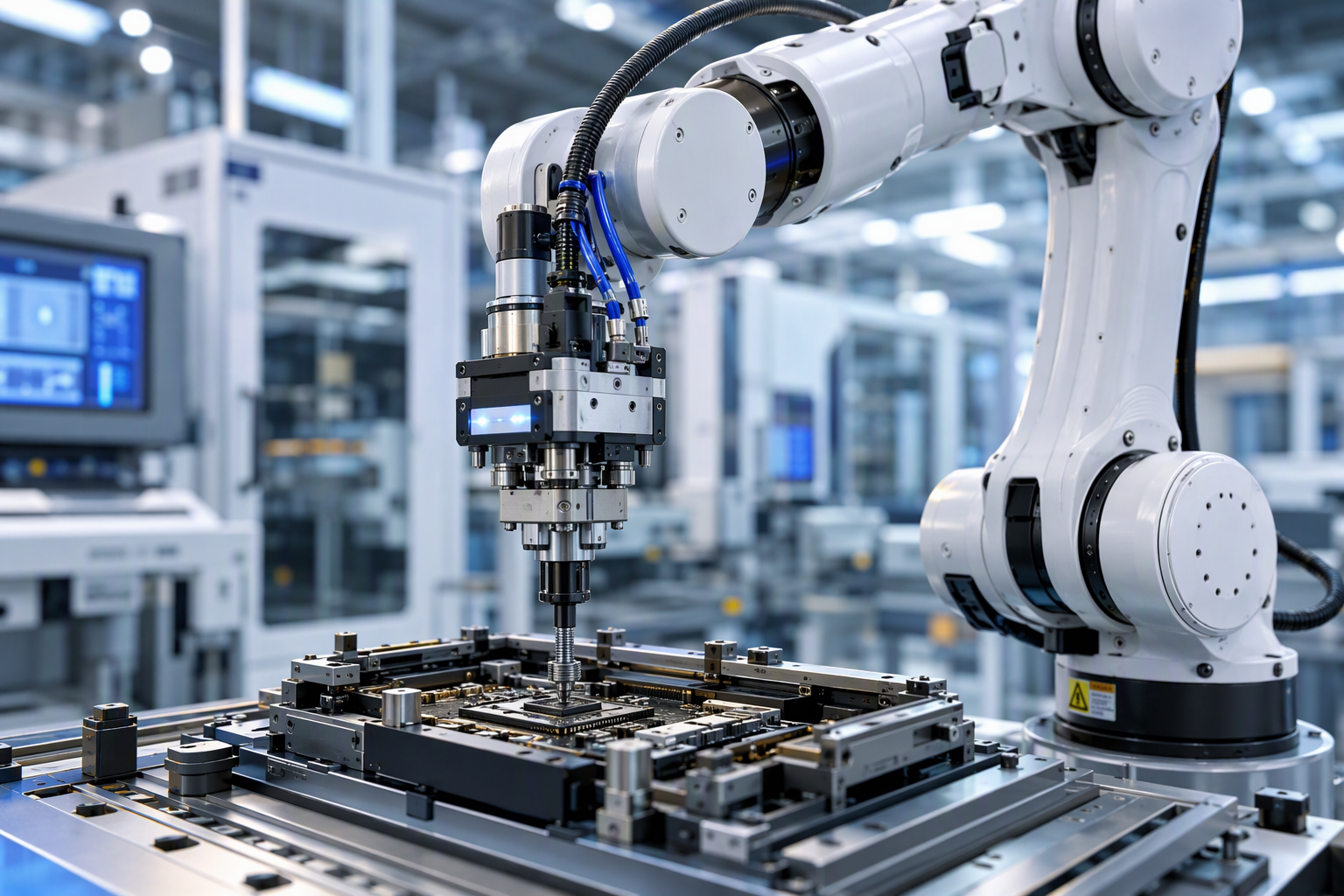
Industrial automation is perhaps the most well-known form of automation. It involves using control systems, such as computers and robots, to manage machinery and processes in an industrial setting. This type is a cornerstone of modern manufacturing, especially in sectors like automotive manufacturing.
The main goal of industrial automation is to improve operational efficiency and increase production rates. By automating tasks like assembly, welding, and packaging, companies like General Motors can produce vehicles much faster and with greater precision. This workflow automation minimizes downtime and ensures a consistent level of quality.
Different levels of industrial automation can be applied depending on the need. Here is a breakdown of the three main types:
| Types of Industrial Automation | Description |
|---|---|
| Fixed Automation | Machinery is dedicated to a single, repetitive task in high-volume production. It's efficient but inflexible. |
| Programmable Automation | Equipment can be reprogrammed to handle different product batches, offering more flexibility than fixed automation. |
| Flexible Automation | Systems can switch between various tasks with minimal setup, ideal for high-variety production environments |
Robotic process automation (RPA) in businesses
Unlike the physical robots you see in factories, robotic process automation (RPA) uses software robots, or "bots," to perform tasks on a computer. These bots are designed to mimic human actions to complete rule-based digital tasks. Think of them as digital assistants that can handle your repetitive computer work.
RPA is especially useful for back-office operations where tasks are predictable and frequent. By deploying software robots, businesses can automate processes with minimal human intervention, which helps reduce human error and frees up employees for more valuable work.
Some common applications for RPA include:
- Data Entry: Automatically transferring information from one system to another.
- Invoice Processing: Extracting data from invoices and entering it into an accounting system.
- Generating Reports: Compiling data from various sources to create routine reports.
- Customer Service: Handling simple queries or updating customer records.
Cognitive automation and artificial intelligence
Cognitive automation represents the next level of automation, integrating powerful technologies like artificial intelligence (AI) and machine learning. While basic automation follows pre-set rules, cognitive automation can handle complex tasks that normally require human intelligence and judgment.
This advanced form of automation enables systems to understand unstructured data, recognize patterns, and learn from experience. It uses technologies like natural language processing (NLP) to interpret human language and computer vision to analyze images. This allows it to make decisions and adapt its behavior without being explicitly programmed for every scenario.
A great example is in healthcare, where cognitive automation can analyze medical records and images to help doctors with diagnoses. By mimicking human cognitive abilities, these systems can tackle complex problems, providing insights and support that go far beyond what traditional automation can offer.
Process Automation Explained
Process automation, also known as business process automation (BPA), focuses on automating an entire business workflow rather than just a single task. It aims to streamline operations from start to finish, connecting different steps and systems to work together seamlessly. This approach provides a holistic view of how work gets done.
By using various automation technologies, organizations can optimize complex workflows, reduce manual effort, and improve overall efficiency. The following sections will explore the steps needed to implement process automation, the tools involved, and the best practices to ensure success.
Steps involved in implementing process automation
Successfully implementing process automation requires a clear and structured approach. You can't just flip a switch; it's a strategic initiative that involves careful planning and execution. The first step is always to identify and understand the business process you want to automate.
Once you've chosen a process, the next phase involves designing the automated workflow and selecting the right software applications and tools for the job. This is a critical part of business process management, as the tools you choose will determine the effectiveness of your automation efforts.
To ensure a smooth implementation, organizations often follow these key steps:
- Identify and Analyze: Pinpoint repetitive, rule-based processes that are good candidates for automation.
- Define Goals: Set clear objectives for what you want to achieve, such as cost reduction or faster processing times.
- Select Tools: Choose the right automation software that fits your specific needs and integrates with your existing systems.
- Test and Deploy: Build and test the automated workflow in a controlled environment before rolling it out across the organization.
Role of software and digital tools in automation
Software and digital tools are the engines that power modern automation. Without them, concepts like IT automation and cloud automation would not be possible. These tools range from simple scripts to sophisticated software applications that can manage complex operations across an entire enterprise.
Software robots, for example, are the workhorses of RPA, executing tasks on digital systems just as a human would. In the world of IT, automation technologies are used to manage and maintain infrastructure. This can include automating software updates, monitoring system performance, and deploying new applications, all of which are crucial for smooth IT operations.
Furthermore, the rise of cloud computing has introduced cloud automation, which allows businesses to manage and scale their cloud resources automatically. Tools like Ansible and Puppet help with configuration management, ensuring that servers and networks are set up correctly and consistently without manual intervention.
Best practices for organizations adopting automation
Adopting process automation can bring huge benefits, but it's important to approach it thoughtfully to ensure success. Jumping in without a plan can lead to challenges. One of the best practices is to start small. Begin with a simple, low-risk process to learn the ropes before tackling more complex workflows.
It's also crucial to remember the importance of human involvement. While automation reduces manual work, it doesn't eliminate the need for people. Humans are still needed for oversight, handling exceptions, and managing the automation solutions themselves. This collaboration is key to maximizing organizational efficiency.
For a successful transition, consider these best practices:
- Get Employee Buy-in: Communicate the benefits of automation to your team and involve them in the process.
- Choose the Right Processes: Focus on tasks that are repetitive, rule-based, and high-volume.
- Plan for Maintenance: Automation systems require ongoing monitoring and maintenance to run smoothly.
- Measure Performance: Track key metrics to ensure the automation is delivering the expected results.
Examples of Automation in Everyday Life
Automation isn't just for big factories or corporations. It has quietly become a part of our daily routines in more ways than you might realize. From the moment you wake up to the way you shop, automation technologies are working behind the scenes to make life more convenient and efficient.
These systems handle many routine tasks that we used to do manually. Think about home automation that adjusts your thermostat or the self-checkout kiosk at the grocery store. Let’s explore some of these common examples that show how automation is all around us.
Home automation — smart devices and IoT
Home automation is one of the most visible examples of automation in our daily lives. Through smart devices and the Internet of Things (IoT), we can automate many functions within our homes. This technology connects various devices, allowing them to communicate and work together.
The result is a home that can respond to your needs without you having to lift a finger. This can range from simple conveniences to significant improvements in energy efficiency. These systems are essentially smaller versions of the building automation systems used in large commercial buildings.
Here are a few popular examples of home automation:
- Smart Thermostats: Devices like Nest learn your schedule and automatically adjust the temperature to save energy.
- Smart Lighting: You can program your lights to turn on or off at specific times or control them with your voice.
- Voice Assistants: Amazon Alexa and Google Home can play music, answer questions, and control other smart devices.
- Smart Security: Automated security systems can monitor your home and send alerts to your phone.
Automation in healthcare, finance, and retail
Beyond our homes, automation is making a significant impact in major industries like healthcare, finance, and retail. In healthcare, automation is transforming patient care. Robotic surgical systems allow surgeons to perform complex procedures with greater precision, and AI-powered tools can analyze medical images to help with early diagnosis.
In the financial sector, automation is streamlining the business process to improve operational efficiency. Banks use chatbots to provide instant customer service and RPA to process transactions and manage accounts, reducing manual errors and wait times. This leads to higher customer satisfaction.
Retail has also embraced automation to enhance the shopping experience. Automated checkout systems at stores like Walmart and Amazon Go let customers skip the long lines. Behind the scenes, robotic systems in warehouses sort and ship orders at incredible speeds, ensuring you get your packages on time.
Transportation, logistics, and agricultural automation
The world of transportation and logistics is being reshaped by powerful automation technologies. The development of autonomous vehicles by companies like Waymo and Tesla is a prime example, promising a future with safer and more efficient travel. In logistics, companies like Amazon and DHL use robots in their fulfillment centers for system monitoring, sorting, and moving packages.
Agriculture is another field seeing an automation revolution. To feed a growing global population, farmers are turning to technology to increase yields and optimize resource use. John Deere’s autonomous tractors can plow fields, plant seeds, and analyze soil on their own, using GPS and sensors for precision.
Drones are also being used in farming to monitor crop health from the air, allowing for targeted irrigation and fertilization. These advancements help save time, reduce labor costs, and promote more sustainable farming practices, showing how automation can address real-world challenges.
Conclusion
In summary, automation is transforming the way we live and work, providing unparalleled efficiency and consistency across various sectors. By understanding its core types—industrial automation, robotic process automation, and cognitive automation—organizations can harness the full potential of these technologies. As we've explored, the integration of automation into everyday life—from smart home devices to advancements in healthcare and finance—demonstrates its vast benefits. Embracing automation not only streamlines processes but also allows businesses to focus on innovation and growth. If you're ready to explore how automation can enhance your operations, don't hesitate to reach out for a consultation!
Frequently Asked Questions
What are the main benefits of automation for businesses and manufacturers?
The main benefits of automation include higher operational efficiency, increased production rates, and significant cost reductions. It also enhances accuracy by minimizing human error in routine tasks, leading to better quality control. By streamlining workflows, businesses can achieve more with fewer resources and respond faster to market demands.
How is automation related to artificial intelligence?
Artificial intelligence is an advanced form of automation. While basic automation technologies follow pre-set rules, AI and machine learning enable systems to perform complex tasks that require human intelligence. This includes learning from data, making decisions, and understanding natural language, making automation smarter and more capable.
What are some challenges organizations face when integrating automation?
Organizations often face challenges like high initial implementation costs and the need for new employee skills. Integrating process automation also requires careful planning to manage the balance between automation and human intervention. Ongoing system maintenance and ensuring data quality for tasks like data entry are other common hurdles.
You might also like