Ideal Cycle Time and Planned Production Time: The OEE Inputs Most Plants Get Wrong
Key Highlights
- Ideal cycle time is the fastest possible time to make one part under optimal circumstances, and it drives the Performance part of OEE calculation.
- Planned production time is the time the asset is scheduled to run, excluding breaks, and it anchors the full OEE formula.
- Many plants confuse cycle time, actual run rate, changeover time, and stop time, which distorts the OEE score.
- Bad inputs hide big losses such as small stops, slow cycles, and unplanned stops.
- Strong measurement methods, training guides, and report templates improve manufacturing productivity.
- For a broader framework, see the OEE pillar page: https://www.empoweredautomation.com/oee.
Introduction
Many plants work hard to improve OEE but still get weak answers because the inputs are off. Two of the biggest trouble spots are ideal cycle time and planned production time. If those definitions drift, your cycle time data stops reflecting the real manufacturing process, and your OEE score becomes hard to trust. The good news is that you can fix this with a few clear rules. In the sections ahead, you’ll see practical ways to define, measure, and use both inputs correctly.
Understanding OEE Inputs in Manufacturing
OEE calculation depends on simple inputs, but each one has to be defined with care. In any manufacturing process, small errors in production time, total count, or cycle assumptions can throw off the whole OEE formula, resulting in a measure of truly productive manufacturing time. That is why these key concepts matter so much on the plant floor.
At the center of this are ideal cycle time and planned production time. Ideal cycle time means the fastest possible time to make one part in optimal conditions. Planned production time sets the window for measuring true performance. We will define these concepts in greater detail. Get these right, and the next two sections will make the math and the improvement work much clearer.
Key Role of Ideal Cycle Time in OEE
Ideal cycle time results have an integral role in OEE calculation because it defines the fastest possible time to produce one piece. In the preferred OEE calculation, it is multiplied by total count to produce net run time. That gives you the benchmark for how fast the line could have run under optimal circumstances.
From there, the performance factor is calculated as (Ideal Cycle Time × Total Count) / Run Time. This is where the ratio of net run time manufacturing productivity becomes visible. If the line is running slower than the maximum possible speed, the gap shows up as slow cycles or small stops, not as guesswork.
Problems start when ideal cycle time is set too high or too low. If it is too high, performance can appear better than it really is and may even go above 100%. If it is too low, your OEE calculation punishes the process unfairly and sends your team after the wrong issues related to good pieces.
Planned Production Time Explained
Planned production time is the total time an asset is scheduled for production. In practical terms, it starts with shift length and removes periods where there is no intention to run, such as breaks, resulting in less stop time. That remaining window is your available production time for OEE.
Next, run time is calculated by subtracting stop time from planned production time. Stop time includes both planned stops, such as changeover time, and unplanned stops, such as breakdowns or material shortages. The ratio of run time compared to planned production time is essential as those events matter because the process was supposed to be running but was not.
Many plants get this wrong because they mix schedule loss with stop loss or fail to treat changeovers consistently. Others leave out certain stops because they seem normal. When that happens, available production time looks bigger or smaller than it should, and the resulting OEE, along with first pass yield, no longer reflects what the operation actually experienced.
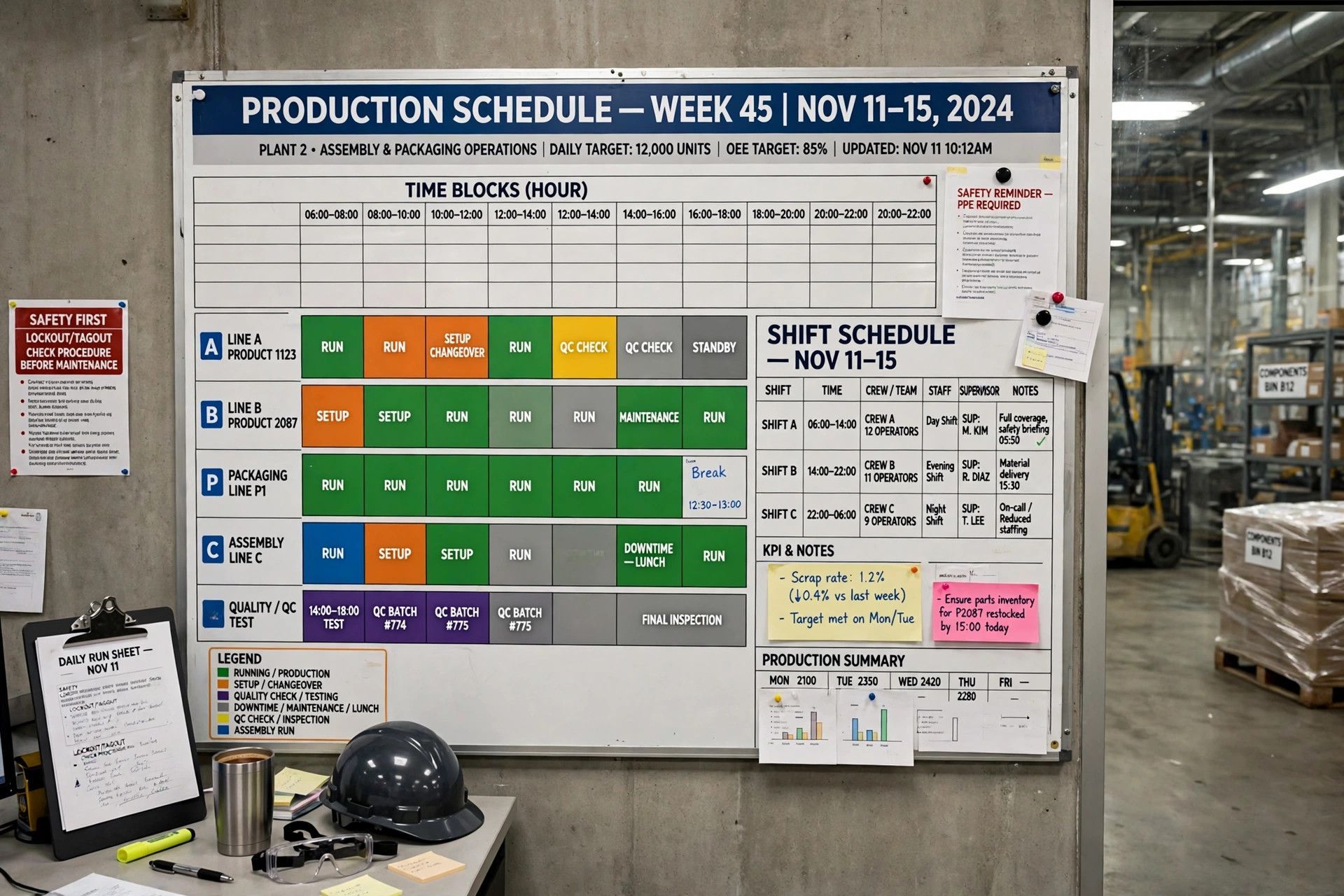
What Is Ideal Cycle Time?
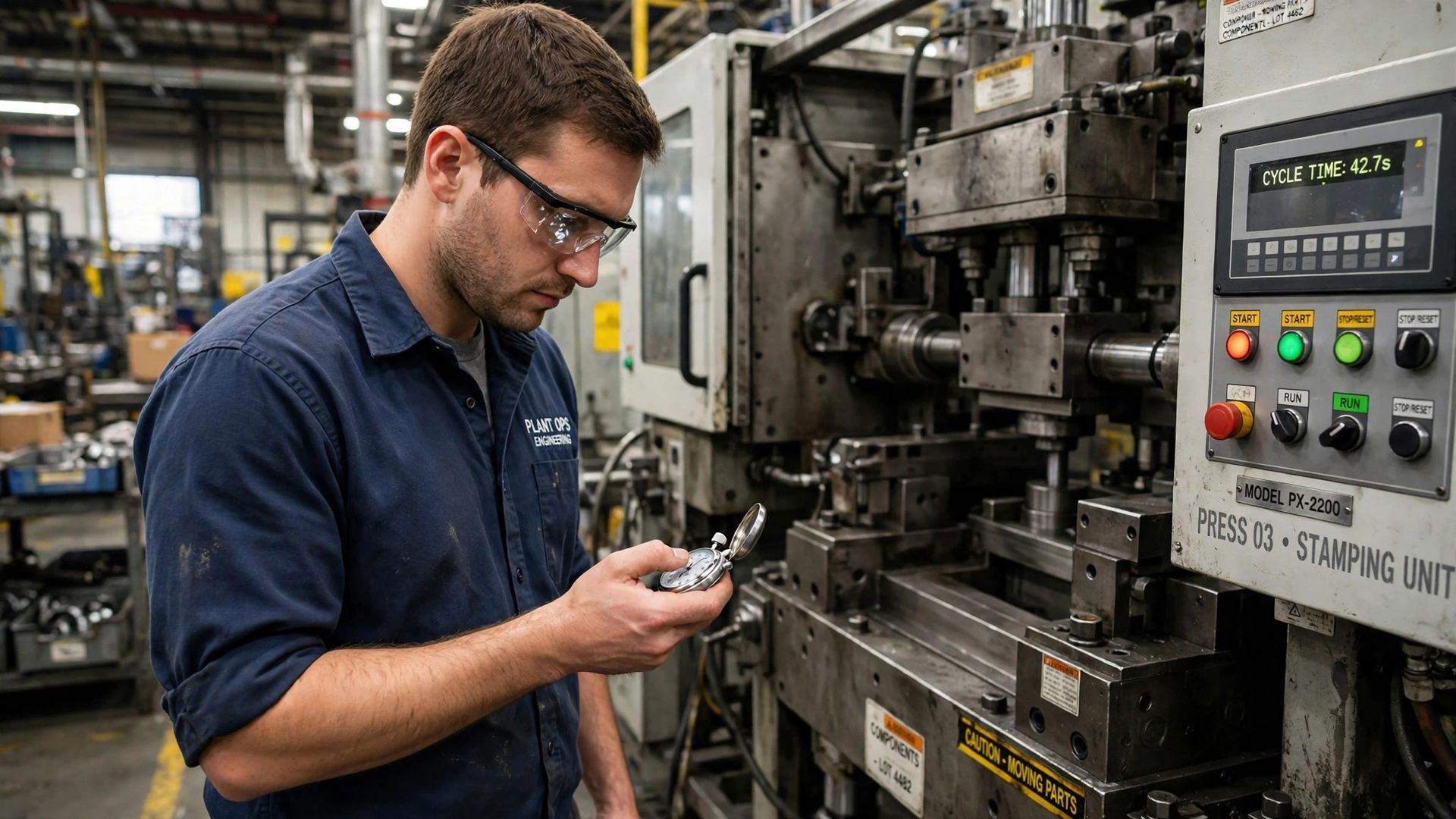
In OEE, ideal cycle time is the theoretical fastest possible time to manufacture one piece. It is not an average and not a target based on what usually happens. It is the best-case rate the manufacturing process can achieve under optimal circumstances.
That makes it a reference point for productive time. When you multiply ideal cycle time by total count, you get the fastest possible time needed to make those parts. This is why the value matters so much in performance tracking and why plants need one standard definition across shifts, assets, and reports.
Definition and Purpose in OEE Analysis
The standard definition of ideal cycle time in OEE analysis is simple: it is the fastest possible time to manufacture one piece. It reflects optimal circumstances, not typical conditions, not a recent average, and not what a machine reaches only after data smoothing. In OEE terms, this is the speed reference for perfect production.
Why does that matter? Because OEE is built around the idea of manufacturing only good parts, as fast as possible, with no stop time. Ideal cycle time supplies the “as fast as possible” part. Without it, the performance side of the model loses its anchor.
It also gives you a fair way to compare actual operation against a common baseline. If your line runs below that benchmark, the gap points to speed loss. If the benchmark itself keeps changing, OEE analysis becomes unstable and improvement trends become hard to trust over time.
Calculating Ideal Cycle Time Step-by-Step
A practical way to use ideal cycle time in OEE calculation is to start with the standard value for the asset or part and keep it fixed as the fastest possible cycle time. Once that value is set, multiply it by total count to get net run time. Then compare net run time to actual run time to calculate performance.
Here is the worked example from the compiled information:
Item
Value
Ideal Cycle Time
1.0 second per widget
Total Count
19,271 widgets
Run Time
373 minutes
Performance Formula
(Ideal Cycle Time × Total Count) / Run Time
Performance Result
(1.0 × 19,271) / (373 × 60) = 86.11%
You can also express the same idea through ideal run rate, which is the reciprocal of cycle time. In this example, 1.0 second per part equals 60 parts per minute. Keep this separate from takt time, which reflects customer demand, not the machine’s fastest possible speed. Mixing those two is a common source of bad OEE calculation.
Measuring Planned Production Time
Measuring planned production time correctly is just as important as setting ideal cycle time correctly. Ideal cycle time tells you how fast the process could run. Planned production time tells you how much scheduled time is available for production before stop time is removed. They do different jobs in OEE and should never be blended.
To keep the number clean, start with shift length and subtract only periods when production was never intended, such as breaks. Then use report templates or system records to track stop time separately so run time and available production time stay accurate.

Accurate Methods for Tracking Production Time
The most reliable method is to define planned production time at the shift level before the shift starts. Use the scheduled shift length, subtract breaks, and document the result in the same way every day. That creates a stable available production time baseline for OEE.
From there, track all stop events separately so productive time is not mixed with loss time. Many plants use an ERP system, production monitoring software, or simple report templates to capture changeovers, breakdowns, and other events. The tool matters less than the rule set behind it.
Best practices include:
- Use one plant-wide definition for planned production time and apply it across lines and shifts.
- Record stop time separately from schedule exclusions so run time stays clear.
- Review report templates regularly to confirm that planned stops and unplanned stops are being coded the same way every time.
Common Mistakes Plants Make with Planned Production Time
One common mistake is treating all lost time the same. Planned production time should exclude only time when there was no intention to run, such as breaks. Once production is scheduled, losses belong elsewhere in the OEE factors. If teams remove too much time here, Availability looks better than it really is.
Another issue is poor event handling. Some plants ignore unplanned stop time that feels routine, or they fail to capture small stops and slowdowns in a consistent way. That hides big losses and shifts them out of view, even though they still damage output.
Typical pitfalls include:
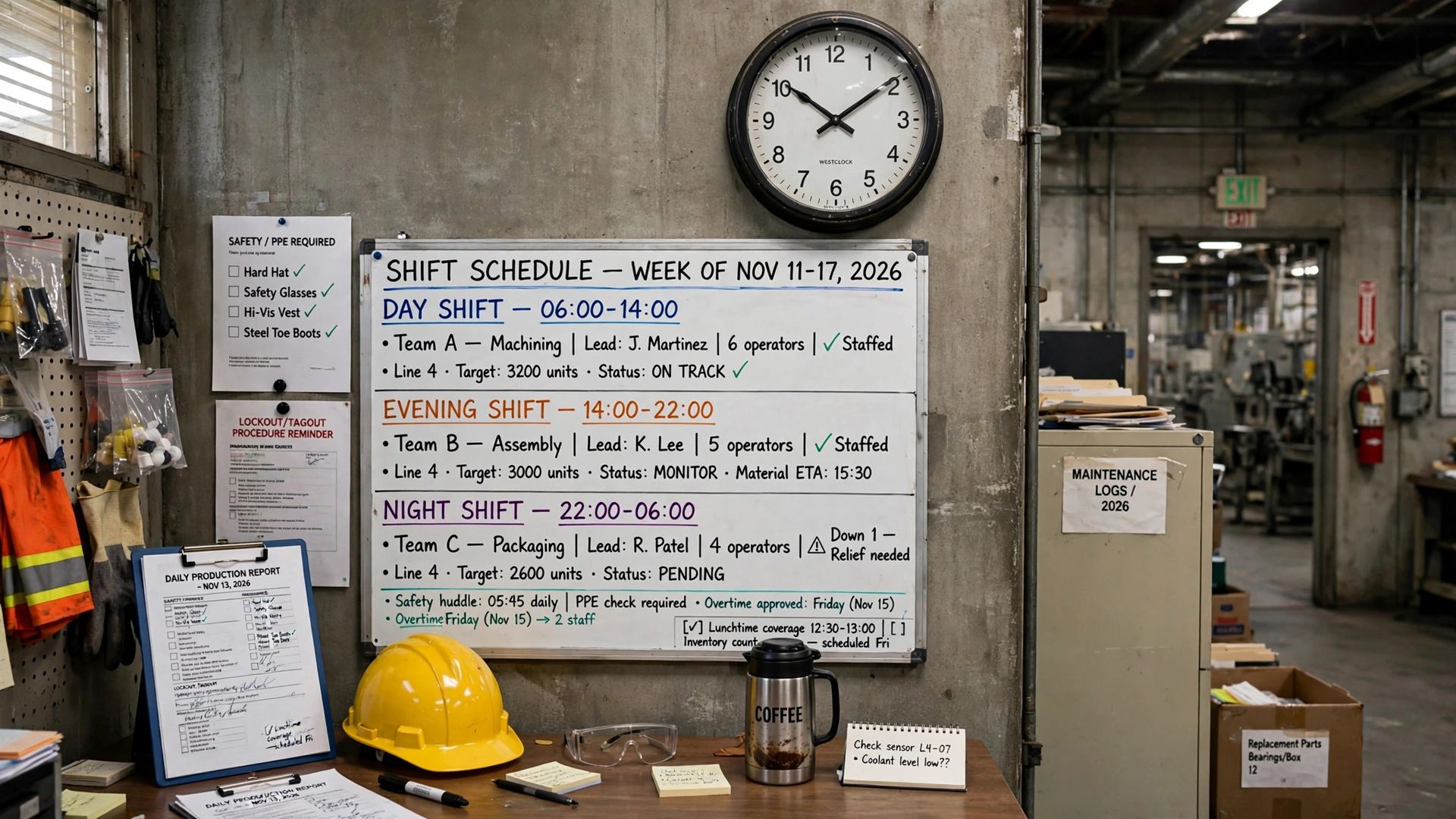
- Excluding changeover time from stop tracking when it should be counted as stop time.
- Leaving out recurring unplanned stop time because it is considered normal.
- Using different rules by shift, asset, or ERP system report, which makes comparisons unreliable.
Conclusion
In summary, understanding both ideal cycle time and planned production time is essential for enhancing overall equipment effectiveness (OEE) in manufacturing. Accurately measuring these inputs allows plants to pinpoint inefficiencies, optimize productivity, and ultimately improve their bottom line. It’s crucial to avoid common pitfalls that can lead to miscalculations, such as neglecting real-world variables or misunderstanding definitions. By focusing on these key areas, manufacturing managers and engineers can make informed decisions that drive operational excellence. For a deeper dive into OEE and other critical metrics, explore our comprehensive OEE pillar page.
Frequently Asked Questions
How does ideal cycle time affect OEE performance?
Ideal cycle time sets the benchmark for the performance factor in OEE performance. It shows the fastest possible pace for producing parts, so you can compare actual run speed against that standard. If the value is wrong, manufacturing productivity and productive time will be overstated or understated.
What is the standard definition of ideal cycle time in OEE?
The standard definition of ideal cycle time is the theoretical fastest possible time to manufacture one piece in the manufacturing process. In the OEE formula, it represents the “as fast as possible” part of perfect production and supports a consistent oee calculation across shifts and assets.
Why do many plants get planned production time wrong?
Many plants blur the line between scheduled production time and loss time. They may exclude too much from planned production time, miss unplanned stops, or code stop time differently across lines in the ERP system. That creates inconsistent production time data and weakens the OEE result.
You might also like