OEE Monitoring in Real Time vs End-of-Shift Reports
Key Highlights
- Real-time oee monitoring shows problems on the production line as they happen.
- End-of-shift reports help with review, but they rely more on delayed data collection.
- Overall equipment effectiveness depends on availability, performance, and quality working together.
- Oee monitoring software improves accuracy by reducing manual entry and missed events.
- Live visibility helps teams act on downtime, speed loss, and defects faster.
- Both methods support improvement, but modern plants gain more control with digital monitoring.
Introduction
In manufacturing, oee monitoring gives you a practical way to measure how well your production processes are really running. It tracks overall equipment effectiveness through availability, performance, and quality, so you can see where output is being lost. The big question is timing: do you want to spot issues as they happen, or wait until the shift ends? This article compares real-time monitoring with end-of-shift reporting, so you can decide which approach better supports faster action and steadier plant performance. When implementing a real-time OEE monitoring system, key challenges typically include integrating with existing manufacturing equipment and software, ensuring reliable data collection, and maintaining network security. Additionally, managing the volume of data generated and training staff to respond quickly to new information can be difficult for many organizations.
Understanding OEE Monitoring Methods
At a basic level, oee monitoring is how you track equipment effectiveness using oee data from production time, output, and quality results. That data becomes an oee score, which gives you a starting point for seeing how well assets are being used. For real-time oee monitoring in 2026, several software solutions are recommended, such as Siemens Opcenter, Ignition by Inductive Automation, and Wonderware by AVEVA. These platforms offer advanced, real-time analytics and dashboards to help manufacturers accurately track and improve oee performance.
Some plants gather that information in real time through software and connected systems. Others depend on manual logs and end-of-shift summaries. The method matters because faster, cleaner data usually leads to better production decisions, quicker response, and more dependable improvement work.
Overall equipment effectiveness is a comprehensive metric that shows how effectively equipment is used in a manufacturing plant. It combines three primary components: availability, performance, and quality. In simple terms, it tells you whether a machine is running when it should, at the right speed, and with acceptable output.
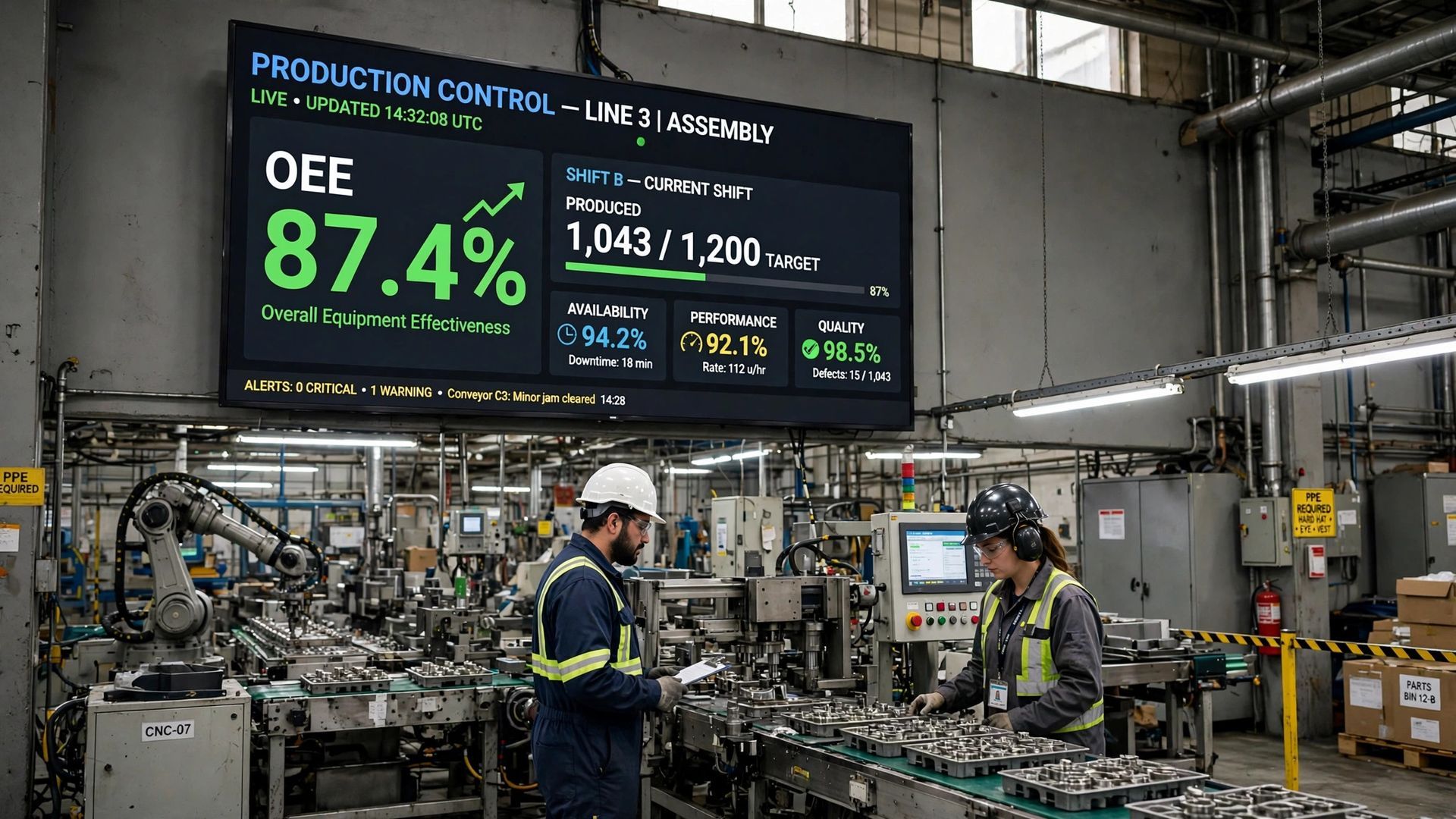
On the production line, oee monitoring turns those three factors into something you can manage. Availability reflects downtime. Performance shows whether production speed matches the ideal cycle time. Quality measures how many good parts you make versus total count.
A strong oee score matters because it points to better use of equipment, labor, and production time. When you track OEE in real time, you can improve manufacturing productivity by reacting to losses immediately instead of learning about them after the shift is over. For a broader overview, see the OEE pillar page: https://www.empoweredautomation.com/oee
Real-Time OEE Monitoring vs. End-of-Shift Reports: Key Differences
The main difference comes down to when you see the problem. Real-time oee monitoring uses monitoring software to collect and display data as production runs. End-of-shift reports summarize what happened later, often after operators complete manual records. Both support review, but only one gives you a chance to react before more time is lost.
Area
Real-Time OEE Monitoring
End-of-Shift Reports
Timing
Live during production
After production ends
Data source
Automated machine and system inputs
Manual entry, logs, checklists
Accuracy
Higher consistency
More risk of gaps or error
Actionability
Immediate response
Delayed follow-up
Improvement use
Supports continuous improvement in the moment
Supports historical review
That does not make end-of-shift reports useless. They still help with trend review and shift discussion. Still, if your goal is faster correction, less delay, and stronger continuous improvement, real-time visibility has the edge.
How Real-Time OEE Monitoring Works
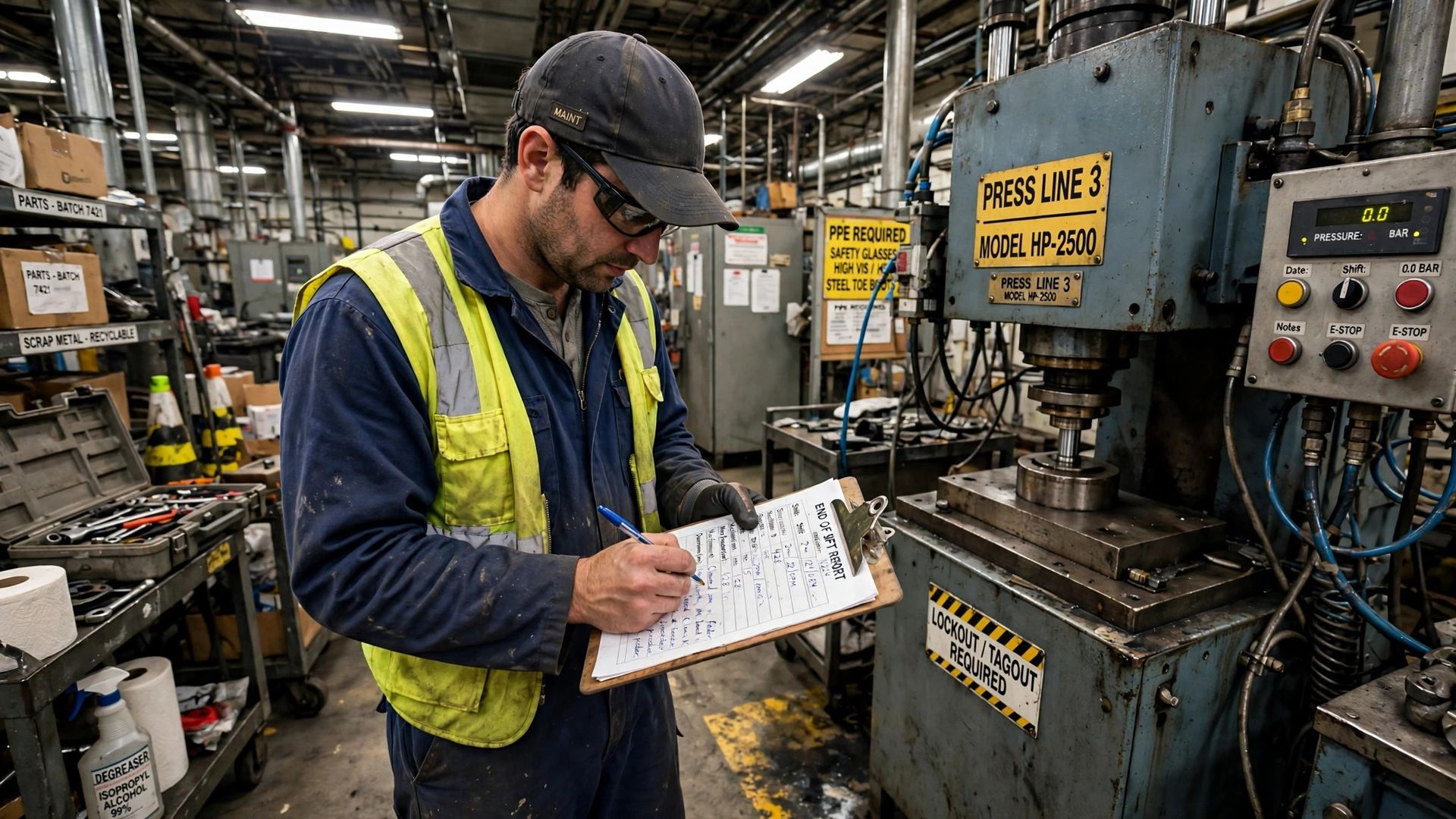
Real-time oee monitoring works by collecting production signals while the line is running. Instead of waiting for someone to record counts, downtime, or quality results later, the system captures live data and updates performance status as events occur.
With oee monitoring software, plant managers get immediate visibility into availability, speed, and quality. That matters because real time data helps you see changes in equipment performance quickly, not hours later. To understand that better, it helps to look at what happens on the shop floor first.
Live Data Collection on the Factory Floor
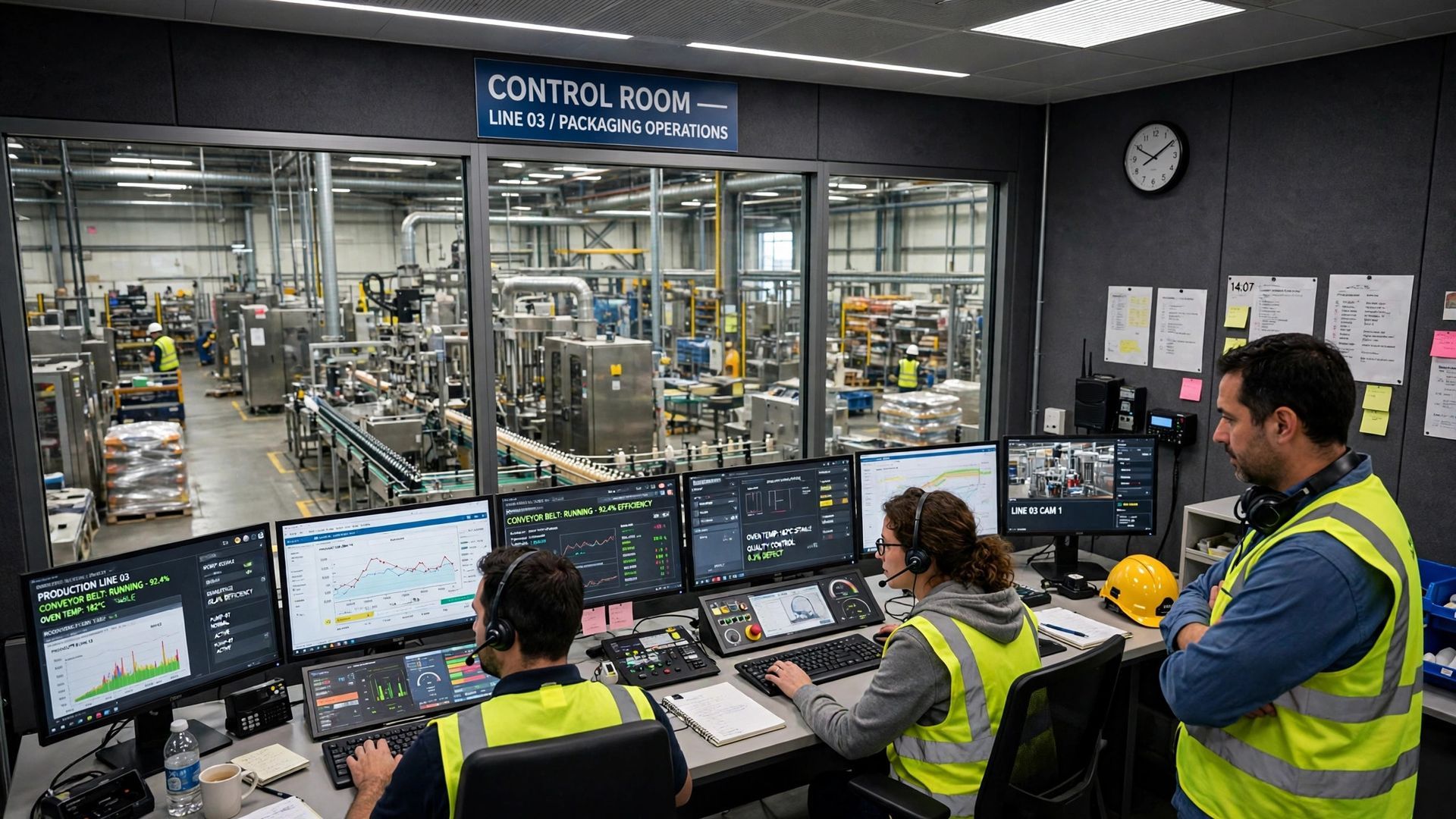
On the shop floor, live data collection starts with machine data. A modern oee monitoring system can pull signals tied to run state, counts, cycle time, and stoppages. That gives you a clearer view of what equipment is doing during planned production time.
In many plants, iot devices and connected systems support this data collection. Instead of asking operators to reconstruct the shift from memory, the system records events as they happen. That improves accuracy and creates a more reliable single source of truth for manufacturing operations.
For teams on the floor, this means fewer guesses and better visibility. If one asset slows down, stops, or produces suspect output, supervisors and maintenance teams can see it sooner. That makes production time easier to protect and helps everyone focus on the real issue instead of sorting through incomplete notes.
Insights Gained from Instant OEE Feedback
Instant feedback changes how you respond to loss. With oee monitoring, you are not just collecting raw data for later review. You are turning live conditions into immediate insights that show where equipment performance is slipping and where teams need to act.
Real-time oee software can help you:
- Spot downtime the moment a machine stops.
- See production speed fall below the ideal cycle time.
- Catch quality signals early enough to address issues before losses grow.
That speed matters on a busy line. If a filler starts running slow at 10:15 a.m., you can respond at 10:16 a.m. End-of-shift reporting may still document the event, but it cannot recover lost output. For plant teams, faster visibility supports a more proactive approach and stronger overall productivity.
Exploring End-of-Shift OEE Reporting
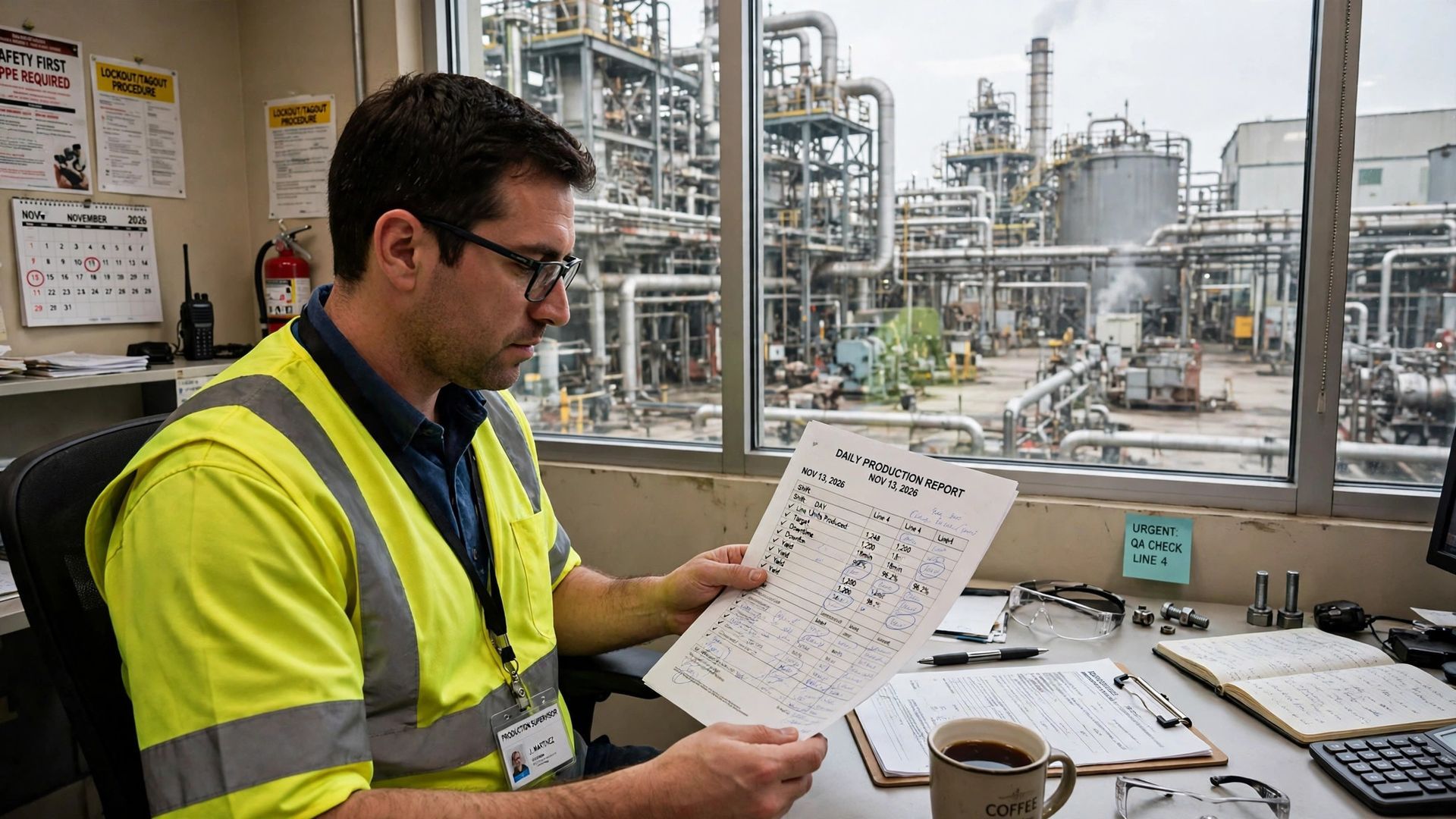
End-of-shift reports are the traditional way many plants review OEE. In this method, operators or supervisors gather oee data after production runs, then summarize downtime, counts, and quality results for the shift.
Because this process often depends on manual entry, it is better suited for historical data analysis than fast response. You can still learn useful lessons from it, but the delay changes what you can fix. Next, let’s look at how manual tracking usually works in practice.
The Typical Process for Manual OEE Tracking
Manual OEE tracking usually starts at the machine or line level. Operators record production counts, downtime minutes, scrap, and shift notes during or after the run. Later, that information is compiled into oee data for review by supervisors or plant managers.
Common tools include:
- Paper checklists filled out during the shift
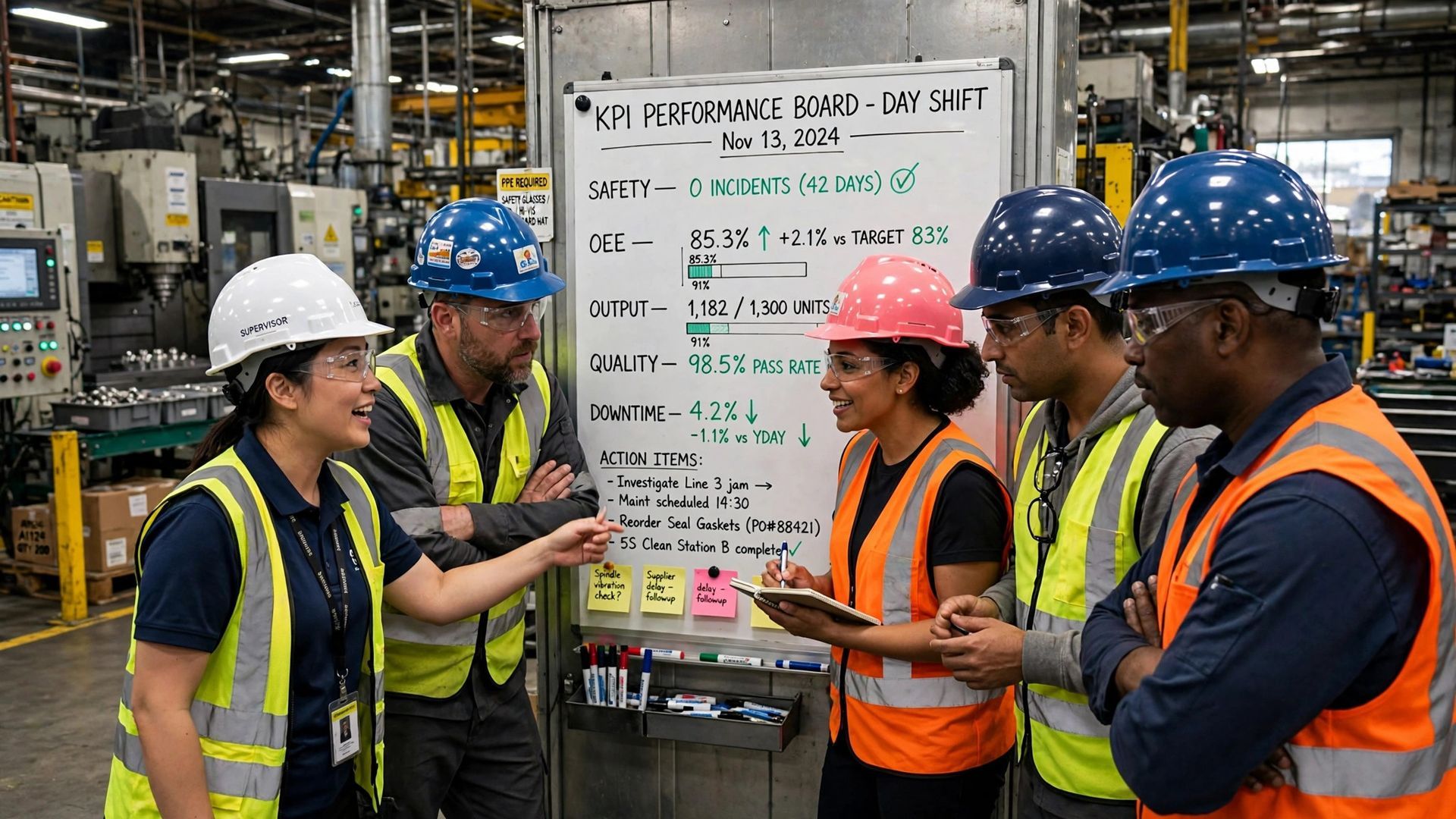
- Operator logs or whiteboard notes
- Manual entry into spreadsheets or plant systems
This process can work, but it depends heavily on operator training and data validation. If one team member records a stoppage differently than another, the numbers can become hard to trust. That is the biggest difference from automated tracking: manual systems rely on people to capture details consistently, even when production is busy and priorities are shifting.
What End-of-Shift Reports Can Reveal—and What They Might Miss
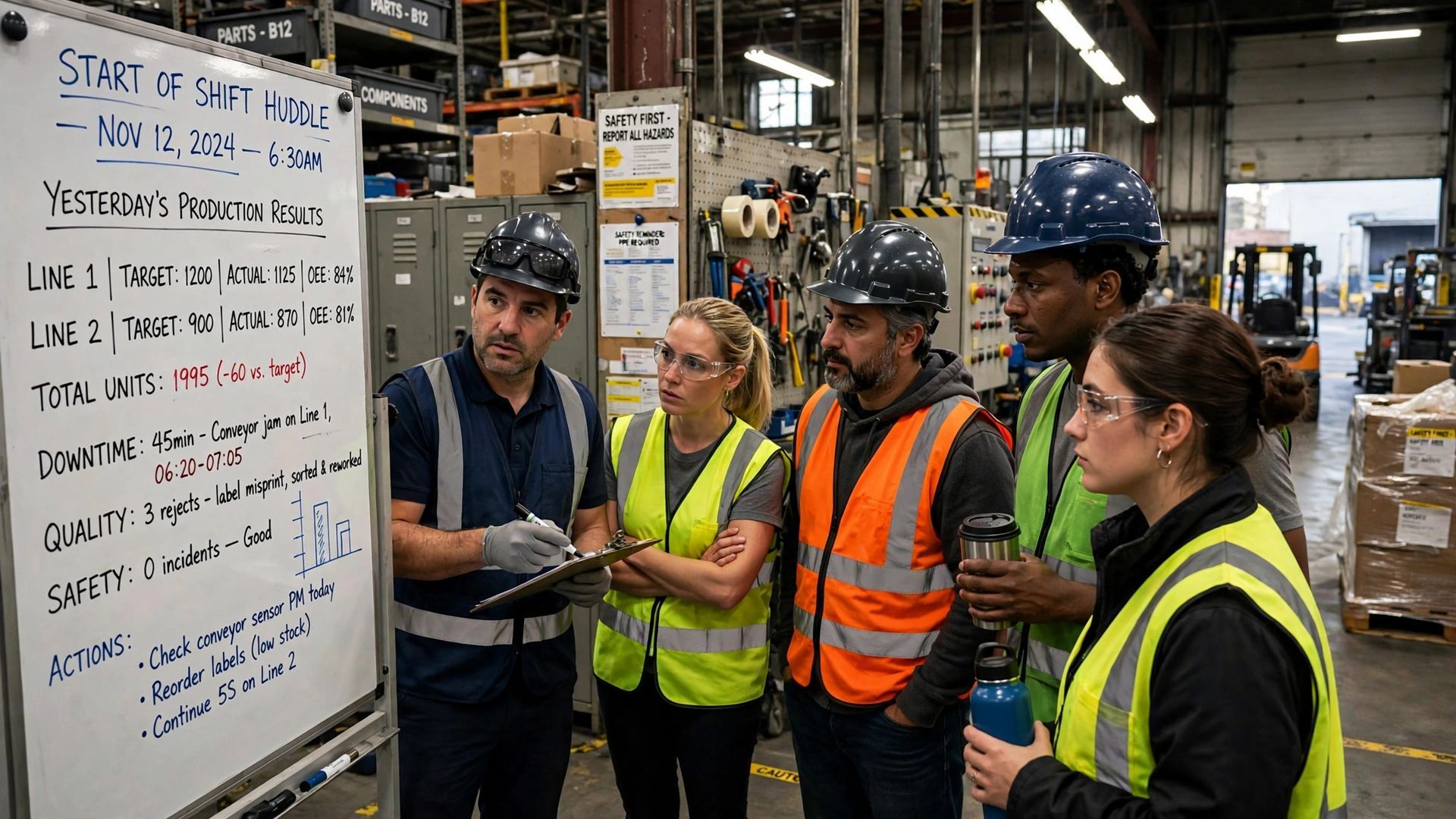
End-of-shift reports can still reveal useful patterns. They help you review the shift’s oee score, compare results across lines, and discuss downtime or output trends in a structured way. For longer-term review, they can support coaching, staffing decisions, and follow-up analysis.
Still, delays in data collection create blind spots. A short speed loss repeated ten times may never be written down. Small quality losses can be grouped into one total number without showing when they began or what was happening at the line at the time.
That means you may know what happened, but not always why it happened. For example, a report may show lower quality by the end of the shift, yet miss the exact hour, machine condition, or operating change that triggered the drift. That limits how fast you can improve.
Comparing Impact: Real-Time Monitoring vs. End-of-Shift Reporting
For plant managers, comparing these methods is not just a reporting choice. It shapes how quickly your team can respond, how accurate your numbers are, and how much production efficiency you can protect during the day.
Real-time oee monitoring software gives you better visibility and faster action. End-of-shift reporting gives you a delayed summary that is useful for review but weaker for intervention. The best way to see the difference is through specific examples of what each method catches, and what it misses.
Examples of Issues Detected by Real-Time OEE Monitoring
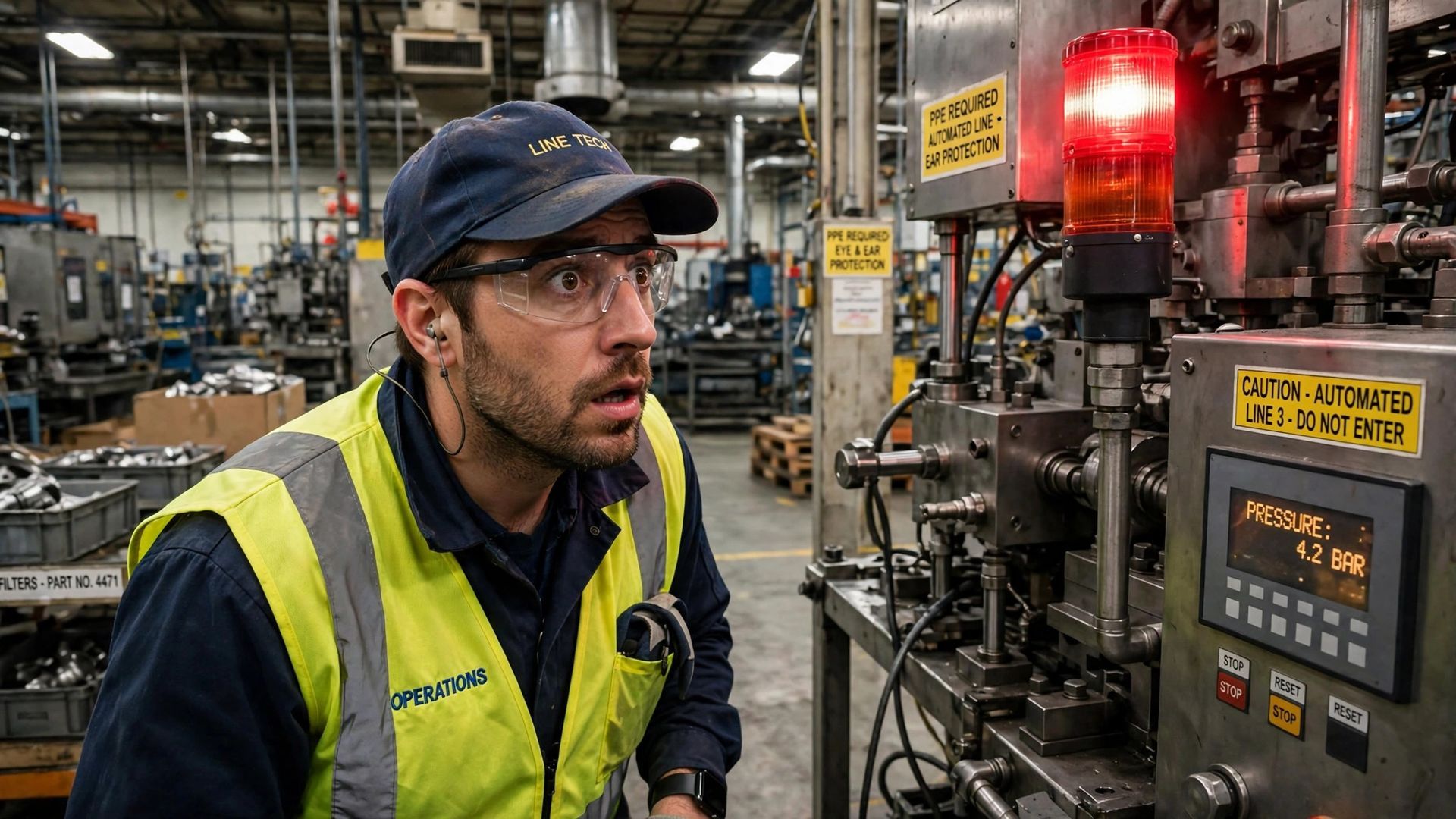
Real-time oee monitoring helps you find bottlenecks while they are still affecting output. Because the data updates continuously, teams can see where the line is slowing, stopping, or drifting before the entire shift is impacted. That is what makes live OEE data useful for fast problem solving.
Examples include:
- Unplanned downtime when a machine stops unexpectedly
- Production speed dropping below target cycle time
- Poor performance on one workstation creating backup downstream
Picture a packaging line where a labeler starts faulting every few minutes. A live system flags repeated machine downtime right away, so maintenance teams can respond before the backlog spreads. With that quick response, you are not just documenting loss. You are using oee monitoring to address issues early and drive continuous improvement in daily operations.
Scenarios Where End-of-Shift Reports May Fall Short
A common problem with end-of-shift reports is timing. By the time the report is reviewed, the line has already lost hours of output, and the exact cause may be harder to confirm. Historical data analysis helps with trends, but it does not recover today’s lost production.
Manual entry adds another challenge. Operators may miss short stops, round numbers, or group several events into one note. That can hide repeated minor stoppages that reduce performance but never look serious on paper.
Quality losses are often the hardest to pin down. Say a machine begins making marginal parts halfway through the shift, but the issue is only summarized at closeout. You may know scrap increased, yet miss when the drift started, what settings changed, or how much rework could have been avoided with earlier visibility.
Conclusion
In summary, the choice between real-time OEE monitoring and end-of-shift reports can have a significant impact on your manufacturing efficiency. Real-time monitoring provides immediate insights into production performance, allowing managers to identify issues as they arise and make informed decisions on the spot. On the other hand, end-of-shift reports may provide a broader overview but often miss critical details that could prevent downtime or inefficiencies. By leveraging real-time OEE monitoring, you gain a proactive approach to managing operations, ultimately leading to higher productivity and reduced waste. For further insights on optimizing your OEE strategy, check out our comprehensive OEE pillar page at https://www.empoweredautomation.com/oee.
Frequently Asked Questions
Which features are essential when choosing a real-time OEE monitoring tool?
Look for an oee monitoring system with automated data capture, clear dashboards, alerts, historical views, mobile access, scalability, and integration with existing ERP systems. Good monitoring software should support best practices, reduce manual work, and give plant managers a reliable view of performance without extra reporting burden.
How does real-time OEE help identify production bottlenecks?
Real-time OEE uses live data to show where machine performance drops on the production line. If one asset slows down, stops often, or creates defects, the oee data reflects it quickly. That helps you trace the source of a lower oee score and act before the bottleneck affects the whole line.
Are there free or cost-effective real-time OEE monitoring options for small manufacturers?
Small manufacturers can start with cost-effective oee solutions by piloting real-time oee monitoring on one machine or one production line first. A phased rollout lowers risk, proves value, and improves production efficiency before wider investment. That approach is often more practical than trying to digitize every asset at once.
You might also like