Industrial Automation Industry: Key Players and Market Share
Industrial Automation Industry: Key Players and Market Share
Key Highlights
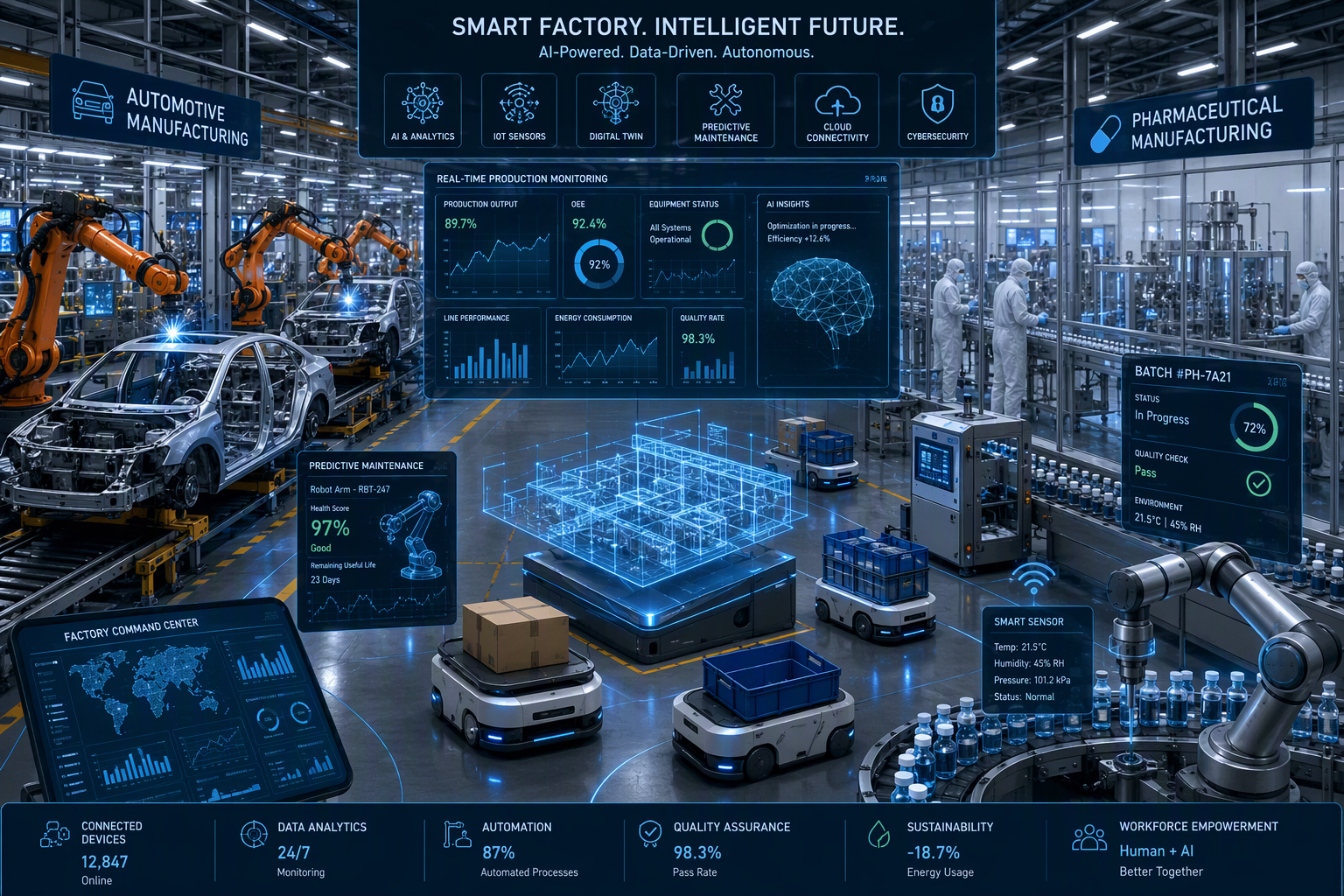
- Industrial automation uses advanced automation technology to reduce manual work and improve product quality in real time.
- The market includes major key players that compete through automation solutions, software, and control platforms.
- Different system types support mass output, batch runs, and flexible production changes.
- Sectors like automotive, pharmaceuticals, food processing, and oil and gas are seeing strong impact.
- Market share growth is tied to AI, machine learning, smart sensors, and connected operations.
- Companies that adopt automation often gain efficiency, consistency, and a stronger competitive edge.
Introduction
Industrial automation is the use of machines, software, and connected tools to run parts of a manufacturing process with less human intervention. It works by linking sensors, control systems, and equipment so tasks can be monitored, adjusted, and repeated with greater consistency. What makes it so important today? It helps companies improve output, safety, and quality while reducing errors. As you look at the types of industrial automation, you can see how each one supports different production needs.
Industrial Automation Industry Statistics: Market Size and Growth Data
Understanding the Industrial Automation Industry
Industrial automation has changed how factories and industrial sites run every day. Instead of depending only on manual steps, companies use automation systems to handle production, monitoring, and process control with greater speed and consistency.
That shift matters because better control often leads to stronger product quality and safer workplaces for human operators. From simple machines to connected digital platforms, the industry keeps expanding as businesses look for smarter ways to manage output, reduce waste, and support reliable operations.
Defining Industrial Automation and Its Core Principles
Industrial automation means using advanced machines, sensors, and software to run industrial work with minimal human intervention. In simple terms, it helps businesses automate parts of production, material movement, and other routine operations. This makes work faster, more consistent, and easier to control.
At its core, industrial automation is built on three ideas: control, feedback, and optimization. Systems track what is happening, respond to changing conditions, and adjust performance over time. That is how automation handles repetitive tasks while improving accuracy and reducing mistakes that often happen in manual workflows.
What makes today’s systems different is the growing role of artificial intelligence and machine learning. These tools help equipment learn from data, adapt to new situations, and support better decisions. As a result, automation now goes far beyond simple mechanization.
How Industrial Automation Works in Modern Manufacturing
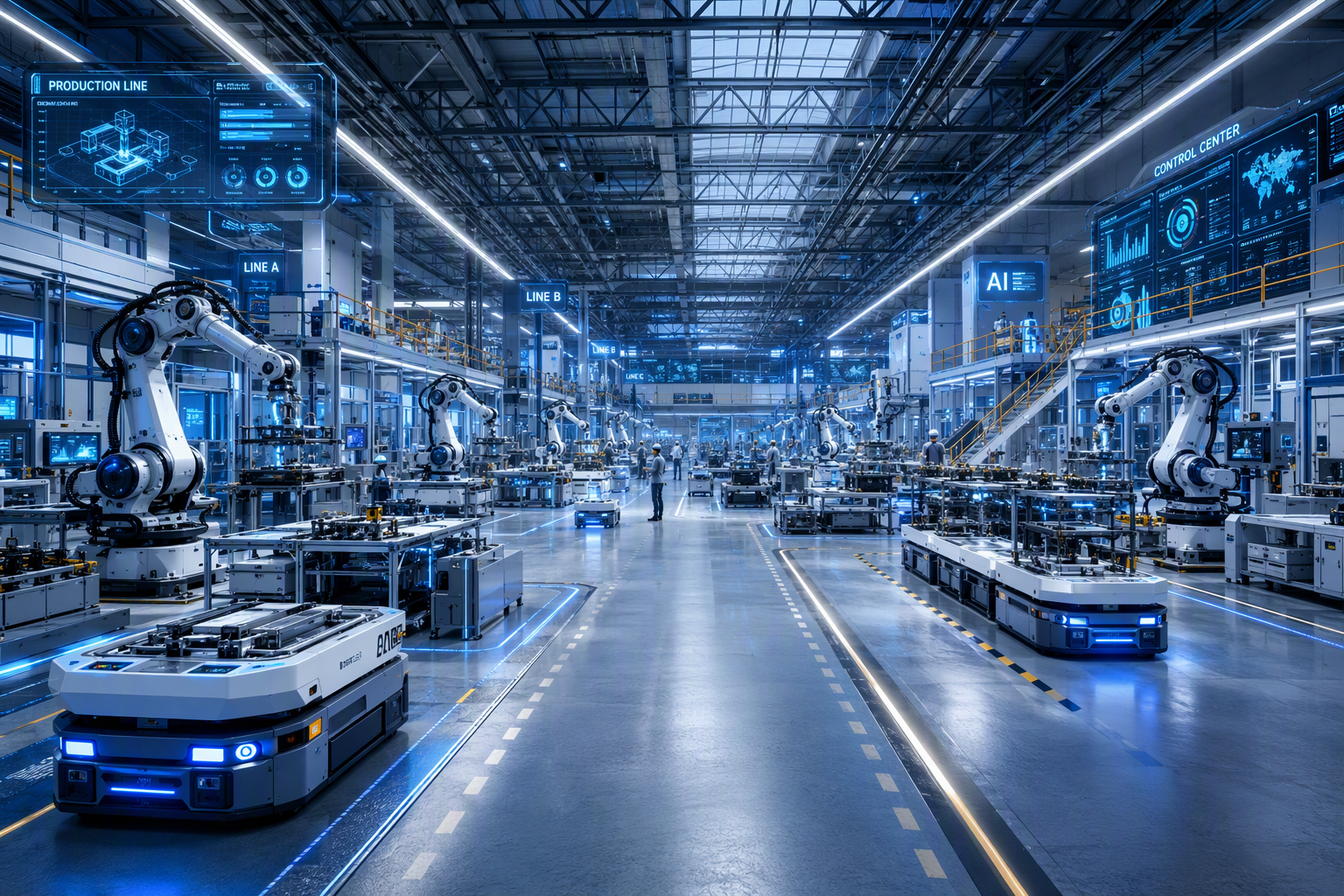
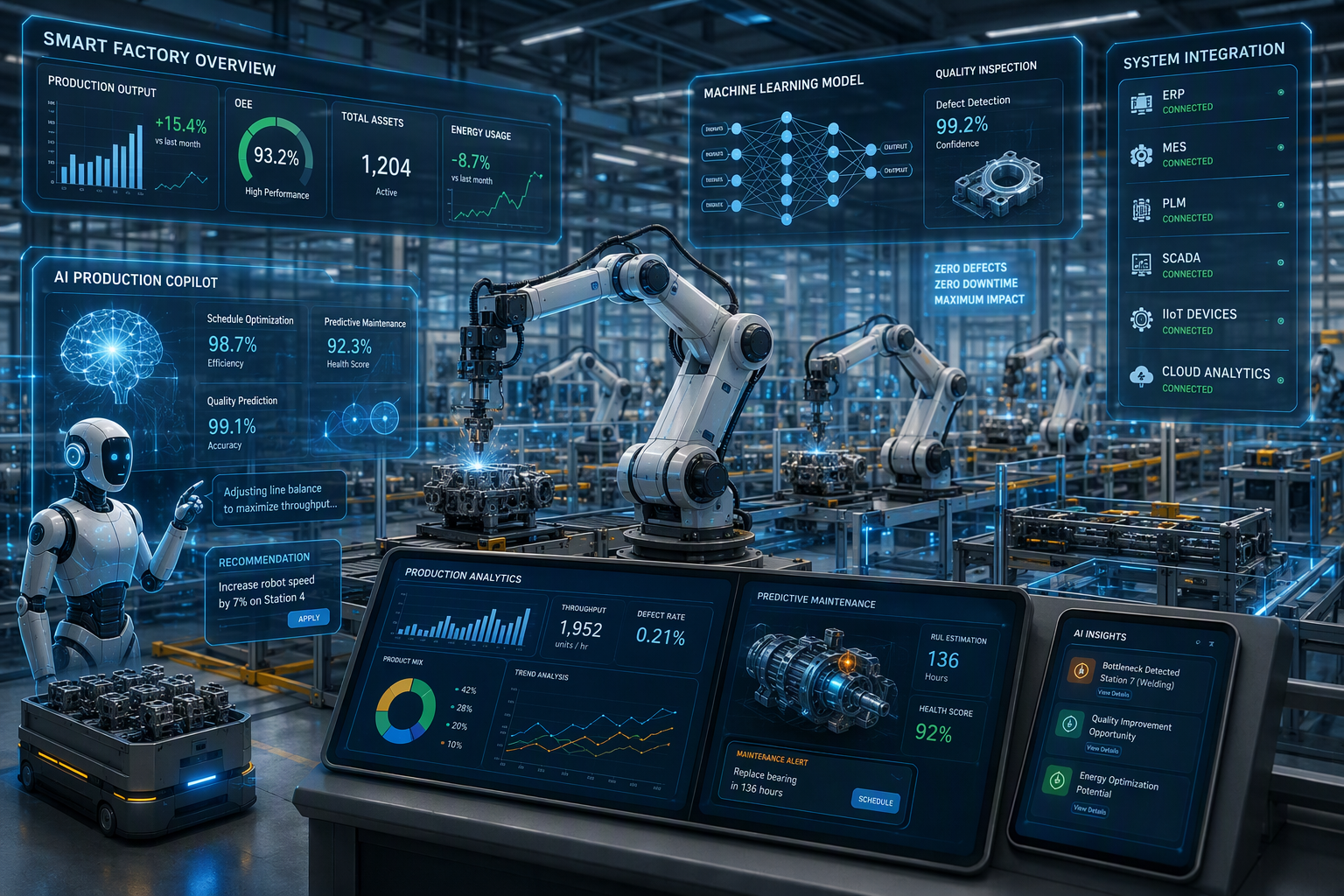
In modern plants, industrial automation works by connecting machines, sensors, and software across the manufacturing process. These automation systems gather information from equipment, track conditions, and send instructions that keep work moving. The goal is simple: make production smoother, faster, and easier to manage.
A control system sits at the center of this setup. It receives signals, compares them to the desired result, and adjusts machine actions when needed. That constant feedback helps reduce errors, keep timing steady, and maintain product quality across long runs or changing workloads.
This also improves efficiency because human operators can focus on higher-value work instead of watching every repetitive step. Automation reduces slowdowns, supports steady output, and helps manufacturers catch problems early before they affect quality or cause unnecessary downtime.
Key Components of Industrial Automation Systems
Every industrial automation setup depends on several connected parts working together. Some devices sense conditions, some make decisions, and others perform physical actions. When these elements are linked correctly, the system can support reliable production and quick response to changing conditions.
Common components include:
- Field devices such as sensors and actuators that detect changes and trigger actions at the field level.
- Programmable logic controllers that execute control logic and coordinate machine behavior.
- Industrial networks that move information between machines, controllers, and software platforms.
- Industrial robots that handle repetitive movement, assembly, or material transfer tasks.
Together, these pieces create a complete automation environment. Data flows from the shop floor into the control layer, decisions are made, and machines respond in real time. That is why even complex plants can maintain speed, consistency, and better overall visibility.
Types of Industrial Automation Systems
Not every factory needs the same setup, so businesses use different types of industrial automation based on volume, variety, and speed. Some automation solutions are built for one repeated task, while others can switch between jobs with less effort.
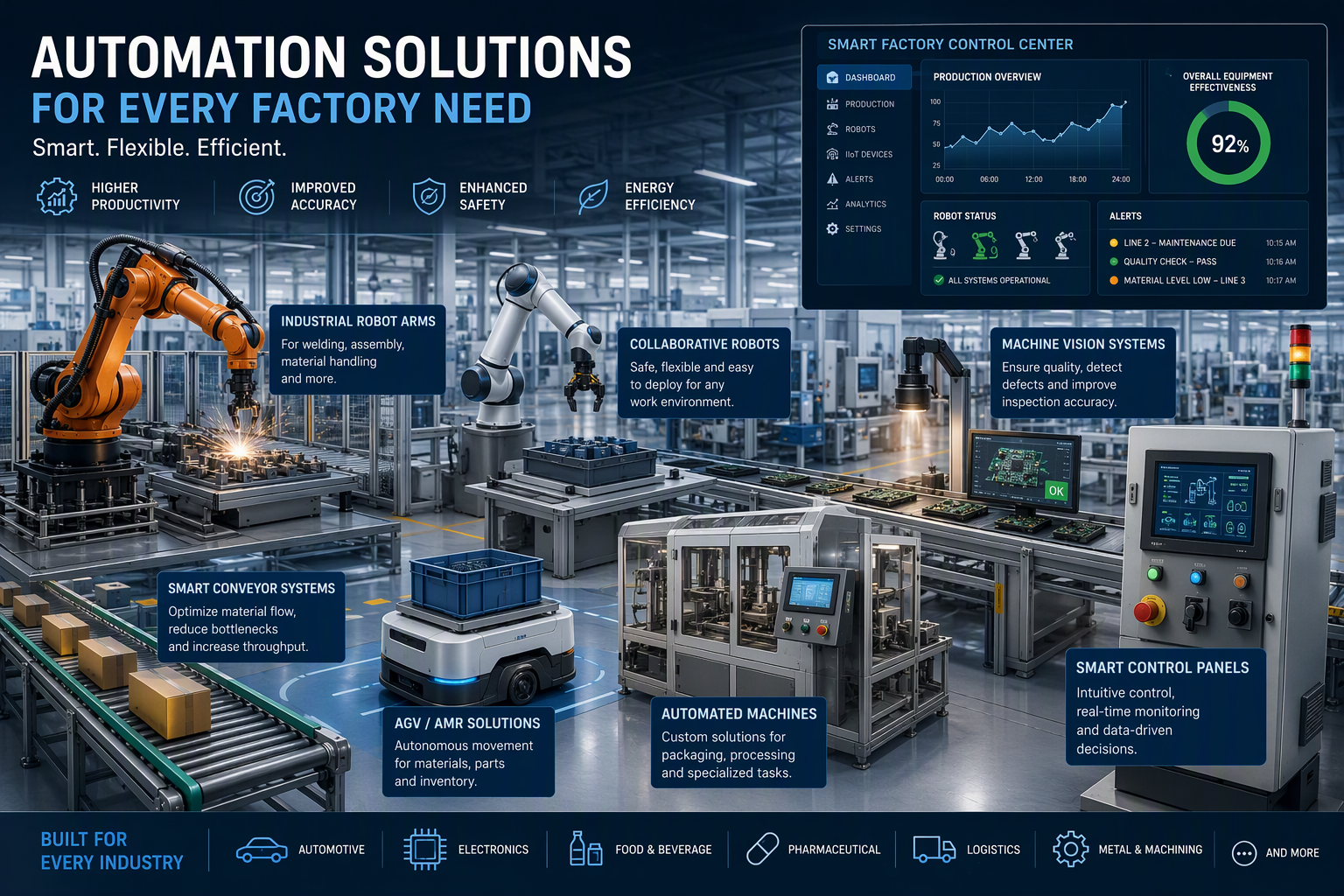
That is where the main categories become useful. Fixed systems suit high-volume output, programmable setups support batch production, and flexible automation helps companies adjust to changing needs. Looking at these approaches makes it easier to match the right system to the right operation.
Fixed Automation and Its Industrial Applications
Fixed automation is the oldest and most established type of automation technology. It uses specialized equipment to perform one set of tasks again and again with very little change. You can think of it as an advanced form of simple mechanization built for speed and repeatability.
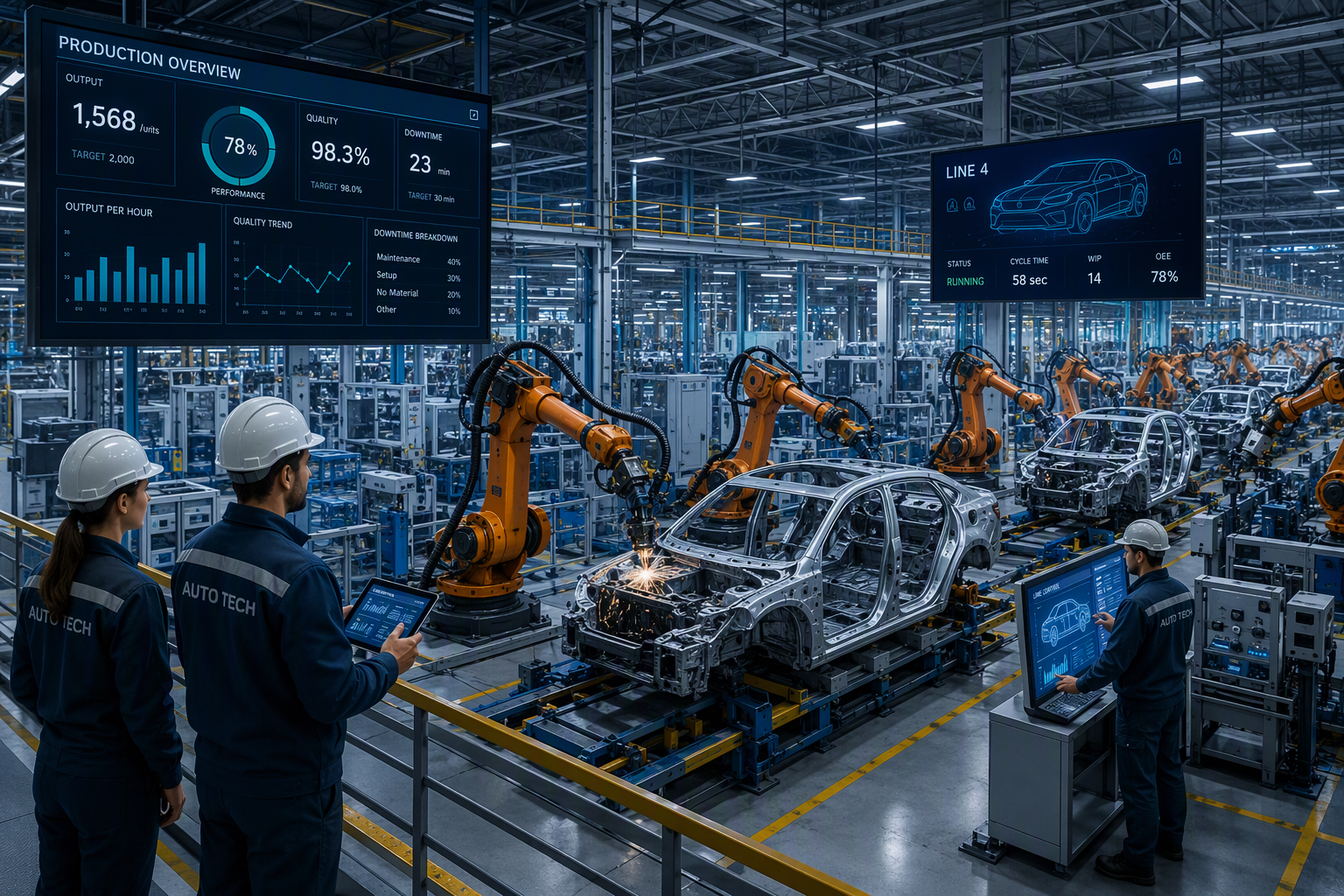
This type works best in high-volume environments where the same operation happens continuously. An assembly line is the classic example. In automotive production, each station performs one specific action, such as welding or painting, as the product moves from one stage to the next.
Because the equipment is designed for a narrow purpose, fixed automation is less adaptable than other systems. Still, it is highly effective for mass production, material handling, and operations that value output speed, consistency, and low variation over customization.
Programmable Automation in Manufacturing
Programmable automation gives manufacturers more flexibility than fixed systems. Instead of using equipment built for only one job, companies use computer-controlled machines that can be reprogrammed for different tasks. This makes programmable automation useful when products or production requirements change from time to time.
A control system manages the instructions that drive each process. Programmable logic controllers are a key part of this setup because they help automate tasks, monitor machine status, and respond to changes during production. That supports stronger process control across a wider range of operations.
You often see this type in batch production, where companies make a product in runs rather than nonstop. CNC machines are a good example. By changing software instructions, the same equipment can produce different parts without replacing the entire system.
Flexible and Integrated Automation Solutions
Flexible automation is designed for change. It can adapt to different products, layouts, or production needs more quickly than older systems. Integrated automation takes that idea further by combining multiple technologies into one coordinated workflow, giving companies broader control over operations.
These automation solutions often support:
- Faster product changeovers without major equipment replacement
- Better quality checks through connected monitoring tools
- Digital twins for testing scenarios before making physical changes
- Machine learning to improve decisions based on operating data
This matters when businesses need customization and responsiveness. Flexible systems can handle shifting demand, while integrated systems connect robots, conveyors, software, and other tools into one production structure. The result is a more unified setup that can improve visibility, speed, and consistency at the same time.
Major Sectors Impacted by Industrial Automation in the United States
Industrial automation is influencing many U.S. industries, but the impact is especially clear in sectors that depend on speed, precision, and safety. Companies in automotive, pharmaceuticals, food processing, and oil and gas are using automation to improve output and reduce risk.
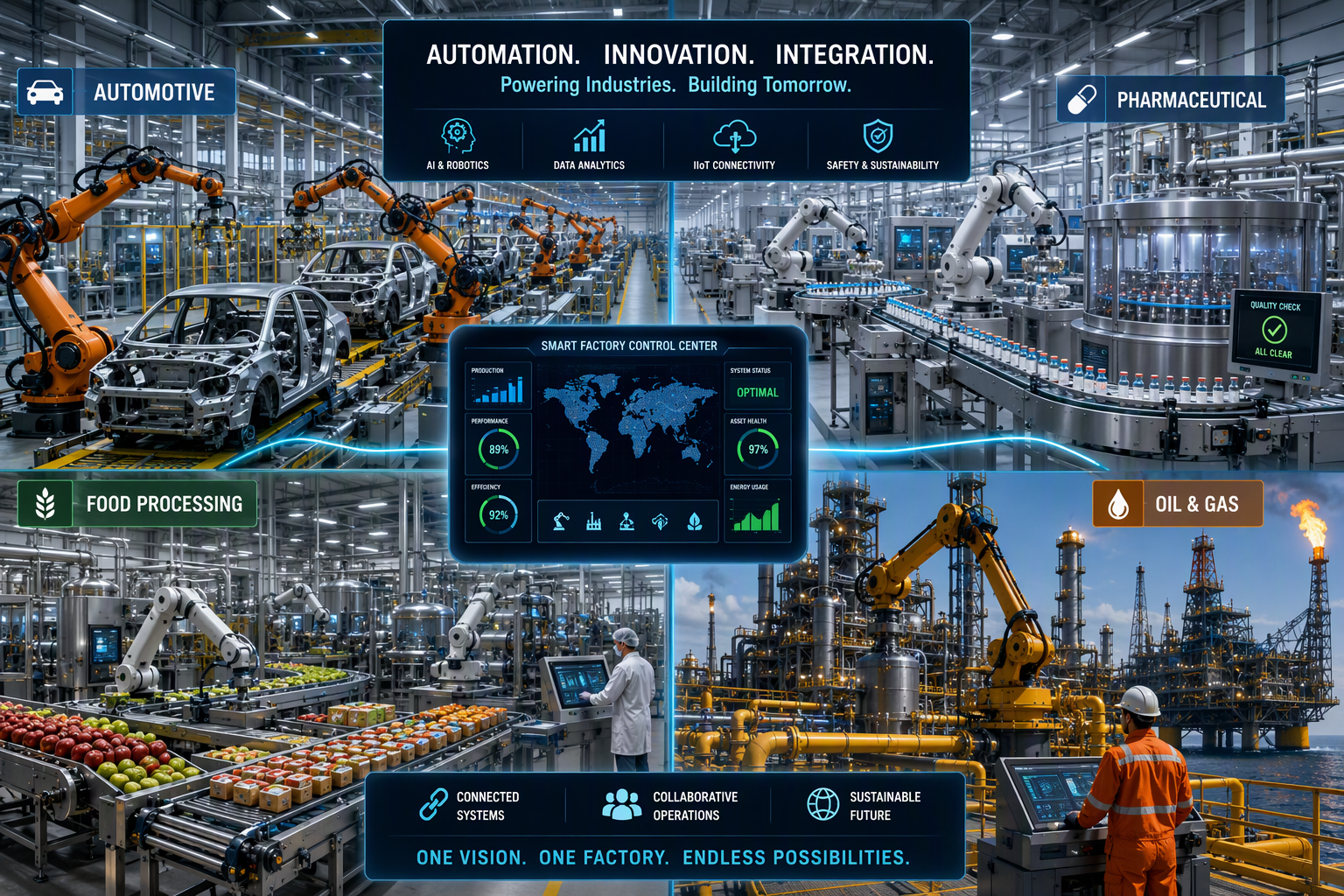
It also plays a growing role across the supply chain, where material movement, tracking, and production timing matter every day. The following sectors show how automation supports very different operations while solving similar problems around quality, efficiency, and labor demands.
Automotive and Transportation
Automotive and transportation have long been among the biggest users of industrial automation. These operations depend on speed, repeatability, and precise timing, which makes automation a natural fit. From welding to painting, many steps are handled by specialized systems designed for continuous output.
Industrial robots are central to modern vehicle manufacturing. They support production lines by performing repetitive tasks with steady accuracy, while automated equipment also helps with material handling between stations. This reduces delays and helps factories maintain a smoother production flow.
Another major benefit is stronger quality control. When each stage follows the same programmed process, manufacturers can reduce variation and catch issues faster. That consistency gives companies a competitive advantage, especially in industries where cost, timing, and reliability shape customer demand.
Food & Beverage Processing
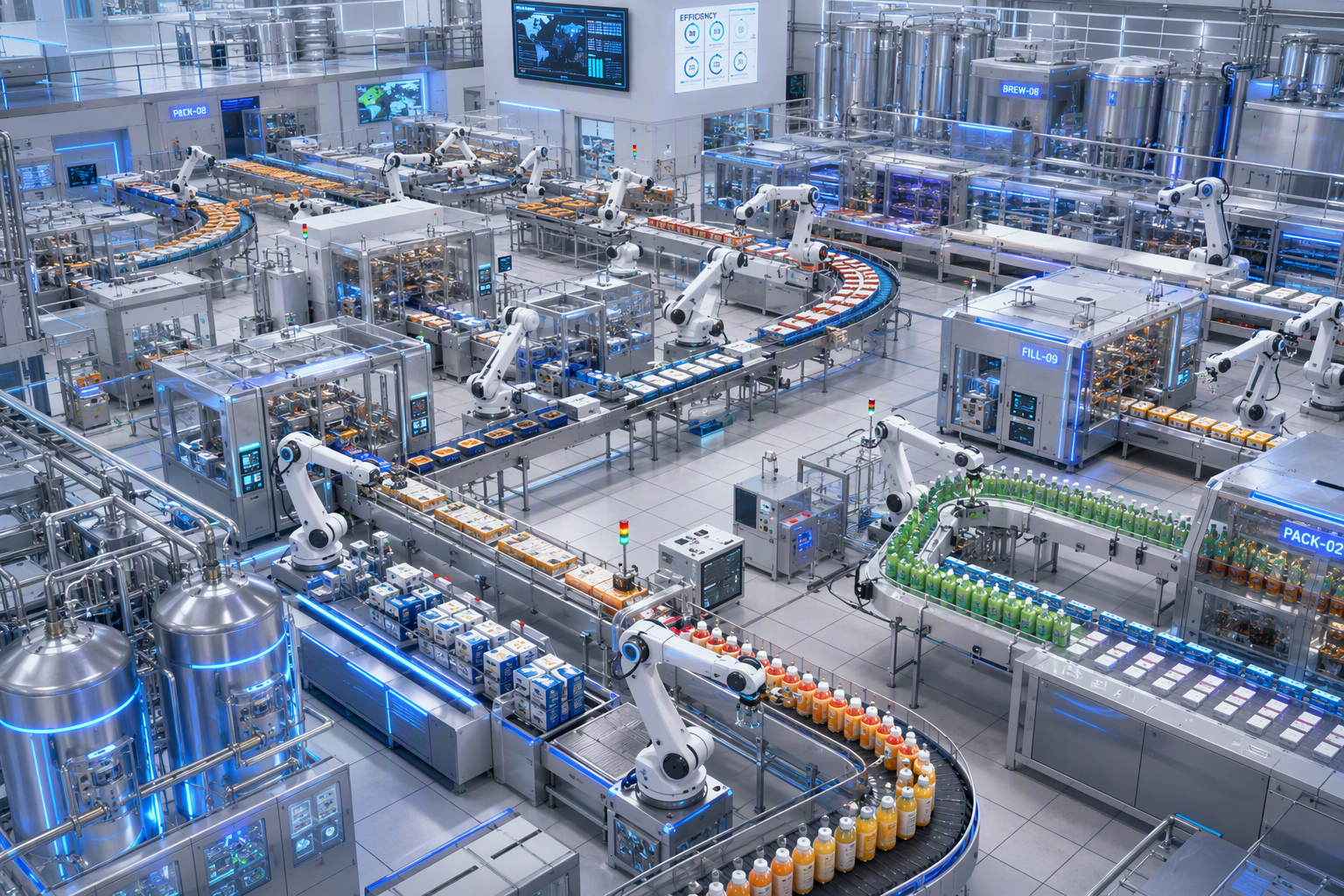
Food and beverage facilities use automation solutions to keep operations consistent and efficient. In these environments, small changes in timing, temperature, or handling can affect outcomes. That is why automated monitoring and process control are so valuable across the manufacturing process.
Automation helps by supporting:
- More consistent product quality from run to run
- Faster response to changing conditions through sensor data
- Better control of material flow and processing steps
- Reduced waste caused by human error or uneven handling
This sector benefits from systems that can monitor conditions continuously and react quickly when something shifts. With better visibility and fewer manual adjustments, producers can maintain steady output, improve reliability, and protect quality standards in high-volume processing environments.
Pharmaceuticals and Life Sciences
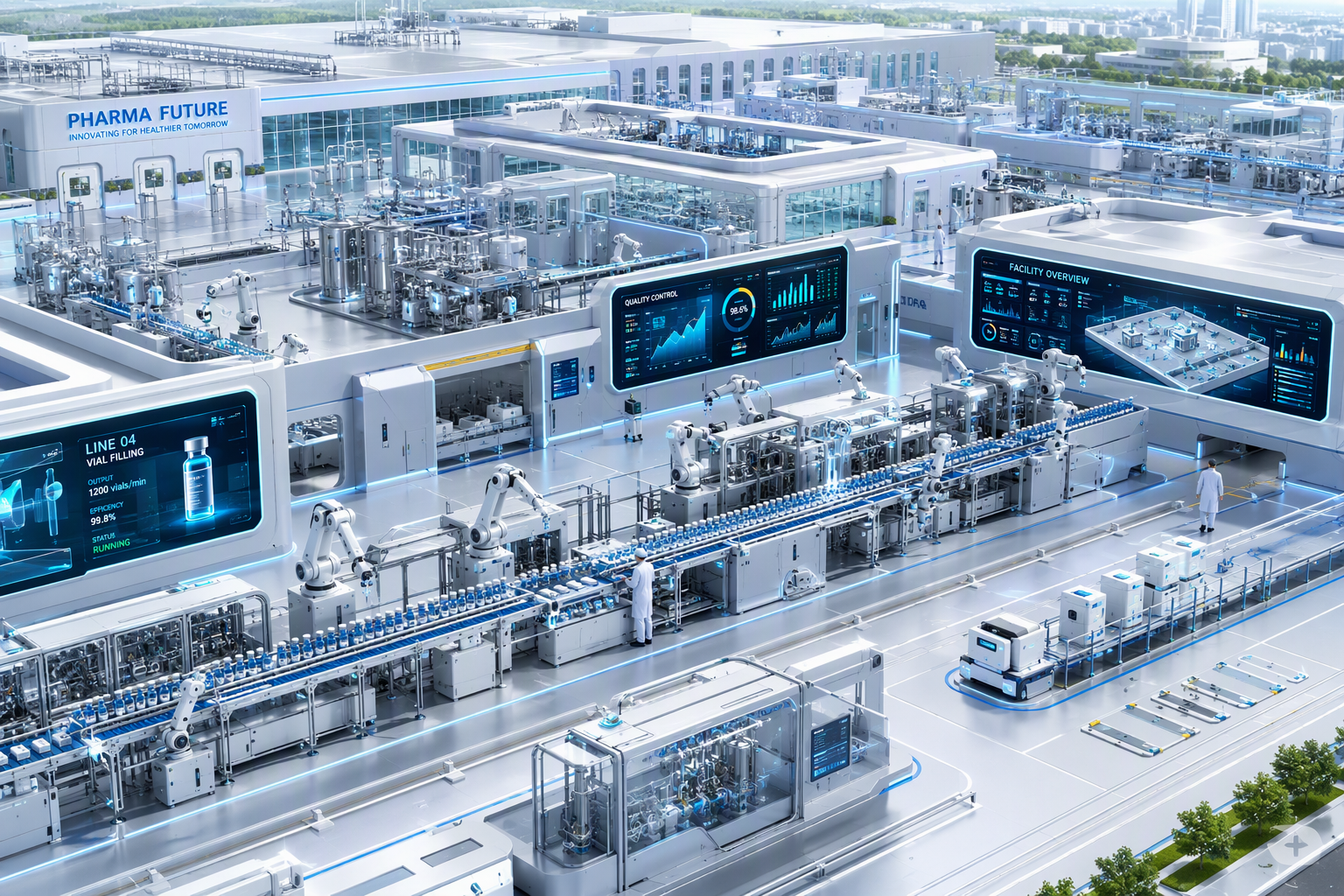
Pharmaceuticals and life sciences depend on precision, consistency, and close monitoring. That makes industrial automation especially useful in these settings. Automated systems help manage production steps with minimal human intervention, which can lower variability and support cleaner, more controlled operations.
Many repetitive tasks in these facilities are a strong fit for automation. Equipment can run the same steps repeatedly while maintaining stable conditions and recording performance. Automated quality checks also help teams spot deviations faster and correct them before they affect larger production runs.
Another advantage is predictive maintenance. By monitoring equipment behavior over time, companies can identify early signs of wear and reduce the risk of unexpected failure. This helps protect uptime, supports more reliable production, and improves planning in highly controlled environments.
Oil, Gas, and Chemical Industries
Oil, gas, and chemical operations often involve large-scale equipment, continuous flows, and hazardous conditions. In these environments, automation technology is valuable because it improves visibility and helps companies manage process control with greater consistency and speed.
A major benefit is the ability to reduce direct human exposure to dangerous tasks. Automated systems can monitor equipment, track conditions, and respond to changes in real time. That is especially useful where temperature, pressure, or material movement must stay within strict operating limits.
SCADA systems are often part of this picture. They support centralized monitoring and data collection across industrial sites, helping teams supervise complex operations from a control layer. With stronger oversight and faster response, companies can improve safety, reduce disruption, and maintain more stable performance.
Key Automation Technologies Driving the Industry
Today’s industrial growth is being shaped by a mix of connected hardware and intelligent software. Core automation technology now goes beyond simple machine control and includes data-driven tools that support faster decisions and more flexible operations.
Industrial robots, machine learning, smart factories, and predictive maintenance are all part of that shift. Together, these technologies help businesses improve reliability, monitor performance continuously, and respond to production issues earlier. The next sections break down the tools that are driving this change across modern facilities.
Robotics and Collaborative Robots (Cobots)
Robotics is one of the clearest examples of modern automation in action. Industrial robots are used to perform tasks with speed and consistency, especially where precision matters or work repeats for long periods. They are common in production, packaging, and movement-heavy environments.
Cobots add a different layer to automation solutions because they are designed to work alongside human operators. Instead of replacing every manual role, they assist with physically demanding or repetitive tasks. This makes them useful in settings where people and machines need to share work safely.
Common uses include:
- Repetitive assembly steps on production floors
- Material movement between stations
- Support for batch production with changing workflows
- Tasks that are too tiring or risky for workers to repeat all day
As a result, companies can improve output while using labor more effectively.
Programmable Logic Controllers (PLCs)
Programmable logic controllers are a core part of many automation systems. These devices manage machine actions by following programmed instructions and responding to signals from connected equipment. If you want stable, repeatable machine behavior, PLCs are often where that starts.
Their main role is to execute control logic. They monitor inputs, compare them to programmed conditions, and trigger outputs based on those rules. In manufacturing, that helps keep process control accurate and consistent, even when operations run continuously or involve multiple coordinated steps.
PLCs are also important because they fit into broader architectures, including setups linked with a distributed control system. That flexibility makes them useful across many industries. Whether a company is automating a single machine or a larger line, PLCs help create dependable and manageable control.
Industrial IoT (IIoT) and Smart Sensors
The industrial internet of things connects machines, devices, and software so information can move across operations more easily. In industrial automation, this helps companies collect sensor data, monitor conditions, and make better decisions without waiting for manual checks.
Smart sensors are a key part of that system because they capture real time information from equipment and processes. They help businesses understand what is happening on the floor, often with faster response than older monitoring methods. In some cases, edge computing supports this by processing data closer to the source.
IIoT and smart sensors help with:
- Real time monitoring of equipment and production status
- Faster detection of performance changes
- Better local processing through edge computing
- More accurate data flow across connected systems
As these tools spread, facilities gain more visibility, quicker response, and stronger operational awareness.
Supervisory Control and Data Acquisition (SCADA)
SCADA systems are widely used in industrial settings where centralized oversight matters. SCADA stands for supervisory control and data acquisition, and the name explains the purpose well. These platforms help teams watch operations, collect information, and manage equipment across broad industrial environments.
In practice, SCADA supports supervisory control by giving operators a clearer view of what is happening across machines, lines, or sites. It also handles data acquisition, which means gathering information from connected devices and feeding it into a system that people can interpret and act on.
This makes SCADA an important part of industrial control systems. It strengthens automation technology by improving visibility, helping teams respond faster, and supporting better operating decisions. In sectors with large or distributed operations, that kind of oversight can be especially valuable.
Leading Industrial Automation Companies Worldwide
The industrial automation market includes several global key players with broad product portfolios and strong regional influence. These companies shape industrial automation through software, controls, robotics, and other automation solutions that support production across many industries.
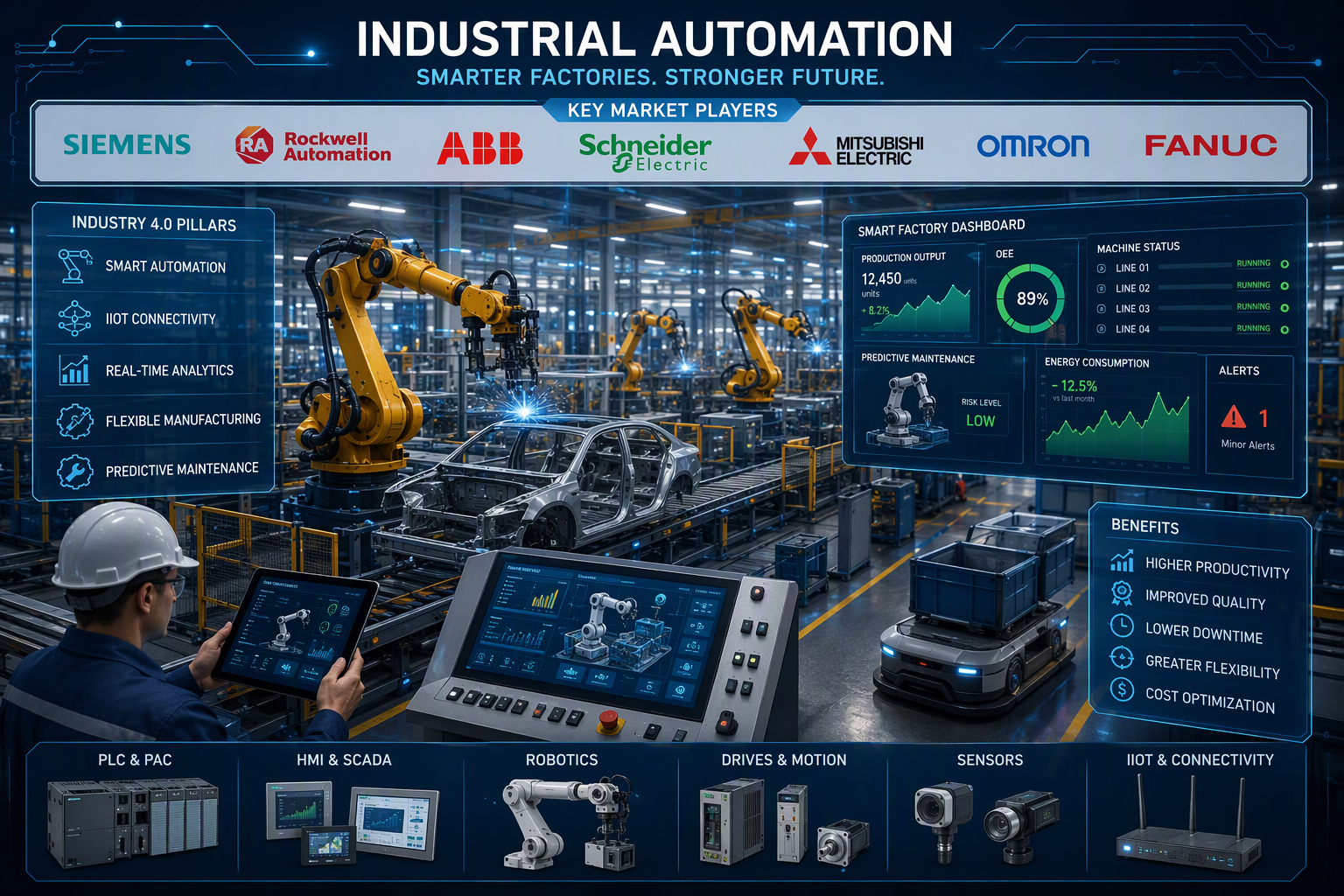
Their market share matters because scale often brings deeper ecosystems, stronger service networks, and more investment in innovation. For buyers, understanding who leads the market can help clarify where competitive advantage comes from and how technology direction is being shaped worldwide.
Siemens – Market Share and Innovations
Siemens is widely recognized as one of the major names in industrial automation. Its position in the market comes from a broad mix of control, software, and connected technologies that serve many industrial environments. That breadth helps the company remain highly visible in discussions about market share.
Companies like Siemens shape the market by setting expectations around integration, digital tools, and scalable systems. Their innovative automation solutions influence how manufacturers think about plant connectivity, production efficiency, and long-term modernization across facilities.
| Area |
How Siemens Shapes the Market |
|---|---|
| Market role |
Considered one of the leading global providers in industrial automation |
| Strength |
Broad automation portfolio across industrial environments |
| Value to customers |
Supports integrated operations and modernization efforts |
| Market impact |
Helps define competitive standards through innovative automation solutions |
This kind of market presence makes Siemens an important benchmark when comparing major vendors.
ABB – Strengths and Regional Presence
ABB is another major force in industrial automation, known for its wide international footprint and strong technology base. Its global reach allows it to serve customers across many regions and industries, which gives the company broad influence in how automation adoption develops.
A key strength for ABB is its ability to support complex operations with control system expertise and a diverse automation technology offering. That matters for manufacturers looking for consistency across multiple facilities or countries. Large-scale providers often help standardize how plants manage performance and control.
ABB’s market role shows how leading companies shape buyer expectations. When firms offer broad platforms, service depth, and regional support, they make it easier for customers to scale automation across operations. That helps move industrial automation from isolated projects to larger transformation efforts.
Rockwell Automation – U.S. Leadership and Solutions
Rockwell Automation stands out for its strong presence in the United States. Its name is closely tied to factory automation, controls, and software used across a wide range of industrial operations. That domestic leadership gives it a major role in shaping how U.S. manufacturers modernize their systems.
The company’s automation solutions are especially relevant for businesses that want to improve the production process while connecting equipment, data, and decision-making tools. Its focus on industrial control systems helps customers manage machines and workflows with greater consistency and visibility.
Rockwell Automation also reflects an important market trend: the growing demand for smarter maintenance and data use. As predictive maintenance becomes more valuable, companies that connect controls with analytics can influence how customers prioritize upgrades, spending, and long-term plant performance.
Schneider Electric – Global Reach and Technologies
Schneider Electric is a major global player with a strong position in industrial and energy-related systems. Its influence comes from combining automation technology with tools that help businesses monitor operations, manage connected assets, and improve efficiency across sites.
One important area is energy use. Many manufacturers want systems that not only automate production but also help them understand resource consumption more clearly. Schneider Electric’s focus on data analysis and connected infrastructure supports that goal, especially in facilities trying to improve both performance and efficiency.
Its role also highlights the value of industrial networks. When machines, controls, and software communicate well, companies gain better visibility and stronger operational coordination. That is one reason major providers like Schneider Electric continue to shape purchasing decisions and technology direction across industries.
Mitsubishi Electric, Emerson, and Other Top Players
Beyond the biggest names, several other companies play an important role in the automation market. Mitsubishi Electric and Emerson are often included in conversations about leading suppliers because they support manufacturers with broad industrial automation solutions and control-focused technologies.
These firms help shape the market by offering tools that support reliable operations, connected monitoring, and faster response across different industrial settings. Buyers often compare them based on industry fit, regional support, and how well their systems handle real time operational needs.
Key contributions include:
- Mitsubishi Electric support for factory automation and machine control
- Emerson strength in process-focused automation and control system applications
- Broad industrial automation solutions for varied use cases
- Real time monitoring and response capabilities that improve plant oversight
Together, these companies add depth and competition to the global supplier landscape.
Industrial Automation Market Overview and Growth Outlook
The industrial automation market has expanded quickly as companies invest in tools that improve output, quality, and resilience. Demand is rising across manufacturing and the supply chain, where businesses want better visibility, faster response, and more efficient production.
That growth is also tied to broader adoption of automation technology, from machine control to connected analytics. As market share shifts among leading vendors, businesses are paying close attention to growth projections in the United States and worldwide. The next sections explain the size of the market and what is driving it forward.
Current Size of the Global Industrial Automation Market
The global industrial automation market has already reached substantial scale. Based on the compiled information, it was valued at about $196.6 billion in 2021 and grew to roughly $213.49 billion in 2022. Those numbers show that industrial automation is no longer a niche investment.
Why does that matter to you? A market of this size signals that automation is becoming central to the modern production process. Companies are investing not just to reduce labor pressure, but also to improve consistency, lower downtime, and gain a competitive advantage in fast-moving industries.
| Year / Outlook |
Market Value or Signal |
|---|---|
| 2021 |
About $196.6 billion |
| 2022 |
About $213.49 billion |
| Longer-term growth outlook |
Continued expansion as adoption spreads across industries |
This market growth also helps explain why vendor competition, innovation, and shifting market share remain so important.
Growth Projections for the US and Worldwide
Looking ahead, the growth outlook for industrial automation remains strong. The compiled information notes that the market is expected to reach $395.09 billion by 2029, with a compound annual growth rate of 9.8%. That points to steady expansion rather than short-term momentum alone.
This trend reflects wider use of automation technology across many operations. Businesses are investing in industrial automation solutions to improve the manufacturing process, respond to labor pressure, and handle changing production needs more effectively. Different industries may prefer different types of automation, but demand is clearly broadening.
For the U.S. and global markets, this means competition will likely intensify as vendors fight for market share. It also means manufacturers that delay modernization may find it harder to match the efficiency, flexibility, and reliability of early adopters using more advanced systems.
Key Factors Driving Market Expansion
Several forces are pushing the market forward. Companies are not adopting automation only to cut labor. They also want better quality, steadier output, safer operations, and stronger control over changing business conditions. In many cases, these pressures come from both factory needs and the wider supply chain.
Key drivers include:
- Digital transformation across industrial operations
- Artificial intelligence and machine learning for smarter decisions
- Predictive maintenance that reduces costly downtime
- Supply chain pressure that requires faster, more reliable execution
These factors connect directly to the main benefits of automation in manufacturing. Businesses can improve productivity, reduce waste, support safety, and use people more effectively. When those gains are combined with better data and flexible operations, the case for automation becomes much stronger.
Trends and Challenges in Today’s Industrial Automation Industry
Industrial automation is moving forward quickly, but growth also brings new demands. Companies are investing in digital transformation to make operations more connected, responsive, and efficient, all while protecting product quality and meeting changing production needs.
At the same time, the industry faces real challenges. Labor shortages continue to pressure manufacturers, and cybersecurity has become more important as machines, software, and networks become more connected. Understanding both the trends and the obstacles helps you see where the market is heading next.
Digital Transformation & Industry 4.0 Initiatives
One of the biggest current trends is digital transformation. Manufacturers are moving beyond isolated machines and adopting more connected automation systems that share information across operations. This shift supports faster decisions, better monitoring, and stronger coordination between equipment and software.
Industry 4.0 is closely tied to that change. It brings together the internet of things, data-driven control, and smarter production methods to create more responsive operations. In practical terms, that means businesses are building systems that can track performance, identify issues early, and adjust with less delay.
You can also see this trend in the rise of smart factories. These facilities use connected tools and digital platforms to improve visibility, efficiency, and adaptability. As more companies modernize, digital transformation and Industry 4.0 will continue shaping how industrial automation evolves.
Addressing Cybersecurity and Workforce Issues
Growth in connected operations creates new risks alongside new gains. As more devices, software platforms, and control system layers communicate with each other, cybersecurity becomes a bigger concern. Companies need connected performance, but they also need stronger protection around that connectivity.
Workforce pressure is another major challenge. Labor shortages continue to affect manufacturing and supply chain operations, making it harder to maintain output with traditional staffing models. That is one reason many businesses are turning to automation solutions that reduce repetitive work and use people more efficiently.
Key challenges include:
- Cybersecurity risks in more connected industrial environments
- Labor shortages that limit production capacity
- The need to balance artificial intelligence tools with practical workforce use
- Protecting control system reliability while modernizing operations
Addressing both security and staffing is now central to successful automation planning.
Conclusion
In conclusion, the industrial automation industry is transforming how businesses operate across various sectors by enhancing efficiency, productivity, and safety. With advancements in technologies such as robotics, IIoT, and PLCs, companies are not only streamlining operations but also adapting to the demands of Industry 4.0. Understanding the key players in this market and their innovations can help stakeholders make informed decisions. As the industry continues to grow, it’s crucial for businesses to stay updated on trends and challenges, ensuring they remain competitive. If you're interested in exploring how industrial automation can benefit your company, get in touch for a free consultation today!
Frequently Asked Questions
What are the main benefits of adopting automation in industry?
Automation solutions help companies handle repetitive tasks faster and more consistently. That improves product quality, raises operational efficiency, reduces errors, and supports safer work. Over time, these gains can lower waste and downtime, giving manufacturers a stronger competitive advantage in demanding markets.
How do industrial automation companies shape the market?
Key players shape industrial automation by investing in new automation technology, expanding service networks, and offering broader automation solutions. Their products influence customer choices, affect market share, and often set the pace for how factories modernize, connect systems, and improve long-term performance.
What are examples of automation technologies commonly used?
Common automation technology includes programmable logic controllers that manage control logic, industrial robots that handle repeated movement and assembly, and SCADA systems that support monitoring and oversight. Together, these tools help manufacturers improve consistency, visibility, and machine coordination across industrial operations.
You might also like