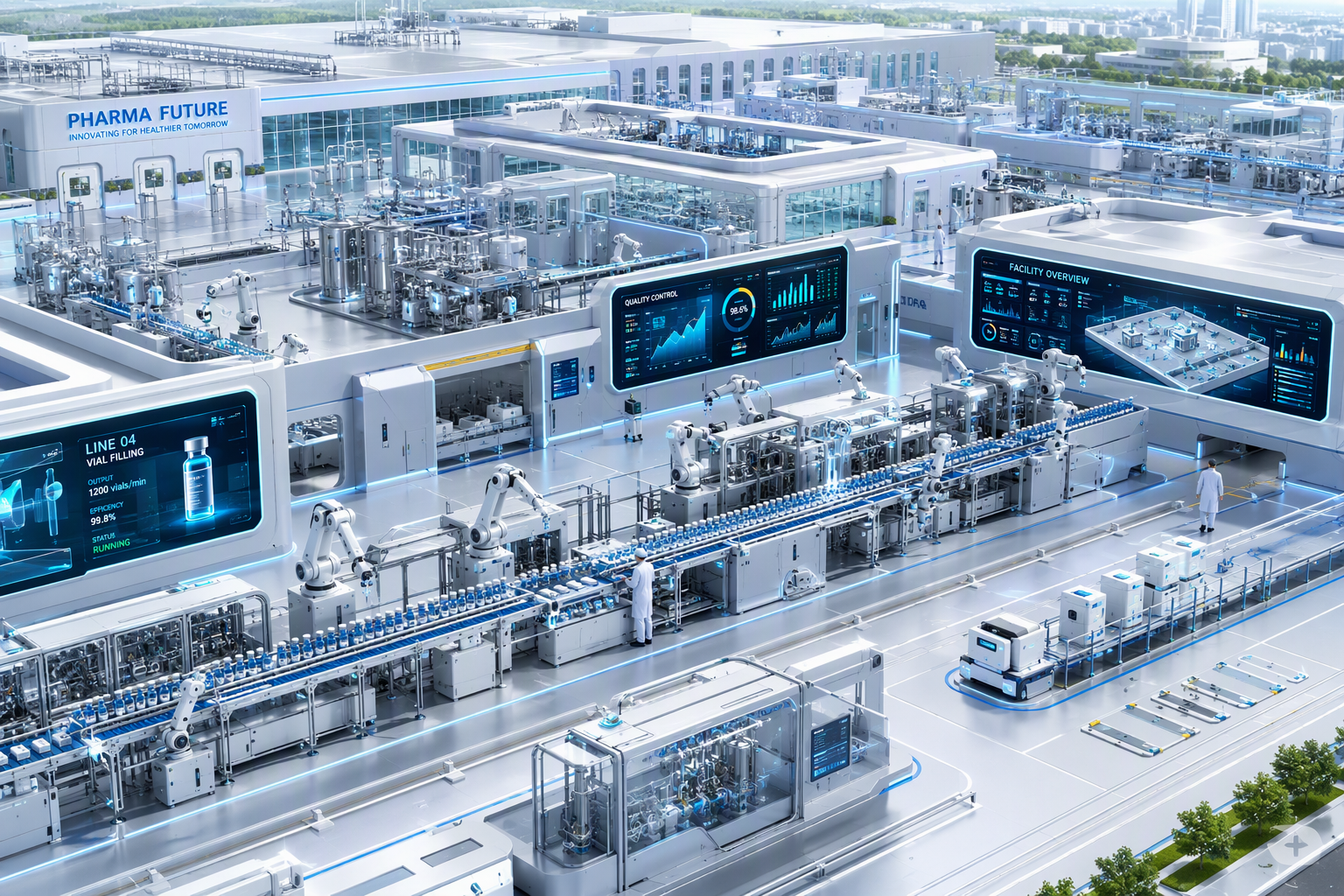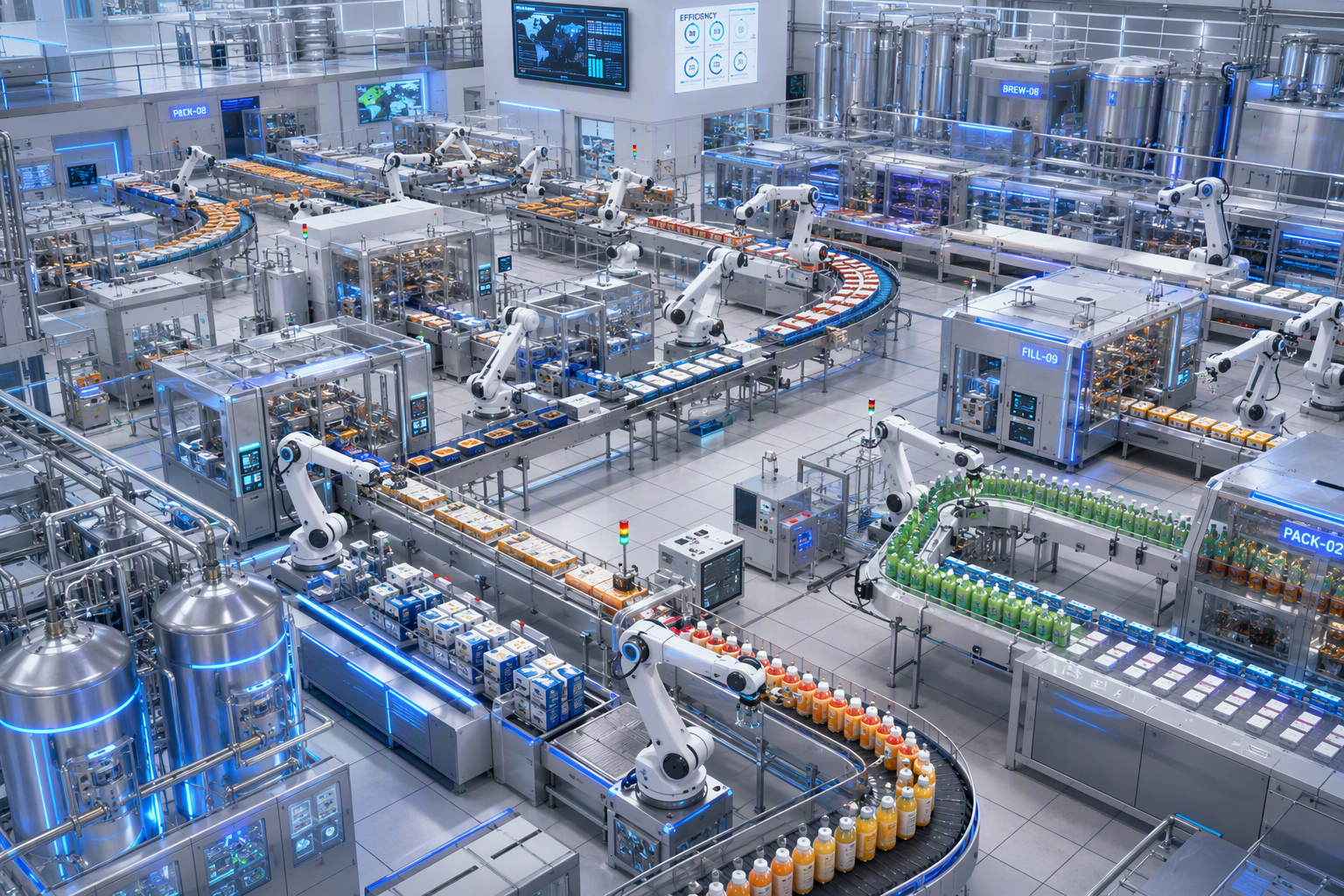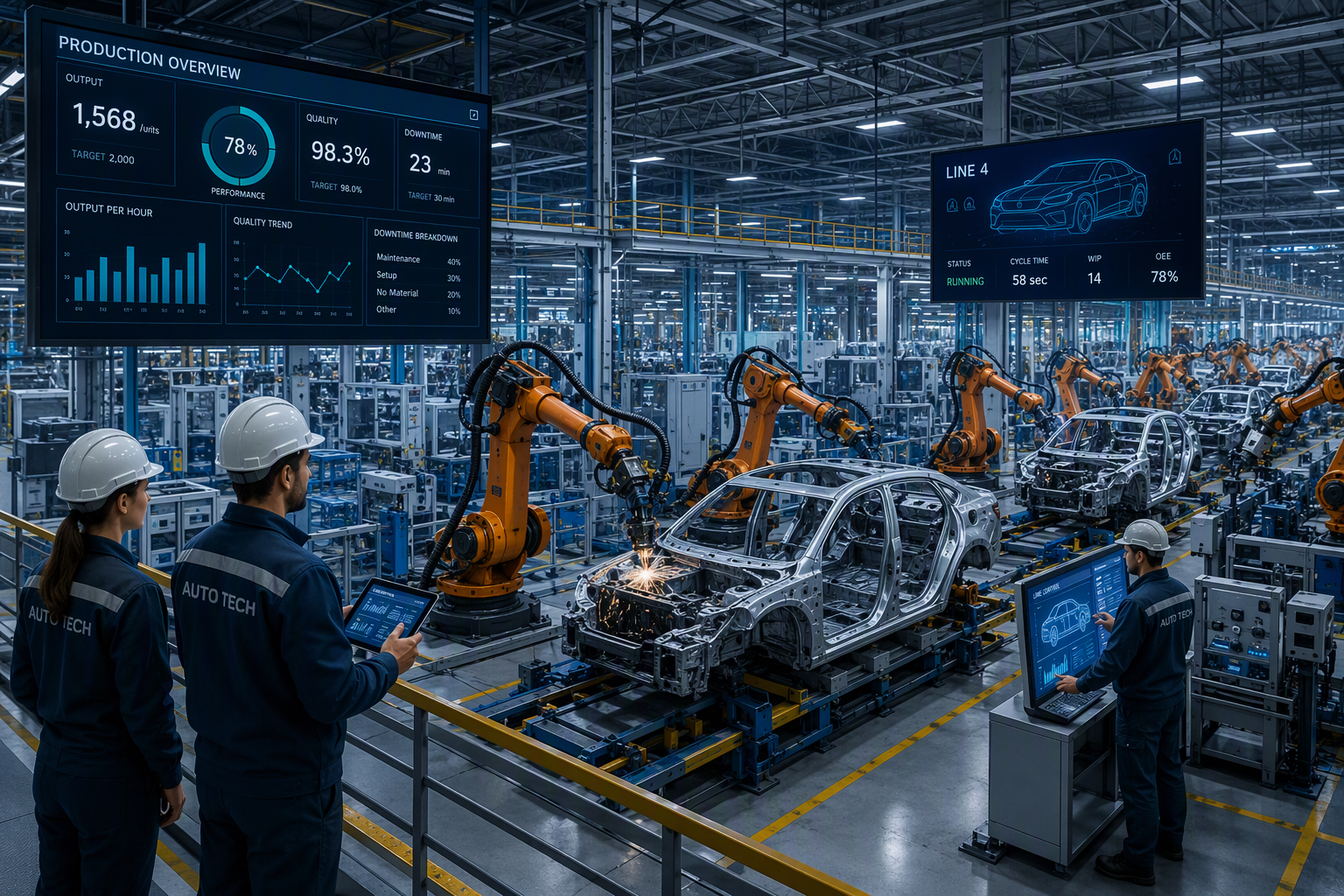
Industrial Automation Industry Market Share by Segment
Industrial Automation Industry Market Share by Segment
Key Highlights
- Industrial automation helps reduce manual steps in the manufacturing process.
- Different automation solutions support speed, consistency, and stronger product quality.
- Fixed, programmable automation, and flexible systems each serve different production needs.
- Smart factories rely on connected tools, data, and control systems to improve output.
- Major sectors such as automotive, food, and pharmaceuticals keep expanding automation use.
- Market share shifts often follow demand for efficiency, customization, and reliable operations.
Introduction
Industrial automation now plays a central role in how modern facilities run. It uses automation systems, machines, sensors, and software to handle tasks across the production floor with less human intervention. That shift matters because companies want faster output, steadier quality, and safer operations. From assembly work to material movement, automation has moved far beyond simple mechanization. If you want to understand where market share is growing, you first need a clear view of what industrial automation includes and why businesses keep investing in it.
Industrial Automation Industry Statistics: Market Size and Growth Data
Understanding Industrial Automation Industry Market Share
Industrial automation market share reflects how spending and adoption are divided across technologies, system types, and end-use sectors. It shows which automation solutions are winning more demand as companies modernize the manufacturing process.
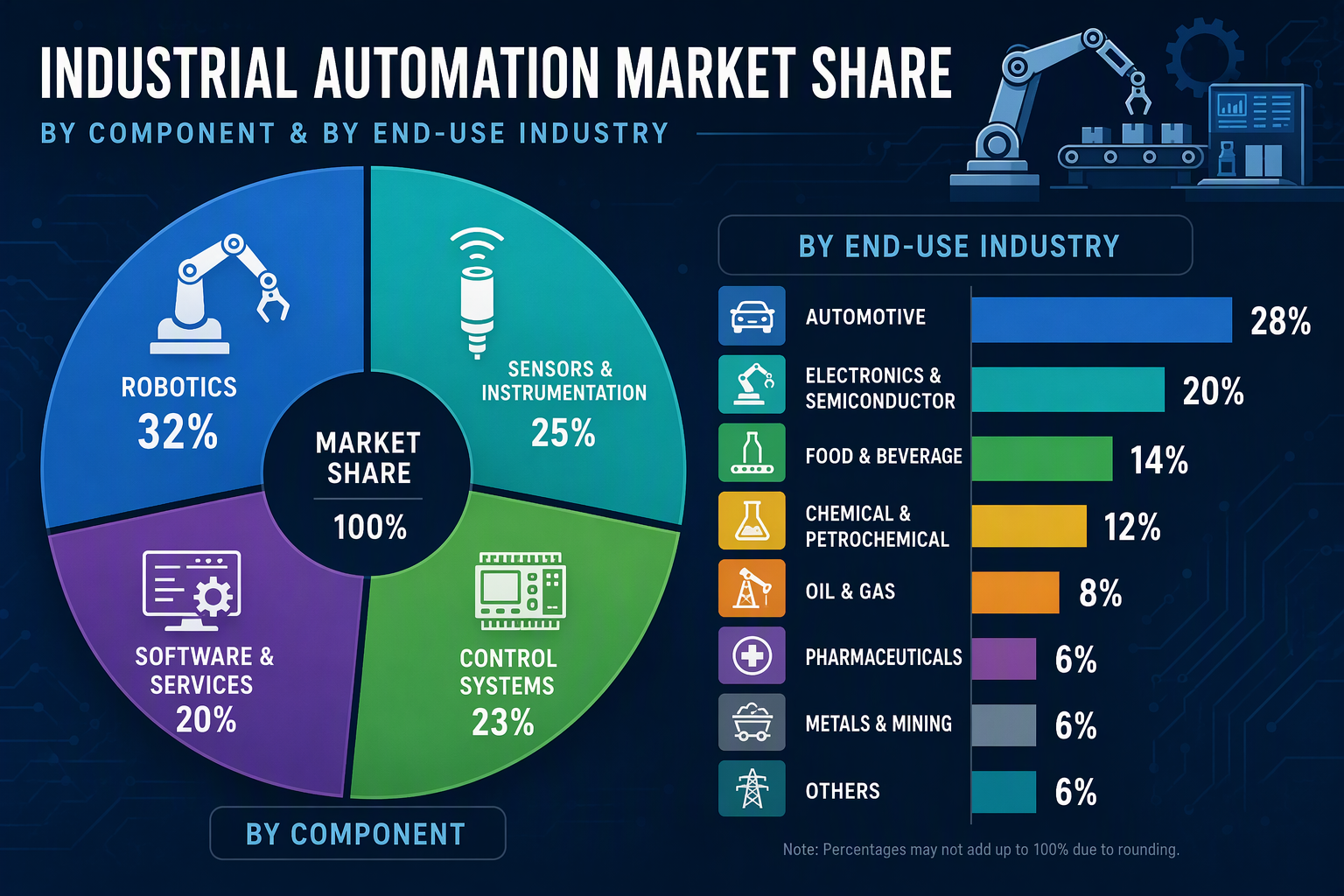
At its core, industrial automation uses a control system, connected equipment, and software to perform work with limited manual input. As more businesses adopt smarter tools, market share moves toward systems that improve speed, quality, adaptability, and day-to-day plant performance.
Definition of Industrial Automation
Industrial automation is the use of advanced machines, sensors, software, and automation solutions to carry out industrial tasks more efficiently. It supports production, material flow, and related operations across many industries. The main goal is to improve output while reducing delays, errors, and waste.
In practical terms, it reduces the amount of human intervention needed in the manufacturing process. Instead of relying only on workers for repetitive actions, companies use systems that can monitor, adjust, and repeat tasks with greater consistency. That helps create safer and more predictable operations.
Many setups include programmable logic controllers, industrial robots, and connected devices that respond to changing conditions. These tools support control, feedback, and optimization. Together, they form the foundation of industrial automation and explain why it has become such an important part of modern production environments.
How Industrial Automation Works
Industrial automation works by linking machines, sensors, software, and a control system so tasks can be monitored and executed with little delay. Information flows from field devices such as sensors and machine components into the system, which then decides what action should happen next.
At the center of many setups are programmable logic controllers. These controllers follow pre-set control logic to run equipment, track status, and respond to changes in the manufacturing process. If a line slows down or a condition changes, the system can adjust quickly.
Human operators still matter, but their role shifts. Rather than performing every manual step, they oversee performance, handle exceptions, and support higher-value work. This balance lets automated systems manage repetitive work while people focus on supervision, safety, and improvement.
Key Drivers Influencing Industry Market Share
Market share in this industry changes as companies respond to cost pressure, labor needs, and production goals. Businesses invest in automation technology when they need higher throughput, steadier product quality, and better use of labor and equipment. That demand pushes some segments ahead of others.
Several factors keep shaping adoption across sectors:
- Stronger operational efficiency is a top reason companies expand automation solutions.
- Supply chain pressure encourages faster, more reliable production and material movement.
- Product quality needs make automated checks and precision systems more attractive.
- Ongoing innovation in robotics, AI, and connected tools expands real-world use cases.
Another big driver is flexibility. Many facilities no longer want systems built for only one output forever. They want tools that can adapt as demand changes. That preference often shifts market share toward technologies that support reprogramming, analytics, and scalable deployment.
Industrial Automation Industry Segmentation Overview
To understand market share, you need to look at the main types of industrial automation and how each serves a different production model. Not every facility needs the same level of speed, changeover, or customization.
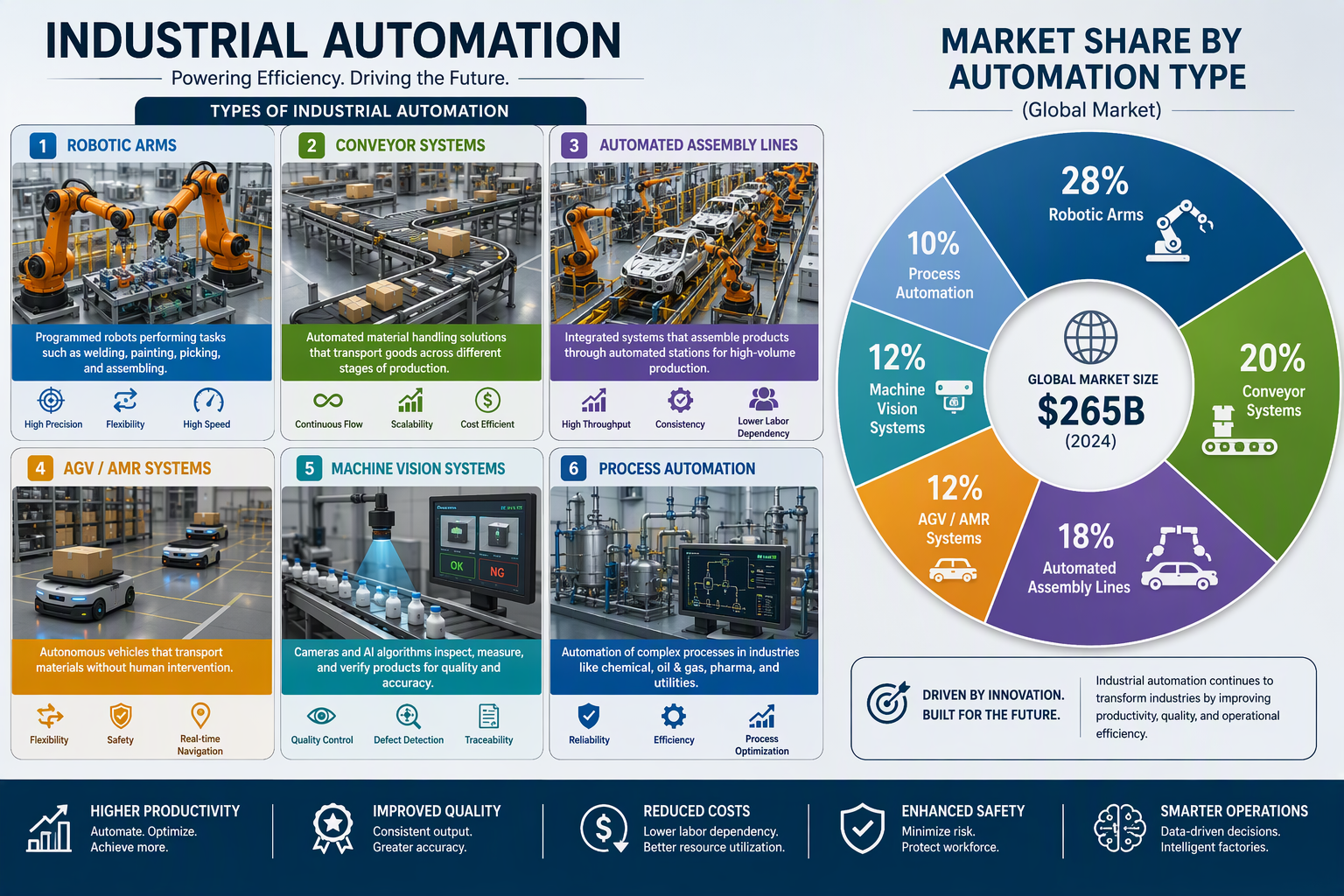
Some automation systems are built for high-volume repetition, while others support product changes and lower-volume runs. Fixed systems, programmable automation, and flexible setups each hold a different place in the market. Their share grows or shrinks based on production goals, budget, and the level of adaptability companies require.
Types of Industrial Automation Systems
The main types of industrial automation are grouped by how much variety and change a system can handle. This is useful because market demand often depends on whether a company runs one product at scale or many different products in shorter cycles.
Here are the main types of industrial automation:
- Fixed automation for high-volume, repetitive production lines.
- Programmable automation for changing instructions between runs.
- Flexible automation for fast adaptation across different products.
- Integrated automation for combining multiple systems into one coordinated environment.
Each type supports a different operating model. Fixed automation works well for constant output. Programmable automation fits batch production and moderate customization. Flexible automation is better when product mix changes often. Integrated environments tie systems together and are common in smart factories that need broader coordination across equipment and workflows.
Fixed Automation Segment
Fixed automation is one of the oldest and most established segments in the market. Among the main types, it is designed for a specific task and usually cannot be reprogrammed easily. That narrow focus is exactly why it remains important in high-volume operations.
You see fixed automation most often on an assembly line where repetitive tasks happen in the same order all day. Specialized machines handle each stage, such as welding, painting, or part placement. Because the process rarely changes, these systems can run at high speed and with strong consistency.
That combination supports stable product quality and dependable output. Sectors with large-scale production, especially automotive and some consumer goods operations, continue to rely on this segment. Its market share stays strongest where companies need repeatable performance more than frequent customization.
Programmable Automation Segment
Programmable automation serves facilities that need more flexibility than fixed systems can offer. Instead of being locked into one sequence forever, the equipment can be reprogrammed for different jobs. That makes this segment useful when production changes from one run to another.
A big advantage is adjustable control logic. Companies can update instructions, switch settings, and prepare systems for new parts or product variations without replacing the whole setup. CNC machines are a clear example because they can produce different outputs by changing software instructions.
This makes programmable automation a practical fit for batch production and lower-volume, high-variety work. Its market share grows in operations that want efficiency but still need changeovers. For many manufacturers, these automation solutions offer a middle ground between rigid speed and full flexibility.
Flexible Automation Segment
Flexible automation is built for environments where change happens often. These systems can adapt to new workflows, layouts, and product requirements more easily than traditional setups. That makes them attractive to companies handling a wider mix of outputs or shifting customer demand.
Unlike simpler systems, flexible automation systems can support multiple tasks with minimal downtime between changes. This is valuable in a manufacturing process where different products move through the same environment. Reconfiguration is faster, which helps maintain flow even as requirements shift.
You can see why this segment matters in smart factories. Connected automation systems, collaborative robots, autonomous mobile robots, and adaptive lines all support more responsive operations. As manufacturers look for versatility instead of only volume, flexible automation keeps gaining attention and a larger role in industry market share.
Core Technologies Powering Industrial Automation
Industrial automation runs on a mix of hardware, software, and connected intelligence. Core automation technology includes programmable logic controllers, robotics, SCADA platforms, and motion control tools that keep machines moving in sync.
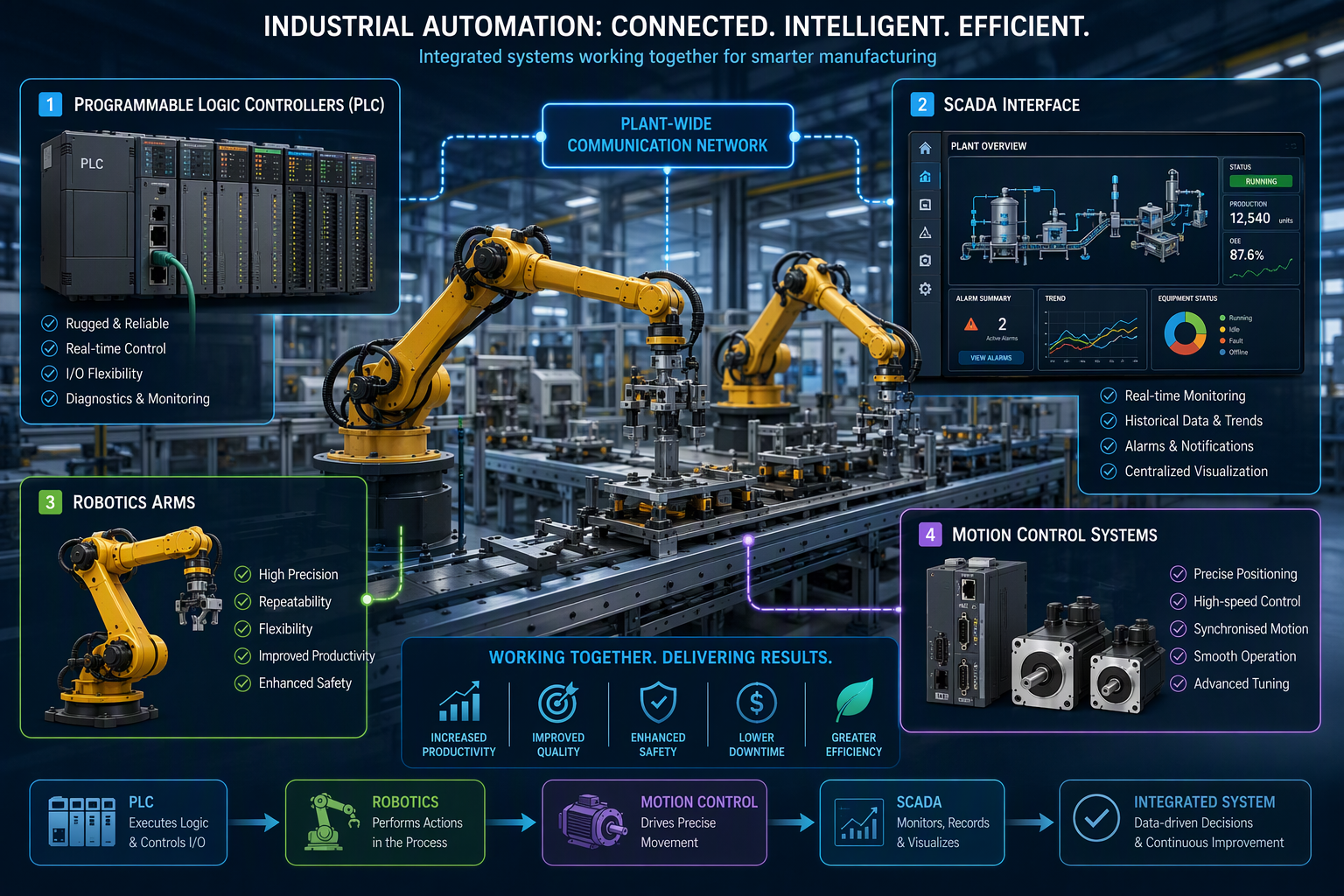
What is changing now is the added role of machine learning, artificial intelligence, and industrial IoT. These technologies help systems sense conditions, analyze data, and improve decisions faster. Together, they form the technical base behind modern control, monitoring, and smarter plant performance across sectors.
PLCs and Distributed Control Systems
Programmable logic controllers are one of the most common building blocks in industrial automation. They are used to automate processes, monitor equipment status, and respond to changes on the floor. Because they are reliable and fast, they remain central to many production environments.
These systems work by following defined control logic. Inputs come from sensors and machines, and the controller sends output commands based on programmed rules. That makes PLCs highly useful for process control, equipment sequencing, and machine-level automation technology across many industries.
A distributed control system expands this concept across larger operations. Instead of one controller handling everything, control is spread across multiple connected units. This approach supports broader coordination and stable monitoring in more complex facilities. For companies managing large or continuous operations, that structure helps improve visibility and control.
Robotics and Machine Vision
Industrial robots have become a major part of modern automation because they can perform repetitive tasks with speed and precision. They are especially useful in environments where consistency matters or where work may be physically demanding for employees.
Many of these systems also support material handling. Robots can move parts, position items, or assist workflows that once required constant manual effort. In sectors with high-volume movement, that brings steadier output and frees people for more skilled tasks.
Machine vision adds another layer of value. By helping automated systems inspect products and identify conditions on the line, it supports quality control and better decision-making. As robotics and vision tools improve, the industry keeps moving toward more adaptive systems that can handle both production and inspection in one workflow.
SCADA and Supervisory Control Solutions
SCADA systems are widely used when companies need broad visibility into operations. SCADA stands for supervisory control and data acquisition, and that name explains the main job well. These platforms gather data from equipment and present it so operators can monitor performance and respond faster.
In a typical setup, the control system connects to equipment, sensors, and other devices across the site. SCADA systems then support process control by collecting operating information and helping teams supervise machines from a central point. This improves awareness without requiring people at every station.
That matters in larger facilities where many assets must be tracked at once. Supervisory control tools help reduce blind spots, improve response time, and support better operating decisions. For organizations growing more connected, SCADA remains a key part of industrial automation infrastructure.
Market Share in Key Industry Sectors
Industrial automation market share is not spread evenly across industry sectors. Some industries adopt faster because they face stronger pressure around volume, precision, safety, or labor availability.
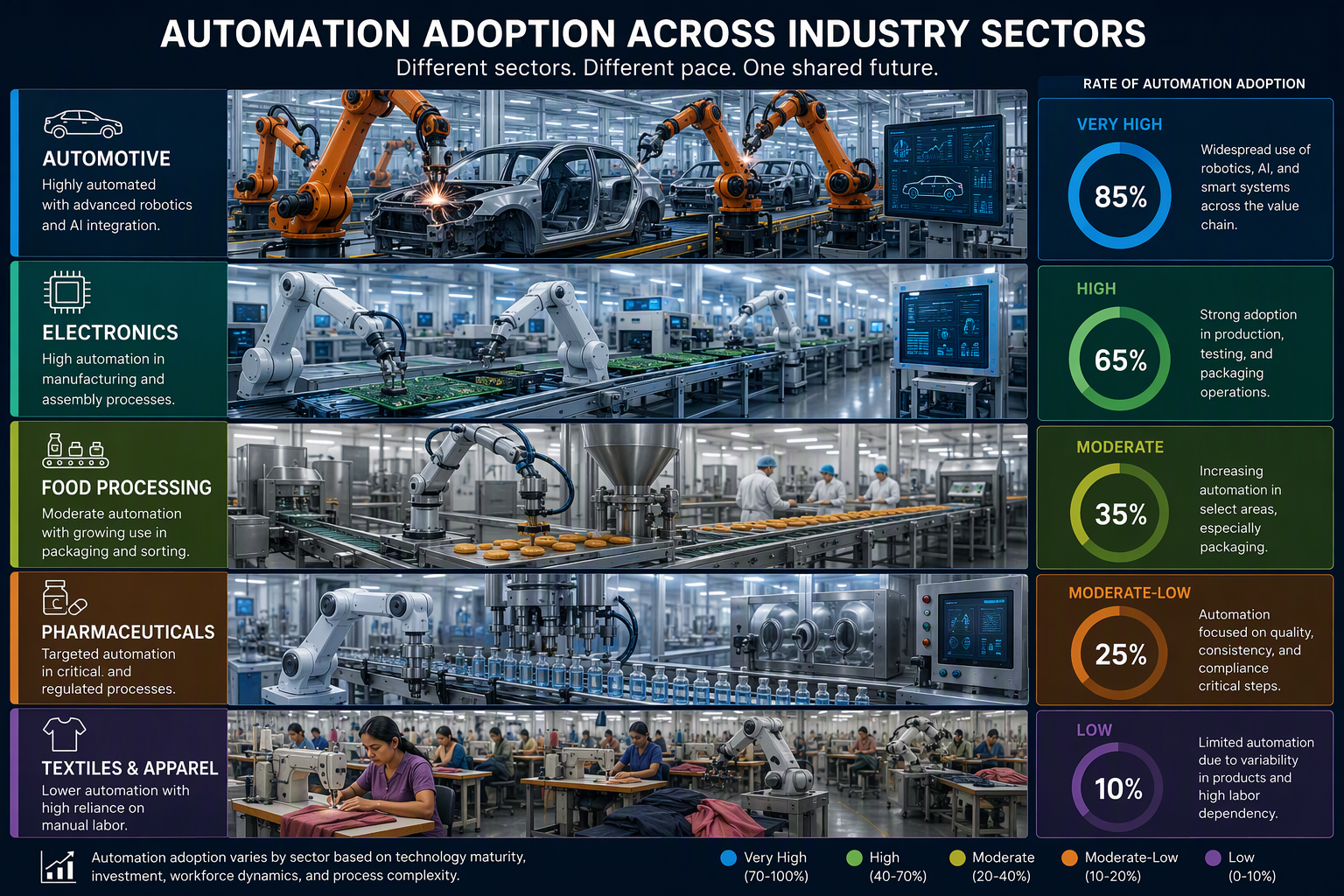
Automotive, manufacturing, food and beverage, oil and gas, utilities, and pharmaceuticals all use automation solutions in different ways. In some cases, the focus is the manufacturing process itself. In others, the priority is quality, compliance, or supply chain performance. Looking at sector-level use helps explain where demand is strongest and why.
Automotive Sector
The automotive sector is one of the clearest examples of large-scale automation adoption. It has long relied on machines to handle repeated steps, making it a leading area for industrial automation investment and market share.
This strength comes from the structure of the assembly line. Vehicles move through defined stages, and automation systems carry out tasks such as welding, painting, and component placement. Industrial robots fit well here because the work is repetitive, time-sensitive, and highly standardized.
Quality checks are also essential in this sector. Automated production helps reduce variation and improve consistency from one vehicle to the next. Because automotive plants often operate at scale, they continue to be heavily impacted by automation growth and remain one of the strongest contributors to overall industry demand.
Manufacturing Sector
The broader manufacturing sector remains at the center of industrial automation growth. Companies use automation to improve the manufacturing process, increase output, and reduce the effect of fatigue or manual inconsistency on daily operations.
A major reason is the need for better process control. Automated systems help standardize work, reduce production errors, and maintain steadier performance across shifts. In many settings, programmable automation is especially useful because it supports product changes and varying production requirements.
Manufacturers also feel pressure from the supply chain and customer expectations. They need reliable timelines, lower waste, and better product quality without adding constant labor costs. That mix of demands keeps manufacturing as one of the most impacted sectors and a core driver of automation market share.
Food & Beverage Sector
The food and beverage sector benefits from automation because it often combines high volumes with strict consistency needs. Producers must keep output moving while making sure each item meets the same standards from run to run.
That is where automation technology helps. Systems can handle repetitive tasks with fewer variations than manual work, which supports better quality control and steadier operations. In environments where product handling repeats continuously, automation improves speed and reliability.
Many food and beverage operations also work in batch production. That makes flexible and programmable systems useful when recipes, packaging, or product formats change. As companies look for stronger consistency and more efficient production cycles, this sector remains an important part of overall automation adoption.
Oil & Gas, Energy, and Utilities
Oil and gas, along with energy and utilities, depend on reliable control across complex operations. These sectors often manage large assets, continuous workflows, and environments where steady monitoring is critical. That makes automation a practical fit.
A strong control system is essential here because process control must remain stable over long operating periods. Automation solutions help teams monitor conditions, respond to changes, and support safer, more consistent performance without relying on constant manual action at every point.
Energy use is also an important concern. Better control can support more efficient operation of equipment and reduce unnecessary waste. Because these sectors run critical infrastructure and large-scale processes, automation continues to play a meaningful role in their operating models and share of industry demand.
Pharmaceuticals and Life Sciences
Pharmaceuticals and life sciences rely heavily on precision, consistency, and repeatability. In these fields, small variations can create major problems, so companies place a high value on systems that support stable operations from start to finish.
That is why automation technology fits well. Automated tools help standardize process control, reduce human inconsistency, and maintain tighter operating conditions. They also support more dependable execution of repeated steps in production environments where exact output matters.
Product quality is a top concern in pharmaceuticals and related life sciences operations. Automation helps keep processes aligned with required standards and reduces the chance of variation caused by fatigue or manual handling. For that reason, this sector remains one of the most important adopters of advanced industrial systems.
Benefits of Industrial Automation Across Segments
Industrial automation delivers benefits across nearly every segment because the goals are often similar. Companies want better operational efficiency, steadier quality control, and less dependence on repetitive manual labor.
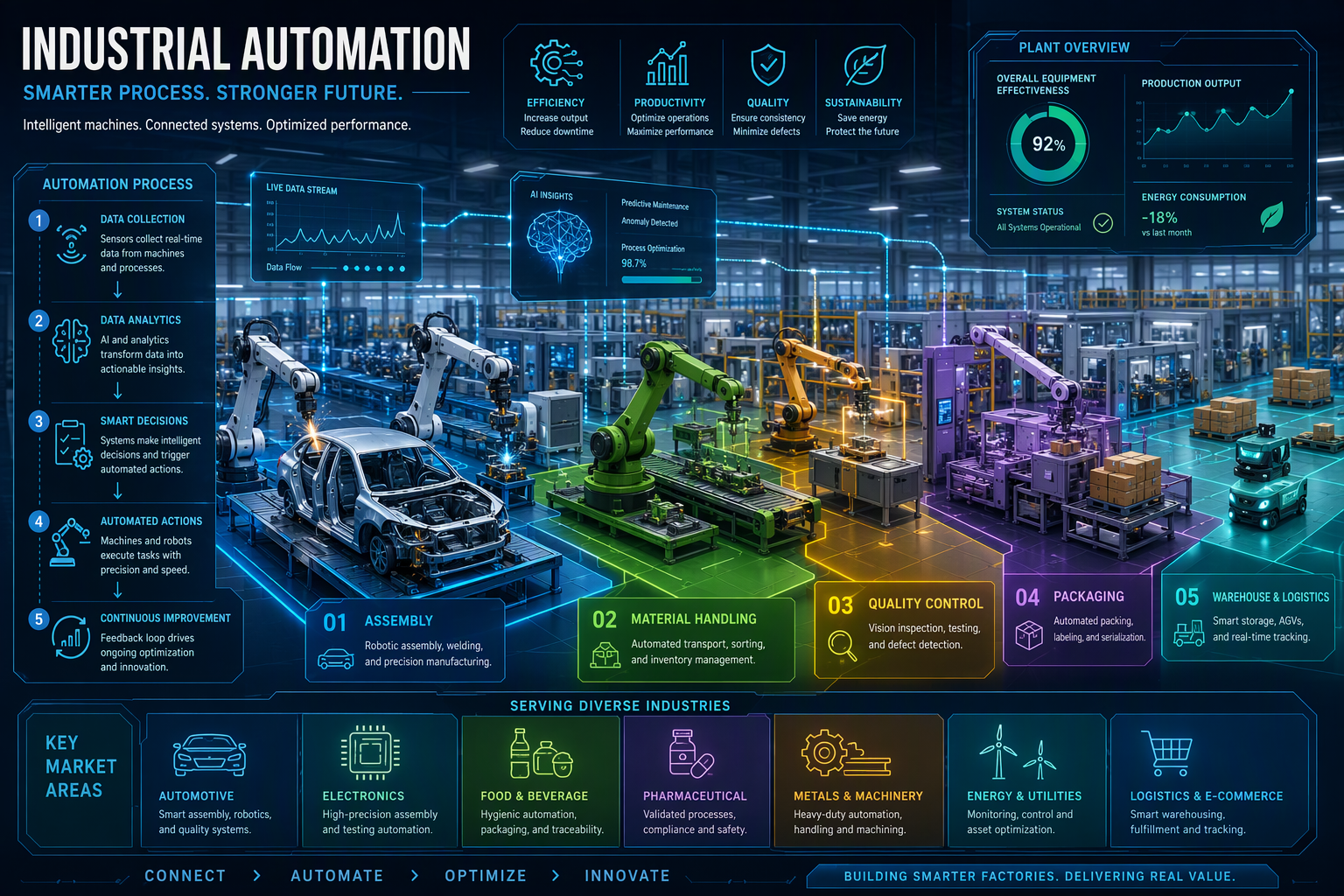
The exact tools may differ, but the advantages repeat across sectors. Automation solutions help improve output, reduce waste, support labor optimization, and create safer workflows. These benefits explain why adoption continues to rise and why market share often grows fastest in industries facing cost pressure, labor constraints, or high quality demands.
Operational Efficiency Improvements
One of the clearest benefits of automation is stronger operational efficiency. Automated systems keep production moving with less interruption, better coordination, and faster response to changing conditions. That helps facilities do more with the same resources.
This improvement comes from several practical capabilities:
- Real time monitoring gives operators a faster view of plant performance.
- Field devices feed useful status data into automated systems.
- Better process control reduces variation and unnecessary slowdowns.
- Predictive maintenance helps spot issues before equipment failure causes downtime.
The result is a smoother operation. Instead of reacting late, teams can act earlier and keep lines running more consistently. For businesses dealing with output pressure, downtime risk, or uneven workflows, automation creates measurable gains by improving how equipment, data, and people work together.
Enhanced Quality and Consistency
Quality is one of the strongest reasons companies invest in automation. Manual work can vary from shift to shift because people get tired, distracted, or rushed. Automated systems reduce that variation and bring more repeatable performance to the floor.
That consistency improves the manufacturing process. Machines and automated tools can perform the same steps with stable precision, which helps quality control teams maintain tighter standards. In operations where every unit must meet the same target, this becomes a major advantage.
Automated quality checks also help detect problems faster. Instead of waiting for issues to build, companies can catch deviations earlier and respond before more output is affected. Whether the environment runs continuous output or batch production, better consistency supports stronger product quality and fewer costly mistakes.
Labor Optimization and Cost Reduction
Labor optimization is a major part of the business case for automation. Many facilities struggle with repetitive tasks that drain time and tie up skilled workers in low-value activities. Automation helps shift that balance.
By reducing dependence on manual labor for routine work, companies can assign employees to more important tasks. This is especially useful during labor shortages, when finding and keeping workers becomes harder. Automated vehicles, robots, and other automation solutions can take on transport routes and repeated actions with steadier performance.
The cost impact can be meaningful too. When systems reduce errors, waste, and downtime, they support cost reduction across operations. Businesses are not just replacing labor. They are improving how labor is used, which helps create safer, more efficient, and more sustainable production environments.
U.S. Industrial Automation Industry Growth Analysis
The U.S. industrial automation industry is growing as businesses invest in systems that improve output, quality, and resilience. Rising interest in automation technology reflects a broader shift toward smarter, more connected operations.
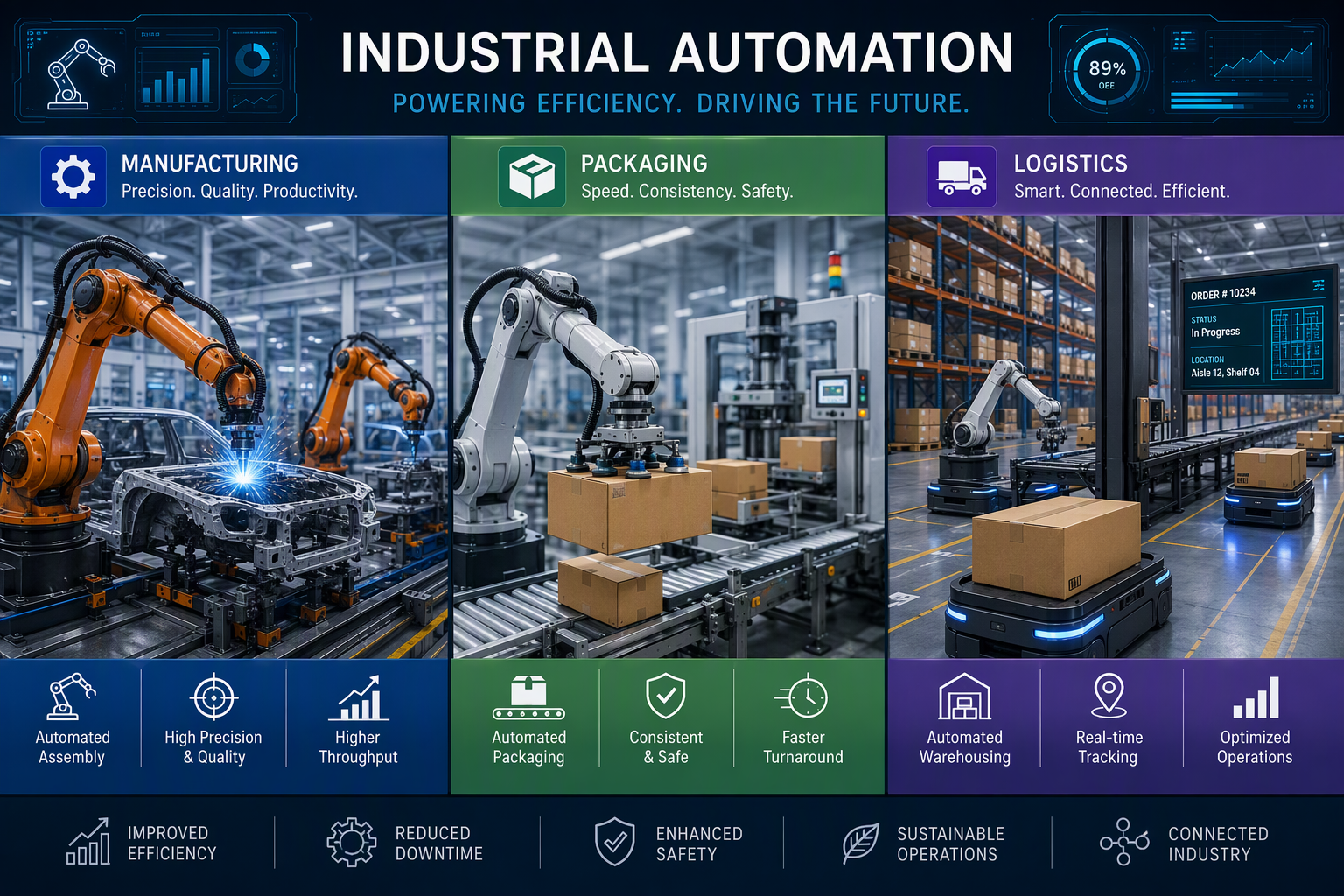
To understand this growth, it helps to look at market size, market share, and how the U.S. compares with wider global movement. The available figures show a growing industrial automation market, supported by demand for productivity, flexibility, and newer digital tools across manufacturing and related sectors.
Market Size and Forecast
Available figures point to a strong growth outlook for industrial automation. The compiled information shows the global market was estimated at $196.6 billion in 2021 and grew to $213.49 billion in 2022. It is also expected to reach $395.09 billion by 2029, reflecting continued expansion.
This pattern matters in the U.S. because domestic investment trends often follow the same demand drivers: better automation solutions, stronger productivity, and more resilient operations across the manufacturing process. Businesses are looking for tools that improve consistency while reducing waste and downtime.
| Year/Period |
Market Size / Outlook |
|---|---|
| 2021 |
Global industrial automation market estimated at $196.6 billion |
| 2022 |
Global market grew to $213.49 billion |
| By 2029 |
Expected to reach $395.09 billion |
| Growth pace |
Reported CAGR of 9.8% tied to ongoing industry trends |
Regional Market Share Distribution
The compiled information does not break the U.S. market into exact regional percentages, but it still supports a useful view of regional distribution. Demand tends to follow where major industrial activity is concentrated and where companies are upgrading plants, logistics operations, and production systems.
In the U.S. market, market share is likely shaped by regions with strong manufacturing, automotive activity, energy operations, and supply chain infrastructure. These areas have more reason to invest in automation technology, especially where consistent output and reliable control system performance matter most.
What this tells you is simple: regional distribution is tied closely to industrial concentration. Where there are more factories, warehouses, and process-heavy facilities, automation demand tends to rise. That dynamic helps explain why industrial regions often lead market adoption and spending.
Comparison with Global Trends
The U.S. growth pattern aligns with wider global trends in industrial automation. Across markets, companies are moving beyond simple mechanization and investing in smarter systems that improve flexibility, visibility, and performance. That broader direction supports continuing growth in both adoption and market share.
A major part of this shift is the rise of advanced automation technology. The compiled information points to artificial intelligence, machine learning, and connected systems as key drivers of the next phase of automation. These tools help companies improve decisions, monitor assets, and respond faster.
Digital twins are another global trend highlighted in the source material. They allow companies to simulate processes and test changes before applying them in the real world. For U.S. companies, following these trends can improve competitiveness as global automation capabilities continue to advance.
Major Trends Reshaping the Industrial Automation Landscape
Industrial automation is changing quickly because core systems are becoming more connected and more intelligent. New automation technology now includes stronger use of machine learning, artificial intelligence, and tools linked through the internet of things.
These trends matter because they expand what automation can do. Instead of only repeating commands, systems can support prediction, analysis, and more adaptive control. Digital twins, connected devices, and smarter software are helping companies improve performance while preparing for more flexible and data-driven operations.
Integration of Artificial Intelligence
Artificial intelligence is becoming a more visible part of industrial automation because it helps machines learn from data and make better decisions. Combined with machine learning, it supports systems that can adapt more effectively to changing conditions.
This matters in smart factories where companies want more than basic automation. They want advanced technologies that can improve scheduling, identify issues early, and optimize operations over time. AI supports that goal by helping systems interpret large volumes of operating information more effectively.
Predictive maintenance is one of the clearest examples. Instead of waiting for equipment to fail, AI-driven tools can help detect patterns that suggest a problem is coming. That allows earlier action, lower downtime risk, and better performance. As these capabilities mature, AI will keep influencing where automation value and market demand grow.
Edge Computing & Digital Twins
Industrial systems are becoming more data-driven, and that is where edge computing and digital twins gain attention. These tools help companies work with information faster and in more practical ways across connected environments.
Edge computing supports real time responses by bringing processing closer to the source of activity. In settings that rely on industrial IoT, that can improve speed and reduce delays in how data is used. Faster data analysis helps teams react sooner and manage equipment more effectively.
Digital twins add a planning advantage. They create virtual models of physical assets or processes so companies can test ideas before making changes on the floor. That helps reduce risk and supports better decisions. As operations become more connected, both technologies are becoming more relevant to modern automation strategies.
OT/IT Convergence and Cybersecurity
As industrial automation becomes more connected, operational technology and information technology are moving closer together. This convergence matters because production systems now depend on both plant-floor equipment and digital tools for monitoring, analysis, and coordination.
That connection creates benefits, but it also raises cybersecurity concerns. When a control system is linked across wider industrial networks, companies need to think carefully about protection, access, and system reliability. More connectivity can improve visibility, but it also expands the importance of secure design and oversight.
The compiled material highlights connected systems, IoT, and broader digital integration as major trends. That means cybersecurity becomes part of the automation conversation, not a separate issue. As businesses link more systems together, they need strategies that support both performance and protection across the entire operating environment.
Conclusion
In summary, understanding the industrial automation industry market share is essential for businesses looking to capitalize on its growth. The key drivers and technologies shaping this sector illustrate how automation enhances operational efficiency and quality across various industries. By examining segments like fixed, programmable, and flexible automation, it's clear that organizations can leverage these insights to optimize their processes and stay competitive. For a deeper look into the current trends and statistics in the industrial automation market, check out our detailed analysis on the industrial automation industry market share and statistics. Embracing these developments will empower you to make informed decisions and thrive in this dynamic landscape.
Frequently Asked Questions
What are the leading segments within the U.S. industrial automation market?
The leading segments usually align with the main types of industrial automation. Fixed automation stays strong in large-scale production, while programmable automation and flexible automation grow where companies need product changes, shorter runs, and more adaptable operations. Each segment serves a different mix of speed, scale, and customization.
How is technology innovation impacting industry market share?
Innovation is shifting market share toward smarter automation solutions. Better automation technology, including artificial intelligence, machine learning, and digit twins, helps companies improve monitoring, planning, and predictive maintenance. As these tools become more practical, demand rises for systems that offer both efficiency and adaptability.
What challenges does the industrial automation industry face?
The industry faces a mix of workforce and system challenges. Labor shortages push companies to automate faster, but cybersecurity concerns and supply chain pressure can complicate adoption. Many businesses are also balancing the move away from manual labor while trying to protect operational efficiency during technology changes.
Understanding Industrial Automation Industry Market Share or H2: U.S. Industrial Automation Industry Growth Analysis.]
Understanding the industrial automation industry market share involves analyzing key segments, including robotics, control systems, and software. Growth is driven by technological advancements and increased efficiency demands across various sectors, positioning the U.S. as a leader in this evolving market.
You might also like