Industrial Automation Industry Growth Statistics You Should Know
Industrial Automation Industry Growth Statistics You Should Know
Key Highlights
- Industrial automation uses automation systems to improve the manufacturing process with less manual effort.
- Today’s setups range from assembly line equipment to industrial robots and programmable logic controllers.
- The main types include fixed, programmable, flexible, and integrated automation for different production needs.
- Smart factories combine connected tools, software, and control systems for better visibility.
- Common gains include stronger quality control, higher output, lower labor costs, and safer operations.
- The industrial automation market keeps growing as companies modernize production.
Introduction
Industrial automation is changing how companies run the manufacturing process from material handling to final delivery. What once started as simple mechanization of repetitive work now includes advanced automation solutions built for speed, consistency, and better control. If you want to understand why this market is expanding so quickly, the numbers tell a clear story. From productivity gains to safer workplaces, industrial automation is becoming a practical business move across many sectors, not just a long-term idea.
Industrial Automation Industry Statistics: Market Size and Growth Data
Understanding Industrial Automation: An Overview
At its core, industrial automation is the use of automation technology to handle industrial tasks with less human intervention. It supports process control by linking machines, sensors, and software so work can move faster and with more consistency.
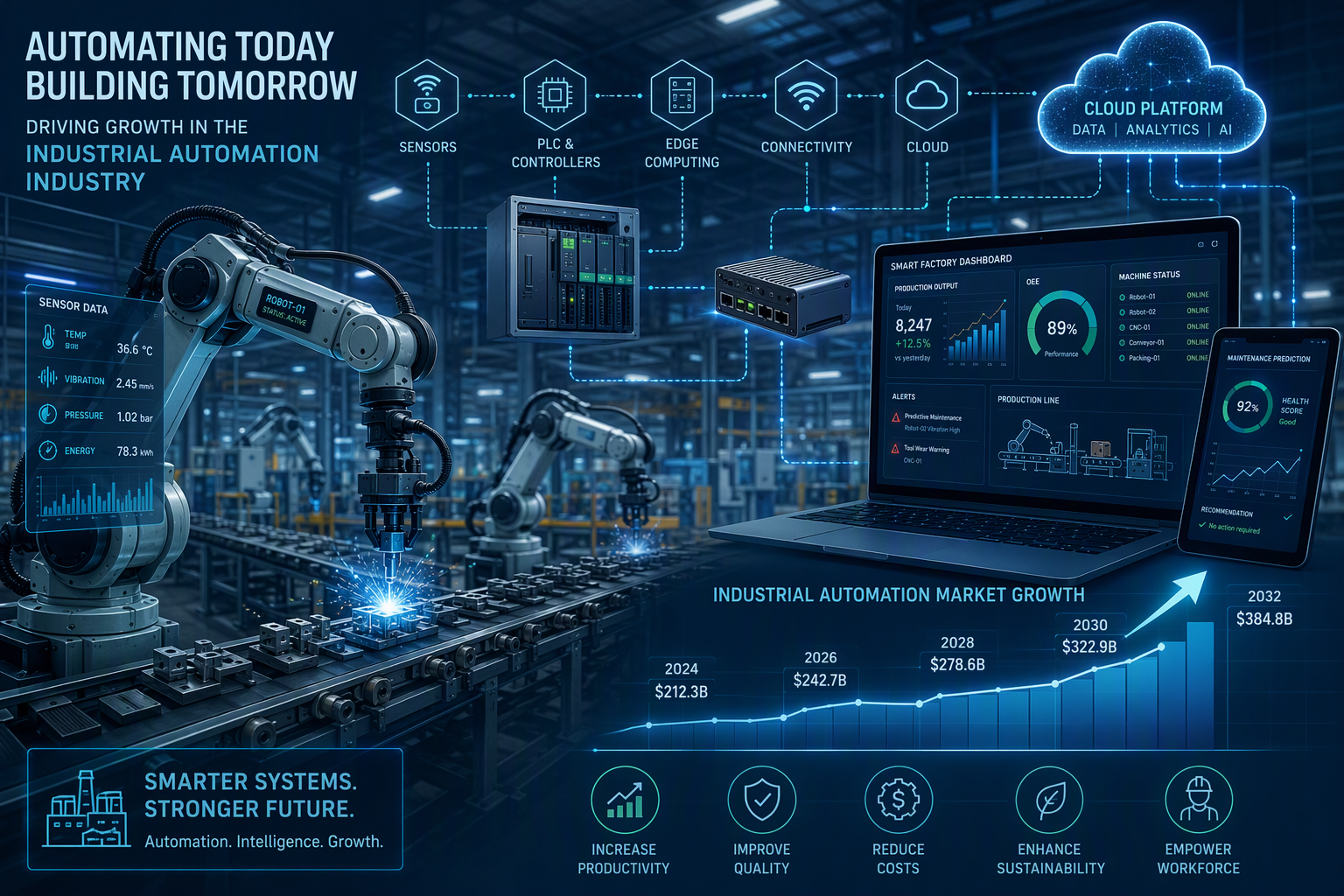
You can see it across many settings, from production floors to supply chain operations. Since the types of industrial automation vary by need, it helps to first understand the basic definition and then how these systems function inside modern facilities.
Defining Industrial Automation
Industrial automation means using advanced machines and software to streamline industrial work with minimal human intervention. In simple terms, it helps businesses automate parts of the manufacturing process that would otherwise depend heavily on manual effort.
These automation systems often connect machines, sensors, and other devices so tasks can be completed in a more organized and efficient way. That can include moving materials, running equipment, and supporting final product delivery across different operations.
What makes industrial automation important is its ability to improve output, safety, and consistency at the same time. Instead of relying on people for every step, companies use connected systems to carry out routine actions, respond to conditions, and keep production moving with better control.
How Industrial Automation Works in Modern Industry
In modern facilities, automation technology works by connecting machines, sensors, and software into one control system. Each part has a role. Sensors capture conditions, controllers interpret signals, and machines carry out actions across the production process.
A common example is the use of programmable logic controllers. These devices help manage equipment, monitor system status, and respond to changes on the floor. That makes it possible to keep operations running in real time instead of waiting for someone to step in.
The result is a faster and more stable workflow. When data moves quickly between devices and equipment reacts right away, your operation gains tighter control, fewer slowdowns, and more dependable output. That is why automation now plays such a central role in modern industry.
Types of Industrial Automation Systems
Not every facility needs the same setup, which is why the types of industrial automation matter. Some automation systems are built for one repeated task, while others can adapt to shifting production goals and different product runs.
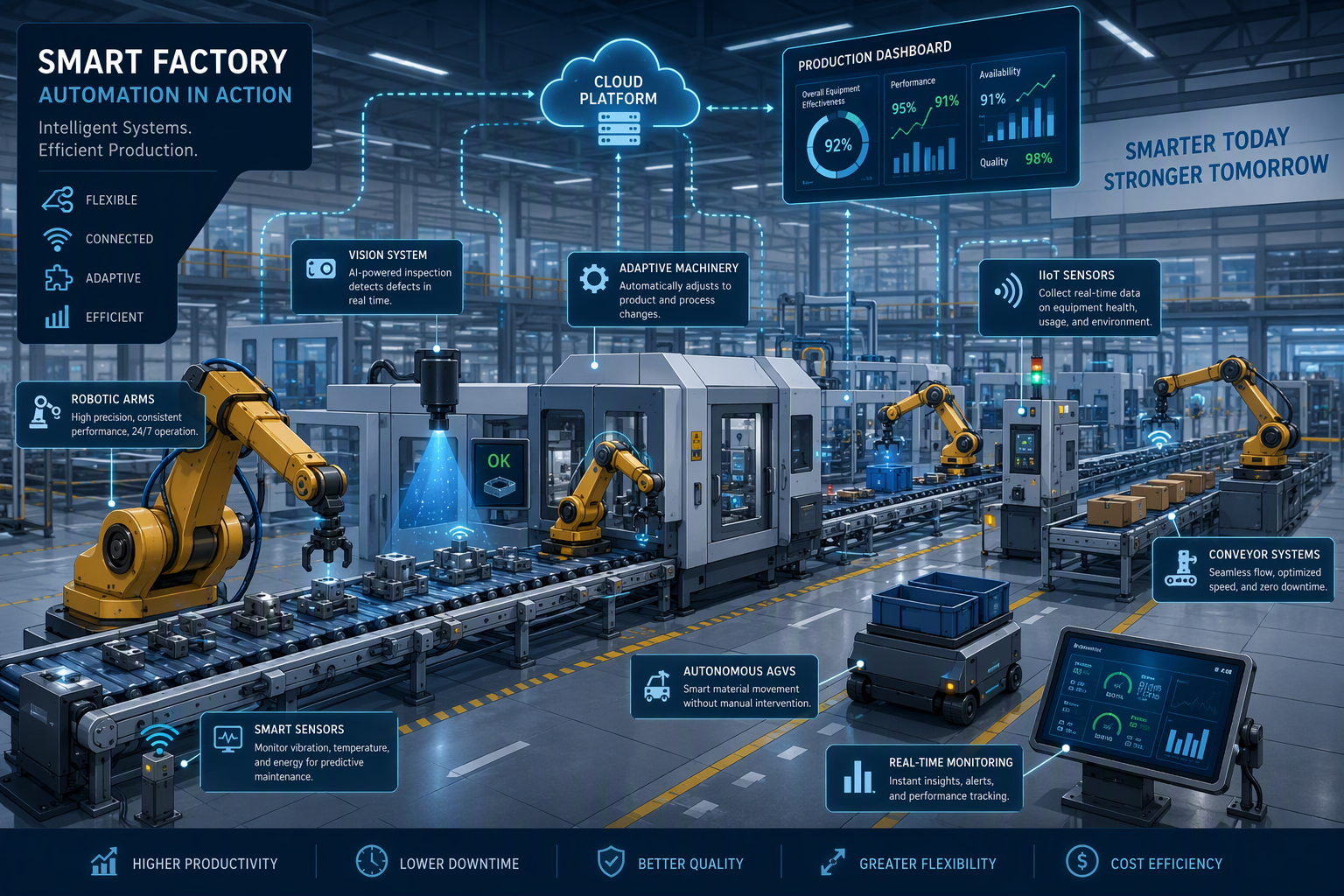
In broad terms, companies usually work with fixed automation, programmable automation, flexible automation, and integrated approaches. Each model supports a different level of speed, change, and customization. The next sections break down how these systems are used and where each one fits best.
Fixed Automation Solutions
Fixed automation is the oldest and most specialized type of automation. It uses dedicated equipment to perform a set task again and again with very little variation. Because it is built for repetitive tasks, it works best where speed and consistency matter most.
You often see fixed automation on an assembly line. In automotive production, for example, machines handle defined stages such as welding or painting while the product moves from one station to the next. The same idea also supports some material handling tasks in highly structured environments.
Its strength is efficiency at scale. Once installed, fixed automation can run fast and reliably for long production runs. The tradeoff is flexibility. Since it is not easily reprogrammed, it is less suited to batch production that changes often or operations that need frequent product updates.
Programmable Automation Systems
Programmable automation is designed for companies that need more adaptability in the manufacturing process. Instead of being locked into one task, these systems can be programmed to handle a range of activities, making them useful for lower-volume work with more product variety.
A major part of programmable automation is the use of programmable logic controllers. These controllers help manage equipment, automate steps, and react to changing production conditions. You can also see this approach in industrial robots and CNC machines that switch tasks through updated software instructions.
This type works well for batch production where product requirements shift from one run to the next. If your facility needs to move between different items without rebuilding the whole line, programmable automation offers a more practical balance between control, speed, and change.
Flexible and Integrated Automation Approaches
Flexible automation gives you a higher level of customization than earlier systems. It is built to adjust quickly when workflows, layouts, or product requirements change. That makes it useful in operations producing different products with frequent shifts in demand.
Unlike simpler models, flexible automation can be reconfigured faster and often supports equipment such as cobots, autonomous mobile robots, and adaptive lines. Integrated automation takes this further by connecting multiple systems into one coordinated setup, linking machines, software, conveyors, and field devices.
This combined approach is what powers many smart factories. Instead of isolated tools doing separate jobs, integrated automation creates a unified production environment. The benefit is stronger coordination across tasks, better visibility, and more responsive operations when your facility needs to scale or change direction.
Key Technologies Powering Industrial Automation
Industrial automation depends on a mix of hardware and software working together. Core automation technology now includes industrial robots, connected sensors, supervisory tools, and data-driven platforms that improve visibility and control.
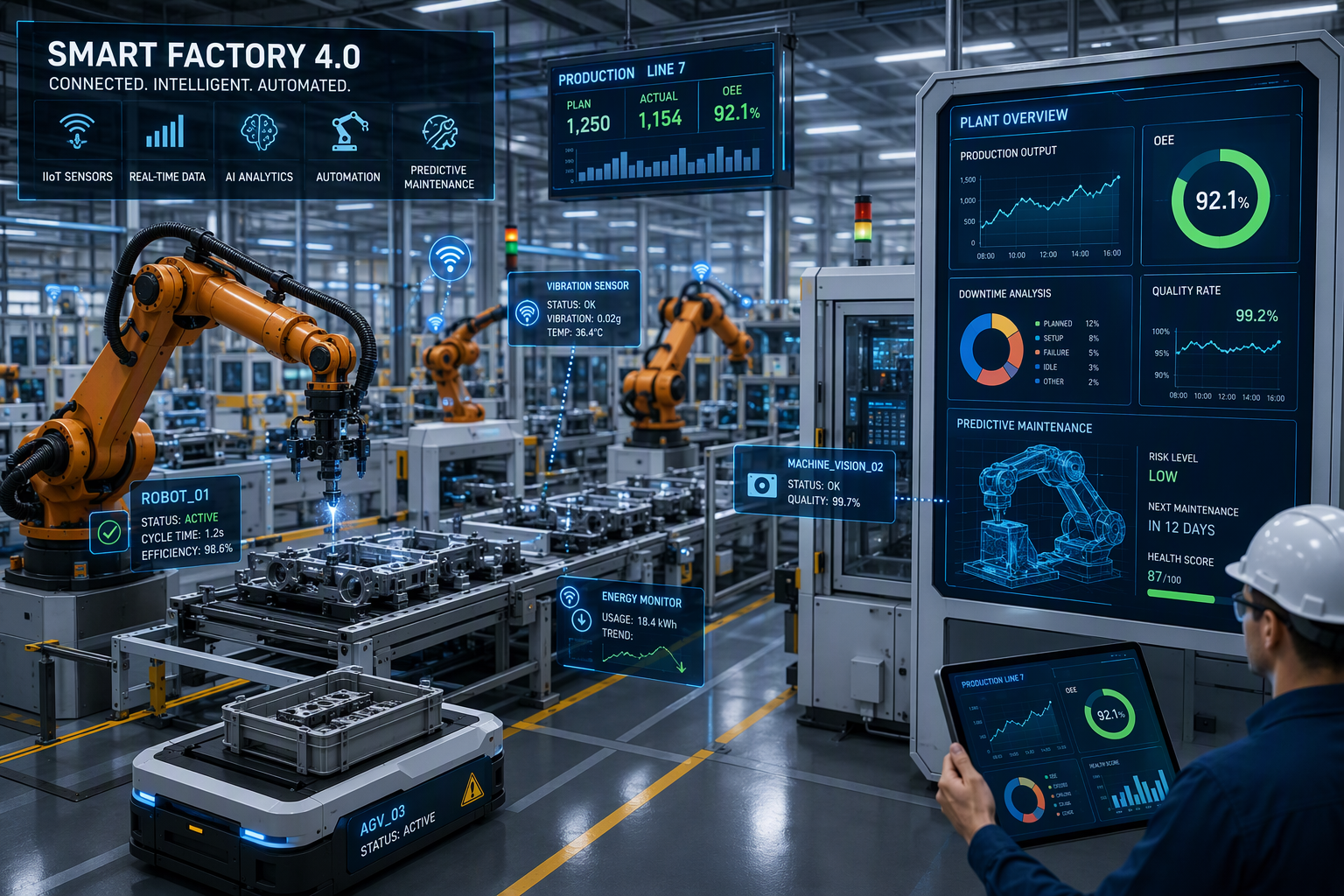
What is pushing the industry forward today? Artificial intelligence, machine learning, and the industrial internet of things are expanding what automated systems can do. These tools help companies react faster, improve planning, and reduce waste. The following technologies show how modern automation is becoming more connected and more capable.
Robotics and Automated Machinery
Robotics remains one of the clearest examples of industrial automation in action. Industrial robots and automated machinery are used to complete repetitive tasks with steady precision. This helps facilities reduce inconsistency and keep output moving at a constant pace.
You can find these automation systems in assembly operations, machine tools, and transport workflows. In many cases, a robot or automated vehicle handles work that is physically demanding, repetitive, or time-sensitive, freeing people for tasks that need judgment or oversight.
Common examples include:
- Industrial robots programmed for welding, painting, or part handling
- CNC machine tools that switch jobs by changing software instructions
These tools matter because they bring repeatability to tasks that can slow down or vary under manual handling. When the goal is dependable throughput, robotics is often the first technology companies adopt.
Industrial Internet of Things (IIoT)
The industrial internet of things connects machines, sensors, and field devices so they can share information across an operation. This creates a more visible production environment where equipment status and process conditions are easier to monitor.
As sensor data moves between devices and software, teams gain a clearer picture of what is happening on the floor. That supports faster responses to issues and helps smart factories manage workflows with fewer blind spots. Connected systems also make it easier to coordinate equipment across different parts of a facility.
One major benefit is predictive maintenance. Instead of waiting for a failure, connected equipment can reveal signs of wear or abnormal behavior earlier. That helps reduce downtime, improve planning, and keep critical assets running more reliably over time.
Artificial Intelligence and Machine Learning in Automation
Artificial intelligence and machine learning are shaping the next phase of industrial automation. These technologies help machines learn from operational information, adapt to changing conditions, and support better decisions without waiting for constant human input.
Their value comes from stronger data analysis. Instead of just collecting signals, automated systems can use patterns to optimize schedules, monitor equipment health, and improve response times. This is especially useful in predictive maintenance, where early insight can help prevent a costly breakdown.
AI also supports quality control by identifying deviations sooner and helping facilities maintain more consistent output. As automation systems become more intelligent, they move beyond simple mechanization and into more adaptive, responsive operations. That shift is a big reason the industry continues to evolve so quickly.
Supervisory Control and Data Acquisition (SCADA) Systems
SCADA systems play a central role in monitoring and managing automated operations. The term stands for supervisory control and data acquisition, and it points to two essential functions: overseeing equipment behavior and gathering operational information.
In practice, SCADA systems help facilities track conditions, observe equipment status, and support process control across multiple assets. Because they bring information into one view, teams can understand what is happening and respond to issues in real time rather than after delays.
This matters in larger industrial settings where many devices must work together. A strong supervisory layer helps maintain consistency, reduce confusion, and improve system awareness. When companies want better oversight of automated processes, SCADA is often one of the key technologies supporting that goal.
Core Benefits of Adopting Industrial Automation
Why are so many companies investing in automation? The answer usually comes down to productivity, operational efficiency, quality control, labor costs, and safety. These are practical needs that affect output, margins, and day-to-day reliability.
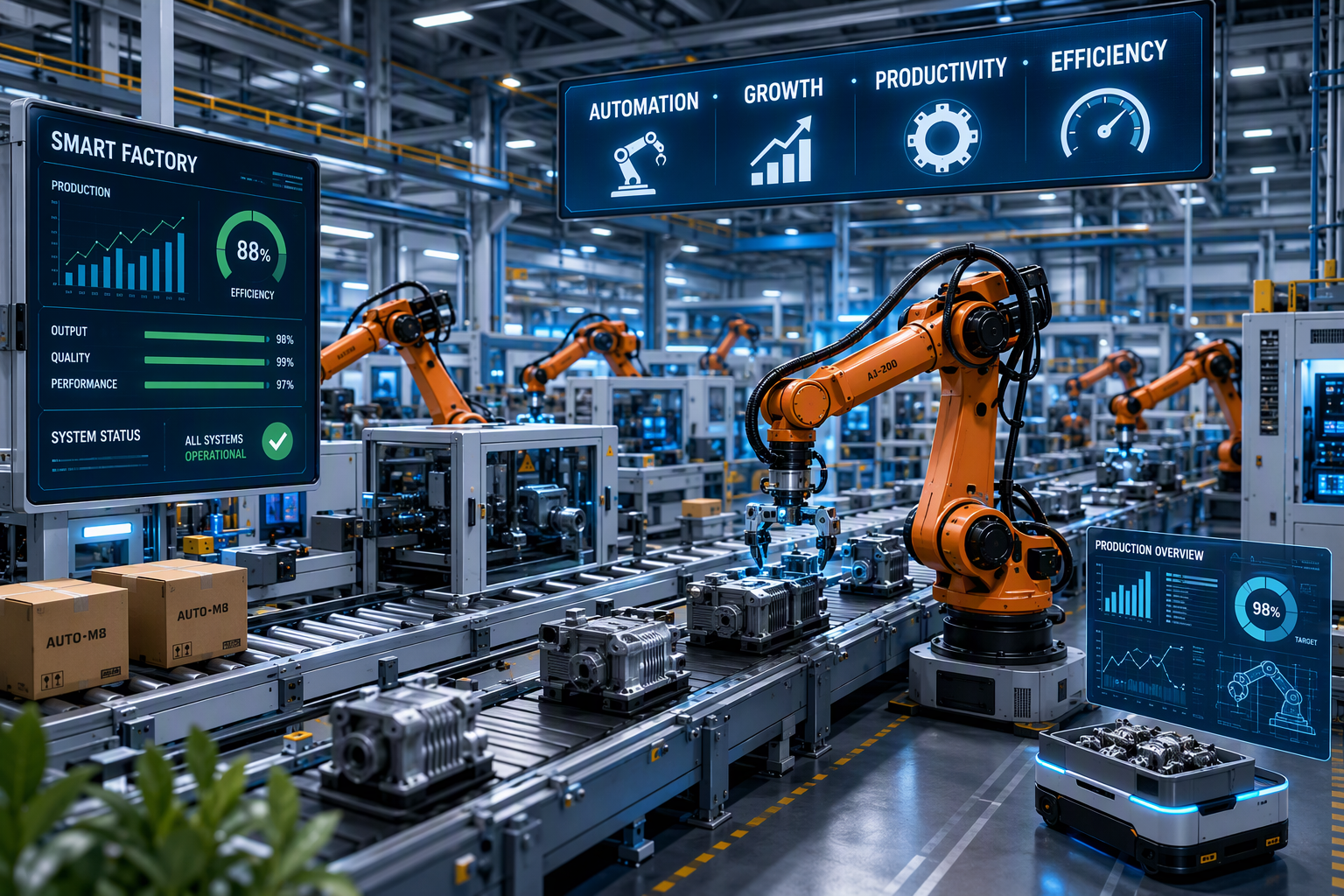
Industrial automation helps companies reduce errors, improve consistency, and shift workers away from risky or repetitive duties. It also supports stronger planning and lower waste. The benefits show up across the production floor, but each advantage plays out a little differently in real operations.
Boosting Productivity and Operational Efficiency
One of the biggest reasons companies automate is to raise productivity. Machines can take over repetitive tasks that slow people down, helping facilities move more output in less time. That means production lines can run with fewer interruptions and more stable pacing.
There is also a strong operational efficiency benefit. When automated systems handle routine work, companies reduce errors linked to fatigue, boredom, and inconsistency. The result is smoother workflows and less friction across connected areas of the operation.
This can extend beyond the factory floor into the supply chain. Better movement of materials, faster task completion, and more dependable throughput all support stronger overall performance. If your goal is to do more with the same resources, automation creates a practical path to that improvement.
Enhancing Quality and Consistency in Manufacturing
Manual work can introduce variation into output, especially over long shifts or repeated cycles. Industrial automation helps reduce that variation by standardizing how tasks are completed. This supports better product quality across every stage of production.
Automated equipment performs actions with steady precision, which makes quality checks easier to manage. Since the same control logic is applied again and again, companies can maintain tighter standards in both continuous operations and batch production.
Another benefit is faster correction when something drifts from the expected result. Automated systems provide ongoing visibility into performance, making it easier to spot issues early and respond before they affect larger volumes. For manufacturers focused on dependable quality control, that consistency is a major advantage.
Reducing Labor Costs and Improving Safety
Industrial automation can lower labor costs by reducing the amount of manual labor needed for routine or time-heavy tasks. Machines and automated vehicles can complete transport routes, repetitive work, and other activities that would otherwise require more staffing hours.
Safety is another major reason companies automate. Automated equipment can take over dangerous tasks in environments that may expose workers to moving vehicles, physical strain, or unsafe conditions. Reducing direct human intervention in those areas can lower the risk of injuries and related costs.
There is also a workforce benefit. When people spend less time on repetitive or hazardous duties, they can focus on more valuable work. Combined with stronger machine safety practices, that shift helps companies address labor shortages while creating safer, more sustainable operations.
Industrial Automation Market Size and Growth Statistics
The industrial automation market has moved from steady expansion to strong momentum. Businesses across sectors are adopting connected tools and automation systems to improve operations, reduce costs, and build a competitive advantage.
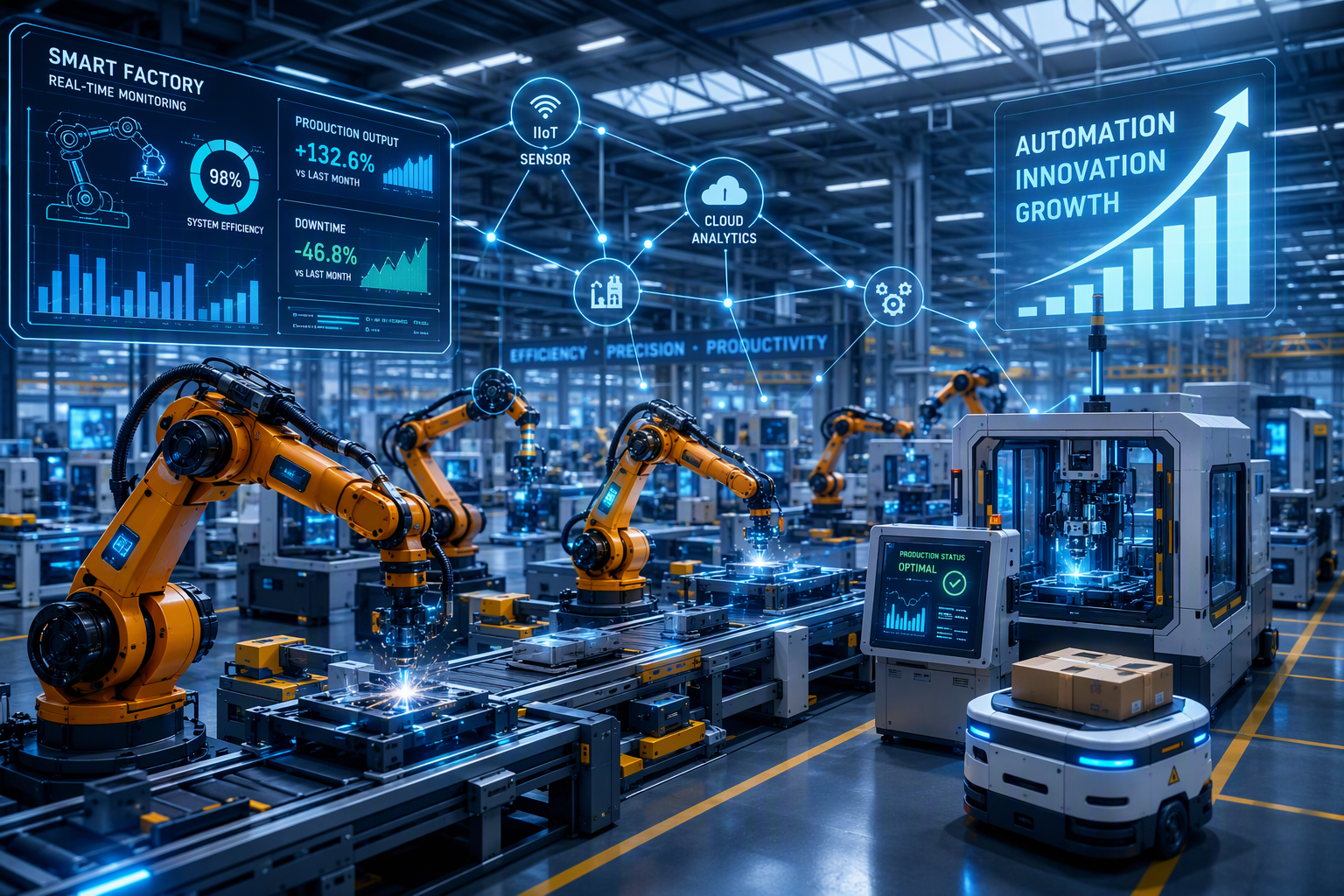
If you are tracking market size and industry growth, the recent numbers show clear acceleration. Global value increased from 2021 to 2022, and forecasts point to much larger totals by 2029. That outlook reflects both current demand and the push toward more advanced digital operations.
Current Industrial Automation Market Value
Current market data shows that industrial automation is already a large global business. The industry was estimated at $196.6 billion in 2021 and then grew to $213.49 billion in 2022. That increase highlights strong demand for industrial automation solutions across various industries.
This rise reflects how widely automation is being used, from manufacturing and automotive to logistics, food, pharmaceuticals, mining, and oil and gas. Companies are not treating automation as optional. Many now see it as part of normal operating strategy.
Text table:
| Year |
Market value |
|---|---|
| 2021 |
$196.6 billion |
| 2022 |
$213.49 billion |
If you want a broader benchmark for industrial automation industry statistics, this market value trend shows why the sector keeps drawing attention. That planned page should be verified when published.
Projected Market Growth and Future Forecasts
Looking ahead, future forecasts point to continued expansion. The industrial automation market is expected to reach $395.09 billion by 2029, with a compound annual growth rate of 9.8%. That is a strong signal that adoption is still building.
Several growth trends help explain this outlook. Businesses want more flexible operations, stronger output, and better visibility across production. As automation technology becomes more capable, companies are finding more practical use cases for it in day-to-day operations.
The rise of digital twins also supports this direction. Virtual replicas of physical assets let companies test scenarios and improve decisions before making changes in live environments. Tools like that can speed adoption because they reduce uncertainty and help organizations plan automation investments more carefully.
Factors Driving Industry Expansion in the United States
In the United States, industry expansion is tied to a mix of labor pressure and technology progress. U.S. manufacturing companies are looking for ways to protect output, improve consistency, and keep operations running even when hiring is difficult.
Labor shortages are a major part of the picture. Retention issues and open positions have pushed companies to consider automation solutions that can handle repetitive work and support existing teams. At the same time, advanced technologies are making adoption more practical.
Key drivers include:
- Labor shortages that make it harder to maintain output with human staffing alone
- Pressure to improve productivity, safety, and product consistency
- Wider access to advanced technologies such as AI, machine learning, and connected systems
Together, these forces are helping accelerate automation across American industry.
Market Trends Shaping the Industrial Automation Industry
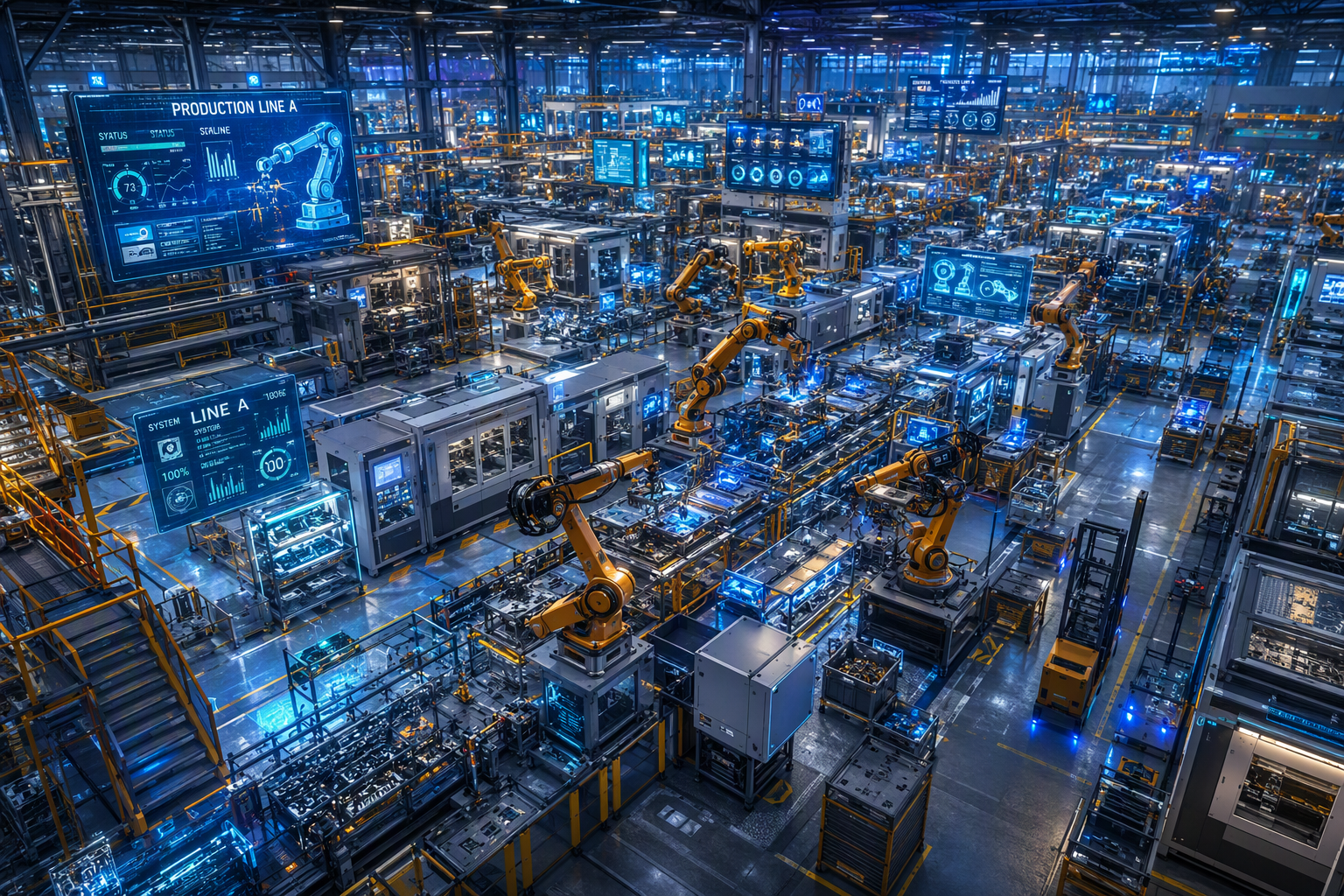
The industrial automation industry is being shaped by a shift toward more connected and responsive operations. Current market trends show companies moving past basic mechanization and toward systems that support visibility, adaptability, and smarter planning.
Smart factories and digitalization sit at the center of that change. Businesses want tools that connect equipment, improve coordination, and help teams make faster decisions. The next trends show how that shift is playing out on factory floors and across industrial networks.
Rise of Smart Manufacturing and Digitalization
Smart manufacturing is gaining ground because companies want better visibility and tighter control over operations. Instead of treating each machine as a separate asset, businesses are connecting systems so production can be monitored and adjusted more effectively.
Digitalization supports that shift by turning equipment activity into usable operational insight. With the internet of things linking machines and sensors, teams can understand what is happening across industrial environments with greater speed and confidence. That improves process control and helps reduce wasted motion.
This trend matters because it changes how decisions are made. When facilities have better access to information, they can respond faster, coordinate workflows more easily, and build a more adaptive operation. Smart manufacturing is not just about new hardware. It is about connected decision-making.
Collaborative Robots and Human-Robot Interaction
Collaborative robots, or cobots, are one of the clearest signs of where automation is heading. These systems are designed to work alongside people, helping with tasks that are repetitive, physically demanding, or less safe for direct handling.
That changes human-robot interaction in an important way. Instead of replacing every worker, collaborative robots support the production process by sharing workloads. This can improve output while letting employees focus on tasks that need awareness, judgment, or coordination.
Machine learning is making these automation systems more capable over time. As robots become better at adapting to conditions and responding to data, they fit more naturally into dynamic operations. For many companies, cobots offer a practical way to automate without fully redesigning the entire workplace.
Increasing Adoption of Edge Computing and Cloud Solutions
Industrial automation is becoming more data-driven, which is why edge computing and cloud solutions are gaining attention. Companies need ways to handle information faster and make better use of operational signals coming from equipment and connected devices.
Edge computing helps by supporting faster data analysis close to where activity happens. That can improve real time awareness across industrial networks, especially when rapid action matters. Cloud solutions add scale, making it easier to monitor systems, manage data, and support broader visibility.
Together, these tools strengthen connected operations. They help facilities process information more effectively and make automation more responsive. As digital operations grow, companies will keep looking for ways to combine speed, oversight, and flexibility, which is why this trend continues to build.
Sectors Most Impacted by Industrial Automation Growth
Industrial automation is not limited to one market. It is influencing various industries that need faster production, better consistency, and stronger control over costs and safety.
The impact is especially visible in sectors with structured workflows, high output demands, or complex production lines. From vehicle assembly to pharmaceuticals, automation is reshaping how the manufacturing process is planned and executed. The following industries show where that transformation is most visible today.
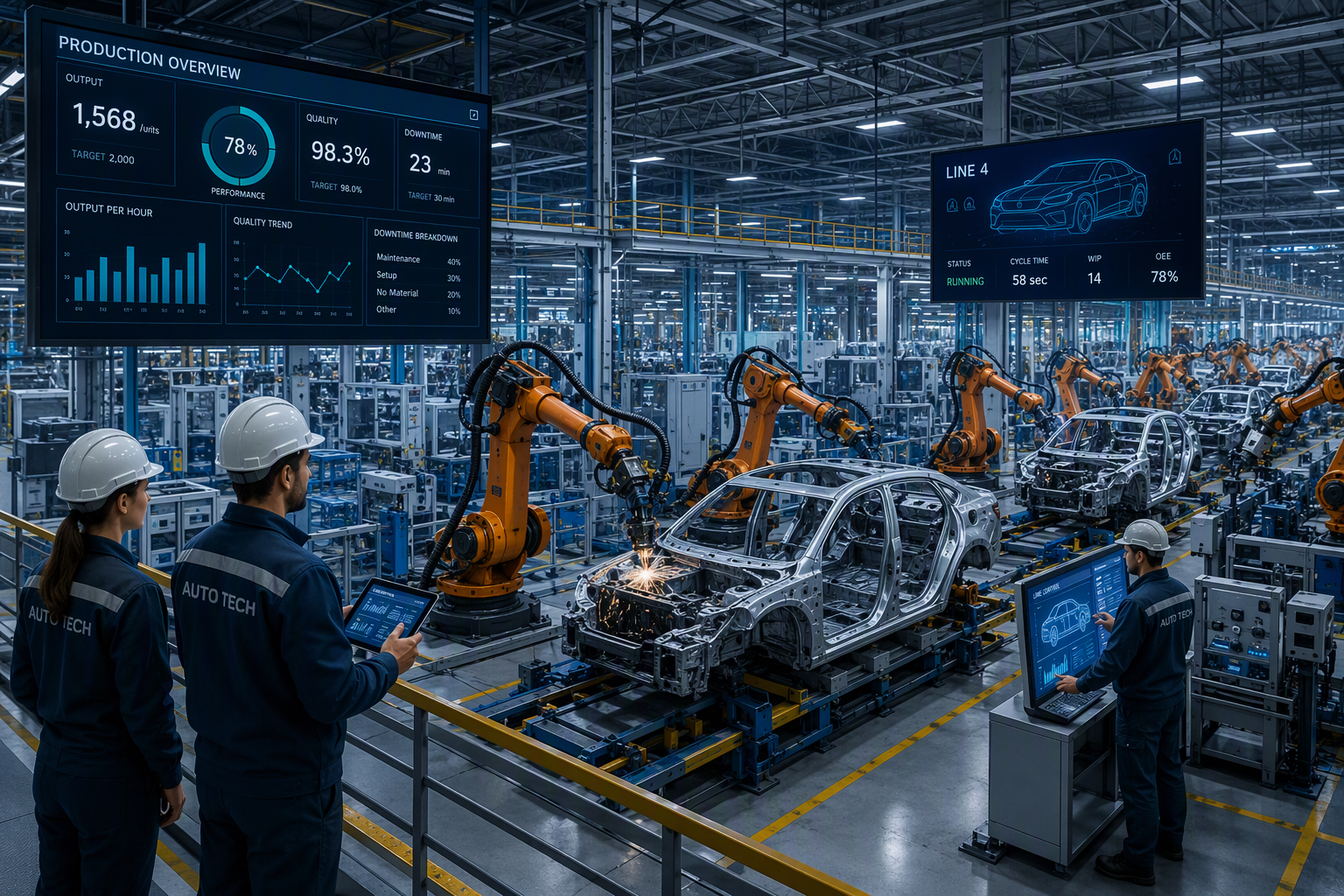
Automotive and Transportation
The automotive industry has long been a leading user of automation technology. It depends on structured production lines where tasks such as welding, painting, and assembly happen in a defined sequence with high repetition.
This environment fits automation well because each stage can be assigned to specialized equipment. From robotic welding to CNC machines producing parts, manufacturers use automation to keep speed and consistency high. Material handling systems also help move parts and vehicles through the facility more efficiently.
Transportation-related operations benefit for the same reason. When workflows involve repeatable movement, precise timing, and large output volumes, automation supports stronger control. That is why automotive remains one of the clearest examples of how industrial automation changes production at scale.
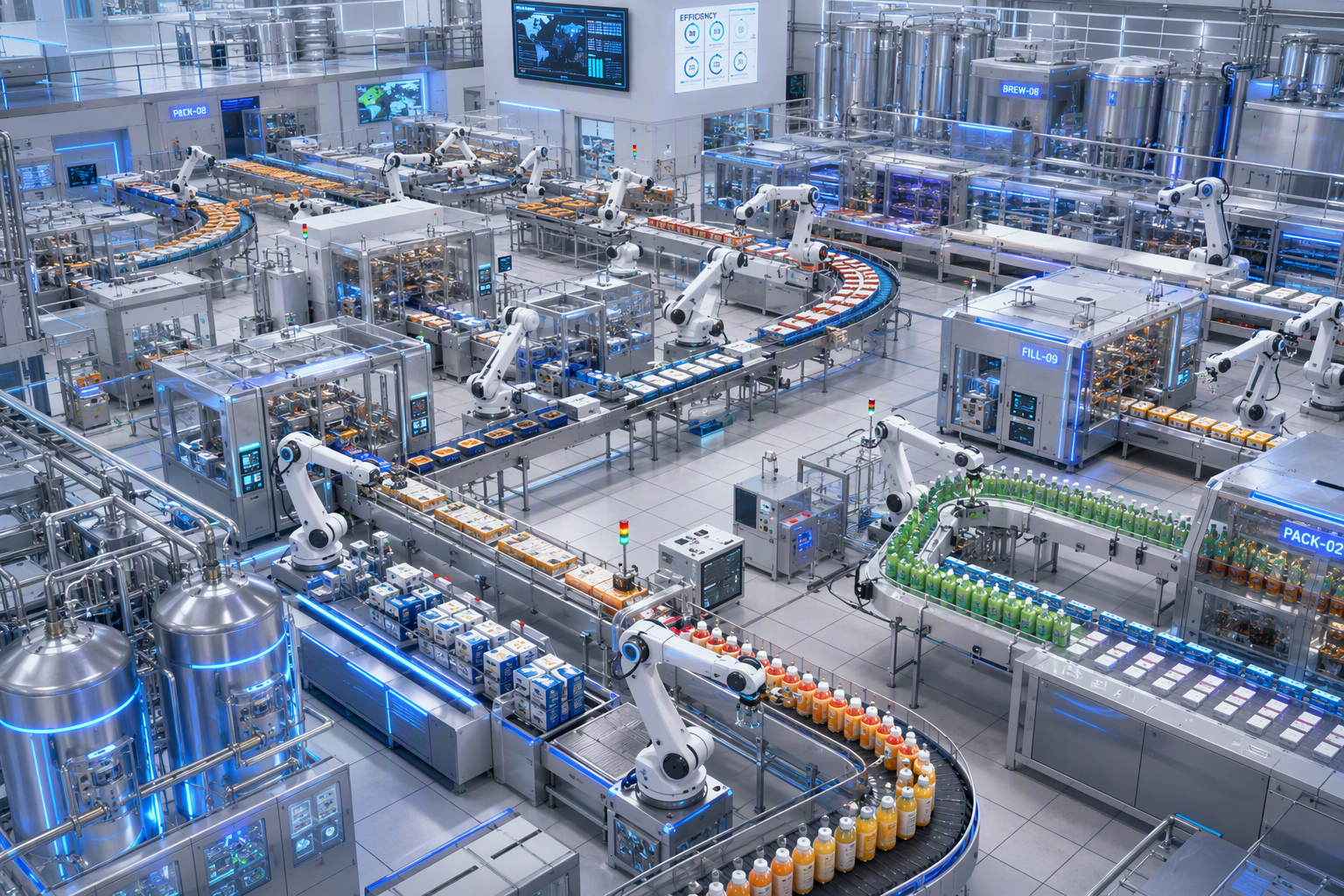
Food, Beverage, and Packaging
The food industry is another area where automation has become highly practical. Producers need reliable throughput, consistent handling, and repeatable processes to move products from preparation to packaging without unnecessary delay.
Automation solutions help support those needs by improving quality control and reducing variation. In packaging operations, machines can perform routine tasks with steady precision, helping companies maintain output standards across large product volumes. That matters even more in fast-moving consumer goods markets.
There is also a strong efficiency benefit. When facilities standardize routine work, they reduce waste and support more dependable scheduling. For food, beverage, and packaging businesses, automation is not just about speed. It is also about consistency, product handling, and better control over daily operations.
Oil, Gas, and Energy Industries
Oil and gas operations often involve large systems, distributed assets, and demanding operating conditions. That makes automation systems valuable for maintaining oversight and supporting process control across complex environments.
At the field level, automated monitoring and control can help companies track equipment behavior and respond faster to changing conditions. This is important in operations where delays, inconsistency, or equipment problems can affect output and efficiency.
Energy use is also a major concern in these industries, so tighter control can support better resource management. Because these sectors depend on dependable performance and safe coordination across many assets, automation continues to play a growing role in how facilities operate and maintain stability.
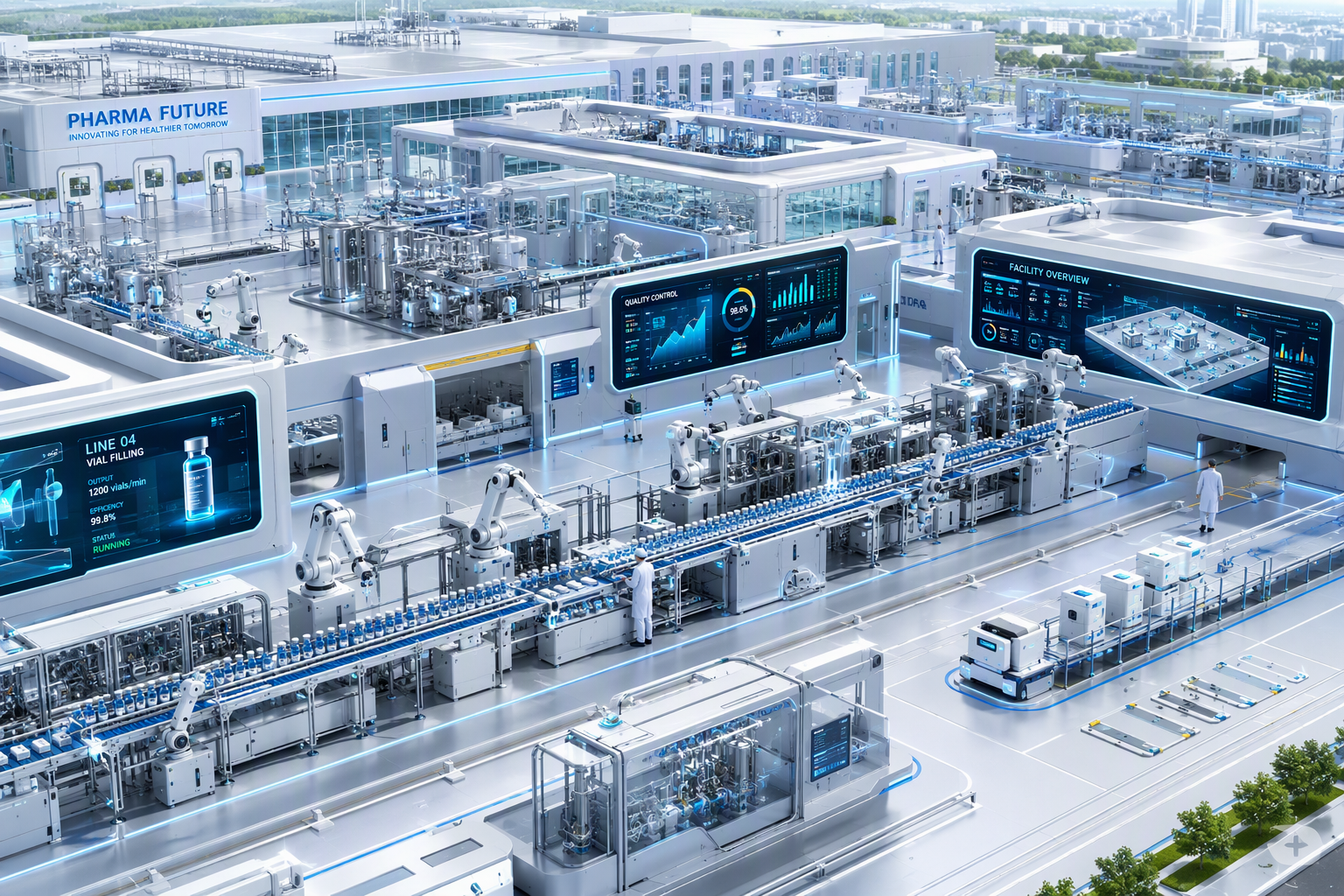
Pharmaceutical and Life Sciences Manufacturing
Pharmaceutical manufacturing depends heavily on precision and repeatability. Even small inconsistencies can create bigger operational problems, which is why automation technology is useful in this sector.
Automated systems support routine processing, quality checks, and stronger tracking of production activity. They also help with data acquisition, giving teams a clearer record of what happened during each stage of production. That level of visibility supports more consistent output.
There is also a close connection between factory systems and information technology in life sciences operations. As production becomes more data-focused, companies need better coordination between equipment, records, and oversight tools. Automation helps bring those pieces together in a way that supports quality, control, and more dependable manufacturing.
Addressing Key Challenges in Industrial Automation
Even with strong growth, industrial automation comes with real industry challenges. Companies need to think beyond equipment performance and consider how connected operations affect security, staffing, and day-to-day management.
Cybersecurity and workforce transformation stand out as two of the biggest concerns. As systems become more connected and advanced, businesses must protect operational data while helping employees adapt to new tools and roles. These challenges do not stop adoption, but they do shape how companies move forward.
Cybersecurity and Data Protection Concerns
As automation becomes more connected, cybersecurity becomes harder to ignore. Facilities now rely on linked machines, controllers, and software, which means more pathways for risk if systems are not well protected.
This is especially important for industrial control systems and SCADA systems. These tools support core operations, so any disruption can affect visibility, coordination, and production stability. Since many assets communicate across industrial networks, data protection also becomes part of operational reliability.
Companies adopting automation need to think about security from the start, not as an afterthought. Protecting connected systems helps preserve trust in the technology and supports stable operations over time. In a more digital environment, cybersecurity is part of keeping production running safely and consistently.
Workforce Transformation and Skills Gap
Workforce transformation is one of the most important changes linked to automation. As more companies adopt automation solutions, the work itself shifts. People spend less time on repetitive tasks and more time supporting oversight, coordination, and higher-value activities.
That creates a skills gap for some organizations. Labor shortages are already putting pressure on operations, and moving to automated systems can increase the need for workers who understand new tools and digital workflows. The challenge is not just finding people. It is helping current teams adapt.
At the same time, automation does not simply remove human labor from the picture. It changes where people add the most value. Companies that manage this transition well can improve retention, reduce strain on staff, and create a more sustainable operating model.
Conclusion
In conclusion, the industrial automation industry is experiencing unprecedented growth driven by technological advancements and increased efficiency demands across various sectors. Understanding the market size, key technologies, and core benefits can help businesses make informed decisions about adopting automation solutions. As industries continue to embrace innovations like the Industrial Internet of Things (IIoT) and artificial intelligence, the potential for improved productivity and reduced costs becomes even more significant. For those interested in delving deeper into the current trends and projections, explore the industrial automation industry statistics that highlight the ongoing transformations within this dynamic field. Stay ahead of the curve and embrace the future of manufacturing!
Frequently Asked Questions
How large is the global industrial automation market today?
The industrial automation global market reached a market value of $213.49 billion in 2022, up from $196.6 billion in 2021. That rise shows strong industry growth as companies across sectors invest in automation systems to improve output, consistency, and operating performance.
What emerging technologies are influencing the industry's growth?
Key automation technology trends include artificial intelligence, machine learning, the internet of things, and robotics. These tools help companies connect equipment, analyze operating data, support predictive maintenance, and make automated systems more adaptive, efficient, and useful across changing industrial environments.
Which manufacturing industries have experienced the most automation-driven transformation?
Several manufacturing industries have seen major automation transformation, especially automotive, food and beverage, packaging, pharmaceuticals, and related sectors. Industrial automation has improved the production process in these various industries by increasing consistency, supporting quality goals, and helping facilities manage repetitive, high-volume work more efficiently.
You might also like