Insights into the Industrial Automation Sector Trends
Insights into the Industrial Automation Sector Trends
Key Highlights
- Industrial automation utilizes control systems, robotics, and software to manage industrial processes with minimal human input.
- The main types of automation systems are fixed, programmable, flexible, and integrated, each serving different production needs.
- Key benefits include enhanced productivity, improved product quality, greater workplace safety, and significant cost savings.
- The industrial automation market is rapidly growing, driven by advancements in artificial intelligence and the need to compete in the global marketplace.
- Innovations like AI and the Industrial Internet of Things (IIoT) are transforming factories into smarter, more connected environments.
- While automation offers many advantages, the industry faces challenges like skills gaps and cybersecurity risks.
Introduction
Industrial Automation Sector is no longer a concept from the future; it's a reality that is fundamentally changing how businesses in different industries operate. From the automotive sector to food and beverage, companies are using advanced technology to streamline every stage of the manufacturing process. This shift involves integrating sophisticated systems to automate tasks, improve efficiency, and enhance quality. As technology evolves, so do the applications of the Industrial Automation Sector, making it a crucial component of modern production and a key driver of competitive advantage.
Defining Industrial Automation in Today's Landscape
So, what exactly is industrial automation? In simple terms, it's the use of technology and machinery like industrial robots and computer-controlled systems to manage tasks and processes with little to no human intervention. This represents a significant shift in the manufacturing industry, moving from people operating machines to machines operating themselves under human strategic guidance. It's the core of what we now call smart manufacturing, enabling companies to optimize their production, improve safety, and reduce operational costs in various industrial environments.
The importance of industrial automation in modern manufacturing cannot be overstated. It allows for continuous operation, 24/7, which drastically increases output. Moreover, these automation solutions ensure a level of precision and consistency that is difficult for manual processes to replicate. By taking over repetitive or hazardous tasks, automation not only enhances product quality but also creates a safer workplace. This technology is vital for businesses looking to stay competitive, meet market demands, and adapt to the fast-paced changes of today's industrial world.
The Role of the Industrial Automation Sector in Modern Manufacturing
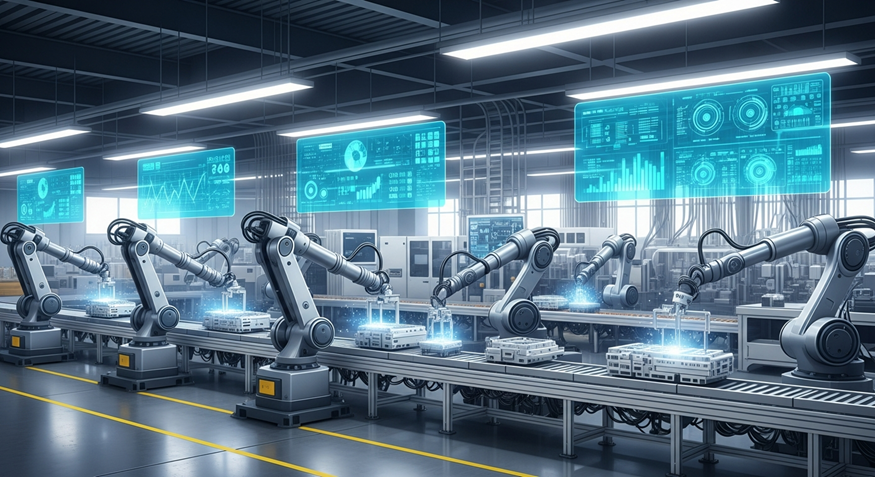
Automation technology plays a pivotal role in transforming the modern manufacturing process. Its primary function is to handle repetitive tasks that were once performed by human workers. By automating these processes, manufacturers can achieve higher speeds and greater accuracy.
This shift allows for a more efficient workflow with minimal human intervention in the physical production tasks. Instead, employees can focus on more strategic responsibilities, such as system monitoring, quality control oversight, and process improvement.
Ultimately, integrating automation streamlines operations from start to finish. It reduces the chance of errors, minimizes waste, and ensures that the entire manufacturing process is as lean and productive as possible, which is essential for success in today's competitive market.
Evolution from Traditional to Smart Factories
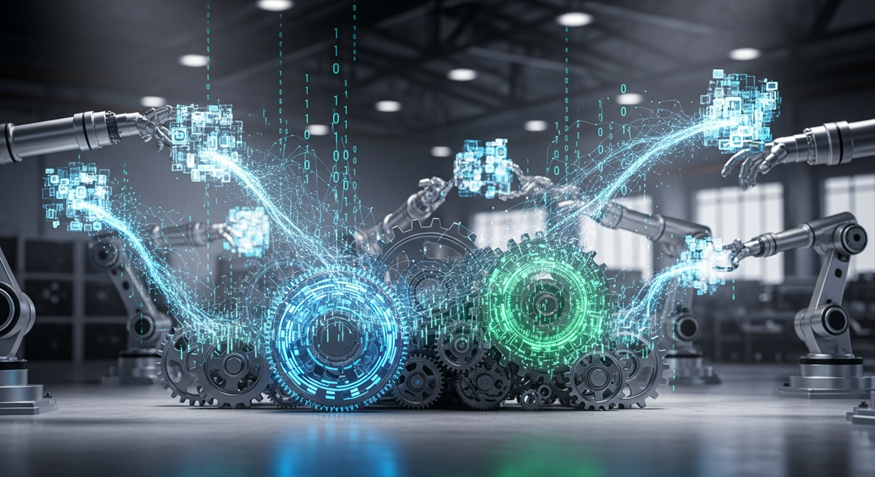
The journey from traditional factories to smart factories is a story of technological evolution. Initially, the Industrial Automation Sector focused on mechanizing simple, repetitive tasks on a production line. Today, the landscape is much more sophisticated, thanks to the rise of Industry 4.0.
Smart factories are the result of integrating new technologies like the Internet of Things (IoT) and artificial intelligence with advanced control systems. This connectivity allows machines, sensors, and software to communicate in real time, creating a fully connected and intelligent production environment.
This evolution means that modern factories can now self-optimize, predict maintenance needs, and adapt to changes instantly. This move towards smart factories is a key trend, enabling businesses to achieve unprecedented levels of efficiency, flexibility, and insight into their operations.
Types of Industrial Automation Sector Systems
When exploring industrial automation, it's helpful to understand that it's not a one-size-fits-all solution. There are several types of industrial automation, each designed to meet specific production requirements. The primary categories are fixed automation, programmable automation, and flexible automation, along with a more comprehensive approach known as integrated automation.
Each type offers distinct advantages depending on the volume, variety, and complexity of the products being manufactured. Understanding these differences is the first step for any business looking to implement the right automation strategy. Let's look at what sets them apart.
Fixed, Programmable, and Flexible Automation Explained
Fixed automation, also known as "hard" automation, involves using specialized equipment to perform a specific task repeatedly. It's perfect for high-volume mass production where the production process doesn't change, like in an automotive assembly line. It offers incredible speed and efficiency but lacks flexibility.
On the other hand, programmable automation is designed for batch production, where products are made in specific quantities. These systems use machines that can be reprogrammed to handle different product variations. This is ideal for industries like electronics, where new models are introduced periodically.
Finally, flexible automation, or "soft" automation, is the most adaptable. It allows for quick changes between different products without significant downtime, making it perfect for custom manufacturing or industries with fluctuating market demands.
- Fixed Automation: Best for high-volume, repetitive tasks with no variation.
- Programmable Automation: Suited for producing different products in batches.
- Flexible Automation: Ideal for high-variety, low-volume production with frequent changes.
Integrated Automation and Its Advantages
Integrated automation takes process automation to the next level by unifying multiple machines, processes, and control systems into a single, cohesive platform. Instead of having isolated workstations, every component of the production floor communicates and works in sync, from robots and conveyors to sensors and data management systems.
This approach is the foundation of the modern smart factory. By connecting all automation solutions, businesses can achieve a seamless flow of information and materials. This integration allows for real-time monitoring and adjustments, which significantly improves overall operational control.
The advantages are clear. An integrated system reduces bottlenecks and downtime while ensuring consistency across the entire production cycle. It provides the scalability needed to grow operations efficiently, though it does require a significant upfront investment and specialized expertise to implement successfully.
- Provides a unified view of all production processes.
- Enhances communication between different machines and systems.
Core Benefits of Using the Industrial Automation Sector
The benefits of the Industrial Automation Sector are compelling and address many of the core challenges manufacturers face today. By implementing these systems, companies can achieve significant cost savings, boost operational efficiency, and maintain higher quality standards. Automation addresses everything from labor costs to material waste, making it a powerful tool for improving the bottom line.
Ultimately, these advantages translate into a stronger, more resilient business. Whether it’s through increased output or a safer working environment, the positive impacts are felt across the entire organization. Let's examine some of these key benefits more closely.
Boosting Productivity and Efficiency
One of the most significant advantages of the Industrial Automation Sector is the dramatic increase in productivity. Automation systems can operate 24 hours a day, 7 days a week, without breaks or holidays. This continuous operation allows for a much higher output compared to a production process reliant solely on manual labor.
Furthermore, automation helps optimize the entire production flow. By automating repetitive tasks, companies can reduce cycle times and eliminate bottlenecks. This not only speeds up production but also leads to lower labor costs per unit, as employees can be reassigned to more value-added roles.
The result is a more efficient and profitable operation. Companies can meet growing demand without a proportional increase in their workforce, giving them a crucial edge in a competitive market.
- Enables 24/7 operation for maximum production capacity.
- Reduces cycle times and streamlines the production process.
Enhancing Product Quality and Safety
Improving product quality is another core benefit of the Industrial Automation Sector. Unlike humans, machines and industrial robots do not experience fatigue. This means they can perform tasks with the same level of precision and accuracy every time, which is crucial for effective quality control. This consistency significantly reduces the error rate, leading to fewer defects and less material waste.
Beyond quality, automation greatly enhances worker safety. Many manufacturing environments involve hazardous conditions or physically demanding tasks. By deploying robots to handle these dangerous tasks, companies create a safer workplace for their employees. This reduces the risk of accidents and injuries.
This focus on both quality and safety has a dual benefit. It not only leads to better products and a happier, healthier workforce but also reduces costs associated with workplace accidents and product rework.
- Minimizes human error for consistent product quality.
- Removes workers from hazardous environments, improving workplace safety.
Current Global Market Trends in the Industrial Automation Sector
The global industrial automation market is experiencing rapid growth, driven by fierce competition and evolving market demands. Businesses are under constant pressure to streamline operations, and automation solutions have become a critical strategy for staying ahead. The adoption of new technologies is fueling this expansion, making automation more accessible and powerful than ever.
From artificial intelligence to the Internet of Things, these innovations are reshaping what's possible in manufacturing. As companies seek greater efficiency and flexibility, the demand for advanced automation will only continue to grow. Let's look at the numbers and regional trends shaping this dynamic market.
Latest Adoption Statistics and Market Growth
The industrial automation market is on an impressive growth trajectory. Valued at $196.6 billion in 2021, it expanded to $213.49 billion in 2022 and is projected to reach an astounding $395.09 billion by 2029. This market growth reflects widespread adoption statistics, as more industries embrace automation to enhance their processes.
This expansion is fueled by the need for real-time data and decision-making, which modern automation systems provide. The ability to monitor and optimize production instantly gives companies a significant competitive advantage.
Below is a quick look at the market's expected growth, showcasing the increasing investment in this transformative technology.
| Year | Market Size (in Billions USD) |
|---|---|
| 2021 | $196.6 |
| 2022 | $213.49 |
| 2029 (Projected) | $395.09 |
Regional Highlights: The United States and Worldwide
In the global marketplace, industrial automation adoption is widespread but varies by region. The United States has been a significant player, with many of its manufacturing sectors leveraging automation systems to combat labor shortages and increase competitiveness. Industries from automotive to logistics are investing heavily in this technology.
Globally, various industries are driving demand. The automotive, electronics, and consumer goods sectors are early adopters, setting new standards for production efficiency. Regions in Asia, particularly, are seeing rapid growth as they become manufacturing hubs for the world.
This worldwide trend underscores the universal benefits of automation. Whether in the United States or abroad, companies are recognizing that investing in automation is essential for thriving in an increasingly connected and competitive global economy.
Innovations Transforming the Industrial Automation Sector
The industrial automation sector is in the midst of a major transformation, thanks to several groundbreaking innovations. Technologies like artificial intelligence (AI), machine learning, and the Industrial Internet of Things (IIoT) are pushing the boundaries of what automation can achieve. These advancements are making systems smarter, more connected, and more autonomous.
This new wave of automation technology is not just about doing tasks faster; it's about creating intelligent systems that can learn, adapt, and optimize themselves. Let's explore how AI, machine learning, and IIoT are revolutionizing the factory floor.
AI and Machine Learning in Automation
Artificial intelligence (AI) and machine learning are adding a new layer of intelligence to industrial automation. Instead of just following pre-programmed instructions, an automated system with AI can analyze data, identify patterns, and make decisions on its own. This capability allows for continuous process optimization without human intervention.
One of the most impactful applications is predictive maintenance. Machine learning algorithms can monitor equipment health in real time and predict potential failures before they happen. This proactive approach minimizes unplanned downtime and extends the life of machinery, saving companies significant time and money.
From optimizing supply chains to improving quality control, AI is making automated systems more efficient and adaptable than ever before. This technology is a key driver of the next generation of smart manufacturing.
- Predictive Maintenance: AI analyzes data to predict equipment failure.
- Quality Control: Machine learning algorithms can visually inspect products for defects.
- Process Optimization: AI adjusts system parameters in real time for peak efficiency.
The Impact of Industrial IoT and Connectivity
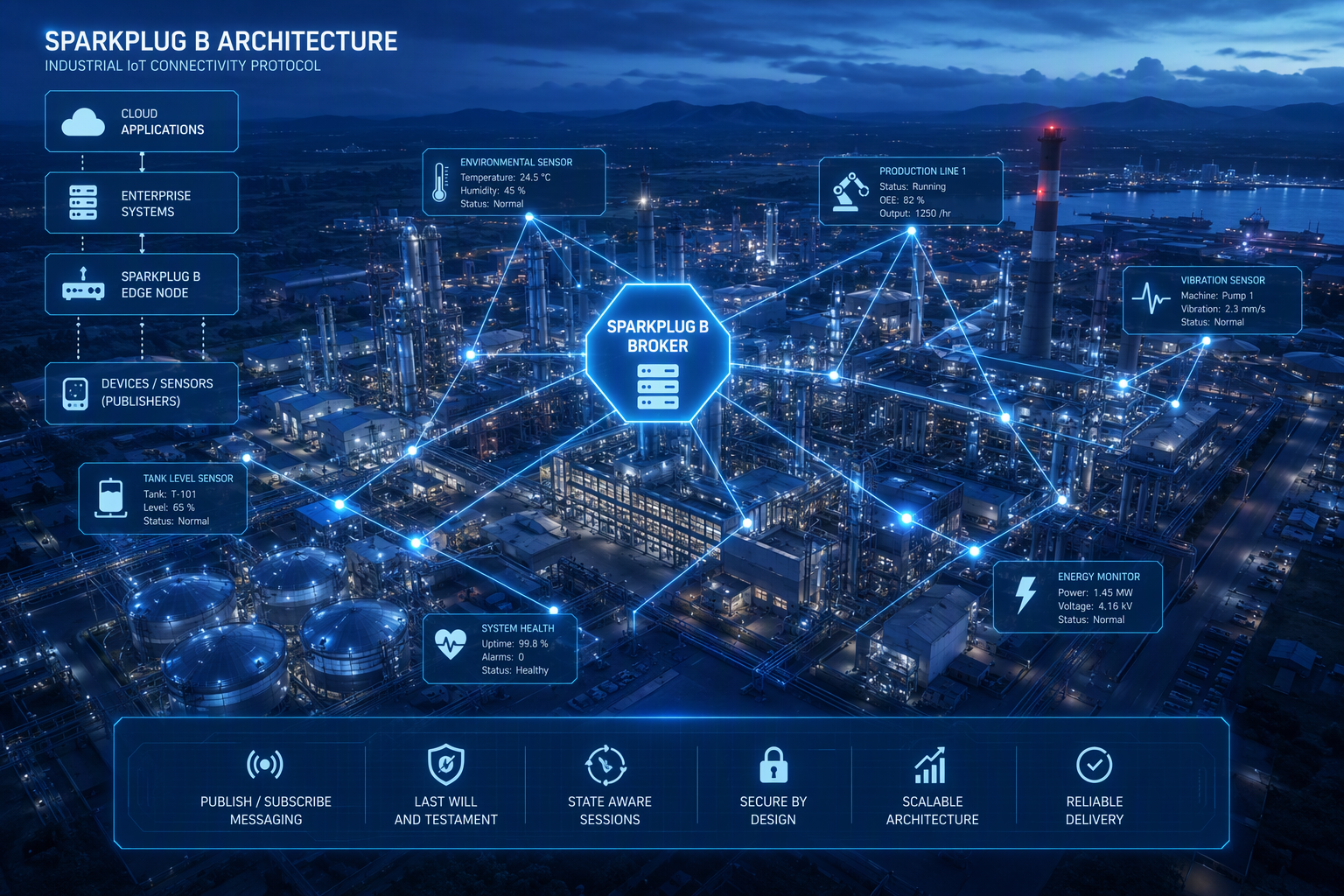
The Industrial Internet of Things (IIoT) is all about connectivity. It involves embedding sensors and smart devices into machinery and equipment on the factory floor. These devices enable continuous data acquisition, collecting vast amounts of information about every aspect of the production process.
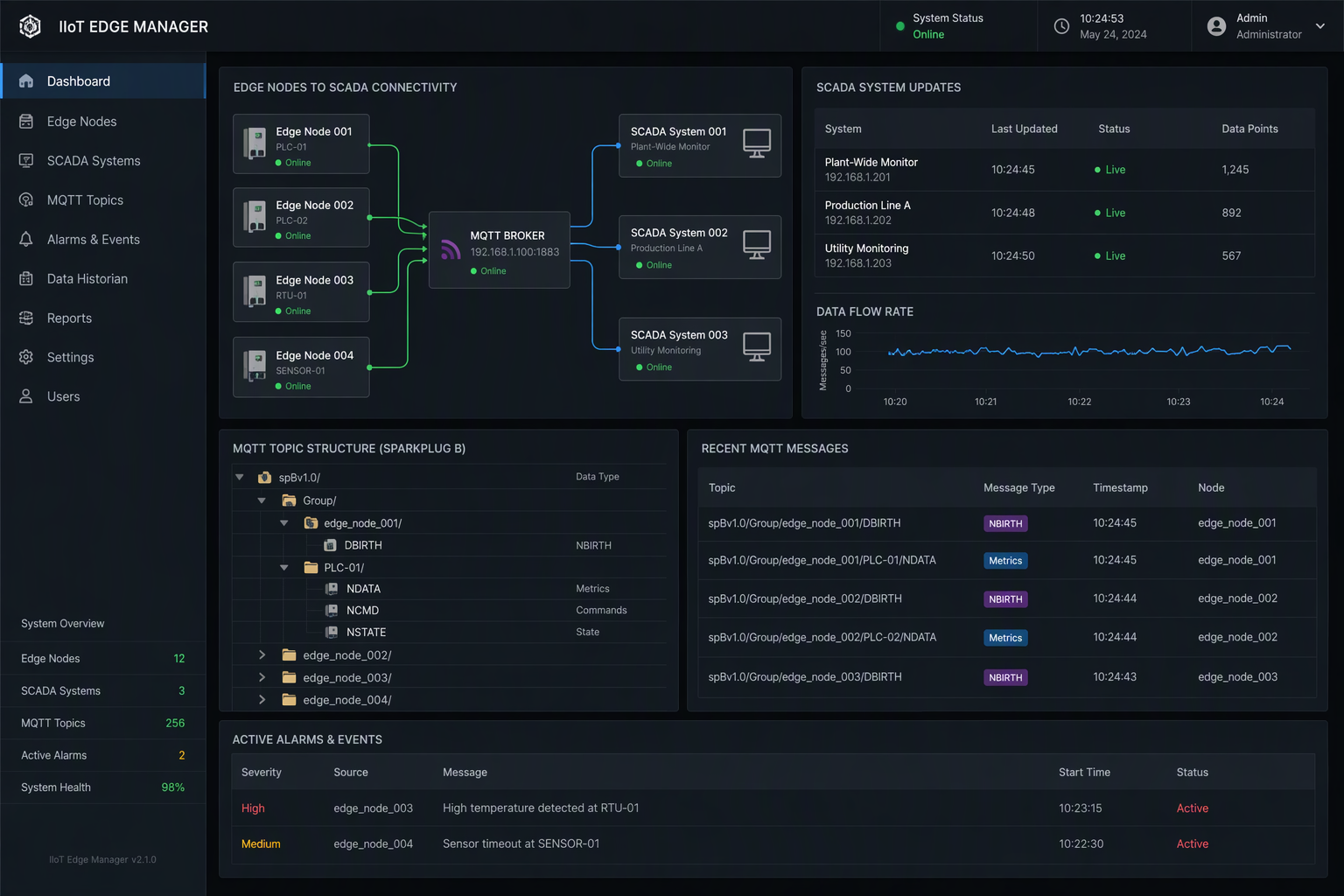
This data is then transmitted in real time to central control platforms, such as SCADA systems. This constant flow of information provides managers with a complete, up-to-the-minute view of their operations. They can monitor performance, track assets, and identify inefficiencies as they happen.
The impact is transformative. Enhanced connectivity allows for better decision-making, improved process control, and greater operational transparency. IIoT is the backbone of the smart factory, turning isolated machines into a cohesive, intelligent network.
- Enables real-time data collection from all equipment.
- Provides a comprehensive overview of factory operations for better management
Key Challenges Facing the Industrial Automation Industry
Despite its many benefits, the industrial automation industry is not without its challenges. As companies adopt more advanced systems, they face hurdles related to workforce evolution, cybersecurity, integration, and scalability. These issues require careful planning and strategic management to overcome successfully.
Addressing these challenges is crucial for unlocking the full potential of automation. From training employees for new roles to protecting connected systems from cyber threats, businesses must be proactive in navigating this new landscape. Let's look at these key challenges in more detail.
Addressing Skills Gaps and Workforce Evolution
As automation takes over repetitive tasks, the roles of human workers are changing. This workforce evolution is creating a skills gap, where there is a growing need for employees with technical expertise in robotics, data analysis, and system management. Many companies struggle to find candidates with these advanced skills.
The solution lies in reskilling and upskilling the existing workforce. Instead of displacing workers, companies can invest in training programs that prepare them for new, higher-value roles. These positions often involve overseeing automated systems, managing maintenance needs, and analyzing production data.
By focusing on training, businesses can bridge the skills gap and ensure their human workers remain a valuable asset in an increasingly automated environment. This approach fosters a smoother transition and helps retain institutional knowledge.
- Requires training programs to equip workers with new technical skills.
- Shifts human workers into supervisory and analytical roles.
Cybersecurity, Integration, and Scalability Issues
With increased connectivity comes a greater risk of cyber threats. Highly connected industrial automation systems can be vulnerable to cyberattacks if they are not properly secured. A breach could disrupt industrial processes, compromise sensitive data, or even cause physical damage, making cybersecurity a top priority.
Another challenge is integration. Getting new automation systems to work seamlessly with existing legacy equipment can be complex and costly. Furthermore, ensuring that these systems have the scalability to grow with the business is essential for long-term success.
These issues require careful planning from the outset. Companies must invest in robust cybersecurity measures and develop a clear strategy for integrating and scaling their automation solutions to avoid future complications.
- Connected systems are vulnerable to cyberattacks if not secured.
- Integrating new technology with older systems can be complex.
Conclusion
In summary, the industrial automation sector is undergoing rapid transformation driven by technological advancements and market demands. As businesses strive for increased efficiency and product quality, embracing innovations such as AI, IoT, and flexible automation systems has become essential. The challenges of skills shortages and cybersecurity must also be addressed to ensure sustainable growth. By staying informed about current trends and challenges, companies can leverage automation to enhance productivity and maintain a competitive edge. If you're ready to explore how these trends can impact your business, feel free to reach out for a consultation to discuss tailored automation solutions that suit your needs.
Frequently Asked Questions
What sectors are experiencing the fastest automation growth?
The manufacturing industry continues to lead in automation adoption, particularly the automotive industry, which uses robotic arms for assembly. Other fast-growing sectors include logistics, electronics, and consumer goods, where industrial automation systems are deployed to meet high demand and improve efficiency with tailored automation solutions.
How is sustainability being addressed in industrial automation?
Sustainability in industrial automation is addressed by optimizing processes to reduce energy consumption and material waste. Process automation fine-tunes the production line for maximum efficiency, which leads to significant cost savings and a smaller environmental footprint. Smart systems can power down when not in use, further conserving resources.
What is the outlook for industrial automation by 2033?
By 2033, the future of industrial automation looks incredibly robust. The global industrial automation market is expected to see massive growth, driven by new technologies like advanced AI and IoT. Automation systems will become standard in most industrial environments, creating smarter, more connected, and highly efficient factories.
You might also like