Industrial Connectivity in Manufacturing: The Complete Guide
Industrial Connectivity in Manufacturing: The Complete Guide
Key Highlights
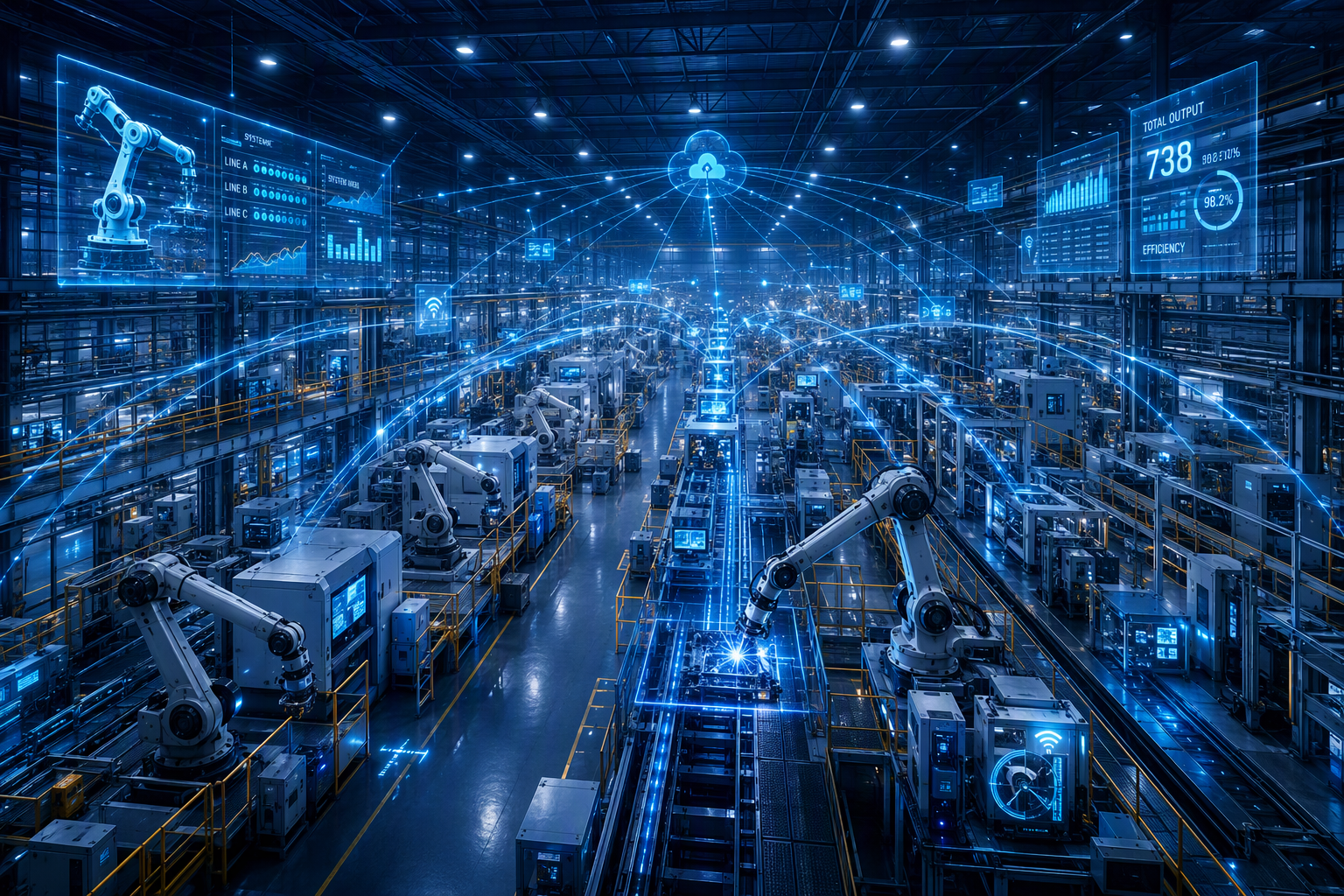
- Industrial connectivity links machines, software, and people so smart manufacturing systems can share data fast and reliably.
- In the manufacturing industry, strong connectivity solutions improve operational efficiency, visibility, and quality control.
- The industrial internet of things depends on secure, interoperable networks that connect legacy assets and newer platforms.
- Edge devices, gateways, OPC UA, and MQTT help move data where it is needed.
- Better plant data supports predictive maintenance, faster decisions, and more resilient production.
Introduction
Industrial connectivity is now a core part of digital transformation in the manufacturing industry. It connects machines, sensors, controllers, and software so your team can use data in real time instead of working in silos. That shift matters because modern plants need better visibility, faster decisions, and stronger security. If you are a controls engineer, connectivity is no longer just a network topic. It directly affects uptime, troubleshooting, system design, and how well your plant can grow into smarter operations.
Understanding Industrial Connectivity in Manufacturing
At its simplest, industrial connectivity is the ability of machines, devices, and systems to exchange data across manufacturing operations. It covers everything from field devices and PLCs to higher-level software, cloud platforms, and reporting tools. In the manufacturing industry, this creates a usable flow of information instead of isolated equipment islands.
Why does that matter to you? Because production lines run better when connectivity solutions support visibility, troubleshooting, and coordination. Strong industrial connectivity helps teams react faster, reduce downtime, and connect operational decisions to real plant data. The next sections break down what that looks like in practice.
Definition and Core Principles of Industrial Connectivity
Industrial connectivity means connecting machines, sensors, controllers, and software so they can exchange information securely and reliably. In plain terms, it is the communications layer that lets your plant move process data from the machine level to supervisory and business systems. That is the base for many industrial applications.
At the core are a few principles. First, industrial networks must be dependable in harsh environments. Second, different systems need interoperability, since most plants use a mix of legacy and modern equipment. Third, security must be built in, not added later, because more connected assets create more risk.
This is where the internet of things and industrial iot come in. They extend connectivity beyond basic control, making data usable for monitoring, analytics, and maintenance. Without that foundation, digital projects struggle to scale or deliver value.
The Role of Connectivity in Modern Factories
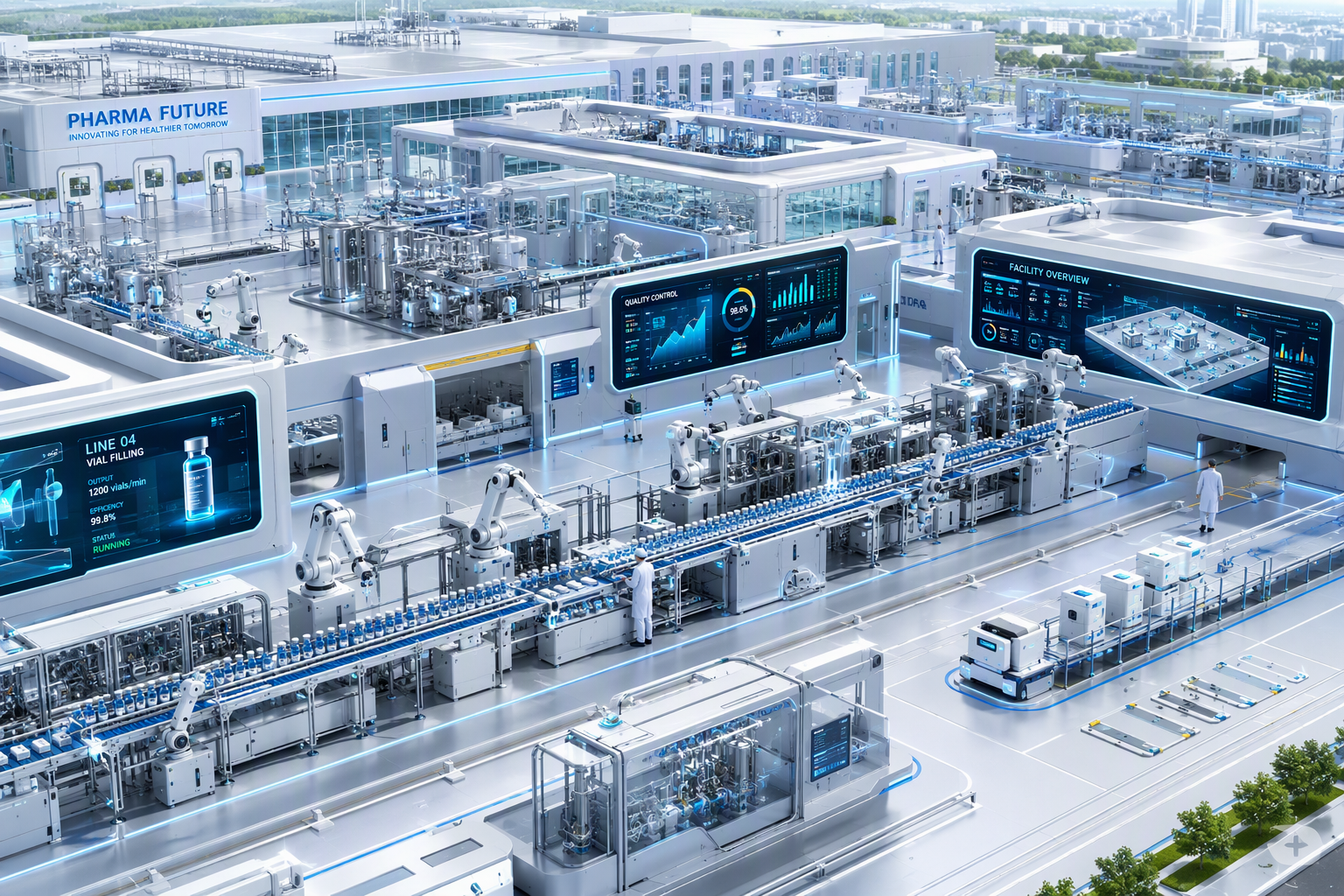
Modern factories need more than machine-to-machine messaging. They need seamless communication across controllers, historians, edge platforms, and enterprise systems. That is how smart factories turn isolated machine signals into something useful for operations, maintenance, and management.
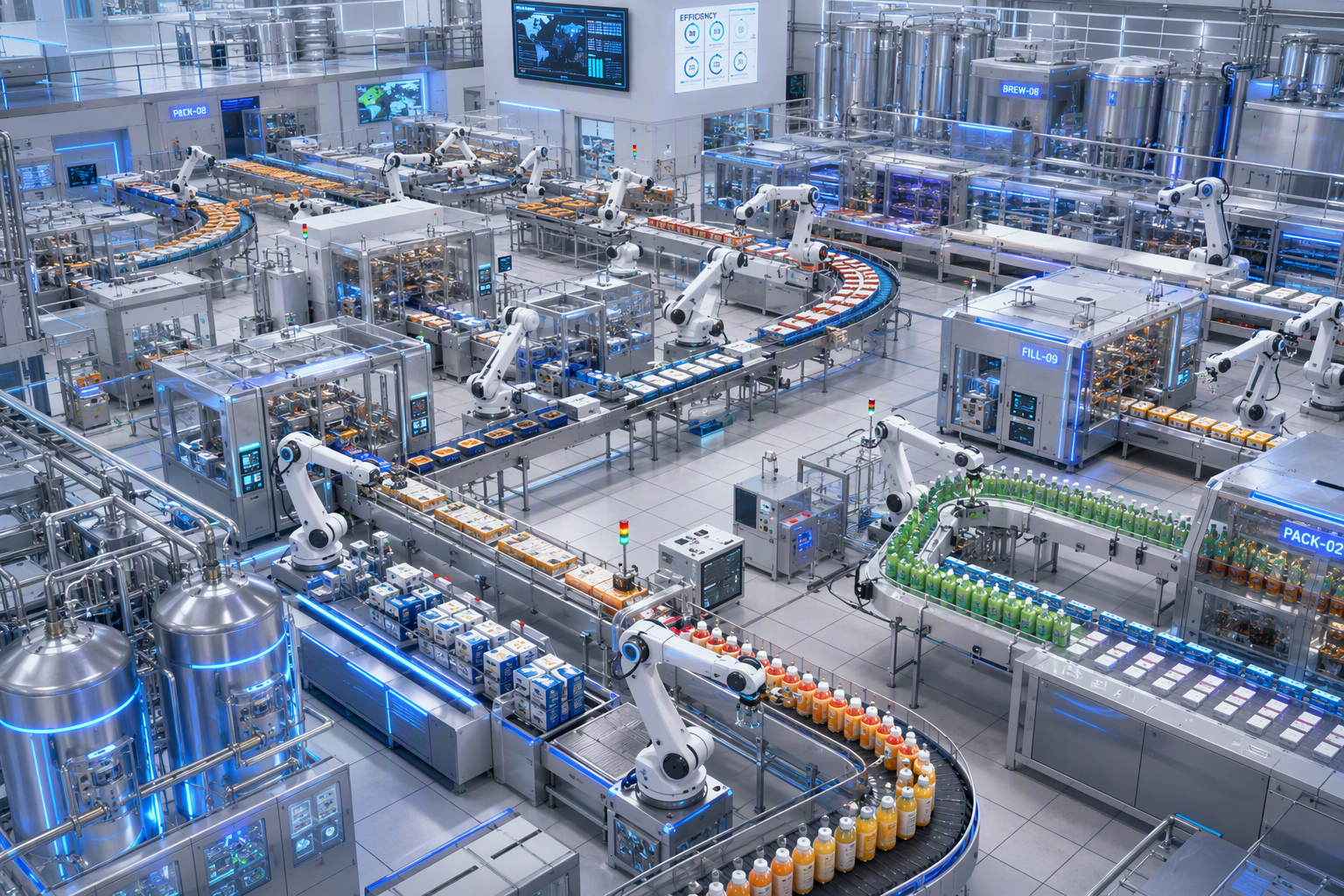
On busy factory floors, iot devices and connected controllers generate production data constantly. Connectivity solutions make that data available in real time where it is needed. This supports faster troubleshooting, better responses to quality issues, and clearer visibility into how each asset is performing.
Just as important, connectivity allows one machine or subsystem to serve more than one higher-level system. That wider data availability helps connected manufacturing systems become more intelligent. It supports faster decisions, stronger coordination, and a more complete picture of plant performance from line level to site level.
Why Industrial Connectivity Matters for Today’s Manufacturing
You can think of industrial connectivity as a performance multiplier. It helps your plant collect, move, and use data across production processes without manual workarounds. That improves operational efficiency and gives teams a clearer view of what is happening right now, not hours later.
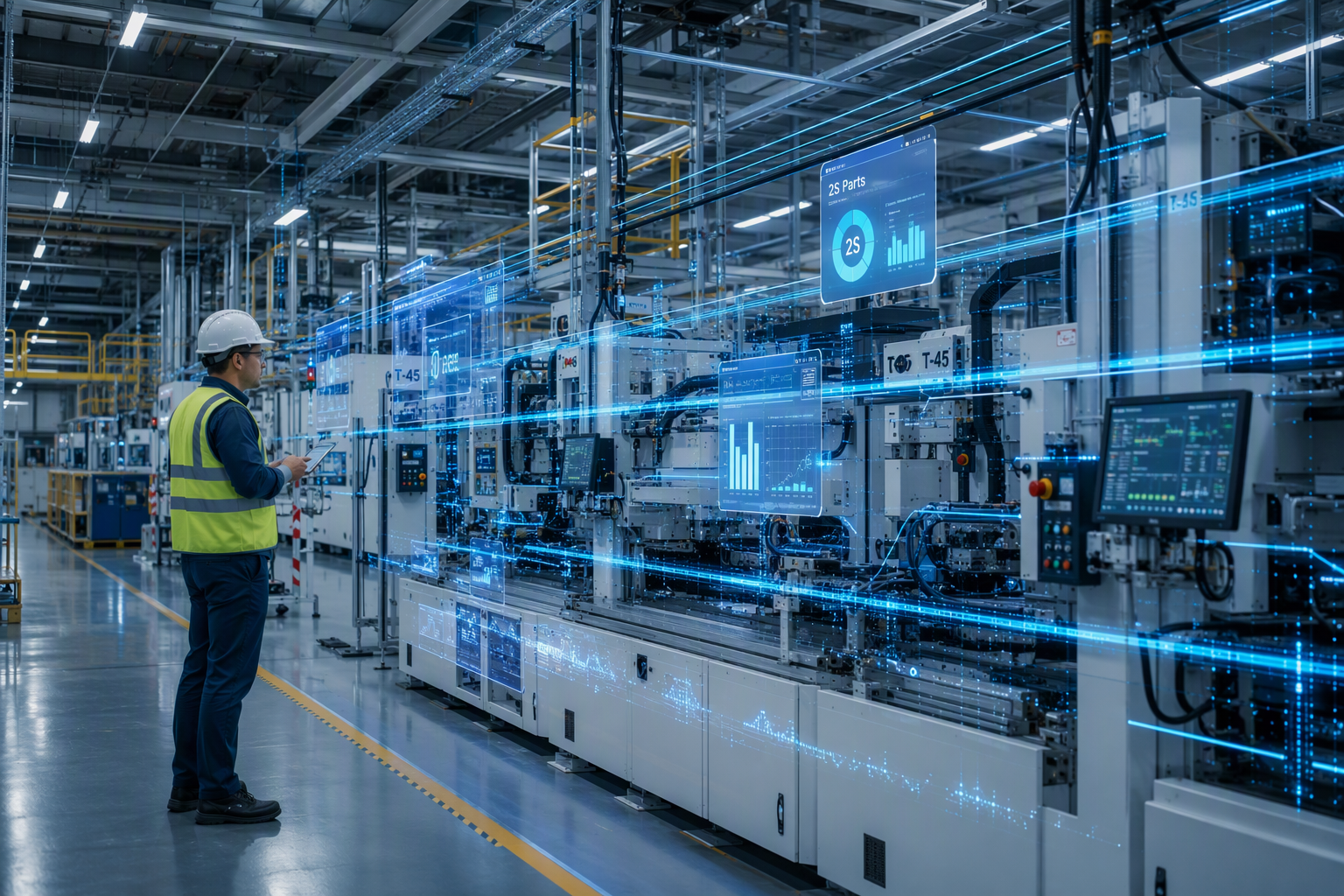
It also strengthens quality control and coordination beyond a single cell or line. When data collection works well, planners, operators, and engineers can align decisions with actual conditions. That matters even more as plants connect more closely with enterprise systems and the supply chain.
Key reasons it matters include:
- Better visibility into machine conditions, production flow, and quality issues
- Faster responses to downtime, process shifts, and maintenance needs
- Stronger competitive advantage through informed, data-based decisions
Industrial Connectivity as the Foundation for Smart Manufacturing
Smart manufacturing depends on reliable data transmission from the shop floor to the systems that analyze and act on it. If machines cannot share information consistently, Industry 4.0 remains a concept instead of an operating model. That is why connectivity solutions sit at the center of every serious modernization effort.
Once data moves cleanly across systems, plants can support machine learning, better diagnostics, and more adaptive workflows. For controls engineers, that means connectivity is not separate from automation strategy. It is the layer that makes smarter applications possible.
How Connectivity Drives Industry 4.0 Transformation
Industry 4.0 is built on connected assets, shared information, and faster decision-making. In practice, that means your machines, field devices, and software platforms must exchange production data in a usable way. Without that, digital transformation efforts often become isolated pilot projects with limited plant impact.
The internet of things and industrial iot expand what plants can monitor and manage. They connect more assets, expose more data points, and make it easier to move information into edge or cloud environments. This supports broader visibility across manufacturing operations and improves responsiveness when conditions change.
Connectivity also reduces architectural barriers. Ethernet-based communication, protocol conversion, and standardized interfaces help older and newer systems work together. That is a big reason connected plants can scale digital projects across multiple lines or sites instead of rebuilding every workflow from scratch.
Intelligent, Connected Manufacturing Systems Explained
Intelligent manufacturing starts when data is not only collected, but organized and used. In smart factories, iot devices, PLCs, and software systems feed information into platforms that support monitoring, analysis, and response. That creates a connected environment where issues become visible earlier.
The industrial internet of things helps by extending data access across assets that were once isolated. Sensors, controllers, and gateways can send values, status, and events to systems that compare trends or flag abnormal behavior. This gives engineers and operators more context, not just more tags.
That context leads to actionable insights. A connected manufacturing system can show where downtime is building, where a process is drifting, or where maintenance should focus first. It does not remove engineering judgment. It gives your team better information to use it well.
Real-World Examples of Smart Manufacturing Enabled by Connectivity
You see the value of smart manufacturing most clearly in day-to-day plant work. Connected systems help teams monitor industrial equipment, spot exceptions, and act before a small issue becomes a shutdown. These are practical industrial applications, not abstract technology promises.
For example, real time access to machine data can support line balancing, alarm review, and process checks. The same infrastructure can feed maintenance tools, edge analytics, or cloud dashboards. When production lines are connected well, different users can work from the same operating picture.
Common use cases include:
- Predictive maintenance based on patterns in equipment behavior
- Real time monitoring of line status, throughput, and downtime
- Better visibility into process conditions that affect product quality
- Remote support and diagnostics for hard-to-reach systems
Key Technologies Enabling Industrial Connectivity
No single product creates industrial connectivity on its own. It comes from a stack of technologies that work together across industrial networking, security, and software integration. For most plants, the key building blocks are communication protocols, edge devices, gateways, and structured data integration methods.
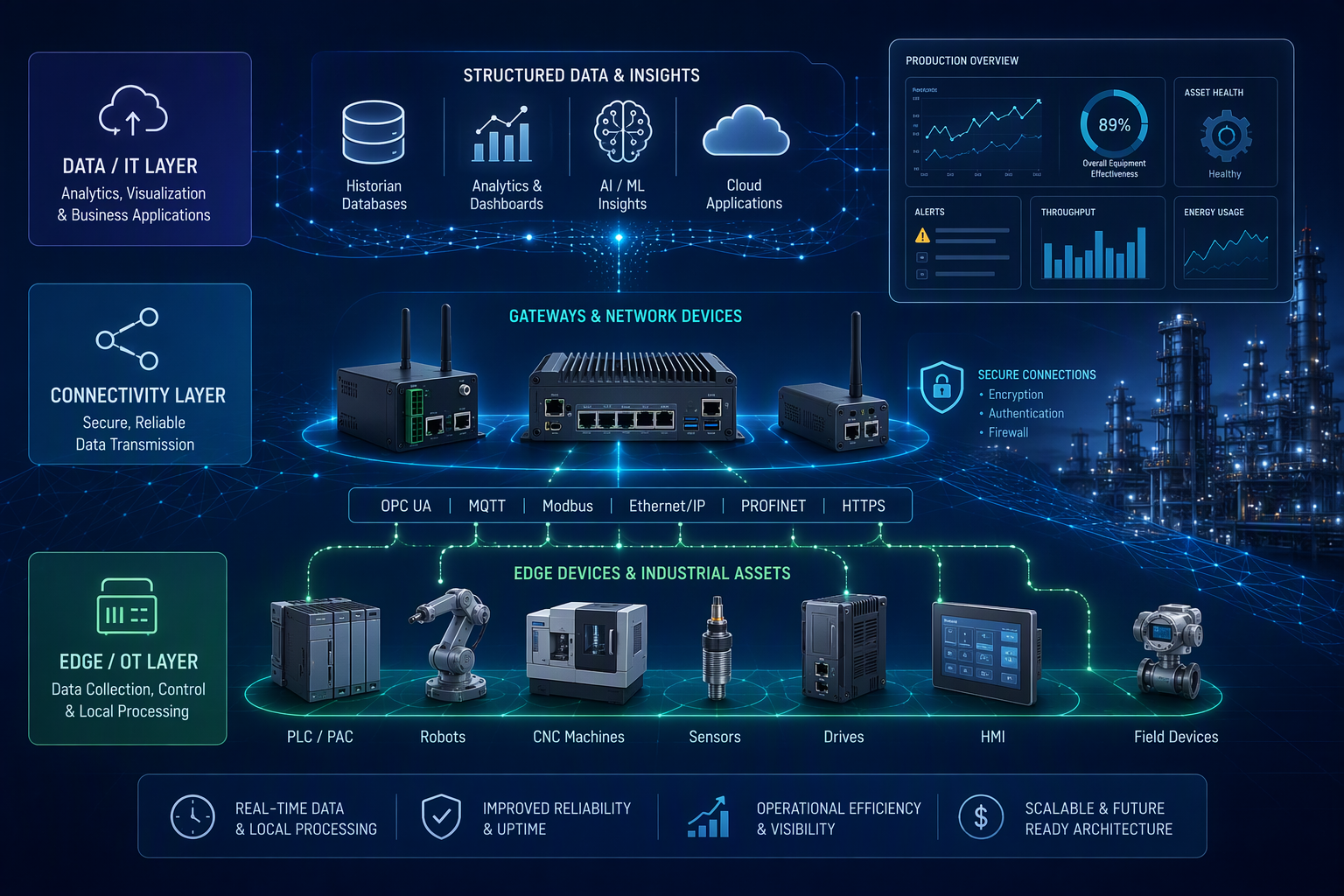
Industrial iot projects rely on these components to move data from machines into useful applications. If you are evaluating an architecture, it helps to understand what each layer does and where it fits. The next three sections cover the core technologies you will see most often.
Common Industrial Communication Protocols (Ethernet/IP, PROFINET, OPC UA, MQTT)
Communication protocols define how devices and software exchange information across industrial networks. In manufacturing, that usually means a mix of control protocols and higher-level messaging methods. As plants move toward Ethernet-based architectures, data transmission becomes faster and larger data sets become easier to handle.
For controls engineers, the choice often comes down to the job. Some protocols fit machine control and local coordination. Others work better for moving process data to IT systems, edge platforms, or cloud tools across wide area networks. Interoperability matters because most sites support mixed vendor environments.
A simple comparison looks like this:
| Protocol | Typical Strength in Manufacturing |
|---|---|
| Ethernet/IP | Common for controller and device communication in Ethernet-based automation networks |
| PROFINET | Strong fit for industrial control and device-level coordination on factory networks |
| OPC UA | Standardized, secure access to process data with information models for interoperability |
| MQTT | Lightweight publish/subscribe messaging often used to move plant data to higher-level systems |
If you are weighing OPC UA against MQTT for plant data collection, Empowered Automation has a useful guide that explains where each fits and why the right answer depends on architecture, latency, and data goals.
Edge Devices, IIoT Gateways, and Data Integration
Edge devices sit close to the machine and work with data near its source. That matters when your application needs fast feedback, low latency, or local filtering before anything is sent upstream. In many plants, edge devices handle real time data collection, aggregation, and preprocessing.
IIoT gateways play a similar role, especially when you need protocol conversion or a secure bridge between OT assets and higher-level platforms. They help connect legacy devices with modern software while reducing integration effort. This is often the practical path when replacement is not realistic.
Good data integration depends on both layers. Edge platforms reduce bandwidth demands and support local analytics, while iiot gateways move data into historians, cloud tools, or enterprise applications. If you want a deeper look at plant-to-cloud architecture, Empowered Automation’s guide on industrial IoT gateways explains this clearly for engineering teams.
The Value of Unified Namespace (UNS) in Manufacturing
As plants connect more systems, one challenge keeps coming up: too many separate data paths. A unified namespace gives you a structured way to organize and share production data so different users and applications can work from the same source of truth. That simplifies data integration.
For the shop floor, this can reduce complexity. Instead of building point-to-point links for every use case, teams create a model that publishes context-rich information in a consistent form. That makes process optimization easier because data is easier to find, understand, and reuse.
UNS is not just a software trend. It is a practical design choice for plants that want scalable connectivity solutions. If you are considering this model, Empowered Automation has a strong guide on what a Unified Namespace means in manufacturing and how it supports cleaner architectures.
Operational Technology (OT) and Information Technology (IT) Integration
Industrial connectivity becomes much more valuable when OT systems and information technology work together. OT owns the machines, controls, and process realities. IT supports infrastructure, security, data platforms, and broader business access. When those groups stay separate, manufacturing operations lose speed and context.
Bringing them together improves data collection, visibility, and governance, but it also raises new cyber threats and design questions. That is why OT/IT integration needs structure. The next sections look at performance gains, the role of integrators, and practical planning steps.
Why Bridging OT and IT Improves Manufacturing Performance
OT systems generate the signals that tell you what the process is doing. IT systems make it easier to store, analyze, secure, and distribute that information. When those layers connect well, plants improve operational efficiency because data collection no longer stops at the control boundary.
That shared access supports real time visibility and stronger advanced analytics. Maintenance teams can see equipment conditions sooner. Managers can compare performance across lines. Engineers can troubleshoot with more context instead of chasing snapshots from separate tools.
Benefits of bridging OT and IT include:
- Faster access to machine and process information for engineering and operations
- Better support for advanced analytics and broader plant reporting
- More consistent security, authentication, and centralized management practices
Chicago-Area Integrators Like Empowered Automation and Their Role
Most plants do not need more disconnected products. They need a workable architecture and a team that can connect the pieces. That is where integrators help. They translate plant requirements into connectivity solutions that fit existing assets, security needs, and future goals.
A Chicago-area systems integrator such as Empowered Automation can support this kind of work by helping manufacturers connect the shop floor to higher-level systems in a way that is practical for real industrial applications. That includes protocol strategy, gateway selection, data modeling, and rollout planning.
For controls engineers, that outside support can reduce risk during digital transformation. It also helps plants move faster toward a competitive edge without forcing a rip-and-replace approach. Empowered Automation’s resources on Sparkplug B, UNS, MQTT, and IIoT gateways are especially useful when you are shaping architecture choices.
Best Practices for Developing Holistic Connectivity Strategies
A strong connectivity strategy starts with your plant reality, not a vendor diagram. You need to understand which assets matter most, what data is useful, and where it must go. From there, connectivity solutions should support process optimization without creating unmanageable complexity.
Security has to be part of the design from day one. As edge devices and gateways become more capable, they also become part of your attack surface. Built-in protections such as encryption, authentication, and secure updates help reduce security threats while protecting network performance.
A practical strategy should include:
- Open, interoperable architectures that can support future expansion
- Security-by-design practices for edge and core infrastructure
- A plan for actionable insights, ownership, and continuous improvement
Major Benefits of Integrated Shop Floor Connectivity
When industrial connectivity solutions are integrated across the shop floor, teams spend less time chasing information and more time acting on it. Data integration makes machine status, process conditions, and system events easier to use across maintenance, operations, and engineering.
For the manufacturing industry, that leads to practical gains in production processes, uptime, and responsiveness. It also creates the conditions needed for predictive maintenance and better planning. The benefits below show why connected plants usually make better use of both people and equipment.
Enhanced Visibility, Analytics, and Decision-Making
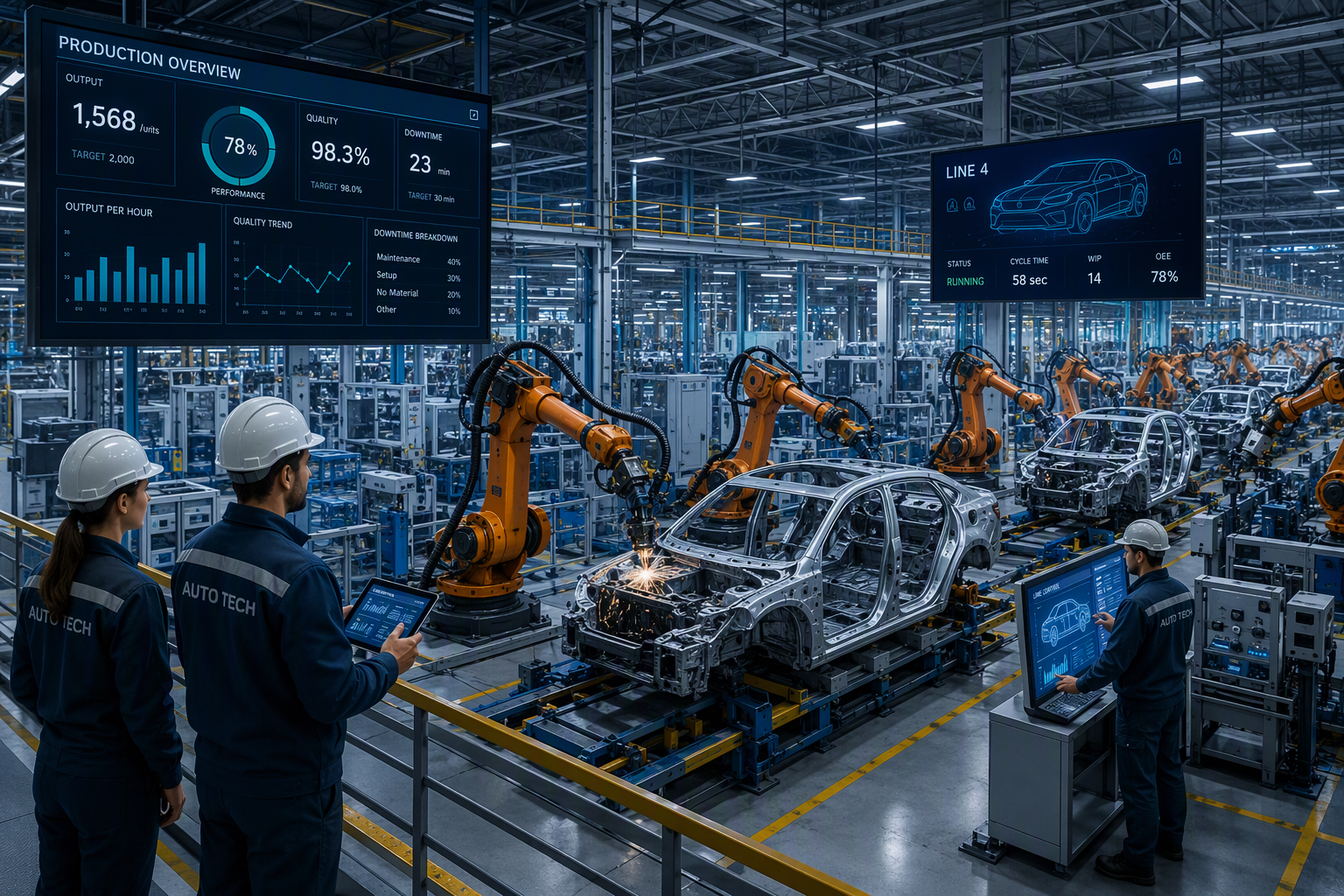
Visibility improves when production data is available beyond a single HMI or controller. Instead of relying on fragmented screens and manual logs, teams can view conditions across lines, assets, or sites. That supports faster judgment during normal operation and during upset conditions.
With better access to data, advanced analytics becomes more practical. Patterns in downtime, throughput, or alarms can be reviewed in context. You are not guessing what happened. You are working from real time information that reflects actual manufacturing operations.
That helps teams make stronger decisions because they can:
- Identify issues earlier with clearer, shared operating views
- Turn raw machine signals into actionable insights for engineering and operations
- Prioritize improvements based on measurable performance instead of assumptions
Improving Worker Efficiency and Collaboration
Connected systems help people work smarter, not just faster. Operators, technicians, and engineers all benefit when information moves quickly and clearly between systems. That improves worker efficiency because fewer tasks depend on manual updates, repeated checks, or phone-based escalation.
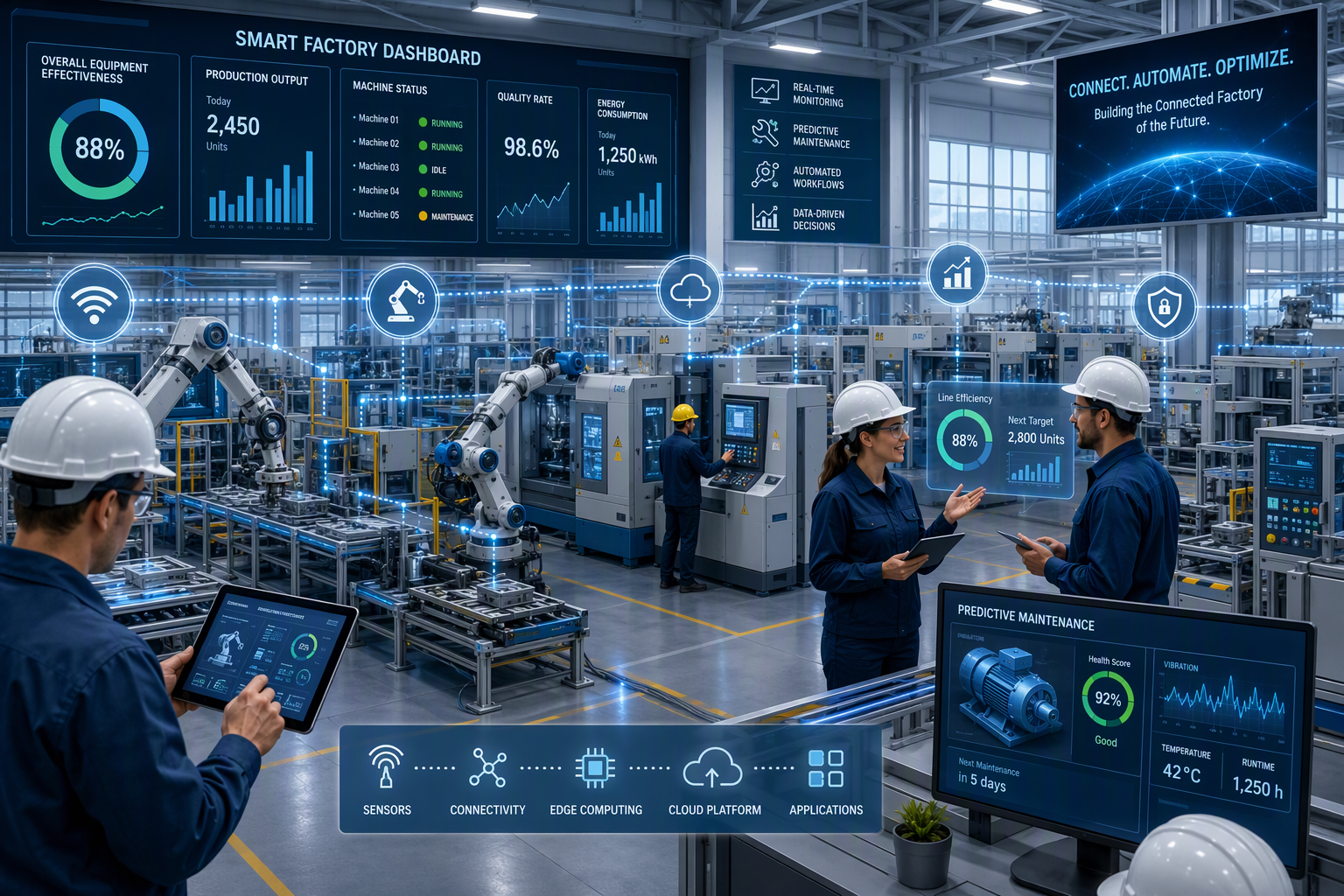
In some industrial environments, added data from connected tools or wearable sensors can support awareness and faster response. Even without advanced devices, better communication protocols improve collaboration by making machine status and events visible to more users at once.
The day-to-day gains often look like this:
- Faster response times when alarms, faults, or abnormal conditions appear
- Less unnecessary human intervention to collect or relay basic system information
- Better collaboration across operations, maintenance, and engineering teams
Reducing Downtime and Enabling Predictive Maintenance
Downtime drops when maintenance teams can see equipment behavior before failure happens. That is the basic promise of predictive maintenance. Instead of reacting only after a stoppage, plants use connected data to identify changes in performance, status, or fault patterns earlier.
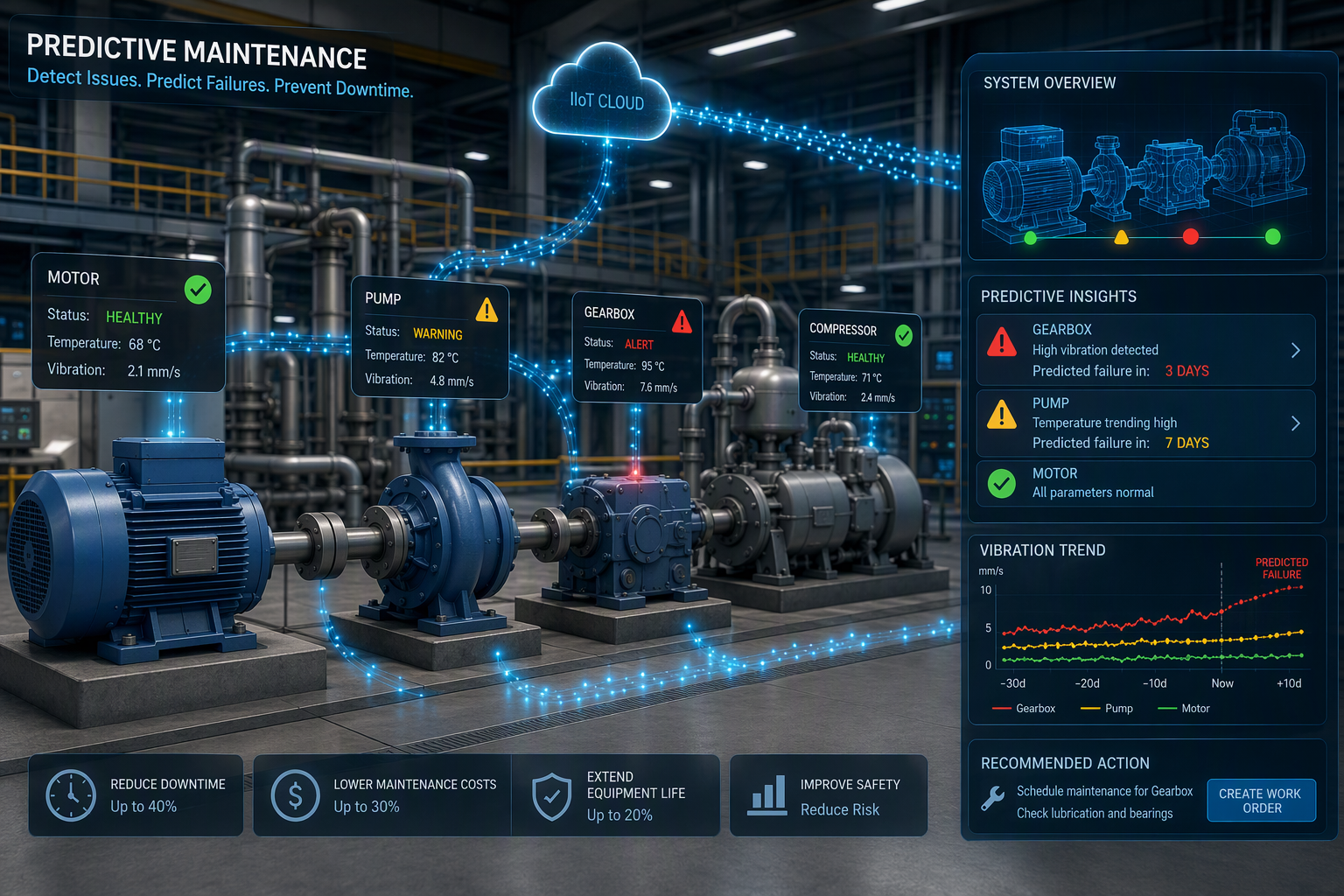
Predictive analytics supports that shift by turning equipment history and current conditions into maintenance signals. The value is not magic. It comes from better data, better timing, and clearer prioritization. When industrial equipment is connected well, teams can plan service with less disruption.
The result is stronger overall equipment effectiveness and fewer surprise failures. Plants also reduce wasted effort because technicians spend less time responding blindly. For controls engineers, this is one of the clearest business cases for industrial connectivity done well.
Conclusion
In conclusion, industrial connectivity is essential for modern manufacturing, serving as the backbone for smart factories and Industry 4.0 transformation. By understanding the key technologies and strategies that enable seamless integration of operational technology and information technology, manufacturers can drive improved visibility, collaboration, and efficiency on the shop floor. As highlighted throughout this guide, leveraging the expertise of Chicago-area systems integrators like Empowered Automation can significantly enhance your connectivity strategy, ensuring you stay ahead in this rapidly evolving landscape. If you're ready to elevate your manufacturing operations, consider reaching out to Empowered Automation for tailored solutions that meet your specific needs.
Frequently Asked Questions
What are common use cases for industrial connectivity in manufacturing?
Common use cases for industrial connectivity include real-time monitoring, predictive maintenance, remote diagnostics, and better visibility across the shop floor. These industrial applications help teams improve production processes, reduce downtime, and make faster decisions using connected machine and process data.
How is global industrial connectivity expected to evolve by 2025?
By 2025, global connectivity is expected to focus more on cybersecurity, IT/OT convergence, edge computing, wireless options such as 5G and Wi-Fi 6, and greater interoperability. These shifts support digital transformation and smarter manufacturing by making factory floors more connected, secure, and data-driven.
What should manufacturers look for when choosing an industrial connectivity solution?
Manufacturers should look for connectivity solutions that match operational needs, support mixed industrial networks, and protect against security threats. It also helps to prioritize interoperability, scalable data collection, secure edge features, and architectures that can connect legacy equipment without major disruption.
You might also like